Politics

You can add some category description here.

In defence of Kwankwaso and the scholars who stand with him

By Muhammad Sani Ilyasu

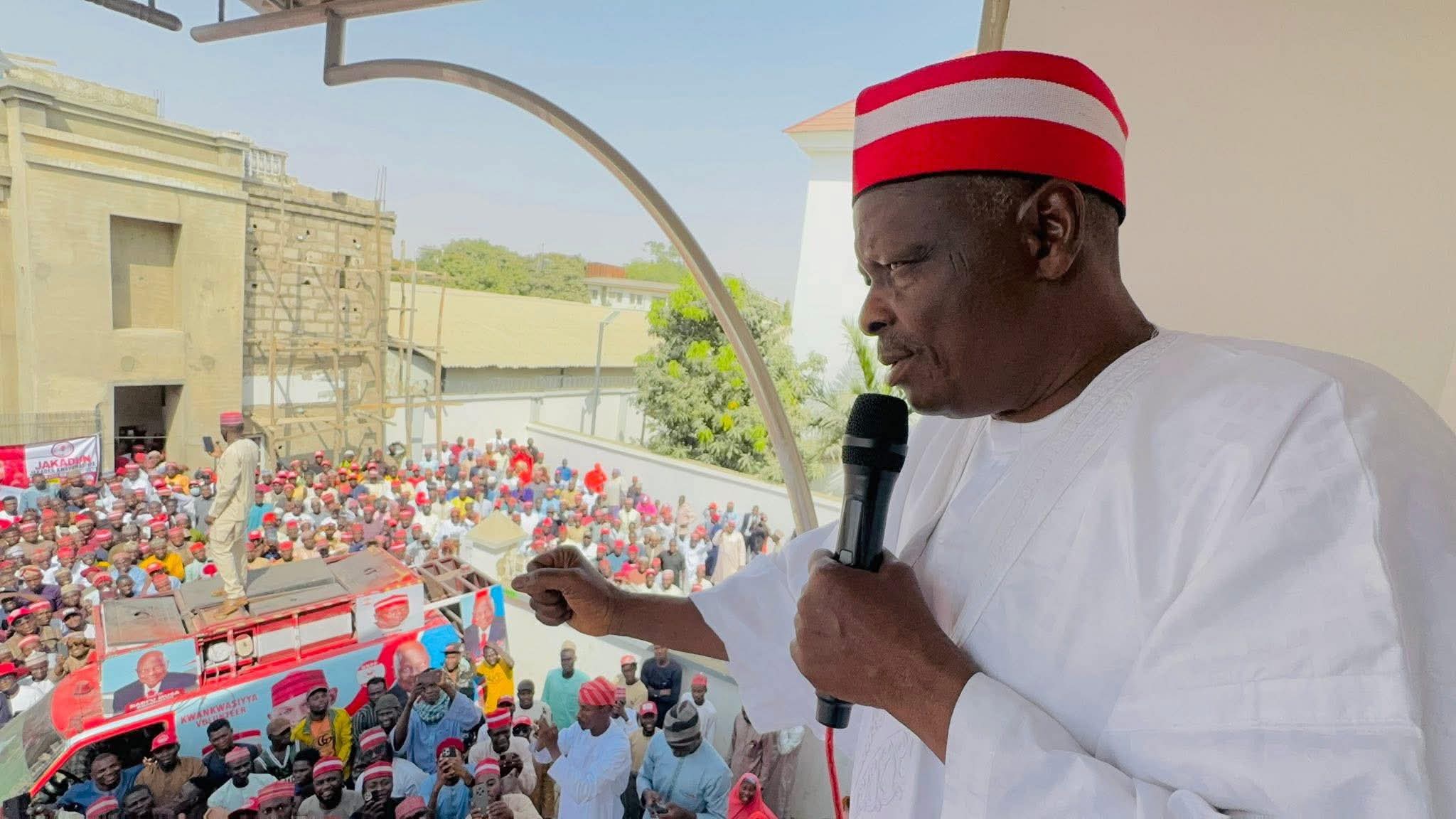
I woke up to a video circulating on social media by a former Kano State anti-corruption czar, giving his opinion about scholarship beneficiaries on why they had no moral right to identify with Kwankwasiyya. It is important to clear the air. Much of what is being said comes from people who were never inside the scheme and never lived the consequences.

Let me state this clearly and upfront: I do not identify with Kwankwasiyya. I disengaged from the movement in 2020. What follows is not partisan advocacy. It is testimony.

Criticism of Rabiu Musa Kwankwaso and scholars associated either rightly or wrongly with his ideology has become fashionable. But much of that criticism is detached from the lived realities that shaped those associations, especially the horrible experience of Kano State scholarship beneficiaries. I write as one of them.

Yes, the scholarships were funded with Kano State resources. But at no point—none that I can recall—were beneficiaries compelled to support Kwankwaso politically. There was no loyalty test, no ideological oath, no expectation of political repayment. In fact, many scholars openly opposed him. I personally recall frequent debates with colleagues who were supporters of Ibrahim Shekarau, many of whom never gave Kwankwaso any credit for the scholarship. Most of us were indifferent, credit was never the issue.

The lesson however came in 2015. That was when Abdullahi Ganduje assumed office—and when all of us, including Kwankwaso’s fiercest critics among the scholars, learned the brutal difference between right and privilege. Tuition payments were halted. Upkeep allowances disappeared. Return-ticket funds were withheld. Scholars were stranded and pushed into destitution in foreign countries.

Some waited over eight years to receive their certificates after the scheme was abruptly terminated. In some cases, parents died without ever seeing the academic fruits of sacrifices they had made.

As if that were not enough, scholars were publicly discredited—labeled products of “substandard universities,” their academic legitimacy questioned to justify administrative neglect. Throughout this period, Kano State went silent.

Religious leaders. Business elites. Civil society organizations. The same voices that now moralize and gaslight scholars looked away. The only “crime” of the scholars was that Kwankwaso started the program.

If, as some critics claim, the scheme was merely a vehicle for siphoning public funds, a simple question remains unanswered: why was Kwankwaso never prosecuted—and why were scholars punished instead? Why were entitlements withheld if the beneficiaries were not the accused?

What makes the silence more damning is that this neglect extended beyond foreign scholars. Until the return of a Kwankwasiyya-led government, even undergraduate scholars sent to private universities within Nigeria—and to Egypt and Cyprus—were denied certificates. For postgraduate students, the delay was damaging. For undergraduates, it was life-shattering: no certificate meant no employment, no future.

In all those years, only one political current consistently raised the issue and demanded settlement: Kwankwasiyya. This is the context critics conveniently ignore.

What they now describe as “indoctrination” or “blind loyalty” was, in reality, a rational response to abandonment. You cannot withdraw education, dignity, and future—then later shame people for gravitating toward the only structure that acknowledged their suffering.

That is not principled criticism. It is double standard. Scholars were not pushed toward Kwankwaso by manipulation. They were pushed there by neglect and even for those of us who have long moved on, that historical truth remains intact—uncomfortable, inconvenient, and undeniable.

Gaslighting scholars for the choices they made under abandonment is not moral courage.
It is hypocrisy.

Muhammad writes from Baltimore Maryland and can be reached at msaniiliyasu@gmail.com.

INEC cannot walk into 2027 with this crisis hanging over its Chairman

By Yakub Aliyu

Nigeria has entered dangerous territory. The country has appointed as Chairman of the Independent National Electoral Commission (INEC) a man whose most prominent public writing is an 80-page brief accusing whole communities of committing genocide. That document, published in 2020, framed national violence almost entirely through a Christian-victimhood narrative and presented sweeping, contested claims that many Nigerians find offensive, incomplete, or simply inaccurate.

Today, the author of that brief is the referee of our national elections. And yet, the political class, from the Presidency to the Senate to the parties, is maintaining a silence so absolute that it borders on negligence.

It is this silence, not the controversy itself, that is now the real danger.

The Integrity of Elections Is a National Security Issue
Every Nigerian knows elections in this country are not routine administrative events. They are national security operations involving millions of citizens, overstretched security agencies, and volatile political identities. The neutrality of INEC is therefore not optional. It is foundational.

When the person leading that institution has authored a highly divisive document, which is now weaponised against the country by some foreign powers, the question is no longer academic. It becomes a matter of national security.

If the chairman once wrote that a section of the country was engaged in “genocide,” how will those communities trust him? How will they interpret his decisions? How will they accept results in a tight contest? And what happens if the outcome of 2027 is close enough for suspicion to matter?

These are not theoretical questions. They are national security scenarios.

How Did This Appointment Pass Through Screening?
The more the issue is examined, the more troubling the answers become.

  1. The Executive Vetting Was Inadequate.
    It is difficult to believe that the Presidency did not know about the 2020 brief. It is publicly available and widely circulated among advocacy groups. If the government did not know, it raises questions about the quality of its due diligence. If it knew and ignored it, that is an even bigger problem.
  2. The Senate Screening Was Superficial
    A nomination of this magnitude requires hard questions about ideology, neutrality, and past publications. No such questions were asked. The Senate treated one of the most sensitive constitutional positions as a formality. This is a failure of oversight.
  3. Political Actors Fear Religious Backlash
    Many southern politicians do not want to appear to be “attacking a Christian advocate.” Many northern politicians do not want to inflame tensions by addressing a document they consider deeply inaccurate. And politicians on both sides fear being dragged into arguments that can harm their coalitions.

The easiest solution for them is silence.

  1. Some Actors Prefer a Weak INEC
    A chairman under suspicion is easier to pressure. A weakened INEC is more pliable. Some forces benefit from an institution whose credibility can be questioned but whose cooperation can be secured.

This is the cynical logic but it must be acknowledged.

Why the Silence Is Dangerous

The real risk is not that the chairman is personally biased. The risk is that millions of Nigerians may believe he is, especially when political temperature rises.

Nigeria’s democracy cannot run on suspicion. If a northern, Muslim candidate loses narrowly, the chairman’s own words from 2020 will be used immediately:
“How can the election be fair when the umpire once accused us of genocide?”

This single sentence is enough to delegitimise an election. In a fragile environment, it is also enough to trigger unrest.

Nation-states collapse not from the actions of one individual, but from the inability of institutions to command trust. INEC cannot afford this weakness. Nigeria cannot afford this gamble.

The Moral Issue Cannot Be Ignored
Beyond politics lies a moral question. Every section of Nigeria has suffered from violence. Christians in some regions have endured brutal attacks. Muslims in others have buried thousands. Any narrative that elevates one community’s pain while erasing another’s deepens division.

The brief published in 2020 was not balanced. It did not acknowledge the wide pattern of atrocities across faith and region. That lack of balance is precisely what raises concern today, not whether the author meant well or not.

Leadership of INEC must be above suspicion. It must be acceptable to all parts of the country. At present, that foundation has been shaken.

Why Is Everyone Silent?
The Presidency is silent because acknowledging the issue means admitting an error in judgment. The Senate is silent because speaking now exposes the weakness of its oversight. The political parties are silent because taking a position risks angering key religious blocs. Security agencies are silent because the moment they comment, the crisis appears larger.

But silence does not preserve stability. Silence delays conflict. Silence leaves the field open for extremists, propagandists, and opportunists.

Nigeria cannot enter 2027 with a question mark hanging over the referee.

What Needs to Happen

Three things are necessary.

  1. The INEC Chairman must address the Brief publicly. He does not need to renounce his past or apologise for advocacy, but he must clarify:
    —that INEC belongs to all Nigerians,
    —that all communities have suffered, and
    —that his role demands strict neutrality. Not making this clarification would mean he has lost the moral authority to remain in that office.
  2. The government must break the silence.
    Here, the Presidency must explain whether the brief was vetted, how it was evaluated, and why the appointment proceeded. Nigerians deserve transparency.
  3. Political leaders must safeguard the integrity of elections. If trust cannot be rebuilt, other constitutional options exist. The aim is not punishment but protection of national stability.

A Final Word

Nigeria stands at a crossroads. This issue will not disappear. It will resurface at the most dangerous moment: during the heat of the 2027 elections. The silence of today will become the crisis of tomorrow.

The country cannot sleepwalk into an avoidable disaster.

If INEC is weakened, Nigeria is weakened. If trust in the umpire collapses, no winner will have legitimacy. And if political leaders continue to pretend that this controversy is insignificant, the consequences will arrive at a cost far higher than the discomfort of speaking the truth today.

It is time to speak. It is time to act. And it is time to protect the Republic.

Obi says Kanu’s conviction could deepen unrest, calls for political solution

By Hadiza Abdulkadir

Former Labour Party presidential candidate Peter Obi has warned that the conviction of IPOB leader Mazi Nnamdi Kanu could worsen insecurity in the country. Obi issued the warning in a statement posted on his social media accounts, saying the development comes at a time when Nigerians are already struggling with economic hardship and widespread violence.

Obi said Kanu’s arrest, detention, and now conviction represent “a failure of leadership,” arguing that the concerns raised by the IPOB leader could have been addressed through dialogue and inclusive governance rather than coercion.

He cautioned that the government’s approach risks aggravating tensions in the South-East and further stretching security agencies already battling multiple crises nationwide.

According to him, nations facing similar internal tensions often adopt political solutions and negotiated settlements when legal processes alone cannot guarantee stability.

Obi urged the Presidency, the Council of State, and respected national figures to intervene and pursue reconciliation, warning that only justice, fairness, and meaningful engagement can prevent the situation from escalating into a deeper security challenge.

From promises to politics: How Jigawa’s focus is slipping toward 2027

By Abba Marke

Across the length and breadth of Jigawa State, conversations are heating up. In tea joints, markets, and political circles, people are talking, and what they’re talking about is the sudden and somewhat surprising shift in tone from the administration of Governor Malam Umar Namadi Danmodi.

Barely halfway through its first tenure, the Jigawa State Government has begun sending strong signals that it intends to seek re-election in 2027. The governor’s close allies and political associates have, in recent weeks, made comments and gestures that clearly point toward a second-term ambition.

To many observers, this early campaign-like posture has come as a shock. The people of Jigawa expected that, at this midpoint in his administration, the governor’s main focus would be on governance, performance, and fulfilment of campaign promises made during the 2023 elections. Instead, they now see high-ranking officials raising eight fingers — a symbolic declaration of a “second term” agenda — while many of the promises that inspired the electorate’s trust remain unfulfilled.

This development has left the public asking some serious and legitimate questions:

1. Is it already time to begin campaigning for the 2027 elections?

2. Have all the commitments made to the people of Jigawa in 2023 been accomplished?

These questions are not born out of malice or opposition politics; they stem from a genuine concern among citizens who want to see their state move forward. The people yearn for progress — for improved infrastructure, better schools, reliable healthcare, job opportunities for the youth, and meaningful reforms that impact their daily lives.

However, they now worry that the government’s attention is shifting away from governance toward political preservation. Many fear that this early flirtation with the idea of a second term could become a major distraction, diverting energy and resources from the actual work of leadership.

History has shown that once a sitting government becomes preoccupied with re-election, governance often suffers. Projects slow down. Accountability weakens. Public servants often start aligning themselves with political interests rather than serving the public. The people of Jigawa, who have placed their hopes in this administration, fear that this could be the same path being taken once again.

What the public is calling for is simple: focus on the job at hand. Let the government channel its full strength into delivering on its promises — building roads, improving agriculture, empowering the youth, reforming education, and uplifting rural communities. Once visible progress is made and the people feel the impact of good governance, the question of a second term will naturally answer itself.

For now, the citizens of Jigawa are watching closely. They want results, not rallies. They want action, not ambition. And they want their leaders to remember that time spent seeking a second term could be better spent earning it.

Abba Marke wrote via abbayusufmarke@gmail.com.

Wike: The deepening threat to Nigeria’s democratic landscape

By Abba Hikima

It is clear to even the most daft Nigerian that Nyesom Wike, a serving member of President Tinubu’s Federal Executive Council, is only in the PDP to sabotage it and clear the path for his benefactor, the President, come the 2027 elections. What may not, however, be clear is the extent to which Wike’s tactics and antics can undermine Nigeria’s democracy.

Whether you are APC, PDP, ADC or even politically indifferent, Wike’s actions should bother you, as long as you dream of a truly democratic Nigeria where institutions transcend whimsical meddling of the few.

From any angle, one sees a deliberate pattern that systematically seeks to dismantle the country’s main opposition party and tilts the political landscape dangerously toward one-party dominance.

The recent Federal High Court injunction, restraining the PDP from holding its planned November 15 National Convention, issued by Justice J. Omotosho, only reinforces this pattern. It aligns with a string of judicial outcomes and political manoeuvres that have consistently favoured Wike’s factional interests, all at the expense of Nigeria’s fragile democratic balance.

Between 2023 and 2025, Wike’s loyalists seized the PDP’s national secretariat at Wadata Plaza, installed their own acting chairman, and plunged the party into even deeper crisis. Earlier, he had been linked to moves to demolish the PDP headquarters in Port Harcourt and to lawsuits that derailed planned conventions.

These deliberate acts of sabotage are calculated to dismantle opposition structures and weaken the political alternatives that every democracy relies on. In Nigeria today, prominent political opposition actors are crosscarpeting from their political parties to the ruling APC, not because the APC is doing better, but to salvage their seats and realise their aspirations, which appear rather vivid with the APC.

In saner climes, inclusion of opposition figures within ruling governments is a laudable means of promoting national unity and bridging gaps. But in Nigeria’s case, Wike’s dual role, serving as a federal minister while wielding extraordinary control over an opposition party, is clearly a means of manipulation.

It blurs ethical boundaries and deprives citizens of genuine democratic alternatives.

Even more disturbing is Wike’s perceived closeness to certain segments of the judiciary- what Professor Chidi Anselm Odinkalu aptly described as a “pathological fixation.”

From 2019 to 2025, at least five major cases tied directly or indirectly to Wike’s interests have been heard before the same judge, fueling concerns of judicial clientelism —a scenario where powerful litigants can select their forums by proxy.

The danger goes far beyond politics.

If political elites can manipulate opposition parties while simultaneously bending judicial processes to their favour, then democracy becomes mere theatre. A performance that preserves power and erodes accountability.

Having said this, the National Judicial Council should randomise the assignment of politically sensitive cases and ensure that no single judge repeatedly handles matters involving the same litigants. A stronger ethical firewall must also be built between judicial officers and politically exposed persons.

Politically, Nigeria must introduce conflict-of-interest rules that bar sitting ministers or presidential appointees from exerting control over opposition parties. Democracy cannot thrive when the same hand both governs and manipulates its opposition.

Coming this far, we must accept that reform is not optional; it is existential.

Abba Hikima, Esq. wrote from Kano, Nigeria.

Kofa dumps NNPP, returns to APC

By Uzair Adam

Hon. Abdulmumin Jibrin Kofa, the House of Representatives member for Kiru/Bebeji Federal Constituency in Kano State, has officially returned to the All Progressives Congress (APC), pledging his support for President Bola Ahmed Tinubu’s 2027 re-election bid.

Kofa disclosed this in a statement he personally signed on Monday, noting that he received a warm reception from thousands of his supporters in his hometown of Kofa, Bebeji Local Government Area.

The gathering reportedly resolved to leave the NNPP/Kwankwasiyya movement and join the APC in solidarity with the president’s agenda.

According to him, the event was attended by approximately 2,000 Islamic clerics who offered special prayers for the president, as well as for peace, development, and progress in Kiru/Bebeji, Kano State, and Nigeria at large.

Kofa’s defection comes two months after his expulsion from the NNPP, which sources say was due to alleged anti-party activities and unpaid membership dues.

His departure underscores the ongoing internal challenges within the NNPP in Kano and marks a significant political realignment in the state.

A former APC member and ex-Director-General of the Tinubu Support Group, Kofa’s return to the ruling party strengthens the APC’s foothold in Kano ahead of the 2027 elections.

Letter to Northern Nigerian Christians

By Abdussamad Umar Jibia 

Finally, you are there. Your “brother” from America has spoken. He is coming to “your disgraced country” to wipe out your enemy, an enemy who has lived above your pettiness. This enemy does not give attention to your blackmail, an enemy in whose presence you always feel inferior. That enemy is I, the Muslim Northerner. Out of your inferiority complex, you have given me different names, the most widely used of which is Hausa-Fulani.

I am Hausa-Fulani, even if I am Kanuri, who can speak no single word of Hausa or Fulfulde. I am Hausa-Fulani even if I was born to one of the minority tribes of Gombe, Bauchi, Kogi or, in fact, a Birom. To qualify as a Hausa-Fulani, I require only to be a non-Yoruba, non-Igbo Northerner who prays five times a day. 

At last, I have caught the attention of your big brother, who has never been to Nigeria, a person who has no respect for a black man like you and me. All you are now waiting for are his bombs and rifles to make you greater than the Hausa-Fulani, to make your presence arouse hate and fear in others, just like you feel when I am around. Congratulations. 

Your hatred towards me has a history which cannot be ignored. You and I have lived side by side for centuries. This is where our creator has decided to place us, just like He placed the Chinese in China, the Indians in India, the Arabs in Arabia, etc.

Living together always generates experiences, sweet and bitter. You have always emphasised the bitter experiences of living with me as the reason for disliking me. For example, you believe that before the coming of the British, you were oppressed by me through my emirs, who carried regular raids on your villages to catch slaves; slaves they sold to Arabs and your newfound brothers in Europe and America.

When the British came as colonisers, they no longer needed slaves. So, even though they ruled you through my emir, they banned slavery the way it was done at that time. However, because they sensed no wisdom in you, they taught you that the worship of one God, as done by your neighbour, was wrong. They taught you about three gods that can be considered as one. Depending on who taught you Christianity, you believe that these three gods (or parts of God) are the Son, the Father and the Holy Ghost or the Son, the Father and the holy ghost. Even if it didn’t make sense, it was handy. At least, you now had a religion just like the Hausa-Fulani had one. 

This raises one question. Are you a Christian because you genuinely believe in Christianity, or are you in Christianity because you want to compete with me? Actions are said to speak louder than words. Your later actions would answer this question.

For example, even before Europeans arrived in this part of the world, we travelled to Makkah, now located in Saudi Arabia, for the annual pilgrimage. To date, we have saved our money to go on Hajj without waiting for the Government. Even without Government agencies, we would continue to go on Hajj on our own because it is an article of our faith. Don’t worry, I know how your mind is working. You would be happy if your American brother would bomb the place we go to annually. To your chagrin, that wouldn’t change anything. We shall still perform hajj even if the Kaába is demolished. Islam has provided for that possibility.

Unfortunately, Christians do not have an organised system of worship that provides for an annual pilgrimage. Out of ignorance, you thought Israelis are your brothers because their grandfather is mentioned in the Bible. You thus put pressure on the Government to create diplomatic ties with Israel so that you can go there for pilgrimage, just like Muslims go to Saudi Arabia. So, you annually come back to tell stories about Israel just like Muslim pilgrims share their experiences in Saudi Arabia.

One thing you have forgotten is that Israelis do not even believe in Christianity. As far as they are concerned, Jesus Christ is an illegitimate child of an adulterous woman, and Christians are idol worshippers. Yet, you still believe that Israelis are better than you because they are the “God-Chosen”. I don’t even know which god chose them. Is it the God they claim to have killed, or is it another God? In any case, you need a solution to your slave mentality. 

You are very unlucky to be a tiny minority; otherwise, I would have been cleansed long ago. Your record of violence against Muslims in the few areas you control is well established. In some cases, like Tafawa Balewa, Zangon Kataf and Saminaka, you wiped off/displaced entire Muslim communities. In many other cases, you killed as many as you could by intercepting Muslim travellers, attacking them during prayers, etc., as you did many times in Plateau state.

You were enjoying your violence and playing the victim with the support of the Christian press when the Fulani herders conundrum began. The word “herdsmen” is a misnomer used to avoid ethnic profiling. The correct words are criminals, armed robbers, or bandits. These groups of people have no respect for human lives and property. The least they do is to drive their cattle into farms to devour crops, and when farmers react, they fight them without mercy.

In the extreme, they attack a village, hamlet or innocent travellers and kill, rape, maim, steal and/or kidnap for ransom. Thank goodness, the ‘’herdsmen’’ kept you in check as they always return whatever fire you release with multiples of it. Both of you are criminals, but they are more vicious and sophisticated. This is even as it is in record that your youth allegedly received training in Israel to fight Muslims.

In any case, you would agree with me that I have suffered from banditry more than you did. The whole thing began in Zamfara and spread to Katsina, Sokoto, Niger and Kaduna before it reached Plateau and Southern Kaduna. Yet, you go about lying that your fellow criminals are Muslims carrying out genocide against Christians. Your shamelessness is awful.

Once more, accept my congratulations. Your lies have paid. You may, however, be disappointed to know that Americans have never solved any problem. Whichever country they enter, they would be worse off after leaving it, except in Afghanistan, where they were shamed out. Should they come in here, we are determined to resist and drive them out like they were driven out of Afghanistan. We shall die honourably or triumph with grace, in sha Allah. For us, submission to the enemy is not an option.

Finally, let me note that there are many exceptions to the above. I have respect for peace-loving Christians from the North, and there are many of them.

Abdussamad Umar Jibia wrote from Kano, Nigeria, via aujibia@gmail.com.

Experts call for broader recognition of ulama in Nigerian politics

By Uzair Adam 

Bayero University, Kano (BUK), on Tuesday hosted a landmark conference organised by the Faculty of History and Development Studies, exploring the historical and contemporary roles of ulama in Nigerian politics. 

The event, themed “Ulama and Politics in Nigeria: Historical Perspectives,” attracted scholars, politicians, and religious leaders from across the country.

Professor Muhammad Wada, Dean of the Faculty of History and Development Studies at the university, explained that the central mission of the conference is to highlight the pivotal role of ulama—Islamic scholars—in societal development. 

He stated that, “Over the years, through our research, we realised that ulama have played and continue to play an important role in various spheres of life, including politics and economics. 

“This conference seeks to address widespread misconceptions about whether it is legitimate for ulama to be involved in politics,” Professor Wada added.

He further stated that the conference has received hundreds of abstracts from scholars of various fields, demonstrating the broad relevance of the topic. 

“Historically, ulama have contributed to societal development, and they remain capable of doing so today. 

“Their role goes beyond leading prayers or teaching religion; it extends to guiding the public in political and civic matters,” Professor Wada emphasised.

Professor Sani Umar, one of the keynote speakers, described the conference as “highly enriching and a model that should be held regularly to sensitise ulama and the public alike.” 

He stressed that the discussions are not only relevant to Muslims but also to followers of other faiths, promoting mutual understanding and peaceful coexistence. 

Umar further explained that the widespread perception that ulama should avoid politics is misguided, noting that true politics involves leadership, compassion, and care for the vulnerable—qualities inherent in the work of scholars.

Speaking on the occasion, Sheikh Ibrahim Khalil, Chairman of the Council of Ulama, urged the public to recognise that politics is for everyone and that ulama, given their knowledge and moral grounding, are particularly well-suited to political engagement. 

He called for more frequent conferences of this kind, at least twice or three times a year, and appealed to media professionals to disseminate these messages widely, including via social media.

The conference drew participation from ulama representing various Islamic sects, academics, and politicians, including Sule Lamido, the former Governor of Jigawa State. 

Governor Abba Kabir Yusuf, represented by Professor Tijjani Muhammad, also attended, highlighting the significance of the event for both scholarship and governance.

The two-day conference will continue tomorrow with plenary sessions, providing a platform for rigorous discussion on the contributions of ulama to Nigerian society and politics.

Aggrievedness in the North: Four things Tinibu should do

By Zayyad I. Muhammad 

Since February 6th, 2013, when the All Progressives Congress (APC) was formed, the party has been the darling of the North. In the 2015, 2019, and 2023 presidential elections, the North was instrumental in bringing and maintaining the APC in power at the centre. However, in President Bola Ahmed Tinubu’s just two years in power, there is widespread aggrievement against the Tinubu government in the North. This is surprising and unsurprising as well:

Out of the 8.7 million votes that brought President Ahmed Bola Tinubu to power, the North collectively contributed 5.6 million votes, accounting for approximately 64% of his total. In contrast, the South contributed 3.2 million votes, or 36%. Given this overwhelming support, it is surprising that the President has allowed the North to slip from his political grip so easily.

To be fair to Tinubu, every President seeks to reward close associates, loyalists, and political allies, including in his own way of governing. However, Tinubu appears to have gone too far in prioritising his inner circle, often at the expense of the region that gave him his strongest mandate.

The good news is that Tinubu still has ample time to regain the North’s confidence. But to succeed, he must act based on facts, not emotions, nor the filtered narratives he hears from those around him.

Broadly, Tinubu must focus on four urgent actions, grouped under two components: one political and three socioeconomic.

The President has made good progress in building elite consensus but must expand to persuade more politicians and elites. Some seek recognition, relevance, appointments, or contracts. Tinubu can quickly address this: by calling, offering appointments, or granting contracts. There’s room for more Advisers, Special Assistants, and ambassadorial positions.

Furthermore, he should establish a Presidential Advisory Council in each state, a small team of respected voices who can meet quarterly to brief him directly on the needs and aspirations of their people. This will give Northern leaders a sense of inclusion and shared ownership in governance.

The second component, socioeconomic, comprises three elements: Agriculture, Livestock, and security and infrastructure.

This is where Tinubu must be most deliberate. Socioeconomic issues directly affect the masses, the real voters. The August 16, 2025, by-election has already shown that money politics will have limited influence by 2027.

Tinubu has tried to stabilise food prices, but the cost of farm inputs has skyrocketed. The North urgently needs a dedicated agricultural recovery program. Past initiatives, such as the Anchor Borrowers’ Programme, the Presidential Fertiliser Initiative (PFI), Youth Farm Lab, Paddy Aggregation Scheme, Agricultural Trust Fund, PEDI, and the Food Security Council, were well-conceived. Yet implementation failures meant that benefits rarely reached genuine farmers.

For instance, under the PFI, fertiliser blenders made fortunes, but farmers, who should have been the real beneficiaries, still buy fertilisers at ₦45,000–₦52,000 per bag, far above the ₦5,000 target price.

Tinubu must ensure that agriculture is reconnected to ordinary farmers, not just middlemen. The Ministry of Agriculture should recalibrate its projects and programs to target real farmers directly.

The creation of the Federal Ministry of Livestock Development was a brilliant and forward-thinking step. Yet, it has made little impact so far.

With proper funding and direction, this ministry can: transform nomadic herders into more settled, educated, and productive citizens; address the farmer-herder conflict that has claimed thousands of lives; reduce cattle rustling, banditry, and kidnapping, which are often linked to herder communities.

If effectively managed, the ministry can become one of Tinubu’s most enduring legacies in the North.

Security remains the North’s most pressing concern. The kinetic and non-kinetic strategies being coordinated by the Office of the National Security Adviser (ONSA) are yielding some positive results, but much more is needed.

Tinubu should expand the non-kinetic approach through security communications, utilising massive public relations and grassroots outreach, particularly in the Hausa and Fulfulde languages. Talking directly to communities and even to at-risk groups will deepen trust, reduce misinformation, and weaken extremist recruitment.

Another way to rewin the North is through concerted efforts to make sure the ongoing and stalled infrastructure projects are fast-tracked, especially the ongoing rehabilitation of the Abuja-Kaduna expressway, some deplorable roads in the Northeast, especially along the Gombe-Adamawa axis, the Mambila hydroelectric project, Sokoto-Badagry Freeway/Highway, Kaduna-Kano Standard Gauge Rail Project, and Kano-Maradi Rail Link.

The North gave Tinubu his strongest mandate in the 2023 election. Losing its trust would be politically costly in 2027. To recover lost ground, the President must move beyond token gestures and adopt a deliberate, structured engagement strategy that balances elite consensus with grassroots socioeconomic transformation.

If Tinubu can act decisively on these four fronts, more political inclusion, agricultural recovery, livestock reform, enhanced security, and fast-track ongoing infrastructure projects, he will not only rewin the  Northern confidence but also secure massive votes in 2027

Zayyad I. Muhammad writes from Abuja via zaymohd@yahoo.com.
The political identity crisis in a “horse” race for power

By Abdulrahman M. Abu-Yaman 

The title race is between two horses and a little horse that needs milk and needs to learn how to jump. –  Jose Mourinho

When the controversial Jose Mourinho made this statement above, it was about football and the race to the Premier League title in 2014, but we never knew a time would come when it would be more suitable to fit into the Nigerian political context as it relates to the switch and frequent change of allegiance from one political party to another.

THE FIRST HORSE

The first horse, being the All Progressives Congress (APC), is the current defending champion in political power and the acclaimed favourite to retain the presidential title going into 2027, based on the power and influence that come with being an incumbent leader in Nigeria. Only once has it occurred since the fourth republic that an incumbent was defeated, and even that took what some have tagged as a miracle when President Jonathan made the famous call to the late former President Muhammadu Buhari (of blessed memory) and conceded. 

This horse has taken on different forms over the years and has been given various names by the political power brokers who have bet on it to win. Part of its defunct origin was the All Nigeria Peoples Party (ANPP), formed in 1998, a year before the fourth republic general elections. However, its popularity was quite limited to the northern part of Nigeria, not as pronounced in other regions of the country. Former President Muhammadu Buhari had contested twice and lost under the ANPP in 2003 and 2007, respectively.

Another major segment of its primordial origins emerged from the Action Congress of Nigeria (ACN), which was formed in 2006. It was formerly known as the Action Congress, which in turn was formed from the merger of its factions with minor political parties, including the Alliance for Democracy (AD), the Justice Party (JP), and the Advanced Congress of Democrats (ACD), among others.

Then came the Congress for Progressive Change (CPC), founded in 2009. It gained significant influence due to the impact of late Muhammadu Buhari and his millions of supporters in the northern part of Nigeria, who contested under the party’s platform in the 2011 elections. 

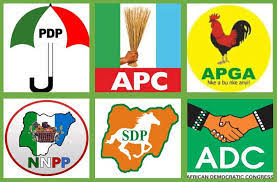
In 2013, the progressives and congresses in some major political parties with these words present in their acronym merged into one; the Action Congress of Nigeria, Congress for Progressive Change (CPC), a faction of the All Progressive Grand Alliance and finally, the All Nigeria Peoples Party (ANPP) to form the All Progressives Congress (APC) – the most formidable opposition group as a party in Nigeria since the return to democracy in 1999 to unseat any incumbent President in power.

THE SECOND HORSE(S)

The second horse(s) in the race are obviously divided and sharing that position based on recent trajectories and events that had left one of the horses deemed as second favourite to crumble and hanging on a thin thread; speaking of the Peoples’ Democratic Party (PDP), as long as it still has time to regroup and put its house in order, it cannot be ruled out of the race based on its political structure long established that cuts across all states in Nigeria.

The PDP was formed in 1998, in the twilight leading up to the 1999 general elections, by a group of political bigwigs who adopted Chief Olusegun Obasanjo, a former military head of state and a prisoner released from the dungeon after the end of the Abacha era. Obasanjo, coming from the south-west region of the country, was seen by many as the best candidate to step into what would have been Chief MKO Abiola’s rightful position as winner of the annulled June 12 elections if he had lived up to 1999 but for his sad and shocking demise in 1998.

The PDP won the 1999 election by a majority of votes and held a majority of seats in the National Assembly. In 2003, the party continued to dominate the political space in Nigeria, growing in influence and power, albeit under some questionable electioneering processes in 2003, 2007 and 2011, respectively, having spent sixteen years in power as the ruling party. During that period, it became the largest party not only in Nigeria but also on the African continent.

However, unfortunately for the PDP, their dream of achieving the milestone of twenty years in power was cut short in 2015 when the APC, a new, formidable force energised and regrouped, ran them out of control. 

Since then, the PDP has contested twice as an opposition party and lost to the APC in 2019 and 2023, but edged them out in 2015. The PDP has also had to lose some of its members who have decamped to the APC and has since struggled to remain as firm and relevant as it once was. The only reason it occupies the second spot as a favourite is its longevity, structural base, and the influence of some stakeholders behind the corridors of power, who are still salvaging what is left to stand firm.

Moving away from the PDP, the other second favourite only came to fruition and gained traction a few months ago, orchestrated by one man, Mal. Nasir El-Rufai, who initiated the movement that led to the formation of a coalition that later evolved into the political party rebranded as the African Democratic Congress (ADC). The party had been in existence before its formation in 2005 as the Alliance for Democratic Change. 

The formation of the ADC elicited mixed reactions in the Nigerian political space. While some saw it as the long-awaited vibrant opposition to challenge the incumbent party in power, others viewed it as a selfish endeavour created by those who had been bruised and pushed out of the epicentre of power, seeking to make a comeback by any means necessary. This notion was proven to be more relevant when the ADC reached out to past or aggrieved members of the APC and PDP to form part of its board and core membership from the official flag-off. 

Nevertheless, it is still considered the second favourite in the race because if history is anything to go by, just as in the words of Jesse Jackson: 

“In politics, an organised minority is a political majority”

Just as in the case of the APC, which was formed two years short of the 2015 elections and later emerged as the winner, the regrouped ADC party and its influx of new members can’t be underestimated.  

Another reason the ADC could be frontrunners could be their ability to capitalise on the harsh economic realities in the country that have affected the masses and present the party as an alternative to better their welfare, just as the same members of the ADC did way back in 2015 when they were members of the APC, which they now want to substitute out of power. 

THE LITTLE HORSE IN THE RACE

The little horse that needs milk to learn how to jump is the Labour Party (LP). It was also driven and triggered to relevance in the 2023 general elections due to the influence of one man, specifically Peter Obi, who was spoken of as the party’s flag bearer. The LP not only defeated the APC in their own stronghold in Lagos but also defeated the ruling party in the Federal Capital Territory, Nigeria’s capital and centre of governance. It was unprecedented and sent a clear message that the LP did not just come to make up the numbers like some minority parties. 

But be that as it may, their numbers in Lagos and Abuja, coupled with the ones from the east and the Niger Delta region, were not enough to put them in second position in the race. This is why it needs to spread its wings to cover all political nooks and crannies in other regions, especially northern Nigeria, where it is yet to get a solid grip.

The recent involvement of Peter Obi with the ADC could lead to a compromise and weaken the party’s strength, as it revolves around him. One of the LP’s former spokesmen also lamented him for not doing enough as a leader and his inability to resolve the party’s internal crisis. He also raised concerns about his failure to build a strong party base to secure the mandate. 

Still, the only reason the LP is coming in third in the horse race is because of the unexpected stunt it pulled and its potential to do more if, and only if, it can capitalise on its momentum to leap ahead like other horses in the race.

THE EXODUS AND CONVENIENT SWITCH BETWEEN PARTIES 

Nigerian politics and politicians tend to switch sides to any political party that offers them a higher chance of winning. It occurred in 1999, when the PDP was formed and founded by members of various political parties. 

In 2003, as the PDP grew in strength and power, it received more members, and others had to decamp from their prior political platforms to join it. It was beginning to look like the only way to win an election was to join the party that was already winning. 

2007 and 2011 were no different as the PDP retained power in government. However, the only parties that managed to maintain some of their strongest and most popular members were the ANPP in 2003/2007, and the CPC in the 2011 general elections, when they fielded Muhammadu Buhari as their presidential candidate in the respective years.

In the buildup to the 2015 election, a massive exodus of politicians decamped from the ‘umbrella’ that had sheltered them in political office to the newly formed APC, which was gaining immense popularity, especially in the northern and western parts of Nigeria. The presidential flag bearer was a familiar figure who was contesting for the fourth and possibly his last attempt, having been persuaded to do so. The APC, like the PDP in the past, also welcomed all members from other parties, irrespective of their past reputation or allegations while in office. In the end, the party grew from being the strongest opposition to becoming the favourite to win the election, which they eventually did.

LOST OF POLITICAL IDEOLOGIES/IDENTITIES

When we start seeing political players decamping at will, it is time to question whether any of the political parties place a high premium on their criteria for membership in relation to their ideologies before accepting any candidate into their fold. Do politicians care any less if the party they join aligns with their manifestos and visionary blueprint for good governance and leadership?

It is beginning to look like a game of chess, with calculated moves aimed at checkmating the ultimate power in the political positions they crave. The only pawns in this game are the masses who have yet to figure out that changing their clothes to another has nothing to do with the real person behind those clothes. A stained reputation, especially in previous leadership positions, coupled with a proven track record of underperformance and incompetence, cannot be covered by new political platforms.

However, the interesting aspect of all this is the emergence of a solid opposition to keep the ruling parties on their toes. Previously, with the decline and crisis in the PDP, Nigeria was moving towards a single-party state due to the frequent switch of its members to joining the APC. It is well timed that the LED coalition, which has resolved to adopt the ADC as its political platform, includes big names like former Vice President Atiku Abubakar, who is also a former PDP presidential aspirant. Peter Obi, the Labour Party’s presidential candidate, has also been seen and involved in some of their meetings. And for the first time since the APC’s ascension to power, they seem concerned about the growing popularity of the ADC and the threat it may pose to their hold on power. Deja vu?

Conclusively, all the parties involved in the horse race have exhibited similar symptoms of identity and ideological crisis in their consistent switch of allegiance to suit their needs. The thin line between them is getting blurrier in their actions and adoptions. Everyone is welcome to any party at any time. No litmus test, exceptional integrity, or individual evaluation criteria needed. Once you are in, all sins are forgiven, and then you are baptised as a new member. 

The ADC is not only like the APC alphabetically, but also in the content of its members and its contextual existence. The primary concern here is whether some members of the ADC could potentially break away from the party in the future, particularly in the event of any unresolved disagreement or fallout within the party. Are we to brace ourselves for another hypothetical ‘ABC’ party if it comes to that? Time is the ultimate revealer.