Opinion

Yusuf Sununu exemplifies dedication to transforming education sector

By Abbas Datti

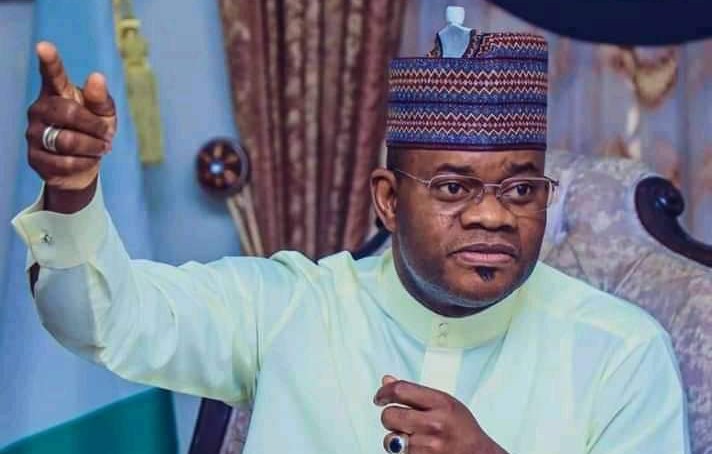
The state minister of education, Yusuf Tanko Sununu, has been making giant strides in improving the nation’s education sector and ensuring that all children have access to quality education. His dedication and hard work shouldn’t go unnoticed, and he deserves to be commended for his efforts.

One of the key initiatives implemented in his intertwined collaboration with the minister of education, Tahir Mamman, is expanding access to educational programmes in underserved communities. By building new schools and upgrading existing ones, the minister has ensured that more children have the opportunity to receive a quality education. This has helped to bridge the gap between urban and rural education and ensure that all children have equal access to educational opportunities.

Furthermore, the state minister has been actively working to improve the quality of education in schools. He has introduced new teacher development programmes, like the Teacher Internship Scheme (TIS), provided support for teachers, and introduced innovative programs for teachers to adapt to a new digital age and assist in the development of smart education in Nigeria. This has not only improved academic performance but has also instilled a love for learning in students, helping them to reach their full potential.

The Teacher Internship Scheme which was introduced by the Universal Basic Education Commission (UBEC), to address the dearth of teachers in the field of smart education being championed by the commission in Nigeria, with the establishment of 37 smart schools across the country.

The Korea International Cooperation Agency (KOICA) is providing technical support for the execution of the smart education programme in Nigeria and has committed about $10.4 million to the project.

Additionally, the state minister has been a champion for inclusivity in education by creating a transnational educational policy that will promote diversity and massive enrollment in tertiary education institutions. The minister has also created a welcoming and inclusive environment for all students, regardless of their background or abilities. This has helped to create a safe and supportive learning environment where all students can thrive.

Moreover, Yusuf Sununu has shown a deep commitment to improving the education sector and ensuring that all children have access to better and quality education

Abbas Datti writes from Kano via abbasdatti448@gmail.com.

Nigerian Senators’ diatribe and their corrupt national budget opprobrium

By Nura Jibo

Senator Abdul Ningi remains a hero of Nigeria’s democracy. His revelations, as the senator from Edo North implied, will haunt their reputation, causing them to receive years of contempt and opprobrium from the Nigerian people.

No one takes any of the current Nigerian senators seriously.

The entire country and world leaders view their tongue-lashing as an overt confession to the national budget’s animadversion. What irony!

Indeed, the mentality of Nigerian politicians, both young and old, is the same. To enter politics, contest, “win” either fairly or by crooked means, and serve the 1st, 2nd, 3rd, and 4th terms.

This could be easily spotted in the Senate chamber. It is full of geriatrics who served eight years as governors in their respective states and have now become senators to take cover in the Senate and hide their political obloquy.

In the past two days, Nigerians have been left in no doubt that the Nigerian senators, including their Senate President, are already in a state of disgrace resulting from public opprobrium. And this is quite understandable.

There is no way a Nigerian citizen could trust any senator with his hard-earned electoral vote. Unless the senator steals it by fabricating figures the way they surreptitiously did in the 2023 national budget, where some of them were allocated ₦500 million as publicly confessed by one of their own!

For one of their own to call all of them culpable, or better yet, culprits, is certainly an obloquy and political hara-kiri—an indelible series of political somersaults.

What Senator Ningi presented was a testament to the fact that the entire Senate is now embroiled in a disturbing saga of corruption and self-incrimination, demonstrating a reckless disregard and disrespect for the public good.

Indeed, this Senate’s attitude is certainly an intentional breach of decorum that exposes them to the vagueness, vagaries, verbosity, and waffle of their statutory unconscionability!

May Allah SWT save Nigeria and its people from this kind of Senate’s malicious misrepresentation(s) of the people under the tutelage of budget padding.

Bridging our differences as Nigerians: A path to unity

By Usman Muhammad Salihu 

In Nigeria, amalgamating diverse cultures, religions, ethnicities, and political ideologies presents opportunities and challenges. To navigate this intricate tapestry effectively, embracing diversity is paramount. Rather than viewing differences as divisive, Nigerians should celebrate the richness they bring to the nation’s identity.

Ultimately, the path to unity in Nigeria lies in embracing diversity while recognizing the common bonds that unite its people. Nigerians can forge a stronger, more resilient nation by celebrating their shared heritage and respecting their differences. Through dialogue, education, inclusivity, and a rejection of extremism, they can build a future where diversity is celebrated as a source of strength.

Open and respectful dialogue is the cornerstone of understanding and reconciliation. By engaging in conversations that promote empathy and mutual respect, Nigerians can bridge divides across religious, ethnic, regional, and political lines. Platforms for formal and informal dialogue offer opportunities for meaningful exchanges that foster unity amidst diversity.

Education is a powerful tool for dispelling stereotypes and fostering appreciation for diversity. By promoting educational initiatives highlighting Nigeria’s multifaceted heritage, individuals can better understand their fellow citizens’ perspectives and experiences. 

Nigerians should advocate for policies and practices that promote equal opportunities and representation across all sectors. By championing inclusivity, they can dismantle barriers and create pathways for collaboration and unity.

Nigerians must collectively reject extremism in all its forms and embrace moderation, tolerance, and compromise. They can build a more cohesive and harmonious society by fostering a culture of inclusivity and understanding.

 Navigating Nigeria’s diverse landscape requires a commitment to dialogue, understanding, and inclusivity. By embracing diversity, fostering dialogue, promoting education, advocating for inclusivity, rejecting extremism, engaging in active citizenship, and cultivating unity in diversity, Nigerians can overcome their differences and build a more cohesive and resilient society.

Usman Muhammad Salihu writes and can be reached via muhammadu5363@gmail.com.

Kano water scarcity: How long is Governor Abba’s ‘State of Emergency’?

By Misbahu El-Hamza

Kano State makes headlines almost every year, and coincidentally, during Ramadan, for water scarcity. The frequent headlines are often attributed to electricity system failures, which disrupt water pumping or equipment faults at water treatment plants, exacerbating the situation.

About ten months ago, upon taking office, Kano State Governor Alhaji Abba Kabir Yusuf declared a State of Emergency to address water scarcity across the state, urging for patience and maximum cooperation from residents. Although I haven’t seen or reviewed the governor’s plan during this emergency, I recall that resolving Kano’s water issues was one of his campaign promises.

I remember when the governor inspected the Challawa Water Treatment Plant in May 2023 and expressed dissatisfaction with its condition. At the time, only two of the six pumping machines were functioning.

Following that, the governor gave the Kano State Water Board a one-week ultimatum to submit its demands to end the state’s water shortage. The public breathed a sigh of relief. Personally, I had hoped that we’d finally overcome this hardship.

Unfortunately, for nearly a year now, the situation has been prevalent not only in urban areas but even worse in rural communities. We are not only seeing those trending headlines of water scarcity in Kano; we’re experiencing the brunt of it.

Recently, the price of a 25-litre jerrican of borehole water in Kano surged by ₦50 to ₦150. Someone told me that he bought one at ₦200 around Kurmi market. In areas like Hotoro, Nassarawa LGA, where I reside near Kumbotso LGA housing the Challawa water plant, prices rose from ₦40 to ₦70 or higher. The Chalawa water plant is believed to have the capacity to supply the whole of Kano with water. Still, we rely heavily on individual boreholes for water, with little to no infrastructure connecting us to the water plant.

While I reside in a suburb and can afford to buy a jerrican of what seems to be clean water, in the rural areas where I often visit for work, the situation is dire. Many communities lack access to clean water sources, with broken or dried-up boreholes and wells being common. Residents, including young children, often resort to fetching water from stagnant ponds shared with cows, donkeys, camels, and even dogs. This water is what they use for all daily activities, posing serious health risks.

It’s evident that both state and local governments have neglected these communities, offering little to no solutions for their water woes. Where you see boreholes or wells in these communities, they are either constructed by individual donors or (charity) organizations, and a handful are constructed by politicians.

Governor Alhaji Abba Kabir Yusuf must be aware of the current water crisis in both rural and urban Kano. However, the pressing question remains: how long will his State of Emergency address the suffering caused by the persistent water scarcity or total lack of it across the state?

Three days ago, I heard a jingle apologizing for the water scarcity in the Kano metropolitan area, blaming the repair works at Challawa and Tamburawa treatment plants. It’s said to have been sponsored by the Kano State Water Board. To me, the jingle suggests the governor partly fulfilled his pledge; now, it’s the board’s turn to restore the water supply—or at least that’s my assumption. 

I know this isn’t the first time the board has apologized. In 2022, the then-managing director of the board was quoted as apologizing to Kano residents for failing to supply water during Ramadan. At that time, 25 litres of borehole water cost between ₦30 and ₦100.

I remain hopeful that before his remaining three years expire, Alhaji Abba Kabir Yusuf will emerge as Kano’s hero by addressing the water scarcity issue and providing relief to the growing population, including those in rural areas.

As the governor continues to address our water problem within this emergency period, I hope the demands the water board submitted to him as requested include: establishing new plants and reservoirs or enhancing existing ones, extending mainline pipes to suburbs and rural areas, ensuring independent power supply for the plants, and securing permanent employment for existing and additional staff. If the board manages its expenses independently, perhaps shifting them to the state payroll would also improve efficiency. 

With reliable service and an effective system in place, the board and the state government should be rest assured that Kano people will be more willing to pay for water, and the board does not need to depend heavily on its revenue from the industries it diverts our little water to.

Misbahu wrote from Kano via misbahulhamza@gmail.com.

Arewa conundrum: a clarion call for agenda and patriotic fervor

By Idris Ishaq Danwanka

Esteemed compatriots and guardians of our collective Northern ethos, in the wake of recent fiscal disclosures, a disconcerting schism has been unveiled that warrants our immediate attention and stringent critique. Senator Abdul Ahmed Ningi, erstwhile Chairman of the Northern Senators Forum, has valiantly illuminated a disquieting anomaly within the fiscal year 2024 budget proceedings.

With the budget initially proposed by President Bola Ahmed Tinubu amounting to 24 trillion Naira, the subsequent and inexplicable inflation to 27 trillion Naira post-senate approval instigates profound perturbation and necessitates scrupulous examination.

The crux of the matter lies not solely within the numerical discrepancies but more so in the disheartening dearth of collective fortitude amongst our Northern sentinels. Senator Ningi’s resignation from the venerable chairmanship of our forum, following his laudable challenge to the opaque augmentation of the said budget, is a testament to a troubling lack of solidarity and a deviation from the path of unwavering patriotism that our region is historically known to uphold.

It is incumbent upon us, as the custodians of Arewa’s legacy, to transcend the paralyzing grip of fear that threatens our tenure within the senate.

The specter of suspension or dismissal should not deter us from our sacrosanct duty to the masses. We must rally behind the banner of transparency, accountability, and unwavering integrity that Senator Ningi has hoisted, even in the face of potential political ostracism.

The significance of unity cannot be overstated in our quest for regional and national development. A fragmented front is a disservice to the populace we have sworn to serve. It is only through a cohesive and unyielding stance that we can effectively steward the resources of our polity and engender a milieu where probity is not just expected but demanded.

Let us not shy away from our responsibility to interrogate and impugn any act that undermines the fiscal sanctity of our nation. To falter in this regard is to capitulate to the whims of those who may not prioritize the collective good over individual aggrandizement. The import of our togetherness is the bulwark against the forces of division and the cornerstone of our advocacy for the masses.

In conclusion, it is our imperative to eschew the parochial fears that stifle our voice and to stand shoulder to shoulder with those who dare to speak truth to power. The Arewa spirit is one of resilience, unity, and an unyielding commitment to the greater good. May we find the moral fortitude to embody these virtues and to restore the faith of our people in our esteemed institution.

Let us not delay in reclaiming our esteemed position as paragons of rectitude and as the vanguards of the people’s will. The time for action is now; the call for unity and patriotism, ever resonant.

Yours in service to our region and our nation;

Sen. Idris Ishaq Danwanka,
B.A. English Language and Literature, Federal University Dutse.

In defence of the NYSC SAED program

By Ammar Muhammad Rajab

On November 1st, 2023, following mobilisation by Ahmadu Bello University, Zaria, I enrolled with the NYSC at one of the accredited centres in Zaria. I was deployed to Wailo Camp in the Ganjuwa Local Government Area of Bauchi State shortly after.

I departed Zaria on November 2, 2023, via a commercial bus. Following a six-hour journey, I arrived in Bauchi and spent the night there. On the afternoon of the 3rd of November, a Friday, I boarded another commercial car for a 60-kilometer journey to the camp where I had been deployed.

Immediately upon my arrival at Wailo camp, I underwent registration with the NYSC officials. Subsequently, I received the necessary items and materials for my three-week stay at the camp. The orientation period blended joy, intensity, lasting memories, education, and valuable information. I vividly recall the rigorous drilling, the monotonous parades, and the enlightening lectures delivered by various professional bodies, including but not limited to the DSS, Army, Police, NHIA, WEMA Bank, Fire Service, NIM, NSE, OIC Foundation, NAFDAC, FRSC, NDLEA, NDE, NGOs, SDGs, NOA, USAID, and YOMA, among others.

The army and Man O’ War were highly professional in their approaches. Despite the unfamiliar circumstances we found ourselves in, I enjoyed the teachings and orientation provided at the camp.

Skills Acquisition and Entrepreneurship Development (SAED), an acronym for a NYSC program established in 2012, was designed to tackle the pervasive issue of unemployment, a significant challenge confronting Nigerian youths and graduates today. This issue has become a national concern as some of our most educated and dynamic individuals are not actively contributing to economic and social development.

The SAED program was charged with raising corps members’ awareness of the realities of the Nigerian job market. Offering foundational entrepreneurship training and practical skills aimed to empower them to consider the possibilities of self-employment or initiating their businesses.

Many corps members harbour disdain for the program, often attributing it to the lengthy duration of both the lectures and practical sessions. During our orientation camp, the program ran daily from 9:00 a.m. to 2:00 p.m., spanning 5 hours. In the classroom, it was common to observe corps members dozing off, engrossed in their smartphones, displaying signs of fatigue, or engaging in other unserious behaviour.

To me, that period was the highlight of the orientation camp. I gained invaluable knowledge, particularly during the lecture delivered by an official from the National Directorate of Employment following the distribution of the guidebook titled “Starting My Own Small Business: Participant’s Workbook.” This lecture was a pivotal and transformative moment for anyone responsible and attentive.

 We were imparted with comprehensive insights into the intricacies of establishing a formal business in Nigeria and the diverse opportunities available across various sectors. We also learned how one could secure grants or loans from government agencies tasked with that responsibility or from commercial banks to facilitate business expansion.

Many individuals who had successfully leveraged these opportunities were invited to deliver practical lectures, and they did so with professionalism and expertise. Their first-hand experiences served as invaluable lessons for us, providing practical insights and guidance on effectively navigating the entrepreneurial landscape.

I listened attentively, maintained focus, and diligently documented all the necessary information provided during the SAED program. Hajia Jummai Idris Reme, the Head of the SAED program in the camp, often reiterated to us that “the SAED program is a corps members’ pathway to wealth creation,” and I wholeheartedly agreed with her sentiment. With commitment and dedication, one could create wealth using the knowledge acquired during the SAED program.

Before attending the camp, I already had a business idea and was working diligently towards realising it. However, attending the SAED classes further ignited and encouraged my efforts. As a result, I recently took the step to register my business with the Corporate Affairs Commission, spurred on by the confidence and insights gained from the SAED program.

In Wailo Camp, I initially participated in the ICT class under the SAED program, but I eventually discontinued my involvement due to some reservations. Subsequently, I joined the educational class, which I found very engaging. However, the class experienced low participation rates. Although we initially started with around twenty-plus participants, we concluded the class with fewer than ten individuals.

Despite the low turnout, I thoroughly enjoyed the educational class. We were exposed to numerous informative, educative, and innovative ideas about education, which enriched my understanding and perspective on the subject.

Most of the participants in the educational class were educators, except myself and one other individual. During this class, I learned about the legal processes involved in opening a private school. I am grateful to Aishatu Yusuf Saje, the head of the educational class, for imparting such valuable knowledge.

Isa Mohammed Inuwa and I were privileged to represent the educational class on Friday, November 17th, 2023, during the camp’s inter-platoon skills acquisition competition exhibition. Following my presentation, Mrs. Rifkatu Daniel Yakubu, the Bauchi State Coordinator, offered valuable advice. She emphasised the importance of establishing a standard school to contribute to our country’s education development. Mrs Yakubu highlighted the prevalence of substandard schools and stressed the significance of ensuring quality education. Her advice resonated deeply with us and reminded us of our responsibility to shape the educational landscape.

With the assistance of the SAED program, four corps members were able to secure a total of 2.3 million Naira in grants. Among the 90 corps members who submitted their business plans, seven were selected to present their proposals to WEMA Bank officials, fellow corps members, and other NYSC officials. Ultimately, four corps members emerged as grant recipients, with amounts awarded: 800,000 Naira, 700,000 Naira, 600,000 Naira, and 200,000 Naira, respectively. This achievement highlights the effectiveness of the SAED program in fostering entrepreneurship and facilitating financial empowerment among corps members.

The prevalent laziness among many youths today contributes negatively to their disdain for the SAED program. Several corps members have expressed that they consider it the most “boring” aspect of the orientation camp. However, the parade is the most tedious part of the camp. This is because I lack any passion for becoming an army or paramilitary officer, which diminishes my enthusiasm for the parade activities.

The blame should not be placed on the NYSC SAED program itself. Instead, the laziness and lack of foresight among many of our youth and graduates hinder their appreciation of this valuable opportunity. The SAED program serves as a platform to showcase talents and acquire knowledge that can be instrumental in thriving during and after the NYSC program. We need to seize this opportunity and make the most of it, as it may only come once in a lifetime.

Ammar Muhammad Rajab is a journalist who writes from Kano and can be reached at ammarmuhammad1993@gmail.com.

Kannywood Movie Review: Zafin Nema

By Muhammad Abubakar

It has been a while since I wrote a Kannywood movie review. The last film I reviewed was Ruwan Dare, directed by the uniquely skilled Auwal Yaseen. In this review, I will discuss the same director’s new series release (Zafin Nema), which shares some similarities with the previous movie.

Zafin Nema is a romantic comedy-drama about two lovers, Ilu (played by Sadiq Sani Sadiq) and Saude (played by Maryam Yahaya), who face numerous challenges. Ilu comes from a poor background, and Saude’s family, especially her paternal grandmother (Hajara Usman), disapproves of their relationship. As a result, Ilu and his friend Rabe (played by Tahir I. Tahir) set off to the city in search of money to marry Saude.

Ilu and Rabe vow not to return home until they become five times richer than Alhaji Dangana (played by Shehu Hassan Kano), whom Saude is forced to marry. Ilu’s financial struggles cause his relationship with Saude to fall apart, and her family’s obsession with material possessions doesn’t make things easier.

The movie is entertaining and leaves you curious about what will happen in the next episode. The cast delivers good performances, but the camera work is poor and looks like it was shot with an ordinary Android camera. However, the natural background is quite appealing.

One issue with the movie is that it’s without subtitles, despite Kannywood’s growing audience across Africa and beyond. Additionally, the subtitles in some Kannywood films are poorly done.

Surprisingly, the industry still produces movies with terrible subtitles despite having (seemingly) educated individuals. Therefore, I suggest they employ people proficient in English to handle subtitles.

Overall, Zafin Nema is a must-watch movie that you shouldn’t miss. I, therefore, recommend it for all and sundry.

Muhammad Abubakar wrote via muhammadabubakarsulaiman070@gmail.com.

Nigeria: The road to new minimum wage…

By Prof. Abdelghaffar Amoka

In 2011, the exchange rate was 1 USD to 155 naira, and in 2024, it is about 1 USD to 1,550 naira. That is a ratio of 1: 10 for 2011 and 2024.

In 2011, a loaf of bread cost 150 naira, and in 2024, it is about 1,500 naira. That is a ratio of 1: 10 for 2011 and 2024.

In 2011, a bag of maize cost about 5,000 naira. In 2024, it is about 55,000 naira. That is a ratio of 1: 10 for 2011 and 2024.

The price of most basic needs has increased ten times between 2011 and now. That is still a ratio of about 1: 10 for 2011 and 2024.

Then, the price of fuel in 2011 was 65 naira per litre, and the current price in 2024 is about 690 naira. That is still a ratio of about 1: 10 for 2011 and 2024.

If the exchange rate and fuel price remain the same, if the minimum wage was 18,000 naira in 2011, it should be 180,000 naira in 2024.

Abdelghaffar Amoka Abdelmalik, PhD, wrote from Ahmadu Bello University, Zaria. He can be reached via aaabdelmalik@gmail.com.

Celebrating World Speech Day 2024

By Bello Sagir

Today is World Speech Day (WSD), 2024! This year’s theme is “Speech for a Better World.” WSD is a day of celebration for all Nigerians and people around the world.

In 2015, Simon Gibson founded WSD at the Athens Democracy Forum to celebrate free speech, public speaking, and public speakers. In 2016, WSD was inaugurated and first celebrated in Athens and Singapore. By 2020, over one hundred countries celebrated WSD. As a result of this milestone, Facebookers and YouTubers began live-streaming the event.

World Speech Day is a celebration day for all Nigerians because, prior to 1960, when we officially became an independent nation from Britain, there were a series of speeches by Sir Abubakar Tafawa Balewa, Herbert Macaulay, Nnamdi Azikiwe, etc., in Britain, some African countries, and, above all, in Nigerian media and during processions and campaigns, all in a bid to free Nigeria from the shackles of the colonial masters.

Sheikh Uthman Danfodio reformed Islam in northern Nigeria, not because he was the most pious or educated person nor because he was the most fearless warrior, but largely, if not solely, because he was a very persuasive speaker.

The same is true of Malam Aminu Kano, who won the Kano East constituency in the federal legislature during the Second Republic. Similarly, in 1979, his party, the PRP, won the Kano and Kaduna gubernatorial seats in a landslide victory.

As we are Black and African, so is Barack Obama, whose father went to the United States from Kenya. Therefore, his political victory affects us. According to analysts, Obama became the first Black African American President because he could speak persuasively to the audience.

Teaching is a form of speech that falls under informative public speaking. That is to say, all educated people are educated because teachers have taught them. Imagine the world without teachers! Would there be medical doctors who take care of our health, engineers who design and make cars for us, pilots who fly us, military and other security personnel who secure us, bankers who keep and manage our money, or even journalists who hunt for news professionally and inform us? Would there be all these personalities and many more?

Regardless of the religion you follow, it reached you through public speakers who are God’s agents. They used largely informative and persuasive public speaking to extend the religion to people. Also, you learn how to worship God through public speakers who teach you at schools the performance of the religion, as prescribed by God and his messenger.

See how public speaking has been instrumental in Nigeria’s independence, the reformation of Islam in Northern Nigeria, educating Northerners (of that time), resisting bad governance, and a person of African descent becoming president of the powerful United States of America.

Additionally, considering how public speaking is responsible for the creature comforts and peace we enjoy, among other things, it is not amiss to conclude that World Speech Day is worth celebrating every year by all of us in our various capacities because, in a way, celebrating the day is celebrating all the public speakers responsible for the civilized world we are all proud of today.

Bello Sagir Imam

Public Speaking Coach

Malam Ahmad the Muezzin: As Constant as the Northern Star!

By Malam Mahmud Zukogi

Those who did one program or the other at the Bayero University, Kano (BUK) new campus may know Malam Ahmad in two places: the university library and the now-old new campus mosque. 

For students who frequent the library for the serious business of “acada,” the likelihood of you not meeting Malam Ahmad every other day is zero. At any of his bits in the Reserve, Circulation, Serials, and Nigeriana sections, you are certain to meet a man who is calm, gentle, welcoming, and professional in his disposition. 

Malam Ahmad listens to you, guides you, and directs you where to get the books and materials you seek. Such is the man Malam Ahmad, who recently retired from the services of Bayero University, Kano, as a Principal Librarian in 2019.

Malam Ahmad obtained his Diploma in Library Science in the early eighties and was absorbed into the university’s services. He went on to do his bachelor of Arts Education in Library Science at Ahmadu Bello University (ABU) Zaria and capped it off with a master’s degree in BUK.

However, his professional duty has not made Malam Ahmad renowned at the university. For over 40 years, his heart has been devoted to the mosque. Starting as an assistant Muezzin, he rose to become the substantive Muezzin, a role he held steadfastly. 

At the onset of time for prayers, you will hear Malam Ahmad’s voice waxing through the air, calling faithful to prayer. He’s as constant as the northern star. Whether sun or rain, he will be on top of time to open the mosque, clean up the spaces and hit the mic with his signature voice. Let the rains tear through the skies with intensity at dawn; his voice calling to prayer and success will wow the fierce nature into the homes and ears of adherents in the quarters. Subhanallah.

He looks frail in his mid-seventies, but his heart is still strong and firm. As a testimony to this, even after packing out of the university quarters, Malam Ahmad will still be in the mosque at the appointed time. The only time you won’t find him is when he is challenged healthwise. He is a very peaceful man, never engaging in any squabbles or quarrels. You will find him engrossed in zikr and recitation of the Holy Qur’an between prayers. 

Ya Allah, grant this your servant good health and endow him with sufficient means to live his remaining life in peace and harmony. Ya Allah, grant him a beautiful ending and enlist him into Jannat ul Firdaus.