Opinion

Community policing a panacea to security challenges in Nigeria

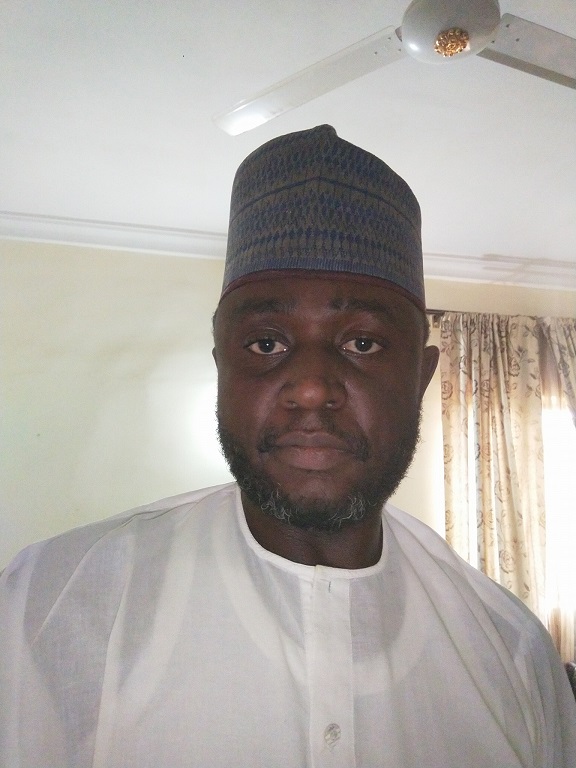
By Abdullahi Mukhtar Algasgaini

Community Policing is a strategy that focuses on developing relationships with community members. It is a highly personal philosophy of full-service policing in which an officer patrols the same area for some time and develops a partnership with citizens to identify and solve problems.

Community Policing came to Nigeria in 2004. The main aim of launching the pilot scheme was to bring the police closer to members of the public and, by extension, get prompt information that the earlier concept of this initiative resulted in the formation of vigilante groups in communities and cities across the country, ostensibly to combat rising crime waves in the face of the police’s inability to deal effectively with armed robbery and other violent crimes.

Examples of such operations include Civilian JTF in Borno State, Amotekun in Lagos State, Zemda Initiated by Zazzau Emirate, and police constabulary in some of the majority parts of the Nigerian police headquarters and divisions across the nation.

The question here is, in whose interest is Community Policing? People have different views on the question above, and their answers vary based on their perceptions. Some see it as in the government’s interest, some in the community’s interest, and some in the interest of both parties (government/community).

Firstly, the side of the community will have a more favourable view of their local police department in the sense that they will be able to check the activities of the police department with the help of the newly emerging community police. It is believed that the Nigerian police force often releases or cooperates with criminals. 

Secondly, on the government side, it will help collect more accurate information from residents regarding criminal activity in the community. Many public safety agencies use technology to engage their residents better and boost their community Policing initiatives. 

Implementing community policing will change the policing structure and management. The partnership that develops over time can help the police discover the underlying causes of crime within the neighbourhood. By involving the community, the police have more resources to assist in crime prevention. Officers who familiarise themselves with community members are more likely to obtain valuable information about criminals and their activities.

Some of the benefits of community Policing in Nigeria include: 

First and foremost, community Policing provides an expanded Outlook on crime control and prevention. Working together, the community and the police would proffer solutions to incessant crimes and insecurity. 

Similarly, community Policing improves the quality of life of everyone in a community and helps police work more efficiently and effectively in curbing the outbreak of crime in a community.

Since the implementation of community Policing in 2004, has this policy had any implications (positive or negative)? Given the nation’s current situation, we can say that the policy has achieved nothing because the level of crime is constantly increasing and penetrating all the nooks and crannies of the nation.

Community policing can only be developed in Nigeria if the government and politicians stop using it to achieve their goals. Members must undergo physical and excellent selection before joining vigilante groups, and the community must support the people who sacrifice themselves for it.

The ripple effects of small acts of kindness

By Usman Muhammad Salihu

In our busy lives, we often overlook a fundamental truth: sharing even the little we have can bring blessings, not only to others but also to ourselves. It does not require grand gestures; sometimes, small acts of generosity can profoundly impact lives and brighten the world.

Sharing fosters connections between people, whether with friends, family members, or strangers, reminding us of our shared humanity. Offering our time, food, or clothing creates a deep sense of joy and fulfilment, and the knowledge that you have made someone else’s day a little better is a reward in itself.

What may seem insignificant to you could mean the world to someone in need. An extra meal or a warm blanket could make the difference between hardship and comfort for someone less fortunate. Sharing eases others’ burdens, inspiring them and others to pay kindness forward, creating a cycle of compassion that can transform communities. It also fosters gratitude, helping us recognise and appreciate our blessings, however small.

Across cultures and beliefs, there’s a common understanding that generosity brings blessings. The universe rewards those who give, often in ways that go beyond material returns. By sharing, we also reduce waste and better use our planet’s resources, contributing to a more mindful and sustainable world.

Even the simplest act of kindness has a ripple effect, touching more lives than we can imagine. It’s not the size of the gift but the spirit in which it’s given. A warm smile, a meal, or a helping hand—each act of sharing has the power to uplift and transform. Never underestimate the profound impact of generosity. In giving, we receive life’s truest blessings.

Usman Muhammad Salihu was part of the pioneer cohort of the PRNigeria Young Communication Fellowship and wrote from Jos via muhammadu5363@gmail.com.

Award-winning essayist Maimuna Abubakar graduated with a first-class from ABU Zaria

By Idris Hassan

A student of Ahmadu Bello University (ABU) Zaria, Maimuna Abubakar, who beat other contestants across the world last time to emerge 3rd in an International Essay Competition organised in the United States of America, has graduated with a first-class degree in Sociology (the third person in the department’s history to graduate with a first-class), after Muminah Musa Agaka, who first broke the 38-year record. 

Maimuna Abubakar is someone I have been mentoring since my time at ABU, Zaria. She’s from Niger State and has always been eager to listen and learn. She lost her mother a few years ago, which was a difficult period for her. 

I recall the last time she asked me if there was anything she could work on, as she often does. I mentioned an essay competition in the US that I wanted her to apply for. She responded, “Sir, that’s for people like you. I don’t think I am a good fit since I know so little.” I laughed and encouraged her to submit her entry. We discussed her ideas critically, and she wrote something she sent me for proofreading. After reviewing it, she submitted her essay and won third place.

Maimuna is a writer, poet, and much more. She graduated as the best student at her level in the Department. Maimuna is also a trained teacher with over five years of experience. During school breaks, she makes dresses, loves writing, and especially enjoys reading. 

She was Amira of the Muslim Students Society of Nigeria (MSSN) ABU, Chairperson of the NSASA Academic Committee, and Secretary of the NSASA Editorial Committee in Zaria. Maimuna aspires to be a Public Health Professional or a Social Psychologist. Given her dedication and achievements, I believe the Niger State government needs to acknowledge and reward her efforts.

Applied Worldwide is a project founded by Stephanie Wilson and Luke Hanna in the United States. It believes in a dynamic sociology in which sociological knowledge is produced and applied to enact positive changes in communities worldwide. 

Applied Worldwide organises an international essay writing competition to inspire students in the field and help foster change through a sociological lens that Applied Worldwide aims to bring. You can also try your luck.

An open letter to the executive governor of Jigawa State

By Dr Najeeb Maigatari

Your Excellency, I hope this letter finds you in good health. As I do not have the means through which my message could reach you, I am compelled to write this open letter to draw your attention to a menace threatening our healthcare system. That is the well-known Japa syndrome that has recently plagued our dear State.

I want to extend my heartfelt condolences to you and the good people of Jigawa State over the tragedy that befell the people of Majia a few weeks ago. This unforeseen event led to the loss of lives of over a hundred people and left several others with varying degrees of injuries. My heart goes out to the bereaving families of all those affected, and I pray that Allah repose the souls of the deceased and heal the injured. Amen.  

Returning to the purpose of writing this letter, Your Excellency, I would like to provide some details about how our dear state used to be. It was undoubtedly one of the states with the best healthcare systems and the highest number of practising medical doctors in Northern Nigeria. At one point, it was akin to a medical hub attracting patients and medical professionals from neighbouring states due to its subsidised healthcare, efficient service delivery, and overall welfare of health workers and patients. 

Since its creation in the early 1990s, the State has made giant strides in providing its citizens with effective and reliable healthcare services. To mention a few, various successive administrations have invested heavily in training Medical doctors and other health professionals, within and outside the country, in varying capacities to ensure effective healthcare delivery to the good people of the state. 

Similarly, Jigawa State has awarded scholarships with bond agreements to local and foreign medical students since time immemorial. It has produced medical graduates from various reputable institutions within and outside the country. In addition, it was one of the pioneer states among its peers to implement the sponsorship of medical doctors through postgraduate medical training programs to further their studies, a policy several other states would later adopt. 

Your Excellency, I can say with immense pride that our healthcare system performance score was impressive overall. It used to be one of the best in the country. The services rendered were affordable and accessible to the masses, and the welfare of patients and healthcare professionals was optimum. For instance, at some point, healthcare workers in Jigawa State were earning more than their federal counterparts. 

Unfortunately, things have now taken a turn for the worse. Our healthcare system is not only ‘underperforming’ below standard by all measures but also one of the worst in the country. We are now a shadow of our past. Jigawa State has a patient-doctor ratio of 1:35,000, far exceeding the WHO recommendation of 1:600, making it one of the states with the worst healthcare systems in Nigeria. This is indeed a troubling situation. 

Over the past few years, Jigawa State has witnessed an unprecedented mass exodus of medical doctors to other neighbouring states owing to poor welfare, overburdening workload, and inadequate health facilities in hospitals, among other factors. Regrettably, this internal Japa syndrome ravaging the state continues to overstretch our already fragile healthcare system. 

To put things into perspective, according to data obtained from the Nigerian Medical Association (NMA) Jigawa State branch from 2013 to 2024, of the 264 doctors who reported back to the state for bonding agreements, only 40 stayed after completing their terms. This is to say that more than 220 medical doctors have left to continue their careers elsewhere because Jigawa is fast becoming a nightmare and a difficult place for medical doctors.

It is worth noting that the state produced over 500 medical doctors (both foreign and locally trained) during the same period. Still, only 214 are on the state payroll, of which only 77 are currently manning the state’s primary and secondary institutions. They are about to round up their bond agreements by the end of the year; 89 are in training as either house officers or doing national service. The state has less than ten consultants and only 12 doctors in residency training. Altogether, fewer than 100 doctors attend to a population of over 7.5 million. 

This data suggests that while the state is doing a good job at producing medical doctors (both local and foreign), its retention capacity is very poor. The State will be left with no Medical doctors in the coming years if things continue at this pace. It has to either employ doctors from neighbouring states or overwork the few that stay to death if at all there would be! Your Excellency, this is only the tip of the iceberg as far as this crisis is concerned. This menace has no end. 

As a citizen concerned about the interests of Jigawa State, I implore you to declare a state of emergency on health in Jigawa State and engage with relevant stakeholders to find a way to end this worsening Japa syndrome, which is wreaking havoc in our dear state.  

The most crucial step to addressing this issue is the urgent need for the improvement of the overall welfare of the few Medical doctors and other healthcare professionals left in the state who are already struggling with chronic fatigue due to overwhelming patient workload. This singular act will not only boost the morale of these weary Medical professionals but relieve them of their burden. Still, it will also attract others from various States to compensate for the acute shortage of Medical doctors in the state. It will also improve the effectiveness of healthcare services delivered to the people. In other words, we can go back to our glory days. 

 Various States have already employed this strategy. Your Excellency, Jigawa State can not afford to lose the doctors it invests heavily in. This could amount to a work in futility! 

In addition, the government should seriously consider domesticating the Medical Residency Training Fund (MRTF), which will help train experts in various medical specialities in the state. This would help address the shortage of registrars and consultants in our tertiary facilities and provide an avenue for a healthy and excellent research environment in the State.

Other measures include equipping our already existing hospitals with state-of-the-art facilities and subsidising healthcare services, especially to women, young children and those suffering from such chronic debilitating conditions as sickle cell disease and chronic liver and kidney diseases. Your excellency, I believe these are some ways that could help end this menace threatening our very existence, help revitalise the State’s healthcare and improve its delivery to the citizens of Jigawa State. 

 Najeeb Maigatari is a Medical doctor. He writes from Dutse, Jigawa State, via maigatari313@gmail.com.

Setting the record straight: Yobe State’s education success

By Ibrahim Muhammad 

The Yobe State Government has made significant strides in revamping the education sector, demonstrating its commitment to empowering future generations.

In 2024, the government invested over N2 billion in learning materials and infrastructure development through its Universal Basic Education Board (YSUBEB).  

According to YSUBEB Executive Secretary Alhaji Isa Shettima, the substantial investment aims to enhance the quality of education in primary and secondary schools across the state. 

Learning materials were widely distributed, including essential items such as pencils, pens, exercise books, school bags, chalk, whiteboards, markers, and more.

Specifically, the YSUBEB distributed 5,600 cartons of pencils, 5,600 cartons of ballpoint pens, and 5,600 cartons of exercise books, among other materials.

Additionally, UNICEF donated 56,000 branded school bags. Infrastructure development was also a key focus area, with the YSUBEB renovating over 100 schools across the state’s three geopolitical zones.

Notable projects included the construction of new classroom blocks, administrative blocks, laboratories, libraries, and offices in various schools.

The government also built two vocational schools in each geopolitical zone. Some of the notable projects undertaken by the YSUBEB include renovating a block of two classrooms, offices, and stores in Government Secondary School, Dagona, and building a block of six classrooms with an administrative block, laboratory, library, and offices in GDJSS, Abba Ibrahim.

The YSUBEB also constructed two classroom blocks, an office, and a store in Bizi Primary School and six classroom blocks with an administrative block, a laboratory, a library, and offices in Government Day Secondary School Buraima. 

Despite these efforts, some reports have falsely claimed that the Yobe State Government has neglected the education sector, leaving schools in a ramshackle condition.

However, these claims are entirely unfounded and misleading. The facts on the ground demonstrate the government’s unprecedented commitment to providing quality education.

The N2 billion investment in learning materials and infrastructure development is a testament to this commitment. It is essential to set the record straight and dismiss these baseless reports.

The Yobe State Government has made overwhelming progress in revitalising the education sector, and this progress should not be obscured by misinformation.

The government remains dedicated to providing a conducive learning environment for its citizens and ensuring that every child has access to quality education. 

The Yobe State Government’s efforts in education are part of its broader development agenda, as outlined in the 2024 Appropriation and Finance Bills.

Are our leaders truly aware of the hardships we face?

By Lydia Usman Maiva

Nigeria’s economic hardship has been a pressing concern for months, which leaves many wondering if the country’s leaders truly grasp the severity of the situation.

Millions of Nigerians struggle to put food on their table, while leaders indulge in luxury. This does nothing except exposing the contrast between the haves and have-nots.

The country’s economic downturn has far-reaching consequences, and it has affected education, healthcare, and overall well-being. 

Citizens are forced to make difficult choices between paying bills or accessing essential services. The soaring cost of living, coupled with dwindling purchasing power, has made everyday life daunting for many.

Families face impossible choices between basic necessities, and leaders’ opulence exacerbates this disconnect. This raises questions about the government’s priorities and commitment to alleviating suffering. 

The impact on citizens is dire, with many resorting to buying half portions of items due to high costs. The struggle to afford three square meals has become a harsh reality for numerous households.

Experts predict that Nigeria’s economy will continue to face pressures, including potential shocks from economic and environmental trends. 

To address these challenges, policymakers must consider key areas for intervention, such as tackling unemployment through targeted interventions focusing on job creation, skills development, and entrepreneurship in sectors like agriculture, manufacturing, technology, and renewable energy.

Additionally, promoting inclusive economic growth by prioritising social safety nets, access to quality education and healthcare, and empowerment of marginalised communities is crucial. 

Strengthening security through comprehensive approaches integrating law enforcement, intelligence, community engagement, and regional cooperation to address insecurity is also essential.

The World Bank recommends policy options to reduce inflation, protect the poor and vulnerable, and support economic recovery. 

By addressing these challenges, Nigeria can work towards a more sustainable and equitable economic future. Nigerians demand empathy, accountability, and tangible solutions to address the economic downturn.

The future hangs in the balance, and leaders must rise to the challenge, demonstrating genuine concern for citizens’ welfare. Luxury enjoyed by leaders is a slap in the face to those struggling. 

In a nutshell, I urge President Tinubu, all relevant stakeholders, and our various representatives to join forces and take immediate action to alleviate the debilitating problems afflicting Nigerians. It is unacceptable that a simple three-square meal has become a rarity in many households across the country.

The time for rhetoric is over; Nigerians need tangible solutions, empathy, and accountability from their leaders.

We cannot afford to continue down this path of hardship and inequality; the future of Nigeria depends on it. 

Lydia Usman Maiva is a student in the Department of Mass Communication, University of Maiduguri.

A work template for the new minister of livestock development

By Zayyad I. Muhammad

Nigeria boasts one of the largest cattle populations in Africa, ranking among the top on the continent. Over 20 million cattle are primarily concentrated in the northern regions, including states such as Adamawa, Borno, Kaduna, and Kano. 

The new Minister of Livestock Development, Idi Mukhtar Maiha, faces a complex and tasking job in three key ways.

First, the newly established Ministry of Livestock Development has high expectations from Nigerians. The ministry oversees and develops livestock policies, manages animal health and disease, improves breeds and genetic resources, enhances farming and production systems, supports rural livelihoods, and modernises livestock marketing and trade.

From an informal perspective, expectations will focus on how the minister will transform the lives of nomadic cattle herders from uneducated and nomadic to more settled, everyday lives while also addressing the farmer-herder conflict and the notorious practices of cattle rustling, banditry, and kidnapping for ransom, which are prevalent among some cattle herders.

Mukhtar’s second challenge lies in his background; he has spent most of his career as a technocrat at NNPC. Whether he knows it or not, he will inevitably experience the bittersweet realities of politics. Once appointed as a minister, one automatically assumes a political role. Mukhtar must navigate this transition, deciding whether to embrace full-time politics or attempt to balance his technocratic expertise with his political responsibilities. 

Furthermore, few people in Adamawa know him despite his former role as Managing Director of the Kaduna Refinery, a Petrochemical Company (KPRC). As a result, many may perceive him as elitist and aloof, particularly in an inherently people-centred position.

Mukhtar’s third challenge stems from the performances of his two predecessors from Adamawa, Mohammed Musa Bello and Prof Mamman Tahir, which many Adamawa people view as less than stellar. Their tenures have left a mixed legacy, leading to scepticism about Mukhtar’s ability to bring about something new and different. 

To distinguish himself, Mukhtar must work diligently to establish his identity and a positive track record. This task is particularly crucial, as he shares several traits with both former ministers, which could lead to assumptions about his capabilities and approach. By demonstrating effective leadership and addressing the needs of the people, Mukhtar can overcome this challenge and build a reputation that sets him apart.

With an impressive CV as a technocrat and practical knowledge of livestock management, Mukhtar’s Zaidi Farm stands out as a well-integrated enterprise that applies world-class best practices in animal husbandry. Given this background, we expect him to introduce innovative approaches to livestock management by benchmarking against countries renowned for their success in this field, such as New Zealand, Australia, the Netherlands, Denmark, Brazil, Ireland, and the United States. These nations have excelled in implementing efficient and sustainable livestock practices, utilising advanced genetic research and technology to enhance productivity. However, Mukhtar’s journey will be sweet and bitter, mainlydepending on his approach to leadership, public relationships and policy implementation. By embracing collaboration and leveraging global best practices, he has the potential to make significant strides in transforming the livestock sector.

Zayyad I. Muhammad writes from Abuja, zaymohd@yahoo.com

In his place, many more Sinwars would rise

By Ismail Obansa Nimah

The Israeli military killed Yahya Sinwar.  A picture of Sinwar in a military vest, with a sniper shot at his forehead, with one arm cut off and the other holding an AK-47 riffle, his body under enormous concrete from a collapsed building, circulated online.

Hamas confirmed the news of Sinwar’s death, fighting alongside his comrades for his people, his land, his home and the liberation of Palestine. Until his death, Israel had tagged Yahyah Sinwar as the most wanted man in Gaza and, by extension, the whole of Palestine. The Israeli military has been on the hunt for him for years. 

Born in Khan Younis refugee camp in 1962, after the infamous massacre and Nakbah that saw the newly formed state of Israel exile more than 750,000 Palestinians from their homes and livelihood, Yahya Sinwar spent his life as a refugee in Gaza and was quick to join the Palestinian resistance forces, after being a witness to the miserable treatments and denial of the rights and freedom of Palestinians by Israel.

He lived through the 1967 Arab-Israeli war and was a bedrock in the Hamas resistance movement founded 20 years later, in 1987. 

In 1989, he was arrested by Israel on the accusation of orchestrating the killing of two Israeli soldiers and was given four life sentences. Sinwar went on to spend 22 years under brutal conditions in an Israeli prison. He maximised his stay in prison by becoming fluent in Hebrew and acquiring various diplomas aimed at understanding the Israeli colonial entity, Jewish history and Zionism. He was subsequently released following a prisoner swap in 2011 and was elected the leader of Gaza following Hamas’s political win in the 2007 Gaza elections.

Until Ismail Haniyeh’s death, Yahyah Anwar was the de-facto ruler of Gaza and was second in command regarding Hamas after late Hamas Chief Ismail Haniyeh. Following the assassination of Ismail Haniyeh in Tehran in August of this year, he became the ultimate leader of Hamas and has, since October 2023, led a principled and steadfast fight against Israel in its war in Gaza.

In the last year, the Israeli government has manufactured countless falsehoods and made widespread propaganda about its war on Gaza, Hamas and the leadership of Hamas, particularly Yahyah Sinwar. Israel, through numerous outlets, claimed that Sinwar was hiding in tunnels, surrounding himself with wealth and using hostages and Palestinian civilians as human shields. And even though these claims have been debunked countless times, the Israeli military became the ultimate belier of itself when it released a droned footage of Sinwar’s last moments. 

The intent behind the footage release was to mock Sinwar and the entire Palestinian resistance, but the footage did the opposite. Instead, it propelled Sinwar to become a legendary figure. It showed Sinwar, sitting honourably on a couch, putting on a keffiyeh, debris around with his comrades down; after being fired on by a tank, a missile and sniped on the forehead, he used his remaining arm, in one last act of defiance to throw a stick at the filming drone. He was side by side with his comrades on the front lines, defending his lands and fighting for the liberation of Palestine and every Palestinian.

Sinwar’s entire life has been an inspiration and a huge source of strength for the resistance axis against the apartheid state of Israel. His story bears many sacrifices and losses for the Palestinian front. He was born a refugee and brutally raised as a refugee in his land amidst an unwavering magnitude of oppression and apartheid. 

Regardless of what the U.S.-led West and Israel wanted the world to believe about Sinwar, he died a hero, one that his greatest adversary inadvertently publicised. Even in his death, he continued to inspire the many more Sinwars who would ultimately rise in his place.

Ismail Obansa Nimah wrote via nimah013@gmail.com.

The suspended Ɓagwai Irrigation Project debacle

By Muhammad Ahmad Iliasu.

In May 2021, the Federal Executive Council (FEC) approved a sum of ₦3.76 billion as augmentation for the existing and ongoing expansion and completion of the Ɓagwai Irrigation Project on Watari Dam in the Ɓagwai local government area of Kano state.

The project was awarded to Messrs Ɗantata and Sawoe Construction Company Limited, mobilised in 2006 for an initial period of two years. The scope of work was a special irrigation scheme involving 872 hectares. The contract had been ongoing but ran into many problems and was suspended at some points due to lack of funding. Thus, the audit and seeking ₦3.76 billion augmentation bring the new contract sum to ₦9.2 billion from ₦5.4 billion, inclusive of 7.5 per cent VAT, with an additional completion period of 24 months plus another 12 months liability period.

Additionally, the then Minister of Water Resources, Hon. Sulaiman Adamu, told State House correspondents after the virtual FEC meeting presided over by Vice President Yemi Osinbajo at the Presidential Villa, Abuja, “We hope that these projects will be implemented in earnest and hopefully, we will be able to get them completed by 2023 for the overall benefit of the people.’’

Unfortunately, as of today, November 10, 2024, the project has not progressed further and has been declared suspended by those who have close contact with the contractors, despite the open revelations made by the former Minister of Water Resources in 2021.

Revealed in a WhatsApp conversation between a stakeholder in the Ɗantata and Sawoe company and one of the farmers desperately praying for when the project will be revisited and completed, the reason for the suspension of the irrigation project in Ɓagwai is the unprecedented instability in exchange rates.

In a fresh setback encountered by the Ɓagwai irrigation project once again, the augmentation, the stakeholder said, was approved when ₦398 was approximately exchanged for $1. But since then, the rate has astronomically risen to ₦448 for $1 in 2022, ₦638 for $1 in 2023, and ₦1,724 for $1 in 2024, respectively. The worsening of the local currency is the single most determining factor between the project and any identifiable progress. If any activity were to resume, the federal government had to revise the audit and account for the unprecedented change in the project cost.

Meanwhile, as the project hits another roadblock, the hardworking farmers, who might not understand the causes frustrating their industry, have grown severely disturbed by their inability to use their farmlands, which are the construction site of a long-suspended project. Many are subsistence farmers who rely on the place to feed their families. Another massive number of farmers rely on the place to make a living.

The anticipation of the continuation of the project hindered most of the farmers from cultivating the farmlands because they didn’t know when the project would resume, and they feared having their season interrupted. The condition of the farmlands, as caused by the start of the suspended canalisation, has rendered most of it uncultivable.

Most farmers have grown confused and fear that the Watari Dam Renovation project in Ɓagwai by the Kano State Government in collaboration with the Islamic Development Bank, has taken the spotlight away from the Federal Government’s expansion of the irrigation sectors. The project has also misled stakeholders into thinking it is ongoing,when indeed it is far from being so. And they’re right to be concerned.

The euphoria surrounding the Watari Dam Renovation was overflogged during the 2023 election campaigns and gubernatorial debates. Unintentionally, this distracted the public from the real ghost in the machine: very few people knew that the projects were separate and dissimilar.

The Kano State’s collaboration with Islamic Development Bank targets renovation of the Watari Dam, servicing the canals, and taking water to the farmlands. The Federal Government’s expansion targets increasing the irrigation sectors from six to eight: Sector One has 160 hectares, Sector Two has 168 hectares, Sector Three has 217 hectares, Sector Four has 72 hectares, Sector Five has 273 hectares, and Sector Eight has 73 hectares have all been completed.

It is Sector Six, which has 257 hectares, and Sector Seven, which has 343, whose work has sadly been suspended. These are scattered into meters owned by beleaguered subsistence farmers and small-scale producers. A group of people are so determined and hardworking that they get out of their skin to produce an incredible quantity of agricultural output.

Each hectare is estimated to produce 2.2 tons of maize or 3 tons of rice per farming season, and the irrigation system allows for four farming seasons annually. The monetary value of the agricultural output, assuming each hectare produces maize throughout the year, stands at ₦3.168 billion. And if all the hectares produce rice throughout the year, the estimate stands at ₦4.3 billion — which is a yield that’s far higher than what’s required to complete the project, all of which is being lost because the project hasn’t been completed, and worse yet, suspended.

When completed, the project’s multiplier effect will cut across revenue generation, job creation, stimulation of the rural economy, food production, poultry and cattle herding, stimulation of rural infrastructure, and discouraging the rampant rural-urban migration.

In the end, it certainly aligns with President Bola Ahmed Tinubu’s Renewed Hope agenda that is focused on diversification of the economy and revenue generation, among others, through domestic production and self-sufficiency in food production, to revise, revisit, and ensure spinal projects like the suspended Ɓagwai Irrigation Project are completed. Failure to do that will not only leave beleaguered farmers in a desperate state but also mean a project of national importance is left to rot away without remorse for the massive taxpayer resources invested in it already.

I’m very confident that such can never be the wish of the government under the watch of the president, Bola Ahmed Tinubu, the Governor of Kano State, Engr Abba Kabir Yusuf, the Minister of Agriculture and Rural Development, Hon. Abubakar Kyari, the Minister of Water Resources, Hon. Joseph Utsev, the Minister of Budget and Economic Planning, Hon. Atiku Bagudu, and the senator representing Kano North in the Red Chamber, who doubles as the Deputy Senate President, Hon. Barau I. Jibrin CFR, the member representing Ɓagwai and Shanono in the Green Chamber, Hon. Yusuf Badau, and the member representing Ɓagwai and Shanono in State House of Assembly, Hon. Halilu Ibrahim Kundila.

MA Iliasu is an economist writing from Kano. He can be reached via muhada102@gmail.com.

The state of Nigeria’s public health sector 

By Fatima Dauda Salihu 

Health is a fundamental priority that any government should address. When citizens are healthy, the entire state benefits. However, it is disheartening when the government neglects its health sector. 

The Federal Government of Nigeria has increased its expenditure on public health over the years to enhance public health outcomes, but much still needs to be done. Public health requires ongoing efforts, and continuous improvement remains a crucial goal. The numerous and serious healthcare challenges in the country arise from poor health infrastructure, inadequate education, hygiene and sanitation issues, and extreme poverty and hunger.

The Health department plays a critical role in educating people about unforeseen infectious diseases and interventions for alleviation. 

Public health infrastructure provides communities, states and the nation as a whole with the ability to prevent diseases, promote health and respond to both ongoing and emerging challenges to health. 

Since its independence, Nigeria’s health sector has been named one of the worst in Africa. Issues include lack of coordination, fragmentation of services, scarcity of medical resources, including drugs and supplies, inadequate and decaying infrastructure, inequity in resource distribution, and access to care. 

According to the National Institute of Health, the Nigerian healthcare system is poorly developed and has suffered several setbacks, especially at the local government level. No adequate and functional surveillance systems have been created;hence, there is no tracking system to monitor the outbreak of infectious diseases, bioterrorism, chemical poisoning, etc. 

Nigeria’s hospitals and emergency services do not meet world standards. The availability of healthcare institutions and professionals is limited, while long distances travelling for healthcare are not affordable. The healthcare costs and expenditures related to the prevention and treatment of diseases are rising. 

Many primary healthcare centres across Nigeria are dilapidated, have low staff, have poor electricity, and have unclean water, and they cannot efficiently serve people in rural areas. Many pregnant women still seek the services of traditional birth attendants for delivery, and even many children in rural areas miss out on routine immunisations, which are meant to be one of the responsibilities of effective primary healthcare centres. 

Due to the poor state of the health sector, there has been a constant mass migration of doctors and health professionals out of the country. This relates to ongoing strikes and poor working conditions in healthcare delivery centres. The challenges faced by Nigeria’s healthcare system include inadequate hygiene and sanitation, insufficient financial investments, and alimited workforce and facilities. 

Establishing healthcare institutions and insurance schemes, increasing the workforce, and improving hygiene and treatment conditions can help address these challenges. Implementing policies for maternal health and healthcare reforms can lead to better health outcomes. 

Fatima Dauda Salihu wrote from Bayero University, Kano.