Opinion

Why unyielding women are always a failure

By Abdullahi Mukhtar Algasgaini

Stubborn women fail in their marriages, and even in their relationships with relatives. Women who lack emotional intelligence and flexibility in dealing with people around them, are the biggest failures in their marriages and their lives.

Why? She enters into an egoistic tug of war with her husband, and prefers the voice of her ego to try to overcome him, and in fact she fails before the ego of her husband and the ego of those who are around her, because men become more stubborn in front of a stubborn wife and stubborn sister, and they become more gentle in front of a submissive woman.

A headstrong woman thinks that she can win while insisting on her opinion, and she can stand in front of any opposition. She forgets that even if she wins by her obstinacy in her opinion and stand, she loses the heart that was loving her and caring for her.

Many narrations and wise proverbs in all the cultures have praised an easy-going, soft, friendly, patient and enduring woman.

Even the Messenger (peace and blessings be on him) and the Companions after him, recommended and praised a woman who respects her husband and speaks with softness and wisdom, and in turn he will love her and never leave her.

The woman who will obey her husband and stoop to let the storm pass; she is the wise, rational woman who thrives, and holds the family together.

The woman who stands like an unyielding dry stick is the one who breaks, suffering irreparable damage.The uncompromising woman clings to her opinion. She tries to constantly perpetuate the illusion of her victory: I win and you lose, I am right and you are wrong. Such a woman destroys herself before destroying others. And she lives a life of sorrowful despondency in this world and the hereafter.

Islam, modern Jihad, and democracy: A short reflection and appeal

By Ibraheem A. Waziri

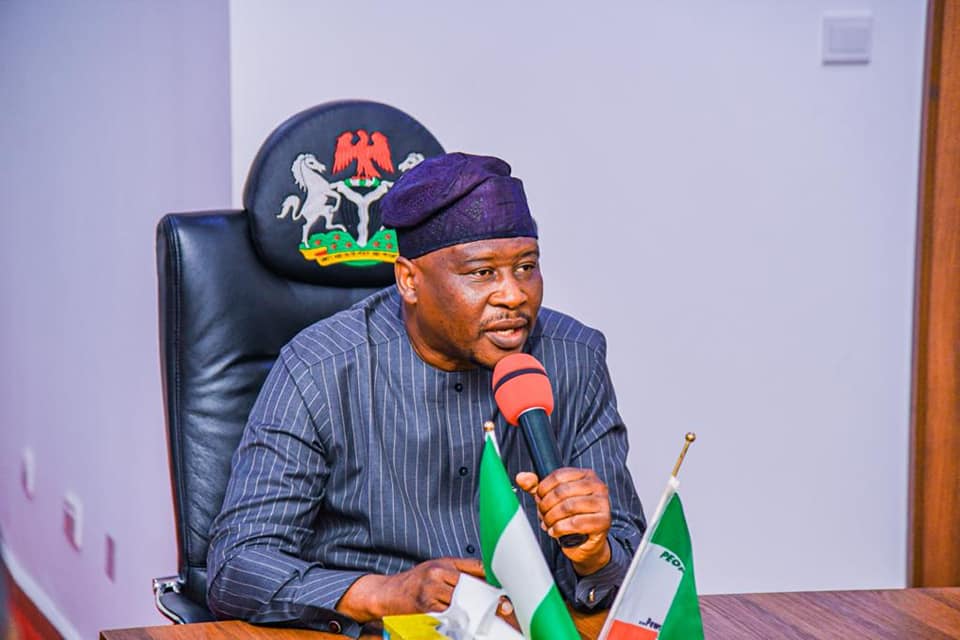
Lately, I have been reflecting deeply on Islam and its legacies, particularly in light of the growing rhetoric against democracy by some Northern Nigerian Islamists. Among them are both young and experienced clerics, such as the recently banned Muhammad Muhammad of Niger State and Shaykh Dr Idris of Bauchi, who appeared to endorse the same ideals. 

My reflections have led me to conclude that there is little justification for condemning democracy and the freedoms it provides, nor for advocating or mobilising for physical jihad in today’s world.  

When we examine the origins of Islam, we find that during the early days of Prophet Muhammad’s (peace be upon him) mission in Mecca, his primary focus was the establishment of a peaceful society where his message could be conveyed freely. Allah states in the Qur’an:  

So remind, [O Muhammad]; you are only a reminder. You are not over them a controller.” (Qur’an 88:21-22).  

This underscores that Islam flourishes in environments of peace and freedom, where individuals can practice their faith openly without coercion. Such conditions allow Allah’s promise to manifest naturally:

Indeed, Allah will fulfil His purpose. Allah has set a measure for all things.” (Qur’an 65:3).  

The first instances of physical jihad in Islamic history were acts of self-defence prompted by aggression against the early Muslim community. Even the campaigns against the Persian and Roman Empires were primarily preemptive, aimed at securing the survival of the nascent Muslim polity against formidable adversaries.  

Closer to home, the renowned 19th-century jihad of Shaykh Uthman Bin Fodio in Hausaland was not launched until his students faced severe threats and persecution from the rulers, who sought to prevent them from freely practising their religion. This historical context highlights that jihad has historically been reactive, not offensive, and born out of necessity rather than choice.  

Similarly, the historical example of the Mongol Empire, which conquered large parts of the Muslim world, demonstrates Islam’s transformative power. Despite the initial devastation, peace was eventually restored. As the Mongols settled and engaged with Islamic teachings, they embraced Islam. This illustrates the enduring strength of Islam’s principles when conveyed in a peaceful and conducive environment.  

In contemporary times, a comparable trend is evident. While the colonial era brought conquest and turbulence, democracy and freedom of choice have facilitated a relatively peaceful global environment. This peace has enabled a surge in the appreciation of Islam’s teachings, as seen in the increasing number of reverts worldwide. Allah reminds us:

When the victory of Allah has come, and the conquest and you see the people entering into the religion of Allah in multitudes, then exalt [Him] with praise of your Lord and ask forgiveness of Him. Indeed, He is ever Accepting of repentance.” (Qur’an 110:1-3).  

Today, Islam is the fastest-growing religion worldwide, a testament to its universal appeal and the truth of Allah’s promise. In light of these realities, is there any justification for militant jihadist movements in the modern era? Especially now, with social media and other platforms offering unparalleled opportunities to spread knowledge, values, and Islamic teachings globally?  

I firmly believe that the focus of our time should be on intellectual and spiritual jihad — investing in research, education, and content creation that addresses the challenges and opportunities of our era. Allah emphasises the power of wisdom and thoughtful persuasion in spreading His message:  

Invite to the way of your Lord with wisdom and good instruction, and argue with them in a way that is best. Indeed, your Lord is most knowing of who has strayed from His way, and He is most knowing of who is [rightly] guided.” (Qur’an 16:125).  

This is the jihad of our age: to understand and teach Islam in ways that resonate with the modern world, using peaceful means to inspire hearts and minds toward the truth. 

May Allah guide us on the best paths and strengthen our resolve in this noble endeavour, amin.

Top 7 Kannywood Series of 2024

By Habibu Maaruf Abdu

For the Kannywood film industry, 2024 has been a remarkable year filled with unprecedented achievements and historic milestones. These include Ali Nuhu’s appointment as the Managing Director of the Nigerian Film Corporation and Rahama Sadau becoming part of the federal government’s Investment in Digital and Creative Enterprise Program (iDICE).

However, while the year was marred by the losses of veteran actress Saratu Gidado (Daso) and singer El-Muaz Birniwa, it also witnessed the emergence of fresh talent and a notable improvement in film quality. Big-budget productions like Nanjala and Mai Martaba achieved significant feats; Nanjala debuted in Turkey and the United States, and Mai Martabawas selected as Nigeria’s official entry for the 97th Academy Awards. Moreover, Sadau’s film Mamah was screened at the prestigious Red Sea Film Festival in Saudi Arabia.

Interestingly, despite the above-mentioned films’ successes, television and web series topped the charts in popularity throughout the year. Established series, such as Labarina and Manyan Mata, continue to reign supreme, with the latter’s instalment (Season 8, Episode 6) amassing over 1 million views on YouTube within 24 hours of its release in January. This success has paved the way for numerous new series. The following are the top 7 among them. Please note that the established series were not considered for this list.

1. Garwashi

Garwashi is arguably the most topical and stimulating series of the year. It confronts critical social issues such as widowhood, moral decay, reckless marriages and irresponsible parenting. The story mainly centres on Asmau/Ma’u (Fiddausi Yahaya), a widow who faces unrelenting adversity due to the cruelty of her in-laws. Her situation is further exacerbated by the greed and heartbreaking indifference of her father. The series is captivating and deserves praise for its engaging writing, intense drama, and realistic portrayal of everyday life. The actors deliver convincing performances, particularly Abubakar Waziri (alias Bado), who plays Asmau’s irresponsible father. His rendition of the Sokoto Hausa dialect is ultimately impressive. 

Additionally, the roles of Baba Lami (Balaraba Abdullahi), Gaddafi (Kabiru Sani), and Sameera (Aisha Humaira), among others, are outstanding. Co-produced by Umar UK and Fauziyya D. Sulaiman and directed by Yaseen Auwal, Garwashihas garnered widespread acclaim, generated buzz, and trended on social media. Other cast members include Yakubu Muhammad, Maryam Yahaya, Isa Adam, Hadiza Muhammad, Sabira Mukhtar, and Rukayya Sharada.

2. Gidan Sarauta

Premiered in 2023, Gidan Sarauta achieved greater popularity in 2024, becoming one of the year’s top series. This is because its episodes get no less than 600,000 views on YouTube weekly. The story follows a complicated love triangle involving two royal brothers, Prince Bello (Umar M. Shareef) and Prince Mu’azzam (Garzali Miko), and a poor daughter, Bintu (Mommy Gombe). Prince Bello initially hides his feelings for Bintu, treating her like a sister and even arranging her marriage to his brother Mu’azzam. Meanwhile, he marries Gimbiya Fa’iza (Aisha Najamu), his cousin whose father (also his uncle) holds the throne. The two couples live together in the royal household, where Bello and Bintu’s bond deepens despite being married to different partners. The drama escalates as Mu’azzam discovers their secret romantic exchanges, leading to intense confrontations and emotional fallout. The series features other compelling characters, such as Alhaji Mai Dala (Rabi’u Rikadawa), his wayward son Kaka (Daddy Hikima), and Tafida (Bashir Bala Ciroki), among others. It was produced by Abubakar Bashir Maishadda and directed by Ali Nuhu.

3. Allura Cikin Ruwa 

2 Effects Media’s Allura Cikin Ruwa revolves around Na’imatu (Ruky Alim), a charming young woman at the centre of attention with numerous men vying for her love. These include Maina (Yakubu Muhammad), Sadiq (Isah Feroz Khan), Dr Hashim (Adam A. Zango) and Alhaji Hadi Makama (Sani Danja). As the title suggests, Na’imatu is like a needle in a vast ocean, which Hausa wisdom says “only the fortunate can find”. Alhaji Hadi is that fortunate one, but he divorces her two days after marriage, adding complexity to the plot. Other characters in the series, such as Maina and his former wife (Fiddausi Yahaya), have interesting backstories that add depth to the narrative. The series features an ensemble cast, stunning visuals and evocative background music. It is also packed with twists and turns, which may hook the audience despite some minor flaws. Sani Danja produced the series, while Yakubu Muhammad directed it. Other casts include Aisha Najamu, Tijjani Faraga, Daddy Hikima, Amal Umar, Ramadan Booth, etc.

4. Darasi

Produced by Sadiq Shanawa and directed by Abubakar S. Shehu, Darasi stands out for its relatable themes, strong performances, and reasonable production quality. The series follows the lives of fresh graduates: Kabiru (Ibrahim Yamu Baba), Marwan (Shamsu Dan Iya), Sadiq (Sadik Shanawa), and Salma (Mommy Gombe), each navigating the challenges of life after graduation. However, Kabiru’s story turns dark after being heartbroken by his love interest, Rabi (Amal Umar), who leaves him for a wealthy son, Shehu Hutu (Abdul S. Tynkin). This betrayal drives him to join a secret cult, aligning himself with powerful influencers such as the corrupt politician Alhaji Audu Maye (Ali Nuhu) and the immoral tycoon Alhaji Maliya (Tanimu Akawu). As the story expands, events become intricately woven. The series is quite popular. It garnered widespread pre-release buzz thanks to promotional photos of Mommy Gombe and other cast members wearing NYSC attire.

5. Wata Rana a Kano 

Wata Rana A Kano is a 5-episode mini-series that addresses the pressing issues of thuggery and phone snatching, which have recently surged in certain areas of Kano State. It is exclusive to Arewa24 TV, unlike many other series that are also available on YouTube. The series exposes the heartlessness of corrupt politicians and their role in fuelling gang violence. It also explores the importance of community involvement in aiding security operatives in combating the problem. Besides its timely thematic relevance, Wata Rana A Kano stands out for its top-notch production quality. The cinematography is exceptional, with realistic portrayals of violence and bloodshed that leave a lasting emotional impact. Many viewers have confessed to crying during a particular scene where the character of Abba Jago (Daddy Hikima) kills Hassan (Adam A. Zango). Produced by Abubakar Bashir Mai Shadda and directed by Kamal S. Alkali, the series also features Mommy Gombe, Umar M. Shareef, Abdurrazak Sultan, Alhassan Kwalle, Abba El-Mustapha, Ali Nuhu, and others.

6. Zafin Nema

Sadik Sani Sadik and Tahir I. Tahir, known for their iconic roles in the Mati franchise as Mati and Lado, respectively, reunite in the topical comedy-drama titled Zafin Nema. The series explores themes of materialism and ambition through the story of two young men, Ilu (Sadik Sani Sadik) and Rabe (Tahir I. Tahir), from a poor background. The duo faces humiliation in their village, Tungan Barau, due to their poverty. Rabe’s father attempts to arrange his son’s marriage to Tala (Mommy Gombe), but her father rejects the proposal despite their familial ties. Similarly, Ilu loses his love, Saude (Maryam Yahaya), to the wealthy Alhaji Dangana (Shehu Hassan Kano). Driven by a desire for wealth, respect, and revenge, Ilu and Rabe embark on a journey to the city. Their misadventures unfold as they foolishly pursue get-rich-quick businesses. The series seamlessly weaves together humour and substance. The actors also deliver excellent performances. It was co-produced by Abdul Amart and Tahir I. Tahir and directed by Yaseen Auwal. Other casts include Al’amin Buhari, Jamila Nagudu, Minal Ahmad, Bello Mohammed Bello, Hajara Usman, Alhassan Kwalle, etc.

7. Umarni 

The series Umarni primarily deals with the issue of wife-mother-in-law relations in Hausaland. It explores the complex and often tense relationships, including jealousy and conflicts between them. In the series, Hajiya Binta (Saratu Daso) reveals her jealousy when her son Ahmad (Bilal Mustapha) prepares to marry his beloved Madina (Bilkisu Safana). She reduces the substantial trousseau he plans to take for the wedding and forbids him from living with his wife in their newly built home. Her intimidation continues while the couple lives with her in the family household. On the other hand, Salma (Sameera Sister) treats her mother-in-law (Asma’u Sani) poorly. Her husband, Sadik (Garzali Miko), initially sides with his mother but is eventually convinced to see her faults. The story evolves as new themes, characters, and conflicts are introduced. The series is generally enjoyable.

Umarni is likely the last film to feature the late veteran actress Saratu Daso. However, the rest of the cast comprises mostly rising stars who nonetheless deliver satisfactory performances. Seikh Isa Alolo directed it, while Naziru Dan Hajiya is the producer. Its second season, which runs during the writing of this review, was co-directed by Tijjani Mai jama’a.

On TSU’s unending strikes and govt’s ‘responses’: A call for stakeholders’ intervention

By Tordue Simon Targema

Taraba State University (TSU), Jalingo is, yet again, under lock and key as a result of industrial actions embarked upon by the Academic Staff Union of Universities (ASUU) on the 5th of December 2024, and all other labour unions in the University subsequently to press home germane issues that bother on effective running of the institution and welfare of its staff.

Ordinarily, this would not have been a hopeless situation completely, as industrial actions could be resolved as soon as they start if well handled. But with the rather harsh and brutal response of the Taraba State government, a solution to the present strike is not in sight.

What are the issues in contention, by-the-way? ASUU-TSU outlined six key demands upon commencement of the strike as follows: (1) absence of pension scheme for staff of the University, (2) non-payment of four months salary backlog, (3) failure of the state government to constitute a Governing Council for efficient running of the University, (4) non-payment of accumulated Earned Academic Allowances, (5) repeated exclusion of the University from minimum wage implementations, and, (6) inadequate funding as provided by the Law establishing the University.

Simple as these sound, all diplomatic approaches by ASUU to prevail on the state government to address them have failed, leaving the Union with no option but to embark on strike. Sadly, the response of the state government clearly indicates that the strike will linger longer than expected.

A quick rundown on the major responses as highlighted by the Chairperson of ASUU-TSU Branch, Dr Mbave Joshua Garba thus far confirms this hunch: first was a statement from the Office of the Special Assistant (to the State Governor) on Media and Digital Communications, Mr. Emmanuel Bello requesting the Union to call off the strike immediately and return to the negotiation table, to which the Union queried: which negotiation table? The same “table” that government officials abandoned since June 2024, and have consistently evaded the Union’s advances for engagements?

Besides, the struggle at this point has passed the stage of “negotiations” but instead, requires appropriate actions on the part of government: do we need negotiation to enact a Governing Council for the University, implement a pension scheme, pay salary arrears/EAA, or implement the national minimum wage for the University? One thus wonders what exactly the SA wanted to negotiate with the Union again.

The second response as reported by the Chairperson came through the Commissioner of the then Ministry of Education, Dr. Augustina Godwin, who told the Union that the Governor has two options for them: to call off the strike immediately and have his audience once he returned to the state, or remain on strike while government takes ALL the time it requires to compute and work on the demands of the Union. ASUU opted for the latter, for who is in a hurry to return to a classroom that holds no hopes for him, both now and in future anyway?

Then came the last move that clearly portrayed government’s confusion regarding TSU and her intractable issues: the (re)creation of the Ministry of Tertiary Education, which hitherto existed in the state but was scrapped by the current administration, and which was there during the past administration, yet could not resolve the stalemates that befall the University.

Clearly, the state government lacks the sincerity of purpose required to resolve the issues in dispute, and this is most unfortunate for an administration that has made access to education its mantra. For instance, one wonders if ASUU must embark on industrial strike before government is moved to constitute a Governing Council without which the University is handicapped in the discharge of its administrative mandates. Yet, ASUU has consistently engaged the government on this issue since the last Governing Council was dissolved in 2023 to no avail.

What about a pension scheme which has become a dirge that staff of the University chant every day, but which all other tertiary institutions in the state have? Today, many staff of the University have put in about fifteen years of service without a penny as pension. When a staff of the University retires, s/he walks home with nothing after years of enslaving but meritorious service to the state.

The most distressing moment is when a staff dies: his family is entitled to a paltry 50,000 naira as death benefit which is recently increased to N70,000. Yes, that is our worth in death without gratuity. Indeed, many staff of the University have switched from other institutions or agencies with functional pension schemes to TSU. Sadly, once they assume duty in TSU, they as well kiss the final “goodbye” to pension and gratuity.

While ASUU’s engagements with the state government towards amicable resolution of these issues hit a stalemate, the final straw came that completely broke the camel’s back, namely: the blatant and cruel exclusion of the University from the N70,000 new national minimum wage implementation in the state. Yes, as I write, TSU staff are being paid using the grossly outdated 2009 salary template for Nigerian Universities! Last year, the state government implemented the N30,000 minimum wage for workers without effecting the consequential adjustment for staff of the University, even as other tertiary institutions in the state were captured which showed the resentment of the government to staff of the University. Then came the FG/ASUU 25% and 35% salary award which was also ignored by the state government with impunity.

The peak of this cruelty has just manifested with the conspicuous exclusion of the University from the 2024 N70,000 national minimum wage implementation in the state in November. Afterwards, all concerned stakeholders put up evasive postures to ignore all efforts by ASUU to push for inclusion of the University.

ASUU Chairperson reported, shockingly, that at a meeting with government representatives, the Commissioner for Finance, Budget and Economic Planning, Dr. Sarah Enoch maintained that the University is not entitled to the new national minimum wage, even as she admitted, funny enough, that there is need for consequential adjustment. This position betrayed, first, the level of confusion that pervades the corridors of power regarding issues in TSU, and secondly, the cruel disposition of critical state actors to the plights of the University’s staff.

Few questions beg for answers arising from the Commissioner’s disposition: if tertiary institutions in the state are not entitled to the new minimum wage, why implement it for the State Polytechnic, College of Education, College of Agriculture, School of Nursing and Midwifery and the School of Health Technology? Why jettison the submission for the University which was computed by the same minimum wage committee in the state? Again, why question the report of a committee that had all relevant stakeholders on board, including from the Ministry of Finance? Does this mean that the Commissioner’s personal judgement supersedes the position of the committee made up of experts from all relevant ministries?

Unfortunately, government has chosen the vindictive path, and has weaponised hunger to chastise the Union back to the classrooms, a strategy that is counterproductive and had repeatedly failed in the past. For instance, November salary was immediately withheld to cow the Union into submission, then came December salary. It is shocking that not even the commemoration of the birth of Christ could move the state government to bury its vindictiveness and release December salary to staff of the University to celebrate the Yuletide with their families and loved ones.

To TSU staff, this is but a familiar maltreatment, a repeat of what happened in 2020, 2022, and now 2024 when staff had to celebrate Christmas without salaries. The tale is same for the Muslim brethren, who can hardly recall when last they celebrated either Eid-el-fitir or Eid-el-Kabir with their salaries paid. This is a dehumanising act that we are already used to, the more reason why the brutal approach is doomed from inception.

Indeed, this is time for all stakeholders in the state to act. TSU is core to Taraba State’s socio-economic advancement, no wonder its motto: “Harnessing Nature’s Gift”. Within the short period of its existence, every sector in the state is a testimony to its profound impact on human capital development. It is, therefore, time for all those who mean well for the state and its progress to speak out and prevail on the government to stop playing the ostrich and do the needful.

Government must, at this point, put on the toga of sincerity towards frantically addressing the lingering issues that constantly ignite industrial disharmony in the University once and for all without further ado. There is no better time to act than now.

Tordue Simon Targema is a Visiting Postgraduate Student in the School of Social and Political Science, University of Glasgow, United Kingdom and teaches in the Department of Mass Communication, Taraba State University. He can be reached at: torduesimon@tsuniversity.edu.ng

Desperate Nigerians need solutions, not tragedies

By Hussein Adoto 

After the palliative distribution tragedy in Nasarawa, I published an article in a national newspaper where I noted that “distribution events, especially those intended to provide aid or relief, tend to draw large crowds, making effective crowd control essential.” 

However, the Nasarawa tragedy wasn’t the first. I wrote: “In February, the Nigerian Customs Service had to suspend its sale of seized bags of rice after seven people died at one of its centres in Yaba, Lagos. Some two years ago, 31 people died at a stampede at the King’s Assembly in Rivers State during the distribution of palliatives to church members; seven more were injured.” I wrote that in March this year.

We are now in December and have recorded at least three stampedes in one week. First is the one that consumed 35 kids in Ibadan. On Saturday, another stampede was recorded in Maitama, Abuja, where at least 10 people died trying to get food. In Okija, Anambra state, three people died due to another stampede. They all went for bags of food and returned home in body bags. Sad.

Sadly, worsening poverty has pushed people into desperately hustling for freebies, to the point of getting stampeded. One would expect that in a war zone like Gaza, where more than 100 people were killed and 700 more injured in a stampede in March this year. Yet here in Nigeria, a country not under siege, our outcomes mirror those of a war zone.

How did we get here? This is one of the most trying periods for Nigerians, and I say this as someone who witnessed the pangs of the COVID-19 pandemic and the recession before it. Although we are told this trying time is a phase that will soon pass, it is dragging on for too long, leaving a litany of crushed souls in its wake. The palliative measures, however meagre, are welcome and necessary to ease our sore bowels. 

Still, the repeated tragedies that trail these events highlight a deeper negligence that we have normalised. Crowd control has always been our problem in Nigeria, and it doesn’t matter whether the event is a palliative distribution, a political rally, or a concert. We tend to be unruly. 

Security officials sometimes shove and cane crowds at political gatherings to make way for VIPs. I saw a video a while ago where a former governor was shoved to make way for the new one. On campuses and in open-air university programmes, the situation is similar. Students shove, push, and tug to no end. It is worse on the days of GNS exams.

Is it not this week that a video of Nigerians crowding aircraft boarding stairs emerged? Even a conference of the Nigerian Bar Association in 2022 ended in chaos as “learned” lawyers scrambled for souvenirs. Now, if we are like that on an average day, how worse can we be when we are poor, hungry, and desperate?

I’m glad the Nigeria Police Force has warned against the unorganised distribution of palliatives. Hopefully, this will tame the gathering of rabid freebie seekers and distributors. It needs to. This cycle of desperation, chaos, and death must end. We can’t keep endangering people in the name of helping them. 

Charity organisations should estimate the number of people they can serve and focus only on those people. Budgeting for 500 people while targeting thousands with publicity campaigns is risky, if not criminally negligent. By focusing on a manageable number of beneficiaries, these organisations can distribute their palliatives without dealing with an overwhelming crowd.

Secondly, they should divide the distribution into chunks. They can do this by age, gender, or community. Instead of gathering everyone, young and old, male and female, into one combustible whole, they can divide them into crowds of tens and fifty instead of hundreds and thousands. That way, even if the crowd gets unruly, the outcome won’t be as tragic as it is. 

The venue itself must also reflect proper organisation. Hosting hundreds of desperate people in a small, gated space with one or two entry and exit points is a recipe for trouble. Crowds kept in areas without shade, water, and seating will likely devolve into chaos. Therefore, managing these factors will prevent an avoidable tragedy. 

Meanwhile, we can’t rely on quick, short-lived palliatives to quench the country’s raging thirst for sustenance. To give Nigerians a modicum of respite, the underlying factors of inflation and underemployment must be addressed immediately.

As desperate times in the country make Nigerians desperate for freebies, we must not allow them to become victims of their desperation. If they don’t see the danger of being unruly, palliative distributors should anticipate and prevent that danger. This starts with treating Nigerians with dignity instead of seeing them merely as a queue to be managed.

Hussein Adoto writes from Ilorin via bellohussein210@gmail.com.

My experience of being robbed in Bauchi City: A ride, a robbery and a resolution

By Mujahid Ibrahim

This life has a strange way of teaching lessons we never expect. To be precise, for at least two years, now, I had grown accustomed to the comfort of moving around the city in my little car. This has already become my everyday norm. But as petrol prices began to rise in the country, as many other fellow lower class citizens, I found myself reevaluating my choices. Moving by car was sometimes cheaper than hiring an okada or a Keke Napep but unnecessary trips were adding up. This pushed us to begin to consider using a bicycle; cost-effective, healthy, and, I thought, practical.

On this particular evening of 22/12/2024, a friend Saifullah had invited me to a dinner in his house, The venue was just about 3 kilometers away, and I decided to leave the car behind and ride my bicycle instead. “Why not?” I thought. “It’s a short distance, and I’ll save money on fuel.” Little did I know, that simple decision would lead to a night I would never forget.

The dinner was delightful—filled with warm conversations with associates, and moments of reflection.

I left there around 8:00pm, I decided to stop by a mini-market at Wunti to pick up a few essentials before heading home.

My mind, however, was already preoccupied with excitement. Earlier that day, an interview with Prof. IBK by Bello Sagir Imam had been released, and I couldn’t wait to listen to it.

Pedaling through the busy streets around 8:30 p.m., I felt the urge to play the interview right away so that by the time I reached home, I reasoned, I would have finished listening and could dive straight into reading a book gifted to me by a dear friend, Tea Isah. It was an insightful work by Ibn Rushd on the relationship between science, religion, and philosophy.

As I passed beneath the Wunti Flyover, currently under construction, I stopped under the bridge to take out my phone and earphones. The area wasn’t quiet; the bustle of vehicles and pedestrians surrounded me. I felt a sense of safety in the activity, but it was short-lived. Suddenly, the sound of a motorcycle pierced through the hum of the evening.

A brand-new white Moto B sped from behind me, its riders veering dangerously close. Before I could react, the motorcycle screeched to a halt, and two men dismounted swiftly.

“Give us your phone!” one of them barked, his voice sharp and filled with menace.

Startled, I looked up, my heart racing. One of them took a step closer, revealing a knife glinting in the dim light. “If you resist, we’ll stab you,” he threatened. The weight of his words left no room for defiance. ‘Ba zan zura ido yaro karami, ya burma min wuka ba.’ I handed over my phone without resisting at the moment.

But they weren’t done. “The bag,” the other demanded, motioning to the small bag I was holding from my shopping trip. I hesitated for a second too long, and the knife came closer. Without another word, I surrendered the bag, my mind racing with a mix of surprise and disbelief.

In moments, they mounted the motorcycle and sped off through the bustling street, heading toward Gwallaga Juma’at Mosque and approaching the Nasarawa Roundabout.

A kind-hearted bike rider nearby noticed what had happened and offered to help. He tried to chase them, but they escaped into the chaos of the night. I stood there, behind the flyover, feeling a mix of helplessness and gratitude to Allah. Though shaken, I was unharmed. My phone, my bag, and my essentials were gone, but my spirit remained intact. I kept pronouncing “Yaa Allah” and repeatedly saying it several times.

What else should I do? I pedaled home in silence, the incident replayed in my mind. I felt anger, sadness, and frustration, but also a growing sense of determination and thankful to Allah for saving me. This wasn’t just about “me”. How many others had faced similar dangers on these streets? I don’t know. How many more would, if nothing changed?

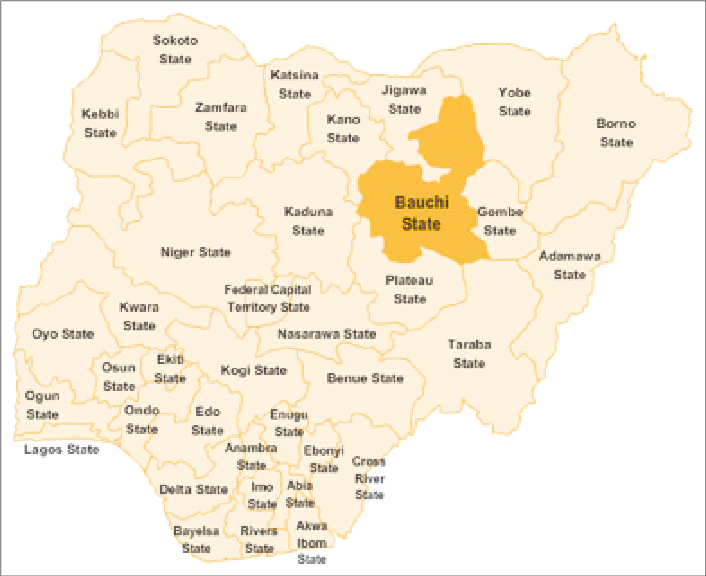
To the Bauchi State Government, under Gov. Bala Muhammad, the “Modern Bauchi City” deserves better. Rising petrol prices all over the country is already pushing many of us to make such tough decisions as trekking long distances, or riding bicycles as in my own case. However, those choices shouldn’t expose us to danger. Even before the completion of the project, we need safer streets, better lighting in vulnerable areas, and a stronger presence of law enforcement. These flyovers are meant to a symbol of progress, not a haven for crime.

To those in authority, especially the security forces, I urge: please pay attention to these areas especially during night hours. To my fellow citizens, I plead: be vigilant, monitor strength movements around you, stop using phones while on streets, unless it becomes necessary and look out for one another. And to those who find themselves in moments of loss or fear, remember; resilience is our greatest strength. Trust Almighty Allah only after doing your best.

That night under the bridge, Uhmm! I lost possessions, but I gained a purpose. Alhamdulillah that it was not easy for them in my case.

Mujahid Ibrahim wrote in from Bauchi and can be reached via littlemujahid4gmail.com.

Save your wedding: Early genotype testing matters

By Usman Muhammad Salihu

Genotype incompatibility continues to disrupt lives and relationships across northern Nigeria, where premarital medical testing is not yet mandatory. The emotional and financial toll it takes on couples, families, and communities cannot be overstated. 

I recently encountered two striking reminders of its devastating impact. First, I came across a trending wedding invitation card on Facebook. What stood out wasn’t the design or details but the heartbreaking update: the wedding had been cancelled due to genotype incompatibility. 

Shortly after, while scrolling through WhatsApp statuses, I saw my sister and classmate, Ummu Kulsum, express her frustration in just a few words: “Ya Allah, why does all this genotype matter?” Her lament instantly reminded me of my brother’s ordeal, where his marriage was called off barely two days before the wedding for the same reason.

These instances are not isolated. They represent a growing crisis fueled by a lack of awareness and delayed action. Many couples only undergo genotype testing at the final stages of their wedding preparations, often when financial and emotional investments are at their peak. 

Discovering genetic incompatibility at such a late stage forces painful decisions: risk the health of future children or cancel the union altogether. In northern Nigeria, where premarital testing is not yet compulsory, such stories are alarmingly common. 

While no religion or culture explicitly prioritises marriage over health, societal practices and insufficient awareness often lead to preventable heartbreaks. Religious and cultural leaders uniquely advocate for early genotype testing as an essential part of marriage preparations.

Sickle cell disease (SCD), prevalent in Nigeria, is one of the most severe outcomes of incompatible genotypes. Couples with AS-AS or AS-SS combinations risk passing this life-altering condition to their children. Living with SCD involves chronic pain, frequent hospital visits, and significant financial strain—all of which could be avoided through proper testing and awareness.

The time has come for a societal shift. Policymakers must work towards making premarital genotype testing compulsory in all northern states. Religious and traditional leaders should advocate for such measures and integrate genotype counselling into premarital counselling sessions.

Healthcare providers and educational institutions must also increase efforts to educate the public on genetic compatibility. Awareness campaigns can normalise discussions about genotype testing, emphasising its role in building healthy families and preventing avoidable heartbreaks.

For families like mine, the trauma of cancelled weddings due to genotype incompatibility is a painful memory. The financial losses and emotional distress are entirely avoidable with early testing and informed decisions. My brother’s experience and countless others highlight the urgent need for collective action.

Love is an essential foundation for marriage, but so is the responsibility to ensure a healthy future for one’s family. By prioritising early genotype testing and raising awareness, we can prevent the heartbreak of cancelled weddings and the lifelong struggles associated with genetic disorders.

The solution is in our hands. We must act now—for love, health, and future generations.

Usman Muhammad Salihu is a PRNigeria Fellow and wrote in from Jos, Nigeria. He can be reached at muhammadu5363@gmail.com.

Debunking the claim that 90% of Nigerians support the controversial tax reform bill

By Adamkolo Mohammed Ibrahim

The Truth Behind Nigeria’s Controversial Tax Reform Bill

Professor Taiwo Oyedele, Chairman of the Presidential Committee on Fiscal Policy and Tax Reforms, recently claimed that 90% of Nigerians support the contentious tax reform bills currently before the National Assembly. This claim is not only misleading but also contradicts the palpable opposition across various sectors of the country. As a university lecturer, researcher, public policy critic, and advocate of public accountability, I find it imperative to refute these unfounded assertions with facts and context.

Professor Oyedele and his team have lauded the proposed tax reform bill as a transformative framework, but it has sparked nationwide outrage, including on social media platforms. Far from the purported overwhelming support, the bill faces staunch opposition from key stakeholders across Nigeria, particularly in the 19 states in northern Nigeria. Among those voicing their discontent are the 19 northern governors, traditional rulers such as emirs, religious organisations, youth groups, business associations, and a myriad of concerned citizens, both in real life and on social media platforms.

Nigeria’s Vice President, Senator Kashim Shettima, who also chairs the National Economic Council (NEC), offered a particularly significant perspective. In alignment with the collective stance of northern governors (drawing from his deep understanding of the region as a proud son of the northeast of Nigeria) and other national stakeholders, he emphasised the importance of ensuring inclusivity and fairness in the proposed tax reform process. 

The Vice President firmly advised against submitting the bill to the National Assembly without wider consultations. During one of NEC’s monthly sessions, a unanimous decision was reached: the bill should be halted to ensure no region or demographic is marginalised in our democratic process. Despite this well-articulated stance, the President disregarded this advice and pushed ahead with the submission of the bill. This move has understandably deepened mistrust and resentment.

Critics argue that the tax reform bill is structured to disproportionately benefit Lagos State to the detriment of 35 other states and the Federal Capital Territory. For northern governors, this directly threatens their ability to sustain basic governance functions, including the payment of salaries and provision of essential services. Governor Babagana Zulum of Borno State is one of the most vocal opponents, warning that the bill if passed, would cripple northern states economically.

Such criticisms are not baseless. Deep inequalities mark Nigeria’s economic landscape, and any policy perceived to exacerbate these disparities inevitably meets with resistance. The tax reform bill appears to reinforce these fears, offering no clear mechanisms to balance its purported benefits with the realities of Nigeria’s diverse socio-economic terrain.

Questionable Survey Claims

Professor Oyedele’s assertion of a 90% approval rating for the bill demands rigorous scrutiny. According to his statement, the survey involved over 3,000 participants, a mix of online and offline respondents, with approval rates ranging from 76% among passive readers to 100% among in-person attendees. These figures raise more questions than they answer.

Who exactly were the survey respondents? What methodology was employed? How representative was the sample of Nigeria’s diverse population? What strategies were used for data collection and analysis? These critical details remain conspicuously absent, leaving the legitimacy of the survey in serious doubt.

Nigerians deserve transparency in policymaking. If this survey indeed reflects national sentiment, Professor Oyedele and his committee should publish the raw data, methodology, and results for independent verification. If they have not done so, this can only be interpreted as an attempt to mislead the public using propagandistic executive intimidation and push through an agenda that lacks popular support.

The Case for Wider Consultation

The NEC’s earlier recommendation to halt the bill and engage in broader consultations was wise and democratic. Policymaking in a pluralistic society like Nigeria requires inclusivity, transparency, and sensitivity to regional and socio-economic disparities. By bypassing these principles, the federal government risks deepening the divisions that have long plagued the nation.

Wider consultation is not just a procedural formality but a necessity. It allows for the incorporation of diverse perspectives, ensuring that no part of the country feels short-changed. Given the widespread criticism of the bill, particularly from regions like the North that stand to lose the most, the government’s failure to heed this advice represents a glaring lapse in leadership.

Furthermore, President Bola Ahmed Tinubu’s policy direction, particularly concerning the contentious tax reform bill, raises critical questions about his government’s approach to governance and inclusivity, especially regarding the northern region of Nigeria. It is a region that not only demonstrated overwhelming support for his candidacy in the 2023 general election but also provided the majority of the votes that secured his presidency.

In the 2023 presidential election, President Tinubu garnered a significant 8,794,726 votes, with the northern region contributing the bulk of this figure. Northern voters cast over 4.9 million votes — approximately 55.7% of his total votes — in his favour. These numbers highlight the region’s decisive role in his electoral victory. Yet, it is disheartening to observe the implementation of policies that appear inimical to the socio-economic interests of this same region.

The adage “do not bite the finger that feeds you” is not only a moral maxim but a practical guide for leadership in a diverse democracy like Nigeria. Unfortunately, recent government actions, particularly the insistence on the controversial tax reform bill, seem to disregard this wisdom. The northern region, often referred to as the agricultural and cultural heartland of the nation, stands to bear the brunt of these policies. Stakeholders, including northern governors, traditional rulers, and socio-political groups, have consistently voiced their opposition, warning that the bill could exacerbate regional inequities and economic hardships.

Rather than recognising and addressing these legitimate concerns, the administration appears determined to forge ahead. This approach not only undermines the trust of a region that played a pivotal role in President Tinubu’s electoral success but also risks alienating key stakeholders whose support is crucial for national stability. It is worth noting that governance is a reciprocal relationship; the trust and support of the people should be met with policies that prioritise their welfare and reflect their collective aspirations.

Every action or inaction in politics has consequences, and the grievances of the northern region should not be underestimated. Leaders must remember that political capital is not an endless resource; it must be replenished through equitable and inclusive governance. President Tinubu’s administration must demonstrate its commitment to Nigeria’s unity and progress by re-evaluating policies that could harm the very citizens whose votes propelled him to power.

The northern region’s contribution to President Tinubu’s mandate was not a token gesture but a profound expression of trust and hope in his leadership. To erode that trust through policies perceived as neglectful or exploitative is to undermine the very foundation of the democratic pact. As the government moves forward, it must prioritise consultation, transparency, and equity to ensure that all regions of the country, especially the North, feel represented and valued. Anything less would not only be a betrayal of the region’s support but a potential threat to the unity and stability of the nation.

The Way Forward

To restore public trust and ensure equitable governance, the Federal Government must take the following steps:

  1. Publish the Survey Data: Nigerians have the right to scrutinise the data underpinning claims of popular support for the bill. Transparency is non-negotiable.
  2. Engage Stakeholders: Governors, traditional rulers, religious leaders, youth organisations, business associations, students, and other demographics must be actively involved in refining the bill. Their insights are crucial for crafting a policy that benefits all Nigerians.
  3. Reassess the Bill: The tax reform must be revisited to address its perceived regional biases. Mechanisms should be introduced to ensure that no state or region is disproportionately disadvantaged.
  4. Strengthen Regional Equity: Any reform should prioritise clear, open, transparent, unambiguous, and sincere equitable distribution of resources and revenue, balancing the needs of economically vibrant states like Lagos with those of less developed regions.
  5. Promote Public Dialogue: The government should organise town hall meetings and public forums across all geopolitical zones to educate citizens about the bill and solicit their input. Relying solely on the National Assembly’s public hearings will not be sufficient to ensure broad-based participation and understanding.

Therefore, the claim that 90% of Nigerians support the tax reform bill distorts reality. The widespread opposition from across Nigeria, including key voices in northern governance, traditional institutions, and civil society, underscores the contentious nature of this legislation. Rather than pushing ahead with a deeply flawed policy, the Federal Government must prioritise inclusivity, transparency, and equity in its approach to fiscal reform.

Cherry-picked survey results, lofty rhetoric, or political propaganda will not silence Nigerians. Democracy thrives on accountability, and the people deserve nothing less than policies that genuinely reflect their collective will and serve their common good. Professor Oyedele and his committee must heed this call, for the integrity of Nigeria’s democratic process and the future of its fiscal stability depends on it.

Adamkolo Mohammed Ibrahim, a Lecturer at the Department of Mass Communication, University of Maiduguri, wrote in from Pompommari Sabon-Fegi, Damaturu, Yobe State, and can be reached via adamkolo@unimaid.edu.ng.

My journey in student politics at Bayero University, Kano

By Bilal Muhammad Bello (BMB)

From a young age, I have been deeply fascinated by politics and dreamed of actively participating in it one day. Growing up in Kano State, I listened to political programs on local FM stations and national media, which nurtured my passion and understanding of the political landscape. This enthusiasm carried over into my academic journey at Bayero University, Kano (BUK), where I discovered opportunities to channel my political ambitions.

Upon gaining admission to BUK, even before lectures commenced, I visited the Students’ Union Government (SUG) Secretariat with a friend in his second year. At that time, the SUG President, fondly known as Third Man, led a vibrant administration. Observing the activities at the Secretariat left a lasting impression on me. I resolved that, despite the challenges ahead, I would one day participate in student politics.

However, during my first and second years, the school management suspended SUG elections and replaced the union with a caretaker committee (CTC). To stay involved, I joined my local government students’ association and other student unions, which allowed me to gain valuable experience and insights.

In 2023, during my third year, the school management reinstated SUG elections, and I seized the opportunity to run for the position of SUG Departmental Senator. Around the same time, my department, the Mass Communication Students Association (MACOSA), was preparing for elections. Since the position of Departmental Senator was part of the SUG elections, MACOSA executives decided to conduct a primary election to streamline the process. The winner of the primary would automatically secure an SUG election form.

I was one of three candidates vying for the position, determined to represent my department in the Students’ Representative Assembly (SRA). Financial challenges posed significant hurdles, but I remained optimistic. My campaign strategy focused on building genuine relationships with students across all levels. From my first year, I had shared resources like past question papers, handouts, and PDFs with my name attached, ensuring I was remembered. Additionally, I provided timely updates about school affairs and assisted newcomers in settling into university life. These efforts resonated with students and garnered their support.

The campaign period was intense. While my opponents distributed campaign materials such as hand fans and handouts, which I couldn’t afford, I relied on the unwavering support of my friends and team members. A close friend, Sa’ad Abubakar, even purchased my election form. My campaign team, including Hajara Abdullahi, Benjamin Jacobson, Umar Farouq, Junaidu Shehu, Abubakar Sadeeq Yahaya, Raheela Usman Buhamas, Sani Labaran and Abdulrauf Abdulrazak Rugu Rugu, worked tirelessly to mobilise voters.

The night before the election, we conducted a face-to-face campaign, visiting hostels such as Sa’adu Zungur (Blocks A, B, and C), Yar’Adua Block, El-Kanemi, Dantata, Dangote, and Ramat. We engaged students directly, explaining our vision and soliciting their support. Influential friends like Al-amin Musa Muhammad, Musa Rabiu and the current MACOSA President, Abbas Ynbs,  played pivotal roles in reaching key student areas with contribution of Fateemah Dabo, Anas Abbas, Alhassan Alhassan Gidan Kara, Khadijah MakkahSanda, Anwar Usman, Abdullahi Mohammed Abubakar, Uzair Adam Imam, Sadi Sada, Yusuf Aminu Yusuf and Adamu Muhammad Dan Hajiya.

The election results were a testament to the power of grassroots engagement and genuine relationships. I emerged victorious, securing the automatic ticket to represent my department in the 24th SRA. I initiated projects that strengthened our department’s presence in the university’s political landscape during my tenure.

Encouraged by this success, I later contested for the position of Faculty Senator and won unopposed, representing the Faculty of Communication in the 25th SRA. This journey was made possible through the unwavering support of friends like Abubakar Ibrahim Shehu, the President of the Department of Information and Media Studies, and the contributions of Distinguished Senator Abdullahi Yunusa Alkah of Law and distinguished Senator Ahmad Mijinyawa of Computing.

Reflecting on my journey, I attribute my success in student politics to a genuine commitment to helping others and fostering meaningful relationships by prioritising the needs of my peers, sharing knowledge, and maintaining mutual respect.

This experience has fulfilled my dream of participating in politics and equipped me with valuable lessons in leadership, collaboration, and perseverance—qualities I intend to carry forward into broader political endeavours.

Bilal Muhammad Bello (BMB) is a Senator Representing the Faculty of Communication 25th Student Representative Assembly SRA-SUG-BUK.

Today’s students’ union and future Nigerian politics

By Nasiru Tijjani

Human society is intricate, comprising individuals from diverse backgrounds and social classes who interact. For society to thrive, it is essential to maintain peace, order, transparency, unity, teamwork, discipline, accountability, sanity, tranquillity, and justice.

However, when corruption, injustice, and criminal activities become rampant, society is bound to collapse. Good leadership, followership, a sense of togetherness, and patriotism are crucial to addressing these issues. 

Established in 1956, the National Association of Nigerian Students (NANS) has played a significant role in Nigerian politics. It advocates for students’ rights and participates in protests for educational growth.

To ensure a brighter future for Nigerian politics, it is essential to revive the spirit of patriotism and collective responsibility among students, leaders, and citizens. We can build a more prosperous and equitable society by promoting transparency, accountability, and justice.

Frequent student demonstrations and unrest have plagued Nigerian universities and other tertiary institutions for years. These protests have often turned violent, destroying public property and resulting in arrests, injuries, expulsions, suspensions, and even the loss of lives. Despite these efforts, students usually return to the same conditions that sparked the protests, with their demands left unaddressed.

Students must form associations and unite under a common banner to address these issues effectively. By doing so, they can discover their strengths and attributes and develop resilience and assertiveness. A well-organized student union allows students to express their opinions, take independent positions, and ask questions on critical issues.

As Jega (2003) aptly noted, students’ unions play a vital role in helping students develop essential organisational skills and strength of character. These skills prepare students for greater responsibilities in their future endeavours.

In its heyday, students’ unionism in Nigeria commanded respect and inspired awe in governments, students, and institution administrators alike. These unions were built on strong ideologies, fostering a culture of intellectual debates and resistance against oppressive government policies and institutional administrators. They fearlessly expressed dissenting views to authorities when necessary, enjoying broad support from the student community.

The primary objective of these unions was to promote and defend the welfare needs of their members. To achieve this, they engaged in constructive dialogue with governments on policy matters and with institutional authorities to secure essential services. These efforts aimed to create a conducive environment for teaching and learning, ultimately enhancing the academic experience.

A Students’ Union is an organised association of students within an educational institution governed by established rules and regulations that guide its operations. According to Isah (1991), the primary objective of a Students’ Union is to promote and defend the collective interests of its members, aligning with the broader societal context.

This underscores the intrinsic connection between education, students, and society. Students can be viewed as raw materials, shaped and refined by institutions of learning. Through this process, they transform, ultimately emerging as finished products, equipped to contribute positively to society.

Students’ union and the future of Nigerian politics

The state of students’ unions in Nigeria is alarming. The desire for leadership positions is no longer driven by a passion for public service but rather by personal gains and fame. This trend is worrying, as it suggests that Nigeria’s future leaders are more interested in self-aggrandisement than in serving the people.

The situation is further compounded by the fact that some student leaders have become professional beggars, presenting awards to undeserving individuals based on their financial contributions rather than merit. The embezzlement of funds generated from such programs is also common.

This decay in students’ unionism poses a significant threat to Nigeria’s future, as many of these leaders will eventually become politicians. If they already exhibit corrupt tendencies, these habits will likely continue in their future careers, perpetuating a cycle of corruption and poor governance ¹.

To break this cycle, students’ unions must return to their core values of promoting the welfare of their members and advocating for positive change. Student leaders must be selfless, transparent, and accountable, demonstrating the moral values and character essential for effective leadership.

The future of Nigerian politics hinges on the quality of leaders from students’ unions. If these leaders prioritize personal interests over service, the country will struggle. Revitalizing students’ unions for their original purpose offers hope for a brighter Nigeria.

Nasiru Tijjani writes from Gwaram Tsohuwa, Jigawa state and can be contacted via tijjaninasiru@gmail.com.