Opinion

Ineffective record breaker 

By Garba Sidi 

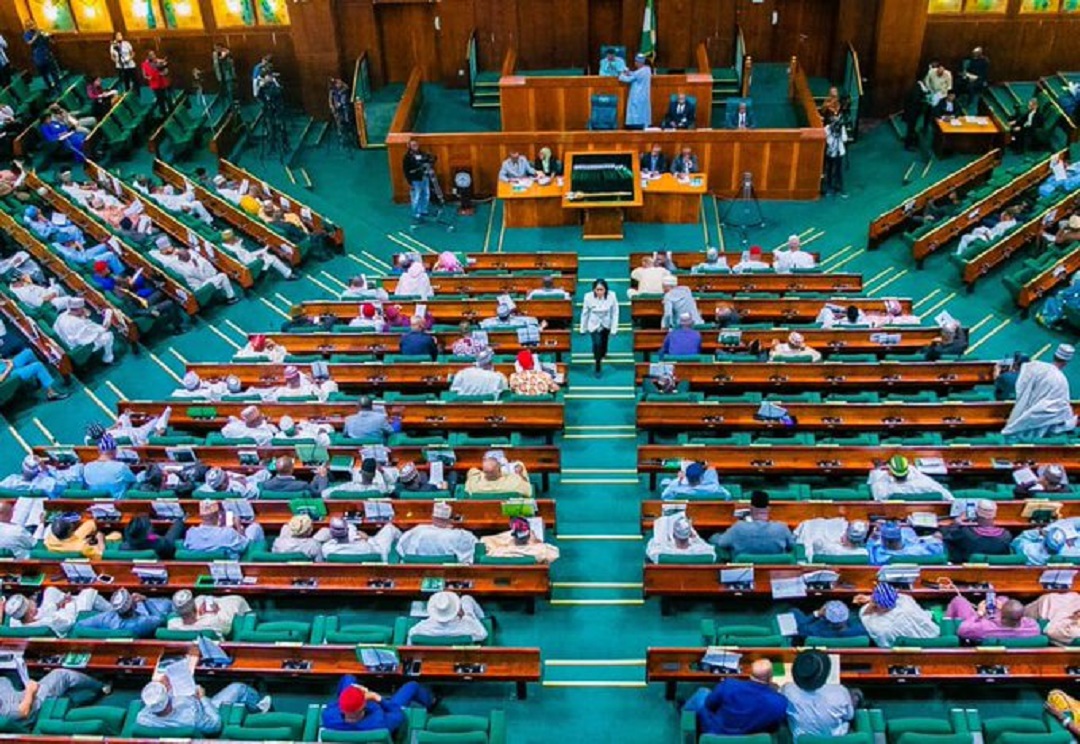
Historically, in Jigawa State, no member had served in the House of Representatives three times before Ibrahim Usman Kamfani Auyo did so. Although there is no tenure limitation for the House of Representatives position in the Nigerian constitution — from Section 65, which states qualifications to contest the position, to Section 66, which outlines details of disqualifications — nowhere does it state the tenure limitation for.

Members like Hon. Musa Sarkin Adar served from 2003 to 2015, representing Kebe and Tambuwal Constituency, and Hon. Aliyu Madaki served from 2003 to 2015, representing Dange-Shuni, Bodinga, and Tureta Federal Constituency, all from Sokoto state, North West. Hon. Muhammed Tahir Mungono served from 2003 to 2015, representing Mungono, Marte, and Nganzai federal constituency, and Hon. Babagana Kingibe served from 2003 to 2011, representing Biu, Kwaya, and Bayu federal constituency, both from Borno State, in the North East. 

Hon. Emmanuel Jime served from 2007 to 2015, representing Makurdi and Guma Federal constituency of Benue State. Hon. Ahmed Idris Wase served from 2007 to 2019, representing Wase federal Constituency of Plateau State, both from North Central.

Hon. Femi Gbajabiamila Served from 2003 to 2023 representing Surulere Federal Constituency of Lagos State and Hon. Lasun Yusuf Served from 2011 to 2019, representing Irepodun, Olorunda, Osogbo and Orolu Federal Constituency of Osun State, both from South West. 

Hon. Nkeiruka Onyejeocha Served from 2007 to 2023, representing Isuikwuato and Umunneochi Federal Constituency of Abia State and Hon. Ifeanyi Chudy Momah Served from 2003 to 2011, representing Ihiala Federal Constituency of Anambra State both from South East. 

Hon. Essien Ayi Served from 2003 to 2015, representing Oron, Mbo, Okobo, Udung-Uko and Urue-Offong Federal Constituency of Akwa Ibom State and Hon. Leo Ogor Served from 2007 to 2023, representing Isoko Federal Constituency of Delta State, both from South South. 

All of these members served more than two terms, as listed above. Section 14(2)(a) of the Nigerian constitution states, “The security and welfare of the people shall be the primary purpose of government. ” This section implies that members of the government, including the House of Representatives, have a responsibility to serve the interests of their constituents. 

As we know, the responsibilities of a member of the House of Representatives as outlined in the Nigeria constitution, are to play a crucial role in creating and voting on laws, they are expected to: assist their constituents, addressing their concerns and helping them navigate government services, members also can speak on the House floor to express their views on legislation, policies and issues affecting their constituents, members vote on bills that impact their constituents, ensuring that their voices are heard in the legislative process, doing all these they must ensure that they are in the best interest of their constituents.

Looking at these responsibilities laid out in the backbone of Nigeria’s leadership framework (Constitution), every good citizen should abide by the rule of law documented in it. Kamfani Auyo initially accepted these responsibilities, but after being sworn in, he turned away from the law and acted in ways that pleased only himself and his party leaders. We have often heard that he gifts cars and other things to these leaders to gain their support so that he can run as he likes. 

Some people in his constituency feel that Kamfani Auyo has not fulfilled the responsibilities that rest on his shoulders. Their criticism concerns his inability to raise motions among his fellow members and address some pressing issues in his constituency. Some argue that his lack of deep western education is the reason for this, but I oppose that notion. 

If we consider how his fellow member from the same state, Hon. Muhammed Gudaji Kazaure, representing Kazaure, Roni, Gwiwa, and Yankwashi, used his unpolished grammar to address his people’s problems, it became a habit for the Speaker of that reign, Femi Gbajabiamila, to ask Kazaure if there was an issue he needed to bring to the House. 

So, why can’t he learn from Kazaure and do what is necessary for the interest of his people? We didn’t vote for him to simply sit and watch his fellow members discuss their people’s problems while there are numerous issues in his constituency, day by day, putting the lives of many at risk—like kidney disease, which is primarily affecting the elderly, leaving their families in grief and sorrow to this day. 

Many federal roads require reconstruction due to the accidents they cause, which result in the loss of limbs and, all too often, lives. Yet, inaction persists, as funds are merely allocated to purchase motorcycles for a select few, while a portion is distributed as small amounts of capital to a few of his political associates, which they then boast about on social media—that’s all. 

Their low IQ prevents their supporters from urging their masters to prioritise lasting solutions for themselves and future generations. They consider the sums he occasionally gives to them—taken from the millions in the constituency’s treasury—sufficient, even though they cannot even cover their basic needs. Their online defenses are full of unpolished rhetoric and spelling errors. He is merely using them for his own benefit. Unfortunately, their cognitive sense is not in a good condition to understand this. 

May God be our helpers.

Garba Sidi wrote via sidihadejia@gmail.com

El-Rufai’s feud with Uba Sani and the lessons learned

By Ukasha Sani Idris

Recently, strange “activism “ by former governor of Kaduna State, Malam Nasiru El-Rufai on his social media platformshas reaffirmed the rumor that he’s no longer on good terms with his successor, the current governor of Kaduna State.

On X (formerly Twitter), El-Rufai responded to a follower’s claim that he would be arrested if he returned to Nigeria.

Malam responded by saying, “ …Your post below refers. I have been hearing these same rumors of arrest, detention and torture in some dungeon in the NSA’s office (where Emefiele was allegedly tortured to resign as CBN governor), since July 2024 when the so-called report of the Kaduna Assembly began circulating…”

El-Rufai VS His benefactors

This development has sparked renewed interest in El-Rufai’s history of betraying his benefactors. Farooq Kperogi’s August 2023 column highlighted El-Rufai’s “serial betrayals,” noting that he turned against former Vice President Atiku Abubakar, who brought him into the national spotlight, and later betrayed former President Obasanjo. In it, he mentioned:

“Of course, El-Rufai later betrayed Obasanjo—and everybody else that has propelled his career or extended favors to him.”

“El-Rufai seems congenitally incapable of being loyal to people who feather his aspirations. “

“What’s happening to El-Rufai now actually pales in comparison to the depth of his serial betrayals of his benefactors. It’s a case of live by the sword, die by the sword.”

Who is the biggest casualty?

When Madina Maishanu questioned Bello El-Rufai on BBC Hausa about the current feud between his father and former boss, the worry lines suddenly appeared on his face. Still, he tried to maintain a neutral stance and replied, “It’s not most desirable, but it’s part of life. Couples divorce. Friends fall out…”

When pressed on whether he would mediate a reconciliation between them, he stated that it is not his responsibility to mediate between his father and Governor Uba Sani; his responsibility is Kaduna North.

He also reaffirmed that Uba Sani is still his boss after reemphasising his strong bond with his father.

Where is Dadiyata?

In another response to the same diehard fan, Malam wrote:

“Be careful, Imran @IU_Wakilii……the Kaduna Kidnapping Team (I will reveal this next week, in sha Allah) will either try implementing the Danbilki Commander (abduct, whip and then offer money) or the Bashir Saidu (abduct and imprison) treatment on you. Please keep away from Kaduna and stay safe wherever you are.”

MALAM shouldn’t only reveal the “Kidnapping Team” without telling us when and how it started and the architect behind this torture, perhaps his information would take us back to Dadiyata’s abduction that occurred when he was the sitting governor of the state where Dadiyata was abducted.

Life Lesson:

“Do unto others as you would have them do unto you.”

  1. El-Rufai’s recent social media outbursts seem to be a reflection of his own bitter experiences. Many are suggesting that he’s facing the consequences of his own actions.
  2. If the biological son of MALAM can maintain a neutral stance, at least in our view regarding this matter, why are the sons and daughters of “Nobody” so eagerly rushing to inherit other people’s feud?

I cherish the virtues of honour, respect, and integrity; however, I am in no way justifying betrayal and distrust. I also pray I never find joy in someone’s downfall.

Ukasha Kofarnassarawa wrote via ukasha_sani@yahoo.com.

Senator Barau I. Jibrin: a visionary leader transforming Nigeria’s legislative landscape

By Nura Abdullahi Bagwai Esq.

The recent recognition from the Senate Press Corps has highlighted Deputy Senate President Barau I. Jibrin’s extraordinary legislative achievements, as he leads the 10th National Assembly with an impressive record of 21 private member bills within just 18 months.

This remarkably unprecedented feat has earned him the Highest Development Driven Bills Sponsorship Award, demonstrating his unwavering commitment to Nigeria’s advancement through legislative excellence.

Senator Jibrin’s legislative portfolio showcases a comprehensive approach to national development, with bills spanning crucial sectors such as education, infrastructure, environmental sustainability, and technological advancement. As the Senator representing Kano North Senatorial District, his crowning achievement came with President Bola Ahmed Tinubu’s this year’s assent to the North West Development Commission Bill, establishing a vital institution for regional development.

In a significant development, the Commission has been allocated over 500 billion Naira to facilitate rapid transformation across the entire North West region. The breadth of Senator Jibrin’s legislative initiatives reflects his deep understanding of Nigeria’s contemporary challenges. His sponsorship of two bills, the amendment of the Agricultural Research Council Act and the Renewable Energy Bill of 2024 demonstrate his forward-thinking approach to food security and sustainable energy development.

Meanwhile, the Occupational Safety and Health Bill, 2024, underscores his dedication to protecting Nigerian workers’ welfare, whilst the National Identity Management Commission (Repeal & Enactment) Bill, 2024, reveals his grasp of digital infrastructure’s importance in modern governance.

Education stands as the bedrock of Senator Jibrin’s transformative agenda, evident not only through his legislative accomplishments but also through his initiatives.

Demonstrating his profound commitment to nurturing future leaders, the Barau I. Jibrin Foundation recently launched an ambitious scholarship programme, sponsoring 70 promising students from Kano State to study postgraduate courses like Forensic and Robotic Sciences, Artificial Intelligence and Cyber Security at renowned international institutions. These scholars received comprehensive support packages, including laptops and essential study materials, embodying his belief in equipping young Nigerians with the tools they need to excel in global academia.

His parliamentary efforts have significantly expanded educational access across Northern Nigeria, notably through the establishment of Federal Polytechnic Kabo and the historic transformation of Federal College of Education, Kano, into Yusuf Maitama Sule Federal University of Education, Kano.
His dedication to constitutional reform is evident through multiple Constitution Alteration Bills, suggesting a profound understanding of the systemic changes needed to advance Nigeria’s democratic journey. The Government Performance and Accountability Bill, 2024, further demonstrates his commitment to fostering transparency and effective governance.

What distinguishes Senator Jibrin’s approach is not merely the quantity of bills sponsored, but their strategic focus on key developmental challenges. The Development Planning and Project Continuity Bill, 2023, for instance, addresses one of Nigeria’s persistent challenges: the abandonment of projects following governmental changes. Similarly, his attention to cyber security through the Cyber Crimes (Repeal & Re-enactment) Bill, 2023, demonstrates foresight in safeguarding Nigeria’s digital future.

As Deputy President of the Nigerian Senate, Senator Barau I. Jibrin exemplifies that effective leadership in the legislature requires more than holding a position – it demands a proactive approach to addressing national challenges through well-considered legislative actions. His records position him as a pivotal figure in shaping Nigeria’s development agenda, particularly in the northern region.

The impact of Senator Jibrin’s legislative work extends far beyond mere statistics. Each bill represents a carefully considered response to specific national challenges, from environmental protection to economic development, from educational advancement to technological innovation.

As Nigeria continues to navigate complex developmental challenges, leaders like Senator Jibrin demonstrate that dedicated legislative work can serve as a powerful catalyst for national transformation.

Bar. Nura Abdullahi Bagwai is a Legal Practitioner and Politician. He wrote from Kano, Nigeria.

From uncertainty to success: The remarkable journey of BUK’s best graduating student

By Fatimat Ibrahim Abedoh 

Students frequently justify their disappointing academic performance by claiming they intended to pursue a different course but ended up in another or that they dislike their current course. Kudirat Oyiza Abdulkareem has disproved this narrative by demonstrating dedication and a strong desire for success.

When Kudirat Oyiza arrived at Bayero University, Kano (BUK), in 2018, she was filled with uncertainty. She had applied for Medicine, but fate had other plans. She was offered Forestry and Wildlife Management, a course she had never even heard of. At that time, the only image that came to her was of lions.

Her mother was the only one who seemed familiar with the course, as her late father had been a forest officer. However, she was too young to remember what he did. Confused and unsure, she considered rewriting JAMB, but her sister advised her to give the course a chance.

Turning Uncertainty into Excellence

The first semester was tough. The weight of studying a course she had not chosen left her unmotivated. Yet, despite her doubts, she ended the semester with the highest GPA in her faculty with 4.72. Instead of celebrating, her sister reminded her that she could do even better. A friend encouraged her to set a higher standard for herself, grading her performance as though she were still in her secondary school, NIOMCO Staff Secondary School, where an “A” started at 80% instead of BUK’s 70%.

With this mindset shift, she achieved a perfect 5.0 GPA in her second semester at the 100 level.

Finding Purpose Beyond Grades

By the 200 level, she had started seeing Forestry and Wildlife Management beyond academics. She became curious about its real-world applications and how to use her knowledge to tackle climate change, food insecurity, and environmental sustainability. This curiosity led her to connect with forestry students worldwide, engage in meaningful discussions, and explore the impact of her field.

Her passion for the environment extended beyond her studies. She traveled across the country, attending various developmental projects and workshops related to her course, visiting six states. She also volunteered with over 10 organisations, mostly remotely, using her skills to address pressing environmental issues.

In addition to her academic work, she co-founded the Forestry and Wildlife Student Association of Nigeria, BUK chapter, where she served as the financial secretary in her final year.

Overcoming Challenges and Staying Resilient

Her journey was not without challenges. Financial struggles loomed over her education, and there were times when different individuals paid her school fees. Even her faculty stepped in to support her. To ease the burden, she applied to teach during school breaks to earn money, an experience she cherished as it aligned with her passion for teaching.

Time Management: A Key to Success

Despite all her engagements and travels, Kudirat Oyiza remained focused on her academics. Her secret? Time management. She was conscious of how she spent her time, balancing her studies, social life, and work commitments.

“I know my brain doesn’t retain half-baked information,” she admits. 

As a slow learner, she needed to review material multiple times to grasp concepts fully. While others might read something once, she would read it three to four times until it stuck. She also knew that her brain wasn’t efficient at night, so she developed a unique scheduled time for mainly reading mornings. 

She always set targets for herself and monitored her time carefully to meet them. During exams, she allocated time based on the number of questions and avoided dwelling on a single one, no matter how confident she was. This strategic approach to time management became her trademark.

A Grand Finale: Graduating at the Top

Fast-forward to 2025, she graduated as the best student in her department, faculty, and the entire university, which speaks volumes about her determination and resilience.

Looking back, she sees her success as a reward for hard work, not just a gift. 

She remains grateful to God, her siblings, friends, mentors, and everyone who supported her through the highs and lows.

But this is just the beginning. She is eager for the next chapter, ready to take on new challenges with the same grit and passion that brought her this far.

She says, “Do the things others aren’t willing to do, and you will get the things others will never have.”

Fatimat Ibrahim Abedoh, a Fellow PRNigeria, writes via abedohzahara@gmail.com.

Ahmad Uthman Muhammad: The epitome of purposeful leadership

By Lukman Dahiru 

Ahmad Uthman Muhammad is a beacon of hope and environmental stewardship in Nigeria. He is particularly noted for his tireless efforts in combating climate change. As the founder of the Purelife Foundation, he has spearheaded numerous tree-planting initiatives that have significantly contributed to reforestation and environmental conservation efforts across the region. His dedication to this cause has not only earned him respect but also the prestigious traditional title of ‘Inuwar Kasar Hausa’ in Daura, Katsina State, a recognition of his commitment to the land and its people.

From a young age, Ahmad has exhibited a rare blend of passion, vision, and action, equipping him excellently for any role in politics. In addition to his environmental efforts, his philanthropy has impacted numerous lives, highlighting his commitment to social welfare. His work with the Purelife Foundation has demonstrated his ability to mobilise communities for a greater cause, uniting individuals from diverse backgrounds to strive towards the common objective of a greener, more sustainable future. 

Ahmad’s venture into politics would mean introducing fresh, dynamic leadership to Adamawa’s political sphere. His understanding of environmental issues is not merely academic but practical, having implemented successful projects that could be scaled up for broader impact. His approach to politics would likely focus on sustainable development, ensuring that economic growth does not come at the expense of the environment. 

Imagine the potential benefits if Ahmad Uthman Muhammad became a federal legislator: his advocacy for policies promoting ecological balance, initiatives for green jobs, and legislation supporting renewable energy projects could have a profound impact nationwide. Moreover, his philanthropy extends his influence into areas like education, health, and social services, where his charitable initiatives could inspire policy changes that address poverty and support the underprivileged. 

Ahmad’s youthful dynamism would likely bring fresh perspectives to education, health, and infrastructure, fostering policies encouraging youth empowerment and innovation. His understanding of community needs, evidenced by his work with the Purelife Foundation, suggests he could push for legislation that enhances social services, supports local economies, and ensures more equitable resource distribution across the country. 

Ahmad’s connection with the community, evidenced by his traditional title, suggests a deep understanding of local culture and needs. This understanding would ensure that his representation would be effective and empathetic. His bid for the House of Representatives is not about personal ambition but about extending his environmental advocacy and philanthropy into the legislative arena, where they can have a wider impact. 

In conclusion, Ahmad Uthman Muhammad embodies a new wave of leadership—one that prioritises the health of the planet alongside the prosperity of its people. His background, achievements, and vision position him as a promising candidate who could effect significant positive change. His philanthropy emphasises his commitment to not only environmental but also social issues, establishing him as a holistic leader for the future.

Lukman Dahiru wrote from Yola, Nigeria, via ldahyru@gmail.com.

Kaduna banditry: The premature peace deal

By Safiyanu Ladan 

The Kaduna State government recently announced that it has entered a peace deal with notorious bandits, particularly in the Birnin Gwari and Giwa Local Government Areas. The aim of the deal is to end banditry in the region. This development is a positive step forward.

For years, bandits have wreaked havoc on local communities, resulting in thousands of deaths and the displacement of millions. Their actions have severely disrupted the socioeconomic activities of these areas.

According to the government, the peace deal is yielding positive results. Relative stability has returned to the affected regions. A cattle market that had been closed for decades has resumed operations, and residents can now go about their daily activities without constant fear of attacks or kidnappings.

However, although relative peace has been observed in the northern part of the state over the past few months, the situation in the southern part is significantly different. Recently, residents of Anguwan Ate in Kachia Local Government Area have staged protests due to the ongoing attacks and kidnappings carried out by bandits.

The resurgence of kidnappings in certain areas of the state following the peace deal is concerning. The government and other stakeholders involved in brokering this peace agreement need to reassess the situation and address any existing loopholes to prevent an escalation of violence.

Safiyanu Ladan wrote from Kaduna.

Ramadan feeding: Misallocation of resources in Jigawa State

By Garba Sidi 

On Monday night, 27th January 2025, the Jigawa State Commissioner for Sports and Information announced to journalists that the State Executive Council approved the sum of ₦4.8 billion for the 2025 Ramadan Feeding Program.  

An estimated 2022 population survey indicated that Jigawa State has approximately 7,499,100 people, making it the eighth-largest state by population. Of this population, 45.2% are below the age of 15, while 49% are between 15 and 59. Females constitute the majority at 50.4%, compared to 49.6% males. Understanding these demographic trends is critical for addressing the state’s challenges.  

I oppose the State Council’s move because the state has many pressing issues that require far greater government attention than a Ramadan feeding program. These funds would be better spent addressing healthcare and education problems.  

According to the National Mass Education Programme Initiative (NMPI 2022), over half of the children (51.1%) aged 6–15 in Jigawa State do not attend school. Additionally, Jigawa is one of the poorest states in Nigeria, with a poverty rate of 87.02%, reflecting severe challenges across economic, health, and education sectors.  

To clarify the situation for Jigawa residents, we must examine how last year’s Ramadan feeding program was conducted. As the Commissioner for Sports and Information stated, the state government contributed 55% of the program’s funding, while local governments covered 45%.  

Jigawa has 27 local governments, each grappling with dozens of unresolved issues. Their grants are insufficient to address even a quarter of these problems, and their chairpersons have done little tangible work for the people’s well-being. If 45% of local government funds are diverted to Ramadan feeding, I doubt they will even have enough to pay workers’ salaries.  

Last year, 609 centres distributed food (Kosai [bean cake], Kunu [porridge], and Kolo rice) during Ramadan. This year, the government intends to increase the number of centres to 630, with each centre providing meals for 300 people daily. Multiplying 300 by 630 results in a total of 189,000 people fed each day. Over 20 days, this programme would reach 3,780,000 people.  

Let us compare this to the approximate population of each local government and the number of beneficiaries:  

Dutse 400,000  

Hadejia 350,000  

Kazaure  300,000  

Ringim 280,000  

Gumel  270,000  

Birnin Kudu 250,000  

Kafin Hausa 240,000  

Gwaram  230,000  

Jahun 220,000  

Gagarawa 210,000  

Maigatari 200,000  

Babura 190,000  

Guri 180,000  

Kiri Kasama 170,000  

Auyo 160,000  

Malam Madori 150,000  

Gwiwa 140,000  

Yankwashi 130,000  

Taura 120,000  

Roni 110,000  

Sule Tankarkar 100,000  

Garki 90,000  

Buji 80,000  

Kaugama 70,000  

Birniwa 60,000  

Kiri Kasamma 50,000  

Miga 40,000  

If this huge amount of money were budgeted for healthcare or education, all Jigawa residents would benefit. Everyone falls ill at some point, and education is essential for ensuring our children live as dignified humans—not animals.  

Garba Sidi wrote via sidihadejia@gmail.com.

Nigeria’s cycle of greed: When will the poor breathe?

By Muhammad Umar Shehu

Nigeria is arguably the only country where the impoverished masses are forced to manage the situation as it is while those in power enjoy life to the fullest. People endure abject poverty, yet our leaders show no sympathy for humanity.  

Nigerian politicians lack compassion, empathy, and conscience for the populace. In this country, the poor must bear the suffering their leaders impose while so-called politicians revel in its intensification. Hunger is a condition no human can survive, yet our leaders compel us to endure it. 

The Nigerian economy is in a dire state because the government is being run by the incompetent, corrupt, unscrupulous, and among the least qualified. One thing I’m sure of is that Nigerian politicians would rather sell their country for power and wealth than pave the way for the poor.

Nigeria’s leaders have turned governance into a tool for personal enrichment. Public healthcare, education, and infrastructure funds vanish into private accounts, leaving citizens to endure crumbling hospitals, overcrowded schools, and impassable roads. While politicians flaunt luxury cars and foreign estates, millions struggle to afford one meal daily. This intentional neglect ensures the masses remain too desperate to challenge their oppressors. 

Coming back to the basics, in the past, before the 2023 general election, the nation’s current president, Bola Ahmed Tinubu, had been weaponizing hope with the slogan “Let the poor breathe”. Do the poor people actually breathe? And when are they going to breathe in this country of plenty?  

Nigerian politicians are used to using fake campaign promises to lobby votes from the poor masses. Still, they cannot be found once the election ends, and those campaign promises become unfulfilled. All my life, I’ve never seen people as shameless as Nigerian politicians. After all the fake promises, they still return during another election cycle with more fake promises. Are you not ashamed of yourselves at all?

Nigerian politicians hoard resources for themselves, raise their own salaries and silence dissent with violence. Meanwhile, families starve, workers go unpaid, pensioners are left starving, and youth lose hope. Until Nigerians unite to reject this cycle of greed, suffering will remain our nation’s legacy.

Muhammad Umar Shehu wrote from Gombe State and can be reached via Muhammadumarshehu2@gmail.com.

Transforming Kano’s education: Governor Abba Kabir Yusuf’s vision for a brighter future

By Hussaini Ibrahim Sulaiman

Education is the bedrock of any progressive society, and in Kano State, a quiet revolution is unfolding under the leadership of Governor Abba Kabir Yusuf.

 Since assuming office, the governor has taken every step to rejuvenate the state’s education sector. 

His administration’s commitment to education is evident in its words and concrete actions, which continue to change lives. His administration has prioritised key reforms in infrastructure, teacher welfare, school enrollment, and vocational training. 

These initiatives have solidified his reputation as a leader who truly understands that Kano’s future rests on the shoulders of its young population.

Recognising the deep-rooted challenges facing Kano’s education system, Governor Yusuf declared a state of emergency in education. 

His administration swiftly addressed the dilapidated state of public schools, teacher shortages, and declining student enrollment. With a clear vision, the governor initiated reforms that have already begun yielding remarkable results.

Budgetary allocations reflect a leader’s priorities. In the 2024 budget, 29.9% of the total allocation was dedicated to education, far surpassing UNESCO’s recommended benchmark of 26%. 

Further demonstrating his unwavering commitment, the state has allocated 31% of its total 2025 budget to the education sector. 

With this substantial funding, the government has embarked on large-scale school renovations, procured essential learning materials, and paid outstanding teacher salaries. 

These initiatives restore public confidence in the education system and ensure that Kano’s children have the resources they need to succeed.

Public schools in Kano needed rehabilitation. The administration launched a massive school renovation project to upgradethousands of classrooms across the state. 

Over 80,000 three-seater desks have been provided, ensuring that 240,000 students no longer have to sit on bare floors. 

New classrooms have been built to tackle the issue of overcrowding. Schools that once faced challenges with insufficient facilities are now reaping the benefits of modern learning environments, enhancing the accessibility and effectiveness of education.

Kano State has long faced the challenge of out-of-school children. To tackle this, the government is constructing 130 new boys’ and girls’ schools to boost enrollment in the next academic session. 

Governor Yusuf’s administration has also launched an initiative to distribute 789,000 school uniforms to pupils in 7,092 public schools. 

At the flag-off of the distribution of over two million education materials—including textbooks, mats, and uniforms—the governor reiterated his administration’s commitment to ensuring that every child in Kano has access to quality education.

The state government is providing a monthly stipend of N20,000 to 40,000 needy girls to promote school enrolment, retention, and completion. 

This initiative specifically aims to ensure that more girls receive formal education, lower the dropout rate, and promote gender inclusivity in education.

A well-trained and motivated teacher is at the heart of any successful education system. Governor Yusuf has approved the permanent employment of 5,500 volunteer teachers under the Better Education Services Delivery for All (BESDA) initiative. 

He has also approved the promotion of over 20,500 primary and junior secondary school teachers.

This move boosts morale and is a strategic step toward retaining and attracting quality educators. By improving teacher welfare and providing capacity-building opportunities, the governor ensures that Kano’s students receive education from highly skilled and dedicated professionals. 

The administration has also cleared backlogs of unpaid teacher salaries and allowances, significantly boosting teacher motivation and improving classroom engagement and student performance.

To further support education, the government has spent N1.3 billion on paying National Examination Council (NECO) and National Board for Technical Education (NBTE) registration fees for 57,000 indigent students. 

This intervention has lifted a huge financial burden off struggling families and ensured that no student is denied access to secondary and technical education due to economic hardship.

Education extends beyond the classroom. The administration has revived 26 vocational and skills acquisition schools across the state. Institutions such as the Kano School of Informatics, Kano State Driving School, and Aliko Dangote Skills Acquisition Centre have been revamped to equip young people with practical skills.

The government plans to create over 63,000 jobs annually through the garment industry. By reopening garment manufacturing clusters in Kano’s 44 local government areas, thousands of young people will be empowered with tailoring and fashion design skills. This approach will provide an alternative pathway for youths who may not pursue conventional higher education.

Governor Abba Kabir Yusuf’s remarkable efforts in education have not gone unnoticed. During the 2024 World Teachers’ Day celebrations, the Nigeria Union of Teachers honored him with the Golden Award for Outstanding Performance in Education Reform. 

This accolade recognises his dedication to improving Kano’s education sector.

Under his leadership, Kano State is experiencing an educational renaissance. His administration’s policies, strategic investments, and people-centered approach have laid a strong foundation for a brighter future. 

The real impact of his reforms can be seen in the smiles of students who now have desks to sit on, the joy of teachers whose hard work is being rewarded, and the hope of parents who can now dream of a better future for their children.

Aiki Sai Me Shi—only the committed can achieve the task. Governor Abba Kabir Yusuf has not only shown commitment but has also demonstrated visionary leadership, courage, and an unrelenting passion for education. Kano’s education sector is on an unstoppable trajectory of growth, and if the momentum is sustained, the state will soon be a shining example of educational excellence in Nigeria.

My love with policy making

By Saifullahi Attahir

If there was ever anything that gave me goosebumps and immense pleasure, it was being surrounded by intellectuals and mature minds absorbing facts and figures about governance, economics, public health, policymaking, national security, and international relations. In such situations I easily lose myself, forgetting almost all other things.

Even at medical school, my best lectures were those with frequent digressions, whereby the lecturer would discuss the pathogenesis of diseases for 30 minutes and later sidetrack into discussing politics, governance, or other life issues. I always enjoyed classes led by Prof. Sagir Gumel, Dr. Murtala Abubakar, Dr. Rasheed Wemimo, Dr. Aliyu Mai Goro, and co. During such lectures, I often observed some of my colleagues disappointment for such deviation. I rather casually show indifference, for I was eternally grateful for such discussions due to the stimulatory effect they had on my mind.

After such classes, I sometimes followed up with the lecturer, not to ask about a medical concept I did not grasp, but to ask for further explanation on policy making, project execution, budgetary expenditures, why African countries are left behind, and similar pressing issues.

In situations where I can’t catch up with the lecturer, I jotted down the questions for further deliberation.

One of the manifest feature I know about my greediness was at reading books. I can open five different books in a day. I lack such discipline to finish up one before another. I can start reading ‘Mein Kampf’ by Adolf Hitler, and halfway through 300 pages, I would pick up ‘My Life’ by Sir Ahmadu Bello, and would have to concurrently read both until the end.

I often scolded myself for such an attitude, but I can’t help myself. The only way to practice such discipline was to at least read two different books in a day. Such was a triumph in my practice of self-discipline. This was apart from my conventional medical textbooks.

To some of my friends, I was called an accidental medical doctor, but actually it was a perfect fate guided by the merciful Lord that I’m studying medicine. For it was only medicine that makes reading books easier for you. Although time is precious in this profession, but one finds it easier to do anything you are passionate about. The daily interaction we have with people at their most vulnerable state was another psychostimulant. Seeing humans suffering from disease conditions is heartachy. Some of the causes are mere ignorance, poverty, superstitions, and limited resources.

The contribution one can give couldn’t be limited to just prescribing drugs or surgical procedures that end up affecting one person. It’s much better to involve one self in to position that may bring possible change to the whole society even in form of orientation.

What also motivated me more was how I wasn’t the first to traverse this similar path. Bibliophiles were common among medical students and medical professionals.

At international level, the former Prime Minister of Malaysia, Dr. Mahathir Muhammad, was a physician. Most of the current economic development of Malaysia was attributed to him. The South American revolutionary figure Che Guevara was a physician. Atul Gawande was an endocrinologist, health policy analyst, adviser to former President Obama, campaign volunteer to former President Bill Clinton, and adviser to USAID/WHO on health policies.

Frantz Fanon was another physician, psychiatrist, racial discrimination activist, and political writer. Dr. Zakir Naik was a renowned Islamic scholar, comparative religion expert, and physician.

At the national level, Prof. Usman Yusuf is a haematologist, former NHIS DG, and currently a political activist. Dr. Aminu Abdullahi Taura was a psychiatrist and former SSG to the Jigawa state government. Dr. Nuraddeen Muhammad was a psychiatrist and former cabinet minister to President Goodluck Jonathan.

During ward rounds and clinics, my mind often wanders to enquire not just about the diagnosis but the actual cause of the disease condition; why would a 17-year-old multiparous young lady develop peripartum cardiomyopathy (PPCM)? Why would a 5-year-old child develop severe anaemia from a mosquito bite? Why would a 25-year-old friend of mine develop chronic kidney disease, and his family would have to sell all their belongings for his treatment? Why are our Accident and Emergency units filled with road traffic accident cases? Was it bad road conditions or lack of adherence to traffic laws and orders?

Why are African countries still battling with 19th century diseases like Tuberculosis, filariasis, and malarial infections? Why issues of fighting cervical cancer and vaccination campaigns are treated with contempt in our societies? Why access to basic primary healthcare in Nigeria was still a luxury 50 years after Alma Ata declaration? The questions are never-ending.

Answers to these questions could be found not in the conventional medical textbooks like Robbins/Cotrand, Davidson, or Sabiston. Answers to these questions are there on our faces. Answers to these questions are tied to the very fabric of our social life, our public institutions, our culture, and our life perspectives.

In order to make any significant contribution towards the betterment of this kind of society, it would be quite easier as an insider rather than an outsider. You can’t bring any positive outcome by just talking or commenting. It was rightly stated that a cat in gloves catches no mice.

The real players in a game are always better than the spectators. A player deserves accolades despite his shortcomings, frequent falls, and inability to deliver as planned theoretically. For the player has seen it all, because so many things in public life are not as they appear. It’s only when you are there that the reality becomes visible. This is the reason why many leaders who have goodwill and enjoy public support appear to have lost track or contributed insignificantly when elected or appointed into office.

But despite all these challenges, one can’t decline to do something good just because something bad might happen. The risk is worth it.

Saifullahi Attahir wrote from Federal University Dutse. He can be reached via; saifullahiattahir93@gmail.com