Opinion

Re: Attempt to discredit the process of ABU VC appointment, by Abdullahi Musa Ashafa

My attention was drawn to an article in the Education Monitor tabloid of Monday, 25 February 2025, written by what the tabloid referred to as the ex-ABU ASUU Chairman. The article was supposedly a rejoinder to a discussion I had with Nagarta Radio, Kaduna, on the changing dynamics of university administration in Nigeria and its implications for university education. The discussion took place during a weekly phone-in program that focuses on topical issues of public interest.

Prof. MK Aliyu

The radio station was concerned about recent events leading to the sacking of some Vice Chancellors and their Governing Councils at Nnamdi Azikiwe University, Awka, and Yakubu Gowon University, Abuja. During the discussion, I cited the recent misconduct and miscarriage of justice in the appointment of a new Vice Chancellor at ABU, aiming to draw the attention of the federal government and other stakeholders to prevent ABU from suffering a similar fate as the two universities mentioned.

Sadly, the rejoinder by the former ASUU Chairman, ABU Chapter, deliberately ignored the issues raised during the radio program. Instead, it focused on personal attacks against me regarding my tenure as Acting Vice Chancellor of Kaduna State University. While it is not in my character to engage in public disputes with a younger colleague, especially when discussions become personal, I find it necessary to clarify the issues raised both in the radio program and in the rejoinder itself.

For the record, the personal attack in the rejoinder, which appears to satisfy the rhetorical standards of an archaeologist, falls far below the analytical rigor expected of a historian. It does not deserve much attention.

In the rejoinder, the former ABU ASUU Chairman insisted that the Council acted within the law by appointing a candidate with a lower score instead of the highest-scoring candidate. However, this raises a moral question that legality alone cannot address. The fact that something is legal does not necessarily mean it is morally right. While the law is a system of rules enforced by a governing body, morality is a set of ethical principles guiding right and wrong behavior.

The key issue here is that the appointment of a candidate other than the highest scorer appears to have been politicized, possibly to serve the political interests of the Chairman of the Council, Alhaji Mahmud Yayale Ahmed, who belongs to the ruling party in Bauchi State. The candidate he announced as the new Vice Chancellor was a former Commissioner of Lands and Survey in Bauchi State. Was this appointment a political favor or a reward for past services rendered to Alhaji Yayale or his political allies?

Laws are meant to ensure that society functions better and more peacefully. Civil law is not intended to regulate the entire spectrum of human conduct, which is where morality comes in. This is precisely where the Council Chairman missed the point.

The Council lacked ethical consideration, an essential principle in decision-making that ensures transparency and prevents harm or injustice to individuals and the system. Alhaji Yayale, a former Secretary to the Government of the Federation who once oversaw the Federal Character Commission—an agency responsible for ensuring federal character compliance in public service—should have known that appointing a Vice Chancellor from his own state under his chairmanship was ethically problematic, even if the candidate had been the highest scorer.

Instead of learning from history—such as the controversy at Yakubu Gowon University, Abuja, where the Council Chairman from Katsina State appointed a Vice Chancellor from his own state—the ABU Council repeated the same mistake. The outcome in ABU is expected to be even worse, especially considering that, unlike in Abuja, the announced candidate did not even score the highest.

The University Miscellaneous Act of 1993, before its amendment, allowed the Council to nominate and recommend three candidates with the highest scores to the Visitor (the President), who would then make the final appointment based on government discretion and considerations such as federal character. In such cases, the government could not be accused of violating the law. However, with the amendment transferring this power to the Council, ethical considerations must be taken into account.

The same Council that advertised the position, set the criteria for selecting the best candidate, ensured all candidates passed integrity screenings by law enforcement and anti-corruption agencies, and conducted interviews to determine the most qualified person, cannot suddenly shift the goalpost at the announcement stage by introducing undisclosed criteria. This lack of transparency fuels doubts and suspicions about the fairness of the process.

The rejoinder also mentioned a past ABU appointment where the Council selected Professor Abdullahi Mustapha (then Vice Chancellor of Umaru Musa Yar’adua University), who ranked second, instead of Professor Abdullahi Zuru (from Usmanu Danfodiyo University, Sokoto), who ranked first. However, the rejoinder deliberately omitted the reasons behind that decision.

In that particular case, ABU was experiencing a leadership crisis that resulted in two Acting Vice Chancellors in quick succession, with the possibility of a third. To stabilize the university, Professor Zuru was deemed unsuitable because he had never been associated with ABU in any capacity—as a visiting lecturer, external examiner, or stakeholder. Appointing an outsider at such a turbulent time would have further destabilized the university.

Thus, instead of appointing someone who would require two to three years to understand ABU’s internal dynamics before taking meaningful action, the Council chose Professor Mustapha. This decision, unlike the current one, was justified.

In the present case, Professor Sadiq Zubair Abubakar, the highest-scoring candidate, has been with ABU since graduating as an Agricultural Engineer from the university. After completing his National Youth Service Corps in 1987, he rose through the ranks to become a professor in 2006. He served as Executive Director of the National Agricultural Extension and Rural Liaison Services, where he initiated a 3-star hotel project that significantly boosted ABU’s Internally Generated Revenue. He was also Vice Chancellor of the revoked Federal University of Education, Owerri, and later Vice Chancellor of Capital City University, Kano. Additionally, he served as Dean of the School of Postgraduate Studies and later as Deputy Vice Chancellor (Administration) at ABU.

Compared to the appointed candidate, Professor Abubakar had submitted over 130 publications for promotion, while the candidate announced by Alhaji Yayale had submitted only 23, as reported by the ABU Bulletin of Wednesday, 5 February. This glaring disparity further supports our argument that the highest scorer, with superior academic and administrative credentials, was unfairly denied the appointment in favor of a politically favored candidate.

The rejoinder attempted to discredit me personally for insisting on merit-based appointments at ABU. As a Nigerian, a bonafide Northerner, and an academic with ties to ABU—albeit not as a former student or current staff member beyond a sabbatical—I have every moral right to express concern over this flawed decision. The wrong decision made by the Mahmud Yayale Ahmed-led Governing Council will negatively impact ABU in the short and long term.

Some candidates were disqualified over serious moral issues and chose not to challenge their disqualification due to the credibility of the allegations against them. Instead, they sought to align themselves with potential appointees, only to switch allegiance once the Council announced a different candidate. This kind of opportunism reflects poorly on the integrity of those involved.

The rejoinder neither redeemed nor absolved the Council from wrongdoing. Instead, it reinforced our concerns about ABU being subjected to an improper and self-serving appointment process. While some may argue that the decision did not violate any legal provisions, we maintain that moral considerations are distinct from legal technicalities.

I am confident that the Federal Government will investigate this matter and take necessary corrective measures. Alhaji Yayale Ahmed’s actions have tarnished his legacy, and ABU must not be sacrificed on the altar of political expediency. The university’s academic excellence should never be compromised for selfish interests.

This is my position against whatever rejoinder that supports wrongdoing and morally unassailable actions.

Prof. Ashafa, a directing staff member on sabbatical at NIPSS, Kuru, wrote from Zaria in Kaduna State, Nigeria.

The metaphor of self in Ibrahim Babangida’s A Journey of Service: An Autobiography

By Bashir Uba Ibrahim, PhD

Etymologically, the terms “autos”, “bios”, and “graphein” are Greek forms. While the former stands for “self”, the “bio” represents “life”, and the “graphein” which diachronically and morphologically changes over time to “graphy,” means “to write”. Thus, autobiography is a self-written narration of one’s own life. 

According to Celluni, “All men, whatever be their condition, who have done anything of merit, if so, be they men of truth and good repute, should write the tale of their life with their own hand”. Thus, the recent 420-page memoir launched by the former military Head of State, Ibrahim Badamasi Babangida, on Thursday, 20th February 2025, is a typical instance of a self-written account of one’s own life experiences.

Babangida’s A Journey of Service: An Autobiography is highly anticipated due to the author’s role as one of Nigeria’s most controversial, if not enigmatic, military leaders. His perceptive ingenuity and cunning leadership style earned him the nickname “Maradona” or “evil genius.” Thus, his reign was marked by numerous seemingly unforgettable controversies and troubles, ranging from the mysterious death of journalist Dele Giwa, the failed coup of Mamman Vatsa and his subsequent execution, Gideon Okar’s bloody failed coup, the Structural Adjustment Programme (SAP), the OIC palaver, and above all, the 1993 June 12 saga. 

As noted by Lejunre (1975), the supreme value of autobiography lies in its nature as a product of the writer’s self, the private realm of his reflective self that informs the bios and graphein, with which they interact to form a text as a discourse about his existence, particularly emphasising the development of his own life and personality. Therefore, as an autobiographical text, A Journey in Service represents a personal account of its author.

In addition, Babangida, in this book, makes a striking revelation, submissions and confessions that left some of its readers in a deep shudder and bewilderment. For instance, about the June 12 saga, an election that was annulled in broad daylight by him, he writes that on June 23rd, 1993, he left Abuja for Katsina to commiserate with the Yar’adua family over the death of their patriarch, Musa Yar’adua, the father of Major General Shehu Yar’adua and the late Nigerian president Umar Musa Yar’adua when “a report filtered to me that the June 12 elections had been annulled” (pp-275). He thus shifts blame to former Head of State General Sani Abacha, who was then his Chief of Defence Staff, the accusation which some people view as not only baseless but rather a joke and a scapegoat as succinctly captured in the book “But annulment was only a component of series of other options. But to suddenly have an announcement made without my authority was, to put it mildly, alarming. I remember saying: ‘These nefarious inside’ forces opposed to the elections have outflanked me! I would later find out that the forces led by General Sani Abacha annulled the election. There and then, I knew I was caught between a devil and deep blue sea” (pp-275).  

Therefore, Abacha served as a whipping boy or a fall guy, thus taking the blame. This is where the need for thanatography- a death writing comes up. Had Abacha been alive, the people would like to hear his side of the story on this saga, or had it been possible to write from the grave, thanatographically, his submission will help in striking a balance. Therefore, it is probable to say that Babangida’s autobiography, A Journey of Service, is just a metaphor of self that conceptually and schematically treatises his life journey from his early years, school years in Wushishi and Bida, early military career as a young officer to Nigerian civil war and NDA teaching years, mounting the saddle of leadership as the military head of state and the challenges that follow. 

In short, this autobiography is timely as it emerges in an era where one of MKO Abiola’s disciples, who fought for the cause of June 12, which led to his exile, is ruling the country. Meanwhile, the public’s eagerness to hear Babangida’s perspective after 32 years since the incident, along with numerous intricate mysteries, controversies, and decisions that characterised his regime, makes the book’s readership thought-provoking. 

However, my prediction is that the book will be subjected to various interpretations, re-readings, and misinterpretations depending on the perspective of its readers. Therefore, critics of this autobiography or memoir may approach it with the intention of deconstructing it, as the autobiographical activity (by Babangida) is also a form of deconstruction, evident through the narrative account and the self-writing upon the subject self.         

Dr Bashir Uba Ibrahim writes from the Department of English and Literary Studies, Sule Lamido University, Kafin Hausa. He can be reached via bashirubaibrahim@gmail.com.

Autobiographies as constructed narratives: Reflections on General Ibrahim Badamasi Babangida’s “A Journey in Service”

By Ibraheem A. Waziri 

On February 20, 2025, Nigeria marked a pivotal moment in its historical and literary landscape by launching A Journey in Service, the autobiography of General Ibrahim Badamasi Babangida, the nation’s former Military Head of State. Held at the Transcorp Hilton Hotel’s Congress Hall in Abuja, the event drew an illustrious crowd: President Bola Tinubu, former Presidents Yakubu Gowon, Abdulsalami Abubakar, and Goodluck Jonathan, alongside business magnates Aliko Dangote and Abdulsamad Rabiu. 

Beyond the fanfare and the nearly N17.5 billion raised for the IBB Legacy Centre—mistakenly dubbed a presidential library in early reports—the memoir’s release reignites a profound discussion about autobiographies. Far from being vessels of absolute truth, such works are meticulously crafted narratives designed to logically articulate an author’s perspective while justifying their actions and thoughts—past, present, and future. Babangida’s A Journey in Serviceembodies this, offering a lens to explore the constructed essence of autobiographical storytelling.

Autobiographies are, by design, subjective endeavours, distinct from impartial chronicles. They weave personal accounts from memory, intent, and selective disclosure, often prioritising coherence over unvarnished fact. Babangida, who governed Nigeria from August 27, 1985, to August 26, 1993, remains a divisive figure. Known for deft political manoeuvres—earning monikers like “Maradona” for his agility and “evil genius” for his cunningness—he oversaw a tumultuous era marked by economic upheaval and democratic setbacks. His most infamous act, the annulment of the June 12, 1993, presidential election—widely deemed Nigeria’s freest at that time, won by Moshood Abiola—has haunted his legacy for 31 years. 

Nigerians anticipated A Journey in Service as a chance for clarity or confession, yet its launch reveals a narrative sculpted to reflect Babangida’s self-perception. He acknowledges Abiola’s victory, a move Tinubu hailed as “unusual courage,” but frames the annulment as an unauthorised act by General Sani Abacha and other officers while he was in Katsina, sidelined by circumstance. This selective disclosure suggests not a full unveiling but a justification, repositioning him as a constrained leader rather than complicit.

This subjectivity underscores a broader truth: books, especially memoirs, filter reality through hindsight, bias, and audience expectation. Babangida’s 420-page work, reviewed by former Vice President Yemi Osinbajo, promises insights into his eight-year tenure—economic reforms like the Structural Adjustment Programme (SAP), infrastructure feats, and banking deregulation—yet sidesteps a complete reckoning. 

Critics highlight glaring omissions: no confession regarding the October 19, 1986, assassination of journalist Dele Giwa by a parcel bomb widely linked to his regime; no accounting for the $12.4 billion Gulf War oil windfall, per the 1994 Pius Okigbo report; and no remorse for the executions of coup plotters like Mamman Vatsa in 1986 and Gideon Orkar in 1990. Babangida’s claim that he feared Abiola’s assassination if he took office—a speculative justification—casts him as a reluctant actor amidst a military cabal, absolving himself of agency. As much as the revelations, these silences illustrate how A Journey in Service constructs a narrative that defends, rather than fully discloses, a deliberate choice aligning with autobiographical norms.

The memoir’s role as a legacy-building tool further amplifies its constructed nature. Launched as Babangida, now 83 (born August 17, 1941), nears life’s twilight, and Nigeria approaches the 2027 elections, the event doubled as a fundraising spectacle for the IBB Legacy Centre. Billion-naira pledges from Dangote, Rabiu, and others—totalling N17.5 billion per ThisDay—underscored Babangida’s enduring clout 31 years after stepping down. 

The title A Journey in Service reframes his rule as a patriotic endeavour, softening the authoritarian edges of his “evil genius” persona. By admitting Abiola’s win while distancing himself from the annulment’s execution, he crafts a complex portrait: a transformative leader navigating chaos, appealing to admirers who credit him with modernisation while mitigating critics’ ire over economic hardship and political repression. This duality reflects a narrative engineered to reconcile his past with the statesman image he seeks today, extending its influence beyond the page into Nigeria’s political present.

The historical context of Babangida’s tenure enriches this analysis. His regime followed a series of military coups, inheriting a nation battered by oil-dependent economics and factional strife. The SAP, intended to liberalise the economy, sparked inflation and unrest, while his annulment catalysed protests and deepened ethnic divides, paving the way for Abacha’s reign. A Journey in Service likely glosses over these ripple effects, emphasising achievements—like the Third Mainland Bridge or Abuja’s development—to counterbalance failures. This selective memory mirrors how autobiographies prioritise legacy over accountability, inviting readers to weigh Babangida’s narrative against Nigeria’s collective experience.

Reactions to the memoir underscore its status as perspective, not fact. Tinubu, a June 12 activist turned president, praised its candour as setting “records properly,” perhaps reflecting political pragmatism. Afenifere, a pan-Yoruba group, rejected it as too late to mend the annulment’s “ogbonge damage,” echoing Yoruba grievances. Activists accused Babangida of exploiting Nigeria’s accountability vacuum, a sentiment rooted in decades of unresolved justice. Literary scholar Pius Adesanmi, were he alive, might have called it a “textual performance,” blending truth and theatre. These responses reveal a fragmented reception: the book’s narrative is interpreted through readers’ biases, not universally embraced as truth, highlighting the elusive nature of autobiographical authority.

However, this constructed nature does not diminish the value of A Journey in Service; rather, it enhances its complexity. It provides a window into Babangida’s mind: his rationalisations, regrets, and aspirations amid a career of calculated risks. At the launch, Goodluck Jonathan urged the preservation of such narratives to enrich Nigeria’s political archive, calling for the institutionalisation of personal histories. 

Readers, however, must approach it sceptically, recognising it as one voice in a cacophony of perspectives—those of June 12 activists, SAP victims, and silenced journalists. Its significance lies not in claiming absolute truth but in sparking reflection and debate, compelling Nigerians to confront the ambiguities of their history. For youth, as commentators suggest, it offers leadership lessons—resilience and adaptability—albeit through a self-justifying lens that demands critical parsing.

Comparatively, A Journey in Service fits a global tradition of autobiographical narrative-building. Nelson Mandela’s Long Walk to Freedom blends triumph with curated humility, while Barack Obama’s Dreams from My Father navigates identity with selective introspection. With its wit (per Osinbajo’s review) and strategic candour, Babangida’s work joins this lineage, tailoring Nigeria’s military past to a personal saga. Its launch timing—amid economic woes and democratic flux—amplifies its relevance, positioning Babangida as a commentator on leadership in crisis, a narrative thread justifying his past while influencing future discourse.

In conclusion, autobiographies like A Journey in Service are not absolute truths but woven narratives serving their authors’ ends. Launched on February 20, 2025, Babangida’s memoir—through selective revelations, strategic omissions, and legacy-driven intent—justifies actions like the annulment while shaping his present stature and future remembrance. 

As Nigerians grapple with its contents, it stands as a testament to storytelling’s power: not a final word, but a provocation to question, analyse, and seek broader truths it skirts. In a nation wrestling with its past—where military rule, economic policy, and democratic betrayal remain raw—such narratives are vital, not for certainty, but for the conversations they ignite, urging a deeper reckoning with history’s many voices.

Ibraheem A. Waziri wrote from Zaria.

Politics and the erosion of integrity: The deterioration of Nigeria’s most esteemed institutions

By Muhammad Rabiu Jibrin (Mr. J)                 

Isn’t the religious institution now on the brink of suffering the same fate as the traditional institution, whose integrity, moral authority, and influence have been swept away by the political hurricane?

Historically, the Nigerian traditional and religious institutions were best known as the custodians of culture and justice, commanding immense respect and dignity. They were no-go areas with clear boundaries known to politicians. Their political neutrality, ethical brevity, and golden silence made them stand out, shielding them against political threats and disrespect. But with the gradual mental shift and negligence of purpose, the passage of time paved unnoticeable ways for political interference in their affairs, rendering them into a vulnerability that warms what once cooled them.

Although the Constitution of the Federal Republic of Nigeria does not clearly prohibit traditional rulers from engaging in politics, it expects public officeholders, including traditional rulers, to remain neutral. The state laws of most states, if not all, prohibit traditional rulers from participating in partisan politics, as such acts can be seen as a breach of their traditional duties and a justification for removal.

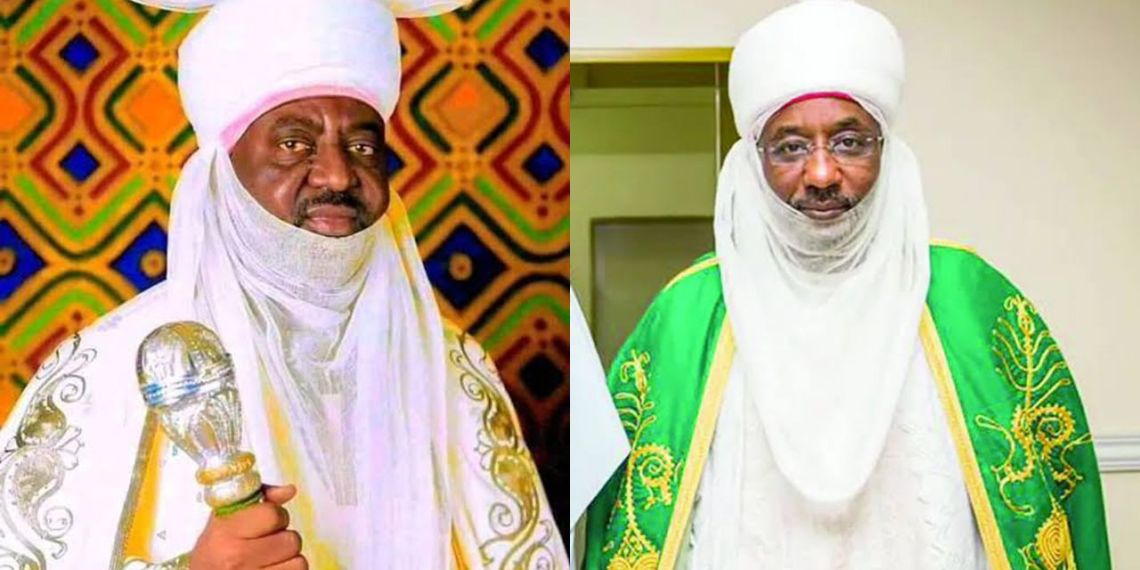
History has shown that most allegations against Emirs were connected to issues like partisan politics, outspoken nature, and mismanagement, among others. On March 9, 2020, the Kano State government under Governor Abdullahi Ganduje officially dethroned Sanusi Lamido Sanusi as the Emir of Kano. His grandfather, Emir Muhammadu Sanusi I (1953–1963), faced the same issue under the Premier of the Northern Region, Sir Ahmadu Bello, on April 10, 1963. Similarly, Emir Mustapha Jokolo of Gwandu (1995–2005) was deposed in June 2005 by the Kebbi State government under Governor Muhammad Adamu Aliero, while Emir Abubakar Atiku of Zurmi (2010–2012) was removed from his position by the Zamfara State government in 2012.

Having successfully influenced traditional institutions, are Nigerian politicians not now attempting to test the same waters on religious institutions through their appointments and donations services?

How our religious leaders glorify and endorse politicians while also criticising one another on political matters in mosques, churches, or during their religious sermons is akin to setting a bushfire that would consume all its inhabitants. It is not difficult for politicians to offer them lucrative sums of money, gift them extravagant cars, and so forth, enabling them to manipulate their views and dilute their words during sermons for material gain.

The silver lining is that the spiritual blueprints and the footsteps that guide them would resolutely remain unchanged till eternity, no matter their deviation.

The recent verbal altercation between Sheikh Sani Yahaya Jingir and Sheikh Muhammad Kabir Gombe, which stemmed from the issue of the ‘Qur’an Festival,’ is disheartening. I view Sheikh Sani Yahaya Jingir as a cleric who strives to speak the truth but often talks excessively. He is a mature, responsible Sheikh who should not demean himself by engaging in disputes with younger individuals like Sheikh Kabiru Gombe. His reputation, knowledge, and age should elevate him beyond such conflicts. He ought to discourage the young, emerging ‘Shuyukh’ under his mentorship from becoming involved in such matters, let alone involving himself.

As for Sheikh Kabiru Gombe, I see his utterances as disrespectful and illogical toward a man of that age, no matter the heat of the moment. If two ‘Shuyukh’ and their followers resort to ranting and calling each other names, what credibility do their preachings hold, and how will their followers perceive them? Where is the unity, patience, and love for one another that Islam teaches and which they claim to promote? No matter the misunderstanding, religious leaders should be careful with their words toward one another in all circumstances.

In conclusion, unless our religious leaders fight selfishness among themselves, adhere to the teachings of Islam, respect one another despite divergent views, and remain united, the future will unravel unfavourably. Only by adhering to the holistic teachings of Islam and the prophetic tradition can they stand resolute against any factor that seeks to erode their strength.

Muhammad Rabiu Jibrin (Mr.J) wrote via muhammadrabiujibrin@gmail.com.

How I found my ideal students

By Ishaka Mohammed

My employers often commended my efforts, increased my salary and gave me bonuses even when I didn’t see any significant impact of my tutelage as a private school teacher. I was worried about my studentsʼ poor comprehension, negative attitude towards learning, and low morals. I couldn’t even stop them from cheating in tests and exams.

Although it was safe to link my failure to a lack of formal teaching qualifications, I expected the impact of the workshops I attended. And to cap it all, most of the teachers I knew (with the required qualifications) weren’t getting any better results. I was frustrated; I blamed parents, society and inadequate facilities—in that order.

However, I was joyous to get a job with an international school in 2024. The school offered excellent educational facilities, teacher training, a six-figure salary, pension, heavily subsidised lunch, and transport and accommodation allowances, among other things. Everything about the school was promising.

Nonetheless, my first meeting with the students ended my excitement. I worked harder than ever before, but as each new week brought tougher challenges, I conceded that I could neither minimise nor tolerate the disruptive behaviour and utter disrespect of the children of politicians, diplomats, business tycoons, etc. They came to the school for two reasons: to have fun and build rapport with their future business partners or political allies.

I quit the job after a term. While I was leaving, some senior colleagues commended my courage to do what they had been unable to do for years despite facing the same challenges that prompted my resignation.

I became jobless but happier, and I didn’t wish to teach again. But a call from a school proprietor in a distant state changed my mind. The head of the department I resigned from recommended that I attend a school he believed would suit me.

This happened when I was already preparing to start a new position in a different industry. My prospective employer is notorious for delaying salary payments.

After weighing the salary factor and the state of education in Yorubaland, I chose to return to teaching, and bingo! My new students meet all my criteria, particularly regarding their morals. Even though they come from privileged backgrounds, they are humble, respectful, and eager for knowledge. 

There was a day when we didn’t have enough teachers to invigilate the tests, and I was the only one who seemed concerned. Two halls were left without invigilators, yet everything went smoothly. I was impressed by the students’ maturity and honesty.

My meeting with these students has reminded me of many things, one of which is the importance of being oneself. While I recognise the significance of adaptability, I still believe that some principles should not be compromised. I appreciate the gentleman who referred me to my new employer. I commend the parents and guardians of these learners, the school management, and all the staff for nurturing such remarkable members of society. Once again, I am optimisticthat Nigeria will be better in the future.

Ishaka Mohammed wrote via ishakamohammed39@gmail.com.

MB Shehu’s mega empowerment program – a timely support for Fagge people

By Dr. Muhammad Sulaiman Abdullahi

In Nigerian landscape today, people need help. Almost everyone needs one form of help of another. This is especially since after Buhari’s brutal leadership which took Nigerians 20 years backward. Baba Tinubu promised that he would continue, not to change and turn things around. And Nigerians are really witnessing a massive and huge form of suffocation, where everyone is gasping for air and therefore, many people don’t care much about what the leaders should do or not do.

A lot of people are hungry as a result of the reckless driving of the nations drivers. You won’t understand the depth of the challenges in Nigeri’as political arena until you engage some politicians, especially those who are genuinely interested in contributing positively to the community. That’s why people like us—who are so much inquisitive—struggle a lot in this field!

I don’t particularly enjoy discussing or praising politicians because whatever they do, they are just doing their jobs. However, there are some reasons that compel me to write on the MB Shehu’s empowerment program, and God willing, I will not do it to flatter; I will only share what I know about that support program, and I know that God is my witness regarding what I write. I also speak from a position of being part of the support committee.

MB Shehu is the current member federal house of representatives, representing the good people of Fagge. During his campaign rallies, he has mentioned and promised many things he intended to do to his people if elected. Today, he is the member, representing Fagge in Abuja. As part of promise fulfillment, he distributes, or rather, he has already distributed a lot of items, to his constituents, to mitigate and cushion the sad and bad effect of the T-pain. While I do not know where he got the idea for this kind of distribution, I believe it stems from the large number of people he has attracted politically, most of whom are needy and in dire need of such support and assistance. He has promised them that he will do good for them if given the opportunity and he is now doing exactly what he said.

Someone might ask, what is more important: meeting the needs of one person or meeting the needs of many people? Many will tell you that meeting the needs of many is more significant. However, how can one meet the needs of the entire community if one doesn’t start from individual people?

Initially, I don’t personally see such “empowerments” as worthy programs, but now, having seen the actions taken and how they have been implemented and also, hard situation which most of the beneficiaries are battling with, I believe that a leader, should, in such kind of situations, do two things:

1) Assist their community in a way that is pleasing to God, through proper channels—those that the people desire (not necessarily highly sophisticated and systematic way), even if a leader sees other ways as more beneficial.

2) A leader should strive to seek and identify certain vital good initiatives that are beneficial, even if many in the community do not see the immediate advantages. This is because most people lack the knowledge or understanding to discern what is more important for them.

Both the above two ways should be integrated! There should be plans for political accountability, and there should be thoughtful and dignified initiatives that can be recognized as good deeds even after one’s life.

During the opening ceremony of the program, the executive Governor of Kano, Abba Kabir Yusuf, aka Abba Gida-gida, inaugurated the program, and it was expected that around 3,000 people will directly benefit from the empowerment, indeed it is serious. Here are some of the items being distributed to the community members:

i) Cars
ii) Motorcycles
iii) Mechanic toolboxes
iv) Car diagnostic gadgets
v) Sewing machines
vi) Deep freezers
vii) Industrial sewing machines
viii) 50,000 Naira to over 1,000 people, with the total number reaching 1,107
ix) Welding machines
x) High-powered cameras, etc

These are just a few of the items I have seen, and some I have heard about.

The Governor of Kano, Abba Gida-gida, who was present during the inauguration of the support program, expressed his happiness and said that he was at a loss for words due to his joy. He added that he had never seen any member who did something like what MB Shehu has done.

This is indeed a significant achievement, and I know that MB Shehu is committed to implementing more initiatives. Anyone interested in knowing about such initiatives can contact Alkanawy, as they are the ones disseminating news and promoting the activities of the legislator.

Before the empowerment, a very strong committee was formed under the leadership of Professor Bashir Yusuf Fagge, and genuinely, there has been a commitment to identifying deserving beneficiaries. I can confidently say that a great effort has been made, day and night, to ensure this work is done perfectly.

In this current political climate under Tinubu, if someone gives you a car, motorcycle, or money, you certainly should appreciate them. Because in Nigeria, especially now, if they don’t give you, there’s nothing you can do. Many elected members do not contribute anything to their constituents and nothing happens.

Finally, some people oppose this empowerment due to their personal reasons or grudges against the one who did it, the committee members or the process. No one can do things that can be accepted by all. Just do your best and move on. No one (especially the politicians) would loved or hated by all. This is why doing things with great foresight and consultation is invaluable. I saw happiness in the faces of the recipients. I hope the money and items given will metamorphose and multiply into bigger fortune.

I call upon the respected member to continue working diligently, to fear God more in carrying out his responsibilities, and to keep doing good for the people. Amen.

Muhammad Kano

Nigeria must be firm against the ‘Tigrans’

By Zayyad I. Muhammad

Nigeria is one of the most important countries in Africa and a key player in the global Black community. Its economic strength, strategic geographic location, and influence (on its own rights) in international affairs have made it a significant hub for investment and business. Therefore, it is no surprise that Binance and its leadership were drawn to Nigeria, seeing the country as a lucrative market.

However, recent developments involving Binance executive Tigran Gambaryan have raised serious concerns. His wild and unsubstantiated allegations against high-ranking Nigerian officials and lawmakers are not just an insult to the nation but a blatant attempt to blackmail and tarnish Nigeria’s international image. Such reckless accusations should not be ignored, as they undermine the country’s sovereignty and credibility on the global stage.

The Nigerian government must not take this matter lightly. To ensure that such behavior is met with firm consequences, further diplomatic, legal, and economic measures should be pursued against Tigran and his company, Binance. If Nigeria fails to act decisively, it risks setting a dangerous precedent—one where foreign actors can manipulate narratives, evade responsibility for economic crimes, and attempt to pressure the country through international channels.

This situation is not happening in isolation. In early 2024, Binance was accused of operating illegally in Nigeria, manipulating forex, and conducting economic activities that destabilised the Naira. Both Tigran Gambaryan and Nadeem Anjarwalla were arrested and charged with money laundering and illicit financial transactions. While Anjarwalla managed to escape, Tigran was released on diplomatic, health, and compassionate grounds—a gesture of goodwill that is now being repaid with hostility.

Nigeria cannot afford to tolerate individuals like Tigran, who engage in questionable financial practices and resort to baseless and outrageous accusations against the country’s leadership. If strong and unapologetic action is not taken, we will likely witness more figures like Tigran exploiting diplomatic loopholes and using ‘below-the-belt’ tactics to evade accountability for their economic crimes.

The Nigerian government must further explore all available legal options, including international legal action and targeted economic sanctions against Binance, to hold those responsible accountable. Nigeria is not a playground for foreign business entities looking to manipulate its financial system while disrespecting its institutions and high-ranking officials, including lawmakers.

Nigeria has the capacity to defend its interests and safeguard its economic stability. It must act decisively to ensure that those who attempt to undermine its economy and reputation face the full weight of the law. International diplomatic channels should be leveraged to demand a formal apology from Tigran Gambaryan if necessary.

Nigeria’s sovereignty, financial stability, and international standing must be protected at all costs. Any attempt to blackmail or pressure the country must be met with strong resistance, ensuring Nigeria remains in control of its economic and political destiny.

Zayyad I. Muhammad writes from Abuja via zaymohd@gmail.com.

The politics of autobiographies

By Amir Abdulazeez, PhD

In ancient times and through the Middle Ages, people used autobiographies to share hidden truths, make confessions and communicate genuine experiences. Nowadays, they are used by politicians and world leaders for self-justification and self-glorification. Whether in the West, across Africa, or within Nigeria, the pattern remains the same—political figures use autobiographies to rewrite history in their favour, often ignoring their failures or controversies.

Between 1948 and 1954, former British Prime Minister Winston Churchill published multiple volumes of memoirs portraying him as World War II’s hero. While Churchill was undeniably a key figure in the war, his narratives downplayed criticisms of his leadership, including his alleged role in the Bengal Famine of 1943, which resulted in the deaths of millions. His autobiographical works cemented his legacy as a wartime leader while sidestepping his more controversial decisions.

Modern political memoirs have increasingly become exercises in selective storytelling, where leaders carefully articulate their narratives to present themselves in the most favourable light possible. Former United States President Richard Nixon used his autobiography, The Memoirs of Richard Nixon, to repair his image after the Watergate scandal. After lying about the possession of weapons of mass destruction as a justification to invade, Tony Blair’s A Journey and George W. Bush’s Decision Points cruelly and shamelessly attempted to justify their baseless war in Iraq in 2003. 

Across Africa, many leaders have also engaged in the practice of using autobiographies to deny or justify their shortcomings. As good as they were, Ghana’s Kwame Nkrumah, Zambia’s Kenneth Kaunda, Tanzania’s Julius Nyerere, and Kenya’s Jomo Kenyatta have all been accused of using autobiographies to exaggerate their legacies, downplay their shortcomings, and ignore controversies around their stewardships.

In Nigeria, Olusegun Obasanjo’s 2014 book My Watch has been widely criticised for being self-serving. While Obasanjo portrays himself as a patriot and a visionary leader, he conveniently overlooked his authoritarian tendencies and allegations of corruption and electoral fraud during his tenure.  

Despite all the glaring circumstances that led to Dr. Goodluck Jonathan’s decisive defeat in the 2015 Presidential elections, in his 2018 book My Transition Hours, he tried hard to justify and downplay his actions while also constructing different conspiracy theories that gave the impression that he didn’t lose the elections freely and fairly. 

Just when we thought we had enough of all these politicised autobiographies, former Military President General Ibrahim Badamasi Babangida has released his own memoirs. While often and correctly presented as one of Nigeria’s finest soldiers, strongest leaders, and elder statesmen, we cannot expect his memoirs to differ significantly from those of other Nigerian, African, and world leaders. IBB is unfortunate to be one of the most studied and documented Nigerian leaders, and there are numerous controversies, inconsistencies, and tactical deceptions associated with his tenure that no autobiography can reconcile. 

One major criticism of IBB’s memoir is its timing. The delayed release suggests a strategic waiting period for public emotions to cool and memories to fade. Apart from the main actors, many others in a position to validate or refute whatever he might say in his book are deceased. In fact, the majority of the current generation of Nigerians were not even born when he left power in 1993. In a nutshell, while Babangida’s autobiography may attempt to rationalise many of his decisions, the scars left by the events he oversaw, such as the Structural Adjustment Programme, state executions, public corruption, and the endless and wasteful transition programme, will remain fresh in the country’s memory.

In Nigeria, what have these autobiographies taught us? Many leaders and political figures have left behind terrible legacies that they cannot afford to entrust to impartial storytellers. While they ought to spend the remainder of their lives in regret and reflection, they prefer to add salt to the wound by publishing half-truths and falsehoods as autobiographies. When they do this, they invariably have other elitist co-conspirators, who benefited from their actions and inactions in power, gathering to celebrate them as heroes. 

As a former Nigerian leader, as long as you are alive and influential, you can always find a way to redeem your image despite your atrocities. I often ask people to imagine if General Sani Abacha were still alive; who would dare to recover any foreign loot associated with him? Who doesn’t have skeletons in their cupboards? Unfortunately for Abacha, apart from being dead, he had also stepped on most, if not all, of the toes that would have protected him, and again, one of the most affected became President just 11 months after his death.

Not everyone is the same. There are patriotic Nigerian leaders, statesmen, and freedom fighters who deserve to write autobiographies. Unfortunately, when they do, their works often get drowned in the ocean of the more negative ones who are wealthier and more popular. By tradition, Nigerians tend to promote and accept things that are popular and glamorous rather than those that are truthful and sincere. This is why you don’t hear trending biographies about Gani Fawehinmi, Abdulkadir Balarabe Musa, and others.

Ultimately, everyone has the right to their own opinion and narrative of events as they wish others to perceive them. While autobiographies offer valuable insights into the minds of world leaders, they should be read critically. Readers must recognise that these books are not always honest reflections of history but are often carefully crafted narratives aimed at preserving a leader’s legacy. 

The memoirs of political leaders frequently function more as instruments of image control than as genuine historical accounts. The ultimate judgement of political leaders should not lie within the pages of their autobiographies but rather in the lived experiences of their citizens and the tangible impacts of their policies. 

I read three autobiographies recently, and I found them to be outstanding and honest: Sir Ahmadu Bello’s My Life, Nelson Mandela’s Long Walk to Freedom and Mahatma Gandhi’s The Stories of My Experiments with Truths. Sardauna’s was simple, least self-glorifying and occasionally self-critical. Mandela’s was strictly a chronicle of collective struggles, only mentioning but leaving out details about subjective issues and cleverly terminating his story to the point he was inaugurated as President. He left the story of his presidency to be told by others. Gandhi’s was the best; when he was literally forced to write his memoirs in 1925, he named it ‘My Experiments’; the translators added the word ‘autobiography’. He never wanted to write because he believed that if your actions were right, there was nothing to boast about; for the wrong ones, there would always be many people to help you write them.

Twitter: @AmirAbdulazeez 

AI and the future of jobs: How automation will impact employment in Nigeria

By Nasiru Ibrahim

“The introduction of AI and automation is a double-edged sword: it holds immense potential for efficiency, but its consequences on job markets, especially in developing economies like Nigeria, need to be addressed through strategic workforce planning and skills development” (Bessen, 2019).

This article examines the positive and negative impacts of AI on the workforce, supported by economic theory and real-life examples from Nigeria.

Artificial intelligence is the direct opposite of human intelligence. It showcases the ability of machines, such as computers, to carry out tasks that require human intelligence. AI performs tasks such as writing, problem-solving, analyzing data trends, driving self-driving cars, harvesting fruits on farms, and other tasks traditionally performed by humans.

AI automation involves the use of artificial intelligence and technology to automate repetitive tasks that humans traditionally carry out in their daily lives. It enhances productivity, efficiency, and scalability, reduces production costs, and ensures round-the-clock availability for services such as banking.

AI depends on data to perform tasks and learns from humans through data annotation or labelling. This indicates that it cannot recognise images, interpret voices, or understand statements unless trained by humans. Generative AI like GPT–4 is transforming the labour market while influencing the demand and supply of labour in the overall economy. The automation of repetitive tasks in both skilled and unskilled jobs by companies has raised concerns about whether AI will harm or benefit the workforce. This debate has led to the application of traditional economic theory to explore and explain the economic effects of AI.

Economic Theory on AI

Austrian Economist Joseph Schumpeter’s theory of creative destruction explains how new technology and innovation reshape economies by replacing old jobs and technologies with new ones. This theory supports the argument that AI can create new industries, jobs, and opportunities, as seen in Nigeria’s growing tech sector, which includes Fintech, E-learning, E-commerce, and Agritech. Below, we explain these theories with examples from across Nigeria.

Firstly, in Fintech in Lagos, companies like Flutterwave and Paystack now employ AI engineers and data scientists to develop fraud detection systems and personalised banking tools.

Secondly, in E-learning in Abuja, platforms like Ulesson use AI for tailored learning experiences, creating roles like app developers and AI trainers.

Thirdly, in E-commerce in cities like Lagos and Kano, Jumia and Konga use AI for supply chain optimisation and chatbots, fostering jobs in logistics tech and digital marketing.

Fourthly, in Agritech in Kaduna, Thrive Agric employs AI for farm monitoring and analytics, generating demand for data analysts and field specialists.

Human Capital Theory

Human Capital Theory, developed by Gary Becker and Theodore Schultz, emphasises the importance of education and skills in economic productivity. In Nigeria, the demand for human capital has increased in sectors such as machine learning, data annotation, and AI development. The rise of AI has fostered a need for expertise in areas like data science and machine learning. Initiatives like Data Science Nigeria are aiding individuals in acquiring these skills, enhancing their employability and contributing to the nation’s economy. This aligns with Human Capital Theory, which asserts that investing in education and skills enhances productivity.

Pareto Optimality

AI has the potential to increase productivity and efficiency in Nigeria’s economy without worsening the condition of any particular group, achieving Pareto optimality. AI in Nigerian healthcare, such as AI tools for diagnosing diseases, is helping both patients and doctors. These tools make diagnoses faster and more accurate, improving care without harming anyone. This is an example of Pareto Optimality, where everyone benefits without undermining the benefit of anyone.

Dr. G. Yoganandham (2024), Professor & Head of the Department of Economics, in his paper titled Impact of Artificial Intelligence (AI) on the Economy, Politics, Ecosystem, Innovation, and Promoting Inclusive Workforce Frameworks (2024), stated:

“The global economy could benefit by $13 trillion from artificial intelligence by 2030, although 375 million jobs may be displaced. The workplace is one of many areas where AI will bring a revolutionary impact. It can streamline processes, reduce costs, and enhance decision-making. AI can also improve customer satisfaction by analysing data for predictive analytics, reducing accidents in construction and manufacturing, and creating new employment opportunities in data science, machine learning, and AI education.

However, workplace AI raises ethical concerns about racial bias, privacy, security, and democracy. While some argue it may lead to robotic employment, there is ongoing debate about its potential to foster innovative work, create new career paths, and improve judgment.”

From the above theories, it can be deduced that on the one hand, AI, ceteris paribus, could have a positive effect on the expanding workforce in Nigeria, in terms of:

Firstly, AI fosters the creation of new jobs and opportunities. It fosters the emergence of new industries and job roles, particularly in data science, big data technology, AI engineering, and cybersecurity. Companies like Data Science Nigeria (DSN) are equipping Nigerians with skills in data analytics and machine learning, creating employment opportunities in the tech industry.

Secondly, AI enhances productivity and efficiency. It reduces production costs and streamlines processes, enabling businesses to operate more efficiently. In agriculture, Hello Tractor uses AI to connect smallholder farmers with tractor owners, increasing farming efficiency and reducing costs.

Thirdly, improving demand forecasting and profitability. AI tools optimise supply chain management and demand forecasting, leading to increased profitability for businesses. Jumia, Nigeria’s leading e-commerce platform, employs AI algorithms to predict customer preferences, enhance inventory management, and boost sales.

Fourthly, upskilling the workforce. AI encourages the development of skills that align with technological advancements, offering workers better career prospects.

On the other hand, AI could have a negative impact on the workforce in Nigeria, in terms of:

Firstly, job displacement due to the automation of repetitive tasks can affect low-skilled workers, particularly in the manufacturing and service sectors. In Nigeria’s financial sector, banks such as GTBank have adopted AI-powered chatbots (e.g., Habari), thereby decreasing the need for human customer service representatives.

Secondly, bias in hiring and decision-making. AI systems trained on biased data can create discrimination, particularly in hiring processes.

Thirdly, ethical and privacy concerns. AI-driven technologies often raise privacy, security, and data misuse issues.

Fourthly, there is limited access to AI resources. Many Nigerians, particularly in rural areas, lack access to the infrastructure and education required to benefit from AI advancements. For example, I live in Gwiwa Local Government Area, Jigawa State, but the entire local government lacks basic ICT facilities, let alone advanced technological resources that would help people understand artificial intelligence.

While AI promises to increase efficiency and productivity in various sectors in Nigeria, such as agriculture, the question remains: Will the benefits outweigh the job losses, particularly in a country with high unemployment and underemployment?

In Northern Nigeria, where more than 50% of the population is engaged in agriculture, a phased approach is urgently needed. Before AI can be widely adopted, attention should be directed towards improving mechanised farming techniques to enhance food security and tackle inflation. 

Given the shortage of skilled labour prepared to use AI in agriculture, it is essential to prioritise education and training, followed by the mechanisation of farming practices. This would ensure that the workforce is adequately prepared to embrace AI when it is introduced. AI has the potential to boost agricultural productivity by facilitating the timely harvest of crops and minimising the risk of poor yields.

The lack of education in Northern Nigeria exacerbates these challenges. According to the World Bank, the literacy rate in Nigeria stands at approximately 31%, with the Northern region experiencing a significantly higher illiteracy rate. This deficit in educational access has fostered a profound sense of frustration, as many individuals find it difficult to survive amid escalating economic hardships.

People in these regions often face unmet needs, yet politicians offer solutions that don’t address the core issues. This disconnect between the people’s needs and the actions of those in power further deepens the divide and hinders progress. Many feel that immediate economic policies, such as harsh taxation and subsidy removals, are prioritised over long-term, sustainable solutions. There is an urgent need for more inclusive and sustainable economic policies that address the technological transformation driven by AI and tackle the underlying social inequalities.

While AI adoption in agriculture has the potential to boost productivity and reduce costs, the key to its successful integration lies in addressing the fundamental issues of illiteracy, poor governance, and lack of infrastructure, particularly in the Northern regions. Only through a concerted effort to improve education, promote mechanised farming, and gradually introduce AI can Nigeria hope to mitigate the potential displacement of jobs while reaping the benefits of technology.

Ibrahim is a graduate of the Department of Economics from Bayero University, Kano, and writes from Jigawa.

Inside NYSC Permanent Orientation Camp

By Usman Mujtaba Shehu

The National Youth Service Corps scheme idea was to expedite contacts across cultural zones and bridge the cultural gaps, and surmount cultural stereotypes.

Being in an NYSC dress is a dream come true for me. Having visualized how it would feel or how I would look in it about two decades ago, I’m thrilled to experience it finally. When I was younger, I used to wear my father’s NYSC ceremonial shirt. Although it was oversized, the tip reaching my knee sparked my interest in the NYSC program.

The question isn’t just about the dress but about the experience and feeling of being a Corp member. That’s what many people long for. During the registration process, I didn’t encounter many hitches. The main challenge was the duration of my university program, which was prolonged due to the long ASUU strike and the emergence of the COVID-19 pandemic.

Apart from these two reasons, all the delays were natural, stemming from the nature of my school’s (ATBU) calendar. The NYSC registration, receiving my call-up number, and anticipating my state of deployment were challenging. I spent 13 hours in the CAFE in the queue waiting to be registered. Additionally, I waited several more hours to receive my call-up number and was eventually deployed to Dakin Gari Orientation Camp in Kebbi State.

When I saw the call-up letter, I was sad, and my mind wandered to the 1-day, almost 12-hour journey ahead. After arriving at Birnin Kebbi, I had to find a taxi to the camp, which was a struggle. It took me 4 hours to get a cab and another 2 hours to reach my destination. I arrived at the camp in the evening, around 5:30 pm. Luckily, the registration queue had been reduced, so I didn’t have to wait.

After checking my bag, I proceeded to the admin block for registration. I discovered my platoon from my state code, which was like a registration number. And from the last digit, I knew I was in platoon 4. I collected my meal ticket, which served as a food ID, and was given a mattress and bed space in the Boys’ Hostel (3).

After settling in, I attended another registration session conducted by the platoon officer. Once completed, I received a set of light-green khaki, the NYSC ceremonial shirt, an orange boot, a white cover shoe, a customized cap, and two pairs of short white trousers and shirts. I felt mixed emotions, reflecting on the future and how it would unfold.

Is it true that the orientation is difficult? In the NYSC Orientation Camp, you feel a sense of belonging regardless of your background or who you are. This is rooted in the NYSC act and the orientation design, which aligns with their motto of “humility and service.” The process is humbling, bringing together people from diverse tribes, such as Yoruba, Hausa, Igbo, Ebra, Tiv, and Fulani.

Religious activities are also accommodated, with three Christian prayer points and one mosque. This allows Corp members to practice their faith without discrimination.

The sense of togetherness is reinforced by the uniform dress code, which includes white shirts and trousers, customized shirts with NYSC alphabets emblazoned on the front, and khaki trousers with boots and customized caps for ceremonies. Trust among Corp members develops quickly as they view themselves as similar or familiar, united by their platoons.

Platoons unite Corp members, and my platoon (platoon 4) leader, a Yoruba from Lagos, exemplified this unity. With 10 platoons, each comprising over 100 Corp members from different states, backgrounds, languages, and cultures, we were united under a shared platoon identity designed by NYSC to foster unity and patriotism.

People tend to trust those within their in-group, and belonging is a primal instinct. When Corp members display attitudes, beliefs, or platoon membership, others tend to like and trust them more. My response to lowering the Nigerian flag every 6:00 pm still amazes me. Every activity would come to a halt when the trumpet was blown.

My new identity became my platoon. I made new friends across all platoons, but Platoon 4 became like family. Competitions were organized to strengthen bonds within platoons. I participated in the football competition and cheered for my platoon in the parade competition, cooking, cultural dance (Edo Dance), and other events.

I attended over 30 lectures and sensitization sessions with my platoon, covering education, health, relocation, finances, and more topics. I only separated from my platoon during the Skill Acquisition and Entrepreneurship Development (SAED) launch. Corp members were allowed to choose their training. I attended and listened to about 30 lectures and sensitization sessions with my platoon. The lectures cover almost all areas, including education, health, relocation, finances, etc.

That was how we were shared with eight different skills Acquisition classes. I chose ICT and learned basic Data analysis and graphic design using pixels.

The orientation is rigorous and tedious. But when I reflect on the whole objective of the NYSC initiative itself, it’s worth it. It’s not a pointless activity but a scheme meant to instil discipline, love of country, and love of one another. As mentioned in the national anthem: ‘Though tribes and tongue may differ, in brotherhood we stand’.

Usman Mujtaba Shehu wrote via usmanmujtabashehu@gmail.com.