Opinion

Redefining relevance: The strategic role of accountants in an AI-driven era

By Sunusi Abubakar Birnin Kudu

Accounting, traditionally seen as the process of recording, summarising, analysing, and reporting financial transactions about individuals, businesses, or other organisations, is currently facing a transformative shift due to technological advancements, especially in Artificial intelligence. AI-powered accounting software has taken over many routine tasks performed by accountants. 

AI now automates core accounting tasks such as categorisation, data entry, and reconciliation. These tools now efficiently deliver real-time financial statements and modern finance metrics. Thus, the shift creates the fear of job displacement and professional irrelevance among accounting students and accountants. This calls for accountants to adapt to those changes and avoid being irrelevant. A study published by Forbes supports these concerns, noting that among the factors that led over $300,000 accountants and auditors to leave their jobs between 2019 and 2021 is a fear of being replaced by automation. 

However, this assertion has a contrary narrative. A recent survey by an automation platform called DataSnipper indicates that auditing/accounting job vacancies rose by 25% in 2024. This was attributed to the high demand for accounting personnel, the retirement of those in practice, and the role of AI in cutting down auditors’ repetitive work. The survey also indicates that 83% of the auditors in the world tend to stay in companies with AI initiatives. 

These findings illustrate a key truth. AI has posed both threats and opportunities to accountants and the accounting profession. However, the determining factor lies in how accountants respond to them. 

Although AI can perform many accounting functions that accountants carry out, it can’t replace the human judgment required to weigh up different variables and make an informed decision. For this reason, accountants might have a respite. However, they need to evolve from being financial reporters to becoming strategic advisors, leveraging financial data analytics (DA) to interpret data, advise their clients, and enhance organisational performance.

Financial data analytics in accounting involves making critical financial decisions for an organisation. It enables accountants to keep track of the overall organisation’s functions. Accountants with DA knowledge can help organisations to make informed decisions. They can assist organisations in maintaining records, budgeting and financial forecasting, and setting targets and projections with high accuracy.

An accountant can use DA to guide company-employee relations by establishing key performance indicators to analyse employees’ overall financial impact on the company. Through AI-driven analytic tools like Zoho and Qlik, accountants can simplify complex financial circumstances into useful information. 

Furthermore, in tax consultancy and advisory services, accountants can use financial data analytics to guide clients through tax planning and compliance. They can also liaise with revenue agencies for efficient revenue collection. Data analytics tools can be harnessed by accountants based on the nature and circumstances of the clients. 

Accountants who transition from ordinary financial data processing to advanced financial data interpretation tend to be more relevant to the accounting profession. Adopting data analytics helps accountants stay relevant in a competitive labour market and improves their professionalism and expertise. 

The accounting profession is no longer limited to classification, summarisation, and reporting. It requires accurate data analysis and informed decisions. AI is an opportunity for accountants, not a deterrent. Accountants shouldn’t resist this development but rather adapt it, harness it, and grow. This is the only way to redefine their relevance in an AI-driven era.

Sunusi Abubakar (ACA in view) wrote this from Arawa B. Akko Local Government, Gombe State.

Technologia Alaji: My “BRAZA” come to Sarkin Mota, before you hear sold…

By Dr. Muhammad Sulaiman Abdullahi

I was riding my electric bike and the engine was in an absolute silence, courtesy of China’s existence on earth, I passed some guys walking by the road side, and suddenly, I overheard one of them screamed out the word “technologia Alaji”, before I took it in, he screamed again, Tesla!

I was internally filled with joy as I was sure he was talking about my little angel, which I didn’t know it would make such an impact on anyone, though the young guy was a millennial. These set of people are fascinated by almost everything today. They find fun even in every sort of trash. The way they take trashes high is so funny and confusing. But my electric bike, though small, is something to attract their whole, I am sure of that.

After I passed, the word “technologia” keeps coming back to me and I just remembered Sarkin Mota, because the young guy mimicked him while screaming the words out.

Sarkin Mota is a Hausa term which can literally be rendered into English as King of Cars or Master of Cars or Owner of Cars or Seller of Cars or all these combined. In this case the guy who is called Sarkin Mota qualifies for all the above mentioned renditions.

I know of Sarkin Mota recently and I am sure he started trending not long ago. The guy was super talented in his unique, unprecedented and unpresidented humorous way of advertising his wares. His style was so tantalizing, timely and it coincides with the needs of the time. Added to this, the Tinubuconomics has angered most Nigerians and made them to think for simple alternatives. Boom… Sarkin Mota emerged with super cars, mostly from China but not in any way affordable by the “Civil Servants”!

The guy started by teasing civil servants whom are mostly today frustrated, angry, hungry and ridiculed from all angles, ranging from their employers, their managers, their community members and even sometimes from within their family structures. Civil servants are in trouble and Sarkin Mota teased them to sell his stuff without remorse identifying with them.

However, Sarkin Mota is sarcastically and truly right. Only some very few privileged civil servants who work in high places can afford the cheapest of his cars today. Others who can afford to purchase cars from him from among the civil servants may do so only with proceeds of corruption, looting or embezzlement. Therefore, the guy is truly right, it is only that too much of everything can be boring as well as hurting. It is not funny to keep banging and punching at one spot, it may end up becoming so fatal and brutal.

In Nigeria there are two types of civil servants today. The extremely poor civil servants and the super-rich civil servants. The extremely poor civil servants are those who work but cannot afford to buy what they need for their lives. They are of various categories. Those who can’t regularly fuel their cars and opt for two days fueling per week or even month. Some have already abandon their cars and opt for their legs. Those who cannot buy a bag of rice to feed their families. Those who are always on credit from the neighboring shop owners as a result of purchase of certain groceries, which they always collect on credit. Those who cannot pay their children school fees. Those who always hide when they see the landlord coming or ignore phone calls to avoid embarrassment. These are even regarded as tier two up, in as much as they eat, even if what they eat is not what they want. There are tier one, top tier, who cannot afford anything. They hardly eat. They barely have any form of enjoyment in Nigeria beside the air they inhale and the sky that covers them from the above. They just live and follow the time. These two categories form the majority of Nigerian civil servants today.

The extremely poor civil servants in Nigeria takes more than 95% of the civil servants’ population. Civil servants are suffering beyond any reasonable doubts. Sarkin Mota was just someone who is frowned at unnecessarily or was only targeted as a scapegoat. His sarcastic nature of dragging the civil servants in the mud was used by NOA to silence him. NOA is also another government agency, which I am pretty sure, harboring extremely poor civil servants who cannot afford to buy Salla rams for their families.

Though I reason with NOA especially if what they did is part of their mandate, I still find their misdirection of anger and warning as worthless.

Their letter should have been a dual sharp edge sword which should have called Sarkin Mota to order and drawn the attention of the government on how they reduce civil servants to being ridiculed by the business community. People look at the “branch” instead of digging deep in order to see the root of a problem! Sarkin Mota’s costly sarcastic style was as a result of what the government does, deliberately. Let us assume that Sarkin Mota was disrespectful, something that he debunked, and then would the government that forcibly pushed the civil servants into this sorry state be? Wicked and merciless, simple. There are no two way about this. He who beats you is more wicked than he who only laughs at you from afar.

What worsen Sarkin Mota’s sarcastic videos were the fact that some other Social Media copycats have already taken his style to another level. A ram, which is purportedly priced at one million naira, would be displayed, and after all the grandiose show off, a civil servant who cannot truly buy it will be dragged. Then, you would be surprised as against whom should a civil servant set his face now? This is someone deprived, wickedly and mercilessly, of all enjoyment and now little boys have made him as laughing stock on their empty social media trashes. On this, everyone must commend NOA for stopping this nonsense.

As for Sarkin Mota, I feel he has carved a niche for himself and has been recognized as one of the top dealers even when for sure, there may be many others above him, but yet unknown.

Aliyu Muhammad Sarkin Mota confirmed that his parents are civil servants and that he was not disrespectly and that he was just pulling their legs in an interview he granted to Channels TV. Also, in a new recent video where he displayed a convoy of electric cars, he didn’t mention civil servants again. He still maintained some of his major take always and insignias like technologia Alaji, but he didn’t mentioned civil servant. This is a sign that he had “repented”. Thanks to NOA’s intervention. But a question to NOA, does their intervention make civil servant to afford his cars?

Another take away from the Sarkin Mota’s style is his unique way of speaking English, especially “my buraza”, which makes him unique and original. This takes us to the resounding debate of English as a measure of intelligence. To Sarkin Mota, that isn’t even a topic of discussion, because he has a great command of the English language but he chooses not to sound like a grandchild of Kings Charles. He speaks in a very nice deep and lovely Nigerian accent which even if you don’t like, that doesn’t snatch a dime away from his celebrity status he attained.

Keep going Sarkin Mota! And may we see a day when ordinary primary school teachers can afford to buy the latest brand of cars you brag about, amen!

Muhammad writes from Kano Nigeria, and can be reached via, muhammadunfagge@yahoo.com

Nigeria has murdered another professor: The shameful death of Prof. Roko

By Muhammad Lawal Ibrahim, PhD

Another brilliant mind has died. Another Nigerian professor, Prof. Abubakar Roko, has just been murdered by the state,not by bullets, nor by bandits, but by an unforgiving system, deliberate neglect, and a government that treats its academics like disposable rags. He needed ₦13 million for medical treatment abroad. After over 20 years of service to this so-called nation, he could not raise it. He lay bedridden, helpless, abandoned, and now he is dead. We must stop calling this “natural death.” This was murder by government negligence.

In a country that throws billions at political cronies, gives lawmakers millions in wardrobe allowances, and funds endless pilgrimages and jamborees, a professor had to be paraded online like a beggar, with students scrambling to raise funds just so their teacher might survive. Yet even that was insufficient. The system choked him to death slowly, much like it is doing to thousands of others right now.

Where are the salaries? 

As of this writing, tertiary institution workers are celebrating Sallah (Eid-ul-Adha) without salaries. Go and verify. Civil servants in other sectors have been paid weeks ago. But those who teach your children, those who write your policies, those who keep the soul of the country alive—are being starved like prisoners of war. And when it was reported that over 1,000 lecturers have died under this current administration, bootlickers and sycophants ask, “What killed them?” What killed them? What didn’t?

Sickness, hunger, depression, suicide, systemic poverty, lack of medical care, all wrapped in the evil legacy of Buhari’s betrayal and now Tinubu’s reign of economic terrorism, killed them and are still counting.

Tinubu’s “Renewed Hope” is academic genocide

Let’s not sugarcoat it. What’s happening in Nigeria’s higher education system today is academic genocide. The federal government has effectively declared war on the ivory tower. Salaries are frozen. Promotions are denied. Research is dead. Morale is nonexistent. Students are turning to fraud and crime. Lecturers are dying in silence, many too ashamed to beg for help. But yes, the president has just approved ₦90 billion for Hajj. Where is the justice in this madness?

A rotten elite and a silent society

The ruling class in Nigeria treats lecturers like slaves while flying abroad for their checkups, educating their children overseas, and stealing public funds to build mansions in Dubai. Meanwhile, professors die waiting for ₦13 million. We are ruled by demons in agbadas, celebrated by cowards, and enabled by silence.

What’s worse is that many Nigerians have been so brutalised that they now laugh off their own destruction. “Lecturers are always complaining.” Yes, because they are slowly being buried alive.

We will not forgive

To those in power, your days of immunity from truth are over. You will be remembered not as leaders, but as executioners. We will not forgive you for the lives you’ve ruined. Not in death. Not in history. Not in the court of God.

You have destroyed one of the few remaining sectors that held credibility in this country. And for what? Your greed? Your power games? Your bottomless stomachs?

Prof. Roko is dead, and I pray for Allah to accept his good, innocent soul into the highest level in paradise, amin. But this article is not about him alone. It is about every Nigerian academic suffering right now in silence. It is about every student being denied a future. It is about a nation killing its own brain and expecting to survive.

Enough is enough. Let this death be a curse on the conscience of every politician who has contributed to this decay.

Let this be a rallying cry for every Nigerian who still has a soul left.

Muhammad Lawal Ibrahim, PhD, wrote from ABU, Zarialawalabusalma@gmail.com.

A policy without a pulse

By Oladoja M.O

How Nigeria’s Traditional Medicine Policy Falters in the Face of a Healthcare Crisis

Traditional medicine remains a lifeline in the heart of Nigeria’s vibrant communities. For millions, the village herbalist is not just a healer but the only accessible one. Yet, despite its ubiquity and potential, traditional medicine in Nigeria remains largely relegated to the fringes of the healthcare system.

Why? Because the one policy that could breathe life into it, the “Traditional Medicine Policy” of 2007, is quite frankly a policy without a pulse.

It exists on paper, yes. But in practice, it drifts in the ether of neglect, underfunding, and governmental lip service. The intent was noble: to recognise, integrate, and regulate traditional and complementary medicine (T&CM) harmoniously with Nigeria’s conventional medical framework. But over 15 years later, the landscape remains fragmented institutions, unrecognised practitioners, and a glaring vacuum of legislation that could bind it all into something functional.

The 2007 policy envisioned institutionalising traditional medicine education, promoting evidence-based practices, and protecting indigenous knowledge. It proposed the development of curricula, collaborations between practitioners and scientists, and most importantly, the integration of traditional health workers into mainstream healthcare delivery.

But here’s the reality in 2025:

Despite repeated attempts to pass the Council for Traditional, Alternative, and Complementary Medicine Practice Bill, there is no functional regulatory council for traditional medicine practitioners.

No constitutionally defined or legally licensed role for herbalists or traditional health workers within Nigeria’s medical profession.

Institutions like NICONMTECH, Ibadan College of Natural Medicine, and African College of Traditional Medicine train thousands annually, but no professional pathway exists to license or employ them formally.

Only National Diplomas or certificates exist; there’s no accredited B.Sc. program, no postgraduate clinical practice recognition, and no universal standard for certification.

The result? A generation of “trained” traditional medicine practitioners with no seat at the healthcare table.

Counting some blessings, Nigeria’s Ministry of Health did establish the Department of Traditional, Complementary & Alternative Medicine in 2018, but its impact has been symbolic at best. NAFDAC mandated herbal product registration and labelling, which doesn’t translate into practitioner recognition or integration. The Natural Medicine Development Agency (NNMDA) was signed into law in 2019 to spearhead research and development, but there is no central governing council, which means that coordination remains chaotic. State governments have made some strides, e.g., Governor Soludo’s Anambra State Herbal Practice Law, but it is an isolated effort with no national backing. Ultimately, it’s like having a beautifully designed ship without a captain or compass.

One might ask, why does this matter more than ever now?

It is no longer breaking news that Nigeria is bleeding professionals. The “Japa” wave has not spared doctors, nurses, or dentists. With over 65% of qualified health workers seeking opportunities abroad, Nigeria’s healthcare system is being hollowed out from within.

To compound this, the country now faces blocked financing from global donors like the U.S., partly due to concerns over poor transparency, suboptimal health data management, and systemic inefficiencies. With this dwindling foreign aid and a crumbling workforce, we should explore every viable alternative, and traditional medicine stands at the crossroads.

But rather than mobilise this ready workforce, we shackle them with policy paralysis, leaving our vast herbal and traditional knowledge base languishing in semi-formal practice, unprotected, unregulated, and unsupported.

Time after time, the National Association of Nigerian Traditional Medicine Practitioners (NANTMP) has repeatedly called on the National Assembly to pass the Traditional, Complementary and Alternative Council of Nigeria (TCACN) Bill. Their plea is simple: recognise, regulate, and give us a voice in the national health discourse. They are not asking for a free ride, but for the years of training at herbal schools, skills acquisition centres, and research institutes across Nigeria to be met with a legitimate path to service.

After all, how do you tell a Nigerian College of Natural Medicine Technology graduate that their diploma is valid, but they are legally invisible? How do you justify decades of policy silence when the country desperately needs all hands on deck?

A living policy evolves with need, responds to gaps, and energises sectors. The 2007 policy is comatose, hanging on by technical documents and departmental charades. What it needs now is:

An active national council to regulate, license, and accredit T&CM practitioners.

Curriculum reform and NUC-approved B.Sc. degrees to professionalise training.

Legal recognition of traditional practitioners under Nigeria’s health law.

Clear collaborative frameworks between conventional health professionals.

Nigeria cannot afford to sideline its heritage medicine when its hospitals are overcrowded, its workforce is thinning, and its people are desperate for healing, wherever it may come from.

We do not need another policy document. What we need is a pulse.

Oladoja M.O writes from Abuja and can be reached at: mayokunmark@gmail.com
NIPSS, PRNigeria and the alarming breach of digital ethics

By Usman Muhammad Salihu

I never truly grasped the danger of exposing personal information in the digital space until Mr. Yushau Shuaib, my boss and mentor, handed me a book—Born Digital: Understanding the First Generation of Digital Natives by John Palfrey and Urs Gasser. 

It was an eye-opener, full of prescient warnings about the hidden costs of living in a world where our lives are increasingly mediated by technology. Ironically, neither of us imagined that the warnings in that book would soon play out so personally, and so dramatically.

Mr. Shuaib, a respected public relations expert and founder of PRNigeria, participated in Senior Executive Course 47 at the National Institute for Policy and Strategic Studies (NIPSS). On May 2, 2025, he was abruptly suspended from the course. 

His offence? Publishing articles highlighting and supporting President Bola Tinubu’s Digital and Blue Economy reforms. One article, “Understanding the ‘Blue’ in the Blue Economy,” praised the government’s innovative strides in marine resource development. 

Another, “NIPSS Goes Digital,” celebrated the institute’s transition to a paperless administrative system—part of Nigeria’s broader digital transformation agenda. While he did not write or edit the latter, it appeared on his media platform.

In response to his suspension, Mr. Shuaib petitioned the President, citing harassment, cyberbullying, and professional ostracism. He argued that the action was punitive and lacked due process. 

NIPSS, however, insisted he breached institutional policy by publishing materials related to the institute without clearance—a rule they claim he had previously been warned about.

But a chilling twist escalated the matter beyond internal disciplinary lines: PRNigeria’s editorial email account was allegedly compromised. Confidential communications between journalists and their sources, private story drafts, and editorial exchanges were reportedly accessed without consent. 

The intrusion, attributed to officials of the same institute that suspended Mr. Shuaib, raised serious ethical and legal concerns. This was no ordinary data breach. It directly violated professional boundaries, journalistic independence, and Nigeria’s own Cybercrime Act. 

It represented something more insidious than a lapse in judgment—it was, in many ways, a digital form of trespass. The incident sent ripples through the media and security circles. 

If an elite policy institute tasked with grooming Nigeria’s future strategic leaders could be implicated in such an act, what message does that send about our national commitment to digital ethics and the rule of law?

It is precisely the kind of scenario “Born Digital” warns about—a world where our private digital footprints are vulnerable not just to hackers or corporations but also to institutions that should be protecting those rights.

In one haunting passage, the authors write: “Young people who are living their lives mediated by digital technologies will pay a higher price, sometimes down the road, for the way privacy is handled in this converged, hybrid environment… 

“Most young people are extremely likely to leave something behind in cyberspace that will become a lot like a tattoo, something connected to them that they cannot get rid of later in life.”

That line has stayed with me because it is no longer just about young people; it is about all of us. Our identities, habits, preferences, locations, communications, and relationships are all being recorded, stored, and sometimes exploited through what are now known as digital dossiers.

These dossiers are detailed archives of our lives compiled by apps, platforms, websites, and even institutions. They are often created without our consent or awareness. While they promise convenience and personalised experiences, they also have profound risks.

Privacy has become a currency we are forced to spend for access. And increasingly, it is a luxury only a few can afford. The NIPSS breach is a wake-up call. It reveals the fragile boundaries between transparency and intrusion, policy enforcement and personal violation. 

It is a reminder that digital transformation must be matched by ethical responsibility and legal accountability. As a journalist, I have often lived under the illusion of digital safety. 

But as a parent, I now worry for my young daughter and the millions like her growing up in a world where data is your shadow—and sometimes, your shackle. We must do more. We must demand stronger data protection laws, foster a culture of privacy awareness, and hold institutions accountable, no matter how revered. 

Our digital world should not come at the cost of our humanity, dignity, or freedom. The threats are real, the consequences are near, and the time to act is now.

Kannywood Movie Review: Da Na Sani

The ‘Taskar Kannywood’ is a YouTube show that seeks to revive the glory of feature films that has been long abandoned since the emergence of web and TV serials. The show runs every Sunday, unveiling fresh standalone movies in a one-episode-per-week order, followed by a review and Q & A sessions to further engage the audience for criticism and opinions. The 7th episode, Da Na Sani, is the collection’s latest and most hyped release.

The film tells the story of a rather humourless and unromantic man (Mansur) married to a young girl (Samira) in her late teens. Samira would always act reminiscent of what we fondly call ‘Kwailanci’ (excessive childishness), which she believes to be her love language to express her romance, a gesture her husband finds too awkward and a clear affront to his dignity.

The biggest drama erupts when she draws a heart emoji with the caption “I love you” on his face while he is asleep and asks if he is ready so she can colour the drawings for a better look. Enraged, he gives her a few slaps and a stark warning about her childish manners, leaving her in tears as he heads back to the bathroom to clean up before leaving for work.

Moments later, after getting housework done, she develops severe chest pain, prompting her to be rushed to a hospital. But she abruptly dies after a brief diagnosis.

Returning home, Mansur finds a note she had dropped containing an apology for her wrongs, promising to change her manners if she made it back alive, plus a reminder that the meal she prepared for him and a visiting friend is already at the dining table. He screams out loud with tears running down his cheeks as he scatters the ice cream and candies he brought as a consolation package, realising the tragedy could have been avoided if he had tolerated her innocent frivolity.

Filled with emotional moments, the movie is ultimately compelling not only for its beautifully crafted drama but also for exposing the gap of misunderstanding between partners and the little effort it takes to fill it. The film is indeed a huge success and well worth watching.

Additionally, the production quality is top-notch, and both Aminu Shareef Momo (Mansur) and Amina Shehu Lulu (Samira) have delivered exceptionally well, thanks to Ahmad Bifa’s directorial expertise in handling family sagas.

However, the running time is relatively short for such a tragic story. The audience would have wanted a longer time frame to see the emotional trauma Mansur would supposedly go through as relief for the painful death of their favourite character, Samira. I rate it 4/5.

Reviewed by

Umar Abdullahi

Kano

umarabdullahiabu@gmail.com

A letter to all Nigerians

Dear Nigerians,


May God have mercy on you! Your country’s name reminds me of abundance — the ceaseless and abundant flow of the River Niger. The great resource that is ever willing to serve Nigerians and non-Nigerians, like me, and countless others. It does not stop there; myriad resources – human, natural, and other— are scattered all over the “Niger-aria” that force the envy and admiration of many people who were not blessed with Nigerian citizenship.


Yet, here we are shedding tears in recognition of the waste it has suffered in the hands of those who have mismanaged it. The teardrops force their way out even more when we consider how ignorant the Nigerian youth is of the resources around him. Who are the successors to this great wealth called Nigeria?


The aspiration, needs, values and beliefs of the young ones are the key focus of every effective national curriculum. Youths should be more useful to their societies than mere patient seekers of white collar jobs. When values and character escape the curriculum, how will dignity and progress not escape the people? The hope of Nigeria is in its curriculum. If Nigeria is to present to the world those great nation-builders it once won the world’s attention with, it should be reflected in what is happening in the schools presently. The worst kind of slavery a country will ever suffer is to leave its abundant resources in the hands of ignorant successors.


What wrong could the people of Nigeria do to their blessed nation if they restrain themselves from those destructive desires that will ruin their owners and the country? Will Nigeria lose anything if it loses all its corrupt citizens? It is common knowledge to the corrupt and those who are not that nobody gains from harming fellow human beings. Surely, the criminals are running from the evil consequences of their crimes. What do we gain when all we have toiled and killed for is left in the hands of our enemies, and the only thing left with us is our graves? If we turn our backs on all opportunities for reform, what use will an enormous and deformed nation have in our modern world?


Despite the problems and conflicts Nigeria endures as a nation, no sane mind can deny that Nigeria holds great potential if its people cooperate in development and nation-building. When people become good neighbours to one another, they won’t suffer and perish in the midst of abundance.


I dream of a Nigeria that will no longer be Nigeria (in the sense that the word Nigeria is synonymous with crime and corruption) I dream of a Nigeria that will ever be Nigeria (in the sense of its blessings and beauty) When the people beautify their beliefs and character, they will achieve their aims, by God’s permission. Let the brave ones among the good-doers come forward wherever they are. Let the people’s hope reflect in the young ones’ willingness to embrace reform. There is great hope for Nigeria, and nobody should say there is no hope for Nigeria. Let it not be a cause of despondency to those sincere and diligent Nigerians that things are not going well in their beloved nation. Let them rejoice that nations with more problems than Nigeria have risen to great heights in the past. Let this awareness motivate them to start work at once. 

Weak minds say: “There is no hope”. The strong and wise minds reply, “We have been appointed to a new office, and there is a lot of work to do” Nigeria is the office of every Nigerian. Its progress should be the concern of every worker, and whoever has good intentions for Nigeria has already entered his office; instead, he has begun receiving his remuneration. Why should we shed tears when we have all the resources to avert the pain and frustration? Is it not this same Nigeria that has served as the nourishing mother of many great minds in diverse fields and life endeavours?


I have spent what I consider to be the best of my life on earth in Nigeria. During this period, I have seen many things that signify hope for the future of Nigeria. As a student, I have encountered many young, intelligent, and morally upright Nigerians. As a neighbour, I have never encountered a situation that makes me feel like returning home; rather, everyone around me has done their best to make Nigeria a home away from home for me. 

As a member of society, I have seen men with vision and energy to reform Nigeria. As a friend, I have met very kind and sincere Nigerians. As a teacher, I have seen students who have the potential of being nation builders, if provided with aconducive environment. In brief, there is a lot of good locked within the Nigerians we see around. All they need is somebody to awaken them and tell them, “Yes, you can”. Somebody to inspire and motivate. Are you the one?

If you are the one, then be patient about proving your worth. Do not let anger or frustration lead you to violence, lest you destroy the very lives you stood up to defend. Do not cry even when you feel powerless to reform society, and do good things for your people. Keep the good dream, and one day, you shall wipe away the tears of your people with your utility and services to them. Praise Him who made you a Nigerian, reform yourself, and be patient about bringing reform to society. Don’t let up, just go on! 

It may take a long time to see the desired change, but your efforts will never be wasted, even if all the circumstances point to that effect. If you can change a single Nigerian, then we can’t quantify the benefit you would have brought to the world through that change. If you can’t change anybody and find people who are obstinate in crime and corruption, never give up.


Your goodwill, endurance, kindness and sacrifices are inspiring to the very people that have caused you so much pain. Also, your efforts are a strong foundation for those who will tread the path of reform after you. No doubt! You did not lose anything. Instead, you gained a lot and left a lot for others to gain from. So don’t give up! Continue to educate your people on what they stand to lose by not being upright nation builders. The people are not as bad as you think; they are just ignorant of the consequences of their evil actions. So educate them.


Mass Quality Education/Awareness, not violence, indifference, or migration, is the answer. If the people are enlightened, they will learn lessons from all the war-torn countries around them. Look around Africa and see where violence has led nations. In the end, somebody like me, born and bred in Sierra Leone, a war-torn country, realised that war, in most cases, means wasting All Resources.


Also, you can’t run away from what you have. You run, run and run, yet one day you will realise the need to return home. Take note and ACT NOW.

Amara Sessay can be reached via femohsesay@googlemail.com.

The government needs to repair the damaged Kano-Maiduguri Road

By Tajuddeen Ahmad Tijjani

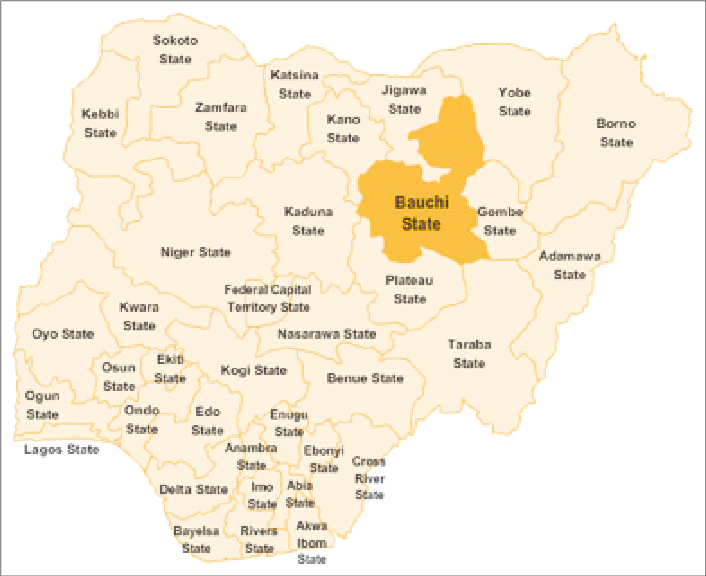
Last year, the Kano-Maiduguri Road suffered severe damage from flooding. The disaster caused immense hardship for ordinary citizens, displaced several communities along the route, and inflicted economic losses in hundreds of millions of naira. It also disrupted access to Maiduguri from key states such as Abuja, Kano, Jigawa, and Yobe, effectively cutting off the northeast from the rest of the country.

It will be recalled that on 15th August 2024, a Federal Government delegation led by the Honourable Minister of Works, Engr. David Umahi and the Governor of Bauchi State visited the affected site. They assessed the extent of the damage and promised urgent intervention, recognising the road’s economic significance not just for the northeast, but for the country as a whole. Unfortunately, to the dismay of the affected communities, no tangible action has been taken since that visit, only temporary fixes that have had little to no impact.

Residents are now growing concerned that if urgent intervention is not undertaken before the rains intensify, the road could suffer even more extensive damage than last year. This poses a serious threat to lives and property, as was previously experienced.

The rehabilitation of the Kano-Maiduguri Road is not merely about filling potholes or patching the surface – it is a vital aspect of regional and national development. The benefits of well-maintained roads are immense: improved safety and reduced accidents, enhanced economic activities, better quality of life, strengthened social integration, and even environmental advantages.

Beyond the infrastructural failure, there are concerns about the federal government’s perceived neglect of certain regions. This is especially disheartening considering that this region gave the current administration some of its highest votes. 

As an optimist and a believer in equitable governance, I hold firmly that all six geopolitical zones of Nigeria deserve equal attention and investment. Every part of this country matters. Mr. President must lead with sincerity of purpose and see all Nigerians as his constituency.

It is worth noting that during his visit, the Minister of Works acknowledged this imbalance, stating: “Let me make it clear that the shortfall in road distribution was not the doing of President Tinubu, nor mine. However, the President is addressing it. That is why the fourth legacy project has been initiated, stretching from Akwanga to Jos to Bauchi State. We are pleased that work is progressing significantly on major portions of the road in Bauchi State.”

The Minister further pledged that the President is determined to provide adequate funding for legacy projects through various intervention mechanisms. We hope that the government will act swiftly and treat this as a matter of national urgency by repairing the damaged sections of the Kano-Maiduguri Road, particularly within the Jama’are and Azare-Potiskum axes.

As an engineer, the Minister of Works should set a precedent prioritising action over rhetoric. When entrusted with responsibility, those in positions of power must demonstrate competence and a genuine commitment to service.

This is a humble but firm appeal to the federal government to urgently address the long-standing issue of the Kano-Maiduguri Road, which has been in disrepair since last year’s devastating floods.

Tajuddeen Ahmad Tijjani writes from Azare, Bauchi State.

Professor Roko’s healing hand: Governor Yusuf’s generosity

By Lamara Garba

In a world where leadership often wears the heavy cloak of command, Governor Abba Kabir Yusuf of Kano State walks a different path—one marked not by spectacle, but by quiet grace. His recent donation of N5 million to support the health of Professor Abubakar Roko, a senior lecturer at Usmanu Danfodiyo University Sokoto, shines like a candle in a stormy night—a gesture simple in form, yet profound in meaning.

This act of compassion stirred a ripple through the academic community, reaching hearts far beyond Sokoto. The family of Professor Roko, alongside the Academic Staff Union of Universities (ASUU) UDUS branch, offered their deep thanks. For them, the governor’s support was not just financial—it was a lifeline, a moment of humanity in an often indifferent world.

Professor Roko’s struggle for access to medical care echoes a troubling truth: that even those who nurture the minds of generations can find themselves abandoned in times of need. When society allows a scholar—one who has dedicated his life to the service of knowledge—to fall through the cracks, it begs the question: who among us is truly safe?

Indeed, Governor Yusuf’s gesture is more than an act of charity; it is a quiet protest against this injustice. It is a reminder that governance, at its best, is an extension of empathy. That leadership is not just about steering the ship, but about seeing those who have fallen overboard—and reaching out a hand.

Beyond the naira and kobo, what Governor Yusuf has given is dignity. His kindness says, “You matter.” It is a message sorely needed in times where those who build the foundations of our future—our teachers, our thinkers, our guides—are too often overlooked.

The ASUU Zonal Coordinator Professor Abubakar Sabo in terse verbal message of appreciation who, himself a staff of UDUS described Governor Abba as a “Messiah.” Saying, forever we shall not forget you, in our hearts. While titles are fleeting, the sentiment behind the praise is enduring. Governor Yusuf’s empathy has breathed life into the belief that leadership can still be rooted in service, not self.

In a letter penned by Professor Aminu Muhammad Bui, Head of the Department of Computer Science at UDUS, heartfelt gratitude poured forth: “This act of kindness and compassion from your esteemed office has brought immense joy and relief to Professor Roko and his loved ones.” These are not just words of thanks—they are testaments to the healing power of compassion.

Meanwhile, Professor Ibrahim Tajo Siraj, Chairman of ASUU BUK, illuminated the grim landscape of public education: dwindling morale, poor working conditions, and an exodus of talent—each one a symptom of a system that has long been neglected. His call for reform is a plea to rescue the very soul of the nation’s development engine.

Indeed, a society that does not cherish its educators weakens the roots from which all progress grows. The conditions endured by those in the education sector are not just unfortunate—they are unacceptable. Their resolution demands more than words; it requires will, vision, and urgent action.

Therefore, Governor Yusuf’s act is a glimmer in this long night, a sign that compassion can still guide power, and that true leadership is not found in titles, but in the quiet decisions that uplift lives.

It calls us to imagine a new dawn—where educators are honored, not merely with words, but with systems that support them; where acts of kindness are not rare exceptions, but a culture of care. Governor Yusuf’s compassion is a seed—may it find fertile ground in the hearts of other leaders.

And so, as the dust of this singular act settles, may it not fade into memory, but grow into a movement—a call to conscience. For in Governor Yusuf’s gesture, we find a lesson not just in leadership, but in humanity. And may that lesson echo far beyond Kano, beyond Sokoto—into every corner where hope waits to be awakened.

Perhaps, Governor Abba Kabir Yusuf’s donation to Professor Abubakar Roko is more than just a gesture of kindness; it is a reflection of his character as a leader. It shows that he is a man of compassion, empathy, and enduring humanity—one who listens not just with his ears, but with his heart.

It is worthy to note that in a time when many cry out for leaders who truly understand the burdens of everyday people, Governor Yusuf’s act stands as a quiet yet powerful answer.

It reminds us that leadership is not measured by grand speeches or lofty titles, but by the courage to care and the grace to act. His benevolence has not only lifted a man in need, but also rekindled faith in the idea that public service can still serve the public. May this gesture inspire others in power to lead not from above, but from among—and to remember that the true strength of leadership lies in the strength it gives to others.

Lamara Garba writes from Bayero University, Kano

2027: A gale of defections, eroding opposition and quest for power

By Emeka Blaise Okpara

As the 2027 general elections draw closer, the gale of defections that has rocked the People’s Democratic Party in recent times has thrown those in the current ruling All Progressives Congress (APC) into wild ecstasy. Once the largest political party in Africa, the PDP ran out of luck in 2015 when it lost the presidency to the APC. Before then, the party held power for sixteen years. 

In fact, at the peak of the party’s stronghold in power, the national chairman, Chief Vincent Ogbulafor, boasted in 2008 that the PDP would rule Nigeria for another sixty years. Perhaps lost in the effervescent aplomb of public office, he forgot that the future cannot always be assured. His boisterous vituperation was perceived as the height of braggadocio, a trait synonymous with most Nigerian political elites. 

Many were not surprised when, a few years after this declaration was made, the party started witnessing some implosion within its ranks. The fall of the PDP was masterminded by members of the party who formed an alliance with the opposition, which eventually led to its calamitous loss in the 2015 general elections.

Sadly, the party that once reigned monstrously in Africa’s most populous black nation has become a shadow of itself. Unfortunately for the PDP, since they found themselves out of power, they have not been able to play the role of the opposition because it is not in their DNA to do so, unlike the APC, which was birthed through opposition. 

In fact, it would not be out of place to say that the APC has so mastered the art of opposition that it has even devised means of creating its own opposition within and outside the party to keep any real opposition party at bay through controlled opposition.

With the open declaration of support for Tinubu’s presidency from governors of supposed opposition parties, and the defection of notable figures like the current Governor of Delta State, Mr. Sheriff Oborevwori, and Senator Ifeanyi Okowa, the immediate past governor of Delta State and running mate to Alhaji Atiku Abubakar in the 2023 presidential elections, many in the President’s camp have picked up a trumpet to sound it to whoever cares to listen that President Tinubu is a master political strategist.

As far as those in the President’s camp are concerned, the 2027 presidential election is already in the bag, awaiting to be transported home. In their assessment and assertiveness, nobody can defeat the chief political strategist of our time in the forthcoming elections.

It would be simplistic for anybody to assume that the mere fact that opposition members are trooping into the President’s camp is enough reason to believe that he will have an easy ride into his second term – far from it! If anything, Nigerians should be worried, as such actions only indicate state capture.

Nigerians are well aware of the politics their political office holders play. With the nature of politics played in Nigeria,where stomach infrastructure and personal interest supersede national interest, this junketing shouldn’t be a surprise.  What do you expect from politicians in a land where political parties lack ideologies apart from grabbing power? 

Interestingly, these massive defections should teach Nigerians that there is obviously no difference between the APC and the PDP. These political elites only care about themselves and not the welfare of Nigerians! At a time when Nigerians’ living standards are at an all-time low due to ill-thought-out policies by the Tinubu-led administration, politicians are falling over themselves to dance owambe in the APC. 

To keen observers of the Nigerian political landscape, these mass defections to the APC are nothing short of a defense mechanism employed by the party to give the impression that it is in total control, and for the defectors – whose priority should be governing and serving the people – to have a haven when the chips are down.  Unless on paper, there is no clear evidence that this administration has performed well enough to warrant admiration from the supposed opposition,who now join them in troops.

Moreover, the only reason political elites are decamping is that Nigeria has a flawed electoral process where the votes of the electorate do not count. If the so-called independent electoral umpire, INEC, were living up to its mandate, political office holders would learn to be disciplined and understand that only performance can guarantee their election or re-election.

While those who believe that the President is a political strategist continue to bask in his political mastery, one is compelled to ask why he has not been able to apply his strategy effectively in governance. Politics, according to Plato, should be for the common good. Nigerians would love to see and benefit from President Tinubu’s acclaimed strategy. 

Political strategy should not begin and end with seizing power. Where is his strategy for overhauling the economy since he assumed the presidency? Are Nigerians better off today than they were three years ago? Why hasn’t he employed his renowned strategy to tackle the nation’s insecurity? Or has the security of lives and property ceased to be the government’s primary responsibility? Where is his plan for reliable power, and why must Nigerians pay excessively for unstable electricity? Don’t we need his strategy for quality healthcare facilities? These vital sectors urgently require his strategic attention!

It would be ludicrous for anyone to believe that the future of Nigeria is solely in the hands of the political officeholders. Whether or not anyone wants to believe it, 2027 is still a long time off. Though Nigerian politicians are always thinking of the next elections, and not how to better the lives of their citizens, they must realise that the political dynamics can change anytime. 

General Sani Abacha was almost certain of becoming a civilian president in 1996. He had convinced all the key political actors of the time to endorse his presidency, and everything was working for his good, but fate had other plans. 

The only thing that will guarantee any political office holder a re-election in a constitutional democracy like ours is performance! A second term in office is like a referendum on an individual’s first term. The power to elect still rests with the people and not with politicians, except that we are no longer a democracy. 

If President Bola Ahmed Tinubu is keen on his second term, he should up his game. If he is unaware, someone should inform the President that Nigerians are not having it easy. Instead of focusing on the 2027 reelection in 2025, he should take advantage of the remaining two years of his first term in office to show his work. PR without performance is pure propaganda!  

A working Nigeria benefits all, irrespective of religion or tribe. Nigerians are groaning under his knee-jerk policies, which have plunged a vast majority of citizens into penury. More than ever, this is when Nigerians expect to feel the impact of his much-trumpeted strategy. Nigerians want to see evidence beyond the rhetoric.

Blaise Emeka Okpara, a student at the International Institute of Journalism, writes from Abuja and can be contacted at: emyokparaoo1@gmail.com