Opinion

Too many people at Umrah this year: why?

By Ibrahim El-Caleel

I can’t understand this obsession with the population at Umrah this year. Some people are taking it too far. Asking why should people be going for Umrah when poverty is biting harder.

The Haramain have been under restricted access since the global Covid-19 blues in 2020. Extremely few people accessed the Haramain throughout the year 2020; just a little above that accessed it in 2021.

In 2022, the Haramain have resumed operations in full swing. The world has moved on Covid, becoming more attentive to Putin’s war.

If the Haramain has remained under restricted access for two consecutive years, commonsense should tell you that a lot of people will troop in immediately everything is back to normal. You have a ‘merger’ sort of attendees from three years – 2020, 2021 and 2022. Also, it is something of joy and divine praises that finally, we can visit the sacred sites to their fullest capacities.

This is only a fair idea on why it is this full. It could have even been fuller than this had it been its affordable.

You come across writings that “recommend” or “advise” Umrah attendees on a ‘better use’ of their money, towards feeding than lesser pilgrimage. We do so with all dictatorial might as if going to the Ramadan Umrah is a misplacement of priority. Social media has helped show how some of us can be more dictatorial than Hitler himself.

Why do we feel this sense of always telling rich people what to do with their money, especially in religious matters? The entitlement is beyond me.

Umrah is not a mere tourism. It is an act of worship. Umrah in Ramadan is even a more serious act of worship, lucratively rewarding with the sincere intentions.

In a hadith, Prophet Muhammad (Peace Be Upon Him) said, “an Umrah made in Ramadan is equivalent (in reward) with performing Hajj with me (the Prophet)”. This hadith is authentic, and has been transmitted by both Imamul Bukhari and Imām Muslim. At least.

This is why apart from Dhul Hijjah, Ramadan is the next month you see Muslims traveling to the Haramain Al-Shareefain. It is with purpose. They have the money to go after a specific huge reward, that’s why. In most cases those of us who don’t have money don’t even pay attention to ahādith like these. I remember the late Shaikh Albaniy Zaria in his Saheehul Bukhari lessons in Kitabuz Zakah. The Shaikh saw a lot of people sleepy, dozing off. So he said, one of the reasons why some people sleep off during Zakah lessons is because they don’t even have the wealth which qualifies for Zakah. They are not rich. This is why they find it hard to pay attention to understand the topic. Rahimahullah.

Therefore, Umrah and Umrah in Ramadan are not tourisms please. Rich people have their reasons for embarking on them. Good, valid reasons. Do not be talking as if they are misplacing priorities. Saying they should use the wealth to feed the poor, instead of doing Umrah. Do you know whether they are already doing so? Or since when did you become the divine regulatory directorate where people must come and confess their acts of deeds so that you are aware?

I think it is important we get down from this moral horse. You have an iPhone, a Redmi Note, an expensive Versace shoe, a Toyota Corolla. You buy 10gb mobile data monthly. Have you ever considered down-tiering from these things to cheaper things so as to use the differentials to feed the poor? Why don’t you sell off your Toyota and buy a Lifan motorbike, and use the balance to feed the needy in this Ramadan? After all, all you need is a transporting automobile. It doesn’t have to be a car, talk less of being a Toyota!

If you haven’t been doing this, do not get obsessed with ‘advising’ people on how to rank their Nawafil acts of deeds based on your perceived scale and degree of importance. It ain’t your place. It ain’t my place either.

Islamiyya System: A perfect replacement for the archaic Almajiri system

By Muhammad Dattijo Kabir

Islamiyya system has been proven to be an alternative to the Almajiri system. In the Islamiyya system, it is easier to commit the Qur’an to memory within the shortest period with decency. And it also allows the children to seek other knowledge that will aid them in confronting the present challenges. Almajiri system can only be insisted to be reformed when it is proven that that is the only way to learn the Qur’an. The system poses a lot of danger to the children, such as health challenges, inferiority and, of course, most of them become morally debased in the end.

Reforming this system alternatively means rewarding irresponsible parents for their irresponsibility, creating unsustainable programs which cannot see the light of the day. Instead, the government should ban and criminalise the system and absorb all the already enrolled Almajiri into formal schools. Then any other parent that wants his child to learn the Qur’an by traditional means must first provide shelter, food, and health facilities for the welfare of the child and must ensure that the child goes to school to at least get primary education.

No one is saying karatun allo should be banned. Karatun allo differs in content and operation from the Almajiri system. While the former entails learning Qur’an by the traditional design by all and sundry, the latter entails recruiting young persons to learn Qur’an by traditional means without provision for food, shelter and medical facility for children recruited. The said recruited army of children relies only on begging leftover food and tattered clothes for subsistence.

It requires no second thought to believe that this system of taking young children away from their parents at the ages they need their parents the most should be stopped and criminalised. No child under the age of 12 should be taken away from his parents’ house in whatever guise. There is nothing good in the Almajiri system as practised today. The system has served and outlived its usefulness. It became archaic and, to some extent, barbaric considering the conditions of the children involved in the system.

There are more decent systems which are alternatives to the already abused system. The system indirectly supports irresponsible parents to breed bundles of children they know they cannot cater for. The parents use the system to abdicate their parental responsibility of feeding, clothing, educating and sheltering their children.

Also, the half-baked Malllams use the system as a means of income. The activists are using it to get themselves employment from international NGOs. The nagging question is, can Qur’an be learned through a more decent system than this child molesting system? The answer is yes. Thousands of children have committed the entire Qur’an to memory through the modern Islamiyya system.

Let’s move on; the system is not viable in the present era. The era of dogma has passed. Let every child be supported by his father and take Quranic education before his parents while attending school. Any system that encourages parents to take their children to the street is barbaric and should not be encouraged.

Muhammad Dattijo Kabir. Muhammad is a lawyer, a human rights activist and a public affairs commentator. He lives in Kaduna and can be reached via jibrilmuhammad27@gmail.com.

Nafisat Abdullahi, Naziru Sarkin Waka and our attack-the-messenger-to-discredit-the-message syndrome

By Ishaq Habeeb

I’ve met Nafisa twice, first at Zoo Road, Kano, hanging out with a friend who’s in business with many Kannywood industry people. Second, when I escorted a friend who visited Kano, Nigeria, from Niamey, Niger Republic. He had been pen pals with Nafisa for some time. So they agreed to meet whenever she’s in Kano.

After my initial attempts to dodge being part of making this meeting happen, I grudgingly agreed to link them up. But, aside from that, I don’t know Nafisa enough as an actress to know whether I like her or her movies.

I mostly remember her from the one-time popular song, “Bankwana sai watarana“, sang by Nazifi Asnanic. But following this Almajiranci debate, I already like her as an activist and looking forward to liking her as – hopefully – a good actress.

As for Naziru, I’ve met him several times. Besides being best friends with his childhood friend Rabiu Uba, I’ve had business reasons to visit his T/Fulani residence last year with Usman G. Abubakar and spent time with the singer in his living room. That aside, I am no fan of his mostly-political music. Nothing personal, just not my genre.

Now back to the original reason behind this write-up; the Almajiranci debate. My stand; Nafisat Abdullahi is right, so is Naziru Sarkin Waka. For those of us that know people in the Kannywood industry and have lived in Kano (the headquarters of Almajiranci in the world) long enough to see the horror of Almajiranci at its peak, we are in a better position to say they’re both right.

Victims of inadequate parenting primarily dominate both Kannywood and Almajiranci systems. Therefore, inadequate parenting is the monster we need to kill. Given that, bearing more children than one can adequately cater for is hugely responsible for bad parenting. This fact proves Nafisa and Naziru right.

Conclusively, the major problem lies with the people that make it their life’s calling always to attack messengers to discredit a message that often serves the good of all – however factual and tangible the facts in the message may be.

First, it was Digital Imam, speaking truth to Presidency on the escalating level of insecurity. Then Nafisat, for speaking out against Almajiranci, a menace we all agree needs urgent addressing. Then almost concurrently, Naziru, for speaking out against the prevalent immoralities in Kannywood, which is being perpetrated chiefly by victims of inadequate parenting.

Now, one can only pray, as a people, may we learn to hate our problems more than we love judging who’s reminding us of their presence for us to FIX them.

Ishaq Habeeb wrote from Kano via simplyishaqhabeeb@gmail.com.

Almajiri and the road to Armageddon: Nafisa Abdullahi is right

By Aminu Mohammed

I have observed the raging debate over the Almajiri debacle in the last few days, especially the antagonism against a Kannywood actress Nafisa Abdullahi. The actress voiced out against parents who send their children to urban centres to memorise the Quran under the guise of an Almajiri system.

This issue resonates with me because I was once an “Almajiri”, though in a modernised form of learning. I was a product of Arabic and Islamic education. I am still grateful to my late father for seeing the wisdom in sending me to the College of Islamic Studies Afikpo, a boarding secondary school in Southeastern Nigeria funded by a Saudi Arabia-based International Islamic organisation Rabita Alamul Islam (the Muslim World League). Unlike some of my schoolmates who later studied Islamic studies at Islamic University Madina and Azhar University Cairo, Egypt, I decided to study International Studies at the Ahmadu Bello University, Zaria, against my father’s wish, whose dream was for me to be an Islamic scholar.

I am still at a loss wondering why the actress is being pilloried for telling the truth. If you ask these intellectual lilliputians and Nafisa’s traducers whether they will be comfortable sending their children out to beg on the streets under the guise of Quranic education, they will never say yes.

Before you call me “Karen farautar yahudawa”, an agent of Jews, which our people are fond of calling those who seek societal change and are in tune with modern realities, let me clarify that I did not attend a conventional secondary school. I advocate an integrated education system involving the acquisition of both western and Islamic education. 

I will never advocate against memorising the Quran or acquiring Islamic knowledge because I was a beneficiary of that. At the boarding secondary school in Afikpo, Ebonyi state, we were taught Hadith, Fiqh, Balaga, Tafsir, Tajwid, Saqafa, Sirat, Ulumul Falsaf, Sarf and Nahw, among other subjects, by some Islamic scholars mainly from Pakistan, Egypt and India. I was able to speak Arabic with confidence on completing my secondary education. I even took some Arabic courses as an elective throughout my studies in Zaria. Even here in Germany, I still communicate with my neighbours from the Middle East in Arabic.

I am not worried that this article will generate antagonism in some quarters or be pilloried for triggering anger in some folks. But the truth of the matter is that we cannot continue on this trajectory. This system can no longer continue the way it is; otherwise, we may be heading towards the precipice. 

The word Almajiri is derived from the Arabic word “Almuhajirun”, meaning a person who migrates from his locality to other places in the quest for Islamic knowledge. During the colonial era and a few years after that, the schools were maintained by the state, communities, the parents, ‘Zakkah’, ‘Waqf’ and augmented by the teachers and students through farming.  “Bara”, begging as it is known today, was completely unheard of. 

Mallams and their pupils, in return, provide the community with Islamic education, reading and writing of the Qur’an, in addition, to the development of Ajami, i.e. writing and reading of the Hausa language using Arabic Alphabets.  Based on this system, which is founded upon the teachings of the Qur’an and Hadith, the then Northern Nigeria was broadly educated with a whole way of life, governance, customs, traditional craft, trade and even the mode of dressing.

However, the system was corrupted in the past few decades, with teachers sending the children to beg for food on the streets. Similarly, many irresponsible parents were unwilling to cater to their children. Thus, they send them away to cities to purportedly acquire quranic education.

The current Almajiri system is not only archaic but atavistic. We must tell ourselves the truth that society is drifting. What we are facing today regarding security challenges in the North will be child’s play if our people refuse to change their ways. There is no gainsaying that the future is bleak if what we can boast of is an armada of malnourished and unkempt children who are roaming the streets under the guise of Islamic education. Eventually, the children may not acquire any meaningful skills to become useful members of society. 

I am not a prophet of doom and derive no joy in pessimism. But, I do not see a bright future for a region struggling with a depleted human resource, coupled with millions of underage children clad in tattered clothes with bowls roaming the streets begging for food. I do not foresee any meaningful progress and development in such a society.

I still recall, in 2012, when former President Goodluck Jonathan visited Sokoto to inaugurate the Almajiri Integrated Model School in the Gagi area of the Sokoto metropolis. This boarding school was equipped with modern facilities. As a journalist working with THISDAY Newspaper then, I was there at the commissioning and even interviewed the school’s principal Malam Ubaidullah, a few months after the inauguration. I was excited that there would be a gradual process of taking Almajiris off the streets, as was promised by former Sokoto governor Senator Aliyu Magatakarda Wamakko. However, the euphoria was short-lived as governments in the region neglected the programme while the school buildings rotted away.

I wonder why our people antagonise those who want the system to be reformed or outrightly banned in the North. Are we comfortable seeing underage children roaming the streets under such dehumanising conditions? Have we pondered over the looming famine in the Sahel as forecasted by global development organisations, of which Northern Nigeria is part due to climate change worsened by overpopulation? Are we not witnessing the level of insecurity pervading the region because of societal neglect and marginalisation caused by a rapacious elite?. Do we sit down and pray and wait for a miracle to happen while expecting that our problems will go away?

Already we are battling with banditry in the Northwest due to societal neglect of a segment of the society that we use to mock because of their ignorance. And things will even get worse in future unless drastic action is taken to reform the system to enable children to memorise Quran in a friendly atmosphere devoid of hunger and deprivation. The current Almajiri system is a pathway to perdition.

Parents should stop sending children to cities if they are not ready to cater for them. These children should stay in their localities and learn under a school system presided by their Islamic teacher or Malam. The state governments must engage those Quranic teachers and pay them a stipend. I know this is doable because the government has the means to do that.

Unfortunately, much resource has been wasted on frivolities instead of channelling it towards revitalising the Almajiri system. We must wake up from our slumber and direct our energies toward finding a way to tackle problems in our society. Taking action is the key, and I believe that is the only way we can expect to have stability and peace in the polity.

Aminu Mohammed is at the school of Sustainability, Christian- Albrechts- Universität zu Kiel, Schleswig Holstein, Germany. He can be reached via gravity23n@gmail.com or stu219013@mail.uni-kiel.de.

Zainul Abideen: An examplary charity giver

By Ibrahim A. El-Caleel

Zainul Abideen was the nickname of Imām Aliyyu bnul Husain (Rahimahullah). He was son to Sayyidna Al-Husain (R.A), and a grandson to the 4th Rightly Guided Caliph, Aliyyu bn Abi Talib (Radiyallahu Anhu) and the daughter of the Prophet ﷺ, Sayyidah Fatimah (R.A). Therefore, he was a great-grandson of Prophet Muhammad ﷺ. Thus, Zainul Abideen is a member of the Ahlul Bayt (Household of the Prophetﷺ). Twelver Shi’ites count him as their 4th Imam, even though he neither believed in nor endorsed their Rafidhi creed and methods, just as indicated by Abu Nu’aim in his ‘Hilyatul Awliya’ (3/136).

The above is a quick biography of this exemplary personality whose history we all deserve to read. He has a rich biography, owing to his religious devotion and Islamic scholarship.

In this brief note, I intend to highlight his mode of giving charity, hoping that we use it as a template or we benchmark it versus how some of us give charity today.

Al-Imamul Dhahabi narrated in his book, ‘Siyaru A’alamin Nubala’ that, Zainul Abideen used to take bread during the dark part of the night, and he would drop it at the doors of the poor and needy while people were asleep.

Nobody knew who was doing this generous act. But after his death, the generous act stopped immediately. This was how it was discovered that Zainul Abideen was indeed the person who used to give out charity at night. He hid his face from people because his ultimate goal was to be rewarded by Allah. He was neither interested in the gratitude of the beneficiaries, nor the validation of the public, nor was he expecting anything in return from this material world.

Meanwhile, during his lifetime, he was known with a famous saying that:

إن الصدقة في سواد الليل تطفئ غضب الرب

“Verily, the charity given out in the darkness of the night extinguishes the anger of the Lord (with his servant)”.

For his rich biography, read Al-Imamul Dhahabi in ‘Siyaru A’alamin Nubala‘, 4/387

What Zainul Abideen was doing was in congruence with what Islam recommends about concealing charity. Allah says in Qur’an 2, Verse 271:

إِن تُبْدُواْ الصَّدَقَاتِ فَنِعِمَّا هِيَ وَإِن تُخْفُوهَا وَتُؤْتُوهَا الْفُقَرَاء فَهُوَ خَيْرٌ لُّكُمْ وَيُكَفِّرُ عَنكُم مِّن سَيِّئَاتِكُمْ وَاللّه
بِمَا تَعْمَلُونَ خَبِير

“If you give charity openly, it is well. But if you hide it and give it to the poor, that is better for you. (Allah) will forgive you some of your sins. And Allah is Well-Acquainted with what you do.”

This explains that there is no problem with you making your charity publicly known, especially if you hope to encourage people to imitate you in righteousness. However, the verse is admonishing you that concealing the charity, hiding it from the public glare is better for you. This is because it helps protect you from riya (show-off) which can make you lose your reward in the sight of Allah. Whatever the case, beware that Allah is well-acquainted with what you are doing. He knows both your intentions and your actions.

Today, some people are fond of exposing their charities which takes them close to riya, if not already it is. After giving the charity in public, you will see them snapping and uploading pictures of the charity session they had on social media platforms. Only Allah knows which charity is submitted for His sake and which isn’t. However, you should be careful because Iblees (Satan) is crafty. He can easily spoil your acts of good deeds by leveraging certain loopholes. Your intention could be pure from the onset, but upon uploading the pictures on social media, Satan would put in whispers to you to corrupt your initial intention and now look forward to trend; to gather ‘likes’, ‘retweets’ and ‘shares’ on Facebook, Twitter and Instagram. This is where riya might set in and destroy a noble cause.

For Allah and His Messenger (Peace Be Upon Him) to recommend concealment of charity, then there is a deep wisdom in such. Perhaps this is why predecessors like Zainul Abideen, for example, resorted to completely hide their faces from their charity. They sought to protect themselves from the whispers of Satan who has sworn to lead the humankind astray.

If you are coordinating a charity program on-behalf of an organization, or a group of people, and there are trust concerns, then it is better you create a small medium through email or social media messengers to send them proof of execution of the project. They are the people whom you might owe a proof of execution of the project. Secondly, in the course of mobilizing for funds through adverts, you may want to hide the faces of the beneficiaries because it appears improper to use someone’s predicament to publicize your financial aid program.

May Allah protect our good deeds from the corruption of riya, ameen

May Allah accept our good deeds and forgive our shortcomings, ameen.

El-Caleel writes from Zaria, Kaduna State.

Adverse effects of force-feeding infants

By Ja’afar Ja’afar

As your little one starts to explore the world of solid foods, he will learn to differentiate the tastes of different food items. This is where the struggle of a parent begins. Despite being a picky eater, making sure your child gets all the required nutrients can be frustrating. At times this frustration makes parents go overboard, and they pressurise their children to eat. Even though done with good intentions, force-feeding is never a good idea when it comes to the developing years of your child.

What is force-feeding?

Force-feeding is basically forcing your child to finish the whole served food against their will. When happy mealtimes turn into a war between parents and children with a plate full of healthy foods in between, parents generally end up using force-feeding as the ultimate strike. Even though it seems harmless, it never leads to a “win-win” situation and can do more harm than good to your child.

Instead of force-feeding your child to eat a particular food, try to prepare different variants of dishes, including that food along with the food groups your child enjoys eating.

How do parents force-feed?

Here are a few common ways parents tend to force-feed their children –

  • Deciding on your own what, when and how much your child should eat.
  • Nagging, scolding or threatening your child to finish his plate.
  • Bribing or blackmailing your child into finishing his food and rewarding him later.
  • Punishing your children if they don’t eat.
  • Comparing your child with siblings or other children to make them feel shame or competitiveness.
  • Literally forcing food into your child’s mouth and making him swallow.
  • Ignoring his pleas to eat less and using fear to force him to eat.

Force-feeding seems to get the work done for the time being and may give you the “mission accomplished” feeling too. However, it actually can have harmful effects on your child. Let’s discuss seven negative effects of force-feeding that are usually seen among children:

1. Destruction of your child’s natural appetite

The natural desire to eat is known as one’s appetite. During mealtime, constant nagging and force-feeding will make your child lose interest in food and disrupt your child’s natural appetite. Forcing your child too much may lead to him puking out everything and hating even the idea of eating.

2. Strong aversion towards food

Studies have shown that force-fed kids often end up developing a strong aversion toward food. The negativity associated with food makes them traumatised and nauseous. This aversion sticks around even when they grow up as these foods continue to subconsciously remind them of the panic and bad memories of childhood.

3. Stressful meal-times

It is in human nature to avoid anything that causes stress or discomfort. The only way a child will accept something is if they enjoy it while doing it. Forcefully feeding your child healthy foods on his plate can leave him with a stressful and unpleasant experience. Hence instinctively, he will only learn to hate mealtimes and continue to struggle with food.

4. Inclination towards sugary or junk foods

Force-fed children often learn to develop unhealthy food habits. This happens because a force-fed child never learns when to stop eating as they get accustomed to overeating during those force-feeding sessions. Also, due to their hatred towards healthy foods, they get attracted more to sugary or junk foods.

5. Lose control over their eating habits

As parents, your ultimate focus should be on making your child less dependent on you and learning to do everything themselves. But, the more you take control and force-feed your child, the less control he will have over his own eating habits. This will hamper his life and food habits even as he grows up.

6. Development of eating disorders

Since force-fed children never learn how much food their bodies require, they tend to overeat or undereat even when they grow up. This loss of control over eating habits can lead to serious eating disorders such as obesity, anorexia, bulimia, etc.

7. Disrupted eating pattern

Every human body has a different food capacity and metabolism rate. The amount you decide to give your child may be much more than his capacity to digest. If you force-feed him to finish the entire serving even after he tells you that he is full, you are feeding him an excess amount. He will need more time to digest that portion, so he won’t be hungry when you serve his next meal. As the cycle continues, your child’s natural digestive pattern will end up getting disrupted.

Ja’afar Ja’afar sent this article via mrjaafar64@gmail.com.

Stop religious altercation, use social media to learn practical skills

By Aminu Mohammed

In the last few weeks, I have keenly observed discussions about bestie, comrade and recently altercation over interfaith dialogue by our youths on various Social media platforms, particularly Facebook. The debates seem amusing, even though the one on interfaith has generated more altercation between some Islamic scholars and their followers, leading to personal abuse. I am not against people using social media to crack jokes and have fun, but it will show a lack of seriousness when people waste time on meaningless arguments.

I shudder in disbelief, wondering if something is wrong with our youth. I still recall that just a few weeks ago, a Kaduna-bound train was attacked, with many people killed while scores are still in captivity. Yet, we have seemingly forgotten about them. Instead, we dissipate energy on trivial issues. Have we done enough by putting pressure on the government to rescue our brothers and sisters in captivity?

What about using social media to pressure our governments in the region to evacuate Almajiris off the streets and end such child abuse. What about encouraging our brothers to exhibit tolerance towards other sects rather than altercations?

We have many issues at hand, and we can use social media to compel the government to do our bidding. Still, we are more comfortable arguing over trivial matters and abusing those who do not believe in our ideology. Our Islamic scholars seem not to see the urgent need through their sermons to pressure the government to tackle poverty and Almajiri syndrome in the North.

Social media is a gold mine that has provided many opportunities for personal development and skill acquisition for career advancement. But are we utilising the massive opportunities in social media to improve our lives? Are we learning new skills every day to change our narrative and move to the next level? These are questions that we should be asking ourselves.

Many people worldwide are utilising the vast opportunities made available by social media to enhance their lives, acquire new knowledge and boost their income. I still recall a post made by Dr Muhsin Ibrahim on his Facebook page, lamenting how many graduates cannot use basic email to send letters or apply for jobs. One can acquire this knowledge by spending a few hours on YouTube, but our youth will rather spend hours on Facebook attacking one another over frivolities. Frankly, obtaining mere certificates is not enough in the current era. Practical skill is what differentiates between graduate A and graduate B.

Living in Germany in the last few years has exposed me to the notion that a certificate is not enough but practical skills that can help one deliver on the job. I have seen people finish graduate programmes here and struggle to get a job until they learn practical digital skills online.

In the last few months, I have observed that some people got jobs after learning digital skills for six months or more such as web development, app development, digital marking, and programming, among others. This is despite the fact that they completed their degree at the university here – in Germany. The reality is that companies are only interested in knowing if you have the practical skills to deliver on the job and not a simple certificate.

It is pertinent to note that some forward-thinking youths in the Southern part of Nigeria work remotely for international companies due to the acquisition of digital skills. Thanks to their skill, they live in Nigeria and still earn money in foreign currency.

I have decided to devote much time this year to acquiring digital skills for personal development and suggest that to whoever is interested. I will not hesitate to reiterate that our youth in Arewa should embrace digital skills to escape poverty. With your mobile phone, you can learn practical skills free online. There are various mediums to learn digital skills for free such as Google garage, Udacity, Udemy, Coursera, among others. In fact, I am currently learning a digital skill on Coursera.

Please, my brothers and sisters, I believe we can change the narrative. Our region is bedevilled by mass poverty because of the attitude and mindset of our people. An untrained mind will create and recreate poverty irrespective of the available opportunities. So, stop wasting your data on frivolities. Instead, use it judiciously for something meaningful.

Of course, not everyone will be interested in digital skills, but there are other vocational skills you can still learn by watching YouTube videos. For example, people learn how to bake cakes, cook, and do many things by watching videos on YouTube.

Likewise, you can improve your Islamic knowledge by reading good articles and books on various Islamic websites online rather than using social media negatively. The time is now for us to do the right thing and find a way to improve our lives and that of our families. May Almighty Allah accept our supplication in this month of Ramadan.

Aminu Mohammed is at the school of Sustainability, Christian- Albrechts- Universität zu Kiel, Schleswig Holstein, Germany. He can be reached via gravity23n@gmail.com.

Photo grid

By Ismaila Academician

One could succumb to knowing why Europeans and Americans are so obsessed with photo-keeping culture. Every fragment of their life, whether small or insignificant, is captured in a photo collection that will be made available on display or neatly hidden in a safe for future use.

Although that is not part of my culture, I can reason that they keep a photo collection, contrary to what we think. The Europeans do that to keep memory down history lanes – pedigree, simply because, at times, that is one heck of a thing one can grow up to know about their family. For example, parents die leaving behind their children at much younger ages; the lost ones, the adopted ones, and those who find themselves in the orphanage may get to know and connect with their past from photos made available to them.

That’s their pop culture right before the present day when digital tools made photos even easy to capture and share with FAF, even on the go. But, unlike photo cards, digital images travel far away and faster than we can ever imagine. It also keeps memories longer than photo cards, free from any physical damage, such as loss, overuse, fire and water consumption, etc.

Despite the importance of keeping photos, I feel that we overdo it. Nowadays, we take unnecessary images that we could not even keep, and recently, it’s becoming like an addiction. We just found ourselves taking photos that are not only insignificant but smartly improper that sometimes pose threats to our peace of mind.

On many occasions, photos land us in big troubles: many people lost their jobs, some were convicted and tried; it broke marriages, shattered dreams, and made rich people poor. However, sometimes the photos we take belie our sense of humanity. For example, sharing pictures of victims of a ghastly accident is more horrible than sharing nudes.

Although photos motivate and make things extremely simple, sometimes they appear to be fallacious and discouraging, and when that happens, it does more harm than the purpose it was captured for. Thus I advocate for photos for a good cause.

Ismaila Academician wrote from Kano via ismailaacademician@gmail.com.
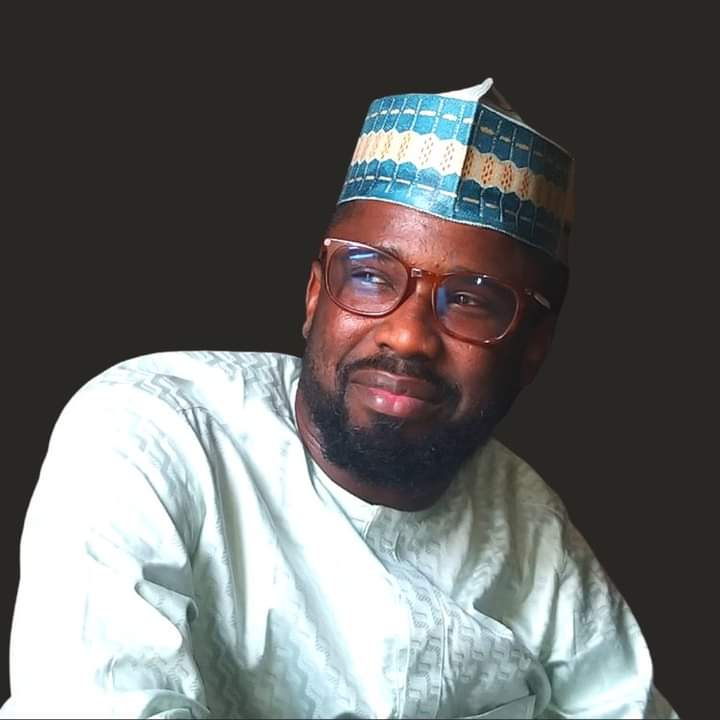
Osinbajo: The face of national unity

By Ahmad Abdullahi

About eight years ago, the All Progressives Congress (APC) appeared to be in a huge dilemma over the selection of a Presidential Running Mate who will fly the flag of the party alongside its candidate General Muhammadu Buhari who just won the party’s primary election. APC’s dilemma was justifiable as they were trying to bring on someone credible that will balance the ticket and make it acceptable enough to stand a strong chance against the mighty PDP.

After so much intrigue within some intense and eventful 48 hours, Professor Yemi Osinbajo got the Vice-presidential ticket to the surprise of many Nigerians. Many expressed fears about whether he carries the political capital strong enough to help the ticket deliver. Little did many know of the Professors’ charming simplicity and intelligent technicality alongside his mass appeal that saw the ticket going all the way. The rest is now history.

Like in 2015, today, we are again witnessing a period when Presidential candidates are being profiled based on their ethnic affiliations instead of their pedigrees. We are having candidates getting attacked desperately on sentiments and arguments that bring nothing to the table except confusion and division. Being a front-runner for Nigeria’s number one job, the Vice President is one of the most prominent victims of these ethnoreligious motivated attacks

As expected, the build-up to Osinbajo’s presidential declaration has been greeted by so many criticisms, many of whom are targeted towards tarnishing his image and rubbishing his candidacy through lies, character assassination and carefully tailored misinformation. Osinbajo’s attackers are hell-bent on bringing down his candidacy even before it gets started. This goes to tell how significant he is in the political equation of 2023 despite many trying hard to dismiss his impacts over the last seven years.

The Vice President has been accused of being a religious and ethnic bigot. Some have gone as far back as his pre-political life to try to convince people of what many facts have proven him not to be. If we are to be fair to Osinbajo, the man is solely building his presidential campaign on the strength of his adventures of the last seven years in which opportunity has entrusted him with a national assignment that requires him to be fair to all Nigerians. As such you cannot use any other criteria to judge him.

In his first five years in office, he has supervised and presided over the initiation and implementation of the largest Social Investment Programme in the history of Contemporary Africa. A program that has been transparent, just and detribalized. Nobody can prove that he has used his position to skew the benefits of the social investment programme towards favouring any religion or region. It is one of the rarest programmes that tricked down to the doorsteps of the poor and downtrodden across all states of the federation.

In mid-2017, Nigeria almost plunged into a national ethno-religious crisis when the Biafran agitators were at the peak of their renewed call for separation. The Federal Government under the wisdom and initiative of the then Acting President Professor Yemi Osinbajo conducted a series of consultative meetings with various groups of leaders and people of societal influence across the country to make sure that the situation is tamed and controlled. Osinbajo tirelessly interacted separately with leaders of thought from the North and the South East, traditional and religious leaders from the same regions as well as all 36 state governors. This was no doubt a big positive step that even the opposition Peoples Democratic Party commended.

In their first tenure, Osinbajo’s same Christian constituency which some believe he is favouring accused him of working with President Buhari to Islamize Nigeria. The outcries became so worrisome that Osinbajo made a public clarification. He said that one day, he woke up around 6:00 am in the morning and saw a text message on his phone sent by a renowned Christian leader who said to him that one day he will account for his actions of allowing Muslims to dominate and take over the government of Nigeria. The Vice President has passed through all this only now to be labelled a Christian bigot.

He further said that he wondered what informed that sort of message while statistics show that there are two more Christians than Muslims in Buhari’s cabinet as of then. He cited an example of a time when a Northern Senator visited President Buhari in his presence and complained bitterly about the marginalization of his people. He however left with the embarrassing information that North West, his zone was leading in the number of heads of government parastatals with 47, followed by South West, South-South, South East, North East and then North Central. Why didn’t this senator do his homework before complaining? Misinformation.

I remember in one of our interactions with him in the last two years, he said if Nigeria disintegrates into smaller countries that can be run over at will by powerful ones, every region will be disadvantaged in different proportions. He, therefore, said our strengths lie in our diversities, number and size. He gave the example of Lagos State’s economy being six times bigger than that of Rwanda despite all the so-called giant strides recorded by Paul Kagame over the years. He emphasized that the country needs not to disintegrate into smaller parts for people to have the opportunity of holding public office and if it is his face or that of President Buhari you dislike that you want secession, then know that, their days in office are numbered but Nigeria can live forever.

As Acting President, he made one of the most diplomatic and yet authoritative efforts to save Nigeria from untimely disintegration in 2017. He brought together all political, traditional and professional stakeholders in Aso Rock to further boost their confidence in the Nigerian Project. Therefore, no one can question his resolve for national unity and integration.

I think the Vice President can be accused of anything but not religious, regional or ethnic bigotry. If anything, he is perhaps the most qualified Nigerian among those seeking the Presidency. He is the first and only Professor to become President or Vice President in Nigeria and has so far adequately demonstrated why the most educated among us need to be allowed to serve at the highest level. He is the most adequately educated and professionally inclined Presidential hopeful among the very top living Nigerians today.

The Vice President has delivered within the limit of authority, opportunity and responsibility at his disposal. He has spent seven solid years serving Nigerians and the President with uncommon patience, dedication and humility. He has never been disappointed in any task assigned to him. Unlike many Presidential hopefuls who are planning to run from regional, religious, political and selfish motivations, the VP plans to become a true Nigerian candidate and a president for all Nigerians.

That he has been to almost every Local Government in Nigeria is not and cannot be an exaggeration. His long-life push for justice reform in Nigeria has taken him to so many nooks and crannies in the country, The trader and market Moni social investment programmes have seen him monitor and visit rural and remote areas that even ward councillors may not fancy going. The same people who accused him of show-off and pretence when he was making such visits are now the ones denying he ever embarked on such visits.

That he has declared to continue from where the President Buhari has stopped is a diplomatic way of saying that he is the man who understands all the successes of this administration and is in a better position to build on them, and also the man who understands all its shortcomings and is in a better position to make up for them. However, some are hell-bent on twisting the narrative.

Those accusing him of political betrayal are tactically telling Nigerians that the Presidency is the birthright of some mighty individuals and it is, therefore, a crime for ordinary people like Osinbajo to make an attempt on it. What some people are having very difficulty swallowing is why will an ordinary teacher and lawyer who is not even a former governor or ex-minister and has become Vice president just become President? Who is he? But they forget, that power belongs to God.

The 2023 presidential election would have been won and lost by this time next year. It may be Osinbajo or anyone else. However, it is clear even to his worst enemies that the Vice President has all the required credentials to make a good President. Deploying arsenals of calumny campaigns to stop him will not work, only divine destiny can do that.

The writer is the Team Lead of the Osinbajo-Face of Hope Project. He can be contacted via info@ofaceofhope.com.

Reforming the Almajiri system: More action, less talking

By Khairat Suleiman Jaruma

It took too long for us to realize that one of our biggest problems in northern Nigeria is the Almajiri system, even though we still have a few slowpokes that believe there isn’t anything wrong with the archaic and inhumane system.

We have criticized and blamed the system enough. It’s high time we started doing more action and less talking. But how do we go about it? Can we stop the influx of children into the system? Completely? No, but to a very reasonable extent, yes. But, how do we deal with those in the system already? You might say they should be taken back to their parents, and you are not wrong, but some can’t even remember their parents or where they come from. We also have those who have lost their families and villages due to banditry and terrorism. So, how do you go about it?

Baffah (2022) explained, “The best way to check the Almajiri system is to empower local governments. When you create wealth at the local level, rural to urban migration becomes unattractive, economic equality is everything”. But there is more to do than just this.

It is almost impossible to abolish the Almajiri system, and previous – and even ongoing – efforts to ban it failed woefully. What the Almajiri system needs are sustainable reforms, as opposed to the white elephant reforms that have been made in the past.

NexTier SPD suggests government must adopt the Child Right Act, which is an effort by UNICEF to protect children and ease the prosecution of violators of child rights. It is equally vital that the government criminalizes the movement of Almajiris from one place to another. In addition, begging and child labour should be banned entirely.

Also, the government must work with informal structures such as religious and traditional institutions to support and promote reforms by emphasizing the gain of a reformed Almajiri system to individuals, parents, and the society at large while discouraging incessant childbirths and implementing childbirth control policies.

The importance of religious leaders and traditional stakeholders in sustainable Almajiri reforms can’t be overemphasized. But, it’s also essential that, as individuals, we stop using Almajiris as henchmen for committing heinous crimes or as a source of cheap labour.

Khairat Suleiman Jaruma wrote from Kaduna via khairatsuleh@gmail.com.