Opinion

Tinubu/Shettima ticket: What are the issues?

By Lawan Bukar Maigana

“We are not coming into government to represent the Muslim or Christian faith. The Sultan of Sokoto and the CAN President are competent to represent their faiths. We are the Nigerian dream team that will catapult the country to a higher pedestal, and we will redefine the concept of modern governance. The Christians have nothing to fear, and there is no cause for alarm because we are one people with a common destiny.”

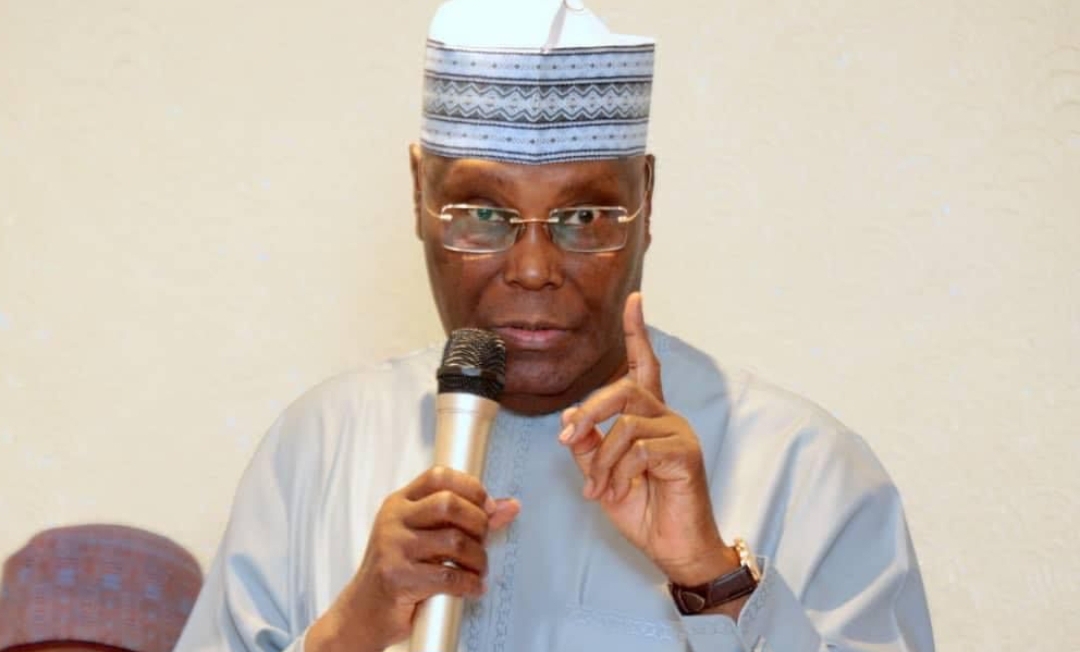
That was vintage Kashim Shettima, the Vice-Presidential candidate of the All Progressives Congress (APC), in one of his numerous efforts to push back the insinuation of a sinister motive behind the Muslim-Muslim arrangement of the party. In fact, based on his determination to deflect attention from the Muslim-Muslim ticket controversy, Shettima has been using every platform available to him to tell everyone who cares to listen that we should all focus on the issues – issues of governance and how to move the country forward.

But beyond the irritation that engulfs his face each time the issue of religion is brought up and his insistence that real issues, not inanities, should be discussed, Shettima also needs to come up with the issues he wants Nigerians to focus on and, most importantly he should lead the conversation.

Is Shettima himself or Ahmed Bola Tinubu discussing the issues? Beyond saying he and his running mate would tackle insecurity and fix the economy using their experience and the pedigree they have garnered over the years, what specifics has Shettima been discussing? What timelines?

What bold ideas are Tinubu and Shettima bringing to the table to tackle insecurity, fix the economy, power, etc.? What specific promises are they making that Nigerians can hold them accountable for?

APC is the ruling party. Tinubu/Shettima ticket is deemed to be the leading ticket in this election, and Shettima himself is believed to be the ‘Golden Boy’ of the ticket, and he deserves that accolade. So it is appropriate for Nigerians to expect a lot from him, knowing full well that he is a very sound, visionary, and modern-day leader.

Nigerians would like to know exactly what Tinubu and Shettima want to do to make their lives better and change the Nigerian condition. Nigerians want them to elevate the conversation beyond the media and public forum rhetorics.

For instance, public universities have been shut for the last six months, and the misery of our undergraduates knows no bounds. Any candidate that comes to say he would ensure they call off the strike is a lazy thinker and should not be taken seriously. That is like treating headaches and ignoring malaria, which is tantamount to leaving fundamental issues and doing window dressing for some temporary gains. ASUU crisis has been a recurring problem for decades, and Shettima and co need to tell Nigerians what they will do differently to fix the rot in the tertiary education sector and take lecturers back to classrooms and also ensure that our campuses stop producing half-baked graduates. I am talking about permanent solutions, not cosmetic measures that will last for a few months.

Nigerians are desperate to know how much Shettima and his running mate are planning to invest in tertiary education over the next four years and how they intend to raise the money that will run them. Nigerians need to know Shettima’s plans to return the universities to the glorious old days when they were some of the best research institutions in the world and where human problems were solved. When the Covid-19 pandemic and other zoonotic diseases are rocking the world, what Nigerian universities and their research institutes are doing in terms of producing vaccines to cure them? Why the over-reliance on the West?

What is Shettima’s opinion on restructuring education, federal universities, legislature, fiscal federalism, state/regional policing, power generation, distribution, and transmission?

Security challenges have also become intractable in recent years. Nigerians would like to know the bold ideas Shettima and his running mate are bringing to the table. Nigeria is said to be under-policed and under-protected generally. What Shettima’s action plans would look like in terms of empowering the Nigerian army, police and other security agencies?

The 1999 Constitution of the Federal Republic of Nigeria (as amended), makes it mandatory for the Vice President, not the President, to chair the National Economic Council, the highest decision-making body (on the Economy) in the country that has all 36 states governors, the FCT Minister and a few other ministers as members. Aside from that, successive presidents since 1999 have made it a tradition to put their deputies in charge of the entire economy. That tradition has not changed, with Vice President Yemi Osinbajo playing that role at the moment. It may not change with Shettima, and the former Borno state governor will have his job cut out for him.

Shettima stole the show at the recent Nigerian Bar Association (NBA) conference in Lagos as he dwelt on some of the issues. But Nigerians would like to see the APC blueprint and know the policies Shettima and his running mate are proposing to tackle negative macroeconomic indices such as rising inflation, poor growth rate, unemployment, underemployment, etc. What about the exchange rate and CBN policies on the monetary side of the economy? How does the APC duo intend to ensure proper fiscal supervision of the monetary side of the economy, and how is the CBN handling it?

Core inflation, headline inflation, and food inflation are all in the excess of 20 per cent in the face of dwindling purchasing power and a national currency that is always in a free fall! It would be interesting to know what Shettima’s ideas are on how to fix these multifaceted problems. What does Shettima want to do to boost local manufacturing and make Nigeria export-competitive in the global market, which is the ultimate, final solution to the twin problems of the exchange rate crisis and high rate of unemployment?

What is Shettima’s opinion on the country’s debt crisis? Do they intend to take more foreign loans? If yes, why?

The current managers of the economy have for years been spending over 90 per cent of the country’s revenue on debt servicing while they keep taking more and more loans and claiming the country’s debt to GDP ratio is okay without paying attention to the revenue end of the argument. Now, the worst has just happened with the 2022 first quarter reports revealing that the government spent more on debt servicing than what it generated as revenue within the quarter, and the difference was in the region of 300 billion nairas! That means aside from the already known scandal of borrowing to pay salaries, they have been borrowing more to service previous debts, a terrible vicious cycle that is highly unsustainable!

This shows that the problem is more on revenue generation than the present government‘s obsession with foreign loans. Shettima must have a couple of ideas about how to boost the country’s revenue from both oil and non-oil sources.

Talking about oil and gas, what about oil theft? It is crystal clear that it is the reason why Nigeria cannot meet her OPEC quota of 2 million barrels per day, and that is the reason for the country’s revenue shortage. Nigeria is the only country in OPEC that is losing up to 400,000 barrels of crude oil per day to the organised, exotic, white-collar crime called oil theft! And this is the major reason the country’s revenue base is wobbling. Shettima should tell us if their administration would be able to summon the political will to confront the highly placed, untouchable monsters behind the evil of oil theft and save Nigeria from becoming another Sri Lanka or Venezuela!

Yet, this same broke country is spending trillions of naira on the corruption-prone, an opaque scam called fuel subsidy. While failing to fix ailing refineries and importing refined products, and killing the naira, the country is spending billions of naira on a monthly basis to sustain hundreds of redundant staff members of these refineries that are not producing up to a drop of refined petroleum!

While not attacking or seeming to be openly disagreeing with the sitting government since they are of the same political party, the duo of Tinubu and Shettima have a duty to let Nigerians know their proposed choices among the difficult options that will be available to the country from next year.

In a nutshell, the APC duo needs to come up with a robust policy or action plan that will answer a lot of questions in the minds of Nigerians. They need to tell Nigerians what they should expect from them within the first hundred days in office, the first six months, the first year, and so on. While marking their first hundred days, how many executive bills would they have sent to the National Assembly? Which of the troubled sectors will they declare a state of emergency? Is it security, power, aviation, education, oil, and gas, or all of the above? Nigerians need to know!

I am urging Shettima and his running mate to come clean on their implementable plans so that Nigerians can scrutinize them accordingly and fairly when they get into office. Doing so now will send a strong signal to the electorates that they will be transparent and accountable to the people when they occupy the highest offices in the land.

May Nigeria succeed!

Lawan Bukar Maigana writes from Wuye District Abuja. He can be reached via lawanbukarmaigana@gmail.com.

The imperatives of Nigeria’s war against poverty (II)

By Lawi Auwal Yusuf

Researchers in social policy now prefer to use the concept of social exclusion to explain multiple deprivations that prevent individuals from joining important community activities. This goes beyond commodities that can be directly purchased. For example, it’s difficult for the socially excluded to secure a job, engage in recreational activities or participate in politics beyond mere voting.

It moves beyond consumption to examine how resources affect the participation of worse-off members in society. Poverty impinges on participation in social activities that are essential to everyday life. For instance, visiting a hospitalised brother or friend. Individuals are deprived if they cannot afford even the cheapest activities.

In the same vein, controlling inequality is indispensable if poverty and social exclusion are to be combated. Any nation with a broader gap between the rich and the poor is bound to be stubbornly enmeshed in poverty. However, some scholars accept that it is not easy to uproot inequality completely. They suggest making a poverty benchmark: income below the average. Those individuals with scanty resources less than this dividing line are considered poor with an intolerable living standard. In this case, there might be inequality devoid of poverty. This idea is primarily concerned with dissipating poverty altogether and integrating people rather than making them more equal.

It is crucial to distinguish between poverty and social exclusion. Poverty refers to material fewness or the lack of means to live a happy life. While social exclusion consists of a broader range of ways whereby members of a society are disadvantaged, consequently predisposing them to poverty. It involves a lack of participation in decision-making and civil, social and cultural life. These deprivations hinder individuals from participating fully in social life. However, both portray the existence of injustice in society.

Tackling social exclusion must involve measures to deal with institutional ethnic stratification, tribalism, sex discrimination, and gender inequality and encourage stronger community cohesion. Nonetheless, institutional ethnic stratification of minority groups is more likely to cause poverty and exclusion among disadvantaged groups than all the other factors. This is because ethnic harassment does produce fear and a sense of isolation, thereby augmenting the social exclusion produced by other inequalities.

Furthermore, women and children are more vulnerable to extreme poverty than men, while lone mothers are at higher risk. This speaks to the high rate of unemployment which is also higher among women than men. This is a reason that helps to explain the high rate of women deprivation that is becoming more noticeable. To cut women’s poverty, it’s necessary to combat the underlying causes like girls’ educational disadvantage, idleness of women, gender discrimination/inequality, lack of promotion for women on low wages and deficient educational achievement for the children of impoverished households. However, a significant increase in welfare services and full employment of women would make a difference.

Disability is another relevant factor prone to poverty and exclusion. Rude attitudes of people towards disabled individuals remain a major cause of exclusion, whereas the need now is for inclusion. Stigmatisation is not only a barrier to participation in the community but also a deliberate move to distance them from the existing opportunities. Moreover, high rates of deprivation among disabled people are a result of marginalisation in the labour market.

Unfortunately, impaired persons tend to have higher living expenses than normal persons for commodities of their special needs. The extra costs for disability include healthcare, physical aid or transport. As a result, they suffer from poverty alongside exclusion, while participation in society is restricted by sensory defects or limited mobility. This results in overall deficient health, which impedes their employability and the ability to work, unlike the non-disabled.

However, poverty and social exclusion are not inevitable consequences of disability. Instead, they are due to discrimination and failure to provide the resources and facilities needed to reduce its effect. Thus, authorities must make strict laws against the harassment of persons with an impairment. Furthermore, public and private organisations must also take reasonable steps to accommodate the needs of disabled persons until the physical environment becomes completely user-friendly for them.

The major causes of poverty in Nigeria include dead-end jobs, low pay, lack of promotion of low-income workers, poor education for the children of the poor and high taxes. The government must understand that excessive taxes such as Value Added Tax and duties tend to take up a larger share of the income of average Nigerians.

Furthermore, a lack of sound education and training for the children of ordinary Nigerians is the leading force behind poverty and exclusion. Skills are increasingly becoming more valuable in the labour market, and without them, there is a high risk of redundancy.

Joblessness is a strong predisposing factor because participation in the labour market greatly reduces the risk of poverty and exclusion, while idleness is closely correlated with them. Provision of full employment with prospects is the gateway to ensuring a better and prosperous life. It also provides the poor with social networks that give a sense of inclusion. It also helps in coping with these acute situations.

Similarly, a high number of children in a family is another factor that increases the risk of poverty compared with smaller households because of the extra costs involved.

Finally, for Nigeria to win its war against poverty, good governance must be the leading force in this crusade. Stealing, embezzlement and turning public office into an instrument of creating wealth for acquaintances and tribal brethren must utterly vanish. Contrarily, transparency, providence, judicious redistribution of resources and equal treatment of all irrespective of closeness or ethnic background must prevail. 

Lawi Auwal Yusuf wrote from Kano, Nigeria

Maqari Controversy: If ASUU says it, it must be right

By Yusufu Musa

Watching Prof. Ibrahim Maqari’s outburst the other day made it difficult to respond to several inquiries. One of these is whether solving all the problems ASUU is bringing home will fundamentally alter the perception of the higher education system and transform our universities into those we hear about in Europe and North America.

On February 14, the Academic Staff Union of Universities (ASUU) announced the start of a four-week roll-over strike that has since been extended three times. However, the issues brought up by Prof. Maqari are not ones that ASUU is examining. Instead, the union is concerned about the subpar working circumstances of its members, the proliferation of institutions, and the appalling physical and technological facilities of public universities.

Maqari alienated his old coworkers by criticizing them. He accused them of working only three to four hours a week, failing to undertake significant research, and engaging in academic fraud to further their careers. Unfortunately, I lack the means to substantiate his broad assertion because intellectual property theft is a severe legal matter. Thankfully, the targets have responded to him with detailed arguments.

I’m arguing in support of his assertion that lecturers should do the duties for which they are compensated, such as quality research and teaching if they want to be paid like Harvard professors who put in long hours. Because when a lecturer declines to instruct, the pupils suffer as a result.

I believe the next battle is one that students should win on their own. There is an internal conflict at the university. University students, who are primarily young people, can ensure that lecturers are held accountable. Still, they don’t always seem to reject the behaviour of some instructors, about whom ASUU appears unconcerned despite the proverb that “charity begins at home.”

ASUU is fighting its own battle but never agrees there are bad elements in the university system that should be fished out. 

The allegorical story Animal Farm by George Orwell struck a chord with me because of how the author captured the naivety of the oppressed in the figure of Boxer. Napoleon never fails, according to Boxer. This is a ball of fire that allows himself to be fooled. In actuality, he is the manor farm’s strongest animal.

Since then, critics have said Boxer represents the Soviet Union’s working class under Stalin’s rule. Members of this group contributed to Stalin’s rise to power. What took place in the end? Boxer became so weak that he was used and dumped. He believed the “thing with two legs” to be his enemy and agreed to help destroy the farm’s owner, only for his persuaders to grow more oppressive.

Consider Nigerian students to be Boxers because they believe ASUU is always right.

While it is true that Nigeria is not working, we are all equally to blame. We understand the system rather well because we are students at the institution.

Prof. Maqari revealed the other side of the story, but ASUU was not pleased. ASUU is bringing the gospel to the government house even though they also require it.

According to Qur’an 2:44: “Despite reading the Book, do you preach holiness but fail to uphold it yourself? Why don’t you understand?”

Through a lecturer, I learned that someone had proposed in one of his university’s senate sessions that professors be required to periodically take an exam so that administration may determine if they are still “professing.” The contributor worried that his colleagues would stop performing research once they received the title. For fear of the professors leaving for other universities, his recommendation was flatly denied.

When they notice that a promotion exercise is getting closer, some professors realize they need to compose a paper. When they do, no one will read the pieces they publish in a departmental journal. The articles are created for promotion rather than to contribute to the scientific community.

I recently visited a department head in one college of education. I noticed some journals on her bookcase. I told her I wanted to submit an article for their upcoming issue. Try to guess what the HoD said. She said that the journal was only released during every promotion season.

Government investment in universities may not change much because some teachers’ unethical behaviour is not being monitored. Even worse, individuals who should be watching for such unethical behaviour believe they are always right. According to them, only the government and students engage in destructive behaviour. Who will then stand up for students?

Students should reject any proposal to restructure the university system without establishing a framework to monitor the behaviour of the teachers. The battle for a functional university system goes beyond having lovely lecture halls, modern labs, and libraries.

Junior academics, resentful of their seniors, do most of the work. Because they are overseeing their PG dissertations, they treat them like slaves.

Even in the classes these powerful lecturers teach, the juniors are tasked with grading the written assignments. A junior lecturer would be seen grading papers for eight courses.

Most of our professors would visit the classroom once or twice during our time at the institution to launch a course and hand it off to a junior scholar. Some of them never even tried to educate us. Due to their inflated sense of importance, they are too big to instruct undergraduates. They were seldom ever seen in the departments. Because their mentors don’t have time, graduate students spend years researching at the institution.

Students must understand that nobody would stand up for them. The government may revitalize institutions and increase funds for higher education, but who has the right to oversee professors’ negligence?

Nigerian young, unlike Boxer, are aware of their power, which they used during the EndSARS rally. The youth must speak up and demand changes in education and other areas of national policy that will affect their future. Some of these teachers have our support despite doing nothing. The strike will finish. We’ll return to the classroom, but will the ASUU police its members there as well?

Yusufu Musa writes from Kaduna and can be reached via ymusa4055@gmail.com.

Scientifically proven ways to learn like a pro

By Hidayah Bashir Dayyib

There’s a famous saying that “learning never ends”. We’re always learning either actively or passively. Learning starts right from birth, at school/college, and even after graduation.

Learning new skills and honing the acquired ones is of utmost importance for one to succeed or stand out in whatever profession, job, or workplace. And thanks to today’s digital world for providing numerous ways of learning than ever before. For example, you can take online courses, watch YouTube videos, attend webinars, and many more.

As we all embark on the learning journey, we focus only on the “learning” and perhaps never think of learning how to “learn”.

There are scientifically proven techniques based on neuroscience and cognitive psychology to help you “learn more effectively” and “learn like a pro”.

Despite our different levels of understanding, these techniques are helpful and productive when applied. These are some of them:

1. Retrieval practice: This is the best and most effective learning technique. It is a way of testing yourself to recall/retrieve from your memory the key ideas and important points,  remembering as much as possible from what you learn (it may be a lecture, a video, reading a book, or solving a problem).

The best way to understand your learning process is through retrieval practice (what scientists call “metacognition”)

This technique will help you learn faster and better and give you a deep understanding of what you’re learning.

2. Pomodoro Technique: It was invented by an Italian Francisco Cirillo and is super simple. The first step is clearing away distractions and setting a timer to 25 minutes. Work as intently as possible during these 25 minutes, and then take a break for 5 minutes. “Taking a brief, five-minute break after approximately 25 minutes of studying can help your brain process new learning, so what you’ve just been learning isn’t overwritten”.

It is required to relax and not switch tasks during the break.

The Pomodoro is flexible. You can experiment with the timing that works best and go with it. This technique is a powerful tool that helps you sharpen your focus and learn faster and deeper.

3. The hard start technique: This technique is used when solving a tricky problem. It is a way of starting a test or assignment with the hardest part. When you get stuck, leave it and solve the simpler problems coming back later to it. You’ll find yourself making progress because your brain has been trying to find a solution to it while you’re away. In addition, the “Hard Start” technique can help you get credit for more challenging problems on tests.

4. Spacing out your learning into smaller periods over several days. Experiments have shown that spacing your learning over several days helps you learn better with less effort. Moreover, pacing out your learning over several days will make your brain strengthen the stored information.

When you use spaced learning, the infirmaries can make their way into your long-term memory.

Fun fact: Regular exercise boost learning

5. Association and metaphor

Metaphor is relating what you’re learning with what you already know. This helps the new knowledge stick better to the brain. A difficult idea can be simple when related to the right metaphor.

Associating what you’re learning with what you already know will help me remember better.

6. Memorisation: memorising information makes you understand it better, and memorising what you understand more easily. There’s a link between memory and understanding.

Best ways to memorise include:

A. Retrieval practice: instead of the traditional way of memorisation by looking or reading the information, try retrieving it from your memory and testing yourself to recall the information. A powerful way of retrieval is using flash cards.

B. Form an acronym or sentence from keywords: This is a powerful and efficient way of memorisation. Play around with the order of words to come up with a remarkable combination. 

C.  Use the Memory Palace technique: it is a technique used by memory champions to memorise incredible information. It involves using an image-based memory technique.

In the memory palace, you create an image of every word or phrase you want to remember and then place these images in a building you’re familiar with. This is a fantastic technique for memorising large amounts of information or data. When mastered, you’ll be amazed and appreciate it.

D. Form memorable mental images is similar to the association technique above. For example, when you try to remember a trip or a moment, it is usually through the images of the events that happened. Our brains function through images. It is recommended while learning a new language.

Which of these techniques do you use to learn? Please share with me the ones you’re fascinated about and would try. Then, as you are submerged in learning, remember to use these techniques to facilitate your learning.

Happy learning.

Hidayah Bashir Dayyib wrote from Kano via hudaelbasheer15@gmail.com.

ASUU strike: Socio-economic theories and everything in-between

By Sagiru Mati, PhD 

I’m an academic and, therefore, a member of the adamant trade union known as the Academic Staff Union of Universities (ASUU), which has been on strike since 14th February. However, I’m not writing to judge who is right or wrong, as both the Federal Government (FG) and ASUU have their share of the blame. Caveat: this write-up does not represent the position of ASUU; all opinions are mine.

To understand the genesis and dynamics of the contention, it is crucial to see the issues through the lens of the theories proposed by Emile Durkheim’s consensus theory, Karl Marx’s socialism and Adam Smith’s concepts of rivalry and excludability, which form the basis of modern capitalism. I will briefly explain these concepts in light of the ASUU-FG imbroglio.

Durkheim asserts that humans, as political animals, are innately egoistic, and only the “collective consciousness” – in the form of social facts such as values, norms and beliefs – controls the egoism and ensures the stability of the society. He developed the consensus theory, which studies society holistically rather than individualistically. Durkheim believed that social reality should be found in the collective consciousness, not individual consciousness. The whole is greater than the sum of its parts.

The societal equilibrium is attained through consensus by the parts based on social facts: language, norms, customs, values and so on. The society itself metamorphoses from a simple society that correlates with mechanical solidarity, where individuals are brothers’ keepers, to a complex society that corresponds with organic solidarity, where individualism prevails.

Nigeria is currently in a transition from a simple to a complex society. Hence, unlike a few years ago, it is now easy to distinguish the children of the poor from those of the rich, even if they come from the same family or neighbourhood. Gone are those days when one man in a family provided for his family’s needs and that of his close relatives. The main argument of the consensus theory is that societies don’t always have to resort to raising their contradictions to crisis and then resolving them through conflict.

Socialism advocates the total ownership and control of economic entities by the authority rather than private individuals, with the main motive of maximising citizens’ welfare. Karl Marx, as its proponent, grouped the individuals into Proletariat and Bourgeoisie. The former is the working class, while the latter controls the means of production. The ASUU’s members and students are the epitome of the Proletariat and subscribe to socialism as they fight to improve their service conditions and university funding and reject the idea of transferring the burden of tuition fees on students.

Capitalism is the direct opposite of socialism and promotes private ownership of the means of production, with the sole aim of maximising profits. Adam Smith, as a proponent, explained what goods and services private individuals and authorities should own based on two concepts: rivalry in consumption and excludability.

Rivalry in consumption implies prevention or reduction in the ability of simultaneous consumption of goods and services. Excludability refers to the extent to which non-payers can be restricted from consuming goods or services. If goods or services are rivalrous and excludable, like university education, they should be owned by private individuals. On the other hand, the state should own the national defence, which is, to a great extent, non-rivalrous and non-excludable. The FG, which subscribes to capitalism, has been privatising and commercialising public economic entities since the introduction of the Structural Adjustment Program (SAP) in 1986.

The capitalistic FG utilises three tools to manipulate the Proletariat: starve them, don’t educate them and divide them. The FG has been starving ASUU’s members as it has been withholding their salaries since March in the name of the no-work-no-pay policy. Barriers to education have been created by not funding universities adequately. Hence admission seekers may meet all requirements but may not get admitted due to the admission limit imposed by the FG. The FG is trying to divide ASUU by considering registering a splinter union known as the Congress of University Academics.

The FG has recorded little success regarding the first and second tools. However, ASUU has fallen into the FG’S trap, as evident by the recent ASUU Chairman’s no-pay-no-work utterances, which hint at venting their frustrations on students and calling some universities quacks, thereby emboldening the line between the State and Federal universities. Obviously, the FG has divided the Proletariat into State Universities and Federal Universities, and into ASUU and students, even though most students have supported ASUU.

Given the foregoing, we can discern that the ASUU-FG face-off is nothing but the clash between socialism and capitalism in a society transitioning from Durkheimic mechanical solidarity to an organic one. Therefore, ASUU needs to change its modus operandi so that its efforts to liberate the Proletariat shouldn’t be hurtful to themselves. The ASUU Chairman needs to be cautious of his utterances. He should understand that both states-owned universities and students share the same economic class with ASUU: Proletariat.

A recent proposal by the National Parent-Teacher Association of Nigeria (NAPTAN) to offer ten thousand Naira (10,000.00), and subsequent rejection of the offer by ASUU, indicates that the two bodies are not working together. ASUU alone cannot win this “battle”; it will be a good idea if it involves the NAPTAN. The duo may develop better wisdom and influence to make things happen, as two good heads are better than one.

The FG should fund universities adequately as Nigeria is too unripe for privatisation or commercialisation of university education, which deserves public finance as it is a merit good. The FG should pay the ASUU’s withheld salaries on the condition that the universities run three semesters a year until they compensate students for the striking period.

Sagiru Mati, BSc (BUK, Nigeria), MSc, PhD (NEU, North Cyprus), wrote from the Department of Economics, Yusuf Maitama Sule University Kano, Nigeria. He can be reached via sagirumati@yahoo.com.

Book Review: Nearly All The Men in Lagos Are Mad

  • Title: Nearly All The Men in Lagos Are Mad
  • Author: Damilare Kuku
  • Genre: Fiction
  • Date of Publication: 2021
  • Page: 198
  • Publisher: Masobe Books
  • Reviewer: Aliyu Idris

It is the author’s debut. It entails twelve short stories narrated in cooperative narration; almost every story revolves around a subject regarding the woman or feminine gender.

From the book title, you may sense that it’s questionable, derogatory and disrespectful to men. However, the book exposes the sufferings of women and how the men of Lagos behave, especially towards women. It involves the story of sacrifice, endurance, rape, patriarchy and phallocentric, deceit and betrayal. Women are presented as saints. But, as it happens in reality, some characters found in some stories are the reason for their suffering.

Another crucial issue highlighted and promoted in the book is the concept of feminism. Just like contemporary feminists, I am not flabbergasted to find out that one of the author’s inspirations to produce the book is a feminist (Ngozi Chimamanda Adichie).

Almost every female writer who writes in any genre of literature promotes feminism right from the 19th and 20th-century feminists such as Virginia Woolf, Simone de Beauvoir, and Kate Millet down to the present-day feminists.

Because contemporary feminist writers do not stick to one feminist ideology but many subcategories. For instance, every story in the book has a different class of feminist ideology. For example, the first story titled “Cuck-Up” uses Amazon feminism to potray how defiant women are despite appearing weak and passive.

The last story in the book, “Independence Day,”  uses cultural feminism, showing women’s kindness and gentility.

Eco-feminism in the story “Anointed Wife” emphasises that patriarchial societies are detrimental to women.

Charles E Brazzler, in his book Literary Criticism An Introduction to Theory and Practice Fifth Edition, asserts that it’s the view of contemporary feminists that subjugation of women still exists worldwide. Issues such as rape, prostitution, social injustice, early marriages, polygamy etc., the feminist writers continue to add their voices to protest through their pens and papers.

It should be noted that feminism has been broadly international in scope, and many local and general factors dictate its disposition. For example, writers from Arab traditions such as Fatima Mernissi and Leila Ahmed have attempted to articulate a feminist vision distinctly marked by their specific cultural concerns. The same is true of African-American feminists such as Alice Walker and feminists of Asian heritage such as Gayatri Spivak (Habib 2005:669).

Dear youth, wake up from your slumber

By Muhammad Abubakar

As the 2023 election comes closer, these politicians will begin to follow you for them to carry out their political ambitions and later run away from you. This happens after they have used you in a way that you will completely lose your dignity in the eyes of the world. And in the end, you will regret it. The biggest loss in your life is that: you are now valuable to them, right? They can give you whatever you request from them but don’t think that after the election they would again do something useful for you or your family.

For that, youth should wake up from this slumber. Something happened in my presence during the 2019 presidential election, which ultimately weakened my opinion about political involvement. There were two guys I had seen fighting with lethal weapons in their hands, and I was sure nothing could stop one of them from dying if stabbed with the weapons. The saddening thing is that none of them passes twenty-two years of age.

It’s time to know where it pains in your body and who pains you in your societal endeavour. Even if you have never attended primary school in your entire life, you will not want something bad to happen to you. For the sake of the almighty God. What sort of life are you (the youth) living?

If you look at the current situation of this country, you will understand that those politicians you are gambling with your life on do not care about your existence. Had it been they cared, they would not have held their arms watching you and your nation’s economy going to the dogs.

Although there are reasonable and competent among them, eighty per cent of them out of a hundred are unarguably incompetent. Therefore, a thoughtful and caring leader will never give his people illegal drugs or any accidental subject during the campaign to achieve his goal.

Another awful thing is that; the deterioration of the academic sector in this country is beyond human imagination. But yet, no good action has been taken upon that. Frankly speaking—I don’t know the specific role those politicians (who have been elected as the leaders of our dear country) play in their offices. However, it’s clear now that everyone understands the government’s negligence and I-don’t-care attitude towards the education sector.

Without a doubt, if their children were studying here in Nigeria, they wouldn’t have allowed this lingering ASUU strike to last this long. Let me repeat; youth should wake up from their slumber. Youth should know who is their foe and who likes them.

I now advise the youth to make sure that they sustain their voter‘s card (PVC) to vote for the right leader in the upcoming election.

Muhammad Abubakar is an essayist and port. He wrote from Jos, Plateau State, via muhammadabubakar01002@gmail.com.

Ponzi scheme: An ugly race for easy money (1)

By Bilyamin Abdulmumin

Needless to say, everyone wants money. Most of us have an insatiable love for them. There is this Hausa rhetoric:  if anyone says, “you have too much love for money, then the person saying that is playing with your intelligence”. In other words, the accuser is being unserious because what he said is a fact not only about you alone but everyone.

However, that is not the nitty-gritty of the matter because the like for money is one thing, and getting them is another. Getting the money is not as easy as pushing a standing pestle. Neither is it as easy as slapping a chick (in Dan Anace’s words)

To get the Phoenician’s invention, one has to invest a lot. It is a struggle for “survival of the fittest”. Those who bring or have the best ideas or strategy get them, thus putting us in constant skirmish and outweighing one another (capitalism in short).

Through their programs, some people have allegedly found a platform that can bring us this money almost effortlessly. In other words, the Ponzi scheme, alias pyramid, promises to free us from the bandage of suffering before getting the money.

To get to the utopia, according to these organizations, one will only invest a certain amount of money, and instantly a fixed profit is ensured (which one can claim after some time). The return of these investments is usually from 10 to 1000 per cent.

Initially, these Ponzi organizations’ operations were physical, with their offices and agents well known. One of such schemes that once cut across nook and cranny in Zamfara State was “oil and gas investment.”

The gale of the scheme in the state swept aside everyone on its path. It left neither business people, politicians, government workers, or even town heads. The “oil and gas” claimed an investment with a 100 per cent return in two weeks. For instance, an investment of 10,000 would qualify one to cash out 20,000 in two weeks. This is the type of eldorado business everyone can envisage, making it difficult to resist.

With the global transition from a physical to an online platform, the Ponzi schemes have followed suit. They would unleash their various applications where subscribers follow laid-down rules. Although different from the physical schemes, the concept remains the same: invest a certain amount of money and recoup mouth-watering profit (at 100 % assurance).

MMM was one online Ponzi that traversed the length and breadth of Nigeria, thanks to the subscribers’ testimonies like that of the oil and gas scheme. MMM promised and initially delivered 30 per cent profit to subscribers at every kobo invested within two weeks. This online investment was even riskier because the subscribers were dealing with faceless agents. When the MMM finally crashed, the bang of the burst was heard everywhere across the globe.

How the MMM founder from the far East of the globe, Russia, was able to convince Nigerians (some of whom are learned) to use not only their savings but other people’s money (staff salary, school registration fees, or money entrusted to them) was a mystery

The basic modus operandi of any pyramid scheme is the same: one particular schemer (the Ponzi initiator) would convince one to two people. Next, these two people convince four, four convince eight, and it keeps cascading like a symbolic pyramid hence the name pyramid scheme. Note the new subscribers in the pyramid pay the older ones; those at the top, especially the schemer who is at the top, bag the most money out of the scheme to the detriment of those at the bottom. For the scheme to remain healthy in operation, the new subscribers must always be able to pay the older ones; otherwise, the scheme becomes stuck in the mud.

Some of the Ponzi schemes recently to have met the waterloo are ISME and OSTIME. And according to “nogofalmaga”, an NGO specialist in dealing with Ponzi schemes, some other currently active schemes are only a matter of when not if they flow suit. These are SunPower, Tesla-recharger, Bitmaincenter sabrinascala, stormgain, among others.

In order not to take too much space, I reserved for the next article the discussion of some funny traits of Ponzi schemes

The elixir for easy money doesn’t exist. The Ponzi scheme can only provide for a few while robbing many others. If it is too good to be true, don’t trust it.

Bilyamin Abdulmumin wrote via bilal4riid13@gmail.com.

Raising the alarm on Nigeria’s rising Yellow fever epidemic

By Dr Naima Idris

Over one hundred and sixty (160) million people – more than half of the country’s current estimated population – are at risk of yellow fever in Nigeria, reports by the World Health Organisation (WHO) Africa Region have recently highlighted. Lately, the yellow fever virus has become of serious global health concern more because the wakes of its historic outbreaks are trailed by devastating outcomes. 

The WHO says the virus is spreading rapidly across Africa, warning that the rising trend could cause an epidemic in Nigeria, mainly because of its large population. Consequently, it issued an advisory for travellers to and out of Nigeria to consult their healthcare provider on precautionary measures required against the virus if need be. 

The Yellow Fever virus is endemic in tropical areas of Africa and Central and South America. The disease is a potentially fatal disease, as half of its patients in the toxic phase die within 7 to 10 days. 

The demography of Nigeria is one of the most important and common reasons why the fever could spike in the country. According to the region’s WHO, Nigeria is one of the countries most vulnerable to the yellow fever virus and has a history of poor health infrastructure. Additionally, the Nigerian population is largely uninformed about health and hygiene precautions, which makes them particularly susceptible to the virus.

According to the Nigeria Centre for Disease Control (NCDC), the yellow fever epidemic in Nigeria could spike in the coming weeks. This becomes worrisome due to the fact that there is no treatment for the virus; the good news is, for most people, a single dose of yellow fever vaccine gives long-term protection. 

Travellers going to areas with an outbreak are usually encouraged to consider taking a booster dose of the vaccine. This recommendation is critical to those who have been vaccinated ten years ago or more from the period of the first shot. In some countries, a booster dose of the vaccine is a requirement for entry. 

For health-conscious minds who understand the magnitude of such alarm, panicking is a reflex possibility; however, protection and precaution – especially for travellers – have proved time and again to be effective weapons in curbing epidemics. To effectively achieve this, the WHO fact sheet outlines these measures to include avoidance of close contact with people who are sick or even appear so, staying away from mosquito-infested areas, using mosquito repellent to ward them off, lodging in hotels that have been well-screened and consulting a healthcare professional about specific needs.

While precaution and protection remain key, we must be well acquainted with its symptoms, including fever, chills, headache, muscle pain and back pain. Other symptoms are nausea, vomiting, fatigue, weakness and rash. 

Most people with the initial symptoms improve within one week, while others will develop a more severe form of the disease which includes symptoms such as high fever, yellow skin (jaundice), bleeding (mouth, nose, eyes, stomach), abdominal ache and organ failure (liver and kidneys).

Though vaccines work and are the only treatment available, certain people should not be vaccinated because complications (side effect) could arise due to underlying ailment and/or treatment they are undergoing. This includes organ transplant recipients, individuals diagnosed with a malignant tumour, those diagnosed with thymus disorder associated with abnormal immune function, and patients diagnosed with primary immunodeficiency. 

Other categories include individuals who use immunosuppressive and immunomodulatory therapies and those who are allergic to a vaccine or something in the vaccine (like eggs). Allergic reaction symptoms include difficulty breathing, swelling of the face and throat, and hives. If any of these symptoms is experienced after receiving the vaccine, medical attention should be sought immediately.

All diseases require a medium to spread, be it air, water, insects, etc. For example, the yellow fever virus being a viral disease is spread through the bite of an infected Aedes aegyti mosquito which serves as the vector of the deadly disease. Worthy of note is that direct spread from one person to another does not occur. 

It is therefore expedient for individuals and businesses in Nigeria to be aware of the yellow fever virus and take the necessary measures to avoid being infected. By following the guidelines of health professionals and organisations, protecting oneself and those around from this dangerous disease is achievable.

Dr Naima Idris, a Medical Doctor and Initiator of “Girls Talk Series,” writes from Kano and can be reached via (naimageidam@gmail.com).

Unlike students and ASUU, what will the Nigerian government lose?

By Abba Muhammad Tawfiq

Instead of a strike, I suggest the Academic Staff Union of Universities (ASUU) should honestly scheme other ways to fight back against the unfair treatment of its members.

Fighting the government with a strike is like a futile attempt to break a mighty rock with an egg. As a group of intellectuals, the only key to the locks of unceasing demands of ASUU is to think out of the box and remain level-headed. But instead of thinking logically to arrive at a substantial outcome that can help ease our education and its entire elites,  the thick curtain of fury guiding the sole objectives of ASUU always obstruct the proper view of the political gladiators!

Like other governments, blessed and lucky is ASUU indeed to have its veteran members in the APC government, ranging from the vice president and the chief of staff to the president to other key figures nesting in the national and presidential offices. With them, I believe that ASUU has the ball rolling in their court. But, of course, nothing can hinder the prosperity of their goal-oriented behaviours.

The strike and on takes us nowhere but to a town of academic Sodom where we, the students, live in the terror of academic denial and our lecturers in the brutality of salary denial! In addition, ASUU’s constant fighting of a superior force like the stolid Nigerian government over its worthy right never had, in the past, and will never in the present, be a forthright approach for a substantial outcome.

Therefore, I wish ASUU  could politely liaise with our Professors at the tiptop of governmental offices to reach a peacefully assuring panacea that can save them and us from turmoil besieging us all together.

Abba Muhammad Tawfiq, a 500L Medical Rehabilitation student at the University of Maiduguri, wrote from Yola.