Opinion

The rise of misandry to promote gynocentric agenda

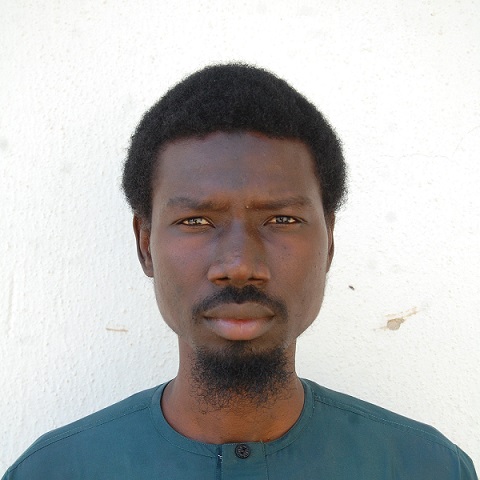
By Abdullahi Yusuf

The agitation for gender equality could be dated back to the beginning of the 18th century when Mary Wollstonecraft wrote her book titled A vindication of the right of woman, in which she argues for women’s right to education. The issue rose to cosmopolitan through the 18th and 19th centuries when women from different parts of the world began to advocate for gender equality and fight against any act they considered as oppression against women by their opposite gender. They aggressively campaign against patriarchy – admonish it and call for its total abolition.

The central themes of most of their campaigns, as they usually proclaim, are centred around fighting against gender stereotypes and gender-based violence. And also seek equal opportunities as men, and women’s education, among others. They perceived women as being oppressed since the inception of humanity.

But unfortunately, the moral justification of this ideology puts men at a disadvantage. They consistently receive backlash as a predicament of these struggles. Those ardent advocates always consider men as oppressors, narcissists, egoists and self-centred, which causes all the misfortunes in women’s lives. This makes women that are adamant about this ideology highly androgynous.

Androphobia has become part of the ideology per se because most of those promoting it display one aspect of man-hating or the other. The radical ones among them tend to even distance themselves from any intersexual relationship due to their adamant stand on ideology. Do women who do not believe in this ideology have anything to lose? Why are many women against this ideology, and some even consider it evil?

According to major religious beliefs and scientific views about creation, almost all living things are created in pairs (i.e. male and female). The disparity is primarily because of reproduction. Therefore, females alone cannot reproduce without their male counterparts. Contemporarily, in this technologically advanced world, there are certain procedures that some women adopt to conceive without the physical involvement of men in the process. Still, regardless, man has to contribute in one way or the other along the way. That’s in the case of reproduction alone.

Human beings are created with inadequacies. Men tend to be physically stronger than women and can cope with the stressors of life more than women. Women, on the other hand, are meant to be more compassionate than men. They can better take care of the responsibilities of others without being stressed. That is why they tend to play a more significant role in the upbringing of children. Coming together of man and woman to form a family has never been a mistake, but rather to fill up the inadequacies of one another and form a society where morality is respected.

Unfortunately, marriage is the first institution destroyed by those promoting gynocentrism. That is why there is a high increase in the rate of single mothers in the developed world, negatively affecting the upbringing of children and victimising women by increasing the level of their responsibility to the children. Broken homes are mostly a predicament because of this ideology that usually renders many men homeless and distances them from their children.

Suicide among men has been on the rise, caused mainly by judgement issues by family courts in developed countries. The legal system has been tempered to favour women in matrimonial cases, which promotes gynocentrism. Men are being oppressed and victimised worldwide, but sadly, nobody talks about it.

Many rape cases where men were held responsible are just false accusations from women to get revenge for what might have occurred between them. Severally, men have been traumatised mentally over allegations of rape cases against them that have not happened. Men face a series of domestic violence. Many men were sexually molested during their childhood by elderly women, which perverted them in their old age. Men are being oppressed on several occasions by women, but nobody is standing for men, and nobody is advocating for men’s rights.

The equality that promotes gynocentrism advocate is subject to women’s superiority. You’ll be tagged as a misogynist when you talk to them about equality that will strike a balance between men and women.

Injustice can be found everywhere, across gender, race, tribe, etc. There’s no monopoly when it comes to justice or injustice. Anybody can oppress and can be oppressed. Therefore, try to be objective in your approach when calling for equality or justice. Nobody will deny you the right to advocate for your rights, but don’t be unjust in trying to find justice. Know your position in society and respect your social obligations and that of others.

Abdullahi Yusuf is a 400-level student of Health Education at Bayero University Kano. He can be reached via abdoolphd@gmail.com.

As underpaid Bauchi oil workers complain

By Ibrahim Garba

The discovery of oil in the north is a national development that is worth celebrating as it would bring about several national developments, provide many employment opportunities to citizens, and enhance the nation’s economic state.

Nigerians, especially northerners, celebrated the news break of the success recorded in Bauchi, north-eastern Nigeria, hoping that the citizens are going to benefit from such a remarkable achievement of president Buhari’s led administration as the Federal Government signed an agreement of establishing a power plant and fertilizer-producing company in the area.

Besides, for oil to be discovered, it has to go through specific series of activities, an operation called SEISMIC, A geological data acquisition operation that leads to the discovery of a hydrocarbon reservoir, which is the key foundation to any success recorded in oil discovery, hence it requires rigorous activities of hard work with persistence and perseverance from the management function and indeed the labourers who are responsible for the entire hard work surrounding the seismic operations.

Also, Seismic is such a difficult job that comes with a series of hard work ranging from carrying and laying heavy loads of cable, drilling machines, and stems, among other equipment and material needed for the operation. It is usual for seismicity to work from 6 am to 6 pm, seven days every week, without any complaints because that is the nature of the work. Still, to JV209, a seismic joint venture between the subsidiary of NNPC Integrated Data Services Limited (IDSL) and that of China National Petroleum Corporation CNPC, Bureau Geophysical Prospecting (BGP)  workers, the case is different, as the company introduces and succeeded in night operation.

Wholeheartedly the workers stand through thick and thin, thereby enduring the extreme cold weather and highly scorching sunshine of the region as the work cuts across the entire season, where workers often get drenched due to heavy rainfall during the wet season.

The workers on the field are left with no option of which route to follow while working in the bush because the lines to work on are preassigned and therefore have to pass through every nook and cranny, thereby climbing mountains, entering water bodies penetrating through thick forest in the course of discharging their duty.

Notwithstanding, the sacrifices of the workers did not go in vain as the crew recorded the highest production ever in the country and yielded positive results of quality data, and was able to complete an estimated two years project in just a year, which should have been paid for if extended to the said period.

Unfortunately, some workers lament that they were promised a certain amount of money after work by the crew management, which is yet to be fulfilled. Almost every worker was admitted to a crew clinic and some to a medical centre in the state capital during the operation only the sacrifice of staying a year away from our family with a lower salary should be rewarded” and cite their ability to finish two years project in one which if extended to that period they would be paid for it. 

Above all, the government should try and fulfil such promises, as failure is a significant threat to the nation’s security. We are not done with militants, bandits, and insurgents, among other security challenges bedevilling the country’s growth and required development.

The workers should follow the right way of pressing home their demands. This may hinder the progress to the logical conclusion of the project, which will be detrimental to all and sundry.

Ibrahim Garba writes From Bauchi.

Your language is your superpower: My stand on using local languages in schools

By Maryam Augie-Abdulmumin

With the approval of the National Language Policy by the Federal Executive Council (FEC), instruction in primary schools within Nigeria will now be done in the mother tongue. As with every other issue of importance in this country, the policy was greeted with passionate arguments, both for and against. The Government’s decision to promote language learning for greater learning outcomes has been in the making for many years, especially at the lower primary levels. The Federal Government may have officially made it compulsory for the primary mode of instruction to be in the mother tongue. However, this policy has been in practice in most remote communities, especially in the North.

Whilst some arguments against the idea (which we shall review shortly) were valid, it is worth considering the fact that Nigeria is currently facing what is akin to an education emergency. In this regard, whatever little effort is made, especially at the policy level, should be greeted with some positivity whilst exploring ways to augment the effort in the non-governmental and private sectors.

Having said that, it is equally important we explore reasons why this policy might not work. This is because it is only when we clearly understand the hurdles ahead that we will be sufficiently prepared to effectively nurture the policy seed that the Federal Government has planted. Below are three strong reasons advanced against the policy:

The Financial Implication of Educating Children From 500 different ethnic groups.

Without mincing words, I agree with those who say it is unrealistic and unachievable to educate children from over 500 ethnic groups. This is especially true considering that education has always been at the low end of budgetary allocations. Let’s face it, the current economic profile of the nation does not look promising for a radical overhaul of this nature. However, in order to take advantage of this policy and benefit from what technologically advanced countries like China, Germany, and Russia have benefited from for many years, we can start with the low-hanging fruits. By this, I mean let’s start with the three dominant languages – Hausa, Yoruba and Igbo.

These languages already have advanced international media backing (BBC Hausa, Yoruba, Igbo, for instance) and a copious body of knowledge accessible through search engines like Google. There is a possibility of easily scaling beyond the three languages by leveraging the data and lessons learnt at this phase of the implementation.

The dearth of Qualified Teachers and Instructional Materials

Closely related to funding is the challenge of the dearth of teachers and the availability of adequate instructional materials to implement such a grand overhaul. The truth is even the current system is grappling with the same challenges, so it is an open secret that any change will mean more challenges. However, with what is available through scientific research on the benefits of children receiving instructions through their local languages, it is clear that it is only a matter of time before this issue becomes the front burner of national discourse. And although we don’t have it all figured out, we have to start with what is available. The NCE curriculum makes provision for every college of education in the Federation to have departments of Hausa, Igbo, and Yoruba and some provision for the language of the immediate community.

Community ownership, NGO, and private sector support will go a long way in ensuring effective implementation. It is also important to note that whilst the Federal Government makes policies, the responsibility of implementing basic education lies with State Governments. Thus, the onus of ensuring this success will vary from state to state. If, for example, northern governors believe this policy will serve their interest most, they should do everything within their powers to ensure the success of this policy at the state and regional levels. The same may not be a priority for the southern region. What is significant here is how we make this policy work in the best interest of Nigeria’s peace and prosperity.

Favouritism and the Challenge to the Fragile Peace in Nigeria

Viewed from the historical context of education in Nigeria, it is obvious that English is more accessible, learnt and understood in the southern part of Nigeria than in the dominantly Hausa-speaking North, where the region has always relied on the Hausa language for the mass dissemination of information. In such a situation, it is obvious that a policy of this nature will find more fertile ground in the north compared to other regions of the country. But let’s face it, the earlier we speed up access to quality education through whatever medium possible, the better for our country’s peace and prosperity.

The data available on the out-of-school population in Nigeria is disproportionately in the north, and the earlier we bridge this gap, the better for our developmental outcome. In the final analysis, this policy might actually make it more cost-effective and efficient to educate a Nigerian child than the current western-based model.

In conclusion, whilst a radical policy of this nature is bound to be confronted with many obstacles, research and comparative curricular studies have proven that our nation gains from a policy favouring our local languages over foreign languages.

It is true that the English language gives us a platform to compete globally, but the spice is in what is truly ours, our local languages, which tell the stories of history and survival. Let’s not forget that nobody says our own languages cannot gain global dominance under the right circumstances, and it all begins with the curriculum.

Mrs Maryam Augie-Abdulmumin is the Founder and  Executive Director of Illmi Children’s Fund. She can be reached via: info@illmichildrensfund.org.

Fintiri leads with sincerity of purpose

By Mubarak Shuaybu Shelleng

Before, Adamawa, as a sovereign state, was counted among the most underdeveloped states in Nigeria. Many transitional administrations we had in the past failed to deliver their mandate in providing basic social amenities to the teeming populace.

The incumbent governor of Adamawa state, Ahmadu Umaru Fintiri, was accurately counted among the few that impeccably excelled in delivering the security, education, health, and infrastructural needs of the state in his first four years in office. Something that is least expected from him. But the man surprised many by changing the narrative in running a system that touched the life of a common man in every nook and cranny of the state.

Unfortunately, none of the past administrations followed the right blueprint on how a committed and effective government should operate the way this current administration is doing.

Interestingly, it’s become a surprise to many that this current administration has succeeded in leaving no single stone unturned when talking about the provision of social amenities and workers’ welfare. A welcomed development that everyone, irrespective of their political parties, is applauding. If truly one has it in mind that we want Adamawa to develop and compete with other states in terms of infrastructural, political, and socioeconomic aspects, then this administration is moving on the right channel.

It’s now general knowledge that little or none among those that voted Fintiri into power regret their action, except those that are not interested in what is called ”Good governance” but focused more on stomach infrastructure. 

More often than not, those who truly had a dream of seeing progressive Adamawa through governance are usually not concerned with political affiliation, religion, or region, among other factors that characterize us as individuals. Rather individuals’ capacity to deliver, based on track record and physical projects, need no further political analysis. Political Candidates that will lead with utmost patience, a high sense of responsibility, and sincerity of purpose. 

Besides, very few among the most sophisticated and critically equipped minds think and analyze issues while keeping their personal biases and prejudice in interpreting and analyzing things that have a direct effect on societal wellbeing. Others find it difficult to think. Thus, remain with no option but to follow the Bandwagon.

The experience, they say, is the best teacher, and with what Adamawa state has been going through for years, regardless of the political party, one can be able to judge fairly on the kind of administration that instantaneously impacted positively the life of all and sundry.

Therefore, it’s high time we learn to turn a deaf ear to self-centred politicians who are influenced by the number of greedy sycophants surrounded with, seeking cheap political gains.

One is at every liberty to criticize or defend a particular divergent political view. But we should not deny the fact that some state governors have performed wonderfully well.

Truth is bitter and difficult to comprehend, but lies are sweet and travel faster than one could ever imagine. Though, understanding the complex game of politics is not for all but a few.

Mubarak Shuaybu Shelleng writes from Yola, Adamawa State.

Bauchi 2023: Why desperation even before pinning to the mat?

By Tajuddeen Ahmad Tijjani

In a democratic setting like ours, leaders are expected to set guiding principles from which followers are expected to learn good conduct and moral behaviour. Sadly, the Bauchi state government is setting a bad precedent, which won’t augur well for the unborn generation.

I was compelled by a video going viral on the internet at the instance of the Bauchi state governor, his commissioners, and top government appointees watching as a car painted with the pictures of APC presidential candidate Bola Ahmad Tinubu, the Bauchi State APC governorship candidate, Ambassador Air Marshal Sadique Baba Abubakar rtd. CFR and his deputy, Aliyu Musa Barden Gabas, were destroyed while they were watching with admiration.

Electoral market volatility makes them susceptible to negative campaigns since “voters have loosened their ties with their party.” Not only that, the people of Bauchi are tired of the misrule of the PDP, yet they resort to diverting attention to their abysmal failure. Education is comatose, infrastructural decay, salary has now become a privilege, pensioners are crying wolf etc.

 As patriotic citizens of Bauchi, we strongly condemn the ruling party’s abysmal attitude. However, it’s expected that they set a pace for the younger generation while noting that Bauchi, as a civilised state is much aware of the happenings in the city. What we desire is a rancorous-free campaign, and we, therefore, urge the APC not to tear the line of the ruling party; let us emphasise to our supporters to shun violence in whatever guise while, at the same time, mobilising people to turn out in mass to vote for the APC at all levels.

As a people-focused grassroots party, APC has continued to champion the cause of issue-based politics while snubbing every temptation by the PDP to lower our standards by joining them in their infamous style of uncouth politics fraught with crass incivility. To put the records straight, Sadique had never been found wanting in such negativity.

As the leading opposition in Bauchi state, we are conscious of our responsibility to be law-abiding and concentrate on the issue-based campaign. We shall do everything possible to discharge that responsibility with total commitment to the rule of law and the sanctity of our nascent democracy. Often, we call on Bauchi State not to be deterred by the lawlessness of the PDP; it’s imperative to use our PVC and send them out of Ramat House because this irresponsibility has no place in our nascent democracy.

The many ills that bedevilled our state include corruption, economic underperformance, abject poverty, and a dysfunctional educational system derived from the action of the ruling PDP. How does a government that benefited from the freedom of expression and association to rise to the highest echelons in the state become so insensitive and uncaring to free campaigns? 2023 we need a purpose-driving and visionary government with a mission to transform the state for the benefit of all and sundry. With Sadique as the 2023 governor, the above is assured. 

Tajuddeen Ahmad Tijjani writes from Galadima Mahmoud Street, Kasuwar Kaji Azare, Bauchi State.

The controversy behind oil discovery in the North

By Ibrahim Garba.

Since the announcement of the success of oil discovery by the Muhammad Buhari-led administration through Nigeria National Petroleum Company, NNPC Ltd., people from different parts of the country rejoiced over the milestone achievement.

However, the development came with many controversies by the citizens who are, in one way or another other, have a direct or indirect connection to the development that is from some groups of people and individuals from the host community.

Immediately after the ground-breaking ceremony, which was attended by his Excellency President Muhammad Buhari, Bauchi State Governor Bala Muhammed, the Group Managing Director NNPC Mele Kyari, among other dignitaries in Nigeria, an argument broke between the neighbouring states, Gombe and its mother state Bauchi, about who owns the Kolmani oil well.

Besides, Bauchi may be right to claim the ownership of Kolmani oil because the oil well is located in Barambu, a village under the Alkaleri local government area of Bauchi state. Bauchi cites the presence of their governor at the breaking ceremony as one of the reasons that they own the oil well.

Gombe state, on the other hand, has more than a reason to claim the ownership because of their closeness to the point where the oil was drilled. Therefore oil as liquid stuff cannot just be for Bauchi alone.

Unfortunately, farmers operating within the host community of MaiMadi, Kwaimawa, among the other 7sevencommunities, complained that they were not paid for the damage done to their farmlands during the oil drill.

Among them, one claimed the ownership of the Kolmani oil well, which according to him, was inherited from his father and yet to be compensated. Also, the report indicates that workers who served during the seismic operation were not adequately paid but only promised to be paid on unspecified dates.

Farmers and other people from the host community should be well informed about the operation of that kind to seek entitlement associated with the oil drill operation in their localities.

With the allegations above, one must note with dismay challenging the Public Relations section of that particular for failing the Social responsibility service expected to render to those communities.

Above all, what Nigerians need to know is how much we need to poster national development above our interest to build Nigeria of our dream. We should also learn from the experience of our people down the south. There is a need for cooperation and mutual understanding between the two states, the farmers, and the entire host community to benefit from such a remarkable achievement. 

Ibrahim Garba writes from Bauchi.

Reading

By Salisu Yusuf

Reading is the interpretation of some signs, symbols and codes into meaning for intellectual consumption. Reading is the third skill in the order of the four language skills behind writing, for one can only write when he knows how to read. The significance of reading can be viewed in the context of the world being a global village; reading has today made our world a unipolar entity where communities understand each other and realise their diversity.

In Islam, reading is the most crucial skill in seeking knowledge and understanding God. The first verse of revelation is “Iqra’a”, or read, for it’s through the pen(writing) that the Lord teaches man some knowledge.

Reading has been the highest source of joy for man. It emancipates and frees man from the shackles of servitude. People have read to escape from the deception of the perverts, the so-called clerics who misinterpret divine injunctions according to their caprices. Reading can wrench you from the grips and chicanery of postmodern politicians. Read and be free from the bog of tradition, the tyranny of the oppressor, the darkness of illiteracy and the glibness of the scammers. 

In fact, reading can make you a gentleman/lady; men/women have become milder, sober and more empathetic through years of excessive reading. When you read, you will understand yourself, your immediate environment, and your world. When you don’t read, you suffer from a lack of effective education. That’s called illiteracy.

 Reading can take you to places you’ve never been. I was once with the notorious Adolf Hitler in a ditch shortly before his infamous suicide. I was once in a Bagdad prison, witnessing the despicable hanging of dictator Saddam Hussein. I have been to Elysse Palace with the powerful Charles de Gaulle during his assassination attempt. Asare Konadu has given me an imaginative ride to cultural Ghana. James Hardly Chase has numerously chauffeured me to an underworld, taught me criminology, spying and espionage. Achebe has taught me some aspects of Igbo culture; in fact, he was the one who told me that “breaking cola” wasn’t only a Hausa culture.

I once read a fable with a combination of animal, bird and spirit characters. I melted into the sky, and became a spirit. I perched on branches of trees as a brood, hatching and nestling. I had become a spirit and mutated into a bird the next moment, flying on a vast, blue and cold sky, feeling acrophobic. I still remember with nostalgia those imaginative, daring escapades. A reader can go directly to a character’s mind and discover his inner thought. He can scale a river and be on war fronts. 

Reading can be your route to escape, add to your knowledge experience, and can polish your language, open you to new vistas and give you aesthetic joy.

 As an advanced reader, you shouldn’t read excessively at night (learn to rest for your mental well-being), or in sunny spots (you should go under a shade). Preferably, don’t read from a white paper; the best paper to read from is either a light yellow or light blue.

 The best thing in your reading is to protect and harness your eyes from being strained. Your eyes aren’t only your sighting treasure. They’re your intellectual and economic assets. By using the best and appropriate paper, you take a long-term measure that’s best for your eyes in later life.

The uncomfortable truth is that, you’ll reach a stage in your life when you lose that flexibility in and around your eyes. So, you must compensate them with reading glasses. But using the right paper will sustain the tempo and rhythm of your sight. You should harness your eyes at this crucial stage of your life. To quote from the famous English poet, Oliver Goldsmith, “husband out life tapers at the close. And keep the flames from wasting by repose.”

At an advanced level of our reading, we read when we’re in the mood, when we’re in the best mental state. This is why it’s crucial to coordinate your eyes and mind together during your reading; otherwise, you’ll only say the alphabet, not the semantic words. There’s a difference between saying and reading. In saying, you don’t understand; in reading, you get the gist.

During our personal/independent reading, we should avoid vocalisation and sub-vocalization because they’re diversionary; we employ the use of silent reading, where the eyes and mind do the bidding. We move the eyes but not the head.

 As an advanced reader, you should devise a contextual reading. A context reading is when a reader utilises all those syntactic, semantic, and discourse markers as well as the surrounding information, use an appropriate analytical approach to the vocabulary, and use the historical and cultural backgrounds in his quest for meaning. 

A reader should digest both the content and form. Reading is twofold; he digests the content for the message and the form or language where he learns some contextual expressions. 

Reading should be a lifetime endeavour. However, reading cannot be an obstacle to my midday siesta, my routine physical exercise, or my light walk. It cannot hinder my other religious obligations.

Reading is my morning tea, my late morning cake and drink, my heavy lunch, my afternoon dessert, and my evening supper. Reading is my light dinner. I will read until I can read no more until I feel numb and dark.

 Salisu Yusuf wrote from Katsina via salisuyusuf111@gmail.com.

National Museum of African American History and the horror of slavery

By Muhammad Jameel Yusha’u, PhD

Apart from hosting us in their house during the Thanksgiving holiday, Danielle Callaway Njama and her husband, Philip Njama, booked a ticket for us to visit the National Museum of African American History in Washington DC. It was another rich historical voyage. I strongly recommend visiting the museum if you happen to be in Washington DC.

The museum, formally launched by President Barack Obama in 2016, documents the history of slavery and the unspoken contribution of Africans to European and American economies.

Walking through the floors of the museum, an air of historical insecurity, goosebumps, and lamentation engulfs you. As you read through the stories of how the enslaved Africans were transported to Europe and North America in chains and other inhuman conditions, you feel the blood of sympathy circumambulating in your veins.

While these thoughts were going through my mind, there was sudden silence among my family. I turned back, and my eldest daughter was in tears, struggling to hold her emotions while reading through the stories of Africans like Ayoub Suleiman from The Gambia, who was enslaved in Maryland, and Mahommah Baquaqua from Benin, who was sold in Brazil and transported to New York.

Being a student of economic development, I couldn’t miss the section in the museum that estimated the value of cotton produced by African Americans to $250,000,000 in 1861; and the value assigned to enslaved African Americans at $3,059,000,000 in 1860. What is the value in today’s terms?

This is a difficult history, but as I have discussed many times with friends and colleagues, Africans shouldn’t allow themselves to be the psychological prisoners of the trauma caused by slavery. Yes, it is difficult, but Africans must move forward with zeal and unparalleled determination to write a glorious chapter of their story no matter the odds against them. Creating a path to development is the antibiotic to economic dependency.

Takeaway: Torturous lessons of history are difficult to ignore. It is the lessons from history that help determined communities to write a glittering chapter for future generations.

Muhammad Jameel Yusha’u, PhD, is a candidate for a Mid-Career Master’s in Public Administration at Harvard University, John F Kennedy School of Government. He can be reached via mjyushau@yahoo.com.

In praise of Matawallen Bauchi

By Mukhtar Jarmajo

Surely enough, one of the banes of our society is that, in most cases, whom we have at the helm of affairs, whether in power or at the community level, are rulers, not leaders. There is a clear distinction between rulers and leaders. Rulers do not listen to their people. They rather authoritatively give directives that must be obeyed without any hesitations and whether or not the result of taking such action will be in the best interest of the greater majority.

While leaders are good listeners who walk and work together with their people in the greater interest of society. And as John Quincy Adams, the 6th US President who served between 1825 and 1829, would say: “If your actions inspire others to dream more, learn more, do more and become more, you are a leader.”

Thus, by the words of John Quincy, leaders are motivators who not only reposition the society to greater heights but also make the people become better in themselves. And that is why it is said that one of the functions of a leader is to build more leaders. Thus, if building people is rightly one of the functions of a leader, then Mallam Isa Yuguda is a true leader.

Deliberately, the Matawallen Bauchi has, over the years, built people as he journeyed from the banking sector through the federal executive council to the Bauchi state government house. Without putting much emphasis on how he transformed the defunct Inland Bank from regional to national and indeed his excellent performance at the aviation and transport ministries as well as in Bauchi state when he held sway between 2007-2015, Yuguda is also an excellent team player who coaches the people that work with him. With the needed dose of confidence characterized by conviction and determination, he is humility and modesty personified. This is why Isa Yuguda is imparting positive behaviours to many and, thus, a role model.

Today, Mallam Isa Yuguda stands tall on the ladder of success. But unusually, Yuguda`s success is, among other reasons, simply because of the number of people he has trained and built. He is second to none in Bauchi state in this regard. In the tripod stand, either directly or indirectly, the Matawallen Bauchi has positively impacted the lives of as many people as possible. For instance, including the incumbent governor Bala Muhammed of Bauchi state, Matawallen Bauchi has played essential roles in the lives of almost any shining star in the Pearl of Tourism.

And while his virtues are extolled in appreciation of Isa Yuguda`s immense contributions to the growth of humanity, it is also right to urge other community and political leaders to emulate the Matawallen Bauchi. After all, as Ralph Waldo Emerson, the American philosopher and essayist, would say, the essence “of life is not to be happy. It is to be useful, to be compassionate, to have it make some difference that you have lived and lived well.”

Jarmajo wrote from Wuse 2, Abuja.

The film industry in Nigeria: A two-left-legged maiden

By Zailani Bappa

I read a post by someone who expressed his worry about the lack of unity of purpose (in fact, he said, unity of everything) among the Nigerian people. He was writing about the movie industry. He said Hollywood had been a household name for a country as vast as America. So also Bollywood for a country as big as India. Both countries are bigger and more economically prosperous than Nigeria.

However, despite the existence of Nollywood, we still have the Kannywood in Nigeria. He believes the existence and progression of Kannywood are retrogressive to the Unity of purpose in the industry in Nigeria. I reason with him. However, that is only when the matter is viewed from the surface. Scratch the surface a little, and you’ll see the bigger picture.

Both Nollywood and Kannywood emerged in prominence in the 1990s. Nollywood comes in English, pidgin, Igbo and Yoruba. The Kannywood comes mainly in Hausa and a few times in English. Looking at the Hollywood and Bollywood industries as both business and national projects, both Industries tend to project National Unity, National Pride and National dignity of their respective countries. And the business does not discriminate in the selection of protagonists.

However, in Nigeria, tribal, sectional and religious stereotypes continue to influence the industry, which makes it even more difficult to have a unified industry. To date, egg-heads of the Nollywood industry find it difficult to accept the fact that the industry needed to diversify and be all-inclusive in sourcing for their resource. For instance, African-Americans in the US are arguably the lowliest rated race in the US. However, the Hollywood industry does not believe so. The Industry became all-inclusive and explored for talents instead of being led by stereotypes. Now the negros are almost the best actors in the industry. That is how it grew to excellence.

In Nigeria, however, Nollywood, with the advantage of producing in English first, metamorphosed most of the vernacular protagonists into English productions but unwittingly limited the train to those from the South-East of the Country who saw themselves as the owners of the industry. For instance, the far Northern Nigerian does not deserve more than the role of a gateman in Nollywood films. If at all you hear the name Musa, Usman, or  Bala, then, it’s the guy employed to look after the gate or wash the cars of Obinna, Ifeanyi or Chibuzo. The Lagos-based Industry is not making any genuine efforts to integrate with the Kannywood industry, even as the latter continues to grow in influence and affluence in the North and elsewhere.

However, the Kannywood, with its vast audience across the Hausa-speaking communities across the globe, also failed to grow in its intellectual capacity. It instead gets stuck to its money-making trash productions in the name of soyayya themes, which, apart from the sheer entertainment it provides, literally promotes empty value to the morale, capacity and quality of lives of the audience, not to even talk of national value, pride and dignity.

In Nigeria, the film industry has no idea or focus on National project but purely exist for business reasons. Hollywood has developed over time to become an agenda setter for the United States policymakers and implementors. It has now become a platform and potent avenue for increasing the influence of the United States over other nations and peoples worldwide. The Indian Industry also helps that country placate the outside world with its numerous internal crises and contradictions by promoting a clean, prosperous and happy India.

In Nigeria, Nollywood promotes less national dignity and unity but corruption, indecency, cultism and disunity. It exposes more of the weak and bad sides of the country, its institutions, leaders and people instead of strengthening their good sides more. Why? Because they make better money doing that since their productions appeal more to the wrong side of humanity in us. The Kannywood, with its empty intellectual value, is simply vain. So, as the two continue to grow side by side like that, we may have to do with the fast growth of a two-left-legged maiden of an industry.

Zailani Bappa wrote from Bauchi State via zailanbappa@gmail.com.