Opinion

 A Call to Action: Breaking the vicious grip of substance abuse

By Mohammed Hussaini Hamidu

In our modern society, the prevalence of substance abuse continues to plague communities, leaving a trail of shattered lives and fractured communities in its wake. To truly understand the destructive nature of these habits, one must delve deeper and closely examine the lives of those who engage in smoking, drug use, and similar undesirable activities. The findings are sobering, revealing a harrowing landscape of financial struggles, academic challenges, strained relationships, and a lack of integration within the broader community. It is clear that these activities offer no benefits whatsoever, and therefore, they should be vehemently discouraged.

Regrettably, we find ourselves grappling with a disheartening reality – children born in the early 21st century perceive smoking, drug use, and the consumption of harmful substances as trendy. The consequences of abstaining from these activities are severe, as individuals who choose not to partake may be labelled as insufficiently masculine or excluded from certain social circles. This warped perception and societal pressure contribute to a growing crisis. As a result, crime rates in various states of Nigeria are rapidly escalating, with a significant number of crimes directly linked to drug-related activities. The repercussions of these behaviours extend beyond criminality, penetrating the very fabric of our society. Most disturbingly, a substantial majority of patients in psychiatric hospitals find themselves there due to the dire consequences of their drug and smoking habits.

In the face of such a pressing issue, one would hope for swift and decisive action from the government agency responsible for addressing substance abuse. However, our observations within the community reveal a disheartening truth. The National Drug Law Enforcement Agency (NDLEA), tasked with combating this concerning behaviour, often exhibits a lackadaisical approach to its duties. Within my sphere of observation, it is dismaying to witness the agency’s apparent indifference towards tackling this pervasive issue head-on. Offenders caught with harmful substances can secure their freedom by merely having enough money for bail, raising questions about the effectiveness of punitive measures. Even more alarming is the existence of a corrupt system, where officials can be bribed to turn a blind eye or actively support drug dealers in what they call a “return.” This deplorable practice enables the unrestricted sale and distribution of drugs, even during operations. While I have not personally witnessed such acts, claims persist that NDLEA officers themselves engage in returning and selling drugs seized during operations back to the very dealers they are meant to combat.

It is an undisputed fact that substance abuse poses a grave threat to our society, and the time for action is now. We must not remain complacent as countless lives are torn apart, and communities are left in ruins. The consequences of substance abuse demand our unwavering attention and collective effort to bring about change.

To confront this crisis head-on, we must prioritize education and awareness. Community leaders, educators, parents, and all stakeholders must come together to instil in our youth a profound understanding of the realities of substance abuse. By debunking the misguided notion of its trendiness and emphasizing the destructive consequences, we can empower young individuals to make informed decisions and choose healthier alternatives.

Furthermore, systemic shortcomings within the NDLEA must be urgently addressed. It is disheartening to witness an agency tasked with safeguarding our communities falter in its mission. The gravity of this issue necessitates comprehensive reform. Adequate funding, stringent oversight, and the implementation of effective anti-corruption measures are essential to restore public trust and dismantle the pervasive influence of drug-related activities.

In the face of this complex and deeply rooted problem, it is crucial that we rise above complacency and indifference. We must mobilize as a society to combat the destructive cycle of substance abuse. By championing awareness, education, and proactive measures, we can pave the way for a brighter future free from the grip of substance abuse. It is incumbent upon us to break the silence, challenge societal norms, and provide support and resources to those affected by addiction.

First and foremost, we must foster a culture of compassion and understanding. Substance abuse is not solely a moral failing but a complex issue rooted in a myriad of factors, including social, psychological, and environmental influences. By dispelling the stigma surrounding addiction, we can create an environment where individuals feel safe seeking help and accessing the necessary treatment and support.

Education plays a pivotal role in prevention efforts. Schools and community organizations must prioritize comprehensive drug education programs that go beyond the traditional “just say no” approach. These programs should equip young people with the knowledge and skills to make informed decisions, resist peer pressure, and develop healthy coping mechanisms. Engaging parents and caregivers in these initiatives is equally vital, as they play a crucial role in shaping their children’s attitudes and behaviours.

Collaboration between various sectors is key to tackling substance abuse effectively. Healthcare professionals, law enforcement agencies, social workers, educators, and community leaders must work in synergy to develop comprehensive prevention, intervention, and treatment strategies. By sharing resources, expertise, and best practices, we can maximize our impact and provide holistic support to individuals struggling with addiction.

To address the systemic shortcomings within the NDLEA, transparency and accountability must be prioritized. Strong leadership and robust internal controls are essential to root out corruption and ensure that officers uphold the highest ethical standards. Adequate funding should be allocated to bolster the agency’s capabilities, including the recruitment and training of dedicated personnel, improved intelligence gathering, and modern technology to enhance enforcement efforts. Collaboration with international partners can also facilitate knowledge exchange and the adoption of successful strategies from other jurisdictions.

In conclusion, the scourge of substance abuse continues to ravage our communities, leaving a trail of devastation in its wake. We must answer the call to action and confront this crisis head-on. Through education, collaboration, and systemic reform, we can break the vicious grip of substance abuse and create a society that prioritizes the well-being and resilience of its members. Together, let us strive for a future where individuals are empowered to make healthy choices, communities are supportive and resilient, and the cycle of substance abuse is finally broken.

Mohammed Hussaini Hamidu can be reached via mohammed27187@gmail.com.

Ten quick practical indicators which Tinubu should look into

By Aliyu Nuhu

First; Nigeria does not generate enough electricity to support industries and sustain growth. When leaders talk of addressing poverty and unemployment they forget the single factor holding Nigerian economy down. With 3000-5000mw of electricity, the story of Nigeria will always be associated with darkness.

Second; Nigeria is still unable to employ its youths, about 90% of them finish schools and are sitting at home or roaming streets and committing crimes. The number is alarming.

Three; Industries are either closing down due to insecurity, absence of forex to import critical spare parts or electricity.

Four; Thousands of Nigerians are losing their jobs. MTN and some banks are still retrenching. Only government is employing and doing it selectively for sons and daughters of the elites, politicians and government officials. Government can’t employ everyone. As long as the private sector is not employing, unemployment will always be high in Nigeria.

Five; Start up businesses die due to failure of banks to give them loans. No Nigerian bank gives any form of loan at all.

Six; Big and small industries are being killed by multiple taxation. There are more than 20 different taxes that companies pay in Nigeria.

Seven; Some states are taxing companies for broad band satellite receivers, something that is vital to their operations, especially banks. Other states are imposing tax on boreholes even as the governments fail to provide pipe borne water to factories.

Eight; Agricultural goods in transit, including livestocks are subjected to all manner of extortion by police, LG officials, VIO, FRSC and security forces. Once a truck or car is loaded with goods, it is fair game to security agencies. Nigeria is becoming an impossible nation to move goods, capital and equipment. No nation develops without free movement of labour and capital. In the northern part of the country, insecurity has ensured that most farmers don’t go to farms due to activities of bandits and Boko Haram.

Nine; Despite efforts to build roads, rail, bridges, power plants and other social and economic infrastructure, it is becoming clear that the government will finish its two terms leaving Nigeria with the same tragedy of uncompleted and abandoned projects.

Ten; Nigerian businessmen are being rewarded for investing abroad. In other words the government rewards them for exporting Nigerian jobs to other African countries. Dangote has been building factories outside Nigeria in the name of diversifying his risks. Government should take a cue from what Donald Trump did in America. He rewarded those that built factories in US and punished those that built factories outside the United States. He slashed taxes on American companies to encourage them employ Americans.

Power of “I think”

By Abdurrazak Muktar

Language is a powerful tool for communication, allowing us to express our thoughts, beliefs and opinions. One commonly used phrase that often sparks debate is “I think.” While some argue that it implies uncertainty, I believe that “I think” carries more significance than mere doubt. In this article, I will explore the multifaceted nature of “I think” and how it can convey conviction, personal perspective and respectful dialogue. Let’s delve into the power of “I think” beyond uncertainty.

Expressing Personal Perspective:
“I think” is frequently used to present a subjective viewpoint. By prefacing a statement with this phrase, individuals acknowledge that their opinion may differ from others. For instance; “I think pizza is the best food ever created.” And “I think the movie was captivating, but others might find it slow-paced.”
In the above examples, the use of “I think” allows for individual experiences and preferences to be expressed without imposing them on others. It fosters a climate of an open discussion where diverse viewpoints can coexist.

Conveying Conviction and Confidence:
While “I think” is often associated with uncertainty, it can also demonstrate confidence in one’s beliefs. Consider the following examples:
“I think renewable energy is the key to a sustainable future.” Or “I think education is the most powerful tool for societal progress.”
In these cases, the speaker uses “I think” to assert their convictions. The phrase is a way of emphasizing personal belief without assuming absolute authority or dismissing opposing viewpoints. It encourages respectful dialogue and invites others to share their perspectives.

Recognizing the Limitations of Knowledge:
“I think” can also be used to acknowledge the inherent limitations of human knowledge. It reflects an understanding that our comprehension of complex issues may be incomplete or subject to change. Examples include: “I think there might be life on other planets, but we haven’t found conclusive evidence yet.” And “I think the solution to poverty requires a multifaceted approach, but it’s a complex problem.”

In these instances, “I think” is a humble recognition of the complexities of the world. It encourages curiosity, open-mindedness, and a willingness to explore different ideas and possibilities.

In my conclusion, the phrase “I think” is a versatile linguistic tool that extends beyond expressing uncertainty. It allows individuals to share their opinions while acknowledging the subjective nature of their perspective. Whether it conveys personal beliefs, invites respectful discussion, or recognizes the limitations of knowledge, “I think” plays a crucial role in communication.

Next time you hear or use the phrase “I think,” remember its power to foster understanding, encourage dialogue, and bridge the gaps between diverse viewpoints. Embrace the potential for growth and learning that arises from the exchange of thoughts and opinions.

Are Nigerians fair to Buhari?

By Prof. Abdussamad Umar Jibia

Many years ago, when I was a young lecturer at Kaduna Polytechnic, I had a discussion with a senior colleague of mine. I have always disliked having disagreements with my seniors because I easily admit defeat as I don’t want to appear disrespectful. 

My discussion with the Chief Lecturer was around General Muhammadu Buhari’s achievement as PTF Chairman. The senior colleague, who bitterly disliked Buhari, was of the opinion that PTF under Buhari “did nothing except for some roads he constructed around Katsina”. When he was reminded that the road he followed daily to work was constructed by Buhari’s PTF, the man vehemently denied it even though it was well known to all the people around the Tudun Wada area of Kaduna, and he could easily find out in case he forgot. But his mind was beclouded by hatred. Hatred stinks, and it blinds.

My discussion with my senior colleague came to my mind this week while I was travelling back to Kano from Kaduna. For two decades before Buhari assumed office as a civilian President, this road had become one of the most dilapidated in the country, and Nigerians, including myself, wrote to call the attention of President Buhari to it while his administration was still taking off. These calls did not fall on deaf ears, and even Buhari’s enemy cannot deny that the quality of work done in the renovation is high.

Of course, more work is needed on the Kaduna-Abuja side, and although it is ongoing, it is clear that the project will outlive the Buhari administration, which has less than three weeks to go. His is, however, much better than PDP governments that were more interested in politics than service.

Two other projects attracted my attention while on the same journey. They are the Kaduna-Kano-Maradi rail line and the famous AKK gas pipeline project. The speed at which the two projects are being pursued is high, but the completion date can obviously be no earlier than May 29, 2023.

On December 25, 2018, while travelling along the Kano-Katsina highway, I stopped at Tsanyawa to take a picture of an accident caused by Rabiu Musa Kwankwaso’s five-kilometre project. The five-kilometre project was a failed project of the Kano State Government under Engr. Dr Rabiu Musa Kwankwaso, in which a five-kilometre length of the expressway was supposed to be built in each local Government headquarters.

For local government headquarters on major federal highways like Tsanyawa, Bichi, Rimin Gado, etc., the state government only succeeded in spoiling Federal roads on which partitions were made without increasing the widths of the roads. I displayed the picture on my Facebook page with a call to Kano State Government to correct the mistake it made. 

Two years later, on 24th October 2020, I stopped at the same spot in Tsanyawa and took another picture of the road after Buhari’s dualization project. The dualization solved the problem in both Bichi and Tsanyawa, the two local government headquarters on that road. I am personally happy that the dualization of the Katsina-Kano road was embarked upon by the Buhari administration because it is the road I ply more than any other in my life.

So why are we only looking at the mistakes? Were our expectations from Buhari too high? Did his mistakes overshadow his achievements? Or are we simply difficult to satisfy?

A fair answer is to say, “All of the above”. You may not be happy to hear that, but it is my opinion.

I have never seen people more expectant than Nigerians. When they love a person, he is fault-free and infallible. Anyone who disagrees with him must be insulted and disgraced. He will solve all their problems. I think that is why when they eventually hate the same person, they go to another extreme of not seeing anything good with them. Buhari is a victim of this, unfortunately. Examples of other objects of extreme blind love by their supporters are Peter Obi and Rabiu Kwankwaso.

What about the mistakes? Are they too many or too grave, or both? Are all of them mistakes or blunders? Or are they simply contempt for Nigerians or some groups thereof by President Buhari?

I sometimes wish Buhari did not accept to become the President. Many people are at a loss about how he simply allowed innocent people to continuously be killed in his home state while speaking about defeating Boko Haram in the faraway North East. By the time he leaves at the end of this month, President Buhari will leave Katsina more insecure than he met it. Last week, a major national daily reported the migration of dreaded bandits in large numbers from Zamfara to Katsina state. 

On several occasions, when Buhari was asked about banditry in the North West, he dismissed it as a fight between people of the same culture and tradition. This can mean farmers/herders or Hausa/Fulani communal clash. Many victims like me are not happy with this kind of response and see it as the reason why well-known bandits’ kingpins are operating freely in our state, kidnapping, enslaving, killing, raping, etc. 

The least corrupt Nigerian politician I know will leave Nigerians in a more difficult economic hardship than he met them. I observed Nigerians taking a long time comparing their income and prices of foodstuffs (yes, food, not any luxury item) in 2015 when Buhari came and in 2023 when he is leaving. Nigerians are suffering.

What about Education? Buhari kept poor people’s children at home for eight months last year and many months in 2020 while his children were schooling in Europe is an indication of the contempt he has for the poor people of Nigeria who formed his support base. The number of out-of-school children is rising. The Almajiri Education Commission should have come earlier, but it is still a welcome development which we hope the incoming President should implement with the seriousness it deserves.

Finally, Nigerians are also difficult and unfair. When they love a politician, they don’t consider him a human being with strengths and weaknesses. If they do that at the beginning, they will certainly be fair to him at the end. But like some binary machines, they only have two states; absolute love and absolute hate.   

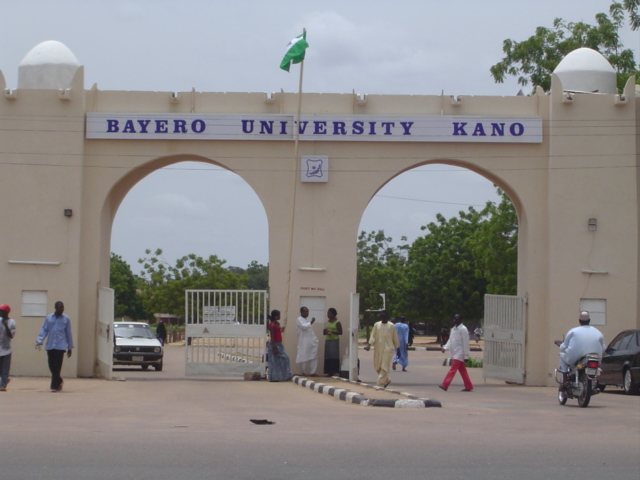
Prof. Abdussamad Umar Jibia wrote from Bayero University, Kano. He can be contacted via aujibia@gmail.com.

Kano: Phone-snatching and the way out

By Dansaleh Aliyu Yahya

The number of phone snatchers is outrageous in Kano because the government is not punishing the perpetrators. Instead, it allows the politicians to use them to win elections and even ask them to do many bad actions, including killing everyone who comes their way in every polling unit in the state. You, too, could all see the thugs that they hired in the recent election—their number is countless. Shame on those that kill their people for their selfishness!

These phone snatchers are those that I can describe as unkind, insensitive, and barbarous robbers that started to turn into vampires—they may eat every flesh of a human when they get patterns. They must be eradicated from the society of living humans to another world of theirs or put in a dungeon of some hungry beats to rot.

Due to their problem, I would like to give some ways to help fight and eradicate them and their scandalous behaviour of snatching people’s property in Kano state and any other place. The ways are here below:

Firstly, It’s time for the government to start neutralising all the obstinate hoodlums that use lethal weapons while snatching people’s phones—they snatch and even kill the victims after. What kind of aggressiveness is this?! Indeed, I stupefy everyone that doesn’t support their killings. But they kill, and they have to be killed! And, slaying them will be soporific to us all.

Secondly, I would like to call upon us all to reflect on and defy the thugs back. However, I don’t mean that you fight them back if you’re alone, but I mean that people shouldn’t always be afraid of those nincompoops—those that run when the action is taking place can stop it (I swear). It’s only that we’re always frightened.

You need to have something you can use to defend yourself. But, I must say, “Shame on those that will see one young man killing a baby in her mother’s back and do nothing to stop him!”

Lastly, I hope the incoming government will ensure that it enforces some laws that will authorise the above forms of penalty to be performed publically for the rest of these hoodlums to see—whoever sees it among them won’t dare to do it again. Indeed, people need a lot from you—not this only!

May you have the ability to do the right things, amin.

Fatima Dikko Radda: An inspiration to women and youths

By Amir Sa’ad Ribadu

The 2023 election cycle has introduced quite a handful of female politicians ranging from the candidates themselves to the wives of candidates. Some female politicians have garnered massive publicity and relevance within their states, while others have become national figures and inspirations to women all over Nigeria.

One such woman is the wife of Katsina state Governor-elect Hajiya Fatima Dikko Radda, whose sudden emergence in the Katsina state political scene has made her an inspiration to women and a political force to reckon with in Katsina.

Before her emergence into the scene as a result of her husband’s success at the Katsina APC primaries sometime in May 2022, Hajiya Fatima, fondly known in Katsina as Zinariya is only known for her philanthropy, passion for educating the girl-child and healthcare delivery by a few beneficiaries of her foundation, PAC-F. PAC-F, which she founded a few years back, has kept her busy. In a recent interview, Hajiya Fatima attributed her passion for philanthropy, which birthed PAC-F, to her late mother.

In another interview in December, she told reporters how she intends to support her husband’s policy, especially in eradicating poverty and improving the healthcare and educational environment for the Katsina girl child.

It is therefore not surprising when she was seen campaigning so vigorously that she is said to have taken her husband’s message personally to 146 wards out of the 361 wards in Katsina, which is unprecedented for the wife of any guber candidate in any state in the North.

Her campaigns mainly centred around her husband’s policy document. Also, they focused on her passion for helping the girl child and supporting her husband in making healthcare delivery accessible to all in Katsina, especially women.

She seems to have been accepted by women and young people in Kastina because most can relate with her, owing to her age, ability to understand and proffer solutions, and natural propensity for generosity. Her acceptance is evident through the crowd she gathers every time she’s at a campaign rally or even in her house when she’s around Katsina.

Her Batagarawa low-cost home has become a popular destination for many who need assistance for medical purposes or daily needs. Her humility, they say, is akin to that of the carpenter of Nazareth.

Her youthful determination and willingness to contribute to her husband, Dr Dikko Radda’s campaign, could be seen in how passionately she reached out to the electorates in Katsina villages. She travelled through the length and breadth of Katsina’s Funtua Zone, a zone marred by insecurity and violence, and on many occasions, some members of her entourage have opted to stay back, but not Zinariya. This is because she was determined to witness first-hand the situation of the typical Katsina family in the villages where insecurity and poverty are rife.

It is, therefore, not surprising to see youth and women rally around her, chanting slogans of hers and her husband’s whenever she is around. This and many more reasons are why Katsina is said to be lucky to have a youthful, energetic, and passionate Governor in Dr Dikko Radda, who shares precisely the same qualities as his wife, Zinariya Fatima Dikko Radda.

Amir Sa’ad Ribadu writes from Libreville Crescent, Wuse 2, Abuja. He can be contacted via mrribadu@gmail.com.

English: Language of science and emancipation

By Abdurrazak Mukhtar

English has become the language of science and emancipation. Whether we like it or not, this is a fact that we cannot ignore. The reasons for this dominance are complex, but we can trace them back to several historical and cultural factors.

In many ways, the emergence of English as the language of science can be traced back to the scientific revolution of the 17th century. This was when scientific knowledge expanded rapidly, and scientists needed a common language to communicate their findings. English became the obvious choice as the language of the dominant scientific culture in Europe and North America.

Over time, English has become the dominant language of science for many other reasons. First, it has a large and growing population of speakers worldwide, making it a common second language for many people.

Second, English has a relatively simple grammar and spelling system, making it easier to learn than many other languages. Finally, English-speaking countries have historically been major scientific research and development centres, giving English prestige in the scientific community.

Beyond science, English has also become the language of emancipation in many parts of the world. The spread of English has been closely tied to the expansion of Western political and economic power, and many countries have adopted English as a way of breaking free from the legacy of colonialism. Today, English is seen as the language of global commerce, and proficiency in English is often seen as a key factor in social and economic mobility.

Of course, the dominance of English is not without its drawbacks. Many languages and cultures risk being marginalised in the global marketplace, and there is a growing recognition of the need to promote multilingualism and cultural diversity. Nonetheless, proficiency in English remains a valuable asset for individuals looking to succeed in science, business, or other areas of international engagement.

The good news is that mastery of any language can be rewarding personally and professionally. The ability to speak multiple languages opens up new avenues of communication and understanding and can lead to greater cultural exchange and collaboration opportunities. Moreover, mastering a language is an art in itself, requiring discipline, creativity, and perseverance. Whether you choose to focus on English or another language, the art of mastery is a valuable skill that will serve you well in any field.

In conclusion, English has become the language of science and emancipation for various historical and cultural reasons. While there are challenges to this dominance, the rewards of mastering any language are great in terms of personal growth and professional success. So, whether you want to improve your English or learn a new language entirely, mastery is always worth pursuing.

Abdurrazak Mukhtar can be contacted via prof4true1@gmail.com.

Tribute to the Saint of films

By Sani Mu’azu

Just like me, Saint Obi’s formative years in creativity as an actor started from NTA Jos in the late 1980s. He was then working with NIPOST as a staff in Jos, Plateau State, but even then, he had studied theatre arts at the University of Jos and his heart was always on the silver screen. And he sees me as an elder brother and a friend.

After a few stints in Jos, Obinna took the plunge and moved to Lagos where, with the advent of the home video phenomenon, he snowballed into national recorning and became Saint Obi – ‘the Saint Obi’. Jos became proud of him and his achievements as an A-list actor as his filmography credits continued to grow.

We had discussed working with Saint Obi on a national unity project I conceived in which he was to play the role of an Igbo engineer that speaks Hausa fluently. It was also an action package and Saint Obi loved action. The idea of delivering lines in Hausa excited him saying the North would see him in a different light. But the project was not to be. It was that project that kept us talking for a very long time until he disappeared into oblivion.

Saint Obi was a Jos boy and I was not surprised when I heard that he passed on quitely here in Jos. It was heartbreaking though to realise that he came back home but never got in touch with us, his hommies.

Ashes to ashes, dust to dust. We are definitely going to miss Saint Obi from the stage. The industry is going to miss him when it takes a retrospective look at the various movies he led and the various roles this great thespian played as an actor.

My sincere condolences to the industry, our colleagues in Jos but more specifically, to his immediate family for such a huge loss.

Sleep well brother. Sleep well.

Arsenal’s Premier League title challenge: A glass half full or half empty?

By Aliyu Yakubu Yusuf

At the beginning of every league season in Europe, football pundits look at the strengths and weaknesses of every team and make predictions on what they think will be the outcome and the position of every team at the end of the season. These pundits predict the likely winners of the league, the top 4 places, the relegated teams, the top scorer, the best player, the best goalkeeper, the best young player, the dark horses and so on.

I have followed these predictions on nearly all the major British tabloids like BBC, Daily Mail, GiveMeSports, Telegraph, Guardian, Athletic, etc. I did not come across a single pundit that predicted Arsenal to finish in the top 3 in the EPL. Most pundits earmarked Arsenal for the sixth position below Manchester City, Liverpool, Chelsea, Tottenham and Manchester United. In fact, some pundits went as far as predicting Arsenal to finish in the seventh spot below Newcastle United.

Looking at Arsenal’s title challenge from this context, it can be argued that Arsenal have punched well above their weight. By finishing second in the league, the Gunners have overachieved relative to everyone’s expectations at the beginning of the season. I have no doubt that most Arsenal fans who are now disgruntled would have indeed accepted the second position gleefully were it offered at the beginning of the season.

Arsenal’s squad is full of players in their mid or early twenties. Most of these players have never experienced a title race in their careers. The current disappointment may serve as a learning curve for Arsenal players. With Saka, Jesus, Odegaard, Martinelli, White, Ramsdale, Saliba, White, Smith-Rowe, and Gabriel approaching their primes, the future certainly looks bright in the red half of North London. A glass half full.

For the 36 weeks so far played in the EPL, Arsenal led the table for 29 weeks. In other words, the Gunners sat at the top of the table for more than 90% person of the matches played. And having led the EPL table for so long, it must be quite disheartening for the Gooners to lose the title in this disappointing fashion.

At a time, Arsenal appeared to be running away with the EPL trophy. However, most Arsenal fans will remember when their team seemed not to put a foot wrong when everything Mikel Arteta touched turned into gold. Thus, it must be heart-breaking to “bottle” everything when victory looks so tantalisingly close.

This season represents a golden opportunity for Arsenal to slap their 19-year wait for the EPL title. Considering their lofty standards, Manchester City were relatively poor for most of the season. Save for the last two months, Liverpool were having one of their worst seasons in recent memory. Chelsea were having a season from hell. Manchester United were in their usual shambles, though the coming of Erik Ten Hag has brought some semblance of calm. Spurs are just…well, ‘spursy’.

Looking at the whole picture, most of the EPL big boys were largely underwhelming for most of the season. It is difficult to imagine Liverpool and Chelsea having another miserable campaign next season for the Gunners to capitalise on. Therefore, this might just be a good opportunity missed. As I said earlier, most of Arsenal’s crop of young players have performed tremendously this season. This may spell trouble for the Gooners in the near or distant future.

Arsenal have grown a reputation of selling their best players just when they appear to hit their peak. Players like Fabregas, Nasri, Van Persie, Adebayor, Hleb, Toure etc., were all forced to leave Arsenal to realise their dreams of winning the big trophies. Will the current Arsenal players resist the temptation if (or when) big boys come calling? The vultures come circling. And this may well be another Groundhog Day for Arsenal. A glass half empty.

Aliyu wrote from Kano. He can be reached via aliyuyy@gmail.com.

Language is not a friend – I have bound my project

By Bilyaminu Gambo Kong-kol

Language is considered the principal method of human communication, consisting of words used in a structured and conventional way and conveyed by speech, writing, or gesture. It is a tool that establishes commonness between the sender and the receiver.

For the commonness to be established, the encoder must be well-grounded in the language he chooses to use and arrange his words systematically. He must also consider meanings such as denotative, connotative, reflected, and social, among others. 

The receiver must also do his part as interference is likely to occur from him, the environment, channel, or encoder.

However, language sometimes becomes a betrayer by betraying even the native speakers due to its rigid nature. The fact is that even if you are familiar with the rules, language may decide to disgrace you abruptly.

In this piece, Hausa, Fulfulde, and English languages will be used to explain my points.

In Hausa, it is a rule that most of the words that end with the letter “A” are feminine, and those ending with E, I, O, and U are masculine. But there are exceptions. For instance, words like kotu (court), gwamnati (government), and kwallo (ball) end with masculine vowels, but they are feminine. On one part, ruwa (water), zama (sitting), and kira (call) are masculine despite having feminine endings.

Hausa also demands that wherever possessives “Na” and “Ne” are used for masculine words, they should be substituted with “Ta” and “Ce” for feminines. For example, Jirgina ne (It is my plane), motata ce (It is my car).

Many Hausa speakers, including some of the natives in northwest Nigeria, are struggling to adhere to the rules. To get primary data on this, choose any state in Nigeria and listen to their radio stations or have physical interactions.

In Fulfulde, the law states that a word’s ending determines its demonstrative adjective. For instance, it is okay to say this horse, this room, or this pen in English, but the case is different in Fulfulde. Wamnde nde, sudu ndu, bindirgol ngol. To learn more, get a Fulani friend or wife.

This rule is giving headaches even to the LI in Yola, as it requires alertness and quickness of thought. It is normal to hear a typical Fulani man saying “Mi laari mo” instead of “Mi laari ngal” when he is referring to “I saw the hen”.

Another blunder is the introduction of the letter “V” in Fulfulde. In a standard Fulfulde setting, there is nothing like the consonant sound /v/. Hausa, too, does not have it. That is why some Hausa say bery good instead of very good. Just like the way some Hausa misplace V for B in English, some Fulfulde speakers misplace W for V in their first language. 

For example, “O vindi” instead of “O windi” (He wrote), “Mi vi” instead of “mi wi” (I said), “O va’i leggal” instead of “O wa’i leggal” (He/she climbed a tree).

One interesting thing about Fufulde is that, unlike Hausa and English languages, Fulfulde does not have pronouns that differentiate gender. Fulfulde’s pronoun “O” refers to he/she in English and Shi/ita in Hausa.  And Fulfulde’s pronoun “Ma” refers to Ka/Ki in Hausa. Maybe this was done to show our shyness and respect (Pulaaku). 

Another virus that is threatening Fulfulde is code-mixing and code-switching. Some Fulfulde speakers in Adamawa, Taraba, Gombe, and Yobe could not speak pure Fulfulde for an hour without borrowing from Hausa, English, Arabic, or their L2 words. This signifies a low level of grammar or lack of respect for Fulfulde language. It needs to be fought gallantly.

In English, rules of concord, tenses, syntax, and semantics are hectic for learners and L2 speakers. 

Concords like: “He says, I say, they say, he has, I have, they have, he does, I do, they do, he does not have, I do not have, and they do not have” are found to be confusing most especially by learners. Also, the sentences below, even though correct, may not convince learners as plural nouns could be seen nakedly. Shamsu, together with his wife, is coming to London or Maijama’a, along with Bilkisu, is coming to Cyprus. Think of “Neither Ghali nor the students are present” vs “Neither the students nor Ghali is present”. 

In tenses, the unjustified usage of the past in the present, the present in the past, or the distortion of the entire tenses is common. Moreso, the choice of words and sentence construction are influenced by speakers L1. You will see an English sentence given direct translation from Hausa, Fulani, Igbo, or Yoruba. Example: Haruna said it is for you and me.

In phonetics and phonology, words are pronounced mostly the way we hear others articulate them over time. Sometimes, Lll speakers localise the British accent. Consonant sounds like /θ/, /ð/, /ʃ/ /ʒ/, /ʈʃ/, /dʒ/, and ŋ/ are mispronounced in some words. Vowel sounds /ʌ/,  /ə/, /ɜ:/, /æ/ and the eight diphthongs play with the tongues of learners. Or should we say learns to play with them?

The topic is broad, but advisably, make sure you learn all the dos and don’ts of every language you want to communicate with people. This will pave the way for you to communicate effectively and earn your respect. By so doing, you minimise 70% to 90% of your chances of making mistakes. Don’t expect 100%; even the natives are still looking for that!

Nevertheless, always remember that language is not a friend. It may decide to disappoint you unexpectedly. I received mine on my last day as an undergraduate student at Bayero University, Kano. I was stuck fishing out whether the word “bind” is a regular or irregular verb. What is the past participle; binded, bounded, or bound? It had escaped my memory. I still don’t understand why English decided to misbehave on this special day of mine (04/05/2023).

Whatever the reason, I got a pitch that led to the writing of this article. Alhamdulillah! My appreciation to communication scholars, the Vice Chancellor of Federal University, Kashere, Professor Umaru A. Pate, and OPEC’s PR Coordinator, Dr Umar Jibrilu Gwandu, for drawing my attention immediately. I HAVE BOUND MY UNDERGRADUATE PROJECT!

Bilyaminu Gambo Kong-kol is a graduating student of the Mass Communication Department at Bayero University, Kano. He can be contacted via bilyaminugambokonkol20@gmail.com.