Opinion

The “Boko Haramisation” of University Education in Nigeria

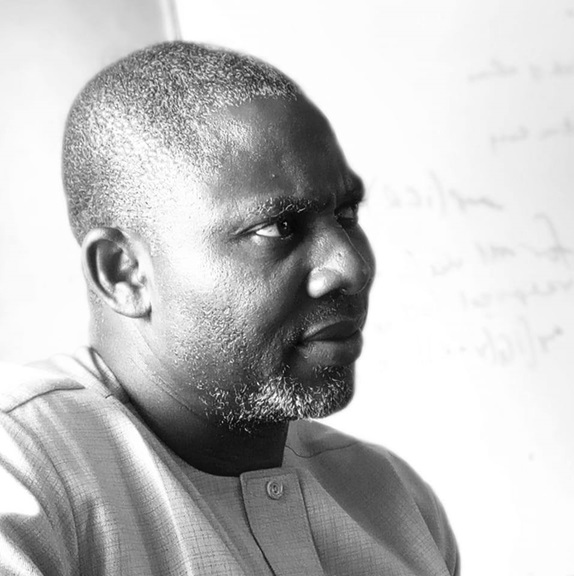
By Kabiru Danladi Lawanti, Ph.D.

Since 2018, when Nigeria’s public universities started announcing hikes in school charges or what is popularly known as service charges, the survival of indigent students in these universities has become threatened. Public universities are the last hope for children from poor backgrounds. According to Emmanuel Onwubiko, the National Coordinator of the Human Rights Writers Association of Nigeria, over 70% of youths from poor backgrounds attend these universities. Therefore, denying these institutions funding is a direct declaration of war on Nigerian youths.

While it becomes necessary for public universities to increase the shortfall in government funding, the increase in school fees means millions of youths will be denied the opportunity to acquire a university education. To say that Nigerian public universities are underfunded is an understatement. That our public universities are in serious crisis is a fact. That universities are unable to achieve the goals of contributing to national development is sadly true.

Two schools of thought exist on this issue. On one hand is the Academic Staff Union of Universities (ASUU), which opposed increasing school fees. Their argument is quite simple: increased school fees automatically mean denying the children of the poor the opportunity to acquire a university education. They argue that there is a need for more citizens to have a university education. The logic is simple: more people with university education in the population automatically translate to positive economic growth, social development, and political cohesion.

To show their seriousness in what they believe in, ASUU had to go on strike several times for several years, starving their members to push forward with this idea. However, there are people who believe education should be removed from social services. They argue that since students are the direct beneficiaries, then the funding of universities should be shifted “from society to the students who are the beneficiaries of the higher incomes their degrees will provide.” These are the advocates of “commodification of university education.”

There are broadly three sources of funding for public universities in Nigeria, as identified by Professor Olanrewaju Fagbohun, the former Vice Chancellor of Lagos State University. These are government grants or subsidies, student/parent contributions (charges fees or allied non-instructional fees) and the income derived by the institution from commercial or quasi-commercial ventures or services, investments, donations, and endowments.

With overpopulation, teeming unemployed graduates, falling standard of university education, corruption in the management of university education and the shift from a mixed economy to a neoliberal economic system since 1986, Nigerian universities are left struggling to survive. Also, the attitude of the people’s government towards education since democracy’s return in 1999 has combined to suffocate the system already in the ICU.

However, in 2017, the universities came to grapple with a very hostile regime under President Buhari. The regime not only cut funding to public universities but imposed an embargo on the recruitment of academic staff in the universities. For over six years now, universities have not employed any fresh staff. Where they are employed, they are imposed on Vice Chancellors from Abuja. Departments no longer have the power to recommend to the VC to retain the best-graduating students in the departments. IPPIS was the last straw that broke the camel’s back. Departments are short-staffed, and IPPIS stopped universities from engaging contract staff, visiting and adjunct lectures and sabbatical staff.

These are the issues that Nigerians need to look at holistically. As it is now, most people have realised the mistake of not supporting ASUU to force the government to investigate the crises of the public universities. The reality clearly shows that indigent students or children from poor backgrounds cannot afford university education. While many analysts gave ASUU strikes the Boko Haram Logic interpretation, no one sees the onslaught on public universities by government agents as “bokoharamisation” of the university education. It is a disservice to Nigeria to remain silent about the current crises confronting the Nigerian public universities and find our voices when ASUU declares strike. This is succumbing to Boko Haram’s wishes. Already, our public primary and secondary schools are in ruins, and it will take the grace of God to resuscitate them. We are now confronted with the collapse of the public university system.

What is the way forward?

Addressing the current crises requires all stakeholders in the Nigerian Educational System. This is a matter of saving Nigeria from collapse. Already, parents have taken 60% of the burden of educating their children in the university. Parents now pay from N50,000 to 250,000 a year for service charges for their children. They provide for their upkeep – accommodation, feeding, laundry, clothing and, of course, purchase of textbooks. Added to that, they take the burden of transporting their children to and from the schools every now and then when the need arises, which can be weekly, monthly, or quarterly. Already, they are involved in funding their children’s education at the university.

The government is supporting universities with infrastructure payments of staff salaries (both academic and non-academic). The government also pays a fraction of the running cost to the universities. TETFUND will not be counted as government funding because it comes from 2% education tax contributions. People in government are leveraging on this and using funding as a weapon of control, as we saw in 2022 when ASUU members were starved for eight months for declaring an industrial dispute with their employer.

Industrial disputes should not be seen as confrontations or a narrow material interest of “greedy lecturers” or “Boko haram logic” of denying Nigerians the opportunity to acquire a university education. It should be seen as a patriotic intervention to salvage a collapsed system.

The commodification of university education in developing nations like ours is never a solution to the lingering crises in the public university system. Commodification destroys “the value of intellectual challenge and exploration by reducing knowledge to quantifiable, job-oriented results”. In fact, commodification is what derives the idea of a “skills rather than degree” gang promoted by a former minister.

I deliberately ignored the push by the present regime of education banks that will serve as lending institutions for university students because it is deceptive, unrealistic, and impracticable in a country like ours. What we need is an acceptable cost-sharing formula that is realistic and acceptable to all stakeholders. And this can come only through negotiation and mutual agreements between university unions, parents, and the government. We need to start this conversation to save our public universities.

On Abba Kabir Yusuf and human capital devt

By Anas Abbas

In recent years, there has been a growing emphasis on infrastructure development as a key indicator of progress and development in many countries. Governments often prioritize the construction of bridges, roads, and other physical structures as a means of showcasing their commitment to progress.

However, it is important to recognize that true development goes beyond just the physical infrastructure and involves the development of human capital.

While infrastructure development is undoubtedly important, it is equally crucial to invest in the development of human resources. This includes providing access to quality education, training, and opportunities for personal and professional growth. Human capital development is essential for creating a skilled and knowledgeable workforce that can contribute to the overall development of a nation.

A recent example of the emphasis on human capital development can be seen in the actions of the current Kano state government. Instead of solely focusing on infrastructure development, it also recognized the importance of investing in human capital develop. The administration sponsored numerous students who had graduated with first-class honors to pursue their Master’s degrees in India. This intervention is set to enable the beneficiaries to advance their education and acquire valuable knowledge that can be applied in the development of the state and the nation.

This programme us not new in the state. During Rabiu Kwankwaso second tenure as governor of the state, he sponsored over one thousand students abroad to pursue their Master’s degrees in different countries of the world.Infrastructure is doubtlessly important for the development of a nation, but it is crucial to recognize that human capital development should be the top priority If you critically observe the society today, you will find out that infrastructure can deteriorate over time and require continuous maintenance and investment, human capital development is enduring and can be needed for such maintainance need.

The knowledge and skills acquired by individuals remain with them and can be passed on to future generations, creating a lasting impact on the nation’s development. This initiative highlights the significance of human capital development in driving sustainable development.

By investing in the education and training of individuals, governments can empower their citizens to become active participants in the development process. These individuals can then use their expertise to address local challenges, drive innovation, and contribute to economic growth.

Furthermore, human capital development has a ripple effect on society. When individuals are equipped with knowledge and skills, they are better positioned to create positive change within their communities. They can become leaders, entrepreneurs, and advocates for social and economic progress. This, in turn, can lead to a more inclusive and sustainable development that benefits all members of society.

I found it laughable when in the trending Kaduna vs Kano online banter sparked by one Hafsat Paki video in which she talked Kano people down, many commenters paid undue attention to buildings as a way to show that Kaduna is more developed than Kano (Kano has fair share of beautiful buildings if you ask me). For me the ongoing effort in place by the government to better the human capital of the state deserves more attention than anything thing else.

In conclusion, while infrastructure development is important, it is equally crucial to prioritize human capital development as a key component of overall development. The recent initiative by Governor Abba Kabiru Yusuf to send students abroad for further education serves as a powerful example of the value of investing in human capital.

By focusing on human capital development, governments can create a foundation for long-term sustainable development that empowers their citizens and drives progress from within.

Anas Abbas is communication student at Bayero University, Kano . And can be reached via anasabbas2099@gmail.com

Can AI surpass human intelligence?

By Muhammad Ubale Kiru

Whether Artificial Intelligence (AI) can surpass human intelligence is a complex and debated topic. Many scientists, AI users, and observers have argued whether what we see in movies regarding AI surpassing human intelligence will come true. I have asked this question several times, and colleagues at work and friends on social media have asked me whether this myth can be true. Since then, I have been gaining momentum, strength, and proof to be able to answer this question.

However, something triggered my urge to share my thoughts on this question today after I received a notification from OpenAI. This company developed the famous ChatGPT, informing users about their new “Terms of Use and Privacy Policy.” One of their newly updated clauses says, “We have clarified that we may collect information you provide us, such as when you participate in our events or surveys.”

The above statement has directly or indirectly revealed that if you agree to use ChatGPT, you must surrender to the fact that OpenAI will collect personal user information for research and training purposes. A non-specialist will not understand the implications or consequences of that. One may think it is an ongoing activity because social media companies like Facebook, X (formerly Twitter), etc.) collect users’ personal information for business and quality assurance purposes.

So, what is the real implication here?

It is simple. AI and machine learning algorithms are like weeds on a plant. They rely heavily on data to learn. The more data they consume, the more intelligent they become. Most of us are already using AI to solve our day-to-day activities and problems. For instance, tasks that used to take me seven days to complete can now be done in 10 minutes. I am handing over my tasks to AI to handle them for me.

Each time I ask AI to handle my task, AI is learning the task more and more. Humans perfect their skills through constant and regular learning. Now, I’m handing over most of my tasks to AI; AI learns while I lose because previously, I learned from my work experiences, and now AI does the work for me. AI is becoming more intelligent and capable, while I am becoming less intelligent and less capable. By the way, I’m not the only one in this mess. Nowadays, even programmers who rely on constant practice to improve their coding skills are also using AI to generate codes or programs that used to take months to complete.

ChatGPT, for example, is used by millions of users daily. When it was first developed, they used random internet data to train its learning models. Now, they are using real-time human input (data) to train the AI. If you look at the core foundation of any AI in the world, it is designed to capitalise on learning from its environment. Our phones are AI-enabled, laptops are AI-enabled, web apps, games, calendars—everything is now AI-enabled. The more we use AI, the more AI learns about us.

Today, your phone keypad knows more about your words and thoughts than you know yourself. As you begin typing, it completes the rest for you. So, with time, your AI-enabled devices would learn more about you than you could ever learn about yourself. Thus, what is left of us if AI has learned everything about us? In Sun Tzu’s book, The Art of War, he says, “Knowing your enemy is akin to winning half the battle. Understanding their strengths and weaknesses provides a strategic advantage that can pave the way to victory.”

The question of whether AI can start a revolution or take over the world, as we have seen in movies, is another debate for another day. The Tesla CEO Elon Musk and AI guru Lex Fridman are among the few people in the world who are always concerned about the potential danger of AI and have continued to call for regulations before AI gets out of hand. The technology has very speedy and staggering growth potential. It is growing at a breakneck pace right now.

To this end, I urge policymakers and regulatory bodies to take necessary precautions before AI gets out of control. AI is undoubtedly powerful, and if unleashed without caution, it can create devastating chaos.

Let me hear your thoughts in the comment box.

(c) Muhammad Ubale Kiru

Governor Bago’s audacious demand

By Muhammad Danjuma Abubakar

For the grammar ‘lords’, the title of this piece is itself ‘audacious’ and might be erroneously perceived as undiplomatic, aggressive, and forceful.

 However, those well-schooled in journalism and those gifted with wisdom would look at it with a  different lens. This essence provokes readership and ignites curiosity about a crucial matter that demands attention.

Within the context of governance and leadership, audacious attributes often translate to courage and boldness when confronting challenges and addressing key issues head-on in ways that could better the lots of ordinary citizens.

This is in the DNA of all serious-governance-ready leaders who are always seen addressing the unaddressed and championing the cause of their people with unwavering determination.

Governor Bago’s recent statement aligns with these when he said that Niger State also deserves a 13% derivation formula that oil-producing states are being given monthly.

The governor stated this when the Federal Commissioner of the National Commission for Refugees, Migrants and Internally Displaced Persons, Tijjani Aliyu Ahmed, led other principal officials of the commission on a courtesy visit to the governor at the Government House, Minna, made headlines on various media platforms. This is an indication that such is a rare call, yet assertive.

A straightforward demand that those who governed the Power State(Niger State) before Bago couldn’t make, probably due to the ‘overwhelming’  vastness of the responsibilities of governance or because of the perceived unimportance attached to such kind of demand.

Yet, in this writer’s good knowledge, the plank of leadership embodies enormous responsibilities, a firm resolve to serve the people and a better platform for a powerful voice for the voiceless everyday citizens.

How, then, could a genuine demand that would better the lots of the electorates who stood to vote for their leaders skip the memories of successive governments in the state? 

This demand is indicative of the understanding of Niger State’s potentials and its vast contributions to Nigeria’s economy.

Of truth, during the last general governorship elections, my candidate was Khadijah Abdullahi-Iya (Audu Kwangila Bida) of the opposition All Progressives Grand Alliance (APGA), a symbol of motherhood. Khadijah Abdullahi Iya, a daughter of the first indigenous contractor in Northern Nigeria (Late Audu Kwangila Bida), also came prepared; toured all the nooks and crannies of the 25 local government areas of Niger State to campaign responsibly within the ambit of the electoral law.

Nonetheless, options of multiple choices are the cornerstone upon which democracy is hewn. The same democracy spoke, and Governor Bago now holds the reins. And it’s crucial to understand that he is the governor for all, and sincere support, prayers, and cooperation from all Nigerlites are essential for the success of the New Niger Agenda.

This is why no person of good conscience could agree less with Governor Bago, given the numerous contributions of the hydroelectric dams. From Power Supply, which power houses, businesses and institutions.

This call, when heeded and implemented, can enhance the infrastructural development of the host communities around dams and spur economic empowerment through the support of local businesses in the communities that would also translate to the economic well-being of the nation.

Governor Umar Bago’s demand echoes the need to ensure that host communities benefit substantially from the abovementioned benefits and that the people directly affected by the power production are active players in the nation’s progress.

As a matter of importance, in championing this cause, our national assembly members from Niger State and across Northern Nigeria should work assiduously with their fellow lawmakers and prove their mettle of strategic lobbying and networks to make this practicable. Sadly, the majority of the citizens do not know the enormous economic contributions of the hydroelectric dams to the country, which should warrant fair compensation through the 13% derivation.

In closing, Governor Bago’s demand is not only a call for more resources. Instead, it is a call for fairness and to recognise the significant roles that Hydroelectric power-producing states, notably Niger State, play in our nation’s economic growth and development.

 Therefore, in good conscience, whether a Nigerlite or not, we need to rally around Governor Bago’s cause because the demand for equity is lawful and a stride towards a more balanced and prosperous nation.

Muhammad Danjuma Abubakar writes from Minna, the Niger State capital and can be reached via muhammadcares4u@gmail.com.

The devastating effects of flooding in Nigeria

By Ladi Ibrahim

Floods have become a recurring natural disaster in Nigeria, causing immense damage to infrastructure, the economy, and most importantly, the lives and well-being of its citizens.

Nigeria’s vulnerability to flooding has grown in recent decades due to many factors, including urbanisation, inadequate drainage systems, deforestation, and climate change. Rising global temperatures are causing extreme weather patterns, leading to more intense rainfall events and subsequent flooding.

Flooding often triggers a humanitarian crisis, displacing thousands of people and leaving them homeless, without access to clean water, food, and sanitation facilities. Internally displaced persons (IDPs) are forced to rely on aid assistance, leading to severe strain on already limited resources.

Flooding wreaks havoc upon critical infrastructure, including roads, bridges, schools, hospitals, and power lines. This compromises public safety, disrupts essential services, and hinders economic growth and development. The cost of rebuilding and repairing damaged infrastructure poses significant challenges to the Nigerian government.

Flooding has far-reaching economic consequences, affecting agriculture, businesses, and livelihoods. Agricultural lands are submerged, leading to crop failures and livestock losses, negatively impacting food security and increasing reliance on imported goods. Small businesses and industries suffer significant financial losses, often leading to closures.

Floodwaters become breeding grounds for disease-causing organisms, heightening the risk of waterborne diseases such as cholera, typhoid fever, and hepatitis. The lack of clean water, sanitation, and proper hygiene practices amid displacement adds to the vulnerability of Nigerian citizens, particularly children and the elderly. Inadequate healthcare infrastructure exacerbates the challenges in providing timely and effective treatment.

Flooding poses physical dangers and leaves long-lasting psychological scars on affected individuals. Displacement, loss of property, and the trauma associated with witnessing loved ones or community members suffer can lead to anxiety, depression, and post-traumatic stress disorder. The mental well-being of affected citizens requires attention and support during and after the flood crisis.

To mitigate the effects of flooding, Nigeria must invest in long-term solutions such as improved urban planning, the construction of drainage systems, reforestation efforts, and the establishment of early warning systems. Comprehensive disaster preparedness and response strategies should also be developed, involving government agencies, international organisations, and local communities.

Building resilience is crucial to enhance Nigeria’s ability to adapt and respond to the potential impacts of climate-related flooding. This includes raising public awareness, developing sustainable land use practices, promoting flood-resistant housing construction, and investing in flood insurance schemes.

The effects of flood disasters on Nigerian citizens are profound and wide-ranging. The ongoing challenges necessitate implementing comprehensive strategies to enhance resilience, minimise vulnerability, and protect the well-being of citizens. Addressing the complex issues associated with flooding requires concerted efforts from individuals, communities, governments, and international partners to ensure a safer and more secure future for all Nigerians.

Ladi Ibrahim wrote from the Department of Mass Communication, University of Maiduguri.

Protection of persons Hors de combat: Perspective on Israeli-Palestine crises

By Yusuf Idris

The Israel-Palestine conflict is one of the most complex and long-standing disputes in modern history. Rooted in deep historical, religious, and political tensions, the conflict has resulted in a series of wars, uprisings, and ongoing violence between Israelis and Palestinians.

The origins of the conflict can be traced back to the late 19th century when Jewish and Arab nationalist movements emerged in the region, claiming their right to self-determination. After World War I, the League of Nations granted Britain a mandate to govern Palestine, facilitating Jewish immigration and settlement. However, this sparked resistance from the Arab population, who feared displacement and loss of their homeland.

Following the horrors of the Holocaust during World War II, international sympathy for the establishment of a Jewish homeland grew. In 1947, the United Nations proposed a partition plan to divide Palestine into separate Israeli and Palestinian states, but the Arab countries and Palestinian leadership rejected this plan.

The protection of persons, including both combatants and civilians, is a crucial aspect to consider in any conflict. From the perspective of the Israeli-Palestinian crisis, this issue carries significant weight as the conflict has led to the loss of countless lives and resulted in widespread suffering on both sides.

One of the key aspects to examine regarding the protection of persons in the Israeli-Palestinian conflict is the nature of the conflict itself. The conflict has been marked by a series of military confrontations, uprisings, and acts of terrorism, which have had severe humanitarian consequences. Both Israelis and Palestinians have been subjected to violence, displacement, and the violation of their fundamental human rights.

From the Israeli perspective, the protection of persons, particularly Israeli citizens, is a paramount concern. Israel, as a sovereign state, has the responsibility to safeguard the lives and security of its population, which various Palestinian militant groups have consistently targeted. 

The causes and origins of the Israel-Palestine crisis are complex and deeply rooted in historical, political, and religious factors. 

The Israel-Palestine conflict dates back to the late 19th and early 20th centuries when Zionist Jews sought to establish a Jewish homeland in historic Palestine, which was under Ottoman rule at the time. This intensified with the Balfour Declaration in 1917, in which Britain supported establishing a Jewish homeland in Palestine.

Partition and Creation of Israel: Following World War I and the collapse of the Ottoman Empire, Britain was granted the mandate to administer Palestine. Rising tensions between Jewish immigrants and the Arab local population led to conflicts. In 1947, the United Nations proposed a partition plan, recommending the creation of separate Jewish and Arab states in Palestine. 

 The term “protection of civilians” refers to the measures taken to ensure the safety and security of civilians during armed conflicts. This can include various actions such as providing humanitarian assistance, establishing safe zones or protected areas, and enforcing international human rights and humanitarian laws.

“Hors de combat” is a French term that translates to “combat horse” in English. It refers to horses used in military operations, particularly in combat roles.

 The phrase “protection of civilians horse de combat” does not inherently have a specific meaning as it combines two distinct concepts. However, one possible interpretation could be using combat horses in military operations, specifically focusing on protecting civilians.

Combat horses may be employed in a conflict situation for various purposes like transportation, reconnaissance, or combat roles. If the emphasis is on protecting civilians, combat horses could be trained to rescue civilians in dangerous situations, evacuate them from conflict zones, or provide a deterrent against attacks on civilians.

There is no specific international instrument called “Words de combat” to protect civilians. However, several international legal frameworks and instruments address the protection of civilians during armed conflicts.

1. Geneva Conventions and Additional Protocols: The Geneva Conventions of 1949 and their Additional Protocols provide the foundation for protecting civilians during armed conflicts. They outline rules for the humane treatment of civilians, prohibit attacks against them, and provide for the establishment of protections such as safe zones and medical facilities.

2. United Nations Security Council Resolutions: The UN Security Council has issued several resolutions to protect civilians in armed conflicts. For example, Resolution 1894 (2009) reaffirms the responsibility of all parties to an armed conflict to protect civilians and calls for accountability for those who violate these obligations.

3. International Humanitarian Law: This body of law includes principles and rules that regulate the conduct of armed conflicts and aim to minimise civilian harm. 

Several international humanitarian principles, protocols, and provisions of the Geneva Conventions govern the protection of civilians in armed conflict situations. These frameworks aim to ensure that civilians are protected from the effects of armed conflict and that their human rights and dignity are preserved. 

 Key principles, protocols, and provisions related to the protection of civilians:

1. Principle of Distinction: This principle, enshrined in the Geneva Conventions, requires parties to distinguish between civilians and combatants and between civilian objects and military objectives. It prohibits direct attacks on civilians and civilian objects.

2. Principle of Proportionality: Under this principle, parties to the conflict must ensure that the anticipated military advantage from an attack is not outweighed by the expected harm to civilians or civilian objects. The excessive use of force that could cause disproportionate civilian casualties is prohibited.

3. Principle of Precautions in Attack: This principle obliges parties to take all feasible precautions to avoid or minimise harm to civilians and civilians.

The Israel-Palestine conflict falls within the scope of international humanitarian law, and the principle of protecting civilians applies to both parties. International humanitarian law, including the Geneva Conventions, stipulates that parties must take all necessary measures to protect civilians from the effects of hostilities in armed conflict situations.

This means that parties to the conflict, including Israel and Palestine, are obligated to:

1. Respect the distinction between civilians and combatants and between civilian objects and military targets. Deliberate attacks on civilians or civilian objects are prohibited.

2. Uphold the principle of proportionality by ensuring that the anticipated military advantage does not outweigh the expected harm to civilians or civilian infrastructure.

3. Take precautions in attacks to minimise harm to civilians. Parties should give effective warning of attacks that may affect the civilian population and take all feasible measures to avoid or minimise civilian casualties.

4. Provide medical care and humanitarian assistance to civilians affected by the conflict without discrimination.

Conclusively, the Israel-Palestine crisis is a complex and ongoing conflict with deep-rooted historical, political, and religious dimensions. A few general suggestions that various international actors have highlighted:

1. Dialogue and Negotiations: A peaceful and lasting resolution to the conflict can only be achieved through a comprehensive, inclusive, and sustained dialogue between the parties involved. This should be based on mutual recognition, understanding, and respect to reach a mutually acceptable solution.

2. Two-State Solution: The international community, including the United Nations, has long supported the idea of a two-state solution where Israel and Palestine exist side by side in peace and security. This solution typically involves the establishment of an independent and sovereign Palestinian state alongside Israel, with agreed-upon borders and mutually acceptable arrangements for Jerusalem, refugees, and security.

3. Respect for International Law: All parties should uphold and abide by international humanitarian law

Resolving the Israel-Palestine conflict is a complex and multifaceted issue that requires the commitment and cooperation of all parties involved. While there is no one-size-fits-all solution, several proposals have been put forward. Here are some potential solutions that have been discussed:

4. Two-State Solution: This solution involves the establishment of an independent and sovereign Palestinian state alongside Israel, based on the pre-1967 borders, with mutually agreed upon land swaps and a negotiated resolution to the status of Jerusalem. This solution has been endorsed by the international community, including the United Nations, as a means to address the aspirations of both Israelis and Palestinians for self-determination and security.

Yusuf Idris writes from  Lagos and can be reached via yusufibnadamu@gmail.com.

Public Universities: the FG’s new revenue generation goldmine

By Prof. Abdelghaffar Amoka

The Academic Staff Union of Universities (ASUU) has been in a battle with the Federal Government of Nigeria over the funding of the public universities. The facilities that made our universities to still have a semblance of a university were products of ASUU strike. ASUU was so passionate over public universities funding to the point that the public began to think that such funds, when released, are paid into ASUU’s account. Even some journalists that are supposed to be properly informed shared in the ignorance or misinformation.

You read headlines like “FG releases 2 billion naira to ASUU for university funding”. ASUU pursued funding at the expense of its members’ welfare. The battle has been on funding to an extent that the younger generation of academics began to wonder why their welfare is not at the top of the union’s demands. The consoling words from our veterans have always been: You get true fulfillment when you have an ideal working environment.

The battle took a new dimension last year, during the reign of the ex-president Muhammadu Buhari, who had no agenda for education aside from establishing more universities without funding plans. Yeah! Buhari came to re-write the story of our university system. The number of the underfunded new tertiary institutions were listed as his major achievements. A strike on funding and the renegotiation of conditions of service that should not have lasted for more than four weeks, if sincerely handled, was dragged on for eight months and the lecturers starved. A few died and many survived and are still surviving but not an item on the demands on the needs of the universities was treated.

While ASUU was fighting for adequate funding, the FG had a hidden plan. It publicly declared that the universities will have to generate their money to partly fund themselves. The public couldn’t see the implication of the statement. The statement received support from some Nigerians whose education was funded from primary to PhD with public funds. However, besides this declaration, they are also seeing the universities as revenue generation institutions rather than institutions to be funded. They were wondering why they should keep funding these institutions when they are supposed to be generating revenue for the government.

Having conceived the idea to make federal universities an internally generated revenue (IGR) source for FG, their challenge was how to make these institutions generate revenue for FG without backlash. The only obstacle to the plan is ASUU that is always using strikes to force to unwillingly release some funds for the universities. ASUU was on strike again. They find their trouble annoying and something must be done. They engaged their friends that are former union leaders to develop the strategy to clip ASUU. Hunger strategy was found most effective and that was deployed and the rest was history.

From the experience of the last strike, call for a referendum on strike today and the members will tell you that if they will lose their salary for a one day strike, they won’t join. They are still paying their debt. So, they began starving the universities of funds.

Universities like Ahmadu Bello University (ABU) and Unilag, whose electricity bills are around 120 million naira per month, are given about 150 million naira per annum for operational expenses. How they pay their bills was left as their business. So, to keep up with the bills, the universities began to review the service charges. The universities estimated what can run the universities and appropriate charges were put together as fees for students. There were outcries on the fee increment. Some called it tuition and that got FG worried.

FG had to come out with a press release. They acknowledged the increment but that FG has not introduced tuition. The increase in fees as announced by various universities was to reflect the current economic reality; mission accomplished. However, the FG didn’t see these increased fees as service charges, they saw them as IGR by the universities and hence became interested.

As the universities were busy announcing the revised fees, the Minister of Finance suddenly remembered that there was a circular FMFBNP/OTHERS/IGR/CRF/12/2021 dated December 20, 2021 that said all partially funded FG Agencies should remit 40% of their IGR to FG. Universities are currently expected to remit 40% of the fees collected from the students to FG as revenue generation. These service charges in the universities are referred to as Gross Internally Generated Revenue. The deduction is effective from November 2023.

This means that if a student is charged N2,000 for an ID card, the university will give N800 out of it to the FG. It doesn’t matter to the FG if the cost of the ID card is truly N2,000. If a student is charged N10,000 as laboratory charges for chemicals and consumable, the university will give N4,000 out of it to the FG as revenue. If every student is charged N30,000 for electricity, water and sanitation bills, the FG will enjoy N12,000 out of it as revenue. It doesn’t matter if the remaining amount is not enough to pay those bills. If a student is charged N15,000 for a field trip or SIWES, the FG will take N6,000 out of it. If a student pay N5,000 as examination fee, the FG will take N2,000 from it as IGR for the FG. etc.

The insensitivity of the government to the needs of the people has gotten that bad. Public universities are the government’s new revenue generating agencies. This 40% revenue is expected to be paid by kids whose parents are earning less than N100,000 per month from the same FG. As they are milking the people dry, they have refused to cut off the cost of governance. The NASS members that were supposed to drive a car of 7 – 8 million naira by law got 160 million naira cars as against the law.

The bad thing is that the government will deduct 40% from the money as it is paid. It is auto-deduction. They will take their share before the universities even have access to the money. The announced fees were calculated to barely take care of the basic needs of the universities. So, how will the universities be run without the 40%?

My opinion…

Dear parents, tight your seat belt and the revised fees of your kids in any federal higher institution increased by 40%, thanks to FG quest for IGR. ASUU has done its bit for us Nigerians. It should not be a major discussion at the ongoing NEC. Nigerians should be allowed to fight their fight. The fight should now be left for the students and their parents. If they are willing to fight, ASUU members can join as parents. If they are not ready, we all MILT and move on as usual. After all, we are used to suffering and smiling.

The university managements, Senates, and Councils should find an appropriate way to introduce the 40% FG IGR from the universities into the fees. The universities that are yet to announce their revised fees should add the FG 40% university IGR to their fees. It should be separated from the university charges. It can be called “40% FG IGR charge” as a separate item. So that the students and parents will know what they are paying for. They need to know that rather than FG funding the education of their kids, something ASUU has fought for and prosecuted over, FG is now generating revenue from them as they pay their kids fees.

©Amoka

As Governor Fintiri constructs the first superhighway in the Northeast

By Zayyad I. Muhammad

The Adamawa state government, under the leadership of Governor Ahmadu Umaru Fintiri, has commenced the construction of a 20.8-kilometre superhighway in Yola, the Adamawa state capital.

The Superhighway, starting from the Yola City Gate and ending at AA Lawan Junction inside the city of Yola, will open up a new corridor in the Jimeta-Yola metropolitan area as the superhighway is passing through virgin land, though there is massive building activity along the way—new housing estates, including the 2000 housing units constructed by the Governor Fintiri Government for civil servants and other citizens of the state. Other activities along the corridor are industries, farmhouses, schools, and commercial activities.

Some critics have been accusing state governors of neglecting basic needs while constructing big roads and flyovers, but Governor Fintiri is different—he has struck a balance between human development and infrastructure, rural needs and urban development, and community engagement, and political engagement. Governor Fintiri has built cottage hospitals and rehabilitated general and specialist hospitals throughout the states. He built new schools and improved the existing ones, including the payment for WAEC and NECO for all Adamawa State students.

In the just-released 2023 NECO Results, Adamawa State recorded the highest number of candidates with five credits, including English and mathematics. Recently, Governor Fintiri launched the Adamawa Human Development Council to drive Adamawa’s human development initiatives and oversee all human development issues in the state. Furthermore, Adamawa State has one of the most well-structured and sustainable poverty alleviation and wealth creation agencies in the northeast: the Adamawa Poverty Alleviation and Wealth Creation Agency (PAWECA). The agency trains and develops skills for youth and women; it’s doing well in that its core mandate

Coming back to the main topic, the superhighway, it is simply a product of knowledge-driven governance, which always strives to strike a balance between development and expansion, rural needs and urban requirements, and people’s needs and wants. This balance is essential for any state government to fulfil its vital role in how its citizens and businesses travel, commute, and transport goods and services. One of the crucial components of modern transportation in this era of high-speed technology is superhighways.

Like any other huge construction project, superhighways have their challenges, but the importance and the need for the 20.8-kilometre superhighway along that corridor overshadow its challenges.

City expansion, urban congestion, population growth, and modernization necessitate the need for better roadways on a global scale. Superhighways in towns and cities bring efficiency to businesses that depend on transportation, reduce commuter time, and are designed to enhance road safety while reducing accidents. Their economic impact is substantial, improving connectivity between different sections of the city, reducing congestion, and diverting long-distance traffic away from the inner town’s roads. Governor Fintiri’s 20.8km superhighway stretching from the Welcome Yola City Gate to AA Lawan Junction inside the city, which will be the first in any state capital in the Northeast, will offer these benefits, including opening a new corridor in the Jimeta-Yola capital city.

Zayyad I. Muhammad writes from Abuja via zaymohd@yahoo.com.

Governor Dikko deprives local government pensioners of their benefits

By Muhammad Malumfashi

It is no longer intriguing to discuss with the victims of withheld pension payments under the current administration in Katsina State. The pensioners are experiencing severe hunger, their children are unable to attend school, and as a result, their families are vulnerable to social problems for which the governor of Katsina is responsible.

How can a rational government extend the screening process until salary time, knowing that their screening team is not mature and time-conscious enough to complete their work before the start of the salary period? This government, which claims to be ‘intelligent’, is creating unnecessary chaos.

I have listened to the accounts of the victims. Regrettably, this government is not taking significant steps to address the issue. These unpaid pensioners dedicated their lives to serving our state. Some could have found lucrative jobs elsewhere but chose to remain in Katsina and serve their home state until retirement. And now, the government is rewarding them with starvation. What an ungrateful government!

If Governor Dikko Umar Radda (PhD) indeed possesses a doctorate, he should not have merely stated it through words, but instead, he should have demonstrated it through his actions. Unfortunately, his actions don’t even match those of someone who has never had the opportunity to attend elementary school. A PhD, in my opinion, should be characterised by excellence, compassion, promptness, and exceptional decision-making. However, the current government, led by Dikko, is the complete opposite of what we expected.

Dikko should not give us the impression that we are moving from frying pan to fire under the APC’s administration in Katsina. We have long to witness a significant distinction between educated leaders and those lacking education. But Dikko demonstrates, through his actions, that the only difference lies in whether they attain power. They are all birds of the same feather.

Dikko started impudently with a fervent religious overtone and resolute vigour regarding his esteemed doctorate. Katsina’s initial expectations were that a transformation would ensue, surpassing the advancements of neighbouring states in infrastructure development, educational excellence, scholarly interventions, agricultural sustainability, and unexplored approaches to security intelligence. However, to our dismay, we regret electing this incapable and uninspiring PhD holder to lead our state affairs.

We earnestly implore Governor Dikko to take compassionate action, whether motivated by his moral duty or the preservation of his scholarly prestige and promptly provide the pensioners with their long-overdue pensions. Their current living conditions have reached an unacceptable state, bordering on the unimaginable, and if not addressed promptly, dire consequences may unfold.

It is disconcerting to witness the sight of workers and pensioners protesting on the streets, exemplifying the government’s ill-treatment towards them. Should our esteemed governor not execute the necessary actions, it would mark an unfortunate first during his tenure and harm the state’s harmonious relationship with its workforce.

A thorough assessment of his achievements thus far has made it evident that a degree or doctorate certificate is not a prerequisite for government appointments or the ability to govern effectively. Dikko’s PhD has not set him apart from his predecessors; instead, he merely builds upon their legacies. The sole accomplishment I can attribute to his tenure is the establishment of the ‘Katsina State Security Watch Corps,’ which emerged as a product of his government initiative. Unfortunately, there seem to be no further substantial achievements to highlight.

Nonetheless, our followers are responsible for recognising that even the constitution does not require a specific educational qualification, such as a degree or PhD, for individuals seeking governance. We should disregard excessive education and prioritise transparency, credibility, competence, experience, past performance, and a candidate’s track record to determine their eligibility for our vote. This is because having a PhD has not translated into tangible benefits for our society, such as improved living conditions or economic prosperity.

Initially, I believed that with the grandiose claims made by Dikko and his supporters about his PhD degree, Katsina would have transformed into a modern metropolis like Dubai or Qatar by now. However, disappointingly, we have yet to surpass the standards set by even neighbouring states in the northwest, let alone compete with the more developed southern states.

We have now realised that all the hype and celebration surrounding Dikko’s qualifications were falsehoods (duk karya ne). He has failed to deliver on his promises, and the role of the governor surpasses that of the Director-General of Smedan. Furthermore, Katsina is not simply a local government like Charanchi.

Muhammad Malumfashi wrote via muhammadisyakumalumfashi@gmail.com.

Prioritising skills and knowledge 

By Salisu Uba, PhD FCIPS

Let’s discuss why it’s crucial to focus on gaining knowledge and skills as you step into the post-graduation world. Instead of chasing influence or hoarding resources, the real power lies in arming yourself with knowledge and skills.

Being well-known might seem appealing, but the true influence isn’t about being the talk of the town. It’s about leveraging your understanding and expertise to make a positive impact. Genuine influence comes when you navigate challenges with the wisdom gained through knowledge and skills.

Accumulating wealth and resources can be tempting, but having a vault of riches won’t get you far if you don’t know how to use them wisely. It’s not just about having resources; it’s about being savvy enough to transform them into meaningful contributions. Knowledge and skills are the keys to unlocking the full potential of the resources at your disposal.

Think of knowledge as a vast kingdom waiting to be explored. It’s about understanding the rich history, diverse cultures, and the broader world. The more you know, the better equipped you are to connect the dots and see the bigger picture. Knowledge acts as the map that guides you through the complexities of the professional journey, especially when combined with digital skills.

Imagine having the ability to navigate complex tasks, communicate effectively, or solve intricate problems. These skills set you apart in the professional world. Furthermore, being skilled means being prepared for the challenges that come your way, making you a valuable asset in any field, anywhere, at any time.

When you combine knowledge and skills, you become an unstoppable force. For example, graduates who merge theoretical understanding with practical abilities can turn ideas into reality. With the wisdom of knowledge and the practicality of skills, you’re equipped to find innovative solutions, inspire others, and contribute to building a brighter future not just for yourself but for generations to come.

Finally, remember this; while influence and resources might glitter, it’s knowledge and skills that truly shine with everlasting brilliance. Equip yourself with the finest tools, explore diverse knowledge, and let your skills improve your professional path.

Dr Salisu Uba, PhD FCIPS, writes from the United Kingdom.