Security

My love with policy making

By Saifullahi Attahir

If there was ever anything that gave me goosebumps and immense pleasure, it was being surrounded by intellectuals and mature minds absorbing facts and figures about governance, economics, public health, policymaking, national security, and international relations. In such situations I easily lose myself, forgetting almost all other things.

Even at medical school, my best lectures were those with frequent digressions, whereby the lecturer would discuss the pathogenesis of diseases for 30 minutes and later sidetrack into discussing politics, governance, or other life issues. I always enjoyed classes led by Prof. Sagir Gumel, Dr. Murtala Abubakar, Dr. Rasheed Wemimo, Dr. Aliyu Mai Goro, and co. During such lectures, I often observed some of my colleagues disappointment for such deviation. I rather casually show indifference, for I was eternally grateful for such discussions due to the stimulatory effect they had on my mind.

After such classes, I sometimes followed up with the lecturer, not to ask about a medical concept I did not grasp, but to ask for further explanation on policy making, project execution, budgetary expenditures, why African countries are left behind, and similar pressing issues.

In situations where I can’t catch up with the lecturer, I jotted down the questions for further deliberation.

One of the manifest feature I know about my greediness was at reading books. I can open five different books in a day. I lack such discipline to finish up one before another. I can start reading ‘Mein Kampf’ by Adolf Hitler, and halfway through 300 pages, I would pick up ‘My Life’ by Sir Ahmadu Bello, and would have to concurrently read both until the end.

I often scolded myself for such an attitude, but I can’t help myself. The only way to practice such discipline was to at least read two different books in a day. Such was a triumph in my practice of self-discipline. This was apart from my conventional medical textbooks.

To some of my friends, I was called an accidental medical doctor, but actually it was a perfect fate guided by the merciful Lord that I’m studying medicine. For it was only medicine that makes reading books easier for you. Although time is precious in this profession, but one finds it easier to do anything you are passionate about. The daily interaction we have with people at their most vulnerable state was another psychostimulant. Seeing humans suffering from disease conditions is heartachy. Some of the causes are mere ignorance, poverty, superstitions, and limited resources.

The contribution one can give couldn’t be limited to just prescribing drugs or surgical procedures that end up affecting one person. It’s much better to involve one self in to position that may bring possible change to the whole society even in form of orientation.

What also motivated me more was how I wasn’t the first to traverse this similar path. Bibliophiles were common among medical students and medical professionals.

At international level, the former Prime Minister of Malaysia, Dr. Mahathir Muhammad, was a physician. Most of the current economic development of Malaysia was attributed to him. The South American revolutionary figure Che Guevara was a physician. Atul Gawande was an endocrinologist, health policy analyst, adviser to former President Obama, campaign volunteer to former President Bill Clinton, and adviser to USAID/WHO on health policies.

Frantz Fanon was another physician, psychiatrist, racial discrimination activist, and political writer. Dr. Zakir Naik was a renowned Islamic scholar, comparative religion expert, and physician.

At the national level, Prof. Usman Yusuf is a haematologist, former NHIS DG, and currently a political activist. Dr. Aminu Abdullahi Taura was a psychiatrist and former SSG to the Jigawa state government. Dr. Nuraddeen Muhammad was a psychiatrist and former cabinet minister to President Goodluck Jonathan.

During ward rounds and clinics, my mind often wanders to enquire not just about the diagnosis but the actual cause of the disease condition; why would a 17-year-old multiparous young lady develop peripartum cardiomyopathy (PPCM)? Why would a 5-year-old child develop severe anaemia from a mosquito bite? Why would a 25-year-old friend of mine develop chronic kidney disease, and his family would have to sell all their belongings for his treatment? Why are our Accident and Emergency units filled with road traffic accident cases? Was it bad road conditions or lack of adherence to traffic laws and orders?

Why are African countries still battling with 19th century diseases like Tuberculosis, filariasis, and malarial infections? Why issues of fighting cervical cancer and vaccination campaigns are treated with contempt in our societies? Why access to basic primary healthcare in Nigeria was still a luxury 50 years after Alma Ata declaration? The questions are never-ending.

Answers to these questions could be found not in the conventional medical textbooks like Robbins/Cotrand, Davidson, or Sabiston. Answers to these questions are there on our faces. Answers to these questions are tied to the very fabric of our social life, our public institutions, our culture, and our life perspectives.

In order to make any significant contribution towards the betterment of this kind of society, it would be quite easier as an insider rather than an outsider. You can’t bring any positive outcome by just talking or commenting. It was rightly stated that a cat in gloves catches no mice.

The real players in a game are always better than the spectators. A player deserves accolades despite his shortcomings, frequent falls, and inability to deliver as planned theoretically. For the player has seen it all, because so many things in public life are not as they appear. It’s only when you are there that the reality becomes visible. This is the reason why many leaders who have goodwill and enjoy public support appear to have lost track or contributed insignificantly when elected or appointed into office.

But despite all these challenges, one can’t decline to do something good just because something bad might happen. The risk is worth it.

Saifullahi Attahir wrote from Federal University Dutse. He can be reached via; saifullahiattahir93@gmail.com

ECOWAS alliance fracture: The Sahelian state exodus, regional stability and Nigeria’s leadership litmus test – can Abuja steer a new path?

By Iranloye Sofiu Taiye

The recent decision by Mali, Burkina Faso, and Niger to withdraw from the Economic Community of West African States (ECOWAS) has triggered reactions of uncertainty across the geopolitical landscape of West Africa. This unprecedented move, announced in January 2024, marks a critical juncture for a bloc historically revered as a beacon of regional integration and collective security. The departure of these three Sahelian nations, all grappling with military rule, jihadist insurgencies, and socioeconomic fragility threatens to destabilize the delicate equilibrium of ECOWAS, undermining its credibility and operational efficacy.

ECOWAS was founded in 1975 via the Treaty of Lagos Nigeria, ECOWAS emerged as a post-colonial vision to foster economic integration, political solidarity, and collective self-reliance among West African states. Its architects envisioned a regional powerhouse capable of rivaling global economic blocs, anchored by principles of free movement, a common market, and monetary union. Over the decades, ECOWAS evolved beyond economics, establishing itself as a custodian of democratic norms through protocols such as the 2001 Supplementary Protocol on Democracy and Good Governance, which condemned any form of unconstitutional government changes.

The bloc’s peacekeeping ventures, notably the ECOWAS Monitoring Group (ECOMOG) interventions in Liberia (1990), and Sierra Leone (1997) demonstrated its capacity to mediate conflict. However, ECOWAS has also faced perennial challenges including coups d’état, governance failures, and the paradox between its lofty ideals and the grim realities of poverty and instability. The recent wave of military takeovers in Mali (2020, 2021), Burkina Faso (2022), and Niger (2023), each met with ECOWAS sanctions and suspensions exposed cracks in the bloc’s authority, heralding the current crisis.

The withdrawal of Mali, Burkina Faso, and Niger strikes at the heart of ECOWAS’s political legitimacy. These nations, representing 10% of the bloc’s population and vast territorial expanse, have denounced ECOWAS as a “tool of foreign powers” and accused it of imposing punitive measures that exacerbate their populations’ suffering. Their exit underscores a broader regional disillusionment with ECOWAS’s perceived alignment with Western interests, particularly France, amid rising anti-colonial sentiment.

For ECOWAS, the secession weakens its bargaining power on continental and global stages. The bloc’s ability to enforce democratic norms is now in jeopardy, emboldening other authoritarian regimes and eroding its moral authority. Moreover, the formation of the “Alliance of Sahel States” (AES) by the three nations — a mutual defense pact aligned with Russia — signals a shift toward alternative alliances, potentially fracturing West Africa into competing spheres of influence. This realignment risks destabilizing the region further, as rival powers like Russia, China, and Western nations vie for strategic footholds.

Economically, the departure of Mali, Burkina Faso, and Niger disrupts ECOWAS’s integration agenda. The bloc’s flagship projects — such as the ECOWAS Single Currency (Eco), slated for 2027—face existential threats. These nations collectively contribute critical mineral resources (gold, uranium) and agricultural output, and their absence could fragment supply chains, inflate intra-regional trade costs, and deter foreign investment.

The free movement protocol, a cornerstone of ECOWAS, may also unravel. Border closures and visa restrictions could follow, stifling cross-border commerce and cultural exchange. Nigeria, which accounts for over 60% of ECOWAS’s GDP, stands to lose significantly: its northern states rely on trade with Niger, while its industries depend on regional markets. The exodus may also derail infrastructure projects like the Kano – Maradi rail project hampering economic growth.

As ECOWAS’s traditional hegemon, Nigeria must spearhead the bloc’s response to this crisis. Historically, Nigeria has bankrolled ECOWAS initiatives and mediated conflicts, but its recent influence has waned amid domestic challenges—security crises, economic stagnation, and diplomatic inertia. To reclaim its leadership, Nigeria must adopt a multi-pronged strategy:

Diplomatic Re-engagement: Nigeria should initiate high-level dialogues with the AES states, addressing grievances while advocating a return to constitutional order. Leveraging its cultural and economic ties — particularly with Niger, with whom it shares a 1,600km border — Nigeria must balance firmness with empathy, avoiding the perception of bullying.
Institutional Reforms: ECOWAS requires structural revitalization. Nigeria should champion reforms to decentralize decision-making, reduce Francophone-Anglophone tensions, and prioritize grassroots economic integration. A revised governance framework, incorporating civil society and youth voices, could restore public trust.

Security Collaboration: The Sahel’s jihadist insurgencies, which have spilled into Nigeria’s northwest, demand a unified approach. Nigeria could propose a joint ECOWAS-AES security task force, blending counterterrorism efforts with development programs to undercut extremism.
Economic Incentives: To lure back the AES, Nigeria could advocate for sanctions relief tied to democratic transitions, coupled with debt forgiveness and infrastructure investments. A Marshall Plan-like initiative for the Sahel, funded by ECOWAS and international partners, might alleviate poverty fueling instability.
Conclusively, the exit of Mali, Burkina Faso, and Niger from ECOWAS is not merely a regional setback but a clarion call for introspection. The bloc’s survival hinges on its ability to reconcile idealism with pragmatism, balancing democratic principles with the urgent needs of fractured states. Nigeria, as the region’s linchpin, must rise to the occasion, blending visionary leadership with humility. In an era of shifting global alliances and resurgent authoritarianism, the stakes could not be higher: without decisive action, the dream of West African unity may dissolve into a mosaic of discord, leaving millions vulnerable to the storms of history.

Iranloye Sofiu Taiye can be reached via:
iranloye100@gmail.com

“Avoid congested places”: Kano police alert residents of possible terrorist attacks

By Anwar Usman

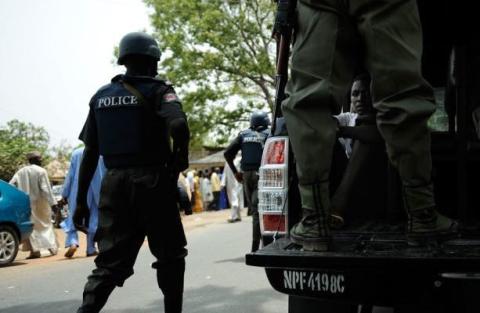
The Kano State Police Command has alerted members of the public on suspected terrorists planning to launch attacks on public gatherings in strategic locations within the state.

This is contained in a statement issued by the command’s Public Relations Officer, SP Abdullahi Haruna Kiyawa, on Friday.

“The Kano State Police Command, in liaison with other security agencies, has received intelligence reports of suspected terrorists planning to launch attacks on public gatherings in strategic locations within Kano State.

“In response, we hereby urge residents to exercise caution and avoid crowded places and environments until further notice as a preventive measure to enable security operatives to identify and dislodge possible attackers”.

He further stated that, as part of an effort to ensure a peaceful Kano State, necessary security arrangements have been put in place.

“A team of experts from the command’s Explosive Ordinance Disposal, Chemical, Biological, Radiological and Nuclear units have been deployed to strategic locations and are on high alert.

“The unit can be reached through: 08169884988 or 07067157218 for report of suspicious persons or item(s),” Kiyawa said.

He called on members of the public to report any suspicious activity to the nearest police station or contact the state command through the designated mobile phone numbers.

He said the command remains committed to safeguarding lives and properties as well as maintaining law and order in Kano State.

“We appreciate the support and cooperation of the good people of Kano State and urge everyone to remain vigilant. Your vigilance and cooperation are crucial in ensuring public safety,” the statement revealed.

Insecurity, damaged line worsen grid collapses – Minister

By Uzair Adam

The national electricity grid in Nigeria remains vulnerable to frequent collapses due to the government’s inability to repair a critical transmission line in the northern region, hindered by persistent insecurity.

Minister of Power, Adebayo Adelabu, disclosed this during the 2025 budget defense session with the Senate Joint Committee on Power.

Adelabu emphasized the consequences of the damaged Shiroro-Kaduna-Mando transmission line, which has been out of service since it was vandalized in October 2024.

“The Kaduna-Shiroro-Mando line was one of two major lines transmitting power to the north. The other line, Ugwuaji-Makurdi, was also vandalized but has since been repaired.

“However, the Shiroro-Mando-Kaduna line remains down due to security challenges,” Adelabu stated.

He highlighted that the reliance on a single transmission line has left the grid fragile and prone to collapse under strain.

Adelabu further noted that while the government cannot entirely prevent grid collapses, efforts are focused on minimizing their frequency and ensuring rapid restoration.

He acknowledged the collaboration with the Office of the National Security Adviser (NSA), led by Nuhu Ribadu, as crucial in combating vandalism, one of the sector’s most significant challenges.

The minister announced a proposed N2 trillion budget for the ministry and its agencies in 2025, with N229 billion allocated to the ministry itself.

He also unveiled a N700 billion allocation for the Power Metering Initiative (PMI), targeting the reduction of the metering gap by next month to enhance billing transparency and curb fraud.

“We are committed to reducing the restoration time after full or partial grid collapses and are working closely with security agencies to address the underlying issues,” Adelabu said.

In addition, the ministry plans to invest N36 billion in distributing transformers across the six geopolitical zones and has proposed the installation of solar lights and CCTV cameras on highways to monitor and deter vandals.

The security-focused proposal falls under a N200 billion sub-head in the 2025 budget.

The minister reaffirmed the government’s determination to secure critical infrastructure and improve power supply across the country.

Jigawa violence claims nine lives, Police say

By Uzair Adam

The Jigawa State Police Command has confirmed that nine people were killed and four others injured following a violent clash between communities in the state on Friday.

The incident, which occurred in Gululu village, Miga Local Government Area, reportedly began when a group of individuals suspected to be Fulani broke into a shop and stole hibiscus and other provisions.

According to the Police Public Relations Officer, SP Shi’isu Adam, the villagers (Hausawa) traced the suspects’ footprints to a Fulani settlement in Yankunama village, Jahun Local Government Area.

Upon confrontation, the Fulani community allegedly attacked the villagers with bows and arrows, injuring four people.

The altercation escalated as the villagers retaliated, burning houses in various locations across Miga and Jahun LGAs.

Adam stated that police teams from the Miga and Jahun Divisions intervened to restore peace, recovering nine bodies from the scene.

The victims’ remains were taken to hospitals in Jahun and Miga, where medical personnel confirmed the deaths.

The state Commissioner of Police, A.T. Abdullahi, along with other senior officers, visited the affected areas to assess the situation and ensure calm.

Community leaders, including district heads, vigilantes, and representatives of Miyetti Allah, held an emergency meeting to address the crisis and prevent further violence.

SP Shi’isu Adam assured the public that the situation is now under control and that an investigation is ongoing to apprehend those responsible.

NAF to investigate the killing of Sokoto villagers in airstrike

By Anwar Usman

The Nigerian Air Force (NAF) says it will conduct a thorough investigation into the raining of airstrikes on two villages in Sokoto on Wednesday.

According to the community members, the incident, which happened around 7am at Gidan Sama and Rumtuwa communities in Silame Local Government Area (LGA), resulted in the loss of 10 civilians and left many other people injured.

Animals were also reportedly killed, with the communities saying some of their houses were destroyed by the impact of the airstrikes.

The residents said the fighter jet was targeting Lakurawa terrorists in the areas, but in the process, dropped explosives on some innocent people.

However, in a statement, the joint media coordinator for the operation, Abubakar Abdullahi, said the airstrikes targeted locations confirmed to be the base of the Lakurawa terrorist group.

He said that, all military operations are based on “thorough intelligence and reconnaissance missions” to ensure precision and protect civilian lives.

On the other hand the NAF spokesperson, Air Vice Marshal Olusola Akinboyewa, while reacting on the issue insisted that the airstrikes were carried out based on credible intelligence from multiple sources and confirmatory aerial surveillance.

He, however, assured that reports of civilian casualties would be thoroughly investigated.

Police thwart kidnap attempt, rescue 10 in Katsina

By Anwar Usman

The Katsina State Police Command has announced the successful disruption of a kidnapping attempt and rescue of 10 victims.

The command’s Public Relations Officer, ASP Abubakar Sadiq, disclosed this in a statement signed and made available to journalists on Wednesday.

According to the statement: “On 24 December 2024, at about 20:30 hrs, some suspected armed bandits, wielding dangerous weapons and shooting sporadically, attacked a commercial vehicle at Kwanar Makera along the Katsina–Magama Jibia road in Jibia Local Government Area, Katsina State, in an attempt to kidnap ten (10) occupants of the vehicle.

“Upon receiving the distress call, the Divisional Police Officer (DPO) of Jibia swiftly led a team of operatives to the scene. The team engaged the bandits in a gun duel, successfully thwarted the kidnapping attempt, and rescued all ten ten victims.

“Four among the rescued victims sustained gunshot injuries as a result of the attack and were rushed to the hospital for urgent medical attention. Sadly, two of the victims succumbed to their injuries while receiving treatment.

“Efforts are still ongoing to apprehend the fleeing suspects as the investigation continues.

“The Commissioner of Police, Katsina State Command, CP Aliyu Abubakar Musa, psc(+), applaud the officers for their exceptional display of gallantry and dedication to duty. Furthermore, the Commissioner urged the members of the public to provide useful information on suspected criminal activities to the nearest police station for prompt and decisive action.”

Police arrest two, rescue four children from traffickers in Rivers

By Uzair Adam

Operatives of the Rivers State Police Command have rescued four children from an alleged child trafficking ring and arrested two suspects linked to the crime.

The children, aged between one and thirteen, were reportedly found at Alaeze Guest House in the Rumukwachi community of Obio/Akpor Local Government Area, where they were allegedly being held before being handed over to a nurse identified as Loveth, who runs a maternity home.

Grace Iringe-Koko, the Public Relations Officer of the command, stated that the hotel manager played a key role in uncovering the situation.

“The Managing Director of the Guest House became suspicious of the activities of one Esther Anthony, who attempted to check out with the children. He insisted that she provide proof of being their mother,” Iringe-Koko explained.

In response, Anthony left the premises and returned with police officers, accusing the manager of abducting the children and threatening her with a firearm.

However, the manager contacted the Choba Area Command, leading to Anthony’s arrest.

Further investigations revealed that Anthony had conspired with another suspect, identified as Favour, to traffic the children from Swali community in Bayelsa State.

Another accomplice, Purity Silas, was also apprehended in connection with the case.

In a startling development, a family in the Rumuodara area of Port Harcourt identified Anthony as the person who had previously stolen three of their children and sold them to Loveth.

The suspects have reportedly confessed to the crime and are now in police custody, with the case transferred to the State Criminal Investigation Department (CID) in Port Harcourt for further investigation.

Police arrest tailor for alleged teen trafficking

By Uzair Adam

Police have arrested a woman suspected of trafficking teenage girls from Eku, Ethiope East Local Government Area of Delta State, to neighboring African countries for prostitution.

Sources revealed that the suspect, who runs a tailoring shop, allegedly lured girls who came to sew clothes with promises of lucrative jobs abroad.

“She convinced them by painting a picture of better opportunities overseas,” a resident said.

It was also gathered that several parents had been questioning the woman about the whereabouts of their daughters before her arrest.

“One of the girls disclosed to a family member that the tailor facilitated her travel plans,” another source added.

A police official from the Abraka Division confirmed the arrest, stating that the suspect has been transferred to the Police Headquarters for further investigation.

Nationwide Operations: Military neutralizes 135 terrorists, arrests 185 suspects

By Uzair Adam

Nigerian military troops have intensified their nationwide operations, eliminating 135 terrorists, apprehending 185 suspects, and rescuing 129 kidnapped victims within the past week.

The Director of Defence Media Operations, Maj.-Gen. Edward Buba, provided the update during a briefing at the Defence Headquarters in Abuja on Saturday.

He disclosed that in the North Central region, some terrorists have begun surrendering due to sustained military offensives and collaborative non-kinetic engagements with community stakeholders.

Among those who surrendered are notable figures such as Yellow Jambros, Alhaji Mallam, Ardo Idi (Alhaji Lawal), Lawal Kwalba, Salkado, Yellow Ibrahim, Gana’e, and Babangida.

Buba emphasized that the military would maintain its operational momentum to dismantle terrorist networks and encourage further surrenders.

During the operations, troops recovered 113 weapons and 2,415 rounds of ammunition, including 72 AK-47 rifles, 11 fabricated guns, 15 Dane guns, eight pump-action shotguns, and four hand grenades. They also seized 46 motorcycles, 15 vehicles, 28 mobile phones, and various communication devices.

In the Niger Delta, troops destroyed 93 crude oil cooking ovens, 12 dugout pits, 37 boats, and 82 illegal refining sites.

They also recovered 909,800 litres of stolen crude oil, 71,060 litres of illegally refined diesel, and 13,580 litres of petrol.

Maj.-Gen. Buba reiterated the military’s commitment to addressing Nigeria’s security challenges, stating, “We remain in a winning position in this war and will continue to innovate in our approach.”