Security

Ulama Forum rejects Nigeria-Israel security pact

By Muhammad Sulaiman

The Ulama Forum in Nigeria has condemned the reported Memorandum of Understanding (MoU) between the Federal Government and the State of Israel on security cooperation, describing it as “a dangerous and insensitive diplomatic move.”

In a statement signed by its Convener, Aminu Inuwa Muhammad, and Secretary, Engr. Basheer Adamu Aliyu, the Forum accused the Minister of State for Foreign Affairs, Mrs. Bianca Ojukwu, of unilaterally engaging Israel despite global outrage over its alleged genocide against Palestinians.

“At a time when the world of conscience is against Israel, Nigeria should be at the forefront of supporting South Africa’s genocide case at the International Court of Justice, not courting a state increasingly isolated for human rights violations,” the statement read.

The Forum warned that involving Israel in Nigeria’s internal security would erode national sovereignty, risk human rights abuses, and entrench dependence on foreign powers. It argued that “internal security issues require homegrown solutions that prioritise community engagement, social cohesion, and inclusive governance.”

Instead of seeking external assistance, the group urged the government to strengthen security institutions, address poverty and corruption, and ensure justice for offenders. It further called on President Bola Ahmed Tinubu to “call the erring minister to order” in the interest of national unity and public sensitivity.

The Forum reaffirmed its confidence in Nigeria’s security personnel and pledged continued prayers for “Allah’s guidance and support to our gallant forces.”

Beyond “scandals”: Subtle war against Kwankwasiyya administration?

By Nuraddeen Nasir

In recent weeks, Kano State’s political atmosphere has been unsettled by a series of corruption allegations targeting senior government officials. From the resignation of the former Commissioner of Transportation, Honourable Ibrahim Namadi Dala, over a bail scandal to the latest accusations linking another top official to the diversion of public funds, the narrative has been one of scandal after scandal, amplified across select media platforms.

While accountability remains a cornerstone of good governance, it is important to ask a deeper question: Are these allegations isolated incidents, or do they point to a calculated effort to discredit the present administration?

A closer look reveals a pattern. Each controversy is picked up, amplified, and sensationalized in ways that extend beyond normal journalistic inquiry. The timing and intensity suggest more than coincidence; it hints at a broader political strategy designed to erode public trust in the governor’s leadership.

By targeting appointees one after another, the opposition may be seeking to create a perception that the administration is engulfed in corruption, regardless of the facts.

The real danger lies not only in the allegations themselves, but in how the administration reacts to them. Governor ABBA KABIR YUSUF has earned a reputation for his swift responses to public concerns. While such responsiveness is commendable, it can also be exploited. Reactionary decisions, especially dismissals or quick condemnations, may serve short-term public applause but risk long-term instability. They can embolden political opponents, who thrive on portraying the government as fragile and divided.

What is needed now is a balance: firm commitment to accountability, but guided by due process rather than media pressure. Investigations into any such incidents must be thorough, transparent, and credible, not dictated by headlines or political intrigue. At the same time, the administration must recognize that governance is not only about policies, but also about narratives. A robust communication strategy is essential, one that highlights achievements, places allegations in context, and exposes the political motives behind orchestrated attacks.

Kano State stands at a critical juncture. The battle is not merely about individual scandals; it is about the credibility of an administration that came to power on the promise of people-centered governance. If unchecked, the systematic discrediting of its officials could weaken the governor’s mandate and distract from his developmental agenda.

The lesson is clear: while corruption must never be condoned, neither should conspiracy be ignored. Seeing the bigger picture is essential. This is more than a string of scandals; it may well be a subtle political war aimed at shaping perceptions ahead of 2027.

Nuraddeen Nasir is a Doctoral candidate from Bayero University, Kano
MD, Data in-use Nigeria LTD

Two men sentenced to death by Katsina court over ex-commisioner’s murder

By Anas Abbas

The Katsina State High Court has sentenced two individuals to death for the murder of Dr. Rabe Nasir, a former Commissioner for Science and Technology in the state.

The verdict was delivered by Justice Ibrahim Mashi at High Court 9 in Katsina.

The convicted men, Shamsu Lawal, who previously worked as a security guard for the late commissioner, and Tasi’u Rabi’u, his cook, were found guilty of poisoning Dr. Nasir in his residence at Fatima Shema Quarters in 2021. The prosecution revealed that the pair resorted to poisoning after their attempts to rob him had failed.

Evidence presented during the trial included a joint autopsy conducted by police and medical officials, which confirmed the presence of poison in Dr. Nasir’s body.

In addition to the death sentences, another former guard of the deceased, Sani Sa’adu, received a five-year prison term for withholding information regarding the murder. Meanwhile, a female suspect, Gift Bako, was acquitted due to insufficient evidence linking her to the crime.

The defense attorney for the convicted men, Ahmad Murtala Kankia, requested leniency from the court, highlighting that both men have families and dependents who rely on them.

Dr. Rabe Nasir was not only a former commissioner but also a retired anti-graft officer and had served as a federal legislator representing Mani and Bindawa local governments in 2003 during the administration of former Governor Aminu Masari.

Over 1,100 Nigerians killed, 276 abducted in June — Security Report

By Muhammad Abubakar

At least 1,111 Nigerians were killed and 276 abducted by gunmen and other non-state actors across the country in June 2025, according to a new report by Beacon Security and Intelligence Limited.

The chilling figures are contained in the company’s monthly security dossier, which tracks violence and criminal activity nationwide. Despite the high numbers, the report notes that June witnessed a “notable de-escalation” in security breaches compared to May, suggesting a slight dip in the frequency or intensity of attacks.

While the report did not provide a full regional breakdown, sources familiar with the data say many of the killings occurred in the North West and North Central zones, where banditry and communal violence remain rampant. Parts of the South East also continue to grapple with targeted killings and kidnappings by separatist-linked armed groups.

The 276 abductions show the persistent threat of kidnapping-for-ransom, which has plagued Nigeria for years, affecting schoolchildren, commuters, and rural dwellers alike.

Security analysts say the figures, though slightly improved from previous months, still reflect a deepening crisis. They have called for more coordinated action by federal and state authorities to strengthen local intelligence, improve response times, and hold perpetrators accountable.

The government has yet to respond to the latest statistics, but critics argue that repeated assurances of improved security have not translated into meaningful safety for the average Nigerian.

Ribadu visits Prof. SAS Galadanci in Kano, pays tribute to national security pioneer

By Muhammad Abubakar

The National Security Adviser, Mallam Nuhu Ribadu, has paid a courtesy visit to Professor S.A.S. Galadanci in Kano, describing the meeting as both inspirational and encouraging.

Ribadu, who was in the city to offer condolences to the Dantata family, took the opportunity to visit Prof. Galadanci, the second Nigerian ever appointed as Adviser on National Security—then known by that title.

In a post shared on his social media handle, Ribadu referred to Prof. Galadanci as a “pacesetter” in the field of national security and a father figure with longstanding ties to his family.

“I was humbled by his confidence in our modest efforts and his profuse prayers for me and our country,” Ribadu wrote.

The visit, he said, provided valuable lessons and motivation as he continues in his current role.

Feared bandit leader Yellow Danbokkolo dies from injuries after clash with security forces

By Muhammad Abubakar

Yellow Danbokkolo, the notorious bandit kingpin long feared across eastern Sokoto and parts of Zamfara State, has died from injuries sustained during a fierce confrontation with Nigerian security forces last week.

His death was confirmed by Abdulaziz Abdulaziz, Senior Special Assistant to President Bola Ahmed Tinubu on Print Media, via a post on his verified social media account. According to Abdulaziz, Danbokkolo succumbed to his wounds on Sunday.

Danbokkolo, widely considered even more dangerous than the infamous Bello Turji, was linked to numerous deadly attacks in the region. He was the mastermind of the gruesome December 2021 arson attack in Shinkafi, Zamfara State, where dozens of travellers were burned alive.

Security sources say the bandit leader’s reign of terror was sustained by a chronic addiction to pentazocine, a powerful opioid, which he reportedly abused in heavy doses.

Residents of the affected communities have expressed relief at the news, hoping it marks a turning point in the fight against rural banditry in Nigeria’s northwest.

The persecution of Hausa people in Nigeria must stop

By Salisu Uba Kofar Wambai

The safety and dignity of Hausa people in Nigeria are increasingly under threat. The recent spate of brutal killings targeting innocent Hausa travellers across various regions of the country is both alarming and unacceptable. 

Disturbingly, the North Central and Southern parts of Nigeria, in particular, are turning into graveyards for members of the Hausa community, despite the hospitality and freedom non-indigenes continue to enjoy in Hausa land—where people from across the country have settled peacefully, enjoying all rights guaranteed under the Nigerian Constitution, including freedom of movement and residence.

The recent killing of two Hausa tanker drivers in the South-East came as a shock. They were attacked and butchered while trying to repair their broken-down vehicle. Similarly, the horrific massacre of Hausa hunters in an incident that sent shockwaves across Nigeria and beyond speaks volumes about the rising hostility against the Hausa community.

Equally tragic was the killing of Hausa travellers in Plateau State who were on their way to honour a wedding invitation. Their brutal slaughter reflects the growing dehumanisation of Hausa people, treated like cockroaches in a country they call home. In Benue State, two sons of renowned Islamic scholar, Malam Ibrahim Khalil, were also gruesomely murdered, as though their lives meant nothing.

These atrocities raise serious questions: Are we to fold our arms while our people are slaughtered day after day? Where are our political leaders? Where are the Hausa individuals within the security and intelligence networks? Is silence the best they can offer? Or is the Hausa community being pushed to a point where it might be forced to retaliate?

This alarming trend must not be ignored. The examples highlighted are only a fraction of the broader pattern of persecution being endured by Hausa people across the country. Despite being one of the most accommodating and detribalized ethnic groups in Nigeria, the Hausa are being pushed to the wall—and if this continues, the unity of the Nigerian federation could be at serious risk.

Urgent action is required. These barbaric attacks must stop, and those responsible must be brought to justice. The time to act is now.

Nigeria’s digital shield: Why SOC analysts, threat-intelligence teams become business-critical

By: Kabir Fagge

As Nigeria’s fintech boom, e-commerce surge and digital-government projects push ever more data online, the threat surface is expanding faster than many boardrooms realise. In January 2025 alone, Nigeria jumped two places on Check Point Software’s global list of most cyber-attacked countries, moving from 13th to 11th in just four weeks.

The previous month saw the National Bureau of Statistics knocked offline by an account takeover, forcing the agency to warn citizens against fraudulent data releases. Analysts say the uptick is part of a wider continental pattern: an INTERPOL-led sweep across Africa in March netted 300 suspects (130 of them in Nigeria) accused of everything from investment-app scams to crypto-laundering rings.

Against this backdrop, the unsung heroes of Nigeria’s blue-team defences. Security Operations Centre (SOC) analysts and threat-intelligence (TI) specialists have never been more vital. “Think of the SOC as a 24-hour digital emergency ward,” says Ofuafo Orumeteme, a Texas-based Nigerian cybersecurity professional completing an M.Sc. in Cybersecurity at Stephen F. Austin State University and formerly a technical-support lead in the Nigerian banking sector. “Every log line, every traffic spike is a vital sign we triage in real time. Without that vigilance, a ransomware infection can burn through a network before leadership even knows something is wrong.”

A modern SOC is typically staffed in shifts of Tier-1, Tier-2 and incident-response engineers who hunt for anomalies across security information and event management (SIEM) dashboards such as Splunk or IBM QRadar. When an alert fires, say, an unusually large data exfiltration at 2 a.m., Tier-1 analysts validate it, block the malicious IP or quarantine the affected endpoint, and escalate the case for deeper forensics.

“Speed is everything,” Orumeteme notes. “The median ‘dwell time’ of attackers worldwide dropped to 10 days last year, but in West Africa, it’s often measured in hours because many criminals are after quick-hit business email compromise payouts. A well-drilled SOC can cut that dwell time to minutes.” Deloitte’s 2025 Nigeria Cybersecurity Outlook agrees, warning that ransomware groups are now “weaponising automation” to compress their attack cycles.

While SOC operators fight fires, threat-intelligence teams work further upstream. They scrap dark-web marketplaces, analyse malware samples and map adversary tactics, techniques and procedures (TTPs) to the MITRE ATT&CK framework. Their goal is to transform fragments of chatter or novel code into actionable “indicators of compromise” (IOCs) that can be fed back into SIEM detection rules.
“In practice, TI is our radar,” Orumeteme explains. “If we learn that a credential-harvesting toolkit now embeds specific PowerShell obfuscation, we will write a YARA rule the same day. That way, the SOC spots it on packet capture before the attacker pivots to domain controllers.”

The Central Bank of Nigeria’s updated risk-based cybersecurity framework for deposit-money and payment-service banks now makes a formal TI programme mandatory. It urges institutions to “proactively identify, detect and mitigate” emerging threats. NITDA’s Strategic Roadmap likewise lists “developmental regulation” and indigenous capacity-building as cornerstones of its 2021-24 plan. These policies are beginning to shape budgets.

Nigerian banks spent an estimated ₦ 35 billion on cyber controls last year, industry executives say, with SOC outsourcing and TI subscriptions topping the list. Yet investment alone is not enough, warns Orumeteme. “You can buy a SIEM overnight, but you can’t buy muscle memory. Organisations need tabletop exercises, cross-training between network and security teams, and clear playbooks that specify who calls whom at 3 a.m. when the alarms go red.”

Nigeria’s cybersecurity workforce deficit is still wide. It is roughly around 76,000 professionals short of demand, according to ISC² regional estimates. That shortage is felt acutely in blue-team roles that require both technical depth and nerves of steel. University programmes are expanding, but Orumeteme argues that industry must accelerate on-the-job apprenticeships:
“Give junior analysts sandbox labs, let them dissect real malware and write correlation searches. Pair them with TI researchers who can teach open-source-intelligence tradecraft. It’s the fastest way to grow tier-2 talent.”

Data-leakage incidents in Nigeria have doubled year-on-year, with BusinessDay warning of “a crisis in the making” as attackers exploit cloud misconfigurations and unpatched VPNs. The average cost of a breach in the country now hovers around ₦ 300 million. Insurers say that money could fund expansion, R&D or thousands of new jobs.

“When executives ask for ROI, remind them that a single business-email compromise drained ₦ 1.2 billion from a West-African conglomerate last quarter,” Orumeteme says. “A mature SOC caught early recon on day one, blocked it, and saved shareholder value.”

Nigeria is aggressively cracking down on cyber-fraud. Over 1,000 arrests and 152 successful prosecutions in the past year show that progress is possible. But enforcement must be matched by enterprise-level vigilance. SOC analysts and threat-intelligence operatives sit at that nexus, turning raw telemetry and scattered clues into the actionable knowledge that keeps businesses and citizens safe.

As Orumeteme puts it, “Cybersecurity isn’t just an IT line item anymore. It’s national economic policy. And the SOC floor at 2 a.m. is where that policy succeeds or fails.”

Kabir Fagge Ali writes from Abuja, Nigeria and can be contacted via faggekabir29@gmail.com

The killing of Zaria travellers: A wake-up call to our failing conscience

By Muhammad Umar Shehu 

I read with deep shock and sorrow about the gruesome murder of innocent travellers from Basawa in Zaria LGA of Kaduna State. It is heartbreaking and disturbing. 

What is happening to our society? When did we become so heartless that taking a human life no longer moves us? When did we start watching these tragedies unfold without reacting, without speaking, without demanding justice? This is not normal. We are clearly losing our sense of humanity and conscience.

The killing of these travellers is wicked, and it must be condemned in the strongest terms. No matter the excuse, mob action is mob action. Whether it happens in Plateau, Uromi, Kaduna, or anywhere else, it is lawlessness. It is cruel. And it has no place in any society that wants to grow, that wants peace, that wants justice. The moment we begin to justify the unjustifiable, we open the door to more bloodshed and deeper division.

The Federal Government, Plateau and Kaduna State Governments, security agencies, traditional rulers, religious leaders, and all other concerned stakeholders must rise to the occasion. This crime must not go unpunished. It is not enough to issue statements. Action must follow. Those behind this evil must be arrested, investigated properly, and brought to justice. That is the only way this act can serve as a warning to others. We cannot continue to act as if all is well when innocent lives are being wasted with no consequences.

It is painful to admit, but we have become a society where people record killings with their phones instead of stepping in to stop the madness. Where is our sense of community? Where is our compassion? The silence and indifference from many quarters are just as dangerous as the violence itself. We must speak up, we must act, and we must demand better from those who claim to lead and protect us.

The media, civil society, and the public must not let this incident be buried under the weight of the next trending story. These lives mattered, and these families deserve answers. We must keep the pressure on until justice is served. A society that fails to protect the innocent will one day be a danger to everyone, including those who look away.

May the Almighty Allah forgive the victims, grant them eternal peace, and give their families the strength to bear this painful loss. And may we, as a people, wake up before it is too late.

Muhammad Umar Shehu is a writer and social commentator from Gombe and can be reached via umarmuhammadshehu2@gmail.com.

Security, youth empowerment, and innovation take centre stage in my first two years in office – Tinubu 

By Maryam Ahmad

President Bola Tinubu has outlined significant gains in national security, youth empowerment, and innovation as his administration clocks two years in office, asserting that the groundwork is being laid for a more secure and prosperous Nigeria.

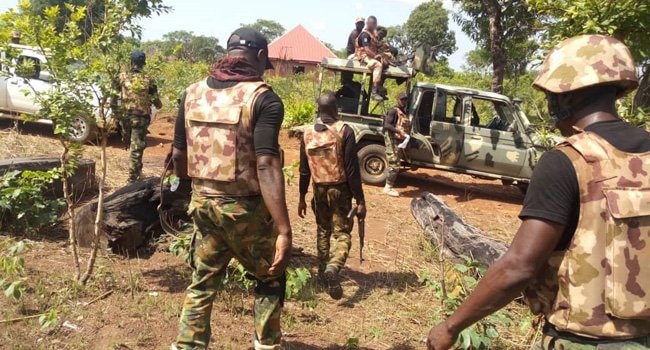
In a comprehensive national address, President Tinubu said his administration had improved collaboration among security agencies and made substantial gains in previously volatile regions. “In some areas of the northwest, hitherto under the control of bandits, our gallant armed forces have restored order,” he said.

The President emphasised the role of young Nigerians in national development, citing innovative programmes at the National Agency for Science and Engineering Infrastructure (NASENI), such as electric vehicle assembly, drone engineering training for women, and local manufacturing of rapid diagnostic kits.

“These initiatives are creating jobs, restoring dignity to work, and opening up a future of possibilities for our youth,” Tinubu stated.

Under the Renewed Hope Agenda, the federal government has also embarked on large-scale infrastructure projects, including major highway reconstructions, rural electrification through solar initiatives, and enhanced support for farmers to boost food security.

In a nod to cultural diplomacy, the President announced plans for the Motherland Festival—a global event that will showcase Nigeria’s cultural heritage, creativity, and tourism potential.

Tinubu also acknowledged the contributions of the Nigerian diaspora and introduced new policies, including a diaspora bond and non-resident BVN, to encourage greater engagement.

“Our direction is clear, and so is our resolve,” the President said in closing. “The real impact of our governance objectives is beginning to take hold. The future is bright.”