News

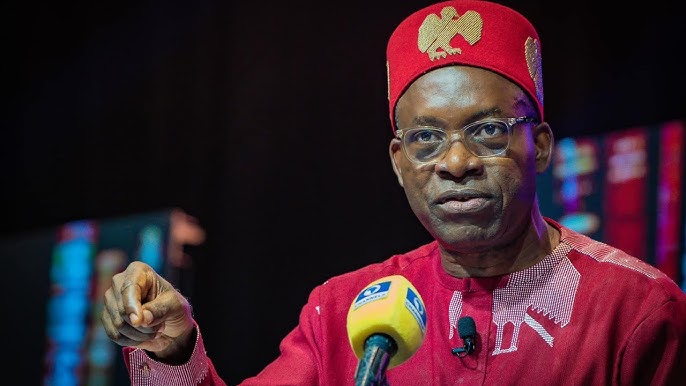
Peter Obi says ‘Yahoo Boys’ are geniuses who need redirection

By Sabiu Abdulahi

Former Labour Party presidential candidate, Peter Obi, has said that many young Nigerians involved in internet fraud, commonly called Yahoo boys, are actually intelligent individuals who require proper guidance instead of outright condemnation.

Obi, who spoke in Onitsha, Anambra State on Saturday, explained that those engaged in such activities possess creative minds but have been misled due to lack of direction.

He noted that if their energy and innovation were properly channeled, they could contribute positively to the nation’s progress.

According to him, while the pursuit of money is common, real wealth should be measured by integrity, purpose, and character.

He stressed that true prosperity should empower people and uplift communities.

“Some of our so-called Yahoo boys are geniuses who need redirection, not condemnation,” Obi stated.

He added that their resourcefulness could be used to promote national development if given the right mentorship and support.

“Their creativity and courage, if properly guided, can drive innovation and national development. Real wealth uplifts both the individual and society, promotes education, reduces poverty, and creates opportunities for others to live dignified lives,” he said.

Obi maintained that redirecting the talents of such youths toward productive ventures would not only benefit the country’s economy but also help reduce crime and unemployment.

Nigerian Film Corporation, Plateau Gov’t to deepen partnership in film development

By Hadiza Abdulkadir

The Managing Director of the Nigerian Film Corporation (NFC), Ali Nuhu, has met with the Executive Governor of Plateau State, His Excellency Caleb Manasseh Mutfwang, to discuss strengthening collaboration between the Corporation and the state government.

During the meeting in Jos, the Plateau State capital where the NFC is headquartered, both parties explored ways to expand their long-standing partnership in promoting film production, nurturing local talents, and positioning Plateau as a central hub for Nigerian and African cinema.

Ali Nuhu noted that the discussion centered on the shared belief in the power of storytelling to shape perception, promote unity, and drive development. He emphasized that Plateau State, with its stunning landscapes and rich cultural heritage, has long been a home for some of Nigeria’s most compelling stories.

“Our goal,” he said, “is to ensure that those stories are not only told but also seen, heard, and celebrated across the world.”

Hisbah nabs 25 for alleged same-sex marriage in Kano

By Uzair Adam 

The Kano State Hisbah Board has apprehended at least 25 persons for allegedly organising a same-sex marriage in the Hotoro area of Kano metropolis.

Deputy Commander of the Board, Dr Mujahedeen Aminudeen, confirmed the arrest in a statement made available to The Daily Reality on Sunday.

He said the suspects—18 males and seven females—were arrested at the Fatima Event Centre along Hotoro Bypass on Saturday.

“Today, Saturday, 25th October 2025, we received a report that some individuals were allegedly organising a same-sex marriage. 

“Our personnel immediately stormed the Fatima Event Centre, the venue of the illegal gathering, and successfully arrested 25 persons,” Aminudeen stated.

He added that the suspects, including the alleged groom, were from different parts of the state, such as Sheka, Yar Gaya, and Kofar Nassarawa.

Aminudeen cautioned that the Board would not tolerate any act capable of undermining the moral values of Kano State.

“We are calling on members of the public to support the Hisbah Board by reporting immoral activities across the state. 

“The Board will continue to clamp down on such gatherings that promote immorality,” he said.

OPINION: Critical thinking or charlatanism?: Exposing the demonisers of the Salafi-Izala

By Shamsuddeen bn Abd al-Hamid al-Kanawy

(i)Background

Alhamdu Lil Lah, was Salatu was Salamu alaa Rasulil Lah, wa ala Alihi wa Sahbihi wa man Walah.In the recent years, the radical ‘Qala-Kato’ trends of rejecting the canonization of Sunnah (the Prophetic traditions), as the second primary source of Islamic Shariah (al-Baihaqi 73-77, Ibn Hazm 96-104, Ibn Qutlubugha 38-39, al-Shanghiti 86), which Northern Nigeria had for decades been largely forced underground – thanks to their Maitashine progenitor’s blood-soaked rebellion against the authorities in the region’s several urban centers (Gari 21-24), have managed to spring back to life, although, chiefly clothed in a desperately selective anti-Salafi rhetoric, or more precisely, paired with an agitation to -at least, keep the Salafis at bay.

It is no surprise that, the reawakened ‘Qala-Kato’ storm in North Nigeria takes aim at the Salafis. For one reason, the Salafis, otherwise known as the ‘Ahl al-Hadith wa as-Sunnah’ (the Adherents of the Hadith and Sunnah), are relentless and vigilant defenders of the realm of the Islamic scriptures, whereby vehemently protesting all sort of attempts to distort, twist or manipulate their codes, in addition to their absolute commitment to the pristine methodology of the Salaf (Righteous Predecessors) (Hussein 31, Thurston 5, Gari 14), for another, almost all advocates of disguised and undisguised anti-Islamic and anti-Muslim sentiments, regardless of their agnostic, atheist, polytheist, Judeo-Christian, liberal, secular, modernist, nationalistic, racial or ethnicist backgrounds, as well as the al-Batiniyyah (esoteric cults) and zanadiqah (the plural of the Arabic zindiq: any individual clandestinely committed to extreme infidelity to Islam), heretic Muslim sects and affiliations who grossly deviate from the teachings of the Quran and Sunnah, not only loathe the Salafis, but also consider them a genuine threat to their respective missions, quests and convictions. In the Nigerian North and elsewhere, the Salafi scholars and students of knowledge, could be distinguished from the rest of the Muslim clerical elites, by their staunch dedication to resisting intellectual war against Islam and its original sources.

As expected, a confederation of presumed critical thinkers of the North and their allies has thrown its weight behind the ‘Qala-Kato’ controversialists. However, the pro-Qala-Kato arguments and assessments of the supposed thinkers, are neither aligned to academic and intellectual basis of any sort, nor do they appear to reflect the reality about the ‘Qala-Kato’ contentions and the scholarly responses to them, the theologies/thoughts, history and sociology of the Islamic affiliations and modes of practice in Northern Nigeria. Hence, their glorification, or rather idolization of the ‘Qala-Kato’ are obviously not warranted by intellectual competence or critical thinking, but -perhaps, dictated by their desperation to bend the truth, twist the reality, mislead, brainwash and rewrite history.

I fear that, the purported Luminants of the North and their allies, might have considered it their professional -and perhaps, moral obligation, as the chosen ones -privileged for their competence in Western sciences and European languages, as well as their familiarity –with particularly, the Anglo-American norms and thoughts, to lead discussions on Islam and its theology, whereby, validating, invalidating constructing, deconstructing and reconstructing the Muslim discourses at will, in a demonstration of utter disregard for academic basis and intellectuality.

Interestingly, none of their Western and West-centric inspirers; the Orientalists, their heirs and puppets within the Islamic world -who had to sacrifice everything for their embattled cause, did a good job of redefining Islam, just as Edward Said testifies that “One ought never to assume that the structure of Orientalism is nothing more than the structure of lies or of myths which, were the truth about them to be told, will simply blow away” and ultimately rules that ‘’I myself believe that Orientalism is more particularly valuable as a sign of European Atlantic power over the Orient, than it is a veridic discourse about the Orient.(which is what, in its academic or scholarly form it claims to be)” (Said 6).

Given the above, this essay intends to explore, assess and deal with misconceptions, fallacies and misinformation about the Salafi-Izala mode of Islamic da’wah and practice in Northern Nigeria that are championed by the West-centric detractors of the as-Salaffiyah, and whose censure and condemnation of it ripens into misrepresentation and distortion of its doctrine and methodology, mischaracterization and dehumanization of the key figures within its intellectual and da’wah constituencies, fabrication and/or promotion of false or erroneous facts about it and its adherents, as well as glorification of the flawed discourses and arguments of its opponents.

Thematically, this essay will focus on issues closely associated with the concept, doctrine, methodology and identity of as-Salafiyyah, its advent in Northern Nigeria, the making of the Izala society; Northern Nigeria’s largest and most well-organized Salafi da.wah platform, the nexus between the Izala and sister local and international Salafi affiliations and platforms, the interrelations between the Sufi Brotherhoods, and between them and the Salafis in the 20th and 21st centuries C.E, the Salafi stands and attitudes towards non-Salafi Muslim individuals, affiliations and sects, allegations of literalism, inconformity, intolerance, conservatism, extremism, and terrorism against the as-Salafiyyah and its prominent figures, international inspirers and benefactors. The Salafi attitudes towards temporal disciplines (Western education) modernity, political and civil participation and -of course, analysis and assessment of their responses to the current Qala-Kato and esoteric Faira Sufi controversies.

The essay will engage the gross anti-Salafi sentiments associated with the following West-centric submissions:

Usman Isyaku’s Oct 18, 2005 Facebook piece on North’s religious landscape, Abdulrazak’s “Masussuka and the Mirror of the Changing North’’ (and through him the analyses of Ibrahim Musa, Ahmad Sadiq and Dr. Musa, among others), sampled contents of Nuru Khalid (the digital Imam’s) moments of anti-Salafi agitation and rhetoric, including his weirdest claim that Wahhabism (as-Salafiyyah) is a British creation, Shehu Sani’s “Political Assassination in Nigeria”; and the last but not the least, Sunusi Lamido Sunusi’s “Identity Politics, Ethnics and Parochialism: My Engagement with Ja’far Adam”, his “In Defense of Reverend Father Kukah” and “If Poverty Continues in the North, Islam Will Disappear”.

It is worth noting that, in the course of its treatment of the issues highlighted above, the essay will – in sha Allah, engage as many profiles within the orbit of the sampled intellectuals as possible.

To be continued…

Shamsuddeen bn Abd al-Hamid al-Kanawy

shamsuddeenabounafeesa@gmail.comJalingo, Taraba State, Nigeria.

Dikko Radda reshuffles cabinet, appoints new heads of key agencies

By Anas Abbas

Governor Dikko Umaru Radda of Katsina State has approved a major cabinet reshuffle and announced new appointments across key government agencies to enhance efficiency and service delivery.

The development, which takes immediate effect, was contained in statements issued on Thursday by the Chief Press Secretary to the Governor, Ibrahim Kaula Mohammed.

The move involves redeployment of some commissioners and the appointment of two new special advisers.Under the reshuffle, Hon. Adnan Nahabu becomes Commissioner for Higher, Vocational and Technical Education, while Prof. Ahmad Muhammad Bakori, who previously led Agriculture and Livestock Development, now heads the newly created Ministry of Livestock Development.

Additionally, Hon. Aliyu Lawal Zakari moves from Youth and Sports to Agriculture, and Hajiya Zainab Musa Musawa shifts from Basic and Secondary Education to Special Duties.

Also, Hon. Yusuf Suleiman Jibia now oversees the Ministry of Basic and Secondary Education, while Engr. Surajo Yazid Abukur takes charge of Youth and Sports Development. Hajiya Aisha Aminu, former Director-General of the Katsina State Enterprise Development Agency, becomes Commissioner for Women Affairs.

Governor Radda further appointed Hajiya Hadiza Abubakar Yar’adua as Special Adviser on Nutrition and Welfare Services, and Isa Muhammad Musa as Special Adviser on Cultural Orientation.

He urged all appointees to align with his administration’s Building Your Future agenda focused on accountability, innovation, and improved governance.

However, the governor appointed Engr. Abba Junaidu, MNSE, as Chairman of the Katsina State Road Maintenance Agency (KASROMA).

He also appointed Dr. Babangida Ruma as Director-General of the Katsina State Enterprise Development Agency (KASEDA), describing him as a technologist and youth advocate previously recognised by UNESCO as the “Father of Technology and Innovation.”

Former Head of Service, Idris Usman Tune, was appointed Chairman of the Katsina State Civil Service Commission.

The Katsina State Pension Bureau was reconstituted with Ibrahim Boyi Dutsinma as Part-Time Chairman, Musa Rabiu Mahuta as Executive Director of Finance and Administration, Abbati Ibrahim Masanawa as Executive Director of Operations, and Usman Shehu as Executive Director of ICT and Database Management. Dr. Faruk Aminu will serve as Independent Observer.

Similarly, for the Katsina State and Local Government Pension Transition Board, Hon. Muntari Dan Ammani was appointed Executive Secretary, while Garba Sanda Mani, MNI, will serve as Part-Time Chairman.

Governor Radda expressed optimism that the changes will strengthen coordination and improve policy execution across ministries and agencies, reaffirming his administration’s commitment to transparency, accountability, and people-centered governance.

Ghana adopts local languages as medium of instruction in schools

By Muhammad Sulaiman

The Government of Ghana has introduced a new education policy mandating the use of local languages as the primary medium of instruction in all schools across the country.

Announcing the policy, Minister of Education, Haruna Iddrisu, said the decision marks a major step toward resetting Ghana’s education system to better reflect the nation’s linguistic and cultural realities. He emphasised that children learn best in their mother tongue, which enhances understanding and cognitive development.

“The use of our local languages in classrooms will not only improve learning outcomes but also help preserve Ghana’s rich linguistic heritage,” Iddrisu stated.

The Ghana Education Service (GES) has been directed to oversee the nationwide implementation of the policy. The move is expected to significantly reduce the dominance of English in the country’s early education system and promote inclusivity through indigenous languages.

Tinubu sacks service chiefs, names new military heads

By Abdullahi Mukhtar Algasgaini

President Bola Tinubu has replaced the country’s service chiefs.The changes, which take immediate effect, were announced in a press release from the State House on Thursday.

The outgoing Chief of Defence Staff, General Christopher Musa, has been replaced by General Olufemi Oluyede. Other new appointments include Major-General W. Shaibu as Chief of Army Staff, Air Vice Marshall S.K Aneke as Chief of Air Staff, and Rear Admiral I. Abbas as Chief of Naval Staff.However, the Chief of Defence Intelligence, Major-General E.A.P Undiendeye, will retain his position.

President Tinubu expressed his “most profound appreciation” to the outgoing service chiefs for their “patriotic service, and dedicated leadership.”

The President charged the newly appointed officers to justify the confidence reposed in them and to further enhance the “professionalism, vigilance and comradeship” of the Armed Forces of Nigeria.

This restructuring is part of the Federal Government’s ongoing efforts to strengthen the national security architecture amidst ongoing security challenges across the country.

Swiss government rejects nationwide Hijab ban for schoolgirls

By Hadiza Abdulkadir

The Swiss Federal Council has ruled out introducing a nationwide ban on schoolgirls wearing the hijab in public schools, stating that existing laws sufficiently regulate issues of participation and equality in education.

In a statement issued this week, the Council emphasized that current legal frameworks already ensure that all students, regardless of religion or cultural background, take part fully in lessons, sports, and swimming classes. It added that individual cantons retain authority over education policies, including dress codes in schools.

The decision follows ongoing debates in several European countries over the wearing of religious symbols in public institutions. Swiss authorities reaffirmed their commitment to freedom of religion and expression while maintaining that integration and participation remain key priorities in the education system.

Army arrests wanted terror leader Babawo Badoo, 37 others

By Uzair Adam

The Nigerian Army has achieved a significant breakthrough with the arrest of a notorious terrorist and violent extremist leader, Idris Idris, popularly known as Babawo Badoo.

The operation, which also led to the capture of 37 other criminal suspects, was part of a series of coordinated raids across different parts of the country.

According to a source at the Army Headquarters, the operations also resulted in the rescue of 15 kidnapped victims.

The source added that two terrorists were neutralised during the encounters, while troops recovered assorted weapons, ammunition, and logistics materials from multiple theatres of operation.

Babawo Badoo, believed to be behind several deadly attacks and abductions in the North-Central region, was arrested on October 20 by troops of Operation Enduring Peace at Lugere Village, Barkin Ladi Local Government Area of Plateau State.

He was apprehended following credible intelligence that led to the recovery of an AK-47 rifle, a magazine loaded with 10 rounds of 7.62mm special ammunition, a mobile phone, and N12,000 cash.

In another operation, troops of Sector 1, Operation Enduring Peace, working with the Nigeria Police and the Civilian Joint Task Force, raided a criminal hideout at Saya Village in Bassa Local Government Area, arresting 19 suspects who are now under investigation.

Meanwhile, troops of the 3 Division of the Nigerian Army and the Joint Task Force, Operation Enduring Peace, have killed two suspected kidnappers and rescued two abducted victims in Kanam Local Government Area of Plateau State.

The operation, carried out on Wednesday, covered Kukawa, Shuwaka, Ganjuwa, and Tunga villages after the abduction of two individuals, Muhammadu Sani and Ibrahim Manman, along the Wanka–Dengi road.

Acting on intelligence, troops cordoned off the area and engaged the suspects on the outskirts of Tunga village.

According to a statement by Major Samson Zhakom, Media Information Officer of the JTF Operation Enduring Peace, the criminals opened fire on the troops, who responded with superior firepower, killing two of the suspects while others fled with gunshot wounds.

A search of the hideout led to the recovery of one pump-action gun, a locally fabricated rifle, eight cartridges, and other items used for their operations.

The rescued victims have since been reunited with their families after undergoing standard security checks.

Major Zhakom reaffirmed the Joint Task Force’s commitment to intensifying operations to dismantle criminal networks and safeguard lives and property across the region.

House committee pushes factoring, BOFIA amendment bills to strengthen SME financing, bank accountability

By Anas Abbas

The House of Representatives Committee on Banking Regulations has held a public hearing on two significant financial reform bills that are meant to strengthen Nigeria’s banking sector and improve access to finance for small and medium enterprises (SMEs).

The bills are the Factoring Regulation Bill (HB. 516) which seeks to enable small businesses to access quick and reliable cash by selling their unpaid invoices and the Banks and Other Financial Institutions Act (BOFIA) Amendment Bill (HB. 1168), sponsored by Hon. Moses Oluwatoyin Fayinka, representing Mushin II Federal Constituency of Lagos State.

The latter aims to protect bank customers from fraudulent withdrawals and enforce greater accountability within the banking system.

The public hearing, described as “very productive” by the Chairman of the Committee and Member representing Kaduna North Federal Constituency, Hon. Mohammed Bello El-Rufai, drew wide participation from key financial and business institutions including the Central Bank of Nigeria (CBN), NEXIM Bank, Afreximbank, NACCIMA, NASSI, and several development partners and private sector stakeholders.

Hon. El-Rufai also acknowledged the presence of Mr. Fabian Okoye, Special Adviser on Research, Documentation, and Communication to Governor Uba Sani of Kaduna State, who represented the Governor at the event.

Reflecting on his earlier legislative experience, El-Rufai recalled observing the Factoring Bill during his tenure as Senior Legislative Aide and Chief of Staff to Governor Uba Sani, when the latter chaired the Senate Committee on Banking and Other Financial Institutions in the 9th Senate.

According to him, despite the Central Bank’s progress in managing what he called its “policy trilemma” the exchange rate, inflation, and interest rate Nigeria’s economic realities underscore the urgency of passing the bills.

He noted that inflation as of September 2025 stands at 18.02%, interest rate (MPR) at 27%, unemployment at 4.3%, and poverty at 46% affecting over 139 million people.

A bag of rice now costs ₦70,000. These figures, he said, show why reforms like the Factoring Bill cannot wait.Bello explained that factoring would provide a much-needed financial lifeline for everyday Nigerians.

For traders, artisans, and shop owners, factoring means faster access to cash to restock and stay in business. For small manufacturers and exporters, it improves cash flow to expand production and create jobs.

He emphasized that the BOFIA Amendment Bill complements these efforts by ensuring stronger consumer protection and holding banks accountable for fraud and misconduct.

Across Africa, factoring has been recognized as a powerful tool to unlock working capital and sustain small businesses.

Experts estimate that if properly implemented in Nigeria, it could release over ₦2.7 trillion into the economy, directly boosting communities and livelihoods.

Reaffirming the committee’s commitment to financial reforms that protect consumers and empower SMEs, El-Rufai expressed gratitude to all participants and lauded the support of the Speaker of the House, Rt. Hon. Abbas Tajudeen, GCON, for his leadership.

He concluded that the House Committee on Banking Regulations remains steadfast in its mission to drive reforms that protect consumers, empower SMEs, and grow the economy for everyone.