News

Ondo Deputy Governor: None like Tinubu in the South West – MURIC

By Muhammad Abdurrahman

The Muslim Rights Concern (MURIC), has concluded that there is none like President Bola Ahmed Tinubu among the governors and political leaders of the South West. This was a sequel to the appointment yesterday of Chief Olayide Adelami as the new deputy governor of Ondo State by Governor Lucky Ayedatiwa. 

The Islamic human rights organisation based its conclusion on the governor’s failure to pick a Muslim as his deputy despite demands to that effect from various Islamic bodies, including MURIC.

This position was made known in a press statement issued by the group’s Executive Director, Professor Ishaq Akintola, on Friday, January 26th, 2024.

The full statement reads:

“Governor Lucky Ayedatiwa yesterday appointed Chief Olayide Adelami, a Christian, as the new deputy governor of Ondo State. 

“This appointment, in our opinion, is a direct rejection of the appeals made by several Islamic organisations, including the Muslim community of Ondo State, which controls about 40% of the total population. It also mirrors the insensitivity of Governor Lucky Ayedatiwa to the yearnings and aspirations of Muslims in Ondo State. 

“The appointment further demonstrates the total lack of hypocrisy in the mantra of ‘religious tolerance’ as publicly brandished by Christian leaders and their politicians in the South West. If there is any scintilla of religious tolerance and inclusiveness, it has been coming from the Muslim politicians and the Muslim population in the region. 

“Whereas President Bola Ahmed Tinubu sought to embrace inclusiveness and religious tolerance by giving top appointments to Christians, none of the Christian governors in the South West reciprocated by giving Muslims a similar treatment. 

“Sanwo-Olu of Lagos gave the Christians 43 commissioners, but he gave Muslims a meagre 14. Dapo Abiodun of Ogun State gave Christians 16, but he gave Muslims only 4. In Oyo State, Seyi Makinde gave Christians 10 commissioners but gave Muslims 6. 

“The worst is Osun State, where the Christian governor, Ademola Adeleke, keeps deceiving the people that he is a Muslim. He also has a Christian deputy. That is the extent of executive fraud. Despite this Christian-Christian ticket in Osun State, the number of Christian commissioners is 17, while that of Muslims is just 7. 

“Ondo has 15 Christian commissioners against only 2 Muslims while Christian commissioners in Ekiti are 24 while the Muslims have 1 (one) only. 

“Who is like Tinubu among the six Christian governors in Yorubaland? There is none. Who can treat Yoruba Muslims with the same magnanimity which Tinubu extended to Christians at the federal level? None that we know of. 

“History will attest to Tinubu as the Muslim president who extended inclusiveness to hitherto hostile Christians. The annals will register Ayetilewa as the Christian governor of Ondo, who could not stomach the thought of having a Muslim deputy. Chroniclers will not spare the intolerant Christian governors of Lagos, Ogun, Oyo, Osun and Ekiti, who used their proverbial teeth to share the common patrimony of the South West but whom only Allah knows what they kept for their Christian brethren.

“Muslims are under heavy siege in the South West. They have become endangered species, oppressed, depressed, repressed, underemployed, overworked, underpaid, mere fish for evangelical fishermen, falcons caged for the falconer.”
#ManguCrisis: Military high command to hold meeting with CAN chairman over allegations

By Uzair Adam Imam 

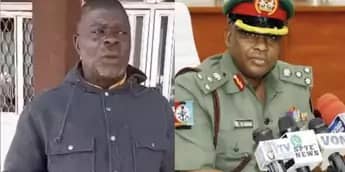
The military high command has announced its intention to request a meeting with Rev Timothy Daluk, the Chairman of the Christian Association of Nigeria in Mangu Local Government Area of Plateau State. 

This decision comes in response to recent comments made by Daluk, accusing the Nigerian military of orchestrating violence against Christians and endorsing property destruction in Mangu. 

Despite Governor Caleb Mutfwang’s declaration of a curfew, reports continue to surface about the ongoing killings of innocent people and the burning of houses, mosques, and churches in Mangu. 

In a viral video, Rev Timothy Daluk explicitly pointed fingers at the military, alleging their involvement in displacing Christians and facilitating militia attacks on their homes. 

He stated, “I am here to report the situation happening in Mangu Local Government for the whole world to understand. What is happening in Mangu at this particular point in time, the military are the ones sending our people away for the militia to burn their houses.” 

Responding to Daluk’s accusations, Major-General Edward Buba, the Director of Defence Media Operations, addressed journalists at the Defence Headquarters in Abuja. Buba assured that the military was in the process of reaching out to Rev Timothy Daluk to substantiate his claims. 

He noted the military’s commitment to fulfilling its duties professionally and adhering to the best international standards, pledging a thorough investigation into the allegations.

Fire fighters rescue man attempting to take own life over N2 million debt in Kano

By Uzair Adam Imam 

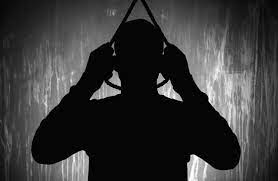
The Kano State Fire Service successfully intervened on Thursday to save a 37-year-old man, Saifullah Rabiu, who was on the verge of hanging himself from a tree. 

The rescue came following a distressing suicide note left by Rabiu, attributing his extreme action to a staggering debt of N2 million incurred during the process of obtaining a foreign visa. 

The Kano State Fire Service spokesperson, Saminu Abdullahi, confirmed the incident in a statement to the media. 

The emergency unfolded when the fire service’s Central Control Room received a call around 10:07 a.m. from the Ministry of Works and Housing in Kano State.

The location reported was State Road, near Nasarawa Emir’s house. 

Swiftly responding to the call, the fire department mobilised its standby personnel, reaching the scene by 10:10 a.m. 

There, they discovered Saifullah Rabiu in a critical condition, poised to carry out his tragic decision. 

In his suicide note, Rabiu detailed the overwhelming debt he owed, revealing that he had already repaid a significant portion of the borrowed amount, approximately N500,000. 

The note narrated the distressing impact of the creditor’s actions, which had driven him to contemplate suicide. 

Following the successful rescue, Saifullah Rabiu was handed over to Divisional Crime Officer Zaharaddini of the Farm Centre Police Division for further investigation. 

The incident sheds light on the profound consequences of financial struggles and the urgent need for mental health support in addressing such crises.

Vigilantes face death sentence for ‘extrajudicial’ killing in Kano 

By Sabiu Abdullahi 

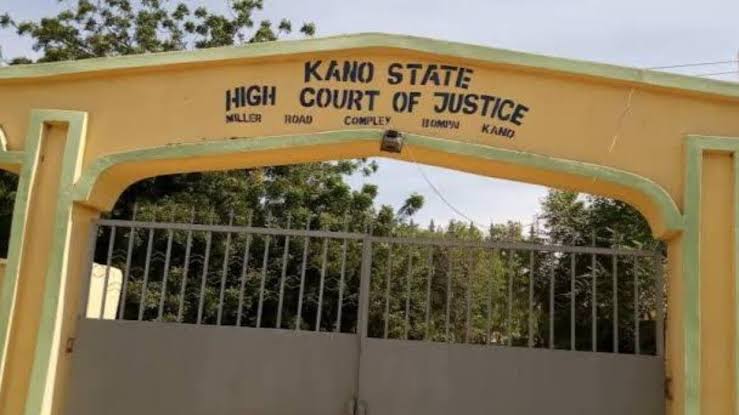
A ruling was passed in Kano as Chief Judge Justice Dije Aboki sentenced five vigilante group members to death by hanging.

The verdict stemmed from their involvement in the tragic extra-judicial killing of 17-year-old Ahmed Musa on January 22, 2022, at Sabon Titi, Panshekara, Kumbotso Local Government Area. 

The convicted individuals, associated with Sani Abacha Youth Centre, were identified as Emmanuel Korau, Elisha Ayuba, Irimiya Timothy, Auwalu Jafar, and Mustapha Haladu.

Counsel Lamido Dinki led the prosecution, unveiling a harrowing tale of a vicious attack on Musa as he crossed Sabon Titi, Panshekara Road. 

Descending from a tricycle armed with a wooden club, the defendants brutally assaulted Musa.

Attempting to evade the attack, Musa suffered a fatal stab wound to his neck from the first defendant’s sharp knife.

Subsequently, the assailants forcibly dragged him into their waiting tricycle, leaving Musa fatally injured. 

Despite prompt efforts, Ahmed Musa succumbed to his injuries upon arrival at the Murtala Muhammad Specialist Hospital Kano. 

Prosecutor Lamido Dinki built a compelling case with the testimony of five witnesses, establishing the culpability of the defendants.

The defence, under Ahmad Muhammad, presented the convicted individuals and an additional person, all of whom vehemently denied the charges. 

The defendants asserted they approached Musa for arrest based on a complaint lodged against him.

However, Justice Aboki, presiding over the case, expressed satisfaction with the prosecution’s evidence and praised the diligent work of Lamido Abba Soron Dinki.

“The prosecution has presented its case beyond reasonable doubt. I, hereby, sentence the five defendants to death by hanging,” declared Justice Aboki. 

This ruling sends a powerful message against extra-judicial violence, noting the court’s commitment to upholding justice and preserving the sanctity of human life.

Customs officers’ president launches national secretariat in Abuja

By Sabiu Abdullahi

The National President of the Customs Officers’ Wives Association (COWA), Mrs. Kikelomo Adeniyi, led a momentous launch of the COWA Secretariat on Monday, January 22, 2024, at Federal Housing Estate, Gwarinpa, Abuja. 

According to a statement released by NCS spokesperson, Abdullahi Aliyu Maiwadah, on Tuesday, the inauguration of the National Secretariat was graced by the esteemed presence of COWA’s founder, Mrs. Prisca Nwadialo, and A’ishatu Sadiya Dikko Inde, the second National President, who played a pivotal role in establishing Association Chapters across the Federation. 

The event brought together Presidents of Officers’ Wives Associations from various security agencies in Nigeria, showcasing the unity and strength within the organisation. 

Mrs. Kikelomo Adeniyi, in her address, expressed gratitude to the participants and recognised the invaluable contributions of the pioneer presidents, Mrs. Prisca Nwadialo and A’ishatu Sadiya Dikko Inde, who laid the foundation in 2009. 

Acknowledging the unwavering support of her husband, CGC Bashir Adewale Adeniyi MFR, and the Customs Management Team, Mrs.

Kikelomo stated how this support has been a driving force behind COWA’s initiatives. These initiatives are carefully designed to enhance the lives of their members, focusing on women-centric programmes. 

Deputy Comptroller-General Festus Okun, representing the Comptroller-General at the event, commended COWA for its commitment to supporting and empowering women.

He regarded the launch of the National Secretariat as a testament to President Kikelomo’s focused leadership, assuring continued support from the Comptroller-General of Customs, Bashir Adewale Adeniyi, MFR.

Ex-Anambra Governor Willie Obiano to be arraigned on N4bn laundering charges 

By Sabiu Abdullahi 

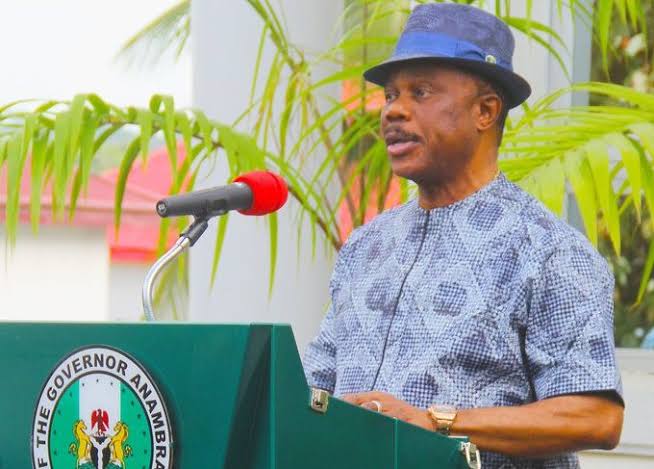
The Economic and Financial Crimes Commission (EFCC) is set to arraign the immediate-past governor of Anambra State, Willie Obiano, on Wednesday, January 24, before Justice Inyang Ekwo of the Federal High Court, Abuja. 

The charges involve alleged money laundering amounting to N4,008,573,350. 

The move comes following EFCC Chairman Ola Olukoyede’s commitment to revisiting abandoned high-profile cases, particularly those involving former governors and ministers. 

An inside source disclosed that Obiano is accused of transferring significant sums from security votes into different accounts, converting the money into dollars, and receiving it back in cash at various times.

EFCC’s lead counsel, Slyvanus Tahir, SAN, will lead the prosecution. Obiano faces nine counts, including allegations of indirectly transferring funds for purposes unrelated to Anambra State’s security affairs. 

The charges cite specific instances where funds were allegedly transferred to entities with no business relationship with the state government. 

EFCC spokesperson Dele Oyewale confirmed the upcoming arraignment, stating, “Yes, we’re arraigning Obiano tomorrow.” 

Obiano’s arrest in March 2022, immediately after leaving office, stemmed from corruption allegations related to the misappropriation of public funds, including the N5 billion Sure-P and N37 billion security vote. 

The EFCC claimed that part of the funds was diverted to finance political activities in the state.

Three men accused of desecrating corpse, cutting off flesh appear before court

By Uzair Adam Imam

Three men, including a tailor, Tunde Adelakun (32), a herbalist, Saheed Oloyede (54), and Oluwasegun Akinlolu (23), have been accused of causing ‘indignity to a corpse’ by allegedly exhuming it and cutting off some flesh. 

The trio appeared before an Iyaganku Magistrate’s Court on Monday to face charges related to their actions.

The defendants, residents of Omi-Adio and Bakatari along the Ibadan/Abeokuta Expressway, were charged with conspiracy and causing indignity to a corpse.

 Adelakun and Akinlolu were allegedly arrested with human flesh on their way to Omi-Adio, heading to the herbalist’s house at Bakatari after exhuming a dead body on January 10.

The defendants pleaded not guilty to the charges, and Magistrate Mrs M. M. Olagbenro granted them bail at N200,000 each with one surety. The case has been adjourned until February 29 for a hearing.

According to the prosecution counsel, Inspector Olalekan Adegbite, the defendants conspired to commit the offences and improperly tampered with the corpse. 

The alleged actions violate sections 242 (1)(b) and 517 of the Criminal Code Laws of Oyo State 2000. 

The defendants could face up to two years of imprisonment if found guilty.

Why our movie series don’t accommodate songs and dance – Kannywood directors 

By Uzair Adam Imam

The Kannywood movies are widely loved by Hausa-speaking communities across Nigeria and beyond. They are known for depicting Hausa culture and life.

The plots of Kannywood movies often feature drama, romance, and comedy, which many viewers find an escape from the harsh reality of everyday life. 

The songs and dances featured in the movies have become a signature of Kannywood cinema and are popular with audiences.

However, the songs and dances have ceased to be featured in the present Kannywood movies due to the new dimensions that the movies have taken.

In an interview with The Daily Reality, some Kannywood producers explained their reasons for taking the new direction.

Songs are incompatible with present movies – Lawan Ahmad

Lawan Ahmad, the producer of and a leading actor in the popular Hausa TV series Izzar So, said the songs have been removed to accommodate the kinds of films produced nowadays.

Ahmad said the songs still possess their enormously powerful impact in conveying messages but added that the nature of the movies nowadays does not accommodate songs. 

He said, “The songs were removed to suit the kinds of most produced movies in the Kannywood industry today. However, they are still useful in those movies.

“The songs were not removed because they are insignificant – their immense impact is still relevant.”

Hausa movies re-create folktales, history 

Another director and actor in the industry, Ali Rabi`u Ali, popularly known as Daddy, said Hausa films in those days were primarily traditional and required songs and dances. 

He stated, “Most of the Hausa films in those days were a replica of tales (tatsuniyoyi) and history that needed to be accompanied with songs and dances of dandali (a stage).” 

“These songs contribute(d) to the advertising and selling of the films. That is why the songs used to be released even before the production of the movies.

“This was to let people know about the film, just like the way Indian movies did,” Daddy explained.

He added that film series now do not require songs and dances because people are after the theme of the film, not songs.

“Besides, song and dance scenes are very costly and time-consuming, forcing us to cease using them in our films,” he stated.

Removal of songs: An opportunity for singers

Asked whether this was a threat to the Hausa singers, Ahmad said this was a wonderfully exciting opportunity for singers to be known for their intellectual production.

He stated, “This has helped the Hausa musicians to be known by the people for their talented works, as they make and act videos of their songs – and there is a lot of creativity in their businesses nowadays as singers resort to dramatic songs, with sole independent themes. 

“Now, instead of saying Ali Nuhu or Adam A. Zango should be featured in the video of their songs, the singers have seized the opportunity to sell their faces while taking a new dimension,” he added.

He added that the dramatic songs have now taken a new dimension, a development which attracts many people in Hausa communities.

Songs, dances mere imitations of Bollywood – don 

A Department of Mass Communication lecturer at Bayero University, Kano, Malama Ummi Hassan, opined that songs and dances in Hausa movies are simulacrums of Bollywood movies. 

The lecturer, who has taught film over the years, stated that “Songs and dances in Kannywood movies are mere facsimiles of Bollywood movies. And now that Bollywood has stopped using them in their movies, particularly series, Kannywood also stops.

“Bollywood now uses only some musical interludes as background sounds in their series movies to establish settings or set moods, to mention a few. Sometimes, they use the songs of the already-produced films, say Kalhonaho.” 

She added that a movie can achieve a desired theme without songs and dances.

She stated, “You must not show an actor or actress dancing before your film sells.” 

Some songs out of context

The university lecturer argued that the songs and dances in most Kannywood movies are sometimes out of context but were used to meet the tradition of Kannywood movies.

She said, “It is like the Kannywood has made it a tradition to put songs in their movies. The songs, however, are sometimes out of context.”

Ummi, who sees films and songs as two different things, advocates that the duo remain independent, with each conveying different meanings.

She added that although songs and dances have ceased to be used, the Hausa movies have witnessed a steep increment in their viewership. 

“I personally see this as a new development. Films and music are two different things. Songs can be used in the background to set the mood,” she added.

Our business at risk – singer

A singer, Hafeez Umar Maikano, who spoke to the Daily Reality, said their business is at risk following the removal of songs in the Kannywood movies.

According to Maikano, although songs have preceded films, singers now rely on filmmakers to survive.

He added, “I see this as challenging for the Hausa singers. The removal of songs from movies has discouraged not only professional but also upcoming singers.

“Before, filmmakers contracted singers to sing for a particular movie, giving them all the required information, including the theme of the movie.

“However, there is no denying that the removal has become a stepping stone to many of the singers,” Maikano added.

Nasarawa State governor denies future political ambitions beyond eight-year tenure

By Uzair Adam Imam

In an interview on Channels Television’s Politics Today, Governor Abdullahi Sule of Nasarawa State declared that he harbors no political ambitions beyond his current eight-year governorship tenure.

He noted that his sole aspiration is to serve as governor and has no intentions of pursuing roles such as chairman, senator, or member of the House of Representatives.

Governor Sule stated firmly, “I have no dream of becoming even president. You can take it from me confidently that I have no intention to run for the office of a senator.”

He affirmed that after completing his eight years, he is open to exploring other pursuits.

Expressing confidence in his post-governorship plans, Sule conveyed his disinterest in seeking a senatorial position, urging viewers to hold onto the statement for future reference.

The governor also revealed his anticipation of a favorable Supreme Court judgment, signaling the conclusion of the court case.

With the legal challenges behind him, he expressed readiness to focus on governing the state.Governor Sule, a member of the ruling All Progressives Congress, served his first term from 2019 to 2023.

In the 2023 governorship election, he contested against the Peoples Democratic Party’s David Ombugadu.

Despite legal challenges, the Supreme Court recently upheld Sule’s election victory, solidifying his position as the state governor.

Sule reiterated that his primary goal is to govern the state, dispelling speculations of seeking a Senate or House of Representatives seat in the future.

The Federal Republic of Lagosia

By Muhammad Sulaiman Abdullahi

The Bola Ahmed Tinubu-led government’s effort to forcibly uplift and upgrade Lagos State shouldn’t surprise anyone who knew or read about Nigeria’s history. The military initiated the idea of the creation of Abuja as the Federal Capital Territory of Nigeria in the late 20th century, precisely in the late 70th. The idea was well thought out, well planned and well executed in good faith by successive military governments. 

The actualisation of Abuja as the capital city of the federation was one of the few tasks inherited and continued by more than one regime of governance. A Wikipedia article says that; “it is a planned city built mainly in the 1980s based on a master plan by International Planning Associates (IPA), a consortium of three American planning and architecture firms made up of Wallace, Roberts, McHarg & Todd (WRMT – a group of architects) as the lead, Archi systems International (a subsidiary of the Howard Hughes Corporation), and Planning Research Corporation. The Central Business District of Abuja was designed by Japanese architect Kenzo Tange. It replaced Lagos, the country’s most populous city, as the capital on 12 December 1991.”

It is one of the fastest-growing cities in the whole world, not only in Nigeria or in Africa. “According to the United Nations, Abuja grew by 139.7% between 2000 and 2010, making it the fastest-growing city in the world. As of 2015, the city is experiencing an annual growth of at least 35%, retaining its position as the fastest-growing city on the African continent and one of the fastest-growing in the world.” This is Abuja for you. 

Everything about Abuja was well-planned by intellectuals of repute in the world. Its strategic location, terrain, weather and, above all, compatibility to all, comfort and suitability as the capital city of this complex combination. There are so many planned cities in the world, and they are done for a purpose. Right from the beginning of the amalgamation, those who perpetrated it had known that it would be so complex to manage. They, therefore, according to their expectation, helped in realising where the leadership would be easier for all. Thus, the idea behind the planned city of Abuja. And this shows how disciplined and committed the military were to the general development and progress of the country. If it were these set of politicians of today, such a momentous task would never be accomplished.

History recorded that the Yorubas vehemently rejected the idea of Abuja’s formation. The “biggest” opposition to the formation of Abuja was the then Yoruba chieftain and presidential candidate, Chief Obafemi Awolowo. Awo pledged and promised to his people that if elected, he would hire the American Walf Disney Corporation – an American multinational mass media and entertainment conglomerate, to convert the current site of Abuja into an amusement park. Perhaps Chief Awo’s dream is quickly becoming a reality under Tinubu’s administration.

Awo lost the election, and it was reported that one of the first works of Alhaji Shehu Shagari, when he assumed power, was to accelerate and lay the foundation of Abuja and push for its early completion. Successive governments took over from him, and the trend continues until these days when we see the reversal in quick gears.

I contested the supremacy of Lagos over Kano a long time ago, but later, when I visited the state in 2013, I concurred and agreed that Lagos state is so blessed and looks like other well-developed foreign cities, if not because of the roughness and ruggedness of some its people. The state is both naturally and artificially endowed. Its intellectuals also support it at the expense of all others. They are the kind of people who love themselves more than anyone else. We started seeing the manifestation of this love so early in this Tinubu-led government.

It is undoubtedly clear to anyone who pokes his nose into Nigeria’s issues that Lagos is by far more prosperous than all the 36 federation states combined. You may not be wrong if you call Lagos a country of its own. That’s why I find it weird when public structures are shamelessly moved to Lagos in the name of convenience, proximity and all other silly excuses. These flimsy excuses can look strong from the surface, but some hidden weaknesses may be uncovered after a deep X-ray.

I once asked a knowledgeable friend about the issue of population between Kano and Lagos. Those who promote Lagos promote it even where others are better. Almost all the time, I see conflicting and contradictory reports on the issue of population. He explained to me in layman’s language that Kano is the most populous city in Nigeria, and there is no doubt about this. But Kano’s population is a dispersed population while that of Lagos is the most densely populated city in Nigeria. 

Then, in the actual number of people living in the two states combined together, Kano is the most populous state in Nigeria. Even this, many people do not care to know. Back to the Federal Republic of Lagosia! The state has been leading in terms of infrastructural development, IGR, investment, inventions, entrepreneurship, companies and all that the world counts as the indices of development. This, no one can deny. Maybe Kano can only be ahead of Lagos in terms of decorum, legitimate earnings and legal dealings. But Kano, being the Centre of commerce, has for long been hijacked by many powers beyond an ordinary imagination to comprehend.

Recently, the Central Bank of Nigeria (CBN) has been reported to have moved some of its key departments to Lagos. Why? It was said that close to 60 per cent of Nigeria’s wealth revolves around Lagos state only. Then, why should CBN sit far away from the Center of money? In this respect, one should salute the courage and foresight of CBN to relocate. Those of you shouting, what do you bring to the CBN’s table to make the CBN move the headquarters to your state? 

FAAN also moved its key offices and officers and even issued a statement that they have done so for the good of the country. It was said that the former aviation minister, Hadi Sirika, was the one who forced them to be in Abuja. 

In the statement issued by FAAN, its PRO Obiageli, it is said that they don’t have enough space/offices to accommodate their personnel in Abuja. Whether this is true or false should not matter, as truth is so expensive in Nigeria, and lies are so cheap. Whatever may happen, they moved out, pending when there would be enough space for them. They would form a committee to start looking for whether they could move back to Abuja. But one important thing that Obiageli mentioned was the issue of 60% of Nigeria’s flights hovering around Lagos. This singular statement is heavier than all the other flimsy and silly excuses given. This holds water!

Abuja was not ordinarily built without any thinking. It was strategically chosen, located and designed. Abuja was one of the purposely well-planned cities in Africa, as explained. It was designed to be in the centre to ease everything for everyone. When it was established, as is the norm, many companies, government agencies, embassies, foreign establishments and above all, the seat of the government were all transferred to the location. This is how Abuja was made.

Today, under the Asiwaju’s government, silly excuses are forwarded, and some government agencies headed by Yorubas are taken back to Abuja without even consulting the two houses of assemblies. I thought such a decision must be backed by law. They should first take the issue to the National Assembly for consent. But even the movement is systematic. They started by saying we are moving “some offices”, maybe to outsmart Nigerians. Many other movements might have been shrouded in secrecy.

The preferential treatment given to Lagos state sends terrible signals to the remaining states. Yes, Lagos generates revenue, but don’t forget that many of Nigeria’s population resides in the North. Lagos is made to be a necessary location for all Northerners or their goods to pass through. To compound issues and systematically actualise this, the Northern land borders are shut. Therefore, everyone is systematically forced to carry his fate, money and energy to Lagos. The import and export solely rely on Lagos. Why all this centralisation? Something is fishy here. Are Yoruba’s up to something? Only time will tell.

Lagos state is rich enough to have its own Central Bank. It shouldn’t take everything away from the rest of Nigerians with the support of the president. Already through the shrewdness of its technocrats, more than half of what is supposed to be shared by all Nigerians is given to her alone, in the name of its ports and other cover-ups. If we go by the statement of proximity and suitability as issued by FAAN and CBN, then the Ministry of Defense should be relocated to Zamfara or Borno, NNPC to Rivers or Bayelsa, Mining and Solid Minerals to Zamfara, Borno or Yobe, among many others. 

Let Abuja be either disbanded for all Nigerians to take their share or be retained as it is. Developmental projects should be distributed evenly throughout the country. You have already forced so much of Lagos on all at the expense of all. Lagos has snatched away the lion’s share of the country’s earnings, and no one says anything. It is another country in Nigeria, so everything about her is different. The train, the power, the companies, and now Nigeria’s CBN, FAAN, among many others. Haba! Why all these? A stitch in time…