News

NASS transmits Investments and Securities Bill to President Tinubu for assent

By Sabiu Abdullahi

The National Assembly has forwarded the Investments and Securities Bill, 2024, to President Bola Tinubu for approval.

Senator Osita Izunaso, Chairman of the Senate Committee on Capital Market, made the announcement during the Securities and Exchange Commission’s (SEC) budget defense on Tuesday in Abuja.

He stated that the bill, which had already been signed by Senate President Godswill Akpabio, had been sent to the executive for final assent.

According to Izunaso, President Tinubu is expected to sign the bill into law within 30 days.

Izunaso also mentioned that the committee had issued a written directive to the Minister of Finance requesting the inclusion of a N10 billion special fund for investor education in the 2025 budget.

During the meeting, Senator Anthony Yaro (PDP-Gombe) commended the SEC for its efforts in 2024.

He expressed optimism about the agency’s improved performance.

ASUU-KASU declares indefinite strike over unpaid salaries, allowances

By Maryam Ahmad

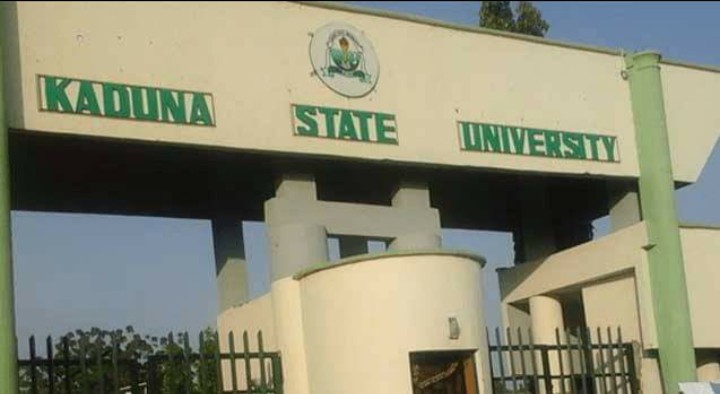
The Kaduna State University (KASU) chapter of the Academic Staff Union of Universities (ASUU) has declared a total, comprehensive, and indefinite strike starting today.

In a statement signed by Dr. Peter Adamu, chairman of ASUU-KASU, and Dr. Peter M. Waziri, secretary, the union announced that the decision was approved by the National Executive Council (NEC) following a resolution by the branch congress.

The strike is in response to several unresolved issues, including the non-payment of withheld salaries from 2017 to 2022, earned academic allowances dating back to 2016, promotion arrears, and supervision allowances for the Student Industrial Work Experience Scheme (SIWES). 

Other grievances include the non-remittance of pension funds from 2009 to 2019, lack of group life assurance for deceased members, and the failure to implement a 25% and 35% wage award.

ASUU-KASU also demands the restoration of university autonomy and has rejected promises from the Kaduna State Government, citing a lack of substance, specific details, and clear timelines for settling outstanding entitlements.

The strike action is expected to disrupt academic activities indefinitely until the demands are met.

Kano govt sets up committee to regulate NGOs, donor organizations

By Hadiza Abdulkadir

Kano State Government has inaugurated a High-Powered Committee to profile and regulate Non-Governmental Organizations (NGOs) and donor organizations operating within the state. The move aims to ensure transparency, accountability, and alignment with the state’s development priorities.

Speaking at the inauguration, the Secretary to the State Government (SSG), Umar Faruk Ibrahim, emphasized the crucial role of NGOs in sectors such as health, education, and governance. However, he noted growing concerns about unregulated activities, necessitating a structured oversight framework.

The committee has been mandated to profile all NGOs and donor organizations, investigate their funding sources, assess their activities, and recommend a regulatory framework. It has also been granted the authority to suspend or shut down any organization found engaging in suspicious or unauthorized activities. Additionally, it can escalate cases to security agencies for further investigation and prosecution if necessary.

The committee is chaired by Comrade Ibrahim Abdullahi Waiya, the Commissioner for Information and Internal Affairs, with Mallam Tijjani Auwal, the Commissioner for Religious Affairs, serving as Vice Chairman. Other members include key government officials, security agencies, civil society representatives, and religious groups.

In his remarks, Waiya assured that the committee would carry out its mandate with diligence and fairness to ensure NGOs operate within legal and ethical boundaries while contributing to Kano’s development agenda.

The committee is expected to work closely with stakeholders to enhance transparency and accountability in the operations of NGOs and donor organizations in the state.

Nigeria should turn its abandoned assets into revenues

By Zayyad I. Muhammad

The Federal Government of Nigeria owns thousands of abandoned and incomplete buildings, roads, dams, electricity, etc, projects, vast tracts of unused land, thousands of obsolete and unserviceable vehicles, and millions of scrap machines and equipment scattered across the country. These assets, though neglected, represent significant untapped potential that could be leveraged to generate much-needed revenue.

Both the federal and state governments need additional funds to finance developmental and humanitarian programs and sustain ongoing projects and programs. The solution to this financial challenge may lie in the assets that have been left to deteriorate. By auctioning some of these assets, commercializing others through private sector participation, and completing abandoned projects, the government can unlock substantial revenue streams.

For instance, Nigeria has thousands of kilometers of abandoned or dilapidated federal highways. Rehabilitating and conventionalizing these roads through private sector involvement would improve infrastructure and generate revenue for the government. This approach would shift the financial burden from the public purse to private investors, who would fund the construction or rehabilitation of the roads and recoup their investments through tolling.

In 2022, the Federal Government introduced the Highway Development and Management Initiative (HDMI), a commendable program that identified 19 federal highways for rehabilitation and tolling. However, recent reports suggest that the current Minister of Works, Senator David Umahi, has become a bottleneck to the initiative.

As Bismarck Rewane, Managing Director of Financial Derivatives Company Limited (FDC), noted, “This idea was thwarted with the entrance of the current Federal Minister of Works, who came into the picture, first as a catalyst and next as a spoiler.”

The President Bola Ahmed Tinubu administration should prioritise reviving schemes to convert abandoned properties, highways, lands, vehicles, machinery, and other assets into sustainable revenue streams. However, the process must be meticulously planned, transparent, and supported by robust legislation and institutions. Given Nigeria’s history of failed concessions and partnerships, neither private sector players nor international investors will be willing to participate without these safeguards.

Failures include the Lekki-Epe Concession, Ajaokuta Steel Company’s 2004 concession to GSHL (revoked in 2008), Lagos-Ibadan Expressway’s 2009 concession to Bi-Courtney (revoked in 2012), and the Nigerian Ports Concession program, where operators failed to meet obligations due to weak enforcement and oversight. Another case is the ALSCON concession to UC Rusal, leading to ownership disputes and legal battles.

To succeed, the government must learn from past mistakes and create an enabling environment that fosters trust and accountability. By doing so, Nigeria can transform its abandoned assets into a goldmine of opportunities, driving economic growth and development for the benefit of all.

Zayyad I. Muhammad writes from Abuja via zaymohd@yahoo.com.
Kannywood actor Nabraska dumps NNPP for APC

By Hadiza Abdulkadir

Popular Kannywood actor Mustapha Badamasi Nabraska has defected from the New Nigeria People’s Party (NNPP) and the Kwankwasiyya Movement to the All Progressives Congress (APC).

Senator Barau Jibril, representing Kano North, announced the defection on social media, revealing that Nabraska visited his residence in Abuja, where he symbolically discarded his red cap—an emblem of the Kwankwasiyya Movement. Senator Ibrahim Lamido (Sokoto East) and Political Adviser Hon. Yusuf Tumfafi were also present to receive him.

Nabraska, known for his shifting political allegiances, previously worked under the APC-led government of former Kano governor Dr. Abdullahi Umar Ganduje. However, after the NNPP’s victory in the 2023 Kano governorship election, he switched sides, only to return to APC now.

The actor’s latest move has drawn mixed reactions. Many social media users mock his frequent party changes, suggesting they are motivated by personal gain rather than ideology.

South Korean actress Kim Sae-ron found dead at 24

By Hadiza Abdulkadir

Renowned South Korean actress Kim Sae-ron was found dead in her Seoul apartment on February 16, 2025, at the age of 24. Authorities have determined the cause of death to be suicide.

Kim began her acting career at nine, gaining acclaim for her roles in films such as A Brand New Life (2009) and The Man From Nowhere (2010). She continued to build her career with notable performances in television dramas, including Secret Healer (2016) and the Netflix series Bloodhounds (2023).

In May 2022, Kim was involved in a DUI incident in Seoul’s Gangnam district, leading to significant career setbacks. Despite efforts to resume her career, including a role in Bloodhounds, her on-screen presence was reduced due to the controversy.

The actress’s untimely death has prompted discussions about the pressures faced by public figures in South Korea, with calls for greater awareness and support regarding mental health issues.

Authorities have stated that there are no signs of foul play, and investigations are ongoing.

Kano govt to complete abandoned projects at state university

By Anwar Usman

Kano state governor Abba Kabir Yusuf has promised to complete all abandoned projects at the Aliko Dangote University of Science and Technology Wudil.

The governor who made the promise when he paid an unplanned visit to the university on Sunday, directed the Commissioners for Works, Land and Higher Education to immediately commence the process of construction of Senate building and completion of ongoing projects on Wudil Campus.

This was revealed in a statement issued by the Deputy Registrar, Information and Public Relations, Abdullahi Datti Abdullahi on Monday.

“Giving much emphasis on the need to have a befitting Senate building, the Visitor to the university decried the non-existence of such a structure in the university despite being established about 25 years ago,” he said.

The statement read in part “other projects earmarked for the university include among others, staff quarters and additional students hostels, with a view to reducing daily shuttling to and fro Kano.

Yusuf was quoted saying “Abandoned projects such as the old Faculty of Engineering, Information and Communication Centre, and drainage are also going to be tackled soon”.

Meanwhile, the Governor who visited both male and female students hostels assured them of improved welfare especially in the areas of water and electricity supply.

While expressing his personal affection to the university, Yusuf said henceforth, special attention would be accorded the institution to enable it to rub shoulders with its peers in Nigeria.

On his part, the Vice Chancellor of the university, Professor Musa Yakasai appreciated the state government’s intervention in the past one year, urging for more government’s presence in the university.

The Vice Chancellor had during the visit, led Yusuf and his entourage on a Campus tour where he visited the land earmarked for Campus expansion and construction of Senate building, Faculty of Science, Faculty of Engineering, Entrepreneurship Development Centre, students hostels, Convocation Square and Wudil Commercial Secondary School.

The governor was accompanied by Deputy Governor and Commissioner for Higher Education, Aminu Abdussalam Gwarzo, Commissioners, Special Advisers, politicians and top government officials among others.

FG moves to absorb 28,000 health workers after trump’s salary block

By Uzair Adam

The federal government has announced plans to integrate 28,000 health workers into Nigeria’s healthcare system after their salaries were blocked by a policy under U.S. President Donald Trump.

Coordinating Minister of Health and Social Welfare, Muhammad Pate, disclosed this during an interview on Channels Television, noting Nigeria’s commitment to reducing reliance on foreign aid.

Pate acknowledged the significant support of the U.S. government in Nigeria’s health sector, particularly in combating HIV, Tuberculosis, and Malaria.

However, he stressed that Nigeria aims to take full ownership of its healthcare system. “There are health workers, 28,000 of them, who have been paid through U.S. government support.

While we appreciate this, these workers are Nigerians, and we must transition them into our system,” he said.

Trump had issued an executive order that paused funding for HIV treatment in developing countries, affecting the operations of the U.S. Agency for International Development (USAID) and the President’s Emergency Plan for AIDS Relief (PEPFAR).

Despite the funding suspension, the U.S. government later approved a waiver allowing continued treatment for people living with HIV.

Meanwhile, the Federal Executive Council (FEC) recently allocated N4.5 billion for HIV treatment packs to support affected Nigerians.

Zamfara govt halts political gatherings amid rising tensions

By Uzair Adam 

The Zamfara State government has banned all political gatherings and rallies across the state, citing the need to maintain peace and stability.  

The restriction, which immediately applies to all political parties, was announced following a political clash in Maru Local Government Area.  

Speaking with BBC Hausa, Mustapha Jafaru Kaura, the Senior Special Assistant to the Governor on Broadcast, Media, and Public Affairs, said the decision was taken to prevent further unrest after a recent incident in Maru that resulted in casualties and property damage.  

He clarified that the ban is temporary, not intended to suppress political activities but to ensure public safety. Security agencies have been instructed to enforce the directive.  

However, the opposition All Progressives Congress (APC) has rejected the move, arguing that it infringes on their rights. 

The party’s spokesperson, Malam Yusuf Idris Gusau, described the decision as politically motivated, claiming it was triggered by a recent APC gathering that unsettled the state government.  

“There is no law that permits the banning of political gatherings. Our party is registered at the national level, and our members are law-abiding citizens who will not engage in actions that threaten peace,” Gusau stated.  

The ban has sparked debate, with concerns over its implications for political engagement in the state.

Nigeria advocates for unified maritime task force at AU summit

By Abdullahi Mukhtar Algasgaini

President Bola Ahmed Tinubu called on the AU Peace and Security Council (AUPSC) to prioritize the establishment of a Combined Maritime Task Force to enhance security in the Gulf of Guinea.

He made the call at the 38th Ordinary Session of the African Union (AU) Heads of State and Government in Addis Ababa.

He also offered Lagos as the potential host city for the task force’s headquarters.

In his address, delivered by Minister of Foreign Affairs, Ambassador Yusuf Tuggar, President Tinubu reiterated the urgent need for such a task force to safeguard the region.

This comes as Nigeria signed an agreement with the AU to provide Strategic Sea Lift Services for peace support operations, humanitarian efforts, and personnel movement.

Under this agreement, Nigeria’s Navy will offer a vessel for the operations on a cost-recovery basis.

Key figures such as Nigeria’s Defence Minister, Badaru Abubakar, and Naval Chief, Vice Admiral Emmanuel Ikechukwu Ogalla, were present at the signing ceremony, alongside AU officials, including Ambassador Bankole Adeoye, the AU Commissioner for Political Affairs, Peace and Security.

President Tinubu also praised the AUPSC’s decision to upgrade the Nigerian National Counter-Terrorism Centre to a Regional Counter-Terrorism Centre and to renew the mandate of the Multinational Joint Task Force addressing terrorism in the Lake Chad region.

Additionally, President Tinubu expressed concern over the escalating instability in Libya, linking it to the worsening security situation in the Sahel, and urged the Assembly to support efforts aimed at restoring order in Libya.

He also highlighted security challenges in countries undergoing democratic transitions, including Sudan, Mali, and Niger.

The Nigerian leader showed strong support for the establishment of an African-led credit rating agency (ACRA), which would provide fairer and more transparent assessments of African economies.

He further backed the Africa Financing Stability Mechanism (AFSM) to support member states in addressing financial vulnerabilities and fostering economic resilience.

This initiative, designed to provide financial stability and support long-term development goals, has gained significant traction in recent AU discussions.

President Tinubu concluded by commending the progress made on the African Standby Force and urged the AU to adopt the Memorandum of Understanding (MoU) for its operationalization.