National

You can add some category description here.

Dangote Group awarded for creating investment opportunities in Africa

By Aisar Fagge

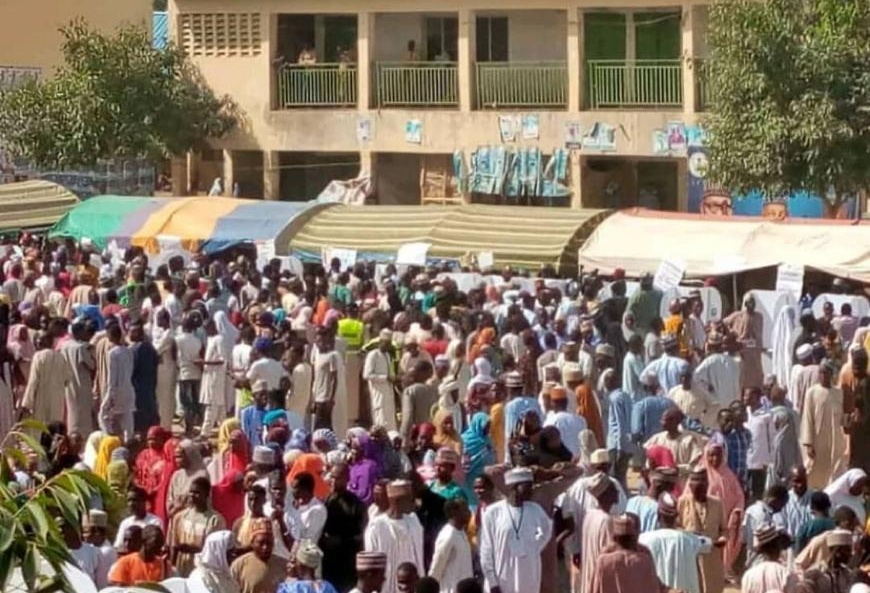
The Dangote Group Tuesday has bagged the First Runner-Up award at the just concluded 44th Kaduna International Trade Fair in Kaduna State.

The group was awarded for its enormous contribution in buoying investment opportunities across Africa through numerous businesses and philanthropic forays.

The Dangote Group made the disclosure in a news release issued to journalists on Monday.

The statement disclosed that Professor Umar Dantsoho, an economist, while speaking to journalists on the event, said the Dangote Industries Limited has been creating investment and job opportunities for Africans through its cement establishments in Nigeria and in Africa.

He said the key to developing the African economy is through the growth of the manufacturing sector, which is a major preoccupation of the company.

The statement added that, “Only recently, Dangote Industries Limited sealed a fresh deal of six million tons per annum with China Sinoma International Engineering which will strengthen local and African production to 57.6 million tons per annum.

“Aside government, Dangote Group is adjudged the biggest employer of labor in Nigeria.

“Speaking also Second Vice President of the Kaduna Chamber of Commerce Industry Mines and Agriculture (KADCCIMA). Alhaji Faruk Suleiman, commended the company for creating opportunities across Africa, adding that the upcoming Dangote petrochemical refinery will change the face of the African economy.

“General Manager, Sales, Dangote Sugar Refinery (DSR) North-West, Alhaji Abdulsalam Waya said the conglomerate would continue to provide opportunities for all willing Nigeria to invest as distributors or as investors in the stock market.

“He added that the theme for this year’s Trade Fare: Value Addition for Sustainable Growth and Development is apt, as Dangote Cement exports its product to several African countries, thereby creating jobs and opportunities across the value chain.

“The company is the major sponsor of the 44th annual event.

“Speaking, President of KADCCIMA Alhaji Suleiman Aliyu described the partnership with Dangote as very important for deepening commercial activities in the country.

“He said the support of the Dangote Group towards the success of the Fair cannot be quantified.

“Speaking to newsmen, the Director General of the Chamber Mr. Usman Saulawa said the Dangote Group is a major sponsor of this year’s Trade Fair and has been sponsoring the annual event.

“He said Dangote Group has been playing the role of supporter and partner for many years. It participation has been adding value to the Chamber.”

“The DG described this year’s fair as unique as there would be a Business Roundtable session that will further help deepens business opportunities for participants.

“The companies that participated under Dangote Industries Limited are Dangote Cement, Dangote Sugar, NASCON, Dangote Fertiliser, and Dangote Sinotruk West Africa Limited.

“A statement from the Corporate Communication Department of the Dangote Group said participants who seek to do business with any of the company’s subsidiaries can avail themselves of such opportunity through a special help desk at the pavilion.

“It described Kaduna State as one of the biggest markets in the country, given its historical position as the political capital of Northern Nigeria,” the statement added.

Ganduje drags Buhari to Supreme Court over Naira notes

By Uzair Adam Imam

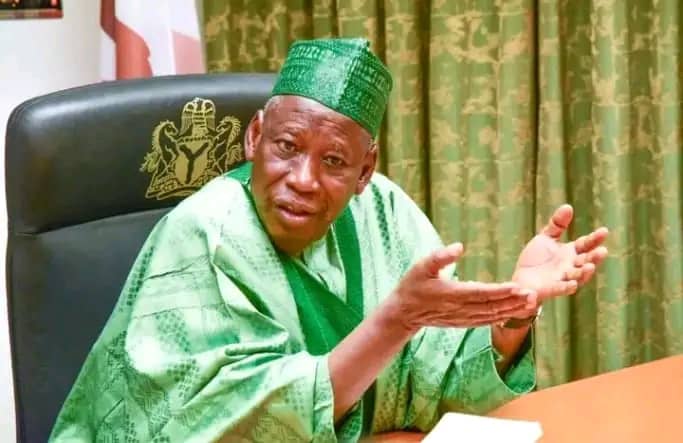
The Kano State Governor, Dr. Abdullahi Umar Ganduje, has dragged President Muhammadu Buhari before Supreme Court on Thursaday over naira notes redesign.

Governor Ganduje asked the court to command the Central Bank of Nigeria (CBN) not to stop collecting the old naira notes of N200, 500 and 1000.

He added that the naira redesign has also contradicted the provision of the 1999 constitution of Nigeria.

In a complaint filed by Sunusi Musa SAN yesterday, Ganduje said President Buhari alone had no right to instruct the CBN to stop collecting the old naira notes without consulting the House of Assembly.

Ganduje also decried about the way people are suffering in the country because of this newly introduced policy by the CBN.

In his interview with BBC Hausa, Musa said the court will hear the case on Wednesday next week.

The Daily Reality recalls that the governors of Kaduna, Zamfara and Kogi had earlier dragged president Buhari to the court over same case of naira redesign.

However, some analysts are seeing it as a power tussle between Buhari and Tinibu cabal ahead of 2023 elections.

How Naira redesign, cashless policy, affect prices of farm produce in Katsina

By Aliyu Ya’u Baraje

I have consistently written against the greediness of Nigerian agricultural produce suppliers since the implementation of the cashless policy. I am now fully convinced that a typical Nigerian is potentially greedy and corrupt, especially when presented with the opportunity.

There is no doubt about the scarcity of Naira, which economics has taught is a characteristic of money. This scarcity has created hardships for Nigerians, particularly for rural dwellers whose voices are hardly heard. This is partly due to a lack of modern education, IT literacy, and little or complete absence of media coverage. When visited, rural areas now seem like mourning grounds, faces barely smile, just silence, and black faces.

As a farmer and rural dweller, I feel it’s my duty to bring to light the ongoing exploitation of local farmers by produce suppliers. These suppliers are taking advantage of the cashless policy to profit at the expense of farmers whose main source of income is selling produce or livestock.

The prices of produce and livestock have plummeted dramatically. For example, the price of maize per 100kg has fallen from 22,000 to 13,000, rice from 26,000 to 15,000, beans from 42,000 to 25,000, and soybeans from 32,000 to 18,000. This trend is also seen in other produce such as millet, groundnuts, sesame, sugarcane, yams and cassava.

Farmers are offered two prices, one for a cash-and-carry deal and another for bank transfers. Those who need cash are given the lowest price, while those who require a transfer receive an increase of about 3,000 to 4,000.

This exploitation is unacceptable, especially since prices of other commodities have skyrocketed. I stand against this mistreatment of farmers and the erosion of their livelihoods.

I am from the southern part of Katsina State, which includes the local government areas of Sabuwa, Dandume, Funtua, Faskari, Danja, Qafur, and Malumfashi. This region is renowned as an agricultural hub not only in Katsina State but throughout northern Nigeria. This is due to the fertile land and extensive use of industrial

fertilizers and manure. The local government areas are rivaled only by the Saminaka, and neighboring local government areas.

Those who are familiar with this region will attest to the fact that its inhabitants are engaged in farming activities, not just subsistence farming but also what could be described as mechanized farming. In this region, farmers producing hundreds of tons or thousands of bags of the listed produce can easily be found. If one is a resident of this region, he is either a farmer or from a farming family. Even those who have switched to other businesses or occupations, most of their extended families are still farmers.

Given this, it should not be surprising that the exploitation of farmers by suppliers is a source of concern for those in the region.

2) In today’s Nigeria, the prices of processed and refined commodities have risen dramatically, with some even doubling, tripling, or quadrupling. The price increase for some commodities is so significant that it’s difficult to describe. So, why are farmers the only target for this exploitation?

3) In southern Katsina State, farming is done on a large scale, making it more of a business. This leads to the excessive use of agricultural chemicals, the prices of which have skyrocketed multiple times. For example, NPK fertilizer is sold for 32,000 Naira, Urea is sold for 22,000 to 23,000 Naira, Moroccan OCP (mixed fertilizer) is sold for 15,000 to 17,000 Naira, and the locally made Dan-Buhari fertilizer made from Kankara Local Government is sold for 10,000 to 15,000 Naira. Given these high prices, it’s understandable why a farmer would not be happy with selling their produce for less than 15,000 Naira.

Moreover, the use of tractors and other heavy engines for farming activities such as harrowing, tilling, harvesting, and transportation requires diesel, which now costs over 900 Naira per liter. The use of small equipment for dry-season farming, mobilization, pesticides, and herbicide spraying also requires petroleum, which now costs between 350 and 400 Naira. The prices of other chemicals such as pesticides, herbicides, and preservatives have not only doubled but have tripled or even worse.

This means that when a farmer who needs cash takes their produce or livestock to local markets, they feel like they are being shortchanged or receiving only a fraction of what they spent months or years nurturing. As a result, many farmers go home feeling like they have been robbed and have nowhere to turn for help

4) I seek to draw public attention to the exploitation of farmers in Southern Katsina state. The rise in prices of agricultural chemicals and equipment, along with the exploitation of farmers by produce suppliers, have led to a situation where farmers are not able to make a fair profit from their hard work. I categorizes those who are happy with the situation into two groups: those who are exploiting the farmers for their own gain (like suppliers) and those who are not involved in farming and only care about purchasing cheaper produce for domestic consumption (the consumers).

5) It is unfortunate that the farmers who work hard to produce the commodities are being exploited by the suppliers, hoarders, and processing industries. The lack of government price control mechanisms, excessive taxes and restrictions on foreign goods, and competitors. The selling of finished products at high prices, even higher than those imported from other countries has shown that farmers are intentionally targeted. This creates a situation where the farmers receive low prices for their produce while the final products are sold at high prices, leaving the farmers with little profit and often feeling exploited. It is important to address this issue and find ways to support and protect the livelihoods of local farmers

6) The exploitation of farmers in Nigeria has become a major concern as they are being targeted by suppliers, hoarders, and companies. The prices of agricultural chemicals and equipment used in farming have skyrocketed, making it difficult for farmers to make a profit from their produce. The lack of government price control and foreign competition, as well as excessive tax charges, have added to the farmers’ burden. Despite the high prices of commodities, the owners of processing, refining and packaging factories have not reduced their prices (per kg from suppliers), and instead sell the finished products at exorbitant prices. This has made life in rural areas even tougher, as the local farmers are unable to compete with foreign imports and are being forced to sell their produce at low prices. The suppliers have also adopted a cashless policy, which has made it difficult for farmers in rural areas to receive payment for their produce. The lack of recognition of wired transfers and poor network and electricity coverage in rural areas has further complicated the situation.

It’s important for the government to consider all factors and individuals, including rural settlers, when making decisions on the cashless policy. The government should strive to ensure that all citizens have equal access to financial services, regardless of their location.

Aliyu Yau Baraje, Dandume Local government area Katsina. He can be reached via: aliyuyau900@gmail.com fb: Aliyu Baraje

StarLink and Nigeria’s telcos competition

By Ibrahym El-Caleel

StarLink is a distant competitor to our telcos. The product price edges it out of immediate competition with MTN, Airtel and co. However, it is good that it is already here. In fact it will definitely gain a fair share from some businesses who have been looking for an alternative to the existing telcos.

Setting up StarLink costs more than N400,000. Personally I think it will be a better buy for businesses who spend about 60-75% of this amount for internet access. They will be bidding farewell to the periodic disappointments we experience from the contemporary telcos.

Market is dynamic. As StarLink takes some time in Nigeria, it will be ambitious about increasing its market share. It will be innovative about coming up with something that will be relatively affordable for the teeming internet subscribers. This is when the true competition will begin. For now, the penetration will be low because at the moment a lot of Nigerians are quite very rich. The consumer conversion will be minimal.

MTN began in Nigeria with N1,500 airtime card only. And it expires in 7 days. If you don’t use the airtime after 7 days, you have to buy another one. This was the case c.2001. Fast forward to 2021, you can have a N100 airtime and keep it for one year if you so wish. StarLink might have to develop something cheaper to get more subscribers onboard. If your things are expensive, you can sell it and make money in Nigeria. If they are affordable to many, you make quicker turnover, bigger sales, (arguably) more profit. This is Nigerian market.

Dangote Group, China company sign to build cement plant in Ogun

By Aisar Fagge

The Dangote Industries Limited (DIL) alongside China Sinoma International Engineering (CSIE) have signed an agreement to build a six million tons per annum cement plant in Itori of Ogun state.

Alh. Aliko Dangote, the Chairman of Dangote Cement Plc, made this disclosure during the signing ceremony.

Dangote stated that he signed the agreement alongside the Group Executive Director, Strategy, Capital Projects & Portfolio Development, DIL, Devakumar Edwin.

While China Sinoma Engineering, on the other hand, was represented by its Group President, Yin Zhisong, and the company’s chairman, Liu Renyue.

Dangote said that the new integrated cement plant at completion would strengthen the local production capacity of Dangote Cement and bring its local capacity to 41.25 million tons per annum and total African capacity to 57.6 million tons per annum.

He further stated that the Nigeria’s capacity to export cement would also be increased, the development that would enable more diversification and foreign exchange inflows for the economy.

He also noted that the project would further develop the domestic economy through creation of thousands of indirect and direct jobs and drive economic development in the Itori axis.

Aso Villa cabals sabotage APC

By Aliyu Nuhu

From what governor Nasiru El-Rufai said, the currency redesigning and fuel scarcity are the handiwork of the cabal in Aso Villa to ruin the electoral chances of the APC candidate, Asiwaju Bola Ahmad Tinubu. The president’s wife validated the claims by endorsing El-Rufai’s views.

Now it makes a lot of sense to me. No sitting government with victory in mind will introduce such harsh policies that shut down the economy few days to election. Northerners will go into the polls with anger and no one will vote for APC. I don’t think there is anywhere, except Borno and Yobe the president can go without being pelted with stones. Let him try it.

I have reviewed the policy again and again and could not see the economic sense in it. Withdrawing cash from circulation in a cash economy is a recipe for disaster. CBN has effectively shut down the informal sector of the economy. The North is 95% cash economy. Everything is at a standstill.

I wholly agree with El-Rufai. Emiefele is acting a script to undermine Tinubu. His policies are for political reasons after all he has never hidden his partisanship by attempting to contest in the election. The cabal surrounding the president wanted the vice president to succeed his principal and it didn’t work because no one could defeat Tinubu in the primaries. I was wondering why Osinbajo contested when it was obvious that Tinubu could not be beaten. Now I understand. It was the cabal that gave him the false hope of winning. Today, due to apathy, Osibanjo is not even attending Tinubu’s campaigns.

Unfortunately the opposition politicians are not cashing on the crisis to make political fortunes out of it. Only Kwankwaso knows how to exploit such situation. This is the time to push Nigerians against APC. But they appear docile as if they don’t know the art of political brinkmanship.

As for Tinubu he is not doing the right thing. This is the time for damage control for his electoral benefits. He should distance himself from the new currency policy and promise to reverse it. He should be beyond any fear by now. Buhari can’t do him anything. The president is now a political nonentity. Without Kano and other parts of the North, Buhari is nothing. As long as the governors are with Tinubu he has nothing to fear.

As for Buhari, just forget about him. He has never been in charge of the government. He is just a figure head. If he were the candidate in this election will he allow this kind of crisis?

Stop incessant falling of tankers and containers on Lagos roads – MURIC

  • News Desk

The Lagos State Chapter of the Muslim Rights Concern (MURIC) has bemoaned the death of seven innocent passengers who fell victim to a 20ft container which fell on a commercial minibus at Ojuelegba, Lagos on Sunday, January 29, 2023. The group urged the Lagos State Government (LASG) to formulate a sustainable and enforceable policy that will regulate the operation and movement of tankers and heavy-duty lorries on major roads.

The statement was signed by the chairman of the Lagos Chapter of MURIC, Dr Busari Muhammad Jamiu.

He said: On Sunday, 29th January 2023, a tragedy occurred in Lagos where seven (7) innocent lives were lost. According to the report, a  truck conveying a 20ft container fell on a commercial minibus at Ojuelegba and killed the occupants.

“We are sad that innocent lives are taken by heavy-duty lorries and fuel-laden tankers unabatedly on Lagos roads. The Ojuelegba incident, which happened two days ago, was not the first as Lagosians do witness myriads of tanker explosions and the falling of containers on innocent road users. We are asking the LASG when such calamities would be curtailed.

“It will be recalled that barely two weeks ago, one life was lost when a  diesel-laden tanker fell on a stationary towing van at Otto Wharf, along Apapa – Oshodi Expressway, Mile 2, in Lagos. This incident is just another example of innumerable calamities that Lagosians have experienced.  Are we safe again as road users? What are the authorities doing in curbing and averting the re-occurrence of these avoidable man-made tragedies?

To this end, MURIC urges LASG to formulate a sustainable policy that will regulate the operation and movement of tankers and heavy-duty lorries on our major roads. The enforcement of such policies has become overdue if they already exist.  

“This could be done in conjunction with all relevant authorities such as the Federal Road Safety Commission (FRSC), the Police, Lagos State Ministries of Transportation and  Justice, as well as the tankers’ owners and drivers associations.

“There must be a framework on how, where and when these trucks and lorries are loaded,  parked and moved around in Lagos to avert incessant loss of lives and properties of Lagosians. It is believed that a stitch in time saves nine. Therefore, LASG must not wait until such tragedy is recorded again before taking a proactive step. The time to act is now!”

Emeritus Professor I.H Umar passes on

By Kabiru Isma’il

The renowned Nigerian Professor of Physics, Ibrahim Khalil Umar, aka I.H. Umar, died a few hours ago today.

I.H Umar was a Nigerian scientist of repute, and he had once been a University administrator. Wikipedia sources described that he was a Vice Chancellor of Bayero University, Kano, Nigeria, from 1979 to 1986. He held a B.Sc. in Physics and Mathematics from Ahmadu Bello University, Zaria, Nigeria, an M.Sc. in Physics from Northern Illinois University, USA and a PhD in Physics at the University of East Anglia, United Kingdom. In 1976 he became the first Nigerian academic in Physics to teach at Bayero University, Kano. In 1978 he served on the national constitutional assembly that drafted the Constitution of the 2nd Republic.

Between 1994 and 1997, the late I.H. Umar served as a Sole Administrator of the Federal University of Technology, Minna.

He also represented Nigeria at the Executive Assembly of the World Energy Council in 1990. He was a member of the Nigerian delegation to the International Atomic Energy Agency (IAEA) General Conference from 1989 and was appointed Director-General of the Energy Commission of Nigeria in 1989. He served as Chairman of the Board of Governors of the IAEA from 2000-2001. In 2004 he was the Director of the Centre for Energy Research and Training, where the first Nigerian research nuclear reactor is located.

In 2007, he was on the international advisory committee for the international workshop on Renewable Energy for Sustainable Development in Africa, held at the University of Nigeria, Nsukka in Nigeria.

I.H Umar was among the first five Professors in Nigeria to attain the Chair of an Emeritus Professorship from Bayero University, Kano, Nigeria.

May the Almighty Allah have mercy on him, amin.

2023 elections: CDD trains journalists, media influencers on combating fake news

By Aisar Fagge

As part of the preventive measures, the Center for Democratic and Development (CDD) trained journalists and social media influencers on how to combat fake news ahead of the 2023 general elections.

The training Wednesday in Lagos was in collaboration with the National Endowment for Democracy (NED), a nonprofit organisation based in the United States of America.

Participants of the workshop, who are mostly journalists, influencers, media experts and members of Civil Society Organizations (CSOs), were drawn from different parts of the country in order to have a wider impact on the objective of the event.

The CDD Director, Idayat Hassan, stated that the participants were trained with vital skills on how to identify and prevent the propagation of fake, misleading and incendiary reports sent to them to share on their channels, handles and timelines.

The participants were also cautioned on the dangers of fake news and the implications of misinformation, and how the duo can terrorise the peace in Nigeria.

It was gathered that the training was given on how to use tools forensically, such as Geolocate, Google image search and Tineye, to detect fake videos, tweets, pictures and news.

Politicians use social media to spread fake news

The director also decried the way some politicians avoid media gatekeeping and use social media to spread fake narratives to the public, thus necessitating measures to address the issue.

She further said, “While the phenomenon of political players intentionally disseminating false information is well-known and discussed, the role of digital media influencers who are meant to be the bearers of truth and factual accuracy and in combating misinformation and disinformation has not received as much attention.”

There are many crises online

The CDD Communications Lead, Armsfree Ajanaku, said there are many crises online as people commit violence without consequence.

He stated, “Online gender-based violence exists within a context similar to what happens in real life, which is just as destructive as offline violence.

“We now live in a virtual society, where offline violence has extended to online, which makes it easier for people to commit violence without consequences.

“Women are the main targets of online violence, especially the ones with voices, like female politicians, service personnel, women’s rights activists, journalists, women leaders, etc. As it is globally, Nigeria faces a worse case due to our culturally sensitive environment,” he added.

In his presentation, Introduction to Fake News Ecosystems and Techniques of Spotting and Countering Fake News, CDD Project Manager, Abiodun Banjoko, noted that the 21st Century had seen the weaponisation of information on an unprecedented scale. According to him, disinformation, misinformation and malinformation are the greatest threats to the Information age, especially in a multi-ethnic and religious country like Nigeria. He, therefore, urged the participants to use the skills and knowledge they acquired in combating fake news in their endeavours.

Tinubu told me he has nothing to offer to North, says Naja’atu Muhammad

By Ahmad Deedat Zakari

A former Director in the Presidential Campaign Council (PCC) of the ruling All Progressives Congress (APC), Hajia Naja’atu Muhammad has disclosed that Tinubu told her he has nothing to offer the North if elected Nigerian President.

Mrs Muhammad said that Tinubu told her he had no blueprint for tackling insecurity in the North during a meeting in London.

She disclosed this while giving reasons for her resignation from the APC and partisan politics.

On Arise Television’s programme, Morning Show, Naja’atu said: “I met with Tinubu in London and he told me “I don’t have a blueprint for tackling insecurity in the North; if I have I might be killed.”

“Having a blueprint for tackling insecurity in the North would mean I will be stepping on so many toes “

“He has been urging me to take the appointment and I refused.”

The Daily Reality had reported the resignation of Mrs Muhammad from the APC and Tinubu’s campaign team. She had resigned after claims that the APC lacks political ideology and is not any different from other political parties

However, Tinubu’s campaign team said she is incompetent and was fired for being a spy.