National

You can add some category description here.

Negative influence of TikTok trends on Nigerian youths

By Manasseh Mercy

Social media integrates digital media platforms, including combinations of electronic text, graphics, moving pictures and sounds in a structured computerized environment that allows users to interact with the data for appropriate purposes or otherwise. The digital environment can include the Internet, telecommunications and interactive digital television. The Web is now part of the overall business of communication, sales and services. It changes business practices across the globe.

Its technical limitations affect the amount of material and the speed of access. The network depends mainly on the connections of the telephone line, so the more they are good on a territory, the more the service will be reliable. As a result, messages can reach audiences and target groups in real-time and generate changes and trends.

Nowadays, younger generations grow up having good contact with different social networks, easily acquire digital culture and live in a digital world where only adults are naturalized citizens. Trends can bring awareness to other organizations and not just for selling products. 

In 2014, the ice bucket challenge was a popular trend that spread across Instagram’s platform. The trend was created to help bring awareness and donations to Lou Gehrig’s Disease, also known as ALS, which stands for Amyotrophic Lateral Sclerosis. Pete Frates, a former baseball player for Boston College, helped promote the nonprofit organization ALS Association because of his diagnosis of the disease. Both celebrities and regular social media account holders made videos of pouring ice water on themselves while tagging at least three friends to post themselves participating.

This trend was an example of one of the many situations that brought light to very serious topics. The millions of people posting about the ice bucket challenge resulted in the organization raising millions of money. That year, an estimated $115 million was raised for the cause in just a few months. The Ice Bucket Challenge was created to raise money for research purposes in hopes of finding a cure for ALS disease.

The Ice Bucket Challenge is just one of the many trends that took over social media platforms. Many nonprofit organizations have been going viral over the years, bringing awareness to millions of people. Situations like these can come out of pure luck to get everyone on the Internet to discuss a topic. Getting people to talk about specific issues brings attention to a cause that can get people to donate money. It’s not only companies and organizations that get attention online but also individuals as well.

TikTok is a social media platform for creating, sharing and discovering short videos. Young people use the App to express themselves through singing, dancing, comedy and lip-syncing. It allows users to create videos and share them across a community. It is one of the most popular social media platforms in the 21st century. 

In Today’s generation, popular trends on social media have a significant influence on younger generations. Trends can consist of different things such as makeup, clothes, music, toys, and interests. TikTok trends are viral short videos that use popular features, songs, sound effects and hashtags. 

Some current TikTok Trends (November 2023) include Bird’s-eye View — November 17, 2023. In this trend, you grab your friends or coworkers, tape your phone to the ceiling, and record yourselves dancing and being silly. Another was (Added November 20, 2023) Smug Corgi/Confused Dog Meme Trend. Example: Posting a video with the CapCut template from the example with a funny text overlay describing a situation where you (the corgi) would be smugly doing something while the other person (represented by the other dog) is super baffled, often about spend a lot of money on something like Christmas decorations.

What are the potential risks? Users may be exposed to foul language and sexual content. Users can comment on other videos, which leaves the potential for online bullying or negative comments. The App promotes positive comments and encourages users to ‘say something nice’. However, if you encounter an inappropriate comment, you can report it as abuse. 

Stalking, identity theft, personal attacks and misuse of information are some of the threats social media users face. Most of the time, the users themselves are to blame as they share content that should not be in the eye of the public. 

These dangerous trends are not only harmful to the individuals who participate in them, but they also hurt society as a whole. When young people engage in these trends, they send their peers messages that it is acceptable to engage in risky and inappropriate behaviours. This can lead to a culture of recklessness and disregard for personal safety and etiquette.

It is essential for parents and educators to be aware of these dangerous trends and to talk to young people about the potential consequences of participating in them. It is also essential for social media platforms like TikTok to take responsibility for the content shared on their platform and to take steps to remove the dangerous content.

In conclusion, TikTok trends influence the social behaviour of Nigerian youths in one way or another. Nigerian youths engage in time-consuming and energy-draining trends, and sometimes, they cost money because they want to be famous and act like their peers. The Nigerian government should closely monitor and adequately regulate TikTok trends so as not to destroy Nigerian youths’ moral and social behaviour.

Mercy Manasseh is a student of Mass Communication from the University of Maiduguri and can be reached via mercymanasseh951@gmail.com.

Nigeria’s Public Procurement Act (2007) Review: The imperative of professional expertise

By Dr Salisu Uba, FCIPS

The Federal Government’s recent initiative to review and refine the 2007 Public Procurement Act is a significant step towards optimizing public spending and fortifying economic efficiency. This endeavour, spearheaded by a committee led by the Attorney General of the Federation and Minister of Justice, Lateef Fagbemi, SAN, marks a pivotal moment in Nigeria’s quest for enhanced transparency, accountability, and responsiveness in procurement practices.

Amidst the constellation of stakeholders enlisted in this laudable undertaking, the conspicuous absence of representation from the Chartered Institute of Procurement and Supply (CIPS) Nigeria and other domestic procurement-related bodies raises pertinent questions about the breadth of expertise and comprehensive insight into contemporary procurement standards within the country.

The involvement of CIPS Nigeria and analogous local bodies bears paramount significance. It is imperative to recognize that these entities serve as bastions of professional knowledge, embodying a wealth of experience in global best practices in procurement and supply chain management. Their inclusion in the committee would infuse the discourse with nuanced perspectives, aligning the proposed amendments not only with global benchmarks but also with the unique fabric of Nigeria’s socio-economic landscape.

Professionalism in procurement transcends mere technical expertise; it encapsulates a commitment to upholding ethical standards, ensuring transparency, and driving value for money across procurement processes. The infusion of such professionalism into the review of the Public Procurement Act is fundamental. It is the bedrock upon which the trust of citizens and investors in the procurement ecosystem is built.

Highlighting the importance of professionalism in this review process signifies a resolute dedication to promoting best practices. Leveraging the expertise of bodies like CIPS Nigeria and local procurement organizations will not only consolidate the legal framework but also imbue it with a pragmatic touch rooted in real-world applications.

Furthermore, the committee’s scope should extend beyond the confines of governmental offices. It is crucial to cast a wider net, seeking insights from outstanding Nigerian professionals who have excelled in the procurement and supply chain domain globally. Drawing from their experiences and achievements would inject the committee’s deliberations with a potent dose of practicality and innovation.

The call to look outward and tap into the reservoirs of Nigerian expertise scattered across the globe is not just a strategic imperative but a visionary approach. Nigeria boasts a diaspora of procurement and supply chain professionals who have garnered commendations and achievements in various sectors globally. Harnessing their knowledge and insights would foster a holistic and comprehensive review process.

Amidst these aspirations for a comprehensive review, one cannot disregard the urgency for swift action. The one-month timeline stipulated for the committee demands focused and efficient collaboration. However, the pursuit of expediency should not overshadow the importance of thoroughness and inclusivity in gathering diverse perspectives to fortify the amendments.

As the committee embarks on this crucial task, the overarching objective should be to nurture a procurement landscape that not only meets contemporary economic realities but also paves the way for sustainable growth, resilience, and equitable access to opportunities for all Nigerians.

In conclusion, the successful review and subsequent amendments to the Public Procurement Act stand as a beacon of progress for Nigeria’s economic transformation. The incorporation of professional expertise from esteemed bodies like CIPS Nigeria and the inclusion of outstanding Nigerian professionals from around the world will serve as catalysts in shaping a procurement ecosystem that is robust, transparent, and aligned with global best practices.

The future of Nigeria’s procurement landscape hinges on the committee’s commitment to professionalism, inclusivity, and forward-thinking strategies that encapsulate the diversity and dynamism of the nation’s procurement sphere.

Salisu is a fellow of the Chartered Institute of Procurement and Supply (CIPS) and a member of the CIPS Education Committee in the UK. He is the founder and CEO of NarQuest Limited – a supply chain technology company based in Glasgow, UK. 

NSA Nuhu Ribadu style: A critique 

By Zayyad I. Muhammad 

For 24 years, most Nigerians were only familiar with one style of operation by their National Security Advisers (NSA)—a regimental style—because of the complete military background of the previous NSAs. Having NSAs with military experience is an excellent idea, but some critical situations require looking at things from different angles, including outside-the-book approaches.

The coming of Nuhu Ribadu as Nigeria’s National Security Adviser is a paradigm shift and a systemic and systematic approach by President Bola Ahmed Tinubu. Tinubu brought not only a person that he understood but also a person who understood his steps. It’s a kind of quality assurance.

Because for two decades, Nigerians have been used to one style, they need to be educated from a layman’s perspective. NSA Nuhu’s style will and must always be soft and hard, silent and loud, publicly and secretly, unique and ordinary because of his background, training, and experience—an excellent police officer and an anti-corruption czar who has gone through the mills of his fields.

Before his appointment and signs that he would be President Tinubu’s NSA, some people thought de-marketing and painting him black would deny him the position. They forgot that security matters; it goes beyond politics when dealing with goal-getters like Tinubu. It’s a matter of the quality of Nuhu Ribadu and Tinubu’s philosophy on exceptional human resources.

The National Security Adviser manages Nigeria’s security on behalf of the President, and he is the chief advisor on all matters vital to Nigeria’s very survival.

The big questions are: has Nuhu Ribadu brought on board something new, being a new face with different backgrounds from the previous NSAs in 24 years? Has Nuhu Ribadu been able to separate politics from policy? He has actively participated in politics before now. Has Nigerian security improved under Nuhu Ribadu?

Analysing security issues and their managers is often difficult, or rather futile because the gains achieved in a decade can be wiped away within a few minutes by one senseless act by terrorists, bandits, or common criminals. Nuhu has brought something unique: Nigerians are being informed of happenings in the fight against criminality, the NSA is now visible when required, confidence has been built, and resources are appropriately distributed while separating needs from wants. Under NSA Nuhu Ribadu, kinetic and non-kinetic approaches are being applied to tackle the security challenges in Nigeria. Inter-agency synergies are now a key in the security architecture.

Furthermore, all security agencies are being reformed and reinvigorated to play their role in internal security effectively. At the same time, the military is being freed from the burden of performing both its constitutional role and that of the police, thus allowing it to concentrate on external security fully.

Politics and man are like love and humankind—they co-exist. Human beings must always love something; the same is true of politics: once one knits tight with politics, they live together. Even his adversaries must admit that Mallam Nuhu was able to separate his office from politics, knowing fully the enormous responsibilities on his head, and Nigeria and the world are keenly watching him. Furthermore, Mallam Nuhu has been able to drive the ONSA back to its original status as a National Security Vehicle, not the sad belief that it is a kind of  ‘big pot ‘for politicians to scoop from.

Silently and interestingly, NSA Nuhu is building a strong interface among all the security agencies. Roles are being defined to allow seamless work to achieve one goal: the peace of the country and its people. Mallam Nuhu is piloting and overseeing security through the eyes of a well-trained security czar who understands both the hard and soft approaches.

Inter-agency collaboration has improved; ordinary Nigerians now view the NSA as just for security only; NSA words now not only matter but work. An example is the recent off-cycle governorship election in Bayelsa, Imo, and Kogi states. Mallam Nuhu assured Nigerians that the governorship elections would be conducted without interference. And it was. This is how NSAs work—their worlds translate into actions and results.

Zayyad I. Muhammad writes from Abuja via zaymohd@yahoo.com.

Dangote Cement surges with 15.2% Pan-African sales growth, record profits, unstoppable expansion

By Uzair Adam Imam

In the nine months leading up to September 30, 2023, Dangote Cement has reported a remarkable 15.2 percent increase in its pan-African sales volumes, reaching 8.5 million metric tons (Mt) compared to the 7.4 million Mt in the same period in 2022.

Pan-African volumes represent the sales volume from Dangote Cement plants located outside Nigeria.

These figures were revealed in the company’s unaudited results on the Nigerian Exchange (NGX) portal. The surge in volumes was primarily driven by exceptional sales performances in key locations.

The Dangote Cement Plant in Senegal saw a substantial 66.9 percent increase in sales, while the Dangote Cement Plant in Congo reported a 60.5 percent surge in volumes.

Dangote Cement Zambia experienced an 18 percent increase, with Ghana and South Africa following closely at 15.5 percent and 18.5 percent growth, respectively. Ethiopia and Tanzania also contributed to the positive trend with 6.5 percent sales volume increases.

Furthermore, Dangote Cement noted a 20.5 percent increase in profit before tax, rising from N335.9 billion to N404.89 billion, while the profit after tax increased by 30.2 percent, from N213.10 billion to N277.55 billion.

Arvind Pathak, the Chief Executive Officer of Dangote Cement, commented on the results, stating, “This positive nine-month result reflects our strong value proposition, enhanced operational efficiency, and our commitment to cost containment in the face of rising inflation. Group revenue reached ₦1,514.6 billion, with EBITDA reaching an all-time high of ₦662.8 billion, marking a
28.5 percent increase.”

He also highlighted the impressive growth of the company’s pan-African operations, which contributed 41.9 percent to Group volumes, with a record revenue growth of 103.9 percent and EBITDA growth of 255.4 percent.

Pathak emphasized that the growth was a result of sustained demand across the regions in which Dangote Cement operates.

Looking ahead, Pathak expressed optimism about the company’s future, particularly with
the final stages of a new grinding plant in Cote d’Ivoire nearing completion.

He reaffirmed the company’s commitment to delivering quality cement products to
its customers and expressed confidence in a strong finish to the year.

Dangote Cement is Africa’s leading cement producer with a capacity of 52.0 million metric tons across the continent. Through strategic investments, the company has not only eliminated Nigeria’s dependence on imported cement but has also transformed the nation into an exporter, serving neighboring countries as well.

Dangote Cement’s extensive operations include plants in Cameroon, Congo, Ghana, Ethiopia, Senegal, Sierra Leone, South Africa, Tanzania, and Zambia, in addition to its prominent presence in Nigeria.

Budget and National Planning

By Bilyamin Abdulmumin

Last week, during the FEC meeting, the Minister of Budget and National Planning, Senator Abubakar Atiku Bagudu, made a groundbreaking announcement by revealing the budget forecast for 2024. It sent shockwaves through the nation, and understandably so, as the projected budget of 26 trillion naira was unprecedented; it was a staggering  4 trillion compared to the previous year.

Nigerians have consistently expressed concerns about the ever-increasing budget forecasts year after year. Regrettably, this budget inflation trend has persisted. For instance, the budget started at 299 billion during the Obasanjo government in 1999 but ballooned to 2.3 trillion when he left office. Yar’adua handed over a 4.4 trillion budget to Jonathan, who returned the exact figure in 2015 (despite presenting a 4.9 trillion budget in three previous years). The budget increase went wild during President Muhammad Buhari’s tenure, reaching a staggering 21 trillion in 2023 when he left office.

Although I am not an expert on budget matters, it’s apparent that every budget must consider factors such as market dynamics, inflation, and the growth of the national population and its demographics.

Rather than fixating solely on the budget figures, we, as citizens, should focus on the prudent and effective utilisation of these budgets. If the Nigerian budget had been prepared and executed more efficiently, we might have already achieved the promised Eldorado.

For example, 43 years have passed since the Shagari and Gowon green revolution, 33 years since Vision 2000, and a decade since Jonathan’s Agricultural Transformation Agenda. However, the majority of Nigerians still lack access to quality housing and healthcare, and we continue to struggle to feed ourselves. Similar ambitious visions have come and gone, including IBB’s structural adjustments, Abacha’s Vision 2010, Obasanjo’s Vision 2020, Yar’adua’s seven-point agenda, and PMB’s Vision 2050.

One crucial issue highlighted by BudgIT, a civic organisation monitoring the Nigerian budget, is the disconnect between our budget and national planning, hindering the realisation of the promised utopia. Our budget is not aligned with our national planning, and it seems that from the beginning, Nigeria has not been drawing the budget structure from national planning.

In the words of Oluseun Onigbinde, Global Director of BudgIT, “The Nigerian budget has delivered sub-optimal results because it has not been linked with national strategic plans written for the medium or short term. The current President has a public manifesto, and the Federal Government recently, at a significant cost, also delivered strategic plans that terminate in 2025 and 2050. It does not make sense if the national budget is not linked to these documents. The budget needs to stop just being a contract vending machine stuffed with varied interests but a thorough planning document.”

If the masses can redirect their attention to this issue rather than merely reacting to budget forecasts, expecting more effective and desirable results is plausible.

Interestingly, the Minister of Budget and National Planning, Senator Atiku Bagudu, has pledged to address this issue and reached out to the public for understanding and engagement. This outreach occurred during an official visit by the House of Representatives Committee on Alternative Education. The minister reaffirmed the government’s commitment to the APC comprehensive plans, particularly Agenda 2050 and the 5-year development plan.

Dear Nigerians, it’s time to refocus our priorities and stop chasing after the shadows.

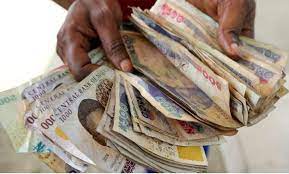
Who will rescue the Naira?

By Aliyu Nuhu

No easy way for a country with bizarre economic behaviour. The economic laws are there for easy implementation in a normal society. But Nigeria is not normal. Everyone, from the leases to the ordinary citizens, is looking for ways to damage the country for personal gain. NIGERIA operates its economy with laws made from hell.

We all know our huge appetite for the dollar is driven by our need for foreign goods which we are unable to produce. If we don’t need foreign goods, there will be no demand for dollars since we only need the currency for imports. But who is not guilty among us here?

Naira supply affects inflation since too much money is chasing a few goods but is not the direct cause of the fall of the Naira in the forex market. Laws of demand and supply drive the forex market. More Dollars available will lower its value and vice versa with Naira. But these laws don’t work in Nigeria because of distortion in all economic policies created by the government, mostly by greedy Nigerians and the officials themselves.

The forex window allows funding of critical sectors with dollars by the Central Bank of Nigeria (CBN). But the distortion here is that those given dollars to import goods will take the money to the money market for round-tripping. The CBN officials will also take the dollar and exchange it for quick gain. Each governor that gets FACC allocation in Naira will take it to market chasing the dollar.

With such behaviour, the Naira can never get a breather. It is this distortion that makes it difficult to explain the reasons why Naira is not only weak but unstable. Currency instability is the worst thing that can happen to a country. At any point in time, investors can never know their profits and losses. It is the reason why companies like Emirates, ShopRite and Game are closing shop.

After looking at some of our promising macro trends, Nigeria is still unable to keep Naira strong because of the depletion of the country’s foreign exchange reserves. The major function of foreign reserves is to keep the Naira strong. But regime after regime keeps spending the reserve account to a point that no one can precisely say the balance of NIGERIA’s foreign reserve.

World Bank said irrespective of all other macroeconomic shortcomings, the Naira can still be exchanged for a dollar one-on-one if we can have $900bn in our foreign reserve. But what do we have today? Less than $30bn!

Kuwait is a consumer country like Nigeria, but because it has a foreign reserve of $137bn and a gold reserve of 78.97 tonnes, it has the strongest currency in the world. But Nigeria has 21.37 tonnes of gold in its reserve and a $34bn reserve for an economy with a GDP of $489bn. Kuwait is able to save with a GDP of $106bn! There is evidence that shows that GDP growth and employment growth increase in response to positive shocks to foreign currency reserves (forex reserves) accumulation, whereas unemployment declines.

Read the reports on the new government report on CBN, and you will understand that the Naira is only competitive by sheer luck, if not a miracle. Everyone, including people in charge of Naira’s health, is out to destroy the Naira.

Calls over shoddy Hausa translations in Northern Nigeria

By Uzair Adam Imam

Translators, language experts, and advertising practitioners in Northern Nigeria are irritated by shoddy Hausa on billboards, TV and radio stations, with some calling for an end to the practice.

The role of translation is to communicate ideas and messages across the audience. However, as those concerned individuals opined, shoddy translation is doing the opposite.

Beyond the expert communities, poor translation, especially from English to Hausa, is generating outrages in many quarters, especially as native speakers of the Hausa language demand better translation of their language.

A report by The Daily Reality disclosed how the Three Crowns Milk, Taira, and Stanbic IBT, among others, came under attack over poorly translated advertisements from English to Hausa placed on their billboards.

Experts have associated the flagrant flaws of advertising agencies and personnel with unprofessionalism. They said that the practice has grown into a disease which has since been ravaging the translation business in Nigeria.

Authority to blame

There are outrages by the relevant authorities that feel very disappointed by the terrible things in the name translation that continue to unfold these days.

A lecturer at the Department of Nigerian Languages, Bayero University, Kano, Dr. Muhammad Sulaiman, described the situation as unfortunate.

He said the way some people bastardise the translation business, especially English-Hausa translation, despite making a fortune in the business is pathetic.

Dr. Muhammad said, “Some of these people mostly do not bother about such violations but rather the money they are tapping out from the business.

“Even though translation is a profitable business, its knowledge should be considered above the profit. If you don’t have the knowledge, learn it or allow people with the skill to do the business.”

Also, a Kano-based translator, Bello Sagir Imam, decried the menace of quack and unprofessional translation ravaging the translation business today in Nigeria as unfortunate.

Imam, the CEO of English Domain, a translation company, blamed the relevant stakeholders for merely lamenting the menace without taking bold action to address it.

He added that the lack of English-Hausa translation companies in the country exacerbates the menace.

He argued that the loopholes gave space to the quack companies and will continue to bring more and worse translators until the proper measures are taken.

Imam stated, “Failure of the Northern Nigerian relevant stakeholders is an easy and thriving business environment for the quack but well packaged and connected companies mainly based in Lagos and few others in Abuja, but amazingly not in Kano.

“For instance, in the North, with the entire daily complaining razzmatazz, there is no single English-Hausa-English translation company or one where such service is among their services.

“These loopholes birthed the quack companies and will continue to birth more and worse translators until the right measures are executed.”

We need support

Imam further lamented how the lack of support from relevant stakeholders discourages aspiring English-Hausa translators.

He said, “Most stakeholders do not help the aspiring English-Hausa translators despite being Hausa native speakers and linguists, Hausa or English graduates, simply because they don’t have a prior relationship with the helpers.

“For instance, if you are not their student, those in academia will not help you. The journalists will not help you if they don’t know you.

“I feel challenged as a relevant stakeholder to walk the talk, to mitigate the problems and inspire others to wake up from their deep sleep.”

What is the root cause of quack translation?

A communication scholar from the Mass Communication Department, Professor Mainasara Yakubu Kurfi, traced the root of quack translation, shedding light on the impact of a shoddy translation on advertising.

Professor Kurfi said, “If you look at what is happening in advertising industries, you can simply conclude that there is no professionalism – lack of professionalism in the sense that most of the advertising agencies and agents did not undergo practical formal education that will avail them the opportunity to understand what advertising is and what advertising is not, as well as understanding the techniques of advertising in appealing to the public without going into their religion, culture and even norms and practices.

“That is why you see several problems, particularly with billboards and adverts. I remember I did my master’s dissertation on billboards.

“Most of these translators, either from English to Hausa or Hausa to English, are not native speakers. They are generally from Lagos, probably Yoruba by tribe, and they do not really understand the nature of the language of reception – from English to Hausa or from Hausa to English.

“Some of the techniques that you consider in terms of translation they understand, they don’t have knowledge of that.

“Also, you find out that most of these translators are based in Lagos. They are not from Northern Nigeria. Therefore, they don’t understand the language itself.

“And we do not have many advertising agencies here in Kano that will now take cognisance of those traditions and norms. Therefore, it is not surprising to see this kind of problem.

Native speakers must key in the advertisement

Professor Kurfi said that to tame the menace of native speakers, in this sense, typical Hausa/Fulani must key into the advertisement business.

He said, “The only way forward is to allow our people to enter the advertising industry. I don’t know why our people, particularly typical Hausa Fulani, are running away from advertising. Let our people be into advertising.

“Let them understand the techniques and practice of advertising, the procedures, the rules and regulations governing advertising, in the print media, in the broadcast media, even on the online media platforms, as well as billboards and adverts.

“When they understand that, you discover these problems will undoubtedly be minimal. They will be contracted to translate from English to Hausa or From Hausa to English.

“Another way out is to let our people, particularly the graduates of mass communication, establish independent advertising agencies responsible for all this kind of advert placement in the media organisations. 

“But when our people are running away, the advertising agencies or the producers or manufacturers have no option but to contract the service of the people from the southern part of Nigeria – and this is why you see all these kinds of problems happening.”

It’s posing a serious challenge to us – APCON 

The President of the Advertising Practitioners of Northern Nigeria, Sammani Ishaq, lamented the rising number of cases of poor translation.

He said that Advertising Practitioners have been working to end the problem over the years.

Sammani Ishaq said shoddy Hausa translations usually affect the persuasive aspect known for advertising and that consumers patronise the product out of desperation, not because they are being persuaded.

He said, “This is a serious issue we have been trying to address over the years. In doing so, we held many meetings and organised different programs. We even formed a forum we named Advertising Practitioners of Northern Nigeria.

“The issue is beyond imagination because most advertisers are from the southern part of the country and are either Igbo or Yoruba. It was not for ten years that northerners started advertising businesses. And, up till now, the advertising agencies are not numbered to ten.

“And what they mostly do is to hire their friends from southern Kaduna, who do not fully understand the language, let alone translate it correctly, or people who have served or had been in the north for a while.

“For this reason, the translators are not even Hausa and don’t fully understand the language. So, they usually hire people from southern Kaduna or those who have served in the north for translation.

“And, sometimes, even in the north, people mostly hire Kannywood or Nollywood actors and actresses for advertising. These people are unprofessional and lack the basis of advertisement. Hence, people purchase products not because they are persuaded to but only because the product has become necessary for them to buy.

We will deal with unregistered advertising agencies

Sammani also threatened that any unregistered advertising agency caught would be dragged before the court to face the music.

He stated, “And for this reason, APCON provided a law signed by the former president of Nigeria, Muhammadu Buhari, before he left office on May 16, 2023. The law stated that any unregistered advertising practitioner caught practising advertising must be dealt with.”

Tinubu swears in 3 new ministers

 By Sabiu Abdullahi

President Bola Tinubu is set to induct three new ministers into his 48-member cabinet today, marking the second Federal Executive Council (FEC) meeting since his May 29 inauguration.

Jamila Bio, Ayodele Olawande, and Balarabe Lawal from Kaduna State will assume key roles, emphasising the government’s commitment to strengthening its leadership.

The ceremony precedes the FEC meeting, symbolising a renewed focus on governance and policy-making under President Tinubu’s administration.  

Defending the Naira: A political perspective

By Ibrahim Isa Wada

When the current administration was advised by some economic experts to withdraw the subsidy on fuel and allow the Nigerian Naira to find its own value in the international arena, I got so much worried for fears of what would be the outcome. Being a nonexpert on economics, banking or finance, but only a bloody retired broadcast regulator with a fair understanding of day to day current issues, I decided to drop this piece and I hope it will be carefully considered by the experts. All I know is that, life is so hard for all of us since the Naira decided to take a flung and the fuel prices shoot up.

Sadly, some of the experts disappeared while others started to blame the past administration and/or their village people for making our lives so miserable.

Defending the value of the Naira amounts to defending the Tinubu/Kashim administration, and surely the interest of the Nigerian people.

How can any government, businesses or persons successfully plan and execute meaningful projects; how can Nigeria join economic groups, like the BRICS, with such a rickety currency?

I understand that the value of the Nigerian Naira is a function of her balance of trade. That is for the Naira to be strong and stable, the total value of goods and services Nigeria imports must be the same or less than the value of goods and services Nigeria exports over the period of time.

In the present circumstances, we tend to import almost everything including PMS, and even charcoal for smoking Shisha! While we export gold and dollars in cash etc, to safe havens. To be frank, any Nigerian leadership that wants to succeed must have a strong and stable Naira to begin with, which can be achieved by taking the following measures, among others:

1) Bring back the policy of Export Promotion and Import Substitution of the late 70’s.

This should be done with vigour. Any product that could be manufactured in Nigeria shall not be easily imported into the country, while all products that can be exported should receive a boost from the government.

There are means and ways to manuver around international trade politics, like the WTO, to achieve that.

2) Formalise all international transactions, including our transborder trade with ECOWAS and other African countries. Currently the Nigerian Central Bank serves as the unofficial African Central Bank, providing the foreign exchange requirements for many African countries that route their trade through Nigeria.

The trade formalization entails the systemic deployment of adequate personnel and infrastructure that would make international trade between Nigeria and other countries smooth, yet documented.

3) The CBN, Commercial Banks and Bureau De Change operations should have a joint universal forex transactions software that will ease, unify and speed up forex trading.

4) From 3 above, all foreign currency transfers including PTA above $250 must be in digital form.

5) Also from 3 above, the commercial banks and BDC Forex Operator window should capture a basket of about seven major foreign currencies that Nigeria transacts in, i.e Dollar, Yuan, Euro, Pound, CFA, Saudi Riyal and Dirham.

Therefore the BDC operators should have multiple currency accounts with their banks to receive and transfer funds in digital form.

6) The Nigerian government should be bold enough to block all foreign exchange leakages, in form of waivers and favours to individuals and institutions.

7) Develop key institutions targeted towards the elimination of Forex Guzzlers thus:

a) Establish more private universities to reduce students high foreign exchange remittances.

b) Establish more world class hospitals to save foreign exchange from medical tourism.

c) Establish companies for the local fabrication of low technology agricultural and industrial machinery to reduce foreign exchange outflow.

d) Fuel imports should stop at the shortest possible time, by developing more modular refineries, privatising existing ones and ensuring the early take up of the Dangote refinery.

8) In line with the Export Promotion and Import Substitution Strategy, invest heavily in agriculture to reduce food and dairy products import, as well as encourage the exports of cocoa, cashew nuts, sesame seeds, beef, etc.

This is my political perspective of the basic economic issue, because if the politicians fail to defend the value of the Naira and the poor, they will fail utterly in politics.

Ibrahim Isa Wada, writes from Kano, Nigeria. He can be reached via; ibrahimisawada@gmail.com

NCRRD aims to improve reading culture in Nigeria

By Muhammad Aliyu Gombe

The Centre for Reading, Research and Development (NCRRD) Bayero University Kano, Nigeria, has organized its Fourth National Conference on the promotion of reading culture among students and researchers. The event which took place at Ɗangote Business School, New Site, (BUK) was a 5 day even which included a Pre-Conference Workshop which aims at sensitizing the participants on the new methods of improving teaching especially from the basic level. The theme of the conference reads ‘Children’s Books and The Teaching of Early Grade Reading in Nigeria.’

The Director of the Centre Professor Talatu Musa Garba, during her speech, says that, as part of the mandate, of the Centre, it “had instituted the annual conference in 2019 to provide a platform for teachers, researchers and other educationists to share ideas on the best practices for the promotion of teaching of reading in Nigeria.” The Director, together with the Vice Chancellor of the University, Professor Sagir Adamu Abbas, commissioned the Centre’s resource room which is named Rebecca Rhodes Resource Room. The room has a modest collection of books and e-resources. It is open to researchers, teachers and students as a reference library.

It has been noted by various participants during the occasion that reading culture is past dying not only in Nigeria but across the globe. There is a huge need to revive it through practical methodologies which will guarantee and assist young readers to be taken right from the tender age.

Some of the participants, especially students and other invited guests, showed their appreciation and happiness with these gigantic efforts which the center is putting to revive reading culture in Nigeria.