National

You can add some category description here.

Dangote inaugurates 15 billion naira nationwide rice distribution initiative

By Uzair Adam Imam

In an effort to address the pressing needs of the less privileged during these difficult times, Alhaji Aliko Dangote, the Chairman of the Dangote Group, has initiated a nationwide distribution of one million bags of rice.

The distribution began in Kano State, with 120,000 beneficiaries, and will continue throughout the country.

The rice will be disbursed in all local governments in Kano State, and the initiative will then be replicated in other states. Dangote hopes that this effort will alleviate some of the hardships faced by the poor.

The Dangote Group’s nationwide rice distribution program was officially launched at the Kano State Government House, with Alhaji Aliko Dangote himself in attendance.

The ceremony was also attended by Kano State Governor, Alh. Abba Kabir Yusuf, who expressed his gratitude for the initiative.

According to Dangote, the rice distribution aims not only to alleviate hunger in the short term, but also to invest in long-term solutions for communities across Nigeria.

The program represents a significant step towards ensuring food security and reducing poverty in the country.

“We should stand as one community, one nation, extending our hand of friendship and brotherhood,” remarked Dangote.

He also emphasized on the importance of unity and compassion during these challenging times.

“During this month of Ramadan, we are reminded of the spirit of compassion and generosity. This initiative is not just about addressing hunger; it’s about fostering a sense of communal support,” he added.

Alh. Aliko Dangote said the gesture is for 774 local governments nationwide, covering one million bags of rice, with Kano State receiving the lion’s share of 120 thousand beneficiaries

“I am confidently informing you today’s distribution is special. Despite the fact that for the past 30 years, we have been extending support to the teaming populace. We decided to come and add this project to relieve our fellow Nigerians in need.

In addition to the current rice distribution program, Alhaji Dangote informed the audience that the Dangote Group has also been providing meals for 10,000 beneficiaries daily in Kano State.

He also mentioned that the nationwide rice distribution initiative cost a total of 15 billion Naira.

Governor Abba Kabir Yusuf thanked Alhaji Dangote for his generosity and noted that the assistance comes at a critical time when many people are struggling.

He urged the distribution committees, including the HISBAH Board, to ensure that the rice reaches the most vulnerable members of society, and thanked Alhaji Dangote for his commitment to helping those in need.

Governor Yusuf stated that the gesture by Alhaji Dangote will greatly alleviate the hardship faced by the people of Kano, and noted that selecting 120,000 beneficiaries from Kano for the inauguration ceremony was significant.

Zouera Yousoufou, the Managing Director of the Aliko Dangote Foundation, also spoke at the event, highlighting Alhaji Dangote’s consistent philanthropic efforts and the critical role that the foundation plays in promoting and facilitating such initiatives.

She stated, “It is we at the Dangote Foundation who encouraged him to publicize the gesture, so others can immulate but he has been doing it for years without the left hand knowing what the right hand was given, ensuring that assistance is provided to those in need without drawing undue attention.”

The distribution of palliatives organized by Alhaji Aliko Dangote demonstrates a commitment to alleviating the suffering of those less fortunate, embodying a spirit of compassion and solidarity. It is a meaningful gesture of support for those in need.

NDLEA warns of fake officers targeting families with travel scams

By Uzair Adam Imam

The National Drug Law Enforcement Agency (NDLEA) is alerting the public, particularly those with loved ones abroad, to a new scam that targets innocent families.

Fraudsters are impersonating NDLEA officers and contacting unsuspecting citizens with a fabricated story.

As described by NDLEA spokesperson Femi Babafemi, “Under this new scam scheme, the fraudsters will call unsuspecting citizens to inform them of the arrest of their relatives at the Murtala Muhammed International Airport Ikeja Lagos or any other international airport in Nigeria with illicit drugs upon arrival in the country.”

Babafemi continued, explaining the scammers’ tactics, “After throwing the family members into panic, the scammers then make a demand of millions of naira to facilitate the release of such persons from NDLEA custody.”

The NDLEA has successfully thwarted similar attempts in the past. Babafemi highlighted, “At the moment, there is one of such scenario the Agency has just investigated.

“In this case, the picture of a Nigerian man based in the US is being circulated with an audio of a purported NDLEA officer negotiating the payment of N5 million with a female relative for the release of the US-based Nigerian man purportedly arrested at the Lagos airport on Friday 22nd March upon his arrival with a ‘contraband.”

The NDLEA emphasizes that these claims are entirely fabricated. “Just like in previous instances, our investigation has also shown that the current incident is the work of scammers,” affirmed Babafemi.

He reiterated, “No NDLEA officer is involved in the audio conversation and the person whose photo is attached to the audio recording being circulated is not in our custody at MMIA or any of our Commands either as at yesterday or any other day.”

The NDLEA urges the public to exercise caution and avoid falling victim to these scams. “The family members involved in this case are advised not to part with their hard-earned money to scammers,” advised Babafemi.

“Nigerians with loved ones abroad are also urged to keep discussions on travel plans of their relatives to themselves to avoid the hijack of such by criminal elements for devious schemes.”

If you encounter a similar situation, the NDLEA provides contact lines for assistance: “+2347064670026 and +2348033326327.”

NANS demands investigation after stampede at NSUK claims lives of students

By Uzair Adam Imam

The National Association of Nigerian Students (NANS) expressed outrage over the deaths of two students at Nasarawa State University, Keffi (NSUK) during a stampede caused by the distribution of palliatives.

NANS President, Comrade Lucky Emonefe, called for a “thorough investigation” into the incident.

“The tragic event at Nasarawa State University, Keffi, which resulted in the loss of two lives and numerous injuries, is vehemently condemned,” Emonefe said in a statement.

He offered condolences to the bereaved families and demanded that “those responsible for the mishandling of the distribution of palliatives be held accountable.”

NANS urged authorities to adopt “modern distribution methods” to prioritize safety during aid distribution.

They also called on the university to provide counseling and support services to the affected students.
 

Revealing the unseen: How climate change fuels infectious diseases in Katsina State

By Ibrahim Adamu Ingawa

In the vast expanse of Nigeria’s Katsina State, beneath the scorching sun and amidst the sporadic rains, a silent predator lurks, imperiling the health and well-being of its inhabitants. Climate change, though often overlooked, poses a formidable threat to public health in Katsina State, catalyzing the emergence and spread of infectious diseases at an alarming rate.

In recent years, the fingerprints of climate change have become increasingly evident, leaving behind a trail of devastation in its wake. From the bustling streets of Dutsin-Ma to the tranquil valleys of Bakori, the impacts of rising temperatures and erratic rainfall patterns are unmistakable, reshaping the landscape of disease transmission in profound ways.

Take, for instance, the surge in malaria cases that swept through Dutsin-Ma Local Government Area in 2019. Heavy rainfall and flooding provided the perfect breeding grounds for disease-carrying mosquitoes, resulting in over 500 confirmed cases within a month. Similarly, the parched earth of Kankia Town bore witness to a cholera outbreak in 2017, fueled by drought conditions and inadequate sanitation infrastructure, claiming the lives of several hundred individuals.

But the toll of climate change extends beyond the realm of vector-borne diseases, reaching deep into the fabric of public health in Katsina State. The specter of Lassa fever loomed large over Bakori Local Government Area in 2016, as changing climatic conditions facilitated the spread of this deadly virus, leaving a trail of devastation in its wake. Meanwhile, in Funtua, rising temperatures and increased mosquito activity paved the way for a dengue fever outbreak in 2015, further exacerbating the burden of disease in the region.

Yet, perhaps the most poignant manifestation of climate change’s impact on public health lies in the floods that ravaged Jibia in 2018. As torrential rains inundated the town, turning streets into rivers and homes into islands, a silent menace took root. Stagnant floodwaters became breeding grounds for disease vectors, leading to a surge in malaria cases and exacerbating the plight of already vulnerable communities.

In addition to the visible impacts on infectious disease outbreaks, climate change is also facilitating antimicrobial resistance (AMR) in Katsina State, thereby exacerbating public health challenges. The rising temperatures and erratic rainfall patterns create favorable conditions for the proliferation of resistant bacteria, as well as the emergence of new strains which are resistant to the drugs that are meant to kill them. Increased use of antimicrobial agents in response to climate-related infectious disease outbreaks further contributes to the selection pressure driving AMR. This alarming synergy between climate change and AMR underscores the urgent need for comprehensive strategies to address both phenomena and safeguard the health of Katsina State’s population.

Despite the magnitude of these challenges, hope remains on the horizon. Armed with knowledge and skills I acquired in addressing the most pressing issues of public health over the past few years, I am committed to leveraging my expertise to develop innovative interventions aimed at tackling the consequences of climate change on infectious disease outbreaks in Katsina State. From outbreak preparedness and prevention to the implementation of robust control mechanisms, I am zealous in my determination to contribute in safeguarding the health and well-being of my fellow citizens at the Home of Hospitality. But my journey has not been without its obstacles.

Since my return from the United Kingdom after my internship at the world-leading genomics research institute (the Wellcome Sanger Institute, Cambridge), there has been interference from certain elements, which has impeded my ability to implement meaningful change. Yet, in the face of adversity, my resolve remains unshaken, fueled by a burning desire to make a tangible difference in the lives of those most affected by the ravages of climate change in my dear State.

The impacts of climate change on infectious disease outbreaks represent just one facet of the multifaceted challenges confronting the public health milieu of my beloved State. I remain resolute in my commitment to driving forward the positive transformation of Katsina State’s public health sector. Anticipating the opportunity to deploy my skills and expertise, I stand ready and poised to seize it at any moment.

As I look towards the future, I am filled with optimism, knowing that together, we can overcome the challenges posed by climate change on ever-increasing infectious disease outbreak and forge a path towards a healthier, more resilient Katsina State. I believe that through collaboration, innovation, and unwavering determination, we can turn the tide against this invisible threat and pave the way for a brighter, healthier tomorrow.

Ibrahim Adamu (Ingawa) writes from Katsina State. He’s a
Project Grantee at The Foundation to Prevent Antibiotic Resistance (Sweden). He can be reached via ibrahimassalafee@gmail.com/ +2348134386907

Fasting Ramadān in the university: A treasure for campus students

By Dr Zakariyya Shu’aib Adam

Last week, I had a pre-Ramadan lecture session with Muslim Health Students at Usmanu Danfodiyo University Teaching Hospital, Sokoto. I reiterated the merits of the four most important acts of ibadah in Ramadān: fasting, recitation of Qur’ān, night prayers, and feeding the needy. I also emphasized how, as students, we can make judicious use of our stay in the university during Ramadān.

Contrary to the mainstream notion, observing fasting in the university is scrupulously enchanting and divinely pleasing. In this piece, I want to write some of the points I mentioned in that session for the benefit of a larger audience. It is worth noting that I drew most of what I said from my experience as a former university student who stayed on campus.

Although fasting is physically exhausting, particularly for a university student who, in most cases, lacks sufficient foodstuff for suhoor (pre-dawn meal) and iftār, it can quietly serve as a pathway that provides students with immense opportunities to connect heartily with their Lord.

During Ramadān, affluent students often use to invite the indigents for suhoor and iftār. You mustn’t cook food before you eat. Moreover, the Muslim Students’ Society of Nigeria [MSSN] sometimes obtains funds from the Sokoto State Government and Muslim lecturers to purchase all that is needed for Iftār. In such circumstances, students usually gather in a hall and break their fasts in what was popularly known as “Tarāsoo” (the word was gotten from the state of closely and neatly joining legs in a congregational prayer).

I haven’t observed a more composed Tarāweeh that is full of tranquillity and serenity like the one we used to observe in school. Specifically, in Tora Bora Masjid, we used to read one page in each raka’ah of Tarāweeh and spend an average of an hour. The congregation was very large. Retrospectively, the Imāms there recited with melodious voices that would touch hearts. There were brief admonishments between every four raka’ah. We were always happy observing this prayer.

When it was the last ten days of Ramadān, many students would be in the mosque for Iʿtikāf (seclusion in the mosque for the purpose of worship, especially the last ten days of Ramadān). Those performing Iʿtikāf receive food from Tarāsoo and from their friends who aren’t staying in the mosque. They constantly recite the noble Qur’ān during that period. In a nutshell, they devote themselves to all kinds of ibadah for a period of ten days.

During Tahajjud (night prayers), we had more than enough Imāms because there were many memorizers of the Qur’ān among us. The ruku’uh and sujood were almost as lengthy as the qiyām (standing). We were given a chance to make prayers to Allāh in sujood because it’s the closest moment a servant is to his Lord. Most university dignitaries attended such ibadāt with us. They relate with us with humility and demureness. This played a role in reducing the imaginary hiatus between students and lecturers.

Females, too, were given special consideration. A portion of the mosque was dedicated to them to observe I’tikāf. Everything they needed was provided to make their stay delightful. When it was time for Tahajjud, they made rows in the mosque and observed prayers with males. There was a question-and-answer session every night, usually organized by experts in Islamic jurisprudence among the I’tikāf members.

I am neither trying to portray my stay in the university during Ramadān as Shangri-la nor am I being utopian. Notwithstanding the aforementioned, some students do not participate in these ibaadāts. They instead go to the female hostels and spend time with their inamoratas. It seems as though they prefer worldly pleasure to the everlasting one. In some instances, they often present what they call Ramadān baskets to these inamoratas, thereby engaging in prodigality.

Others spend much time in social gatherings. You mostly see them chitchatting about politics and entertainment. They burn calories in debating about football. Champions League matches used to be on the night at the exact time of Tarāweeh. Therefore, big boys won’t attend the night prayers. Females, too, weren’t left out. They commit themselves to watching Korean TV series and Indian love movies. Their role models used to be Lee Min-Ho, Lee Min-Jung and Aishwarya Rai.

I entreat you not to be like these students. Be steadfast in your ibādah. Remember that Ramadān is made up of either 29 or 30 days. If the month elapses, you may not necessarily live to witness another Ramadān. Stay in the circle of pious friends. Never befriend anyone that doesn’t help you in your studies or doesn’t add to your religiosity. Devoted servants in Ramadān are rewarded in multiple, so also the transgressors – their punishment is multiplied.

Lastly, I narrate this to settle the nerves of students who are unhappy with their stay in the university during Ramadān. I, admittedly, was unhappy in school in my first year. Subsequently, it became apparent to me that I could turn that cheerless moment to my advantage. I doubt if, in the nearest future, I can have enough time I dedicated to myself for ibadāh in Ramadān as I had in the school. So, make good use of your stay in school during Ramadān while you are still a student. You may not have much time if you graduate.

Dr Zakariyya Shu’aib Adam is a serving corp member with Area Veterinary Clinic, Argungu, Kebbi State. He graduated from Usmanu Danfodiyo University, Sokoto. He can be reached via: zakariyyashuaib2020@gmail.com.

Nigeria’s Insecurity: Do state police have the magic wand?

By Kabir Ali Fagge

In Nigeria, security has long been a topic of paramount concern. The efficacy of law enforcement agencies, particularly the Nigeria Police Force (NPF), has often been scrutinized in the face of escalating crime rates and challenges to public safety.

One proposed solution that has garnered significant attention is the establishment of state police forces. The history of policing in Nigeria is marked by a series of reforms and challenges. Since Nigeria’s transition to democratic rule in 1999, the Nigerian police have undergone various reforms in an attempt to address issues within the force.

These reforms have been a response to the need for more effective law enforcement mechanisms to combat rising crime rates and insecurity in the country.

We all know that the Nigerian police force has a long history of facing criticism for unprofessional conduct, corruption, and the use of excessive force.

Nigeria inherited a centralized police structure modelled after the British system. The Nigeria Police Force (NPF) operated under federal jurisdiction and was tasked with maintaining law and order throughout the nation.

State Police, on the other hand, entails the decentralization of law enforcement authority, granting individual states within a federal system the power to establish and manage their own police forces.

Under this model, states would have the autonomy to address security issues specific to their regions, tailoring law enforcement strategies to local needs and priorities.

Proponents argue that state police can foster greater community engagement, enhance responsiveness to local concerns, and improve overall security outcomes.

The existing centralized police system has faced criticism for its inability to effectively address the security concerns of the diverse Nigerian population.

The call for state police stems from the need for a more localized approach to law enforcement that can better cater to the specific security needs of different regions within Nigeria.

Establishing state police in Nigeria is a significant step that requires a thorough understanding of global policing practices. While the centralized police system is predominant in many countries, there are instances of decentralized policing models.

For example, Municipal Police in France, Municipal Law Enforcement Officers in the Netherlands, and Police Community Support Officers in England and Wales represent non-police uniformed state officers in a decentralized system.

Comparative analyses of policing in countries that have undergone political or social transitions, such as Russia, Brazil, and China, highlight the importance of understanding the contextual factors that shape policing practices. Confidence in the police varies across different countries, with Taiwan ranking among the top one-third globally, indicating variations in public perceptions of law enforcement; therefore, those who argue that the establishment of state police is not out of place.

Community policing, actively conducted in countries like South Africa, Northern Ireland, and Sierra Leone, emphasizes the importance of engaging communities in maintaining public safety. However, the effectiveness of community policing initiatives can vary based on each country’s socio-political context.

While some countries prioritize individualism and minimal government intrusion in policing, others focus on collective well-being through law and order.

I think what Nigerians want to know is how is state policing going to be any better than the current system of policing in Nigeria.

According to pundits, the establishment of state police in Nigeria promises to bolster security at the grassroots level. State police forces, attuned to the unique security dynamics of their regions, can enact targeted measures for more efficient crime prevention and control.

This localized approach fosters stronger community engagement and enables proactive responses to emerging threats, ultimately ensuring safer environments for all. Such reforms hold the potential to significantly enhance law enforcement’s effectiveness and responsiveness across the nation.

State police deployment within local communities will supposedly ensure swift emergency responses, curtailing intervention time in critical situations. By having officers stationed close to the areas they serve, the state police can swiftly address emergencies, thereby enhancing public safety.

This proximity allows for immediate action, minimizing the potential impact of crises on communities. Such rapid responses underscore the effectiveness of localized law enforcement in ensuring timely assistance during emergencies.

State-level oversight of law enforcement ensures accountability and transparency, as state governments are directly answerable to their constituents. This close supervision fosters trust between law enforcement agencies and the communities they serve, enhancing transparency in operations.

By holding state authorities accountable, citizens can have greater confidence in the integrity of policing practices, ultimately strengthening democratic principles. Such measures reflect a commitment to upholding transparency and accountability within Nigeria’s law enforcement framework.

State police possess the flexibility to tailor strategies and allocate resources according to local needs, enhancing their ability to address emerging threats and crime trends. This adaptability ensures a dynamic response to evolving security challenges, bolstering effectiveness in crime prevention and control.

We must also look at some disadvantages posed by the governors to establish the State Police. Firstly, Critics warn of the potential for abuse of power with decentralized policing, citing concerns about corruption, political interference, and violations of human rights at the state level. This apprehension underscores the importance of establishing robust oversight mechanisms to safeguard against misuse of authority and uphold the rule of law.

Addressing these challenges is crucial to ensure that decentralization efforts in policing prioritize accountability and respect for human rights, thereby fostering trust and confidence in law enforcement institutions. Such vigilance is essential to maintain the integrity and effectiveness of state police forces in Nigeria.

Fragmentation of law enforcement across states presents coordination challenges in tackling transnational crimes and upholding national security. This underscores the need for seamless collaboration and information-sharing mechanisms among state police forces.

Effective coordination ensures a unified approach to combating cross-border criminal activities, safeguarding Nigeria’s territorial integrity and public safety. Addressing these challenges is paramount to fostering synergy and maximizing the effectiveness of law enforcement efforts nationwide.

Unequal resource allocation among states may hinder smaller or economically disadvantaged regions from adequately funding and equipping their police forces, leading to discrepancies in law enforcement capabilities.

The establishment of state police carries constitutional and legal implications, necessitating amendments and legislative frameworks to define the powers, jurisdiction, and duties of state and federal law enforcement entities.

This underscores the importance of comprehensive legal reforms to ensure clarity and coherence in the division of responsibilities between different levels of law enforcement.

The debate surrounding the establishment of state police in Nigeria is multifaceted, reflecting the complex interplay of security, governance, and constitutional considerations.

While proponents argue that decentralization can lead to more responsive and accountable law enforcement, sceptics raise concerns about the potential for abuse of power and operational challenges.

Ultimately, any decision to implement state police must be carefully weighed against its potential benefits and drawbacks, with a keen focus on enhancing security while upholding the principles of justice and democracy.

Kabir Fagge Ali is a youth corps member with PRNigeria Centre and wrote via faggekabir29@gmail.com.

President Tinubu ‘strongly’ condemns killing of soldiers in Delta

By Sabiu Abdullahi 

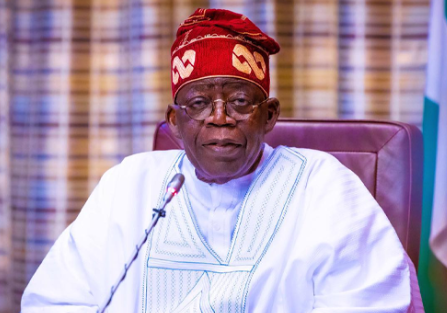
President Bola Tinubu expressed profound grief and condemnation over the recent attack on Nigerian soldiers during a rescue mission to Okuoma Community in Delta State. 

Tinubu expressed his sadness in a statement released today. 

The incident, which occurred on Thursday, March 14, 2024, reportedly claimed the lives of several military personnel, including high-ranking officers. 

The President described the attack as unprovoked and cowardly, stating the sacrifices made by the brave servicemen and women who put their lives on the line to maintain peace and security in the nation.

Among the casualties were a commanding officer, two majors, one captain, and twelve soldiers, along with one civilian. 

Tinubu extended his deepest condolences to the families of the fallen soldiers, their colleagues, and loved ones.

He was quoted as saying, “I extend my profound condolences to the families of these fallen soldiers, their colleagues and their loved ones. The military high command is already responding to this incident. The cowardly offenders responsible for this heinous crime will not go unpunished..

He noted that any attack on the armed forces is a direct assault on the nation itself and vowed to relentlessly pursue peace and security across Nigeria. 

The President granted full authority to the Defence Headquarters and Chief of Defence Staff to ensure that those responsible for the attack are brought to justice swiftly.

He praised the heroism, courage, and patriotism of the fallen soldiers, noting that they join the ranks of the nation’s esteemed defenders who sacrificed everything for the country. 

President Tinubu equally reiterated his government’s unwavering commitment to achieving peace and tranquilly in every corner of Nigeria, calling upon divine intervention to bless the Federal Republic of Nigeria and safeguard its armed forces.

Bridging our differences as Nigerians: A path to unity

By Usman Muhammad Salihu 

In Nigeria, amalgamating diverse cultures, religions, ethnicities, and political ideologies presents opportunities and challenges. To navigate this intricate tapestry effectively, embracing diversity is paramount. Rather than viewing differences as divisive, Nigerians should celebrate the richness they bring to the nation’s identity.

Ultimately, the path to unity in Nigeria lies in embracing diversity while recognizing the common bonds that unite its people. Nigerians can forge a stronger, more resilient nation by celebrating their shared heritage and respecting their differences. Through dialogue, education, inclusivity, and a rejection of extremism, they can build a future where diversity is celebrated as a source of strength.

Open and respectful dialogue is the cornerstone of understanding and reconciliation. By engaging in conversations that promote empathy and mutual respect, Nigerians can bridge divides across religious, ethnic, regional, and political lines. Platforms for formal and informal dialogue offer opportunities for meaningful exchanges that foster unity amidst diversity.

Education is a powerful tool for dispelling stereotypes and fostering appreciation for diversity. By promoting educational initiatives highlighting Nigeria’s multifaceted heritage, individuals can better understand their fellow citizens’ perspectives and experiences. 

Nigerians should advocate for policies and practices that promote equal opportunities and representation across all sectors. By championing inclusivity, they can dismantle barriers and create pathways for collaboration and unity.

Nigerians must collectively reject extremism in all its forms and embrace moderation, tolerance, and compromise. They can build a more cohesive and harmonious society by fostering a culture of inclusivity and understanding.

 Navigating Nigeria’s diverse landscape requires a commitment to dialogue, understanding, and inclusivity. By embracing diversity, fostering dialogue, promoting education, advocating for inclusivity, rejecting extremism, engaging in active citizenship, and cultivating unity in diversity, Nigerians can overcome their differences and build a more cohesive and resilient society.

Usman Muhammad Salihu writes and can be reached via muhammadu5363@gmail.com.

Arewa conundrum: a clarion call for agenda and patriotic fervor

By Idris Ishaq Danwanka

Esteemed compatriots and guardians of our collective Northern ethos, in the wake of recent fiscal disclosures, a disconcerting schism has been unveiled that warrants our immediate attention and stringent critique. Senator Abdul Ahmed Ningi, erstwhile Chairman of the Northern Senators Forum, has valiantly illuminated a disquieting anomaly within the fiscal year 2024 budget proceedings.

With the budget initially proposed by President Bola Ahmed Tinubu amounting to 24 trillion Naira, the subsequent and inexplicable inflation to 27 trillion Naira post-senate approval instigates profound perturbation and necessitates scrupulous examination.

The crux of the matter lies not solely within the numerical discrepancies but more so in the disheartening dearth of collective fortitude amongst our Northern sentinels. Senator Ningi’s resignation from the venerable chairmanship of our forum, following his laudable challenge to the opaque augmentation of the said budget, is a testament to a troubling lack of solidarity and a deviation from the path of unwavering patriotism that our region is historically known to uphold.

It is incumbent upon us, as the custodians of Arewa’s legacy, to transcend the paralyzing grip of fear that threatens our tenure within the senate.

The specter of suspension or dismissal should not deter us from our sacrosanct duty to the masses. We must rally behind the banner of transparency, accountability, and unwavering integrity that Senator Ningi has hoisted, even in the face of potential political ostracism.

The significance of unity cannot be overstated in our quest for regional and national development. A fragmented front is a disservice to the populace we have sworn to serve. It is only through a cohesive and unyielding stance that we can effectively steward the resources of our polity and engender a milieu where probity is not just expected but demanded.

Let us not shy away from our responsibility to interrogate and impugn any act that undermines the fiscal sanctity of our nation. To falter in this regard is to capitulate to the whims of those who may not prioritize the collective good over individual aggrandizement. The import of our togetherness is the bulwark against the forces of division and the cornerstone of our advocacy for the masses.

In conclusion, it is our imperative to eschew the parochial fears that stifle our voice and to stand shoulder to shoulder with those who dare to speak truth to power. The Arewa spirit is one of resilience, unity, and an unyielding commitment to the greater good. May we find the moral fortitude to embody these virtues and to restore the faith of our people in our esteemed institution.

Let us not delay in reclaiming our esteemed position as paragons of rectitude and as the vanguards of the people’s will. The time for action is now; the call for unity and patriotism, ever resonant.

Yours in service to our region and our nation;

Sen. Idris Ishaq Danwanka,
B.A. English Language and Literature, Federal University Dutse.

Nigeria reopens borders with Niger Republic, lifts sanctions 

By Sabiu Abdullahi 

President Bola Tinubu has taken a significant step towards enhancing regional relations by ordering the reopening of Nigeria’s land and air borders with the Republic of Niger.

Additionally, President Tinubu has instructed the lifting of various sanctions imposed on Niger, further strengthening diplomatic ties between the two nations. 

In a statement released by his Special Adviser on Media and Publicity, Ajuri Ngelale, titled ‘Nigeria opens land and air borders with Republic of Niger, lifts other sanctions,’ President Tinubu’s directive shows his government’s commitment to the course. 

Consequently, the President has directed that the following sanctions imposed on the Republic of Niger be lifted immediately: “Closure of land and air borders between Nigeria and Niger Republic, as well as ECOWAS no-fly zone on all commercial flights to and from Niger Republic. 

“Suspension of all commercial and financial transactions between Nigeria and Niger, as well as a freeze of all service transactions, including utility services and electricity to the Niger Republic. 

“Freeze of assets of the Republic of Niger in ECOWAS Central Banks and freeze of assets of the Republic of Niger, state enterprises, and parastatals in commercial banks. 

“Suspension of Niger from all financial assistance and transactions with all financial institutions, particularly EBID and BOAD. 

“Travel bans on government officials and their family members,” the statement read.