National

You can add some category description here.

Presidency accuses El-Rufai of conspiring to overthrow Tinubu’s government

By Abdullahi Mukhtar Algasgaini

The Nigerian Presidency has criticized former Kaduna State Governor Nasir El-Rufai for his comments about democracy in the country.

The Daily Reality reported that El-Rufai, speaking at a national conference in Abuja on Monday to strengthen democracy in Nigeria, stated that the ruling All Progressives Congress (APC) party has failed to fulfill its promises to the people.

He said, “I no longer see the APC as a party. There has been no meeting of any party organs for two years—no meetings of the party leadership, no NEC, nothing. We don’t even know if it’s a one-man party or if there’s no structure at all.”

The former governor added that there was a significant gap between the party and the people, noting that the APC had deviated from its founding purpose and could no longer deliver on its promises to the public.

He further stated that the country’s problems result from the leadership of incompetent, lackadaisical individuals who hold power.

In response, Daniel Bwala, former Federal Capital Territory Minister and Special Adviser to President Bola Tinubu on Communications, accused El-Rufai of plotting to destabilize the government he helped establish.

On his X platform, Bwala queried whether El-Rufai would make such remarks if he were part of the current government and seated in the cabinet.

“Brother, if you were in the government and the cabinet, could you take this position and express such views? History has shown such behaviour in the past. Now you want to overthrow the government you helped establish,” Bwala said.

Society of Nigerian Broadcasters collaborates with Faculty of Communication on investigative journalism

By Anas Abbas

Faculty of Communication of Bayero University, Kano and the Society of Nigerian Broadcasters organized a two-day round table meeting on investigative and data-driven journalism challenges.

The roundtable, held on Monday, focused on challenges of investigative and data-driven journalism and was themed ” Round table meeting on issues and challenges of investigative and data-driven journalism in the broadcast sector in North West Nigeria.”

The event, organized in collaboration with the Society of Nigerian Broadcasting, took place at the CBN Centre of Excellence at Bayero University, Kano.

Professor Umaru Pate, a communications expert and seasoned scholar, presented a paper titled “The Imperative of Investigative and Data-Driven Journalism in North West Nigeria.” 

As the keynote speaker, Pate thoroughly explained that “investigative journalism contributes to freedom of information.” 

Pate noted that some companies might pull their advertisements if the media content conflicts with their interests. 

He highlighted the pressing issue of inadequate funding for research within media organisations.

Pate noted that many outlets often overlook the necessity of investing in thorough research, emphasizing that producing quality news requires financial commitment. “To deliver high-quality journalism, organizations must be willing to allocate resources toward research,” he stated.

He addressed another significant challenge faced by investigative journalism, which is “the threats to journalists’ safety,” which underscores the need for greater support and protection for those committed to uncovering important stories.

Police clarify powers to enter properties without warrant

By Uzair Adam 

The Force Public Relations Officer, ACP Olumuyiwa Adejobi, has clarified that police officers have the legal authority to enter properties without a warrant if they reasonably suspect a crime is being committed.  

Adejobi made the statement on Saturday while responding to a widely circulated video that has drawn public outrage. 

The Daily Reality reports that the footage shows masked armed policemen in unprofessional attire storming a property, allegedly without a warrant.  

In the video, shared by @General_Somto and tagged “What’s Going On Here???,” two masked officers carrying AK-47 rifles demanded access to a house, but the occupants refused, citing the absence of proper identification and a search warrant.  

One of the occupants, believed to be the homeowner, said, “Imagine police people with facemasks come into my house to force our door, saying that we are fraudsters.”  

The officers overheard threatening to enter by force, eventually fired a shot and scaled the fence. Once inside, one officer opened the gate for his colleague.  

Reacting to the incident, ACP Adejobi stated, “The police have the power to break into any house or place where they are reasonably convinced an offence is being committed. That is understandable. 

However, I am not too ok with their dress and appearance. Policemen are not allowed to wear masks or tie headgear.”  

He further questioned the circumstances surrounding the invasion, saying, “What is the offence of the people to have warranted breaking in, and why this dressing? 

“I wish I knew the location so that we could direct these questions to the men involved.”  

The Nigeria Police Force condemned the officers’ actions, describing their conduct as unprofessional while assuring the public of an investigation into the matter. 

Adejobi noted that the video had been forwarded to the relevant authorities to identify and hold the officers accountable.  

The incident has reignited concerns about police brutality, human rights violations, and the need for accountability within the force.

Tinubu approves Ganduje, Gawuna, 43 others for federal board positions

By Uzair Adam

President Bola Tinubu has appointed new board Chairpersons and Chief Executive Officers for 42 federal organizations, alongside a secretary for the Civil Defence, Immigration, and Prisons Services Board.

The announcement was made on Thursday through a statement released by the president’s Special Adviser on Information and Strategy, Bayo Onanuga, confirming that the appointments take immediate effect.

According to the statement, Tinubu also named a new Managing Director for the Nigerian Railway Corporation and a Director-General for the National Board for Technology Incubation.

He directed all appointed board chairpersons to refrain from interfering with management operations, emphasizing that their roles are non-executive.

Below is the full list of the appointees and their respective organizations:

  1. National Youth Service Corps, Ministry of Youth Development
    Hillard Eta, Chairman (Cross River State)
  2. Nigerian Institute of International Affairs
    Prof. Bolaji Akinyemi, Chairman (Lagos State)
  3. Federal Airport Authority of Nigeria, Ministry of Aviation
    Abdullahi Ganduje, Chairman (Kano State)
  4. National Sugar Development Council
    Surajudeen Ajibola, Chairman (Osun State)
  5. Nigeria Bulk Electricity Trading Company
    Sulaiman Argungu, Chairman (Kebbi State)
  6. National Agency for Great Green Wall
    Senator Magnus Abe, Chairman (Rivers State)
  7. National Teachers Institute
    Festus Fuanter, Chairman (Plateau State)
  8. National Board for Technology Incubation (NBTI)
    Raji Kolawole, Director-General (Oyo State)
  9. Nigerian Institute of Educational Planning and Administration
    Victor Giadom, Chairman (Rivers State)
  10. Teachers Registration Council of Nigeria
    Mustapha Salihu, Chairman (Adamawa State)
  11. Industrial Training Fund
    Hamma Kumo, Chairman (Gombe State)
  12. Nigerian Institute of Science Laboratory Technology
    Donatus Nwankpa, Chairman (Abia State)
  13. Sheda Science and Technology Complex
    Senator Abubakar Maikafi, Chairman (Bauchi State)
  14. Federal Mortgage Bank of Nigeria
    Nasiru Gawuna, Chairman (Kano State)
  15. National Office for Technology Acquisition and Promotion
    Senator Tokunbo Afikuyomi, Chairman (Lagos)
  16. Nigerian Postal Service
    D.J. Kekemeke, Chairman (Ondo)
  17. National Inland Waterways Authority
    Musa Adar, Chairman (Sokoto)
  18. National Steel Council
    Prof. Abdulkarim Abubakar, Chairman (Nasarawa)
  19. National Environmental Standards and Regulations Enforcement Agency
    Garba Muhammad, Chairman (Kaduna)
  20. National Bio-Safety Management Agency
    Mu’azu Rijau, Chairman (Niger)
  21. Nigerian Building and Road Research Institute
    Durosimi Meseko, Chairman (Kogi)
  22. Federal Teaching Hospital, Gombe
    Zainab Ibrahim, Chairman (Taraba)
  23. Nigerian Railway Corporation
    Dr. Kayode Opeifa, Managing Director (Lagos)
  24. Federal Teaching Hospital, Ido-Ekiti
    Durotolu Bankole, Chairman (Ogun)
  25. Federal Medical Centre, Abeokuta
    Mr. Dayo Israel, Chairman (Lagos)
  26. Federal Medical Centre, Asaba
    Mary Alile Idele, Chairman (Edo)
  27. Federal Medical Centre, Lokoja
    Chidi Duru, Chairman (Anambra)
  28. Federal Medical Centre, Owerri
    Emma Eneukwu, Chairman (Enugu)
  29. Civil Defence, Immigration and Prisons Services Board
    Maj-Gen. Jubril Abdulmalik (retd.), Secretary (Kano)
  30. Federal Medical Centre, Umuahia
    Mr. Uguru Ofoke, Chairman (Ebonyi)
  31. Federal Medical Centre, Yenagoa
    Felix Morka, Chairman (Delta)
  32. Federal Medical Centre, Yola
    Bashir Gumel, Chairman (Jigawa)
  33. David Umahi Federal University Teaching Hospital, Ubuhu, Ebonyi State
    Dr. Ijeoma Arodiogbu, Chairman (Imo)
  34. National Oil Spill Detection and Response Agency
    Edward Omo-Erewa, Chairman (Edo)
  35. Nigerian Maritime Administration and Safety Agency (NIMASA)
    Yusuf Abubakar, Chairman (Kaduna)
  36. Nnamdi Azikiwe University Teaching Hospital, Nnewi, Anambra State
    Ali Dalori, Chairman (Borno)
  37. Ahmadu Bello University Teaching Hospital, Shika, Zaria, Kaduna State
    Lawal Liman, Chairman
  38. Federal Medical Centre Katsina
    Dr. Abubakar Maiha, Chairman
  39. Raw Materials Research and Development Council (RMRDC)
    Isa Achida, Chairman (Sokoto)
  40. Federal Medical Centre Birnin Kudu
    Dr. Mohammed Hassan, Chairman (Zamfara)
  41. National Building and Road Research Institute
    Yahuza Inuwa, Chairman (Nasarawa)
  42. Sokoto-Rima River Basin Development Authority
    Abubakar Wurno, Chairman (Sokoto)
  43. Aminu Kano Teaching Hospital
    Augustine Umahi, Chairman (Ebonyi)
  44. Federal Scholarship Board
    Babatunde Fakoyede, Chairman (Ekiti)
  45. Nigerian Social Insurance Trust Fund
    Shola Olofin, Chairman (Ekiti)

Suspended Adamawa REC Hudu Ari seeks indefinite adjournment in court

By Uzair Adam

The suspended Resident Electoral Commissioner (REC) of the Independent National Electoral Commission (INEC) in Adamawa State, Barrister Hudu Yunusa Ari, has appealed to the Adamawa State High Court to adjourn the case against him indefinitely.

During a hearing on Thursday, Ari, through his counsel, M. Tijanni, submitted an application requesting the court to stay proceedings in the case pending a decision on his appeal filed at the Court of Appeal, Yola Division.

The Daily Reality gathered that the application, dated January 21, 2025, urged the court to put the trial on hold.

However, the state’s counsel, Chief L. D. Nzadon, strongly opposed the plea, describing it as a challenge to the rule of law and the administration of criminal justice.

He argued that the law does not permit such applications in criminal matters and called on the court to dismiss Ari’s request.

Following arguments from both parties, Justice Benjamin Manji Lawan adjourned the case to January 30, 2025, for a ruling on the application.

Ari’s legal troubles stem from his controversial actions during the 2023 governorship election in Adamawa State. While serving as INEC REC, he declared a winner before the collation process was concluded, bypassing the Returning Officer’s authority.

The incident sparked widespread criticism and led to his suspension by the Federal Government under former President Muhammadu Buhari.

He now faces charges for the alleged electoral offence.

Student leaders reject Tinubu’s rice palliatives, demand focus on educational reform

By Abdullahi Mukhtar Algasgaini

Student union leaders from Obafemi Awolowo University (OAU) in Ile-Ife and Ahmadu Bello University (ABU) in Zaria strongly disapprove of President Bola Tinubu’s distribution of rice palliatives to student leaders across Nigerian tertiary institutions. They call for more substantive reforms in the education sector.

In separate statements, the Student Union Government (SUG) Presidents of both universities criticised the gesture, highlighting that the rice distribution fails to address the deeper challenges Nigerian students face, particularly tuition costs and poor university infrastructure.

Damilola Isaac, the SUG President at OAU, emphasised that he had not received any rice palliatives and made it clear that he would not accept them, even if offered. Isaac stressed that his administration focuses on advocating for systemic change in the education sector rather than accepting temporary handouts that do not address the root causes of student hardship. He called on the government to prioritise measures that would reduce tuition burdens, improve university infrastructure, and generally enhance the quality of education across the country.

“While the government may have good intentions, it is crucial that efforts are directed toward addressing the real issues in education,” Isaac said. “We are committed to fighting for the interests of students and ensuring accountability in the education sector.”

Similarly, Ibrahim Nazeer, the President of the Students’ Representative Council at ABU, voiced his rejection of the rice palliatives. Nazeer, through his media advisor Abdulrazak Shuaibu, said he would not accept the rice unless it were ensured that all students at ABU received their fair share. He urged the government to focus on creating an environment where students can afford necessities like food without relying on sporadic palliative distributions.

Instead of periodic rice handouts, Nazeer suggested that the government focus on long-term solutions that ensure students have access to basic necessities year-round.

While some student leaders, including Fahad Abdullahi, the SUG President of Abubakar Tafawa Balewa University (ATBU), confirmed receiving the palliatives, several other institutions, including Usmanu Danfodiyo University, Sokoto (UDUS), and Moshood Abiola Polytechnic (MAPOLY), reported being unaware of the distribution.

The rice palliative, which allocated two 25kg bags of rice to each SUG President, has been criticized for being limited to student leaders rather than the entire student body. Many students expressed concerns over the perceived unfairness of the selective distribution, noting that all students, not just those in leadership positions, are affected by the country’s economic challenges.

Anas Abdulrahman, a student from UDUS, questioned why only student leaders received the palliative. He stressed that all students should benefit from government initiatives, as they are all citizens of Nigeria. “We all voted for this government, and we should all be considered for such palliatives,” he remarked.

The rice distribution is part of the government’s repeated efforts to alleviate the economic hardship exacerbated by the removal of the petrol subsidy and the floating of the naira, leading to high inflation and food price increases. Despite these measures, inflation has reached 34.8%, with food inflation soaring to 38.94%, according to the National Bureau of Statistics (NBS).

Many students and citizens are questioning the effectiveness of distributing rice as a response to the economic crisis, with some suggesting that more meaningful policy changes are needed to address the underlying economic issues facing Nigerians.

As Nigeria grapples with economic instability, student leaders are calling for a shift in focus toward lasting educational reforms, improved infrastructure, and sustainable solutions to the challenges faced by students.

The politics of Qur’anic Festival and the predicament of almajirai

By Ibrahim Ado Kurawa

Nigeria is consistently one of the most successful countries in the annual international Qur’anic recitation competitions. It is blessed with many learned Ulama and pious populace but unfortunately it is also notorious for neglecting Almajirai (Qur’anic school pupils). Therefore the prestige of the Glorious Qur’an is relegated to optics not inculcating the true teachings of Islam of honoring its pupils and their teachers.

Recently, the Ulama closely associated with the president Ahmad Bola Tinubu propagandists and cronies have come under scathing criticisms because of their planned “Qur’anic Festival”. Dan Bello, the popular social media influencer, was the first to bring public attention to the project [contract] though negatively depicted. He exploited the prevalent anti-Tinubu sentiments. This is because, Tinubu is widely perceived as having betrayed the Ulama who supported the Muslim-Muslim ticket.

Shaykh Abdullah Bala Lau, the leader and National Chairman of Jama’atu Izalatul Bidi’ah wa Ikamatus Sunnah is the promoter or convener of the Festival. The Shaykh made a video clip that has become viral in support of the initiative. His most important reason for initiating the Festival is to promote the unity of the Ummah, which is laudable. He has been engaged in such efforts of bringing together leaders of various sects and factions in the past especially during national crises.For example, his most recent effort was in public diplomacy and it culminated in his leading the Ulama mediation team that visited Niger Republic to meet its military president on the tension between Niger and Nigeria over ECOWAS feud. That has immensely enhanced his image. In addition, he is widely respected within the Salafi circle as a man of compassion and friendliness. He has also been able to win some Sufi leaders who are also battling with their factional crises just like him. This is a major political asset, which could translate to votes hence politicians always visualize and exploit it.

Unfortunately, the Shaykh and many other Ulama and activists are not treated fairly by the politicians who are only concerned with exploiting the social capital of the Ulama. This is because, there are states where president Tinubu lost the election, but their politicians are now the major beneficiaries of his government more than the promoters of the Muslim-Muslim ticket – the most important strategy that brought him to power.

Tinubu’s handlers are only interested in using the Ulama for political gains. Hence Dan Bello’s insinuations always resonate with the poor masses no matter how hard the Ulama try to distance themselves from the ineptitude of the Tinubu’s administration.

The big questions people are now asking is, is the Qur’anic Festival going to be financed by Tinubu, his propagandists or cronies? Is the Qur’anic Festival for the benefit of the Muslim Ummah and at what cost? Shaykh Bala Lau must be careful in his dealings with politicians. Because he didn’t clarify the sponsors of the Qur’an Festival.

Though, in a widely circulated video clip, one of the Shaykh’s lieutenants alluded that the Shaykh and a senior official of the government initiated the idea. So, who’ll bankroll the exercise?

The Ulama must resist temptation of taking money from government officials past or present, without knowing the source of the money, otherwise, they will suffer the same fate of loss of integrity as clerics of other faiths. Although, the Shaykh’s followers never doubt his integrity, however, dining with politicians is a dangerous gamble.

Most politicians pretend to work for national interest but in reality it is subordinated to their interests. When did our politicians ever consult any religious leader before implementing unpopular policies? They only do so when things get bad and are in desperate need of public support. This is not acceptable more especially because Muslim organizations made responses to the Presidential Advisory Committee (PAC) Policy Document with diligence and expertise probably more than any other politicians who are now the darlings of Tinubu’s administration.

Moreover, the Tinubu team never respected and honoured the contributions of the Ulama and Muslim intellectuals to the policy proposals of the PAC. Therefore, Shaykh Bala Lau has no reason to use the Qur’anic Festival for the benefit of Tinubu administration unless it changes its course because they will use and dump him.

Presently, there are video clips of some Salafiyya clerics drawing the attention of Shaykh Bala Lau that he’s now compromising his doctrinal position by “inventing” a new “bidi’ah” which his organisation claims to be eradicating. Of course, the unity of the Ummah is sacrosanct and yes, the Qur’an unites the Ummah. But focusing our attention and finding solutions to the issues of almajirai who are neglected by the society are more important than a convention or festival.

According to the Shaykh, 30,000 Qur’anic reciters from across the country will assemble at Moshood Abiola Stadium to promote Qur’anic recitation. How much is the cost? Conservatively it could reach N3 billion at N100,000:00 per head. There is no need for this, because every year there is a National Qur’anic Recitation Competition or Musabaqa with representatives from all over the country. So why spending billions on a similar competition?

Finally, Shaykh Bala Lau and supporters of this Festival should use their influence to mobilize resources for the Almajirai through the National Commission for Almajiri and Out of School Children which has not received up to N3 billion from the Government since its inception. And if the Shaykh and his team do not support the Commission, they should channel their resources and energy to confronting the challenges of the Almajirai through whatever means they believe in, rather than festivities or jamboree. No strategy has so far succeeded in alleviating the predicament of the Almajirai since 1960 when Sir Ahmadu Bello (Premier of Northern Region) initiated the process with the Committee of 100 Mallams. Is this not a shame for Muslims of Nigeria?

Ibrahim Ado-Kurawa is a renowned historian who lives and writes from Kano. He’s the editor of Nigeria Year Book and Who is Who. He can be reached via ibrahimado@yahoo.com

FCT doctors declare three-day warning strike over unpaid salaries, welfare issues

By Uzair Adam 

The Association of Resident Doctors (ARD), Federal Capital Territory Administration (FCTA), has initiated a three-day warning strike in protest of unpaid salaries, allowances, and other unresolved issues. 

The Daily Reality leaned that the strike has disrupted services at government hospitals across Abuja.

In a press briefing held on Wednesday in Abuja, Dr. George Ebong, President of ARD FCTA, explained that the strike followed the expiration of a three-week ultimatum issued last year. 

He lamented the neglect of healthcare workers’ welfare and hospitals in the nation’s capital.

Ebong called for urgent intervention from the Minister of the Federal Capital Territory, Nyesom Wike, to prevent an indefinite closure of hospitals in the region. 

He emphasized that the decision to go on strike was reached after a Congress held by ARD FCTA members on Tuesday.

The strike, which covers all government hospitals in Abuja, from Wuse to Asokoro, Maitama, Kubwa, Zuba, Kwali, Abaji, Nyanya, and others, follows months of unresolved demands. 

The doctors had earlier engaged in multiple dialogues with the authorities but saw no meaningful action, even after the government requested two additional weeks to address their grievances.

“We gave the government a three-week ultimatum to meet our demands, and after meeting them and discussing several times, nothing was done. Not even the minimum things. We expected the government to pay for the six months of unpaid arrears,” Ebong stated.

He criticized the neglect faced by doctors in Abuja, referring to them as “abandoned projects” and highlighting the urgent need for action to prevent the collapse of the healthcare system.

In December, ARD FCTA had warned of a possible shutdown if their demands were not met, with the current strike representing a call for immediate resolution. 

The association has warned that if their issues remain unaddressed after the three-day strike, they will consider an indefinite strike.

The full communique, also released at the press briefing, detailed the various concerns of the association, including unpaid salaries, delays in the Medical Residency Training Fund (MRTF), unfulfilled accoutrement allowances, unpaid hazard allowances, and the lack of necessary hospital equipment. 

The communiqué also stressed the shortage of manpower in the healthcare sector, with many doctors leaving the country due to poor working conditions and lack of support. 

It concluded with a plea for the government to act swiftly to avoid further deterioration of the healthcare system in Abuja.

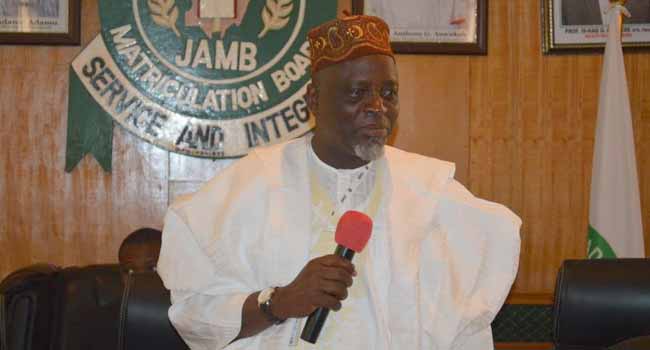
Sacked JAMB official alleges threats, challenges dismissal in court

By Uzair Adam

A former deputy director of the Joint Admissions and Matriculation Board (JAMB), Mr. Yisa Usman, has alleged that his life is under threat due to his efforts to expose corruption within the board.

Usman made the claim during cross-examination before Justice Osatohanmwen Obaseki-Osaghae at the National Industrial Court in Abuja, where he is challenging his dismissal from JAMB, which he claims was unlawful.

Responding to questions from JAMB’s counsel, A. A. Owonikoko, Usman admitted writing petitions to various government agencies, including the National Assembly, the Attorney-General of the Federation, and anti-corruption bodies, alleging financial mismanagement under the current registrar, Prof. Ishaq Oloyede.

Usman also acknowledged receiving queries from the board and an invitation to appear before a disciplinary committee prior to his dismissal.

While admitting to responding to the queries, he stated that he rejected the composition of the committee due to alleged bias.

“My Lord, I informed the committee that I could not trust its fairness as it comprised individuals implicated in the infractions I reported,” he said, denying claims that he refused to appear before the committee.

He further testified that he informed JAMB’s directors of his concerns through an email message dated May 18, 2023, in which he reiterated his resolve to fight corruption within the organization.

“The fight against corruption and abuse of authority is a responsibility of every Nigerian. My determination remains unshaken, despite the threats and attempts to intimidate me,” he told the court.

Usman also alleged that he had reported threats to his life to the Department of State Services (DSS) and the Inspector General of Police, claiming that if anything happened to him, the registrar, Prof. Ishaq Oloyede, and the Director of Finance and Accounts, Mr. Mufutau Bello, should be held responsible.

During the proceedings, Usman denied accusations that the criminal charges filed against him at the Federal High Court in Abuja were related to investigations into his allegations, stating that the charges were unrelated to the audit of JAMB’s finances conducted by the current registrar.

Justice Obaseki-Osaghae admitted several documents submitted by Usman’s counsel, Mohammed Shuaibu, as evidence, while reserving JAMB’s right to challenge their admissibility.

The court adjourned the case to February 27 for JAMB to present its defense.

It would be recalled that Usman has filed a N150 million lawsuit against JAMB, seeking reinstatement, full entitlements, and the nullification of his dismissal.

He has also requested a declaration that the disciplinary committee was improperly constituted and unable to guarantee him a fair hearing.

The case, marked NICN/ABJ/266/2023, remains ongoing.

Japa: Nigerian hospitals face collapse as health workers exit in droves – CMDs

By Uzair Adam  

The Chief Medical Directors (CMDs) of University Teaching Hospitals and Federal Medical Centres have expressed concerns about a looming staff crisis. Doctors, nurses, and other healthcare professionals are leaving Nigeria in large numbers due to poor salaries and working conditions.  

During the 2025 budget defence session before the House of Representatives Committee on Health Institutions, the CMDs noted that despite significant federal government investments in health infrastructure, the mass exodus of healthcare workers weakens the country’s healthcare delivery system.  

The Chief Medical Director of Lagos University Teaching Hospital (LUTH), Professor Wasiu Adeyemo, described the trend as alarming, warning that if immediate steps are not taken, the nation’s hospitals could soon be empty.  

“Resignations occur almost daily,” Adeyemo stated. “In one or two years, our hospitals may become empty. The main reason people leave is economic. Consultants are earning less than $1,000 monthly. 

“Without addressing remuneration, all government investments in infrastructure will be wasted,” he added.

He reported that LUTH’s 2024 budget included N19.2 billion, with N13.57 billion allocated for personnel and just N33.2 million for overhead costs. 

While personnel performance reached 91 per cent by December, only 45 per cent of the capital project budget had been utilized.  

For 2025, LUTH proposes a budget of N32.7 billion, with N20.3 billion allocated for personnel. 

Adeyemo emphasized the need for improved funding to prevent further resignations and ensure the hospital’s functionality.  

Similarly, the Chief Medical Director of University College Hospital (UCH), Ibadan, Professor Jesse Abiodun, decried delays in releasing budgeted funds. 

He revealed that UCH had a capital appropriation of N5.59 billion in 2024, but only 38 per cent of the funds were released.  

“We still have 72 per cent of the funds outstanding,” Abiodun said. “We could only utilize the 38 per cent because we had prepared a cash plan in advance.”  

UCH has proposed a capital budget of N4.39 billion and an overhead budget of N690 million for 2025, which Abiodun said is insufficient, especially given rising utility costs such as electricity.  

The House Committee on Health Institutions Chairman, Hon. Patrick Umoh, urged the CMDs to provide comprehensive presentations detailing their budgetary needs and challenges. 

He noted that the committee would continue reviewing submissions to address the critical issues facing Nigeria’s tertiary health institutions.  

The CMDs reiterated the urgent need for government intervention, stressing that improving remuneration and timely funding release is crucial to averting a healthcare crisis.