Local

Epistle: Letter to Arewa bandits and kidnappers

By Ibrahiym A. El-Caleel

Ideally, I should begin this letter with the epistolary salutation. “Dear brothers” would have been a good salutation, to begin with, but it would be deceptive. I am neither a bandit nor a kidnapper; neither do I have a rifle, nor do I live in the woods. I feel emotional when people die natural deaths. I feel depressed when people are killed. Even in my wild dreams at night, I have never seen a mirror image of myself with a gun. Thus, if I salute you as “Dear brothers”, it will be ungodly deceitful to both you and I.

The enigma in writing you this letter doesn’t end with my failure to find a befitting salutation. It furthers my lack of faith that this letter will reach you. Despite all its mighty capacity, the Nigerian government does not have your full address. Certainly, as a poor Nigerian, I also do not have your address to deliver this letter. In case this letter comes to you by accident, I appeal to you, kindly spare some minutes out of your busy schedule to read it.

Earlier today (9th July), residents of Maradun Local Government in Zamfara lowered 35 bodies into graves. These are the 35 people you killed yesterday. On Monday (5th July), you also ‘worked’ in Tsauwa village in Batsari LGA of Katsina State. You dispersed the villagers, running after them on your motorbikes and shooting them as they flee. You also burnt their houses and farm harvests. Anyway, on Wednesday, they also had to lower 19 bodies into their graves. About a month ago, precisely on Thursday 10th June 2021, you struck Kadawa village of Zurmi LGA in Zamfara State. There in Kadawa, after your bloodbath, they did the burial of the 93 people you successfully butchered. In this case, survivors narrated that you spoke French during the operation. This means you are also now operating as a Multinational organization.

I could go on to narrate your operations, from Zamfara to Kaduna, from Katsina to Niger States. You have become one of the most active and busiest workers in Nigeria today. Hardly does a day or two passes without your career activity making headlines in the national dailies. I am not being satirical. I am being euphemistic so that you become aware that we are feeling the pains. The agony! You have pierced a fat needle into our skins, aggressively drawing our blood. We are eager to know when will your syringe be full? How much volume of our blood can satiate your blood thirst? Does it have to be this cruel?

We have always wondered what is it you want with this ruthless bloodletting. It was only recently that people like Shaikh Dr Ahmad Gumi and journo Abdulaziz Abdulaziz took the courage of walking into the bushes to converse with you, to hear the reasons. Their reports centred around your bitterness with the Nigerian government’s neglect of you; also about how Nigerian security outfits have persecuted you, and how they couldn’t secure your cows from being rustled; also about how common Nigerians have abandoned you in the bushes without care. I honestly do find any cogent reason among all these claims.

Your dwelling in the bushes was by your own choice. Common Nigerians shouldn’t be your enemies on this. If the Nigerian government has maltreated you, what stops you from following a legal process via MACBAN to address this? How does killing innocent people and driving them out of their homes help you?

These innocent people you are killing on a daily basis are also victims of Nigerian state neglect. Had the Nigerian state not neglected term in terms of securing their lives, you won’t even have the chance to kill them in scores as you do. They are your partners in suffering from this bad leadership culture that has stayed for long in Nigeria. Killing them and destroying their properties is the height of your own injustice. Unlike you, these victims suffer a two-way transgression: one from the Nigerian government, then the second from bandits and kidnappers.

Even if you must transfer your aggression to these innocent people, what stops you from seizing their material wealth alone and leaving them with their lives? Your predecessors in this criminality (armed robbers and thieves) mostly kill only when they ask for money, and it’s not given. In your own case, you do not even ask for money or anything. You just ride your motorcycles into a random community and make bullets fly.

What specifically do you want to achieve?

What point do you want to prove?

What is it you all want, please?

How can we go back to a time when we could sleep with both eyes closed, please?

Yours dreadfully,
Ibrahiym.

Bandits demand food for their hostages

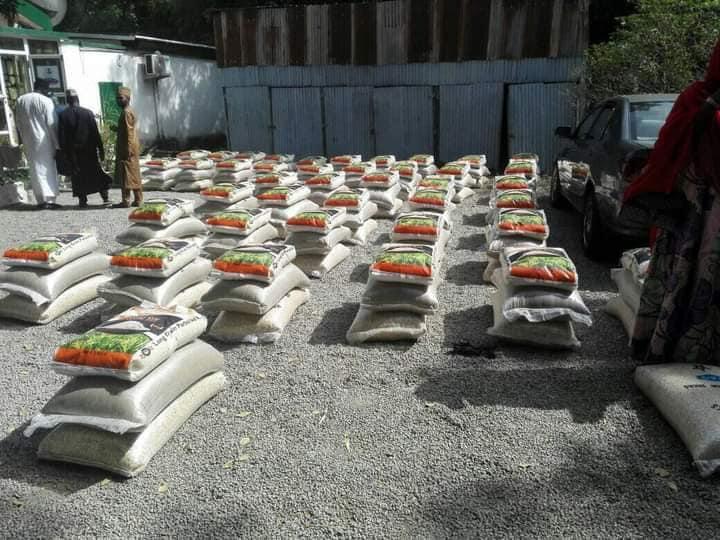
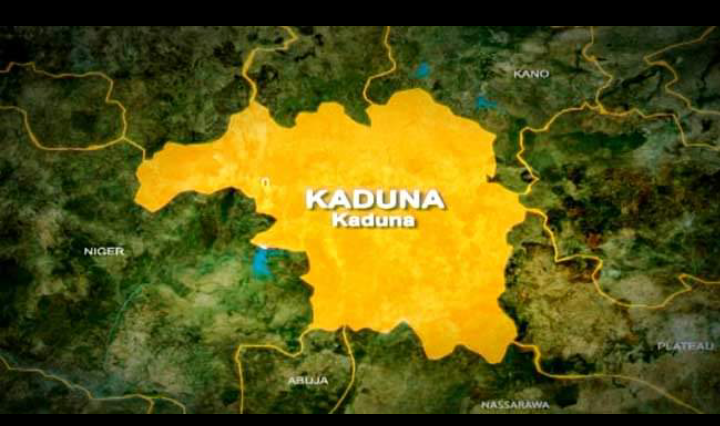
The armed bandits who kidnapped some school children in Kaduna have demanded the state to give them food for their hostages. It was gathered that the parents and management of the Bethel Baptist High School, which is located at Marabar Rido in Kaduna State, have already raised money to buy foodstuffs and every other thing as demanded by the abductors of the 121 students of the school.

Such kidnappings and killings have become commonplace in the North, where people are kidnapped and killed almost every day, especially in Zamfara, Katsina, Katsina, etc. The parents of the students are so scared and frightened over the recent threat and boldness of the kidnappers, pinning their children’s survival on their necks through the evil demand.

It can be recalled that the bandits forced themselves into the school on Monday around 2 am and kidnapped 121, who were said to be primarily senior students.

Flooding: As you make your bed, so you must lie on it

By Ibrahiym A. El-Caleel

Flooding in this season is caused by heavy rainfalls. It happens because the excess water from a heavy rainfall is unable to find a drainage system with the capacity to contain it. Our local areas, called “ghettos” are fond of blocking the gutters. Household wastes are dumped in gutters instead of depositing them in refuse dump for proper incineration.The new extension areas mostly called “low-cost” also suffer from inadequate drainage system due to poor planning. People passionately build houses of N8-10 million, but comfortably neglect building a drainage that will cost them less than N300K.

I know a man whose neighbor refused to build a gutter for over 20 years, with much quarrel. Everyday, this man had to use a rake to collect the waste from his house to pass it to the next gutter because his immediate neighbor refused to let the gutter continue in front of his house. Of course it’s a semi-ghetto area, no one cared to reveal this to appropriate authorities. Rainfalls have no specific regards to the poor drainage system we have in our communities. We can continue to block the gutters with our household wastes. Lowcost residents can continue to build their fine houses without making provision for drainage. When the heavy rain eventually falls, it will not seek for a pathway. It will accumulate on the streets and find its way into our houses, living rooms and bedrooms. Eventually, we will then begin to have honest concerns with our lack of regards for drainage systems. It is true that we have governmental institutions for environmental health. Take Kaduna State for example. Kaduna has Kaduna Environmental Protection Authority (KEPA). Go to KEPA’s office on Old Jos Road in Zaria close to Kongo Campus and see the gutter there. A few years back when I was making a self-assigned field research on this issue, their gutter was also blocked with several plastic wastes and heap of sand! This is a regulatory agency that should drive residents compliance with environmental health systems like drainage. KASTELEA was also launched to enforce both state traffic laws and environmental laws. KASTELEA stands for “Kaduna State Traffic and Environmental Law Enforcement”. But today KASTELEA is obsessed with catching drivers with an expired “Road Worthiness Certificate” more than cracking on households with no drainage systems which leads to flooding of a community of 2,000 homes.

For prevention, people should not wait for KEPA or KASTELEA to come and enforce them to clean their gutters. They don’t have your time! If you like, don’t just dump your household wastes in the gutters. You may please seal the gutters with molten steel! When the community eventually floods, you will feel the pain more than anyone. The best thing SEMA will do is to give you 2 tiers each of rice as palliatives and then have NTA cover the story. The remaining wahala is yours to know how to solve. It is the usual way of manhandling everything that has to do with public good. I have seen someone who demolished a part of his house, and instead of transporting the red sand elsewhere, he spread it on the tarred road that is meant for public use. When rain fell, the red sand became sticky and everyone in that community had to suffer for this indiscipline. Yet no one cared to force this man to come and pack up his red sand. After all, he dumped it on a road that doesn’t belong to anyone. The road belongs to the government. Therefore, it is the government’s headache! Allah has been very merciful to us. We are not living in coastal areas that are susceptible to tropical cyclones that could lead to storm surges that will flood our communities. Now that we live in our areas that are free from this, why can’t we have good drainage systems that will contain heavy rainfalls? As we make our bed, so shall we lie on it.

Southern governors should prepare for boomerang

By Muhammad Mahmud

Even as the nation is struggling to bring an end to the Boko Haram crisis, which could’ve been effectively tamed but for the inane and complacent manner the leadership of some Northeastern states treated the issue initially, we could not but gape at the myopic decision of the Southern governors to fly the kite of moral support to their organized thugs who were recently suppressed by the authorities. 

At their meeting on Monday, July 5 2021, the southern governors “resolved that if for any reason security institutions need to undertake an operation in any State, the Chief Security Officer of the State MUST be duly informed.” (Emphasis mine).

It is unmistakable that the governors were referring to the recent success recorded by the nation’s security agencies in arresting many IPOB members, including their “supreme leader” Nnamdi Kanu, and the arrests at the residence of a tribal warlord, Sunday Igboho.

One cannot but wonder how on earth these governors will be so insensitive to the flights of their people. The gory stories emanating from the arrested members of IPOB, where 2000 fresh skulls of innocent southern girls were targeted and how lives of fellow southerners who never aligned themselves to the “cause” were to be wasted, are enough to galvanize the governors into taking stern action against those terrorists. But to the shock of the whole nation, these governors, who never even found it worth their time to give a one minute silence to mourn souls of the ten brutally killed girls, have the temerity to demand that they must be informed whenever the criminals are to be arrested. 

Perhaps the support for IPOB and Igboho militia by the southern governors has everything to do with what Rochas Okorocha said, in an interview with BBC, that it was the fear of what the IPOB boys could do to them that stops Igbo elders from speaking against them. This gives a picture of caged and gagged elders who have no option but to simply watch as the boys took their entire region into uncertainty. This means that Kanu’s group has evolved into a monster that no Igbo could dare criticize even from afar. 

Maybe the southeastern leaders fear that what happened to the four Ogoni chiefs could befall them if they dare oppose IPOB. On May 21 1994, four Ogoni chiefs were beaten to death by angry Ogoni youths. The victims’ names were Edward Kobani, Alfred Badey, Samuel Orage, and Theophilus Orage. Their crime was that they were suspected to be against the MOSOP. Perhaps the Igbo leaders fear the Ogoni chiefs’ treatment from IPOB; that’s why they are backing them. 

But suppose Igbo elders are so terrified with the IPOB to the extent that they are hypnotized into submission, or they are so emotionally sympathetic to the “cause”. In that case, it is very dumbfounding that the south-southern governors couldn’t see the danger of backing IPOB for the simple fact that they (IPOB) made it categorically clear that any non-Igbo will be, and shall remain, a third-class citizen in the region. Suppose the south-western governors found it strategically right to support IPOB in supporting their tribal warlord, Igboho; what exactly is in it for the south-southern region? Their governors seem to be either coerced/harangued into submission or too foolish to figure this out for their people.  I believe if a south-southerner like Reno Omokri is among the governors, he will object to this. 

It appears as if the southern leaders are no longer in control. They seem to be tele-guided by the prevailing emotions in their regions instead of playing the leadership role of directing towards a better future for their people. 

Notwithstanding some of their failures and the resentments of their people, Northern elders are more in control and seem to be leading. When some northern youths issued a quit notice to the Igbos, in a reaction to the IPOB’s agitation, the leaders of the north rebuffed them. Governor El-Rufa’i even ordered their arrest. When some northern youths initiated “Shege Ka Fasa” as an answer to south-western governors’ backed “Amotekun”, the leaders of the north stopped them, and they complied. Even Boko Haram, with their firepower, did not frighten northern leaders into opposing the federal government to support them!

If the southern leaders are publicly backing their criminals with a kind of moral encouragement by attacking the federal government’s crush on them, they should, rest assured, know that it will boomerang. They should have taken lessons from what happened during the early stage of Boko Haram in the northeast.

During the initial stage of Boko Haram, they enjoyed massive support from their people. This is partly because they appeal to their people’s sentiments. All they need is to list eloquently, in a highly sentimental manner, the ills and backwardness that bedevilled the people in addition to hunger, poverty, diseases etc. and finally quote relatively congruent verses of the Qur’an and sayings of the Messenger of Allah (peace be upon him) to drive home their point that “Jihad” is the only way out and they, as the conveyors of that message, are the ones to lead. It was full of promises of a utopian state that will replace the current dystopian state. And that appealed to many, more especially as most of the movement members were children of the elite. What a perfect gulp of toxic will that be on the gullible, the strata of his/her social status notwithstanding.

It was only after the actual road to Sambisa was taken that the people realized, albeit too late, how wrong they were and how naive they behaved.

Now the IPOB and the tribal warlord, Sunday Igboho, are getting the support of the southern governors because they appeal to the sentiments of regionalism and tribalism (or drum up support for their political agenda), only time will reveal the sour fruits that will shower down. I hope some leaders will be blunt enough to put aside political correctness and act appropriately before that happens.

Malam Muhammad writes from Kano. He can be reached via meinagge@gmail.com.

Tragedies: Like Zamfara, Fulani crises loom in Jigawa State

By Amir Muhammad Harbo

It is undeniable and physically known that Jigawa state is blessed with high fertile land suitable for farming and grazing. However, the clashes between Fulani herders, natives, traditional rulers and some government officials have almost encircled the state’s cities and villages in a wave of violence that resulted in many people losing their lives and their houses being razed.

Jigawa state purely depends on agriculture -so, I never see any impact on its disintegration. But, the emerging unrest has started shooting the single ball of its cherished unity and harmony. So, can you answer one question – how can the state build forward better from the current existential crisis plaguing it, especially that of pastoralists? 

These clashes and disputes are all over the land ownerships between these warring groups. It is for settlements and rearing fields to the herders as they’re there countless years back, while to the remaining groups, it is about farming for their economic gains.

The proprietorship of the lush land wants to take it from one of the parties. This has led to too many conflicts between the groups over the years in the state. It’s now more worrisome because there is an increase in skirmishes among the groups. Hostile exchanges have already started, and some people got stabbed. Many also were feared injured recently in some local government areas in the northeastern zone of the state.

Now, nonnatives residents have started coming from Zamfara, Yobe and other restive cities across the North, said a victim when I visited him. When I contacted Lutto, the chairman of Udawa (one of the sects of Fulani), he said they have been sitting with some stakeholders, but nothing has been implemented yet. A lot of sorrowful mysterious tales to tell. Yet, the government and community organisations for long don’t come with an active and formidable strategy to mitigate the conflicts.

These villagers are low-income earners; they know nothing but going to farm and cattle rearing. Taking advantage of their illiteracy in persecuting and duping them must be stopped now. They are seeing everyone as a contributor to the blockage of their future. Everyone must act before these parties start fleeing to take refuge in other places.

I hope this misfortune between heartless traditional rulers and politicians, Fulani herders and indigenous farmers bedevilling this state will finally come to an end and be over forever. But, to curtail this problem of insecurity, Jigawa has a long way to go and has a lot to do.

Amir Muhammad Harbo writes from Jigawa state. He can be reached via ameerharbo@gmail.com.

Why we need to empower women

By Salisu Yusuf

There’s an established cultural practice of female social exclusion in the Muslim North that’s partly patriarchal and partly a cultural construct fuelled by religious misinterpretation, especially on business transaction issues. 

Many people wrongly and unfairly assume that women must not participate in business dealings because men cater for their needs. However, instances from Islamic history and established ahadith corroborate women’s active role in market-oriented activities, especially during the caliphate of Sayyid Umar bn Khattab (RA). I have a story to tell which will convince you that our women should, or even must, be allowed to transact.

A close, affluent friend of mine died two years ago. He left behind four wives, children and millions of naira. Fortunately or not, the deceased’s male relatives could not handle the proceeds of the orphans properly. And even if they could handle the wealth well, most people nowadays are morally lax in handling trusts, especially inheritance. Only a few handle it sincerely, while many others betray the trust given to them. So, the widows became carers and guardians; in other words, the bulk of wealth is handed over to them.

Those who had never transacted (only two out of the four) became businesswomen in their life. They are both fathering and mothering the young orphans. Although single parenting is a difficult task, the women brace up, take care of the children efficiently, conduct business aspects, get profits, provide daily bread, support the children’s education, and other basics such as clothing. I am deeply impressed by the women’s resolve to forget their differences, shun their rivalries, burry their wounds, pick up the pieces and continue to survive in the absence of the best husband and father. 

Two years after their husband’s death, the entire house fares very well, managing to survive despite the harsh realities of the Nigerian socio-economic milieu. When last I visited the family, they told me of the difficulty in combining business dealings with parenting and guidance. One widow told me how lucky they were to learn to trade even before their husband’s death because he had numerously given them startups to learn to earn a living. She said if they had not been this fortunate – under a caring husband who had so much empathy and understanding, they would have been left in the cold, would have devoured the money and would have been left at the mercy of a hostile public as beggars.

Two years since their breadwinner’s death, the women turned men survive because they can hold their heads, transact, guard and guide the young orphans.

Salisu can be reached via salisuyusuf111@gmail.com.

A case for technical colleges in Nigeria

By Adamu Tilde, PhD.

For a while now, Nigeria has been witnessing exponential growth in the rise of certificate-awarding institutions and massive production of holders of certificates of all kinds: diplomas, NCEs, degrees, masters, PGDs, etc. Ordinarily, this should be a welcome development. But, unfortunately, this phenomenon comes at the expense of acquiring quality skills, thus resulting in the production of certificate holders with no skills at all or with some skills that are not in demand and/or have no economic value whatsoever.

One comes to realise the effects of this phenomenon when one does a simple close-proximity analysis—for example, over sixty registered and unregistered colleges of education award NCE certificates in Bauchi state alone. Most of the courses offered in these colleges are combinations of English/Hausa, Social Studies/English, Arabic/Fulfulde, etc. The questions to ask are: what are the specific skills that an average NCE holder acquires in the three years they spend in college? Do these skills, if any, have any economic value? If yes, how many NCE holders, for example, does Bauchi state need at any given time?

Again, in Toro, one out of the twenty local government areas of Bauchi state, there are six colleges of health technology and counting. Most of the courses offered in these colleges are diplomas in Medical Records, Environmental Health, Community Health, Laboratory Technology, etc. I may sound so dismissive of these courses, but don’t get me wrong. These are significant courses and, perhaps, with valuable skills to offer, but we already have enough to go around. And, trust economics, its laws are no respecters of irrational decisions: the higher the supply, the lower the demand and invariably the price. So the need to rethink why we do certain things instead of other things could not be more urgent.

Way Forward

To be very clear, I am not presenting anything novel. Our pioneer leaders had envisaged the inevitable need for technical skills for economic growth and development, and that’s why they established monotechnics, polytechnics, and technical colleges across the country. No thanks to unimaginative leadership and penchant for mass production of certificates-wielding graduates that had led to having polytechnics with more students studying mass communication, theatre arts than engineering, computer science, statistics, etc. Nothing can be more ironic.

In the following subheadings, I will argue on why we should pay more attention to technical skills and invest more in establishing technical colleges:

Guaranteed employment

Rest assured that employers lined up waiting for you once you possess skills like plumbing, welding, woodwork, carpentry, masonry, tiling, electric wiring, programming, website and apps development, etc. With an increase in population comes corresponding demands for housing, food, and services. So these skills will forever be in need, so long as we breathe. And in the event you don’t want to be on the payroll of anybody, you can monetise the skills by employing yourself. For example, a diploma holder in animal health and production can engage in the private practice of visiting farms and local markets to provide first aid treatment. There are too many farms to go around. We can say the same about a plumber, tiler, painter, etc.

Less time than conventional schooling

Most technical skills can be acquired in a record time, probably in a year or two, and then you are good to go. The most interesting thing about a given skill is that the more you practice it, the more you master it. Moreover, it is more difficult for a person to forget a set of skills than the paper-based theories learned in school. Very unlike typical schooling (a diploma or a degree), where you would spend 2 or 4 years with no specific skills to show and then sooner you would forget the little theoretical knowledge you have acquired since you are not practising.

High return on investment

Compared to the money spent to acquire NCE certificates, diplomas in health-related courses, and some instances, degree courses, you are better off having any of the aforementioned technical skills. NCE holders and, in some cases, degree holders hardly make up to ₦30,000 per month in many private schools. In fact, even in public service, NCE holders fetch ₦36,000 per month in Bauchi state. When you analyse the time, money and energy expended to acquire the certificate and the monetary reward after that, you will struggle to make economic sense of the decision. So many Keke Napep guys make more than that amount in a month. So much for a heap of certificates!

Again, as a private investor, you are better off establishing a technical college, especially if you would engage in vertical integration by employing your products (graduates). For example, you can set a company that specialises in finishing and look for contracts. Trust me; we have a paucity of skilled workforce in the building industry. We do import tilers, plumbers, welders from outside. That’s how bad things are, and that’s how vast the opportunities are.

And for those who want to ‘japa‘ (to go abroad), your chance of securing a visa and employment abroad is greatly enhanced if you have any technical skills. This is for non-medical professionals and exceptionally brilliant computer wizards.

Note

The argument here is not whether an NCE certificate or health technology diploma or even degree certificate, for that matter, is good or not. No! The idea here is that we should go to colleges and universities to acquire skills that we can use to improve our financial situation. If the so-called certificate(s) you have obtained cannot fetch you a job or equip you with skills that people can pay for, you need to rethink why you were in school in the first place. We have tonnes of graduates and varying certificate-holders roaming the street for jobs that are not there and crying for lack of employment; meanwhile, they have no skills worth employing. We are massively producing what we do not need and under-producing what we urgently need. Something is wrong.

We have to appreciate the dynamics of time. Long ago, all it takes to climb the mythical social ladder and join the much-vaunted middle-class is a certificate of any kind. Whatever or not you studied in the university is immaterial; public jobs were waiting for you. But that was then. Those years of yore have passed for good. There are no more public jobs for everyone. Internalise this and know peace. As for private companies, well, first of all, they are not charity organisations. Secondly, they are profit-driven, so they don’t employ people to fill any underrepresented state’s quota. Thirdly, they reward value— what you have to offer is what counts. You need much more than a certificate to survive. You need skills, not just any skills, but skills that have economic value.

You need to wake up and smell the coffee. Hello!

Dr Tilde can be reached via adamtilde@gmail.com.

The onset of 2021 rainy season in Kano

Nazifi Umar Alaramma,

This year, 2021, had experienced a late onset of rainfall in Kano and surrounding. Therefore, the onset of rain in Kano and surrounding was computed to be five days with 83 millimetres of rain fall.

83mm is equivalent to 9.2% of the mean annual rainfall of Kano state. However, the duration of the rainy season in Kano is between mid-May to early October. Nevertheless, the rain may delay until June. This means the rainy season could not begin before mid-May in Kano and surrounding. Likewise, it will not extend to November.

As per the climate of Kano, the region falls within 100 rainy days in West Africa. Therefore, rain may fall earliest in mid-May, never before. However, it could delay up to July.

In 2021 the rain had delayed to very late June due to natural and anthropogenic factors. The natural characteristics are the routine of delay rainy seasons that happen to entire Sudano-Sahelian environments, some every five years, like parts of Mali and Ethiopia and some for many years like Kano in Nigeria.

This year could have followed the suit of those who predate it to bring rainy season late. However, it is significant to note that delaying the rainy season and frequency of drought in Kano and surrounding had reduced following the construction of Tiga, Challawa and other more than 30 dams in the state. These dams increased the recharging of clouds. Hence, no frequent drought in Kano and surrounding since the 1970s. However, a delay of the rainy season has not been totally hampered yet. 

The human factor in delaying the rainy season this year may be human-induced climate change. We believe it originates from outside Nigeria. It is linked to the general circulation of the atmosphere, which alters Africa’s condition even if the major polluters are from Europe, America, and Asia.

Nazifi Alaramma is a lecturer at the Department of Geography Yusuf Maitama Sule University, Kano. He can be reached via alaramma12@gmail.com or nazifiumar@nwu.edu.ng.

Kano has the best emirate in northern Nigeria – Prof Abdalla Uba Adamu

Adamu speaking at the Coronation Lecture of his highness, the emir of Kano, Alhaji Aminu Ado Bayero, which Kano Emirate Council organized in conjunction with the Bayero University, Kano held at the Convocation Arena of BUK on Thursday, July 1, 2021.

While delivering his paper titled “Kano Emirate: Yesterday, Today and Tomorrow”, Prof. Abdalla Uba Adamu argued that “Of all the grand emirates of northern Nigeria, none has the spectacular and expansive history and cultural anthropology recorded like the emirate, now the emirates of old Kano.”

In the historiography of Kano, Adamu traced that “Kano was founded in the 7th century by a group of wandering blacksmith seeking for iron ore from Gaya Town.” The versatile scholar used the typology of urban cultures developed by Fox (1977).

Adamu classified Kano as a ritual city, administrative city, mercantile city, scholastic city, colonial city, industrial city, and a bustling hub. He reiterated that it maintains the famous cultural jingle “Kano ko da me ka zo an fi ka”, loosely meaning: Kano is simply the best. 

Despite its greatness, Adamu lamented the increase in crimes and other social vices in Kano, adding that “these are the characteristics of any prosperous urban state.”

In his welcome address, the Vice-Chancellor of Bayero University, Prof. Sagir Adamu Abbas, said that it was a privilege to choose the University to host this maiden lecture. “It was a wise decision to introduce a public lecture into the activities of the coronation as it signals [a] new archetype in the affairs of Kano Emirate Council.”

Abbas commended the decision of the Kano State Government to formalize the Coronation of Sarkin Kano as that “demonstrates love and commitment towards ensuring a stable society and hopes Sarki Aminu Ado will use this opportunity to move Kano and the traditional institution to greater heights.”

Also speaking, the chairman of the occasion, His Eminence, The Sultan of Sokoto, Alhaji Muhammad Sa’ad Abubakar, reminded the audience of the significance of traditional leaders as the custodian of cultural heritage. 

In his remark, His Royal Highness, Alhaji Dr Aminu Ado Bayero, the emir of Kano and the 15th Fulani ruling amir, described the relationship between Kano Emirate and Bayero University as that of “hanta da jini” [blood and liver]. Being a former student of Bayero University, mass communication programme, Sarki Aminu was delighted to see his former teacher, Prof. Cecil Blake, in the audience. 

In his speech, the Executive Governor of Kano State, His Excellency, Dr Abdullahi Umar Ganduje, said the title of the paper presented by Prof. Adamu “is apt.” Ganduje expressed happiness with the current peace in Kano State when many northern states are fighting insecurity. 

The event was attended by many politicians, academics, business people, traditional and religious leaders from and outside Kano State.

Why the north needs a news channel

By Dr Ibrahim Siraj Adhama

News is often assumed to be a factual and objective account of happenings at global or local stages. Yet, news has always been a function of gatekeeping and, therefore, selective. Much is included or omitted through a selection process that is not entirely devoid of subjectivity and intrusion of personal judgement. Stories are framed to convey certain interpretations or promote certain ideologies. Facts are skewed to confer advantages on some individuals or groups who happen to be the news media owners and put the “others” at a disadvantage or cast them in a bad light. Globally, the media are being used, albeit cleverly, to promote their funders’ political ideology and protect their economic and other personal interests in a manner that is beyond what a layperson can see and understand. As the saying goes, no news is value-free.


Since its inception in Nigeria, one crucial feature of the media has been its religious, ethnic and regional configuration. Since independence, the Nigerian media have not only been highly politicized but were also found to be regional and ethnic in orientation and patronage. They seem to have fallen into and accepted the sad characterization of being ethnically and regionally oriented to the extent that issues of regional or ethnic significance are hardly treated objectively and professionally.


Northern Nigeria has always been a victim of media misrepresentation. Often, the media amplify the region’s challenges and, grossly, underreport its potentials. Of course, the North is battling serious developmental challenges, yet its vast mineral, agricultural and human resource potentials are entirely overlooked. The impression one gets is that of a region that is gradually turning into an epicentre of everything terrible or backward about Nigeria, bereft of any meaningful contribution to the country’s socio-economic development. It took the recent protests by food and animal suppliers to remind Nigerians that the key to the country’s food security lies in the hands of the North, a region portrayed by some as worthless.


True, the North has its more than fair share of challenges. It has a higher number of poor people. It also leads in other negative indices such as illiteracy, diseases, child mortality, hunger, and out-of-school children, especially if the available local and international statistics are anything to go by. This is not to mention the high level of insecurity that has continued to bedevil the region and is threatening to turn it into the largest killing field in the world.

The Boko Haram insurgency in the Northeast is more than a decade old. Unfortunately, it does not show any sign of ending anytime soon. Bandits and kidnappers are on the prowl in the Northwest and the North-Central, killing and maiming at will. The kidnapping of school children is assuming a worryingly disturbing rate. The region similarly witnesses social and political upheavals with secessionist agitations re-emerging from East to West ostensibly to counter phantom Northern domination, domination about which an average Northerner knows close to nothing. Essentially looked upon through a parasitic lens, the North has disappointingly continued to be projected as the “sick man of Nigeria”.


To make things worse, the North appears not to have a voice of its own. Unlike what obtained in the past, the North has given up on the race to establish media outlets (especially news channels) to cater to the region’s information needs and ward off negative media campaigns from other regions. It was the late Ahmadu Bello Sardauna (of blessed memory) who said at the opening of New Nigerian in 1966 (shortly before his assassination) that “if you don’t blow your trumpet, nobody will blow it for you for the simple reason that they are too busy blowing theirs”.

Owing to good leadership, the North in those days was able to compete favourably against other regions in the media arena – from newspaper to radio and television. However, this is no longer the case, especially with regards to private news channels.


Since the deregulation of broadcasting in 1992 to allow for private ownership of radio and television in Nigeria, all the North can boast of are private FM radio stations and a handful of entertainment TV channels. In Kano, for instance, there are over twenty such radion stations and counting.


What the North actually needs at the moment are news channels in the form of TVC and Channels Television that will broadcast news and analysis of significant events to the world from a perspective that represents the average thinking of Northern people or at least does not misrepresent them. Enough of these avenues for “talking to ourselves” that these FM stations represent. There is the need to channel concerted efforts and resources towards achieving this in the nearest future if we are interested in changing the narrative about our region and what it stands for.


To better appreciate the need for this, one has to watch AIT, TVC or Channels Television coverage of such issues like restructuring, resource control, farmers-herders conflict or any of those issues that are so dear to the South but about which the North feels differently. The North is effectively turned into a punching bag of some sort by annoyingly ignorant noisemakers posing as analysts or barely informed ethnic bigots parading themselves as advocates for justice. Neither the right of self-defence nor the ethical prerequisite of fairness and balance could guarantee hearing from the other side. This has to be countered!

Dr Ibrahim wrote from the Department of Mass Communication, Bayero University, Kano.