Local

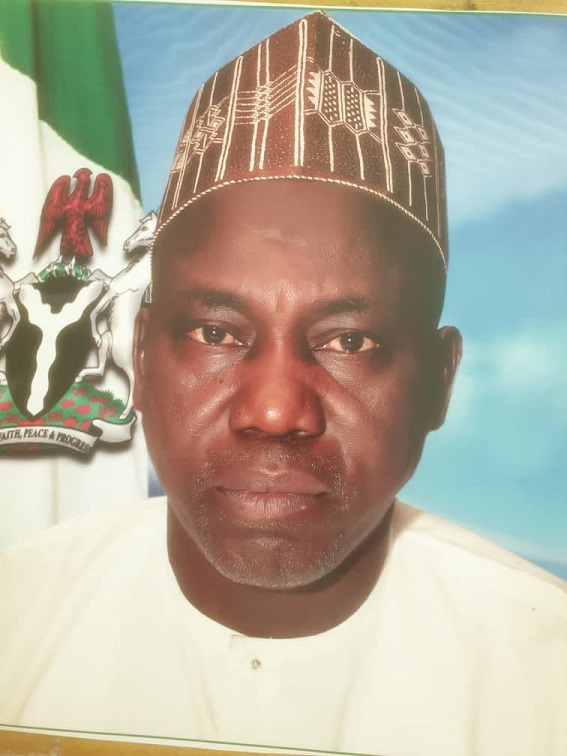
Just-In: Renowned Nigerian administrator, Ahmed Joda is dead

Ahmed Joda, an elder statesman, was one of the finest administrators who held several positions in the Northern regional government and later, the Federal government of Nigeria.

Ahmed Joda, OFR, CON, CFR, rose through the administrative cadre of the Northern regional government and then the federal civil service. He retired as Permanent Secretary at the Ministry of Industries.

During the administration of the youthful General Yakubu Gowon, Malam Joda was considered to be among a group known as super Permanent Secretaries.

Details soon.

Plateau: 8 suspects nabbed over killing of 3 women

By Muhammad Sabiu

Eight suspects in connection with the murder of three women in Rafin Bauna community in Bassa Local Government Area of Plateau State have been apprehended by Troops of the Special Task Force, Operation Safe Haven (OPSH)

The arrest was confirmed in a statement on Tuesday by the Media Officer of the task force, Maj. Ishaku Takwa, in a statement.

Recall that an incident occurred in which suspected gunmen raided a community, attacked three women on a farm, and instantly killed two and injured one, who later passed on.

In the statement, the army officer said, “Troops of OPSH this afternoon arrested 8 suspects in connection with the shooting of three women on a farm close to Rafin Bauna general area in Bassa.

“The troops earlier responded to a distress call and immediately mobilised to the scene and discovered 2 of the 3 women were shot dead on the spot, while one of the women sustained gunshot wounds.

“Unfortunately, the injured one later died while receiving treatment at the hospital.”

Sheikh Abduljabbar Kabara is a blessing in disguise

By Abdurrahman Nasir Salis

The emergence of Abduljabbar Kabara is a blessing and not entirely a curse to the Muslim Ummah from this part of the world. Abduljabbar is a common enemy to variegated clans of foes, to wit Izala, Tijjaniyya, Qadiriyya and Salafiyya, among other sects, who could neither share a shade to rest, mosque to preach and pray nor a home to shelter.

The aftereffect of fighting the common enemy has taught all the clans that the commonalities they share as Muslims far outweigh the differences. It taught all the sects that they have for long overtired themselves on trivialities that are neither a passport to paradise nor a ticket to hell.

Yesterday, I saw three or four different sects I mentioned hereinbefore, who, to an extent and often attribute infidelity or disbelief to each other gathered amicably in a mosque in Kano belonging to one sect (Tijjaniyya), preaching together and praying together. I saw their guards, “Yan Agaji“, working side by side in complete harmony and feeling of togetherness, considering themselves brother’s keeper.

From the onset, seeing Izala guards together with Qadiriyya’s and Tijjaniyya’s “Yan Agaji” at the doors of Tijjaniyya Mosque named SHEIKH IBRAHIM INYASS MOSQUE bewilderedly caught my eyes and attention. Despite the saying that curiosity kills the cat, I entered the mosque with no fear of being killed as the cat. I saw scholars of all the sects on a single table and a crowd of onlookers, the loud cheerers, from all the sects, listening to their Sheikhs filled with feelings of togetherness and inclusivity, and above all, seeing each other as Muslim with Islam at the top of the priority scale and pushing all other considerations to the bottom of the scale.

Life is indeed the best teacher. This happening is not just an ordinary incident that will pass by time. Muslims and their Sheikhs should take this as a lesson that should symbolise how we should behave like Muslims. Unity shall be our sigil. Let me conclude by the saying of the Almighty Allah in the Holy Qur’an Chapter 8 Verse 73: “The Unbelievers are protectors, one of another: Unless you do this, (protect each other), there would be tumult and oppression on earth, and great mischief”.

Abdurrahman Nasir Salis writes from Kano.

abdurrahman00800@gmail.com

+234 806 578 7324

Kaduna: 28 abducted Bethel students released

By Muhammad Sabiu

Some 28 out of the 121 kidnapped Bethel Baptist Secondary School students have on Sunday regained their freedom after being held for weeks in captivity.

Recall that the students were on July 8 abducted at their school premises in Chikum Local Government Area of Kaduna State.

A report by Tribune newspaper has indicated that this development was confirmed by the Chairman of the Kaduna chapter of Christian Association of Nigeria (CAN), Joseph Hayab. He added that the students would be reunited with their families.

Although the abductors of the students demanded the sum of M60 million as ransom, it remains unknown whether or not the money was paid before the release of some of the students. Kidnapping and killings have become a quotidian threat in northwest Nigeria despite the efforts made by security agents to curb the problems.

Kano has the best market for rams

I entered the market today to sample ram prices. The big one we bought for N70,000 last year is now N250,000 to N300,000. A medium ram is now N80,000 to N150,000. And a small one is around N60,000 to N70,000. These prices are all depending on the city and the market.

One interesting point that I want to make here is, I am presently in Kano and everything looks cheaper in Kano than in other states in the North and probably in Nigeria at large.

Therefore, what makes ram so expensive giving the fact that it has near 100% local content? First, it has to do with human greed and wickedness. Prices in Nigeria are influenced by approaching festive seasons not and not only the natural and conventional law of demand and supply. There was never a sallah with shortages of rams.

Second, it very clear that there has been food inflation in Nigeria. Rams feed on the by-products of local food staples like wheat, maize, rice, millet, Guinea corn and rice. If they are expensive, their by-products, the offal and chaps will definitely be expensive.

Third, is the devaluation of Naira. With the nation’s currency losing value and the government also officially devaluing it, the purchasing power of Naira will naturally drop, and it is drastically dropping everyday. Naira doesn’t hold much value today compared to last year. Take N20,000 to the market today and you will get 40% value of what it used to be last year.

Then last but not the least is the corruption components added to transportation of rams. The police, VIOs, state traffic agents and other security agencies are all out to make a kill by collecting bribes from all vehicles conveying livestock. There are also middlemen in all markets that impose tolls and illegal taxes on every head of ram.

So what to do?

The best way to go around it is either to buy an alternative to ram like sheep or goat that are cheaper or wait for the purchase a day after sallah when the market is becoming a buyer’s market. There are three days grace for layya. That way you can get ram 30% cheaper.

It is indeed obvious that life is generally not easy in Nigeria! If you are alive and healthy give glory to Allah and do what you can afford. Layya is only compulsory for those that have the means. If you can’t afford ram use your money and face other issues and pray for Allah’s blessings. Don’t overspend because after sallah you will still pay school fees. Those of us with children in universities should also brace up for increase in tuition fees. There is going to be increase in prices of petrol and electricity. The government is just bidding it’s time but mark my words, with crude oil price going up, the government will surely increase petrol price.

I wish all of us a very warm and wonderdul Barka da sallah.

Aliyu Nuhu

Abuja, Nigeria

Eid-el-Kabir: Kaduna ram sellers decry low patronage

Ram sellers in Kaduna famous Zango Cattle Market on Monday decried low patronage barely 24 hours to the 2021 Eid-el-Kabir celebration. The ram sellers said that customers were not forthcoming, and their hope for a brisk business this year seems to have been dashed due to the poor state of the nation’s economy. According to some ram sellers, the situation has forced many of them to sell on credit.

A livestock dealer at the market, Malam Samaila, said that the ram business was not flourishing as before due to the economic and insecurity situations in the country.

Investigation reveals that a medium-size ram is sold at N40000 against its previous price of N25000, while a well-bred ram is sold for between N90000 and N150000. The prices of sheep and goats also indicate similar hikes as they are sold at N20,000 and N25000 against their previous prices of N15,000 and N10,000, respectively. 

‘It is our collective responsibility to protect Prophet Muhammad (SAW)’ – Prof. Salisu Shehu

With the ongoing discussions on Sheikh Abduljabbar Nasiru Kabara saga, Professor Salisu Shehu spoke to The Daily Reality (TDR) on why religious conflicts are pervasive in northern Nigeria.

‘The fact is our state governments are primarily responsible for this. They allow everybody to do what they like. If a state government can muster the necessary political will to exercise the necessary political authority to curtail these things, things like these must not be happening. The governments should be proactive; they should not act when issues are already or on the verge of going out of hand. Besides government, other factors include widespread ignorance and poverty. These and other factors are the facts we cannot dismiss.’

TDR asked Prof. Shehu to comment on the call to sensitise and regulate religious preaching. The call gain prominence since the devastation caused by Boko Haram religious organisation in North-East.

‘I believe something around that should be done by the respective state governments. People like these [Sheikh Abduljabbar and co.] should not be allowed to be saying whatever they want. Freedom of speech does not mean saying whatever you want to say, true or false; whether it could bring confusion in the society, create disaffection and cause bloodshed and so on. For me, the regulations should not be unilateral. The state government cannot just come out and hand down some rules and regulations without consultations. You know, there has to be a wide range of consultation with stakeholders, primarily the preachers and scholars. So, based on mutual understanding, something should be done,’ said Prof. Shehu.

Concerning the dialogue Kano State government organised after receiving series of complaints from religious scholars and other concerned citizens on the manner Sheikh Abduljabbar was preaching, Prof. reacts thus:

‘Actually, one of the reasons why the government organised this dialogue was because it wanted to bring peace. It wanted to avoid the situation that may degenerate into violence in Kano State. So now it is left for the government to take the necessary steps to ensure that this thing does not continue. It must take measures to ensure that this blasphemy against the person of the Prophet (S.A.W) stops. And whatever it takes, the governor should do that. Because it is collective interest to protect the honour, the nobility and the great position of the Prophet (S.A.W).’

Abduljabbar Dialogue: ‘My emergence as judge’ – Prof. Salisu Shehu

Prof. Salisu Shehu, who is the Director of the Centre for Islamic Civilization and Interfaith Dialogue of Bayero University, Kano, in an exclusive interview with The Daily Reality (TDR), described how he emerged as the presiding judge of the dialogue between Sheikh Abduljabbar Nasiru Kabara and some Islamic scholars in Kano state.

“I want to believe that it was made by the grace of God. I know that several senior, elderly and important personalities were pencilled down and contacted, but some of them declined while others, unfortunately, were out of town. My name was among those that were suggested as options. And, by the grace of Allah, my name was anonymously accepted by the committee and therefore was presented to the Kano State Government. I received my appointment letter a day before the fixed date for this dialogue. I, too, have actually tried to decline because there are many people that are more deserving and competent. Still, the committee insisted and persuaded me to accept this appointment since State Government has approved it.”

There were speculations that those who rejected the offer to chair the session or refused to participate did that due to the gravity of the blasphemous remarks on the person of Prophet Muhammad (S.A.W). They, thus, and see the whole issue as needless and a waste of time.

“Of course, these are terrible, sacrilegious statements and utterances. And it is disturbing listening to them because they are horrible and disrespectful to the Prophet (S.A.W). But from the perspective of a jurisdiction maxim: “Addarurat tubihul mahzurat“, we have to do something to bring an end to it. And I have seen how this person has been boasting and bragging that all his claims are valid and no one can face him. So I felt it was necessary to accept and participate in this capacity to bring an end to his misguidance That was how I convinced myself,” Prof. Shehu said.

Sheikh Abduljabbar has complained about the time given and has tried several times to provoke you. How did you manage his provocations?

“You see, dialogue should not just be conducted for an unlimited time. We don’t have to stay the whole day. Unless there is no orderliness and good organisation, he was the only one complaining about time. You have all seen how one of the participants open about five books or more in his ten minutes. Abduljabbar had a system [mobile phone or laptop] with him together with two of his disciples. What was their function? Why did he bring them there? Why they were not opening the pages of those books, he was asked to? It was obvious. So it was quite challenging in the sense that you have to control yourself. You have to exercise a great deal of patience because one can easily be provoked.”

I wish Abduljabbar will truly repent – Dr Muslim

A leading member of the Coalition of Kano Ulama and an academic, Dr Muhammad Muslim Ibrahim, who also attended the dialogue between Sheikh Abduljabbar Kabara and representatives of the Coalition, said in an interview with The Daily Reality that Kano Ulamas had done their parts. The rest was for the Kano State government to make the final decision.

Dr Muslim said, “The debate was well-organized and was just. Each contestant was allocated ten minutes to present their argument, followed by an additional five minutes for clarification, etc. Malam Abduljabbar was aware of the questions to be asked. They were nine questions formed from his blasphemous translations and utterances on Prophet Muhammad (S.A.W), his companions and famous Hadith books – Sahihul Bukhari and Muslim. He said all this in his lessons, preachings and sermons.”

In the dialogue held on July 10, 2021, Sheikh Abduljabbar persistently complained about insufficient time to answer questions. He further protested that he was not aware of the debate’s guidelines. However, Dr Muslim countered these claims.

“This is nothing but denial and a look for a way out. The questions had been with him for months, and he was the one who urged that this debate should be held. Thus, he had to be more prepared than any of these scholars. Similarly, nobody was aware of the specifics of the arrangement of the debate as everything was in the hand of the government. Of course, we also wanted to have equal time for both parties, but he had more.”

Dr Muslim emphatically added that “Our representatives should have more time than Abduljabbar because his task was to defend those blasphemous remarks, but the judge of the sitting outrightly rejected our demand.”

On his expectation as the dialogue was over now, the cleric responded thus, “There are many views. Some say the government intended to have a reasonable point with which Abduljabbar can be legally convicted for making those blasphemous statements. However, now that it has been confirmed that Abduljabbar fabricated all those statements, it is the Kano State government that will decide his fate. So though some say the punishment of blasphemy in Islam is killing, I don’t think it will be possible here in Nigeria. So we should not talk about it because we will end up wasting our time.

But what I expect from the Kano State government is to continue banning him from leading prayers, giving lessons and or posting on social media. It is none of our intent for Abduljabbar to be jailed; we are afraid that he will use this opportunity to corrupt the inmates. But, If we are to follow what Allah says, the only option for Abduljabbar is to either repent or be killed if he refused. How I wish he will repent,” concluded Dr Muslim.