Local

Two men sentenced to death by Katsina court over ex-commisioner’s murder

By Anas Abbas

The Katsina State High Court has sentenced two individuals to death for the murder of Dr. Rabe Nasir, a former Commissioner for Science and Technology in the state.

The verdict was delivered by Justice Ibrahim Mashi at High Court 9 in Katsina.

The convicted men, Shamsu Lawal, who previously worked as a security guard for the late commissioner, and Tasi’u Rabi’u, his cook, were found guilty of poisoning Dr. Nasir in his residence at Fatima Shema Quarters in 2021. The prosecution revealed that the pair resorted to poisoning after their attempts to rob him had failed.

Evidence presented during the trial included a joint autopsy conducted by police and medical officials, which confirmed the presence of poison in Dr. Nasir’s body.

In addition to the death sentences, another former guard of the deceased, Sani Sa’adu, received a five-year prison term for withholding information regarding the murder. Meanwhile, a female suspect, Gift Bako, was acquitted due to insufficient evidence linking her to the crime.

The defense attorney for the convicted men, Ahmad Murtala Kankia, requested leniency from the court, highlighting that both men have families and dependents who rely on them.

Dr. Rabe Nasir was not only a former commissioner but also a retired anti-graft officer and had served as a federal legislator representing Mani and Bindawa local governments in 2003 during the administration of former Governor Aminu Masari.

Kano transport commissioner resigns amid drug bail probe

By Uzair Adam

Kano State Commissioner for Transportation, Ibrahim Ali Namadi, has stepped down from his position following a probe into his alleged involvement in securing bail for a suspected drug dealer, Sulaiman Aminu Danwawu.

The development was made public on Tuesday by the governor’s spokesperson, Sunusi Bature Dawakin Tofa, shortly after Governor Abba Kabir Yusuf received the report of the investigative committee set up to look into the matter.

Namadi said his resignation was in the overriding public interest, considering the sensitivity of the issue and the administration’s strong stance against drug-related crimes.

“As a member of an administration that has consistently championed the fight against the sales and consumption of illicit drugs, it behoves me to take this step—painful as it may be,” he stated, while maintaining his innocence.

He expressed appreciation to Governor Yusuf for the opportunity to serve and reaffirmed his loyalty to the ideals of transparency and good governance.

The governor has since accepted the resignation, commended the commissioner for his service, and wished him well in his future endeavours.

He also reiterated his administration’s zero tolerance for drug-related offences and called on political appointees to exercise caution in matters of public concern.

Bello Turji releases 32 hostages, vows to end attacks on farmers following clerics’ intervention

By Sabiu Abdullahi

A well-known cleric, Musa Yusuf, popularly called Asadus-Sunnah, has revealed that terrorist leader Bello Turji has freed 32 people who were held hostage and promised to halt his group’s assaults on local farmers.

This followed a series of meetings between Turji and Islamic scholars in Zamfara State.Speaking during a religious event in Kaduna on Monday, Yusuf said the peace discussions were initiated in July and took place in the Fakai forest in Shinkafi Local Government Area.

He explained that the clerics met with Turji and other key fighters including Dan Bakkolo, Black, Kanawa, and Malam Ila.

All the parties reportedly agreed to the peace terms.

According to him, “We met Mr Turji, Dan Bakkolo, Black, Kanawa, and Malam Ila. The speculation that Dan Bakkolo was killed is not true. These people are the ones terrorising the axis, and they all agreed to the peace proposals, one of which is for them to surrender some of their arms to show commitment to the peace process.”

Yusuf said the bandits released the arms in three separate batches and gave residents of Shinkafi access to farmland across the river leading to Turji’s camp.

He added, “We agreed that the Fulanis must be allowed to go to town without being stereotyped or killed by the vigilante.”

As part of the agreement, Turji released 32 hostages.

Yusuf presented a video that showed the harsh conditions the victims endured before reaching the terrorist leader’s hideout.

He said the captives, which included women and children, spent nearly four months in captivity.

One woman reportedly gave birth during her time in the camp, while another was bitten by a snake.

Yusuf stated that the Shinkafi axis has since experienced relative calm.

Farmers are now working on their lands without fear of abduction.

He mentioned that while the talks had brought some relief to the area, negotiations were ongoing to convince Turji to commit fully to the peace plan.

However, the clerics chose not to demand a complete surrender of arms so as not to expose Turji to attacks from rival armed groups who are not part of the current discussions.

The cleric also cautioned religious figures who have been attacking Turji on social media. He warned that such actions could worsen the situation.

Yusuf acknowledged that the peace initiative would not completely end the insecurity in Zamfara, but pointed out that communities within Turji’s area of control are now enjoying some stability.

He praised President Bola Tinubu, National Security Adviser Nuhu Ribadu, Zamfara State Governor Dauda Lawal, and Senator Shehu Buba for supporting non-military approaches to resolving the region’s security crisis.

In a video released last October, Turji had insisted that true peace would remain out of reach in Zamfara until government forces and vigilantes stopped targeting Fulani communities.

“This is why we are calling on all of you to come and collaborate with us for peace to reign and stop the bloodbath in Zamfara. Guns and airstrikes will not stop us because we are not afraid of death,” he said.

He also dismissed the political back-and-forth between Governor Lawal and the Minister of State for Defence, Bello Matawalle, saying neither was truly concerned about the people’s welfare.

Kano settles ₦22 billion gratuity backlog, pledges full clearance — Governor Yusuf

By Muhammad Sulaiman

In a major stride toward social justice and responsible governance, the Kano State Government has cleared ₦22 billion out of the ₦48 billion backlog owed to retired workers and families of deceased civil servants.

Speaking at a ceremony marking the release of the fourth tranche of ₦6 billion, Governor Abba Kabir Yusuf described the payments as a milestone in his administration’s commitment to restoring dignity to pensioners and bereaved families.

“This settlement is part of our broader agenda to address long-standing liabilities and reposition Kano State as a model of responsible governance,” the governor said.

Governor Yusuf emphasised that the payments not only bring relief to affected families but also reaffirm his administration’s dedication to restoring trust in government institutions. He assured that the remaining ₦26 billion will be paid in subsequent tranches.

“No pensioner or bereaved family will be left behind,” he declared.

Kano Emirate Crisis: Group demands swift police response after ‘premeditated’ palace disruption

By Hadiza Abdulkadir

A coalition of concerned citizens has issued a strong call to the Nigeria Police Force for an urgent investigation into what they describe as “premeditated acts of provocation and incitement” targeting the Kano Emirate.

The group, led by Secretary General Rabiu Matazu, alleges that recent unrest surrounding the annual Durbar celebrations was orchestrated by associates of the deposed Emir, Aminu Ado Bayero. According to the statement, supporters of the former Emir had publicly mobilised thugs via social media to gather at his Mandawari residence, which lies directly along the route of Emir Sanusi’s durbar procession.

The release also describes a separate incident involving Aminu Ado Bayero’s convoy, which reportedly passed in front of Gidan Rumfa — the official residence of the Emir — during a condolence visit. Eyewitnesses claim the convoy tore down official banners and damaged parts of the palace wall, while chanting threats against Emir Sanusi.

“This is not [a] mere coincidence,” the statement read. “These are coordinated efforts to provoke confrontation and destabilise the Emirate.”

In stark contrast, the statement commended Emir Sanusi II for what it described as a peaceful and respectful gesture during the Nasarawa Eid durbar, deliberately avoiding the Nasarawa Palace where Bayero is said to be “squatting.”

The group is demanding that the police investigate all aspects of the incidents, including social media incitement, acts of vandalism, and the role of any influential individuals behind the provocations. They emphasise that accountability should not be selective.

“Kano has suffered enough,” the statement concluded. “The people deserve peace, stability, and a police force that enforces the law without fear or favour.”

Nigerian forces kill 30 bandits in Katsina counter-operation

By Abdullahi Mukhtar Algasgaini

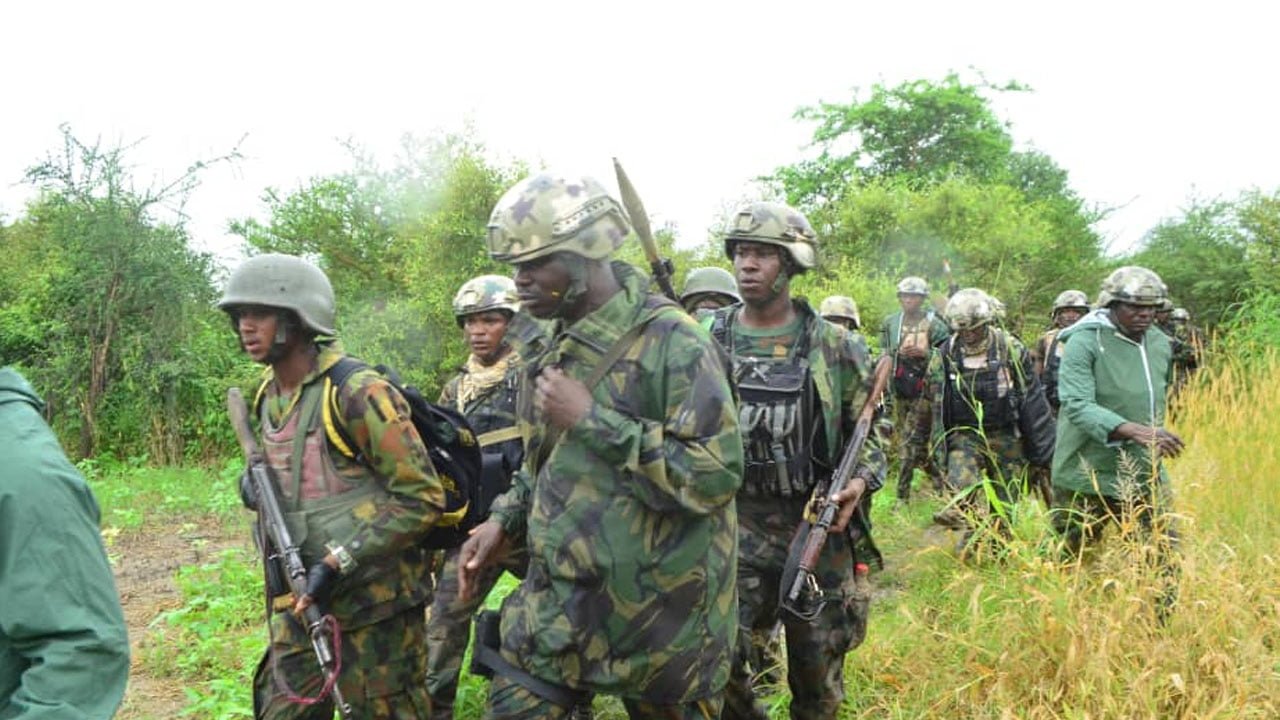
Security forces in Katsina State, Northern Nigeria, have announced the killing of 30 bandits following a counter-operation in Faskari Local Government Area.

The action came in response to attacks launched by the terrorists on three villages within the state on Tuesday.

The bandits had targeted the villages of Kadisau, Raudama, and Sabon Layi.

This prompted a coordinated response involving ground troops from the police and army, supported by the Nigerian Air Force.

The joint operation successfully neutralized 30 terrorists.

However, the engagement resulted in the loss of five security personnel and one civilian.Katsina State Commissioner for Internal Security, Dr. Nasir Mu’azu, confirmed the success.

He stated that security forces, acting on prior intelligence about the bandits’ planned attack, deployed personnel from Dandume and the Nigerian Air Force to intercept the assailants.

“After a prolonged gunfight involving ground and air assets,” Mu’azu said, “the bandits’ attempted attack was successfully repelled.”

Katsina State is located in Nigeria’s troubled North-West region, which has endured persistent bandit attacks leading to significant loss of lives and property.

Kano bans importation of metal scraps from North East

By Anwar Usman

The Kano State government has ordered a temporary stoppage of the importation of metal scraps and waste materials from the Northeastern states, especially those ravaged by the Boko Haram insurgency.

The order is contained in a press statement by Muhammad Dahir Idris, the Director of Public Relations and Enlightenment of the ministry, which was made available to journalists.

According to the statement, the commissioner for Internal Security and Special Services, AVM Ibrahim Umaru (Rtd), gave the directive on Wednesday during a meeting with the leadership of the National Association of Scraps and Waste Dealers, Employers of Nigeria.

Umaru said the order was due to the recent bomb explosion at the warehouse of such scrap materials along the Western Bypass Road and the Kofar Ruwa, which resulted in the loss of lives and properties.

He urged members of the association to take preventive measures aimed at preventing such occurrences and ensure that explosives are not present in scrap materials before they are imported into the state.

“As Kano State will continue to protect your interest and your business, you should come up with a written policy and plans that will boost your business,” the commissioner urged the association.

On his part, the Regional President of the association, Aminu Hassan, informed the commissioner that his association had already ceased purchasing scrap and waste materials from states affected by the Boko Haram insurgency in the Northeast.

He assured Umaru that they would continue to be law-abiding business partners, just as he emphasised the need for the Kano State government to support them in improving their businesses.

The president further outlined some challenges bedevilling the association, including the inflow of underage children as scavengers, even as he readily disassociated the group from any form of involvement in the use of children as scavengers in the business.

However, he blamed the parents or guardians of such children and wards for their poor moral upbringing.

Hassan assured the commissioner that his association would not relent in its efforts to prevent the future occurrence of such incidents.

Six child traffickers sentenced to 120 years in prison in Kano

By Hadiza Abdulkadir

A Kano State High Court has handed down a combined sentence of 120 years to six members of a notorious child abduction and trafficking syndicate found guilty of abducting and selling children under the age of 10.

The convicts, who operated between Kano and Onitsha, Anambra State, were charged with multiple counts of child abduction, trafficking, and conspiracy. According to court records, the group abducted several young children from various parts of Kano and trafficked them across state lines to Onitsha, where the children were sold.

Justice Zuwaira Yusuf, who presided over the case, found all six guilty as charged and sentenced them to various prison terms without the option of a fine.

Justice Yusuf described the crimes as “heinous and inhuman,” noting that the syndicate’s actions had caused “unimaginable trauma to innocent families.”

She sentenced Mercy Paul to 55 years imprisonment, Ebere Ogbono to 41 years, Emmanuel Igwe to 9 years, Loius Duru to 6 years, Monica Oracha to 5 years, and Chinelo Ifedigwe to 9.

The verdict follows years of investigation and cooperation between security agencies in Kano and Anambra. Parents of the abducted children expressed relief at the ruling, calling it a step toward justice.

Authorities say efforts are ongoing to rescue the remaining missing children and dismantle the broader trafficking network.

Group applauds massive turnout for Governor Yusuf’s welcome rally

By Uzair Adam 

The Kano State Governor, Abba Kabir Yusuf, witnessed a mammoth gathering on Thursday as thousands of supporters lined the streets to welcome him back from the Kingdom of Saudi Arabia, where he had gone for the Hajj pilgrimage.

The Daily Reality gathered that what is ordinarily a 30-minute drive from the Mallam Aminu Kano International Airport to the Kano State Government House took several hours due to the massive turnout of well-wishers who accompanied the governor’s convoy amid chants, music, and the waving of red caps — the symbol of the Kwankwasiyya Movement.

Commending the solidarity and support shown to the governor, the AKY Go Again Movement, in a statement on Sunday, expressed deep appreciation to the people of Kano, political and non-political groups, and government officials for their overwhelming participation in the reception rally.

The statement, signed by Hon. Ramadan Yusuf on behalf of the group, described the turnout as a clear demonstration of loyalty and love for Governor Abba Kabir Yusuf and a reaffirmation of the strength of the Kwankwasiyya Movement under the visionary leadership of Senator Rabiu Musa Kwankwaso.

“We organised this grand reception to show appreciation for the impactful and transformative leadership of Governor Yusuf, and to publicly declare our unwavering support for his continuity in office beyond 2027,” the statement read in part.

The group said Governor Yusuf’s people-first leadership style, dedication to restoring dignity in governance, and delivery of key developmental projects have set Kano on a path of progress and prosperity.

It added that the AKY Go Again Movement will continue to serve as a strategic platform to mobilise grassroots support, highlight the administration’s achievements, and promote the ideals of progressive leadership espoused by the Kwankwasiyya philosophy.

The statement listed key members steering the movement, including Alhaji Tijjani Hussain Gandu (SSA Mawallafa), Hon. Sadeeq Kote (Chairman), Hon. Abdullahi Sarki Fulani (SSA, Kano State Censorship Board), Hon. Abubakar Muhammad Inuwa (SSA on Reformatory Institutes), Hon. Sulaiman Mukhtar Bichi, Hon. Ramadan Yusuf (SSA on Media Monitoring and Innovation), Hon. Aminu Yanmedi, Hon. Yakubu Kubaraci, and Hon. Shamsu Kura.

The movement prayed for Allah’s continued guidance and protection for Governor Yusuf as he continues to serve the people of Kano State.

Emirate dispute cast a shadow over Eid-el-Kabir prayers in Kano

By Fatima Ishaq Muhammad

Kano, known for its deep Islamic practices and royal traditions, witnessed a historic and uneasy moment during the 2025 Eid-el-Kabir celebrations as two rival Emirs led separate congregational prayers in different parts of the city.

This development demonstrated the woeful crisis over the leadership of the Kano traditional Emirate, which, indeed, remained one of the most powerful traditional institutes in northern Nigeria.

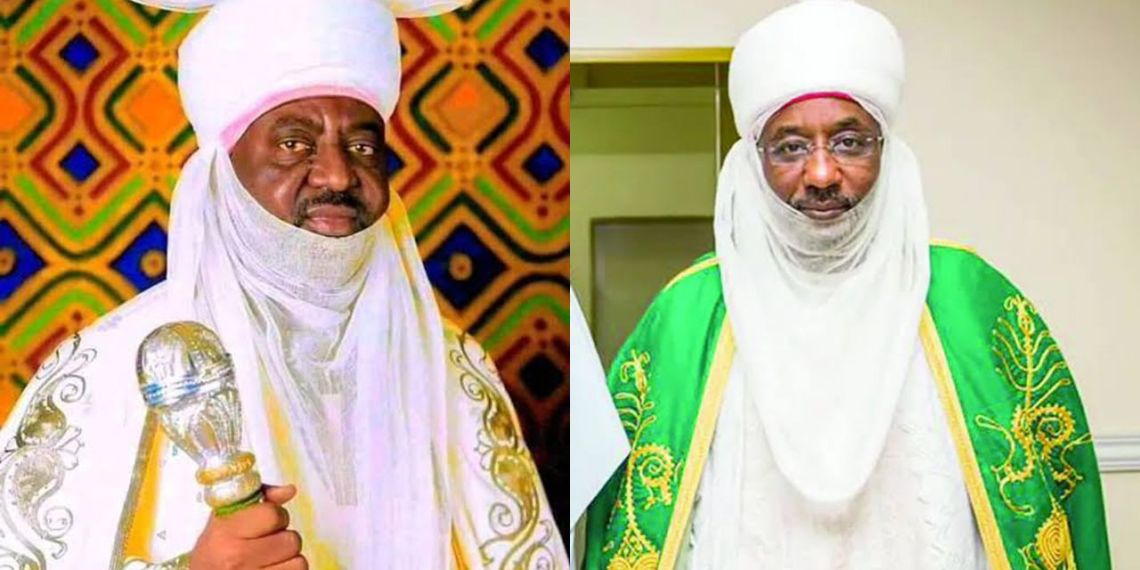
Moreover, on one side was Emir Muhammadu Sanusi II, reinstated in May 2024 by the Kano State Government after being dethroned in 2020. Aminu Ado Bayero was installed as Emir on the other side after Sanusi’s removal. He still maintains that he remains the rightful occupant of the royal seat.

During the Eid celebrations, Emir Sanusi II led prayers at the Kofar Mata Eid Ground, traditionally recognized as the seat of the Emir’s religious leadership.

Meanwhile, Emir Aminu Bayero held his prayers at a different location, with loyalists gathered around him. For the first time in recent memory, Kano experienced two major Eid congregations, each holding up to a divided royal allegiance within the ancient city.

This unprecedented situation did not happen in isolation, but it resulted from the recurring tussle over the Kano Emirate, rooted in politics and personal rivalries.

Sanusi II’s removal in 2020 by the administration of former Governor Abdullahi Ganduje was widely termed as punishment for his massive outspoken criticism of the government.

His reinstatement by the current government of Governor Abba Kabir Yusuf has been challenged in court by Bayero’s supporters, creating legal and political uncertainty over who the legitimate Emir of Kano is.

The split Eid prayers skyrocketed across Kano and beyond, symbolizing the Emirate’s division and disunity of authority.

What should have been a day of religious unity became a visible sign of division in the state’s leadership. Thankfully, no major disturbances were reported, though tensions remain high.

Adding to the complexity of the situation, the traditional Durbar festival, which usually follows the Eid prayers, was banned by the police for security reasons.

The ban disappointed many residents, as the Durbar is integral to Kano’s cultural identity and economic life.

As the legal battles escalate, many residents and observers fear that the division within Kano’s traditional leadership could escalate unless a clear resolution is provided by the courts or through dialogue among key stakeholders.

For now, Kano remains a city with two Emirs, two congregations, and a divided loyalty, awaiting clarity on the future of one of northern Nigeria’s most important royal institutions.

Fatima Ishaq Muhammad via fatimaishaq021@gmail.com.