Local

Bandits kill policemen in Zamfara

By Muhammadu Sabiu

Armed bandits on the Gusau-Sokoto route in Zamfara’s Bungudu Local Government area are reported to have slain four police officers.

According to a local who identified himself as Haruna Musa, the bandits ambushed and shot the police officers who were on duty on the road on Monday.

He stated that the bandits opened fire on the police officers who were stationed at a roadblock they had set up not far from Bungudu town, killing four of them.

Musa was quoted as saying, “The police officers were on duty and mounted a roadblock not knowing that the bandits were hiding in a bush near the roadblock.

“The bandits suddenly came out of their hiding place and opened fire on the police officers, killing four of them.”

The Daily Reality (TDR) understands that the police public relations officer in the state police, SP Yazid Abubakar, confirmed the attack.

However, he noted that he was not aware of whether or not a police officer was killed during the attack.

Sokoto Governor denies staff entrance to Government House 

By Ahmad Deedat Zakari

Sokoto State Governor, Ahmed Aliyu, denied entrance to members of staff of the Government House over lateness to work on Thursday. 

The governor drove to the Government House at about 8:30 to the reality that most of the staff were not in their offices and duty posts. 

According to reports, the governor only met cleaners and a nurse at the Government House Clinic. Consequent to the development, he ordered the security to lock up the gate and not allow entrance to anyone.

Speaking on the decision, the governor explained that “This is not a matter of joke.

 “What is expected from any serious government is to ensure timely payment of workers’ salary.

 “When I came in, I paid two months’ salaries within three weeks.

 “That is why I drove myself to the office because my driver did not come in time.

 “But I will not tell you my next line of action because you, too, came late (referring to the interviewers),” he said.

 The governor added that “I promised the people of Sokoto State that I would not betray their trust nor allow any public officers to do so.

 “You either work or return our money. You cannot collect our money without justifying it,”

Gunmen killed vigilante in Kogi East

By Ahmad Deedat Zakari

Gunmen has shot and killed a vigilante in Ankpa Local Government Area of Kogi State. The victim, simply identified as Mustapha, was gunned down by unknown persons in the late hours of Saturday at the Ejeh Palace gate.

The attack is believed by many residents of to be politically motivated. A resident of who spoke to the Daily Reality on the ground of anonymity said: “Some powerful persons in the state want to instill fear in the voting population in the eastern part of the state.”

Another resident who spoke out of fear and sought not to be in print, disclosed that attacks on individuals have been on the increase since the conclusion of party primaries and as the state prepares for December gubernatorial election.

Daily Reality has gathered that the residents have threatened to arm and defend themselves if the culprits are not brought to justice by the government. As of the time of writing this report, the police is yet to comment on the issue.

Woman murdered, set ablaze over accusation of witchcraft

By Uzair Adam Imam

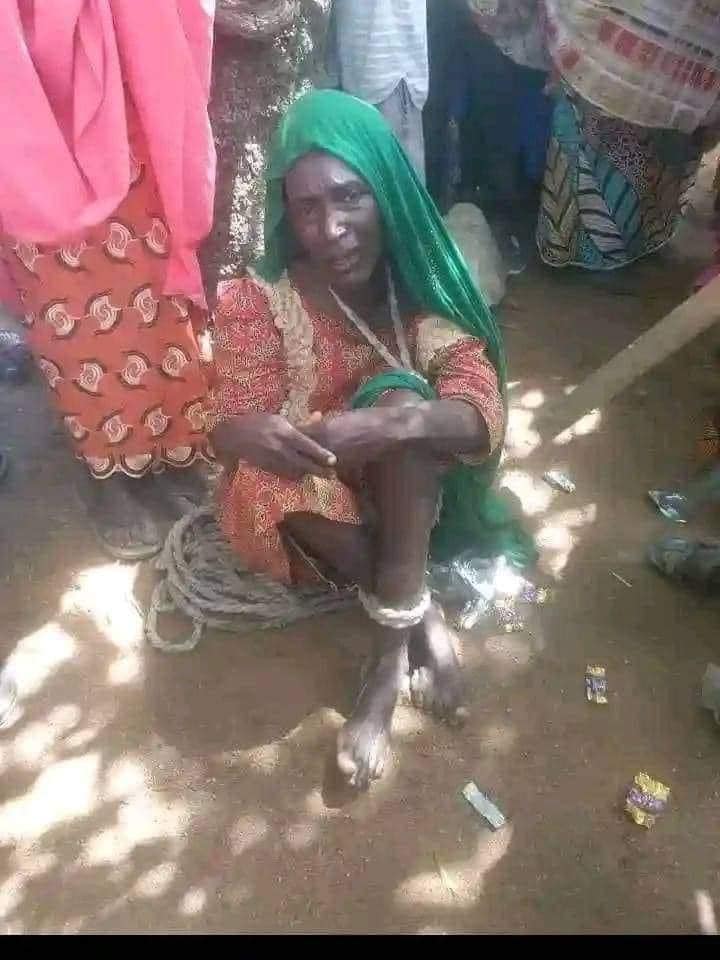
A mother of four in Cross River State, Mrs. Martina Itagbor, was murdered by some frustrated youths over accusation of a witchcraf in Akamkpa Local Government Area of the state.

The deceased was accused of witchcraft following the death of two brothers in a motor accident. It was on the heels of the accusations that the mother of four was beaten to death and her fingers chopped off.

It was reported that the frustrstrated youths also set her dead body ablaze, a development many people described as horrible.

The Commissioner of Police, CP Gyogon Grimah, directed that the perpetrators be tracked down, arrested and prosecuted according to the law.

This was relayed Saturday in a statement by the Command’s PPRO, SP Irene Ugbo, and made available to journalists in Calabar, the state’s capital.

The statement reads in part, “The issue of jungle justice is one crime that the Police does not take lightly and, as such, we have already commenced manhunt for those responsible for the dastardly act.

“Those responsible, no matter how highly placed, will be arrested and prosecuted according to the laws of the land.

“We are going to treat them like the criminals that they are, and no stone would be left unturned on this matter.

“They can only run but won’t hide. Enough is enough. Jungle justice is not the solution.All those involved in the murder of Mrs Itagbor would be brought to book, and the law will take it’s full cause. We won’t relent until they are in our custody,” CP Grimah assured.

Kano State governor swears in 19 commissioners

By Muhammad Abdurrahman

Today, the Executive Governor of Kano state, Engr. Abba Kabir Yusuf, swore in his newly appointed commissioners and assigned them to their respective ministries.

During the governor’s speech, he urged the appointed commissioners to prioritize honesty and sincerity and avoid any involvement in corrupt practices.

The commissioners and their ministries are as follows:

1-Comr. Aminu Abdulsalam  – Ministry for Local Government

2-Hon. Haruna Umar Doguwa -Commissioner for Education

3-Hon. Ali Bukar Makoda -Commissioner for Water Resources

4-Dr. Abubakar Labaran Yusuf – Commissioner Ministry of Health

5-Engr. Marwan Ahmad – Commissioner Ministry of Works, Housing and Infrastructure

6-Barr. Haruna Dederi – Commissioner Ministry for Justice

7-Dr. Yusuf Kofar Mata – Commissioner Ministry for Higher Education

8-Hon. Nasiru sule Garo-Commissioner Ministry for Environment

9-Engr. Muhammad Diggol – Commissioner Ministry for transport

10-Hon. Abbas Sani Abbas-Commissioner Ministry for Commerce and Investment

11-Hon. Hamza Safiyanu-Commissioner Ministry for Rural Affairs

12-Dr. Danjuma Mahmoud -Commissioner Ministry for Agriculture

13-Hon. Musa Sulaiman Shanono – Commissioner Ministry for Budget and Planning

14-Haj. Ladidi Garko -Commissioner Ministry for Culture and Tourism

15-Hon. Adamu Ali Kibiya – Commissioner Ministry for Land and survey

16-Hon. Tajuddeen Othman- Commissioner Ministry for Science and Technology

17-Hon. Baba Halilu Dantiye – Commissioner Ministry for Information

18-Sheik Tijjani Auwal – Ministry for Religious Affairs.

19-Aisha L. – Commissioner Ministry for Women Affairs

Majma’al Bahrain: Arabs in Kano II – the sequel

By Prof. Abdalla Uba Adamu

My posting about MU Adamu’s 1968 paper on the influence of Arabs on Kano culture, economy and religious practices has ignited a few responses of personal nature from some readers interested in their own interconnected life stories. This is a follow-up and update.

I think it is wonderful that we begin to interrogate our past so that we can appreciate our present in order to make better plans for the future. We were all besotted with this implausible concept of ‘Hausa-Fulani’ that we tend to ignore other genetic tributaries that constitute the Hausa genetic pool, especially in Kano. Such Majma’al Bahrain is either unknown to many or ignored. Bringing it out means that the ethnic picture of the Hausa is more than the mingling of the Fulani genes with the Hausa – there were dashes of Arab in there thrown for good measure.

For the most part, the Arab voices had been silent. I think it is time for them to voice out their life histories in conversations with their elders. Not to further divide a monolithic Hausa society but demonstrate how the Hausa have been developing into distinct, absorptive people. Clearly, then Hausa is not a language but a people. Ask any individual in Kano with ‘Fulani’ or ‘Arab’ ancestorial roots, and they will tell you they are Hausa, ‘even though my grandmother is Fulani/Arab/Russian/Greek, etc.’

Let’s split hairs here. Having different languages but the same skin colour – whether you are black, white, brown, yellow or (if an alien) green, and submitting to the same central, national governing authority makes you ‘ethnic’. Having the same attributes but without recognition of national authority, only blood and kinship ties make you ‘tribal’. Separation across skin colour is a race, not an ethnic issue. Arabs are a separate race from Africans. So, what happens when the racial divide is crossed (bred)? Will a new ‘race’ emerge?

The Arabs’ contributions to the economy and culture of Kano are far more than any other ethnic group, including the Fulani. Consider the Yemeni alone and their massive contributions to the animal skin trade in northern Nigeria. Initially ‘imported’ as Italian trade agents from Yemen in the early 20th century, they have now become domesticated to the Hausa society. Yes, they are light-skinned, and quite a few speak Arabic; but the mid-generations have lost the Arabic language. As a ‘minority’ group, they intermarried with local African women and their offspring contributed to the sustainable development of culture and life in Hausa societies without the consciousness of being ‘the other’. What are then the cultural specificities that tie them to the Arab world? Can it be in dress, language, food, existential rites and rituals (birth, living, death)? How do theirs – if at all present – differ from those of the Hausa?

Then consider the Lebanese and their input into the goods and products found in various Kano markets – including their influence all over West Africa. They are less integrative with their African hosts but have been linguistically domesticated, and for all intents and purposes, many self-identify as Hausa and retain some living rituals (e.g., food habits). This is an area initially mapped out by Sabo Albasu’s monumental groundbreaking research, “The Lebanese in Kano” (which is based on his 1989 doctoral thesis), and unfortunately, not much else was done on such a scale by other people. I wish he could update and re-print it, as now, more than ever, is the time for it.

The Sudanese, more than the other Arabs, had integrated more effectively into northern Nigerian Hausa communities, perhaps due to the gradation in their skin colours – from extremely dark to extremely light – than either the Tripolitanians, Yemeni, Lebanese or Syrians/Jordanians, whose clearly light skins made them stand out in any group. Establishing themselves in the city of Kano at Sudawa (Sudanese settlement), they formed part of the identity of the Kano city populace.

The Sudanese influence was also more intellectual. While they were instrumental in trade, their main contribution was in education. For instance, when the School for Arabic Studies – undoubtedly the Oxford of Arabic Studies in Nigeria – was established in 1934, it was to Sudan that inspiration was sought, including the teachers. Even what later became Bayero University Kano was first headed by Abdullahi el-Tayyeb, a Sudanese. No talk of Sudan itself being a destination for studies at all levels by northern Nigerians. You don’t see such rush for education in Lebanon or Yemen.

While rummaging through the caverns of an old abandoned hard drive, I came across a booklet that Kantoma (Muhammad Uba Adamu) had asked me to extract from his “Confluences and Influences” as a standalone paper (presented in 1998) and later with additional material, as a booklet. We named it “The Presence of Arabs in Kano”. Lack of funding prevented its publication, but I was able to get it published as a paper in a book project. A link to the paper is given at the end of this posting.

For those interested, I have included the table (from the paper attached) of the 25 Arab-dominated Kano inner city wards. I did this because not many would have the time to read 43 pages of the paper!

Adamu, Abdalla Uba. 2014. The presence of Arabs in Kano. In A.I. Tanko & S. B. Momole (Eds.). Kano: Environment, Society and Development (pp. 125-164). London & Abuja: Adonis & Abbey Publishers.

Or: https://shorturl.at/dgzW0

Kano Demolition: Doctor who built house with overseas loan begs Abba

By Uzair Adam Imam

A Nigerian doctor based in Russia has pleaded with the Kano State Governor, Engr. Abba Kabir Yusuf, to spare his newly built house from demolition.

The doctor, whose name is withheld, told Kano Chronicle that he borrowed almost $500,000 and added his savings of $500,000 to build the house.

The passionate plea to the governor was in a letter written by the doctor, which Kano Chronicle shared on its verified Twitter handle.

Recall that the governor had decided not to back down on demolishing illegal structures built by his predecessor.

Abba’s administration had torn down a three-storey shopping complex located at Race Course Road, Nasarawa GRA, with 90 shops, Daula Hotel and other buildings at Hajj Camp, to mention but a few.

However, the doctor, who insisted that he put the house up for N500,000,000, pleaded with the governor to spare his home, adding that he would be at a loss if the house is demolished.

He stated, “I spent close to 8 years working in Russia now, and I have developed a successful business. So I decided to take a loan on my business name and use my savings to move to real estate back in my home state Kano Nigeria. I borrowed close to $500,000 and added $500,000 together with saving from some family members to buy land for 15,000,000 nairas and build a mansion on it.

“My home has been completed, sir, and I have even put it on the market to service my debt due to the economic situation in Nigeria. I won’t even make a profit on it. I will take a loss because I put the house up for 500,000,000 Naira as a distress sale.”

“Yesterday, I was informed that (Knupda)  has marked my house for removal, and I followed all instructions before building. I got their approval and a C of O . I didn’t put up a single block on that land until (Knupda)  gave me approval. Please consider my situation, sir. 

“If that house is taken from me. I will be in very serious financial problems coupled with the debt I took for the building,” he added.

Kano, know your Comrade

By Murtala Sani

Beyond the eloquence and vibrancy that are attributed to the newly elected Deputy Governor of Kano State under the platform of New Nigeria Peoples Party (NNPP), Comrade Aminu Abdussalam Gwarzo, there are other special qualities that earned him the title of a Comrade. His entire life, from teenage to date, is spent in the struggle for the betterment of the lives of the people.

Comrade Aminu Abdussalam Gwarzo was born at Gwarzo Local Government, Kano State, on 6th November 1960. He was set for the quest for Islamic knowledge at Alkalawa Islamiyya and then transferred to Kofar Fada Islamiyya, all in Gwarzo town. He was later enrolled into Gwarzo Central Primary School from 1966 to 1972 and then proceeded to Kano Educational Development Centre (K.E.D.C) in 1973 for Secondary School Education.

Within one year, Aminu was transferred to Kano Teachers College (K.T.C) and graduated from the college in 1977. In the same year, he started teaching at Kara Primary School on 1st July 1977 for six months, when Kano and Jigawa States were in the folder old Kano State. The brilliant young Aminu was the youngest primary school Headmaster when he headed Salihawa Primary School in Gwarzo Local Government.

In his quest for more knowledge, Aminu got admission into the School of Management Studies, Kano State Polytechnic, in 1981, where he obtained a National Diploma in Banking and Finance, the qualification that propelled him to get a new job at the Kano State Board of Internal Revenue in 1986. In the same year, Aminu was re-admitted to the same School, School of Management Studies, Kano State Polytechnic, and bagged Higher National Diploma in the same course, Banking and Finance. In 1988, Aminu received his National Youth Service Certificate (NYSC) after serving as a corps member at Nigerian Mining Corporation, Jos, Plateau State.

As a youth, the comradeship of Comrade Aminu started manifesting glaringly when his activism beckoned him to join Gwarzo Youth Progressive (GYPA) in 1980. The Association was founded in 1979, but he became its first Chairman in 1981 due to his immense struggle to bring positive change within his society. The dominant role he played in stabilizing the then embattled Gwarzo Development Association (GDA), an association of Gwarzo elders, made the elders accommodate the useful Aminu into their association. They also considered his impact on the progress of GYPA, especially the way his wonderful leadership brought huge development within Gwarzo Local Government.

As a civil servant, his activism earned him the seat of Interim Secretary General of the Nigerian Union of Teachers (NUT) of the Gwarzo branch in 1981. Again, he became the Secretary-General and then Chairman of the National Civil Service Union (NCSC) board. Noticing his charisma while steering the leadership of the Union in the board, the then Chairman of Nigerian Labour Congress (NLC), Kano State, Comrade Baffa Gaya, suggested that talented people like comrade Aminu should not be limited to a low level. Therefore, Comrade Aminu was propelled to the position of Auditor General of the Nigerian Civil Service Union (NCSU), Kano State branch, from 1987 to 1991.

After carving Jigawa State out of Kano State, Aminu Abdussalam clinched the seat of Chairman National Civil Service Union, Kano State. As a politician, the Comrade was among the seven Local Government Chairmen that initiated the formation of the Association of Local Government Chairmen of Nigeria (ALGON) in the whole Country. He was the pioneer Chairman of ALGON in Kano State. He was the pioneer National Co-ordinator of ALGON North-Western States comprising Kano, Kaduna, Katsina, Sokoto, Kebbi, Zamfara and Jigawa, and lastly, the pioneer National Auditor of ALGON.

His passion for the struggle for the masses led him to support Mallam Aminu Kano’s Peoples Redemption Party (PRP). He was also an active member of the Social Democratic Party (SDP), the political party registered alongside Nigerian Republic Congress (NRC) by General Ibrahim Badamasi Babangida. Comrade Aminu’s diving into mainstream politics was when he contested and got elected the Chairman of Gwarzo Local Government of Kano State in 1996 during the reign of General Sani Abacha’s military regime. After the formation of New Political parties by the same Government, Aminu vied for membership in the Federal House of Representatives to represent Gwarzo/Kabo Constituency under the umbrella of the Democratic Party of Nigeria (DPN). The controversial election declared his opponent, Alhaji Aminu Sule Garo of the United Nigeria Congress Party (UNCP), the winner of the election. Therefore, Aminu Abdussalam challenged the victory in court.

On 5th December 1999, Comrade Aminu Abdussalam was elected as the Chairman of Gwarzo Local Government, Kano State, where he defeated Engineer Abdullahi Tijjani Muhammad Gwarzo, who contested under the platform of All Peoples Party (APP). His pragmatism led him to develop Gwarzo through the execution of countless developmental projects, providing employment and other humanitarian activities. This moulded him to become a strong political clout in the stream of Gwarzo Politics. From 1999 to 2011, Comrade Aminu was the Director General of Senator Bello Hayatu Gwarzo’s Campaign Organization, the leadership that hugely contributed to the victory of the senator throughout his four Senatorial races. During the Presidency of late Alhaji Umaru Musa ‘Yar’adua, the Comrade was appointed the Federal Commissioner of the National Assembly Commission.

When Dr Rabi’u Musa Kwankwaso was re-elected as the Governor of Kano State in 2011, he appointed Comrade Aminu Abdussalam as the Commissioner of Monitoring and Evaluation. Satisfied with his hardworking, honesty, trustworthiness and loyalty, Kwankwaso promoted him to the position of Commissioner of State Affairs, thus, occupying the office very close to the Governor. The duo decamped to the All Progressives Congress (APC) and supported Dr Abdullahi Umar Ganduje to become the state’s governor. In President Muhammadu Buhari’s tenure from 2015 to 2019, Comrade Aminu was appointed the Chairman Governing Council of the Federal College of Education, Kwantagora.

After the eruption of a feud between Kwankwaso and Ganduje, Comrade joined his boss, Kwankwaso, by decamping back to PDP, where he and Abba Kabiru Yusuf contested for Deputy and Governorship seats, respectively, in 2019. Although they won against Ganduje with more than twenty thousand votes, the election was declared inconclusive by the Independent National Electoral Commission (INEC) due to the controversy that trailed the election. Again, Comrade and Abba contested and won the election against Nasiru Yusuf Gawuna and Murtala Sule Garo under the platform of the New Nigeria People’s Party (NNPP) during the 2023 gubernatorial election.

One of the greatest challenges against Comrade Aminu was when he was contesting for Member at the Federal House of Representatives to represent Gwarzo and Kabo Constituency. At that moment, more than twenty of his prominent supporters were arrested by the forces challenging his candidature. This made others flee from Gwarzo to other hidden places within and outside Kano State, seeking refuge.

At the same time, Comrade’s house was invaded by political goons who attempted to break into his house and assassinate him. With the help of his die-hard supporter, a ladder was erected for him and his entire family and escaped to his neighbouring house. This forced him to run for political asylum in the Cameroon Republic, but on his way, he found refuge in Gombe State. Again, the Comrade escaped lynching by some political thugs in 2003 at the Madadi ward of Gwarzo Local Government when they set his official car ablaze.

Every discerning mind could detect Comrade Aminu’s erudition and intellectual analysis either on the podium of a political campaign or interview. He expresses himself with facts and figures while debating. He laces his speech with quotes from Qur’an or Hadith.

Comrade faces a lot of criticism, one of which is his austerity measures at home office or public. He doesn’t pamper his children to run a luxurious life. He doesn’t embezzle government funds or throw money at his followers. Furthermore, Comrade frowns at favouritism and nepotism. He only relies on creditability and merit. Moreover, he detests thuggery and bloodshed; he allows things to flow naturally. More so, the Comrade doesn’t hesitate to get his beautiful, educated and morally sound children married to commoners or children of commoners.

The Comrade has two wives with twenty-three children.

Murtala Sani, a lecturer at Kano State Polytechnic, writes from Kano.

Dispute resolution committe a solution to phone snatching – Sheikh Daurawa

By Aisar Fagge and Uzair Adam Imam

Sheikh Aminu Ibrahim Daurawa, a renowned Kano-based Islamic cleric, has challenged people to establish a dispute resolution committee as the “only solution” to the menace of phone robbery rocking our states.

The sheikh stated this in a symposium Saturday organized by The Muslim Forum of Nigeria in collaboration with Al-Istiqama University Sumaila, Kano and the Muslim Students Society of Nigeria (MSSN) Kano chapter to discuss the way forward to put to an end the menace of phone snatching in Kano state.

The Islamic cleric stated, “We must come together and analyze how and why these thugs are into this kind of business before we can address it. Any ward should establish a dispute resolution committee that would include parents, traditional leaders, Islamic clerics, teachers, security personnel, retired civil servants and lawyers to ensure discipline and exemplary character among the youth in the area.

“The committee will help provide jobs for the unemployed youth, enrol them into schools, empower orphans and widows, and form vigilante committees, among others.

“This committee will also assist the security personnel with an intelligent report on any unknown persons or suspicious act,” Daurawa stated.

The speaker reiterated his stance on parents who give birth to kids they cannot care for or moralize.

Daurawa said although Prophet Muhammad (peace be upon him) encouraged marriage and giving birth, he would never be proud of a useless crowd of spoiled kids and thugs.

He also called on the government’s intervention through empowerment and provision of skills acquisition centres for the youth.

In the symposium that hosted security personnel, traditional rulers, analysts, journalists, Islamic clerics and university dons, Daurawa empowered two phone snatchers with N100,000.

Governor Namadi Relieves Chairmen, Board Members, Head of MDAs

By Muhamamad Suleiman Yobe

Jigawa State Governor Malam Umar Namadi has relieved chairmen, board members and chief executives of parastatals of their appointments with immediate effect.

This was contained in a statement signed by the Permanent Secretary, Administration and Finance, office of the Secretary to the Government of Jigawa State, Alhaji Muhammad K. Dagaceri.

The statement said “His Excellency, Governor Malam Umar Namadi has approved the relieve of appointments of Managing Directors, General Managers, Executive Secretaries, Chairmen and Members of Board of Agencies/ Parastatals with exception of Commissions.

“The statement explained that Career Executive Secretaries, Managing Directors and General Managers were excluded.”Accordingly, this exclude career Managing Directors, General Managers and Executive Secretaries ” the statement said.

The statement directed all the affected officials to hand over Government properties in their possession to the most senior officer in their organization.

The statement further added that “His Excellency, Malam Umar Namadi appreciates your contributions and wish you success in your future endeavours”.