Lifestyle

You can add some category description here.

Malaria: ‘Kano recorded over 2m hospital visits in 2021’ says commissioner

By Uzair Adam Imam 

Kano State has recorded more than 2.8 million hospital visits due to the menace of malaria in 2021, the Commissioner for Health, Aminu Tsanyawa, said.

Tsanyawa spoke yesterday at a press briefing to commemorate 2022 World Malaria Day.

This, according to Tsanyawa, made the disease the single most common reason for about 60 per cent of outpatient visitations and consultations in Kano state. 

However, Tsanyawa recalled that the Kano state government, in collaboration with its partners, did its best to mitigate the menace.

He said, “between July and October 202, the state government, in collaboration with its partners, administered more than 13,110,365 doses of malaria prevention drugs (sulfadoxine-pyrimethamine and Amodiaquine SP+AQ) with a view to preventing malaria and deaths in children under the age of five.”

Furthermore, Tsanyawa sounded a clarion call on residents to avail their children aged 3-59 months for the forthcoming 4-day cycles of mass distribution of malaria prevention drugs. 

Adverse effects of force-feeding infants

By Ja’afar Ja’afar

As your little one starts to explore the world of solid foods, he will learn to differentiate the tastes of different food items. This is where the struggle of a parent begins. Despite being a picky eater, making sure your child gets all the required nutrients can be frustrating. At times this frustration makes parents go overboard, and they pressurise their children to eat. Even though done with good intentions, force-feeding is never a good idea when it comes to the developing years of your child.

What is force-feeding?

Force-feeding is basically forcing your child to finish the whole served food against their will. When happy mealtimes turn into a war between parents and children with a plate full of healthy foods in between, parents generally end up using force-feeding as the ultimate strike. Even though it seems harmless, it never leads to a “win-win” situation and can do more harm than good to your child.

Instead of force-feeding your child to eat a particular food, try to prepare different variants of dishes, including that food along with the food groups your child enjoys eating.

How do parents force-feed?

Here are a few common ways parents tend to force-feed their children –

  • Deciding on your own what, when and how much your child should eat.
  • Nagging, scolding or threatening your child to finish his plate.
  • Bribing or blackmailing your child into finishing his food and rewarding him later.
  • Punishing your children if they don’t eat.
  • Comparing your child with siblings or other children to make them feel shame or competitiveness.
  • Literally forcing food into your child’s mouth and making him swallow.
  • Ignoring his pleas to eat less and using fear to force him to eat.

Force-feeding seems to get the work done for the time being and may give you the “mission accomplished” feeling too. However, it actually can have harmful effects on your child. Let’s discuss seven negative effects of force-feeding that are usually seen among children:

1. Destruction of your child’s natural appetite

The natural desire to eat is known as one’s appetite. During mealtime, constant nagging and force-feeding will make your child lose interest in food and disrupt your child’s natural appetite. Forcing your child too much may lead to him puking out everything and hating even the idea of eating.

2. Strong aversion towards food

Studies have shown that force-fed kids often end up developing a strong aversion toward food. The negativity associated with food makes them traumatised and nauseous. This aversion sticks around even when they grow up as these foods continue to subconsciously remind them of the panic and bad memories of childhood.

3. Stressful meal-times

It is in human nature to avoid anything that causes stress or discomfort. The only way a child will accept something is if they enjoy it while doing it. Forcefully feeding your child healthy foods on his plate can leave him with a stressful and unpleasant experience. Hence instinctively, he will only learn to hate mealtimes and continue to struggle with food.

4. Inclination towards sugary or junk foods

Force-fed children often learn to develop unhealthy food habits. This happens because a force-fed child never learns when to stop eating as they get accustomed to overeating during those force-feeding sessions. Also, due to their hatred towards healthy foods, they get attracted more to sugary or junk foods.

5. Lose control over their eating habits

As parents, your ultimate focus should be on making your child less dependent on you and learning to do everything themselves. But, the more you take control and force-feed your child, the less control he will have over his own eating habits. This will hamper his life and food habits even as he grows up.

6. Development of eating disorders

Since force-fed children never learn how much food their bodies require, they tend to overeat or undereat even when they grow up. This loss of control over eating habits can lead to serious eating disorders such as obesity, anorexia, bulimia, etc.

7. Disrupted eating pattern

Every human body has a different food capacity and metabolism rate. The amount you decide to give your child may be much more than his capacity to digest. If you force-feed him to finish the entire serving even after he tells you that he is full, you are feeding him an excess amount. He will need more time to digest that portion, so he won’t be hungry when you serve his next meal. As the cycle continues, your child’s natural digestive pattern will end up getting disrupted.

Ja’afar Ja’afar sent this article via mrjaafar64@gmail.com.

Photo grid

By Ismaila Academician

One could succumb to knowing why Europeans and Americans are so obsessed with photo-keeping culture. Every fragment of their life, whether small or insignificant, is captured in a photo collection that will be made available on display or neatly hidden in a safe for future use.

Although that is not part of my culture, I can reason that they keep a photo collection, contrary to what we think. The Europeans do that to keep memory down history lanes – pedigree, simply because, at times, that is one heck of a thing one can grow up to know about their family. For example, parents die leaving behind their children at much younger ages; the lost ones, the adopted ones, and those who find themselves in the orphanage may get to know and connect with their past from photos made available to them.

That’s their pop culture right before the present day when digital tools made photos even easy to capture and share with FAF, even on the go. But, unlike photo cards, digital images travel far away and faster than we can ever imagine. It also keeps memories longer than photo cards, free from any physical damage, such as loss, overuse, fire and water consumption, etc.

Despite the importance of keeping photos, I feel that we overdo it. Nowadays, we take unnecessary images that we could not even keep, and recently, it’s becoming like an addiction. We just found ourselves taking photos that are not only insignificant but smartly improper that sometimes pose threats to our peace of mind.

On many occasions, photos land us in big troubles: many people lost their jobs, some were convicted and tried; it broke marriages, shattered dreams, and made rich people poor. However, sometimes the photos we take belie our sense of humanity. For example, sharing pictures of victims of a ghastly accident is more horrible than sharing nudes.

Although photos motivate and make things extremely simple, sometimes they appear to be fallacious and discouraging, and when that happens, it does more harm than the purpose it was captured for. Thus I advocate for photos for a good cause.

Ismaila Academician wrote from Kano via ismailaacademician@gmail.com.

Towards fighting drug and substance abuse

By Kabir Fagge Ali

The rate of drug and illicit substances abuse among Nigerian youths is alarming. It is heading towards a national emergency, which should be considered and treated appropriately with the kind of attention it deserves in our today’s modern society.

According to the United Nations Office on Drugs and Crime (UNODC), in the last 24 years, cannabis potency has increased by as much as four times in parts of the world, even as the percentage of adolescents who perceived the drug as harmful fell by as much as 40 per cent.

This is despite the evidence that cannabis use is associated with various health issues and other harms, especially among regular long-term users.

Meanwhile, a worrisome development that should not be treated with levity is that there are 11 million cannabis users in Nigeria, a third of whom seem to be regular users needing drug counselling.

Similarly, the world drug report further noted that “Between 2010 and 2019, the number of people using drugs increased by 22 per cent, owing to global population growth. Based on demographic changes alone, current projections suggest an 11 per cent rise in the number of people who use drugs globally by 2030 – and a marked increase of 40 per cent in Africa due to its rapidly growing and young population. In Nigeria, this would signify that the country will have to grapple with approximately 20 million drug users by 2030, further deepening the public health and public security challenge”.

Recall that the Chairman of the National Drug and Law Enforcement Agency (NDLEA), Buba Marwa, a retired major general, while reeling out some statistics, said Nigeria was not only the highest user of cannabis worldwide but that revelations from kidnapped victims had corroborated the facts that illicit substances were enablers of insecurity currently plaguing the country.

He noted, “it is not difficult to conclude that drugs have been catalysts of terrorism, kidnapping, banditry, armed robbery and various violent conflicts currently troubling the country.

The consequences of drug abuse can never be overemphasized, as it has birthed a lot of problems not only in the family but in the nation and the international community. Medical issues associated with drug abuse include mental disorders, liver cirrhosis, lethargy, irritability, and heart disorders. Studies also reveal that drug addiction contributes largely to social consequences such as internet fraud, gang formation, disruption of normal educational activities, cultism, violence, armed robbery, kidnapping, rape, sexual abuse, and reduced productivity.

Experts asserted that so many factors are responsible for indulging youths in drug and substances abuse worldwide. These include but are not limited to reasons such as; Parental abuse, depression, peer pressure, peer group influence, the proliferation of quacks in the drug trade, early childhood and adult trauma, and environmental circumstances.

Drug and alcohol abuse in Nigeria are serious problems and has mainly contributed to the sorry state of our dear nation. Therefore, we can no longer continue to ignore the implication of such action as it poses a threat to our lives and that of the upcoming generations.

Talking about the way out – the government alone cannot eradicate this social menace. It is a joint task involving every individual, community, family, school, civil society, religious organization, the media, business entities, and traditional leaders to halt the ugly trend.

Most of these drug abusers are jobless individuals roaming about the streets. Thus, the government should step up an effort to provide them with jobs, while others could be empowered with the necessary skills and tools to start their own business to carter for themselves and their family.

Again, the government should remember that stemming the tide of drug abuse is akin to solving the security challenges currently bedevilling the country. The time to take action is long overdue.

Fagge is a Student of Mass Communication at Skyline University Nigeria. He sent this article via faggekabir29@gmail.com.

Social media is another world

By Musa Idris Panshekara

The first human being was created single. Then another creature was created from him. Later all generations were created from the two. Then they were all dispersed on the face of the earth. Some are black, some are yellow, some are tall, some are short while, some are medium, some are fat, and some are thin. All these differences were prescribed for us to contemplate God’s creatures and better interact with one another.

Allah said in the glorious Qur’an, “…the camels, mules and donkeys (were created) for travelling and luxury, and He creates (continuously) what you (companions of the prophet and we) would not know.”

Allah, the alpha and the omega, the omnipotent, the omniscience and the omnibenevolent, knows all that human beings need for their better survival on this globe. That is why He creates us and provides us with all we will rejoice in in our lives.

As a result of technological advancement, it makes life expedient. As a result, the world has become small, and what are remote are brought closer. However, the ubiquity of cell phones resulted in a constant increase in social media users, whereas social media helps get the world close to one another too. These platforms are; Facebook, WhatsApp, Instagram, Twitter and Tiktok.

Some social media users utilise it in a meaningful manner, while others misuse and abuse it. The constant increase of users increase social media abuse. As a result, cybercrimes such as cyber fraud, phishing, social engineering, etc., also increase. On the other hand, some use it in a beneficial and meaningful manner, such as teaching and learning, mentorship, digital marketing, etc.

Some people think social media brings, helps, and contributes to spreading some acts of immoralities. In contrast, some condemn the entirety of social media and label it a means of spreading numerous immoralities in our society. Nevertheless, I can neither deny nor accept all the claims.

Let us scrutinise the following analogies;

The producer produces cups and sells them in the market; consumers buy. Some will use them to drink water and tea, while some will use them to drink intoxicant drinks and other alcoholic beverages, and some will even use them to feed others with poisonous drinks. Therefore, how could the cups be blamed for the above mentioned positive and negative uses? You use your cup and drink cool water or juice. What if I use mine for drinking poison and committing suicide? Whose fault is that? The cup? Never!

Moreover, medicines are made to cure diseases and illnesses, but some people use them otherwise. If a hacker uses a computer and commits malicious acts like fraud, phishing, or hacking someone’s device, whose fault is it? The hacker or the computer? Allah created the world and its contents (social amenities) for human beings to enjoy and perform their prescribed worships (for them to be rewarded in the Hereafter). If humans did not utilise the opportunities and provisions provided to them righteously, who would be blamed?

Social media is no different from the physical world in so many instances. There are friends and acquaintances, family and relatives, teachers and students, mentors and mentees, just like the physical world. But, despite all these, it does not prevent someone from doing what they desire to do on social media. Similarly, all the personalities mentioned above do not prevent someone from misbehaving in the physical world.

We should not call social media terrible or obnoxious. On the contrary, social media is innocuous itself operated by humans. Therefore, it should be considered as another world. In this manner, you would find many people of your ilk (if you are good or otherwise), despite some users portraying their mirror side like a “hyena shrouded with a goat’s skin”.

If you want to benefit from social media, minimise using numerous platforms (you must not be on all platforms). Choose the most important ones and leave the rest. When you are on the selected ones, follow or befriend those whom you will benefit from their educative posts and speeches. Block and unfriend or do not follow those who spread immoralities, whose posts are devoid of knowledge and wisdom.

Avoid engagement in any controversial trending topics, and always remember that those who created the platform you are using are not illiterate or uneducated. They did not make it for charity rather than as a source of income. Therefore, do not let yourself be distracted from whatever you know is important to you. Finally, always remember God watches over you. Whatever you are doing, everywhere you are.

Musa Idris Panshekara wrote from Kano via pmusaidris@gmail.com.

15.8% of World’s population have headache on any given day – A review estimates

By Abdullahi Abdullateef

A team of researchers at the Norwegian University of Science and Technology, says it has reviewed over 357 publications estimating 15.8% of the global population have a headache on any given day signifying the prevalence of headache worldwide.

This estimation is reported in a review of 357 publications from between 1961 and the end of 2021. The review was published in The Journal of Headache on Tuesday, 12th April, 2022.

Noting that the majority of publications reported in the review indicate the prevalance of headache among adults between 20 and 65. It also reports that children upto five years of age and adolescents suffered acute headache.


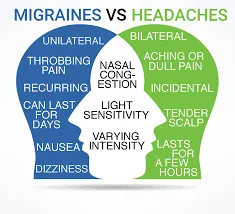
Similarly, the newswise.com reports that of the 357 publications reviewed, it has found that 52% of the global population have experienced a headache disorder within a given year, with 14% reporting a migraine. 26% percent reporting a tension-type headache and 4.6% reporting a headache for 15 or more days per month.

The Lead Author, Lars Jacob Stovner says: “Compared to our previous report and global estimates. The data does suggest that headaches and migraines rates may be increasing. What is clear is that overall,headache disorders are highly prevalent worldwide and can be a high burden.”

“It may also be of interest in future to analyse the different causes of headache that varied across groups to target prevention and treatment more effectively.”

Jacob adds that all the types of headache are more common in females than males most especially migraines.

Noting that there are 17 percent in females compared to 8.6% in males having headache for 15 or more days per month representing 6% in females compared to 2.9% in males.

He maintains that the majority of the publications reviewed reported from high income countries and gave recommendations that further investigation into middle and low-income countries would help present a more accurate estimation of prevalence of headache in the globe.

Lagos shuts down a hospital over Illegal operation, inadequate personnel

By Abdullahi Abdullateef

The Lagos State Government, through the Health Facility Monitoring and Accreditation Agency (HEFAMAA) has shut down Medville Global Health Centre located in Okota area of the state over its illegal operation and low numbers of personnel working in the hospital.

This is contained in a statement signed by the Head Public Affairs of HEFAMAA, Mr Muyideen Ayokunle Uthman on Tuesday, 5th April, 2022.

According to the statement, the Executive Secretary of the Agency, Dr Abiola Idowu, says that the Medville Global Health Centre which is located at 1, Bashiru street, off Lateef Adegboyega street, Ago Palace Way, Okota is sealed for not complying with the set standards.

Reacting to the demise of one Mr Triplem C. Mchaty’s wife, she said the agency carried out preliminary investigations which revealed that the hospital was not registered with HEFAMAA, noting that this contravened the 2006 health sector reform law.

She stated, “It means the facility was operating illegally.” She added that the hospital had inadequate personnel.

Reiterating the allegation on social media, in a tweet, one Mr Triplem C. Mchaty @scantee stressed the sad moments on his Twitter account @scantee. The tweet reads thus:

“Good morning family, I am really heartbroken now. My wife died at MEADVILLE GLOBAL HEALTH CENTRE (HOSPITAL) NO. 1 Bashiru street,off Lateef Adegboyega Street, Ago Palace Way, Okota.

“We just got married 10 months ago, she took in, she was undergoing Antenatal in Onitsha, Anambra [state].”

However, Dr Idowu disclosed that the Chairman Dr Solanke Kayo Esq. has ordered the agency to carry out a full investigation to uncover the facts of her death.

Relating with the closure of the hospital, she maintained that the agency has taken the crucial decision in furtherance of public protection awaiting the final outcome of the ongoing investigations.

She finally urged all administrators of health facilities in the state to adhere strictly to the set standards and cooperate with the leadership of Governor Sanwo-Olu.

Are you wasting time or wasting data – or both?

By Engr. Mustapha Habu Ringim

There is a significant thing for university students doing nothing at home, in their neighbourhoods, or going from one town to another town. Still, some of these students just waste their precious time on social media, which can be described as a “waste of data.” Thanks to the students’ lack of the mindset to learn a skill or handwork.

Learning skills will benefit them even after graduating from university. Therefore, the fruitful result is that they will become employed or employers, instead of moving up and down looking for an even non-existent job, just like everyone following events in Nigeria knows today.

Engausa Global Tech. Hub hereby welcomes all enlightened students who have realised that we are now in the age of “Digital Technology”. Thus, because we know of such challenges and joblessness, we established EngausaHub.com, whose main aim is “Breaking Barriers and Bridging Gaps.”

Before suspending the ongoing ASUU strike, students can gain a lot. And even afterwards, what they must have learnt will benefit them, in and outside the university. In fact, it’s ridiculously unwise for a young person not to have where he acquires a modern skill or handwork. Otherwise, he would just be going to the university with an empty pocket, with nothing to buy anything they desire.

The universities themselves should have skills acquisition centres because it has become pervasive for graduates—sometimes, including master’s and PhD holders—to finish school and never get a job. They would just “enmesh” themselves in the so-called “Labour Market” without any fruitful result in the end.

Hence, I advise the ASUU, federal and state governments to establish vocational training centres in our universities and other tertiary institutions. Most of these sustainably developed countries also adopted this same method of getting exceptionally good young people. The Vice-chancellor of Skyline University, an Indian, confirmed this assertion to me when he recently paid us a familiarisation visit at ENGAUSA HUB. 

We seek Allah’s guidance.

Engr. Mustapha Habu Ringim is the Founder/CEO Engausa Global Tech. Hub, Kano. He can be reached via ringims@gmail.com or 070383224643. Their websites are www.engausahub.com and www.chosenglobalech.com.

SPECIAL REPORT: How desire for materialism affects marriages and relationships

By Uzair Adam Imam 

Materialism is not limited to friendship or brotherhood; marriages and relationships also suffer greatly.

Friendship and brotherhood are gradually losing their true meaning, if not buried at all, because of this sudden shift of behaviour to materialism, The Daily Reality gathered. 

The menace led and is still leading to the breakdown of many relationships, including marriages, thereby manifesting itself into a serious problem in society – such as the increase in the number of widows and heartbreaking individuals.

The Daily Reality speaks with some people on this issue.

People like Aisha Mujitaba believe that guys pretend to be rich in life in order to woo girls.

“Nowadays, both loves and marriages are based on materialism; that is how equivocation and deception have chipped in in the process of getting married.

“Guys pretend to be wealthy in order to win girls’ hearts. Consequently, when they are joined in matrimony, the true nature of what the person is will be revealed. This leads to the breakdown of relationships,” Aisha said.

Parents were also accused of encouraging this lingering issue in society, according to Suwaiba Umar. 

She said, “Today, parents encourage their children to marry rich people. Marriages nowadays are not for the sake of Allah, the almighty. That is why guys make-believe a big life.”

Frowning at this behavioural change, Juwairiyya Aminu compared marriages in the past and marriages today.

She said, “Marriage in those days was entirely different from the marriage in these days, including the process, lefe (trousseau), ceremonies and whatnot.”

Both girls and their parents find it very exciting to have rich as their husbands or sons-in-law, making it difficult for the poor to get married.

“A poor man finds it very difficult to be loved, much less being married. But when a rich person proposes, without hesitation or any proper investigation on his religion, habit or maturity, he will be accepted,” Sa’adatu Shu’aibu.

Buhari Ahmad posited that guys fear being rejected by the girls, let alone the parents. For this, he said, “Guys make a pretence of big life out of fear of being rejected by girls and their parents.

“That is why guys now rent clothes, hats, shoes, bikes or even cars when visiting their suitors.” 

Materialism: What Brings About It?

Dr Muhammad Sulaiman Abdullahi is a lecturer at the Department of Nigerian Languages, Bayero University, Kano. He told this reporter in an interview that many reasons made our society materialistic.

“There are so many reasons which contribute to the moral decadence we are witnessing today in the Hausa society. I can summarily list them as follows:

“1. Deficiency in terms of Islamic education and pursuing more in terms of Western educational life and style.

2. Negative modernity

3. Access to the new media and multi-media stuff which led to increasing in absorbing haram items.

4. Lack of proper orientation, etc.”

The solution to materialistic life

“Having sound Islamic education and fear of Allah, pursuing what is halal in any form of education and social life; and abiding strictly to Islamic teachings are the solution,” Sulaiman added.

Why, as a man, I fight period poverty, menstruation stigma

By Bilyaminu Idris Ndasadulau

I believe in collective action, responsibility and collaboration. That’s why I joined as a man to fight against period stigmatisation and period poverty. It’s everyone responsibility, not only the females.

Menstruation matters to me. Thus, I consider any form of stigma associated with menstruation a social abuse and crime against women. Unfortunately, millions of women and girls continue to live in period poverty around the world without any support from the government to end the problem. We need to address the issue collectively. That’s why in 2019, I started online research studies on health matters, and I found out many women and girls need pads, but they cannot afford them, which can often lead to girls not attending school and also unhygienic practices. 

So in 2020, we initiated the “Rescue A Girl” project, which aims to end the stigma and discrimination and focus on enhancing, from the grassroots, adequate education, health and gender equality, which is a key to achieving the Sustainable Development Goals agenda. 

In the same year, during the COVID-19 pandemic, we launched the project on International Girl Day. We outreached to different schools and communities where we educated and impacted over 350 women and girls with free sanitary pads.

After our 2020 project report, we understand that sanitary pads are not the best solution to end period poverty and financial inequality worldwide. So we design a sustainable solution strategy to support these women and girls through reusable pads products. Which is very affordable and also help in economic empowerment to produce these materials and sell them. At the same time, our approach will be a sustainable solution to end period poverty and increase available good health hygiene aids for women and girls. 

In late 2021, we decided to push the sustainable solution to reality, where we visited and trained almost 1000 women and girls in different marginalised places. While we also raise awareness to improve knowledge and practices of menstrual hygiene management, especially for the local residents and school girls.

This effort was supported by Connected Development in collaboration with ShareYourself Organization from the USA. Through this project, we build transparency data of impact to ensure our partners and the public can see the sustainability of our work. So we can gain more support around the world. 

This project targets 2000 women and girls just for the 2021 goal. Still, it is a life continuation work to ensure we reduce the high rate of women and girls facing period poverty and lack of MHM knowledge. While we also empower them to become self economic independent and minimise environmental waste caused by sanitary pads. 

We will keep pushing the Rescue A Girl project as a movement to ensure policymakers, government, NGOs and individuals all play their role through taking it as a responsibility and commitment to change the policies and mindsets to support these vulnerable living survivors. 

The experience we gained throughout this health project was unique. We travelled to slums; we met a lot of young housewives and girls, and we built confidence brought hope and a smile on their faces.         

You can reach Idris Bilyaminu Ndasadu’Lau via bilyaminuidrisndasadulau@gmail.com.