International

Queen Elizabeth II under close medical supervision – Buckingham Palace

By Ahmad Deedat Zakari

The Queen of England, Elizabeth II is under a close medical supervision owing to concerns of her deteriorating health. A statement from Buckingham palace disclosed on Thursday.

The statement reads: “Following further evaluation this morning, the Queen’s doctors are concerned for Her Majesty’s health and have recommended she remain under medical supervision.

“The Queen remains comfortable and at Balmoral.”

This is coming after the Queen met UK new Prime Minister, Liz Truss on Tuesday at Balmoral Castle in Scotland. The Prime Minister has joined the rest of the country to express concern over the Queen’s health

“The whole country will be deeply concerned by the news from Buckingham Palace this lunchtime.

My thoughts – and the thoughts of people across our United Kingdom – are with Her Majesty, The Queen and her family at this time.” She wrote on Facebook.

Oh Britain! Why not Rishi Sunak?

By Aliyu Nuhu

Rishi Sunak should have been British prime minister, arguably seen as most qualified candidate to Liz Truss. Born in Southampton to parents of Indian descent who migrated to Britain from East Africa in the 1960s,he would have been British version of Barack Obama. But then Obama himself once said” my story is only possible in the United States of America”.

Subtle British racism played a role to deny Sunak the office of prime minister. No matter your struggles the system has a cap to your dream. There is nothing like the British dream.

But then the British even tried. At least the system allowed him to be Chancellor of the Exchequer, Chief Secretary to the Treasury, member of the Conservative Party, and Member of Parliament (MP) for Richmond (Yorks). The only important position he missed is the prime minister.

In Arab world the system will not even allow a non citizen into the mainstream politics in those that practise democracy. The monarchies deny non citizens university education even if they are born and raised there. Nigerians in Saudi Arabia decried being denied university enrollment except if they are going to read Islamic studies.

Malam Aliyu is a renowned social analyst. He writes from Abuja, Nigeria.

Bandits negotiator, Mamu arrested in Cairo

By Ahmad Deedat Zakari

The negotiator of the Kaduna train hostage, Tukur Mamu, was arrested by Interpol on Tuesday in Egypt.

According to reports, Mamu was arrested and detained by Interpol at the International Airport in Cairo on his way to the Kingdom of Saudi Arabia. 

Mr Mamu, also the spokesperson of the Kaduna-based cleric, Sheikh Ahmad Gumi, led the negotiation to release some of the abductees of the March 2022 Kaduna train attack. 

Mr Mamu has confirmed his arrest to the press. He disclosed that he was released immediately after a search which found nothing unlawful on him.

Mr Mamu had earlier withdrawn from negotiating with terrorists. He cited threats to his life by the Nigerian government as the reason for his withdrawal.

UK elects new female PM

By Ahmad Deedat Zakari

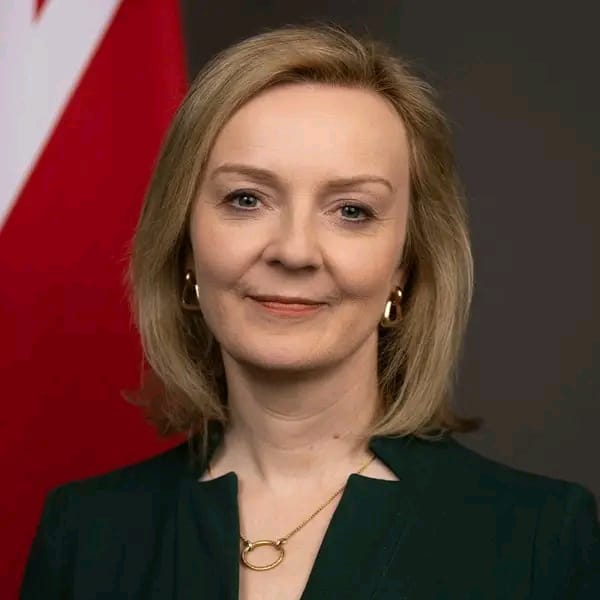
The United Kingdom has elected Liz Truss as the country’s new Prime Minister. Truss made history as the third woman to become UK Prime Minister on Tuesday, September 6, 2022.

Truss was elected as the leader of the Conservative Party on Monday and officially became British Prime Minister on Tuesday after an audience with Queen Elizabeth II.

In a ceremony traditionally known as “Kissing hands” held at Balmoral Castle in Scotland on Tuesday, the Queen accepted Truss offer to become Prime Minister and form a new government.

The new PM, a former British Foreign Secretary said, as Prime Minister she will remove the obstacles holding her country back.

“As Prime Minister, I will unleash Britain’s potential by going for growth and removing the obstacles holding our country back. A growing economy is key to delivering for the British people and unlocking opportunity.” She said.

Northern, Muslim lady made history, became Solicitor of Senior Courts of England and Wales

By Ahmad Deedat Zakari

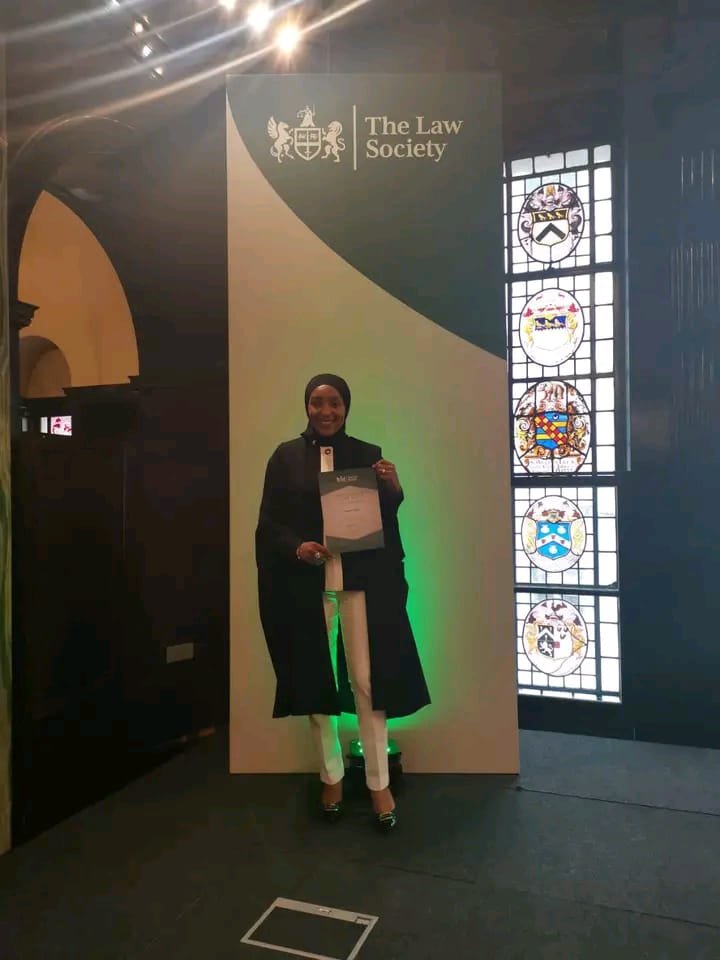
A Nigerian lady of northern extraction, Munayah Yusuf Hassan, has reportedly made history as the first woman from the northern part of Nigeria to be admitted as a Solicitor of the Senior Courts of England and Wales.

Audu Bulama Bukarti, a Senior Analyst at the Tony Blair Institute, announced this on Facebook on Saturday, September 3, 2022.

According to Bulama, Mrs Hassan is the first lady of northern descent to achieve the feat. Bulama added that Mrs Yusuf graduated from the Law Faculty of Bayero University, Kano and was called to the Nigerian Bar before relocating alongside her husband to the United Kingdom.

He further described the solicitor as humble and hardworking.

“Meet Munayah Yusuf Hassan, the first northern Nigerian woman to be admitted as a Solicitor of the Senior Courts of England and Wales (to my knowledge). Her admission ceremony held in London yesterday. Munayah was born and brought up in Kano and graduated from Bayero University before proceeding to the Nigerian Law School and being called to the Nigerian Bar. She relocated to the UK after marrying a Nigerian architect who lives there. Munayah is a beacon of hardwork, resilience, humility, kindness and excellence. May this be a blessing to Munayah, her family, friends and society. May it inspire all of us to work harder towards our dreams.” Bulama posted

And again, ASUU extends its strike…

By Hassan Ahmad Usman

Recently, I read a post on Facebook cautioning ASUU not to ignite the government into following the path of the former UK prime minister, Margaret Thatcher, in her famous face-off with unionists. Before then, I only knew of her being called the  “The Iron Lady”, and that’s all. It prompted me to find out more about her struggle with them. I got a book, Margaret Thatcher: A portrait of the Iron Lady by John Blundell. 

After winning the war of about eleven weeks against Argentina over the Falkland island, she made a famous statement in 1983: “We had to fight the enemy without in the Falklands, and now we have to fight the enemy within, which is much more difficult but just as dangerous. These few men are the wreckers in our midst.”

The miners, led by Arthur Scargill under the NUM, started a strike action after learning of the National Coal Board’s chairman’s plan to close uneconomical pits. The NUM held a special place in the political landscape.

They were somewhat invincible. In fact, the unionists brought down a government a decade earlier before Thatcher’s. But as the book’s author opined: “I think it possible that her defeat of General Galtieri (in the war)  emboldened her to take on the mineworkers with robustness she may otherwise not have shown”.

She welcomed the fight against the miners, defeated them and reformed the unions. 

Now, let us relate the defeat of the NUM and ASUU’s likely end if they thread the same path. One of the early actions that Thatcher’s government took when the strike heightened was to promise a big Christmas bonus to whoever resumed work. It yielded positive results, and a war started between the striking and non-striking workers. Imagine the federal government promising to pay the unpaid salaries for six months to only lecturers that resumed. What do you think? There is already a push for a rival union.

Nigerian government can actualize the new union, which would automatically birth the beginning and end of ASUU. ASUU chairman’s recent labelling of universities not on strike as quacks is a big blunder. Other state universities felt insulted too. If the union keep on this trend, its end looms. A divided house is a recipe for a fallen one. 

Another area is politicizing ASUU strikes. One mistake the union should not make is making the politicians understand that they can win elections with or without an ASUU strike. It’ll ultimately show that the public is not sympathetic to the union. Parents are already tired of seeing the unhappy faces of their wards. Like the NUM, their resolve would eventually wane after the election litmus test.

The NUM leader Scargill was embarrassed when the press revealed that President Gaddafi and Soviet President Gorbachev were sending large sums of money to the NUM. Indeed treason was in the air. In the case of Nigeria, it is nothing close to treason, but acting as an opposition party by the ASUU chairman while calling on Nigerians not to vote for the government that made their universities to be closed is an apparent derailment from the status quo. It gives the government reason to cling. 

I’ve long wondered if ASUU listens to its ordinary members’ cries. Do they even have a voice? Yes, solidarity and loyalty are good, but how long can they be sustained with a hungry stomach? They are passing through a lot, and words of the mouth alone cannot keep them going. Just like NUM members that couldn’t hold on for long without cheques, ASUU members, too, are humans and any given opportunity thrown at them to abandon their war gear, they’ll heed without hesitation.

Prime minister Thatcher weakened the old arrangements that made membership in the union mandatory by giving more power and rights to individual workers. She went to the British public and the ordinary members of the unions. She explained that strikes affected union members just as much as the rest of the public. And she used simple examples to show how the kind of economic thinking represented by the TUC would keep Britain on the road to ruin.

Thatcher’s strategy was to break down the closed shop and bring real democracy to these institutions so ordinary members could regain control. As a result, union membership dropped from 51% when she assumed power in 1979 to just 18% in 1997, seven years after leaving. 

Lastly, it is my utmost prayer to see ASUU get what they want from the government for the betterment of our education, for I believe they are doing it with good intentions and for the interest of all.   

Hassan Ahmad Usman writes from Lafia and can be reached via basree177@gmail.com.

NiDCOM laments killing of students in Northern Cyprus, warns Nigerians

By Ahmad Deedat Zakari

The Nigerians in Diaspora Commission (NiDCOM ) has warned Nigerian students against travelling to Northern Cyprus for education.

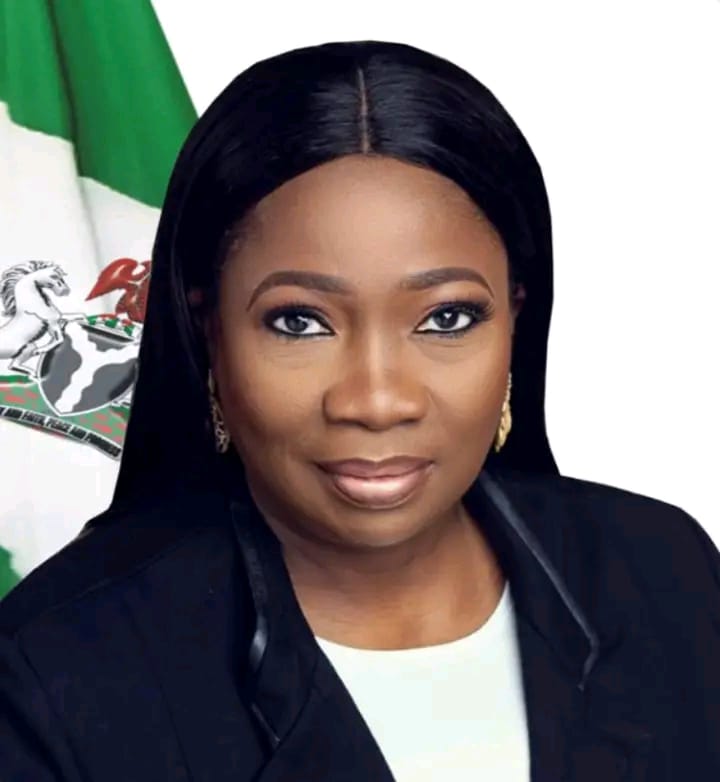
NIDCOM’s Chairperson, Abike Dabiri-Erewa, said this at a ministerial briefing in Abuja on Thursday, August 25, 2022.

According to Dabiri-Erewa, Northern Cyprus is not recognised by the UN and a lot of Nigerian students have been murdered in the country.

“There have been a lot of problems in Northern Cyprus; we have youths come to tell us, please tell everybody to stop going to Northern Cyprus.

“We did that sometime ago and we were challenged at what rights we had to tell people not to go to Northern Cyprus.

“I say it again; if you have to go to Northern Cyprus, think twice about it; no fewer than 20 students have been killed over the years and nothing has happened to the assailants.

“Students who had gone there earlier came to tell us that they had to embark on an awareness campaign. Don’t go to these places; Northern Cyprus is recognised only by Turkey,’ she lamented.

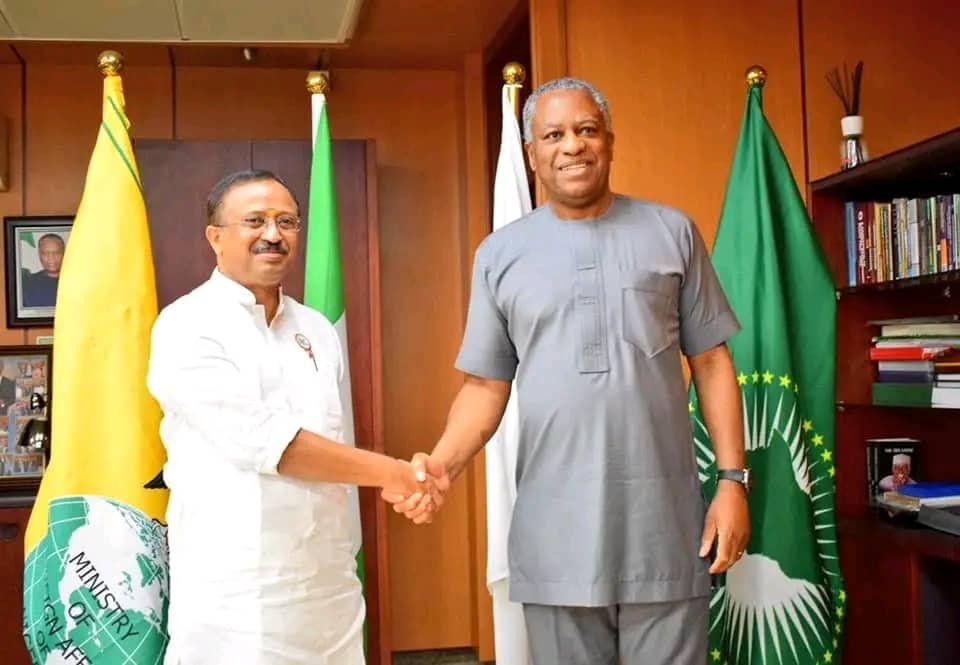
Nigeria, India to strengthen bilateral relations

Nigeria and India are looking for strategies to enhance their mutually beneficial and robust bilateral ties.

Geoffrey Onyeama, the minister of foreign affairs, revealed this on Monday when meeting Shri V. Muraleedharan, the state minister for external affairs of India.

Muraleedharan is in Nigeria to attend the Nigeria-India Business Council’s opening (NIBC). Nigeria, according to Onyeama, is attempting to benefit from India’s expertise in the fields of information, communication, and technology.

India is one of the biggest investors in Nigeria and one of the biggest consumers of Nigerian crude, he pointed out.

In the context of the Solar Alliance and Conference of the Parties on Renewable Energy, Onyeama acknowledged India as the primary instigator.

“On Defence cooperation, there is a joint initiative with some of our Defence institutions on the development of detection of Improvised Explosive Devices which we are working on.

“Of course, that will be an important addition to the armoury of our security forces”, he added.

Muraleedharan stated that the bilateral relationship between India and Nigeria is excellent and that the meeting covered topics such as commerce, consular matters, education, etc.

The minister expressed confidence that the NIBC would enhance bilateral trade and investment in a number of industries.

Muraleedharan indicated that his nation was prepared to lend soft credit to Nigeria so that it might construct solar power facilities.

“On Power, Nigeria is part of the International Solar which is the global alliance to ensure that sustainable power is there across the world”, he noted.

UN condemns 34-year imprisonment of Saudi woman for tweeting politics 

By Uzair Adam Imam 

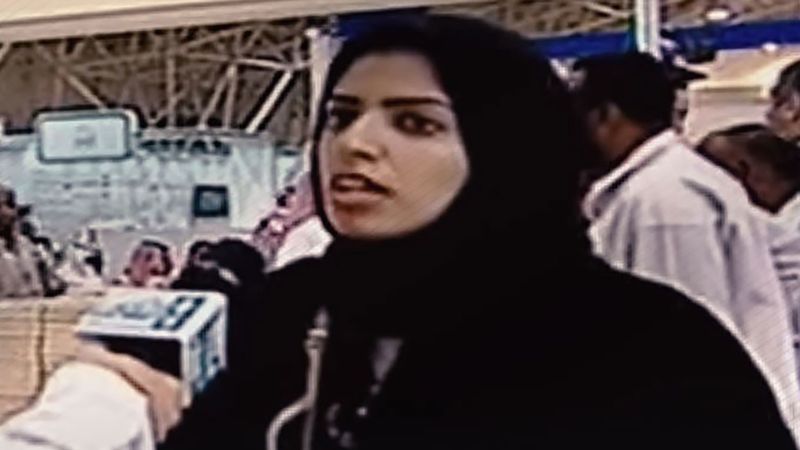
The UN human rights office, OHCHR, has expressed grievance over the 34-year prison sentence of one Saudi woman, Ms Salma Al-Shehab, 34.

Al-Shehab, a doctoral student, was sentenced to 34-year imprisonment for following and retweeting so-called dissidents and activists.

She was arrested in Saudi Arabia in 2021 while on holiday from her studies at Leeds University in the UK.

The woman, who has two small kids, was sentenced to jail, followed by a 34-year travel ban in connection with a series of tweets and retweets on political and human rights issues in Saudi Arabia,

OHCHR expressed concern in a statement by its spokesperson, Liz Throssell, urging the Saudi authorities to quash her conviction and release her immediately and unconditionally.

The statement read, in part, reads, “She should never have been arrested and charged in the first place for such conduct.”

“Saudi Arabia must not only release Al-Shehab so that she can re-join her family but also review all convictions stemming from free expression against human rights defenders.

“The government should release those jailed, including women who were jailed after they legitimately demanded reforms of discriminatory policies, as well as religious leaders and journalists,” Throssell said.

Scotland becomes first nation to offer free pads and tampons

By Ahmad Deedat Zakari

Scotland has passed a law pronouncing period products free for all its citizens. The landmark legislation is the first of its kind in the world. 

The Members of Scottish Parliament, MSPs, have unanimously approved the Bill in November 2020 to combat period poverty

According to a report by BBC, local authorities now have a legal duty to provide free items such as tampons and sanitary pads to “anyone who needs them”.

 The bill, now known as the Period Products Act, was introduced by Labour MSP Monica Lennon, who has advocated to end period poverty since 2016. 

Lennon said: “Local authorities and partner organisations have worked hard to make the legal right to access free period products a reality.

“This is another big milestone for period dignity campaigners and grassroots movements which shows the difference that progressive and bold political choices can make.

“As the cost-of-living crisis takes hold, the Period Products Act is a beacon of hope which shows what can be achieved when politicians come together for the good of the people we serve.”