International

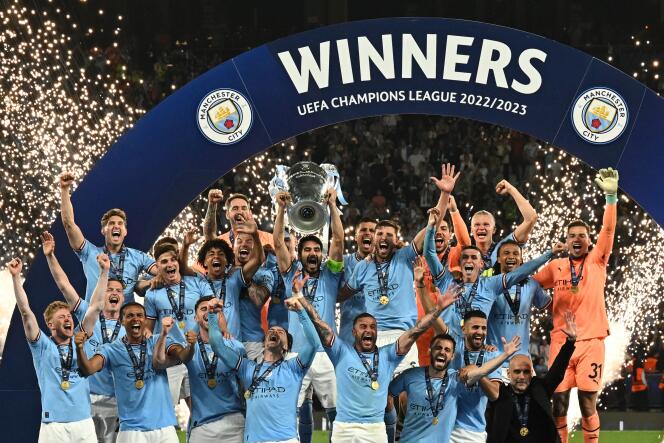
Breaking: Lionel Messi joins American side, Inter Miami

By Muhammadu Sabiu  

Argentina captain Lionel Messi has joined an American side, Inter Miami, after parting ways with the French club, Paris Saint-Germain (PSG). 

According to Fabrizio Romano, Messi will make an announcement about the new club he has joined in a few hours. 

Reporting on his official Facebook page today, Romano wrote, “Lionel Messi to Inter Miami, here we go! The decision has been made and it will be announced by Leo in the next hours. 

“Messi will play in MLS next season. No more chances for Barcelona despite trying to make it happen.” 

Recall that before this year’s Ligue 1 campaign came to an end, it was already announced that Messi would not continue at PSG. 

There were speculations that the 7-time Ballon d’Or winner would return to his former side, Barca, but the deal wasn’t sealed by the two parties.

Book Review: The Lebanese in Kano

By Dr Shamsuddeen Sani

I thought The Lebanese in Kano: An Immigrant Community in a Hausa Society in the Colonial and Post-Colonial Periods merely contained a handful of newspaper tales. I was mistaken! Within its pages lies a meticulously researched body of work, a testament to the cultural heritage of Kano that begs to be savoured and preserved for generations to come. It has profound glimpses into the very foundations of Kano’s societal evolution as it illuminates the paramount role played by the Lebanese community in the rich Kano’s historical traditions.

This book, published in 1995 and authored by S.A. Albasu, unfolds with an intricate chronology of eight captivating chapters. As the introduction sets the stage, the initial chapter gracefully delves into the existing body of literature on migration, skilfully intertwining it with the historical fabric of West Africa and Nigeria. Embracing a tangent in the second chapter, Albasu illuminates the emigration of the Lebanese into Kano, beginning in the mid-19th century.

However, a pivotal juncture in Lebanese history within Kano emerged in 1920, a defining moment marked by profound geographical and religious divisions among the Lebanese migrants. The historical catalysts propelling Lebanese emigration into Nigeria were meticulously examined within this segment.

It becomes apparent that prior to the 1920s, the Lebanese immigrants in Kano predominantly belonged to the Maronite Christian community. It is only after this period that a demographic shift occurs, welcoming the arrival of Muslim Lebanese, particularly those of the Shiite sectarian extraction hailing from southern Lebanon. The book exposes the reader to the sociocultural intricacies of the Lebanese community’s towns of origin and unravels the fabric of their society, dispelling prevailing myths.

The entire Lebanese migration into Kano is thoughtfully categorised into four distinct phases, each meticulously explored with great detail: 1890-1903, 1903-1912, 1912-1920, and the 1930s during the tumultuous period of the great depression. Each of these phases represents a significant milestone in the history of the Lebanese community within Kano, as well as its impact on the city’s socioeconomic development.

Subsequent chapters of this book delve into the physical establishment of the Lebanese community, intricately entwined with crucial historical policies such as colonial taxation, the indirect rule system, and segregation policies.

Chapters four, five, and six embark on an exciting journey, covering the consolidation of the Lebanese community within Kano’s vibrant business milieu. From the thriving cattle trade to the realms of Kolanut and groundnut businesses, the book unfurls the profound influence of factors like colonial intervention, the upheaval of the Second World War, Nigeria’s independence, and the burgeoning national consciousness. The book has revelations of ground-breaking nature, leaving you enlightened and astounded, and for me, every piece seamlessly falls into place now.

ABU wins Huawei ICT Competition in China

By Ahmad Deedat Zakari

The Ahmadu Bello University (ABU), Zaria, has emerged winner at the Huawei ICT Competition for the 2022-2023 Global Final held in Shenzhen, China.  

The management of Huawei disclosed on their website that the competition was the first to be held physically since 2019, and about 80 universities worldwide participated.

“Today, the Huawei ICT Competition 2022-2023 Global Final concluded in Shenzhen, drawing to a close the seventh instalment of this competition. The first to be held in person since 2019, the event’s culmination was a competition between finalists in 146 teams from 36 countries. Before the Final, more than 120,000 students from more than 2000 universities in 74 countries and regions around the world took part in the ICT Competition,” the statement reads.

Maryam Jimoh Olalade, Haruna Anas, Ahmad Abdullahi and Elayo Aliyu Isah represented the institution that won the prize.

Near East University awards Kano academics for exceptional achievements

By Muhammad Abdurrahman

Near East University, Cyprus, honours three Kano state indigenes, Dr Mubarak Auwal, Dr Zubaida Said Ameen, and Asst Prof Abdullahi Garba Usman, for their outstanding achievement in the research world.

The above was made known in a Facebook post by Dr Sagiru Mati, another Kano indigene and staff of Yusuf Maitama Sule University (formerly North-West University, Kano) doing his postdoc at the same university.

Dr Mati added, “We are thrilled to announce that these brilliant individuals have been recognised as the best researchers by the prestigious Near East University. Their dedication, perseverance, and exceptional contributions to their respective fields have not gone unnoticed.

The award certificates

Mubarak and Zubaida, not only exceptional researchers but also a married couple, have shown us the power of collaboration, support, and shared passion in achieving extraordinary results.”

Asst Prof Abdullahi’s research focuses on analytical chemistry and operational research in healthcare. He has numerous publications in reputable journals and more than 600 citations.

The fantastic couple (Drs Mubarak and Zubaida) work in the same field of Biomedical Engineering and Artificial Intelligence. They also have several publications and hundreds of citations to their credits.

Of football, racism and hypocrisy

By Aliyu Yakubu Yusuf 

Racism in football has been a problem that refuses to go away. Football is often rightly described as the beautiful game. However, the persistent problem of racism has been a blight on this enduring beauty. Despite the fact that numerous campaigns (such as “Say No To Racism” and “Black Lives Matter” etc.) sponsored by FIFA and other regional football associations, racism has seemingly been kryptonite for the footballing establishments. 

I firmly believe that FIFA, UEFA, the media and most fans in Europe and America are not sincere about fighting racism. All these campaigns against racism are merely lip service that will never bring an end to this menace. Vinicius Junior is just the latest case that opens a fresh can of worms in a long list of racism storms that rocked the football world. 

When the trio of Saka, Sancho and Rashford missed crucial penalties in England’s Euro 2020 final defeat to Italy, they were racially abused online by their own fans. Even Real Madrid fans are also guilty of racism towards black players from other clubs and their players. When FIFA released the votes for the last Ballon d’Or, and it appeared that Real Madrid’s Austria captain, David Alaba, had voted for Lionel Messi as his first pick ahead of his teammate Karim Benzema, Real Madrid fans racially abused him online. And he was forced to apologise. And these are the same people that are up in arms “protecting” Vinicius. If this is not hypocrisy, I don’t know what is. 

Heck! Even fans at various French clubs were reported to have racially abused black players. And this is a country whose national team is simply an amalgam of players from their former African colonies. Imagine! 

Racism is here to stay as long as the powers that be are not serious about tackling it. FIFA has a three-step process for dealing with racism during matches. First, the referee should stop the game and announces that racist chants are going on and should stop. Then, if the chants continue, the referee should apply the second stage, which is to instruct the players to go back to the dressing room and wait. After a while, the referee should ask the players to resume on the pitch and restart the game. Finally, if the chants continue, the referee should apply the third process, which is to stop the game entirely and award the three points to the opponents. 

However, instead of making it mandatory for all regional football unions to adopt this process, FIFA only “recommend” it. Everyone knows that the only way to stop racism once and for all is to enforce this law. When clubs realise that some unscrupulous elements within their fanbase are making them lose points unnecessarily, they will fish out these “fans” and give them lifetime bans from stadiums. 

The question is, ‘Do black lives really matter’?

Aliyu Yakubu Yusuf wrote from Bayero University, Kano. He can be reached via aliyuyy@gmail.com.

UK rolls out plans to deny entry for students’ dependents

By Muhammadu Sabiu 

The United Kingdom is planning to ban foreign postgraduate students from coming to the country with their relatives except under certain circumstances. 

This is part of the government’s effort to reduce the number of immigrants entering the country. Last year, 135,788 visas were issued under the sponsorship of foreign students, almost nine times the number issued in 2019. 

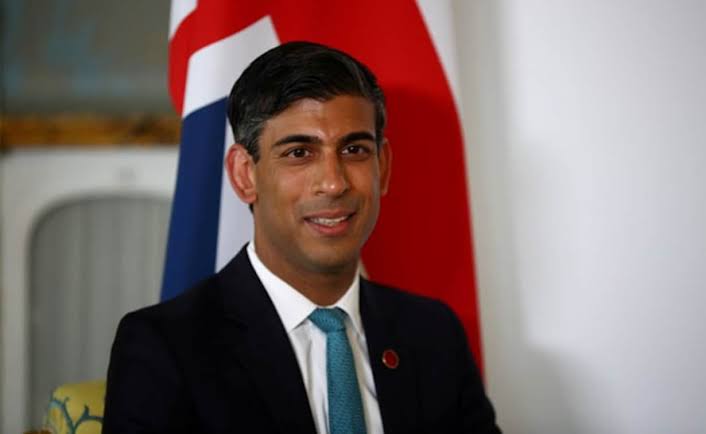
Prime Minister Rishi Sunak told UK ministers that the move would help reduce the number of migrants trooping into the country. He told the ministers that the policy, which will come into effect in January 2024, will help reduce the number of people entering the country.

In the past, the Conservative Party promised to reduce the number of people migrating to the UK to less than 100,000 in total. However, this plan was abandoned before the 2019 election.

Doctors’ anti-migration bill and nurturing greener pasture

By Lawal Dahiru Mamman

Brain drain in Nigeria has lingered for some time now. In the medical profession, it is the most dominant issue occupying the mind of physicians and other health personnel. This may not be unconnected to the fact that human life is sacrosanct.

It goes without saying that the incessant brain drain of medical personnel in Nigeria will slow the attainment of Universal Health Coverage (UHC), that all people have access to the full range of quality health services, they need, when and where they need them, without financial hardship, in this part of the world.

Mainly, the mass exodus of doctors out of the country is caused by poor welfare of medical practitioners, lack of or insufficient working equipment, and poor working environment leading to the need for seeking a more sumptuous alternative – greener pasture as it is called.

This is purely a reflection of the theory which argued that “…… if wages rose above subsistence, the number of workers would increase ….” By implication, wherever our medical brains are sprinting to have a more luscious wage or salary for the profession. This would increase the country’s workforce while wearing out our dear nation.

Discussions have sprung over time on how to salvage the situation. Experts have suggested an increment in the welfare of doctors. In contrast, others have voted for ending medical tourism, especially public officeholders, to enable them to pay more attention to funding health facilities at home.

The most recent attempt to curb the mortal exodus of medical practitioners is to shackle them with the power of the law. This is through a bill sponsored by Ganiyu Johnson, a lawmaker from Lagos. The bill seeks to amend the Medical and Dental Practitioners Act 2004 to address the brain drain in the health sector. According to the lawmaker, it is only fair for medical doctors who enjoy taxpayer subsidies on their training to give back to society.

The legislation is titled, ‘A Bill for an Act to Amend the Medical and Dental Practitioners Act, Cap. M379, Laws of the Federation of Nigeria, 2004 to Mandate Any Nigeria Trained Medical or Dental Practitioner to Practice in Nigeria for a Minimum of Five Years Before being Granted a Full License by the Council to Make Quality Health Services Available to Nigeria; and for Related Matters.’

While the above is more restricted to medical and dental practitioners, the same lawmaker said on Friday, April 14, 2023, that he would be presenting a similar bill on nurses and pharmacists; when he intends to do that, time will tell.

With different medical associations reacting in negation by stating that the bill has the propensity to trample on the rights of doctors, the Minister of Health, Dr Osagie Ehanire, said the bill is in order especially looking at the fees paid by the government to subsidise their training at universities, and the service which they render before travelling overseas. However, the minister said the service does not make up for the cost of training.

The Nigerian Medical Association (NMA) has said the bill will not see the light of the day because it impedes the constitutional right to freedom of movement of doctors and violates international labour law, chiefly since the government has subsidised students from all other professions.

The Nigerian Medical Students Association (NiMSA) and the World Medical Association (WMA) have vehemently disapproved of it, too, because the bill, according to the latter, is “not only outlandish but totally retrogressive, unresearched and very ill-informed.”

The bill that intends to give health workers full license only after five years of working in Nigeria has passed the second reading in the House of Representatives. While this may have come out of benevolence, it may not be the piece we search for to solve the puzzle of brain drain in the health sector.

If the bill sees the light of day, after five years, doctors will still have the freedom to travel out, in my opinion even more experienced. So, could this be the solution we yawn for? Instead, a more lasting solution should involve doctors and government officials meeting halfway to save Nigeria’s crumbling health sector.

I want to firmly believe that Nigeria has what it takes to cultivate the soil for growing ‘greener pasture’ our medical professionals continue to voyage foreign lands for. But only leaders fuelled with altruism can summon the political will to do the needful.

Lawal Dahiru Mamman writes from Abuja and can be reached via dahirulawal90@gmail.com.

WhatsApp to unveil smartwatch

By Ahmad Deedat Zakari

Mark Zuckerberg, the Chief Executive Officer of Meta, has announced that Whatsapp will unveil the first WhatsApp smartwatch later this year.

Zuckerberg disclosed this in a Facebook post on Wednesday.

The smartwatch will enable Whatsapp users to make phone calls and reply to messages.

“Announced at Google I/O that we’re shipping the first WhatsApp smartwatch app on Wear OS later this year. You’ll be able to start new conversations, reply to messages, and take calls on your wrist,” he posted

Sudan’s warring parties arrive Saudi Arabia for peace talks

By Muhammadu Sabiu  

Representatives of the warring factions in Sudan have gathered in Saudi Arabia for face-to-face peace talks for the first time since the war broke out in mid-April. 

There will be talks sponsored by Saudi Arabia and the United States between the country’s military and the RSF security forces. Several previous ceasefire agreements have failed since the start of the war a few weeks ago. 

Both sides said they would agree to a ceasefire to allow civilians to leave the areas where the war is most intense. On Saturday, the Minister of Foreign Affairs of Saudi Arabia, Faisal bin Farhan, welcomed the representatives of both parties who arrived in the country for the reconciliation talks. 

He said he hoped the talks would end the conflict and restore peace and security to the country. General Mohamed Hamdan Daglo, who leads the RSF forces, stated on his Twitter page that the RSF welcomed the decision to cease fire in order to be able to send support into the country. 

He also said that the RSF is ready to return power to the hands of civilians in the country.

The cry of distressed Nigerians in a war-torn country

By Lawan Bukar Maigana

The war is still raging. The fight in Sudan between two factional military groups, which started on April 15 — about two weeks ago, has left hundreds of people dead. Thousands have also fled for their safety.

A large number of foreigners in Sudan, especially diplomats and students, have been evacuated by their governments. But some are still stranded in the Sahara desert and in schools, among which are Nigerians.

Heartbreakingly, videos and audio of young Nigerians have emerged online, showing how helpless they have been since the war in Sudan broke out. Some of them claimed that they didn’t eat for days and that life had been hell for them since the start of the war, and the power struggle is still unfolding, leaving millions of people in fear.

No responsible country will leave its citizens at the mercy of rival factions whose attacks on each other can claim lives and properties. Therefore, it is baseless for anyone to compare the Ukrainian war and Sudan’s because the Ukrainian airport was not targeted by Russian soldiers, which is why countries were able to pick up their people safely and peacefully, but that of Sudan was and still is.

If Nigeria had insisted on evacuating Nigerians on the very day the Turkish plane was attacked, many lives would have been lost because the Nigerian plane, too, would have been attacked, but the almighty saved Nigerians. The government got some privileged information about the massive plan to attack evacuation planes, which was hitherto unavailable.

Hence, the Nigerian embassy wrote to the students urging them to be patient and pack their belongings so they could be transported to Egypt by road, where they could be brought home safely without any fear of attacks or victimization by anyone. This has saved the lives of my fellow citizens.

In appreciation, one of the ladies who was seen crying profusely, calling on the Nigerian government to come to their aid, has again made another video saying over 20 luxurious cars have successfully evacuated Nigerian students who were helpless and stranded in Khartoum, the Capital of Sudan.

She added that the government has again sent its representatives to Egypt to work on releasing students who were unable to cross the border due to some issues related to diplomacy. They, too, have been successfully cleared, and they are in Egypt.

It is important for Nigeria’s incoming government of President Bola Ahmed Tinubu and Senator Kashim Shettima to, as leaders of the giant of Africa, intervene. They should quickly come to the aid of distressed Nigerians still residing in Sudan. Their prevailing agony can only be imagined. Delay is dangerous, as it is often said in our local parlance.

Lawan Bukar Maigana writes from Maiduguri and can be reached via email: lawanbukarmaigana@gmail.com.