International

Nigerien army killed more than 100 ‘terrorists’ in deadly attack

By Abdullahi Mukhtar Algasgaini

Niger’s army said Thursday it had killed more than 100 “terrorists” during air and ground operations in response to a deadly attack against soldiers near the Burkina Faso border.

A coalition of armed groups killed 20 troops and one civilian in the region of Tera in jihadist-plagued western Niger on June 25, according to the army.

“More than 100 terrorists have been killed since,” the army said in its latest bulletin, adding that its operations were ongoing. The army had said in its previous bulletin that it had killed around 30 “terrorists” in the region the day after the Tera attack and had “destroyed their means of war” in an air raid.

Tera lies in the Tillaberi region bordering Mali and Burkina Faso where rebels linked to Al-Qaeda and the Islamic State group have waged a bloody insurgency for almost a decade.Civilians are frequently targeted in the area by jihadists, prompting many people to flee their homes.

Freight trucks from Niger also pass through Tera, arriving every month from the Togolese port of Lome, via northern Burkina Faso.

Russian President Vladimir Putin arrives in North Korea for 2-day state visit

By Sabiu Abdullahi 

Russian President Vladimir Putin has arrived in North Korea for a two-day state visit, where he was received by North Korean leader Kim Jong Un at the airport in Pyongyang. 

The visit is expected to focus on further arms deliveries from Pyongyang, which Moscow intends to use in its ongoing war against Ukraine. 

According to the Russian news agency Interfax, the main part of the visit will begin on Wednesday with a meeting between Putin and Kim on Kim Il Sung Square, Pyongyang’s urban and symbolic center. 

The day will continue with long negotiations, first in one-on-one talks and then on a larger scale.

The two leaders will also share several meals together and participate in a wreath-laying ceremony and a joint concert visit. 

This visit marks a significant development in the relationship between Russia and North Korea, which has been strengthening in recent years.

Putin’s last visit to North Korea was in 2000, when he was received by Kim’s father, Kim Jong Il. 

Since then, the two countries have experienced a long break in their relationship, but they have recently moved closer together, particularly in the context of the Ukraine war. 

As reported by observers, the visit is expected to solidify the alliance between Russia and North Korea, with a focus on arms deliveries and military cooperation. 

The visit is seen as a significant development in the geopolitical landscape, with implications for the ongoing conflict in Ukraine and the broader regional dynamics.

OPEC Sec Gen: Peak oil demand not on the horizon

By Haitham Al Ghais 

In the 1990s and 2000s, the world regularly saw column inches devoted to the theory of peak oil supply, amplified by voices like Colin Campbell and Matthew Simmons. Decades later, however, it has still not come to pass, as enhanced economics and constant improvement in technology have helped lower costs and open up new frontiers to expand the resource base.

The past decade or so has witnessed a shift to talk of peak oil demand, with some forecasters increasingly pushing theoretical scenarios that have decided before any data is analysed that oil should not be part of a sustainable energy future.

This is evident in some net zero scenarios, with suggestions that oil demand will peak before 2030 or, more dramatically, that oil demand will drop by more than 25% by 2030 and calls to stop investing in new oil projects. 

This narrative was repeated only yesterday when the IEA published its Oil 2024 report, which once again stated that oil demand would peak before 2030. It is a dangerous commentary, especially for consumers, and will only lead to energy volatility on a potentially unprecedented scale.

We have also heard similar narratives before, ones that have proven to be wrong. The IEA suggested that gasoline demand had peaked in 2019, but gasoline consumption hit record levels in 2023 and continues to rise this year. It also stated that coal demand had peaked in 2014, but today, coal consumption continues to hit record levels. 

Many net zero futures focus almost exclusively on replacing hydrocarbons, which make up more than 80% of the global energy mix today. Rather than adding new energy sources to the mix, the focus is on substituting energy sources, which flies in the face of the history of supplying energy to the world. The emphasis is on rhetoric over reality and constraint over consumer choice.

Today, wind and solar supply around 4% of global energy, with electric vehicles (EVs) having a total global penetration rate of between 2% and 3%, even though the world has invested over $9.5 trillion in ‘transitioning’ over the past two decades. OPEC welcomes all the progress made in renewables and EVs, but it is nowhere near close enough to replace 80% of the energy mix. Furthermore, electricity grids, battery manufacturing capacity and access to critical minerals remain major challenges. 

We should also remember that the development of renewables and EVs requires some oil-related products. Their future expansion will increase oil demand.

Of course, we all want to lower emissions, but at the same time, we all need ample, reliable and affordable supplies of energy. The two cannot be decoupled. Instead, our energy futures must focus on the full picture and not on a partial, incomplete one. In this respect, three key facts are worth bearing in mind. 

Firstly, future energy and oil demand growth primarily lies within the non-OECD developing world, driven by increasing populations, an expanding middle class and growing economies. From now until 2045, non-OECD oil demand is set to expand by over 25 million barrels a day (mb/d), with China and India contributing over 10 mb/d alone.

We should also remember that billions of people in the developing world still lack access to modern energy services. For these people, their energy future is not about net zero, deciding on the purchase of an electric vehicle, or ruminating over the costs and benefits of energy sources. Instead, it is about achieving the energy basics that the developed world takes for granted, such as being able to turn on a light, cook on a clean stove or have motorised transport to move to and from work or school.

Secondly, oil demand continues to increase. At OPEC, we see oil demand growth of 4 mb/d over the two years of 2024 and 2025, with other forecasters also seeing an expansion of over 3 mb/d. Even the IEA sees growth of 2 mb/d over this period, followed by growth of 0.8 mb/d in 2026. It then dramatically drops off a cliff to almost no growth in the next four years through 2030. 

This is an unrealistic scenario, one that would negatively impact economies across the world. It is simply a continuation of the IEA’s anti-oil narrative. Given the real trends we see today, we do not see peak oil demand by the end of the decade.

Thirdly, many parts of the world are witnessing consumer pushback as populations comprehend the implications of ambitious and unrealistic net zero policy agendas. This, in turn, is prompting policymakers to re-evaluate their approaches to future energy pathways, for example, in the UK, with the government recently supporting new oil and gas licenses. 

These shifts, alongside developments in the economic landscape, have seen OPEC revise its oil demand expectations upwards to 116 mb/d by 2045, and there is potential for this level to be even higher. We do not foresee a peak in oil demand in our long-term forecast.

On the supply side, technological improvements are allowing us to continually add resources to the base to help meet demand growth. There are clearly enough resources for this century and beyond, with the world’s proven crude oil reserves standing at over 1.55 trillion barrels. Moreover, technologies are also enabling us to take huge strides in reducing emissions, as exemplified by the availability of cleaner fuels, much-improved efficiencies and technologies such as carbon capture, utilisation and storage, carbon dioxide removal and direct air capture.

Everyone is free to have an opinion, but it is important that this is based on the realities we see before us today. There is a clear need to prioritise energy security, utilise all available energies, deliver energy affordability, enhance sustainability, reduce emissions, and not limit our energy options in the face of expanding demand.

Oil can deliver on all those fronts, and as we look to the future, its versatility ensures that we do not see peak oil demand on the horizon. Just as peak oil supply has never transpired, predictions of peak oil demand are following a similar trend.

Against this backdrop, stakeholders need to recognise the need for continued oil industry investment today, tomorrow, and many decades into the future, given the products derived from crude oil are essential for our daily lives. Those who dismiss this reality are sowing the seeds for future energy shortfalls and increased volatility and opening the door to a world where the gap between the ‘energy haves’ and ‘energy have-nots’ grows even further. 

Haitham Al Ghais became OPEC Secretary General in 2022. He served as Kuwait’s OPEC governor from 2017–21 and was the inaugural chairman of the OPEC+ Joint Technical Committee in 2017. Al Ghais was already an oil and gas industry veteran, having held senior positions in key OPEC and OPEC+ bodies and committees, as well as at the Kuwait Petroleum Corporation.

Nigeria’s economic revival: Drawing inspiration from the Asian Tigers

By Haruna Yusuf Abba

Nigeria, Africa’s largest economy, is grappling with severe economic challenges, including a debilitating recession, widespread poverty, and stagnant growth. Meanwhile, the Asian Tigers – Hong Kong, Singapore, South Korea, and Taiwan – have transformed their economies into high-tech, high-income powerhouses. This article explores the secrets behind the Asian Tigers’ success and how Nigeria can draw inspiration from their model to revitalise its economy.

I. Introduction

Nigeria’s economic woes are well-documented. With a shrinking GDP, rising inflation, and a volatile political climate, the country urgently needs a new economic direction. The Asian Tigers, on the other hand, have achieved remarkable economic growth and development, becoming global leaders in innovation, trade, and investment. By examining their strategies and policies, Nigeria can identify valuable lessons to overcome its current economic hardships.

II. The Asian Tigers’ Success Factors

A. Export-Led Growth

The Asian Tigers focused on export-oriented industrialisation, leveraging their competitive advantage in manufacturing and trade. Nigeria can similarly develop its export sector, particularly in areas like agriculture, textiles, and mineral processing.

B. Human Capital Development

Investing in education and training, the Asian Tigers built a skilled workforce, driving innovation and productivity. Nigeria must prioritise education, vocational training, and capacity building to enhance its human capital.

C. Infrastructure Development

The Asian Tigers invested heavily in modern infrastructure – transportation networks, energy systems, and telecommunications – creating a conducive business environment. Nigeria must upgrade its infrastructure to facilitate economic growth.

D. Economic Diversification

The Asian Tigers diversified their economies, reducing dependence on a single sector. Nigeria, too, must diversify its economy, exploring opportunities in services, manufacturing, and renewable energy.

E. Strong Institutions and Governance

Effective governance, rule of law, and institutional frameworks underpinned the Asian Tigers’ success. Nigeria must strengthen its institutions, combat corruption, and ensure transparency and accountability.

III. Nigeria’s Way Forward

A. Diversify the Economy

Nigeria must reduce its reliance on oil exports and develop other sectors, such as agriculture, manufacturing, and services.

B. Invest in Human Capital

Nigeria needs to prioritize education, vocational training, and capacity building to enhance its workforce’s skills and productivity.

C. Infrastructure Upgrade

Nigeria must invest in modern infrastructure, including transportation networks, energy systems, and telecommunications, to facilitate economic growth.

D. Export-Led Growth

Nigeria should focus on export-oriented industrialisation, leveraging its competitive advantage in areas like agriculture and mineral processing.

E. Strengthen Institutions and Governance

Nigeria must strengthen its institutions, combat corruption, and ensure transparency and accountability to create a conducive business environment.

IV. Conclusion

Nigeria’s economic revival requires a comprehensive approach, drawing inspiration from the Asian Tigers’ success factors. By diversifying its economy, investing in human capital, upgrading infrastructure, promoting export-led growth, and strengthening institutions and governance, Nigeria can overcome its current economic hardships and embark on a path of sustainable growth and development. The time for action is now.

Haruna Yusuf Abba wrote via ealistharoonyusufabba@gmail.com.

All Eyes on Rafah

By Najeeb Maigatari

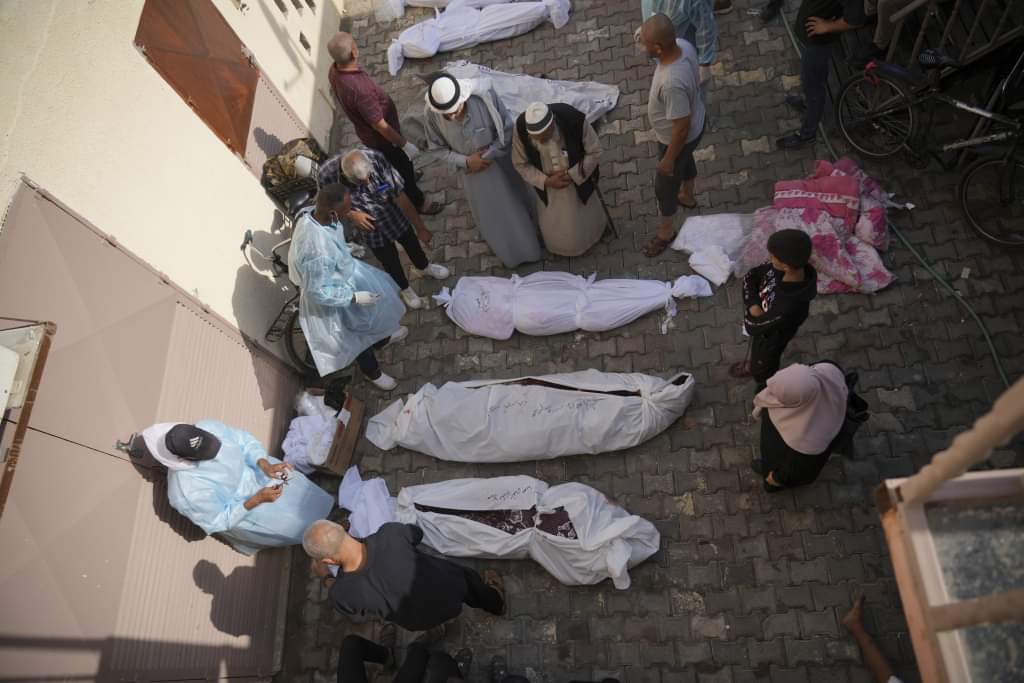
The recent Zionist Israeli regime’s serial attacks on defenceless Palestinians in Rafah, a city in the Southern Gaza Strip, is an issue of serious concern that should never be swept under the carpet. The gory pictures making the rounds on social media platforms are horrifyingly disturbing, to say the least.

What was once a shelter for homeless Palestinians- courtesy of the Israeli regime’s act of terror on the former- is now turned into a slaughterhouse. According to the Director of the United Nations Relief and Works Agency for Palestine Refugees in the Near East (UNRWA), all the 36 shelters established for Palestinian refugees in Rafah are now empty. People have either been killed or fled.

Since the beginning of this heinous act, the hashtag #AllEyesOnRafah has been trending and has been shared by millions of people across social media platforms to highlight the imperative of putting an end to the continued suffering of the Palestinian people.

The attack on Rafah is a continuation of a decades-long act of usurper terrorism and settler-colonialism aimed at pushing for the heinous agenda of Zionist Imperialist expansionism right at the heart of Palestinian land, a holy place for Muslims, Christians and Orthodox Jews alike. Since July of the previous year, the illegitimate state of Israel has ruthlessly intensified its attacks on the defenceless Palestinians, this time in particular targeting hospitals, schools, worship centres, and refugee camps.

The United Nations Office on Palestinian Affairs has put the death toll from this heinous crime to around 34,000 people. However, according to a report from the Gazan Ministry of Health (MOH), no fewer than 36,756 have been killed since the beginning of the operation. Nevertheless, the figures underscore the true extent of the ongoing Israeli genocide in various Palestinian territories.

According to another report from UNICEF, children account for over 40% of the mass casualties. This is to say for every 100 people killed, over 40 of them are children. Indeed, Palestine is a grave for women and children. Nowadays, few children live to witness their first birthdays, courtesy of the murderous Israeli regime.

It is worth noting that the deafening silence of the international community on this issue of magnanimous human rights violations is a shame on us all. Under our watch, the Illegitimate state of Israel is waging an all-out war against innocent Palestinians – on their own land – in a bid to expand their settler-colonialist agenda.

We all have a responsibility toward the oppressed people of Palestine. Now that the Israeli regime has shown that it has no regard for international laws, as it continued its terrorist operations in complete disregard for all known such laws and provisions, here are some ways we can help the people of Palestine:

We can engage in demonstrations/rallies/sit-ins in our workplaces, worship centres, schools, streets, etc., to show our solidarity with the oppressed people of Palestine. This should also send a clear message to the Israeli regime and its allies that the teeming world of humanity is watching them and will no longer sit idly as innocent Palestinians are massacred in cold blood.

In addition, we can demand and mount pressure on our governments to cut all diplomatic ties and stop all economic dealings with the murderous, illegitimate Israeli regime; and to officially recognize the regime as the terrorist state that they truly are! Our countries should borrow a leaf from such countries as Spain, Norway and Ireland, who have recently followed the footsteps of other dozen countries that cut off all ties with Israel and officially recognize the Palestinian state.

We can also demand that the International Community impose sanctions against Israeli officials for their unspeakable war crimes against innocent Palestinian civilians. In the same vein, an economic blockade should be enforced on the very organizations that fund the activities of the terrorist Israeli Defense Forces (IDF).

Furthermore, we can boycott all products produced by Israel and the companies that support or fund their act of terrorism. This will cause a huge economic blow to the murderous regime and will hamper their ability to locally produce or buy arms which they use to kill innocent and defenceless Palestinian civilians.

At the individual level, we can contribute to the Palestinian struggle for freedom and the right to self-determination by sending relief aid either directly (through reliable #GoFundMe projects) or through their representatives in various countries. We can also help raise awareness by joining campaigns on social and print media regarding the flight of the Palestinian people.

What is happening in Palestine is arguably the worst humanitarian crisis of our time. Our silence is giving way to more Israeli genocide. We are enablers of this very crime against humanity until we wake up and do the needful. As the South African anti-apartheid movement leader Nelson Mandela rightly puts it during his Presidential inaugural speech in 1994: “We know too well that our Freedom is incomplete without the freedom of the Palestinian people”.

Najeeb Maigatari wrote via maigatari313@gmail.com.

Harrowing tales of people who deny God

By Uzair Adam Imam

In a stark reminder of the omnipotent power of God, a collection of tales compiled by Ghanaian system engineer, Kuame Oliver, have revealed the devastating consequences faced by individuals who arrogantly mocked the Almighty.

These accounts, shared by The Daily Reality, serve as a warning to those who would dare challenge God’s authority.

The list of tragic figures includes renowned physicist Stephen Hawking, legendary musician John Lennon, former Brazilian President Tancredo Neves, and iconic actress Marilyn Monroe.

Other include: Cazuza, a bi-sexual Brazilian composer, singer, and poet, earned the title “The Poet Who Defied God” for his brazen stance against the Almighty. Bon Scott, the lead singer of AC/DC, became known as “The Rockstar Who Challenged God” for his defiant lyrics and lifestyle. Christine Hewitt, a Jamaican journalist and entertainer, was dubbed “The Journalist Who Mocked God” for her outspoken disdain towards religion.

The list went on to include: a group of friends in Campinas, Brazil, tragically learned the consequences of defiance, earning the somber title “The Fatal Car Ride: A Tale of Defiance”.

Lastly, the people of Brazil, who mocked God during the Rio Carnival Parade, suffered a devastating flood, a calamity that became known as “The Devastating Flood: A Consequence of Mock

Each story recounts how these individuals openly disparaged God, only to meet with calamitous ends shortly thereafter.

While skeptics may dismiss these incidents as mere coincidences, Oliver’s compilation serves as a testament to the enduring power of faith and the importance of humility in the face of the divine.

These tales urge us to recognize God’s sovereignty and seek His guidance, lest we suffer a similar fate.

As the debate surrounding these accounts intensifies, one message resonates clearly: acknowledge and honor God, and live a life filled with purpose, blessings, and divine protection.

FG delegation meets with Benin Republic to reopen Tsamiya Border

By Sabiu Abdullahi 

A high-level delegation from the Federal Government of Nigeria met with counterparts from the Benin Republic on May 21, 2024, to discuss the reopening of the Segbana-Tsamiya border post in Kebbi State.

The meeting aimed to fast-track the operationalisation of the border post, which is expected to enhance regional integration and boost economic activities. 

The Nigerian delegation included the Honorable Minister of Foreign Affairs, Alhaji Yusuf Maitama Tuggar, Executive Governor of Kebbi State, Dr. Nasir Idris, Comptroller General of the Nigeria Customs Service, Adewale Adeniyi, and other dignitaries.

The Benin Republic delegation was led by the Director General of the Benin Customs Administration, Adidjatou Hassan. During the meeting, the delegations discussed comprehensive issues surrounding the border post’s opening, including logistics, security measures, and economic impact.

Feasibility studies were presented, outlining expected benefits such as increased trade and potential challenges that might arise.

The deliberation also included setting timelines and identifying necessary infrastructure to ensure a smooth operation. 

The Comptroller-General of Customs, Adewale Adeniyi, indicated the importance of engagement between the two countries to enhance the economy.

“To ensure closer working and economic relations between Nigeria and the Benin Republic, we have been working with our colleagues from the Beninese Customs Administration to ensure that we bring the economy together through easy border crossing with goods,” he said. 

The Director General of the Benin Customs Administration, Adidjatou Hassan, appreciated the move to reopen the border, which will strengthen trade activities and bilateral ties between the two nations.

“This development is expected to increase economic cooperation and strengthen bilateral ties between the two nations. We are committed to sustaining our seamless collaboration with the Nigeria Customs Service while enhancing security at our borders and trade activities,” she said. 

The meeting concluded with a summary of the key points discussed and a formal statement of commitment from both sides.

An agreement was reached to schedule a follow-up meeting in June 2024 to monitor progress and address any outstanding issues.

A bi-national committee meeting was also agreed upon, with a defined commitment for subcommittees to submit their reports within two weeks to streamline seamless efforts towards border reopening.

Funeral procession of Raisi, entourage begins

By Uzair Adam Imam

Thousands of Iranians gathered in the streets on Tuesday to bid a final farewell to President Ebrahim Raisi and seven members of his entourage who lost their lives in a tragic helicopter crash.

The mournful procession began at a central square in the northwestern city of Tabriz, the destination Raisi was headed to when the helicopter went down on Sunday.

With somber faces and waving Iranian flags, the crowd paid their respects to the late president and his companions, carrying portraits of Raisi as they marched through the streets.

The funeral procession was a poignant display of national grief and solidarity, as Iranians came together to honor the memory of their leader and the lives lost in the devastating crash.

International HR Day: Shaping the new future

By Imam-Malik Abdullahi Kaga (ACIHRM, CPM, PGD-HRM)

Today, Monday, May 20, 2024, marks International Human Resource Day, a celebration of the vital role HR professionals play in shaping the future of work. As a Certified Personnel Manager, I write to celebrate this special day in line with the theme: Shaping the New Future.

International HR Day was founded by the European Association for People Management (EAPM) and was first observed in 2019. Its aim is to recognise the momentous contributions of HR professionals globally. Prior to this day, the then-Jamaican Governor-General, Sir Patrick Allen, proposed the celebration in 2013 but was not successful in bringing the day to life. In 2018, the Jamaican government declared the day.

Since then, it has become an avenue for HR practitioners to come together, share best practices, and discuss the latest trends and challenges by organising webinars, workshops, et al in the industry.

This year’s HR Day is tagged with the theme: Shaping the New Future, and sub-themes of Championing Ethical Tech and AI Integration, Excellence in People Management, Continuous Investment in Skills and Education, Redefining the Future Workplace.

Championing Ethical Tech and AI Integration

The integration of technology and AI has revolutionised the way our department works. However, it also raises important ethical considerations. Despite the increasing reliance on technology and AIs, it’s very important that HR professionals champion ethical practices to ensure these technologies are used responsibly and for the betterment of organisations, companies, and society at large.

This includes implementing AI systems that are transparent, unbiased, and protect employee data privacy.

Excellence in People Management

MSF has this adage: “MSF is People.” HR professionals play a crucial role in attracting, retaining, and developing top talent. At the heart of any successful organisation is its people. This requires a deep understanding of the changing needs and expectations of employees.

By nurturing a culture of excellence in people management, HR can improve employee engagement and create a positive work environment. This involves adopting a holistic approach to talent management, spotting the diverse needs of global labourers, and providing opportunities for growth and development.

Continuous Investment in Skills and Education

The stride of technological change demands that employees continually update their skills to remain relevant. HR invest in education and training programs that arm workers with the skills needed to succeed in their roles. 

This includes providing access to online learning platforms, workshops, and mentorship opportunities. For example, organisations like the MSF have a department called learning and development, where the staff’s KSA are developed. MSF also has a platform called Tembo for its staff to learn and develop. By prioritising continuous learning, HR can future-proof the workforce, initiate innovation, and stay ahead of the competitive world.

As we celebrate International HR Day, we urge all departments in every organisation, whether humanitarian, government, or profit-based, to adapt the culture of continuous learning for professional growth and excellent work outcomes.

Happy International HR Day to the “retention strategists”

Imam-Malik Abdullahi Kaga is a member of the Chartered Institute of Human Resources Management and a Certified Personnel Manager. He writes from Maiduguri and can be reached via imammalikabdullahikaga@gmail.com.

Teen dies after eating spicy crisp in viral ‘One Chip Challenge’

By Uzair Adam Imam

A US teenager died of cardiac arrest after participating in a social media challenge daring people to eat a single extremely hot tortilla chip, an autopsy revealed Thursday.

Harris Wolobah, a 14-year-old from Massachusetts, died in September after participating in the so-called “One Chip Challenge.” The challenge involved a single chip produced by Paqui dusted with Carolina Reaper and Naga Viper peppers.

The dare has evolved over the years, with different peppers used each time.

The local chief medical examiner determined that Harris died of cardiac arrest after ingesting food with a large amount of a chilli pepper extract called capsaicin, according to the autopsy report seen by AFP. 

The autopsy also concluded that the teen had an enlarged heart, which could have contributed to his death.

Days after his death, Paqui removed the product—packaged in a coffin-shaped box with a red skull and marked ‘extreme heat’—from store shelves.

In California, three youths were hospitalized after taking part in the dare, and seven got sick in Minnesota for the same reason, according to media reports.