International

Brazil bans phones in schools, joining global trend

By Abdullahi Ibrahim

To enhance concentration and minimize disruptions in Brazilian classrooms, the use of mobile phones by elementary and secondary school students has been officially prohibited during school hours.

The new policy aims to enhance academic performance and encourage healthier social interactions among students.

Brazil joins a growing list of countries, including the Netherlands, France, and Italy, which have implemented similar measures to address concerns about the negative impact of mobile phone use on education.

Proponents of the ban argue that limiting phone use fosters a more engaging learning environment, while critics highlight potential challenges in enforcing the policy and addressing emergencies.

Education officials in Brazil have expressed optimism about the initiative, emphasizing its role in creating a more focused and collaborative atmosphere in classrooms.

The global trend reflects a broader debate on balancing technology’s benefits with its potential drawbacks in education.

Dual Disasters: LA wildfires and Gaza war

By Sulaiman Abdullahi

Los Angeles is currently experiencing severe wildfires that have burned over 26,000 acres. This has led to a state of emergency and mandatory evacuations for approximately 150,000 residents. 

The Palisades Fire has caused significant destruction, including the loss of numerous buildings and the deaths of at least 16 people. High winds and limited firefighting resources have complicated efforts.

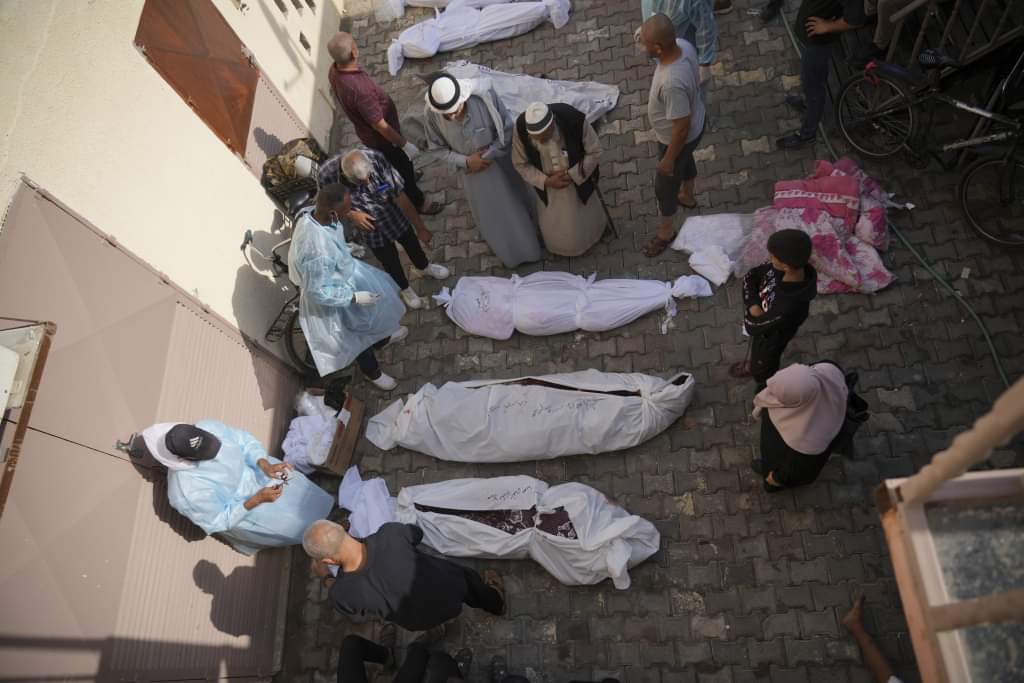
In contrast, Gaza is enduring a humanitarian crisis due to prolonged conflict, resulting in over 46,000 Palestinian deaths and extensive damage to infrastructure, including water and sanitation facilities, due to Israel’smassive attacks on the enclave. The United Nations estimates that recovery and rebuilding will take years and require billions in funding.

While both regions are experiencing severe destruction, the causes differ: Los Angeles is facing a natural disaster, while Gaza’s devastation stems from military conflict. The recovery for both areas will demand substantial resources, time, and international assistance.

Several social media users share pictures of the two devastations. Many also make comparisons. Some view the LA fire as punishment for U.S. support of Israel, while others see it as a natural disaster that can affect anyone, anywhere.

Africa, France and the New World 

By Zayyad I. Muhammad

Millions of Africans have emigrated to Europe, America, and other parts of the world. This emigration is driven by both push and pull factors — economic challenges, political instability, conflicts, and the pursuit of better job opportunities and more accessible social services.

Despite often being stringent in their immigration policies, receiving countries have found ways to benefit from this influx. They tap into the labour, expertise, and talent of these immigrants. Rather than solely viewing immigration as a burden, many of these nations recognize the potential gains from incorporating skilled and unskilled labour into their economies.

Several West African countries have reassessed and severed their military ties with France in recent years. Notable examples include Mali in 2022, Burkina Faso in January 2023, Niger Republic in 2024, Chad in November 2024, Senegal in December 2024, and Ivory Coast in December 2024. These moves signal a significant shift in regional dynamics as these nations seek to assert greater sovereignty and explore alternative partnerships. Some have terminated defence agreements outright, while others are exploring new international collaborations.

International relations experts see these developments as pivotal. However, they caution that these countries might merely replace one foreign power with another without concrete plans for mutual benefits. For instance, in Niger Republic, the Russian presence, along with the mercenary group Wagner, has not brought substantial change. Wagner’s operations in several African nations, such as Mali, have drawn criticism, with human rights groups accusing its forces of severe abuses.

Reuters reported that: “French President Emmanuel Macron recently expressed frustration over the perceived lack of acknowledgement from certain African nations regarding France’s military interventions in the Sahel region. Speaking at a foreign policy conference with French ambassadors, Macron claimed that some African leaders had “rewritten history” concerning France’s role in combating Islamist militants since 2013. He argued that these states might have lost their sovereignty without French military support.

However, officials from countries like Chad and Senegal have pushed back, asserting that their decisions to expel French troops were made independently and in the best interest of their nations. Chadian Foreign Minister Abderaman Koulamallah criticized Macron’s remarks as disrespectful, while Senegalese Prime Minister Ousmane Sonko emphasized that Senegal’s decision was made without any negotiation with France.”

For Africa to progress, its leaders must define the continent’s needs, recognize its current position, and set a clear direction for the future. Africa must move beyond the outdated narrative that external forces are the primary obstacles to its development. The global landscape has evolved, and Africa must engage with international partners based on mutual respect and benefit.

For example, France and Nigeria have an excellent trade relationship, with Nigeria serving as France’s leading trading partner in sub-Saharan Africa. So, if country A sees the French as a bottleneck, you don’t expect Nigeria to do so. 

If countries like France, China, Russia, or the United States want to invest in Africa, they must do so with clear, mutually beneficial agreements. African resources should be processed on African soil, ensuring the continent gains more than raw material exports. Africa needs technology transfer, expertise, and infrastructure development to foster sustainable growth.

Africa must adopt a global perspective and interact with nations based on their strengths in areas like United Nations status, military power, industrial capacity, African diasporas, trade volumes, and financial influence. Only through strategic, well-negotiated partnerships can Africa harness its full potential and assert its rightful place in the global arena.

Zayyad I. Muhammad writes from Abuja via zaymohd@yahoo.com.

Video of Nigerian, French troops unloading supplies debunked as old footage

By Uzair Adam 

A video depicting Nigerian and French troops unloading supplies in a coordinated manner has garnered significant attention on social media.

The Daily Reality reports that the footage has sparked controversies surrounding France’s alleged intentions in Nigeria.  

The controversy intensified after Mohammed Idris, Nigeria’s Minister of Information and National Orientation, dismissed claims that the country had ceded any part of its territory to France. 

Idris issued a statement on Thursday addressing allegations that Nigeria was conspiring with France to destabilize the Niger Republic through terrorism.  

Mahdi Shehu, a public affairs commentator, had previously alleged plans to establish a French military base in northeastern Nigeria. 

He claimed the plans gained traction after Femi Oluyede, Chief of Army Staff (COAS), reportedly hosted French soldiers.  

In a video accompanying Shehu’s since-deleted social media post, Nigerian troops were seen offloading supplies, including bags of rice, from trucks while French soldiers unloaded a cargo plane. 

The scene included vehicles, personnel in uniform, and a bus displaying a French flag. In the video, a Nigerian soldier stated that the troops had recently left a counterterrorism training centre.  

However, investigations by TheCable revealed that the video has been online since January 2013. 

According to a report by the Associated Press (AP), the footage shows ECOWAS troops, including 156 Nigerians, arriving at Senou International Airport in Bamako, Mali. 

The mission was part of a regional peacekeeping effort to stabilize Mali during a crisis.  

Reacting to Idris’ statement, Shehu urged the government to halt its denials. 

Meanwhile, Nigeria’s defence headquarters dismissed the allegations as “baseless.”  

The resurfaced video highlights the challenges of misinformation in public discourse, underscoring the need for careful verification before making conclusions or spreading claims.

India’s ex-prime minister Manmohan Singh passes away at 92

By Sulaiman Abdullahi

Manmohan Singh, the renowned economist and former Prime Minister of India, has passed away at the age of 92, according to local media reports on Thursday.

Singh, who served two consecutive terms as prime minister, was instrumental in steering India’s economic liberalization during his tenure as finance minister.

A respected economist-turned-politician, he also held the position of governor of India’s central bank.

The former leader had been ailing and was admitted to the All India Institute of Medical Sciences (AIIMS) in New Delhi, where he reportedly passed away late on Thursday.

Singh leaves behind a legacy of economic reforms and leadership that transformed India’s trajectory on the global stage.

Kemi Badenoch on the cross of ignorance: A rejoinder to her misrepresentation of British and Northern Nigeria’s history

By Sanusi Maikudi 

In her recent remarks, Rt. Hon. Kemi Badenoch, the leader of the UK Conservative Party, reportedly dismissed associations with Nigeria beyond her Yoruba heritage. She distanced herself from Northern Nigeria and associated it narrowly with Islamism. These comments, replete with historical ignorance and political misjudgement, reflect poorly on her understanding of the intertwined histories of Britain and Nigeria and, by extension, her role as a leader in one of the world’s oldest democracies.

It is troubling that Badenoch, a figure who aspires to statesmanship, would exhibit such a parochial view of her heritage and the complex relationship between the United Kingdom and Northern Nigeria. Her remarks not only betray an ignorance of British colonial history but also reflect a failure to grasp the significance of global citizenship—an essential quality for anyone seeking to lead in a post-imperial world.

Misunderstanding History

Badenoch’s attempt to disassociate herself from Northern Nigeria exposes a glaring lack of awareness about the region’s rich and diverse history. Long before colonialism, Northern Nigeria boasted a sophisticated socio-political structure exemplified by the Sokoto Caliphate and other emirates. These entities maintained written records, produced scholarly works in Arabic, and upheld organised governance systems.

British colonial explorers and missionaries documented these structures extensively. Figures like Hugh Clapperton, Mungo Park, and Frederick Lugard not only travelled through Northern Nigeria but also admired its governance systems. The British colonial administration, recognising the efficacy of Northern Nigeria’s traditional leadership, adopted the system of indirect rule to govern the region. This is a testament to the historical and administrative depth of the region—a depth Badenoch seems to have overlooked.

Furthermore, the Christian missionaries who ventured into Northern Nigeria risked their lives not to trivialise or divide but to understand and engage with its people. Their contributions are preserved in archives that form part of Britain’s collective memory. Denying or dismissing this history is ignorant and disrespectful to the legacy of British-Nigerian relations.

A Failure of Diplomacy

As a leader in a global power, Badenoch is expected to demonstrate diplomatic acumen and cultural sensitivity. Her dismissive remarks, however, suggest a narrow worldview that is unbecoming of someone in her position. Britain’s legacy as the patron of the Commonwealth—a union of diverse nations shaped by shared history—requires its leaders to embody inclusivity and understanding.

Badenoch undermines her credibility by distancing herself from Northern Nigeria in such a derogatory manner. Her comments seem less like the musings of a seasoned statesperson and more like pandering to fringe nationalist sentiments. Was she addressing British society, which has long recognised and documented the importance of Northern Nigeria? Or was she appealing to a clandestine audience of Yoruba nationalist agitators? Either way, her remarks reveal a political novice more concerned with short-term rhetoric than long-term statesmanship.

The Irony of Her Position

Badenoch’s position as a British politician of Nigerian descent is itself a product of the historical forces she now dismisses. Like many others from former colonies, her parents benefited from the opportunities created by Britain’s imperial legacy. She was born in London, a city shaped by centuries of global migration and colonial history. Ironically, the very system she now seeks to lead is a product of the multiculturalism and interconnectedness she seems to reject.

It is also worth noting that Badenoch’s rise to prominence coincides with the UK’s struggles with political leadership. The Conservative Party’s internal crises have eroded its cadre of charismatic leaders, paving the way for figures like Badenoch. Yet her divisive rhetoric and lack of historical understanding alienate mature voters and diminish her standing as a potential statesperson.

Populism and the Far-Right Trap

While Badenoch may be tempted to align herself with the growing populist and far-right ideologies in Europe, she is ultimately a victim of these movements, not a beneficiary. The same far-right ideologies that demonise immigrants and minorities would not spare someone of her background. Her attempts to position herself as “more Catholic than the Pope” by demonising others only highlight her vulnerability within such spaces.

Conclusion

Rt. Hon. Kemi Badenoch’s recent remarks reveal a troubling ignorance of British and Nigerian history. Her attempt to distance herself from Northern Nigeria not only disrespects the region’s rich heritage but also undermines her credibility as a leader in a globalised world. Her rhetoric, steeped in parochialism and divisiveness, starkly contrasts the qualities of diplomacy, wisdom, and inclusivity required of a true statesperson.

Rather than deriding others, Badenoch would reflect on the interconnected histories of the nations she represents and aspire to a leadership style that unites rather than divides. As history has shown, those who fail to learn from the past are often relegated to its margins. Let her words serve as a reminder of the perils of ignorance and the importance of informed leadership in a complex, interconnected world.

Sanusi Maikudi wrote from the Network for Justice, Kaduna, Nigeria, via sanusihmaikudi@yahoo.com.

Kano scholar wins prestigious Doctoral Dissertation Award in Chicago

By Muhsin Ibrahim

Kano-born historian Dr Abdullahi Hamisu Shehu has been awarded the 2023 African Studies Review/Cambridge University Press Award for Best Africa-Based Doctoral Dissertation at the 67th ASA Annual Meeting held in Chicago, United States of America, from December 12 to 14, 2024.

The recognition celebrates Dr Shehu’s groundbreaking research, titled “Procession, Pilgrimage, and Protest: A Historical Study of the Qadiriyya-Nasiriyya and Islamic Movement in Nigeria Public Religiosity in Northern Nigeria, 1952-2021.”

Dr Shehu, a faculty member at the Department of History, Bayero University, Kano, earned his PhD from Stellenbosch University in South Africa. His dissertation examines the dynamic interplay between public religiosity and identity formation in northern Nigeria, focusing on two key movements: the Qadiriyya-Nasiriyya, a reformed Sufi order, and the Islamic Movement in Nigeria (IMN), a Shia revivalist group.

His research explores the historical, social, and religious aspects of public demonstrations, such as the Maukibi (Sufi processions) and the Muzahara and Tattaki (Shia protests and symbolic journeys). According to Dr Shehu, these practices represent a unique contest for public space and visibility between competing religious identities in the post-colonial northern Nigerian landscape.

An accomplished scholar, Dr. Shehu is also a Fellow of the Next Generation Social Sciences in Africa (Social Science Research Council, New York) and a Lisa Maskell Fellow (Gerda Henkel Foundation, Germany). Over his career, he has participated in numerous academic conferences and workshops worldwide.

His work sheds new light on the role of public space in shaping religious identity and offers fresh perspectives on the sociopolitical complexities of northern Nigeria. Dr. Shehu’s achievement highlights his academic excellence and underscores the growing impact of African scholarship on global discourse.

US-based Nigerian scholar Dr Fahad Usman develops innovative, non-invasive method for diabetes testing

By Uzair Adam

In a ground-breaking advancement for diabetes diagnostics, Nigeria-born Dr Fahad Usman, an Assistant Professor of Optical Engineering Technology in the United States, has introduced a highly sensitive optical biosensor capable of non-invasive diabetes screening.

Dr Usman’s pioneering work focuses on a surface plasmon resonance (SPR) biosensor that detects exhaled breath acetone, a key biomarker for diabetes. This innovative approach offers an alternative to traditional blood glucose tests, which are invasive and often painful.

Dr Usman’s research, published in top journals like Results in Physics and Polymers Journal, presents a novel ternary composite material made from polyaniline, chitosan, and reduced graphene oxide. With enhanced electrical conductivity and thermal stability, this material underpins the SPR biosensor, allowing it to detect acetone concentrations as low as 0.88 parts per billion. 

This collaboration with researchers from Malaysia, France, Saudi Arabia, and the U.S. addresses the global diabetes crisis. With over 537 million affected worldwide and projections of 783 million by 2045, this innovation promises a significant impact. According to the National Institutes of Health, over 37 million people in the U.S. are affected by diabetes. 

Due to its non-invasive nature, the optical sensor ensures greater accuracy, sensitivity, and reliability and enhances patient compliance. 

Dr Usman’s work represents a significant leap forward in healthcare innovation. It positions the U.S. at the forefront of global scientific advancements.

This technology offers potential beyond healthcare, with broader industrial applications in optical sensing and materials science.

Ghanaians reject ruling NPP: A caution for Nigeria’s APC

By Zayyad I. Muhammad

Ghanaians have voted out the ruling New Patriotic Party (NPP) in the presidential election on 7 December 2024. The party’s candidate, Vice President Dr Mahamudu Bawumia, has conceded defeat to former President John Dramani Mahama of the opposition National Democratic Congress (NDC).

The NPP’s downfall is attributed mainly to Ghana’s economic woes. Under its leadership, the country has experienced its worst financial crisis in decades, marked by skyrocketing food prices, rampant unemployment—particularly among the youth—soaring living costs, and an overwhelming debt burden.

Although no party in Ghana has ever won a third consecutive term, many observers and analysts believe the NPP was punished for failing to alleviate citizens’ economic hardship. Despite criticisms of Mahama’s previous tenure—characterised by a weak economy, allegations of corruption, and widespread power outages—Ghanaians have opted for his return. Mahama has promised to chart a new course for the nation – though politicians are like that!

What makes Ghana’s December 7 presidential election particularly striking is that even supporters of the NPP welcomed their party’s defeat. This unusual occurrence reflects the extent of the economic challenges faced by Ghanaians—challenges they claim are unprecedented in recent generations.

Ghana’s presidential election result sends a strong message and serves as an early warning to Nigeria’s ruling All Progressives Congress (APC). For the majority of voters, particularly the masses, what truly matters are tangible results: affordable food, reduced living costs, and economic relief. They care little for figures, statistics, reforms, or long-term projections if their immediate needs remain unmet.

Nigerians today face similar struggles: soaring food prices, escalating petrol costs, and crippling transportation fares. These same issues that brought down Ghana’s NPP threaten to undermine Nigeria’s APC, which is already losing sympathy in its traditional strongholds, especially the North. However, the APC still has time to take stock, address these challenges, and implement meaningful changes.

Ghana’s ruling NPP’s defeat is a stark warning to Nigeria’s APC. When the economy fails, so does the people’s trust. Voters, particularly those struggling to meet their basic needs, will not hesitate to hold governments accountable at the ballot box. 

Rising food prices, high living costs, and unemployment are not just economic indicators—they are everyday realities that define the quality of life for ordinary citizens. If the APC fails to address these pressing challenges and provide visible, immediate solutions, it risks suffering a fate similar to Ghana’s ruling NPP. 

The Ghanaian experience highlights a universal truth: no amount of political rhetoric or long-term promises can outweigh the frustration of citizens whose daily struggles remain unresolved.

Zayyad I. Muhammad writes from Abuja, zaymohd@yahoo.com.

Rabi’u Kwankwaso Bilingual College, Niamey, PTA requests Governor Yusuf to return their children to school

By Abdullahi Sulaiman

The Parents Teachers Association of Rabiu Musa Kwankwaso Bilingual College, Niamey, Niger Republic, has appealed to His Excellency, Governor Abba Kabir Yusuf, to honour the promise made by the former Governor of Kano, Dr Rabiu Musa Kwankwaso to return their children to their school in Niger Republic. 

The students have not been in school for over a year now, while their peers in the Niger Republic have already resumed classes in the new session five weeks ago.

Dr. Ibrahim Habu, Chairman of the PTA, commends Governor Yusuf for prioritising education with substantial budget allocations. However, he urges him to address the unresolved issues of Bilingual College students in Kano from the last academic session. He calls for immediate action to ensure no child from the college is left idle at home.

The PTA Chairman urges all stakeholders to work collaboratively to fulfil Rabiu Musa Kwankwaso’s vision of establishing a Bilingual college, emphasising the importance of equipping students with bilingual skills in French and English to enhance self-reliance and global competitiveness among Kano’s next generation of citizens.

The Chairman also calls on the people of Kano State to continue supporting Governor Yusuf’s educational initiatives. These initiatives will ensure sustainable development in the education sector and contribute to the overall development of Kano State.