International

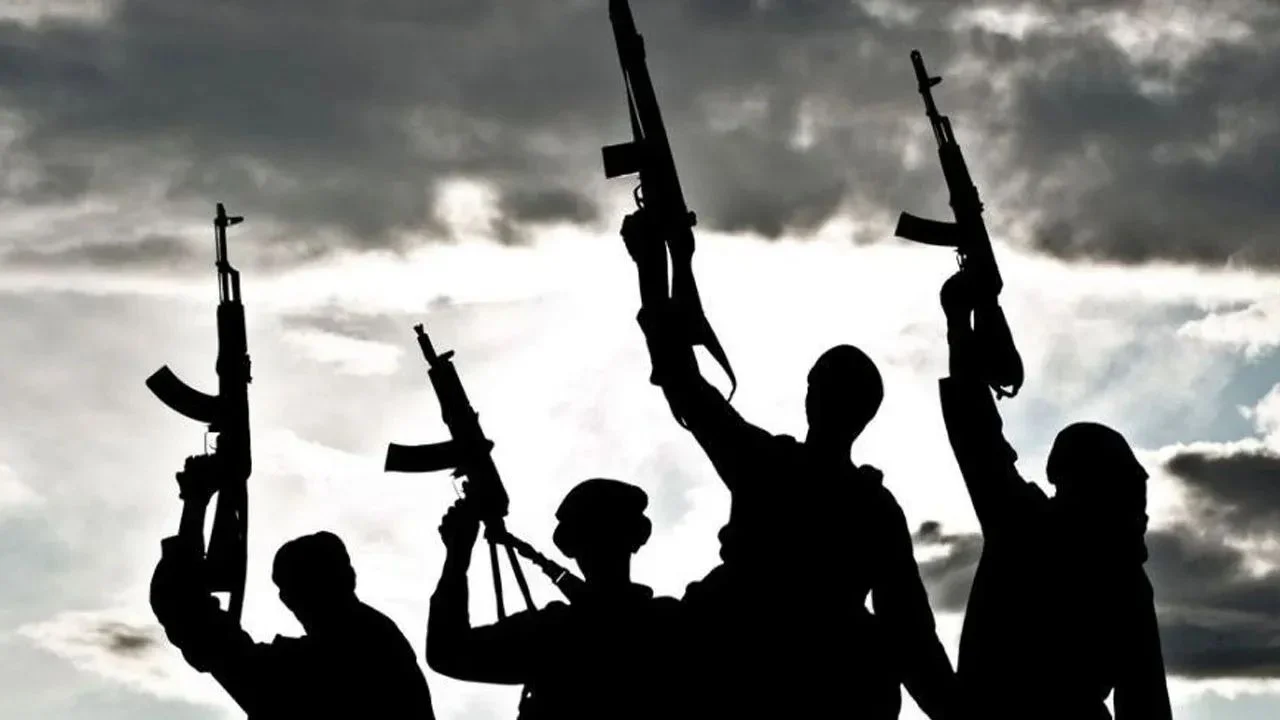
U.S. issues travel warning, flags 18 Nigerian states as high-risk zones

By Abdullahi Mukhtar Algasgaini

The United States government has issued a new travel advisory, warning its citizens against visiting 18 Nigerian states due to escalating security and health risks.

The advisory, released Tuesday, cited widespread violent crime, terrorism, abductions, and poor healthcare infrastructure as key concerns.

The U.S. Department of State classified Nigeria among several African countries under its highest risk categories, advising against all non-essential travel to certain regions and urging increased caution nationwide.

Other countries listed include Somalia, Libya, Burkina Faso, South Sudan, the Democratic Republic of Congo, Uganda, Burundi, Mauritania, Guinea-Bissau, Niger, and Chad.

In Nigeria, the advisory designates Borno, Yobe, Kogi, and northern Adamawa states as highly dangerous due to terrorism and frequent kidnappings.

It also flagged Bauchi, Gombe, Kaduna, Kano, Katsina, Sokoto, and Zamfara states for rampant abduction cases.

Meanwhile, Abia, Anambra, Bayelsa, Delta, Enugu, Imo, and Rivers (excluding Port Harcourt) were noted for persistent criminal activity and violent gang operations.

“Reconsider travel to Nigeria due to crime, terrorism, civil unrest, kidnapping, armed gangs, and inconsistent availability of health care services. Some places in Nigeria have an increased risk. Overall, all locations carry significant security risks,” the U.S. Mission in Nigeria stated.

The advisory emphasized that violent crime—including armed robbery, assault, carjacking, and rape—is widespread, and that travelers could be exposed to kidnapping and hostage-taking, especially along major roads.

This latest warning underscores growing global concern over Nigeria’s internal security challenges and places increased pressure on authorities to address rising insecurity across multiple regions.

Columbia University disciplines students over pro-Palestinian protests

By Muhammad Abubakar

Columbia University has announced disciplinary actions against dozens of students involved in pro-Palestinian demonstrations on its campus earlier this year. Measures taken include suspensions, expulsions, and the revocation of degrees, according to a university spokesperson.

The protests, which drew national attention, had sparked controversy over their tone and messaging. The Trump administration, citing concerns of antisemitism, accused the demonstrators of promoting hate speech and paused federal funding to the university in March.

University officials stated that the disciplinary process was based on violations of campus policies, not political content. “We support free expression, but actions that disrupt university operations or threaten community safety are subject to consequences,” the spokesperson said.

Student and civil rights groups have condemned the punishments, calling them excessive and politically motivated. Advocacy organizations continue to demand transparency in the university’s disciplinary procedures.

Nigerian physicist appointed to UN scientific panel on nuclear war

By Hadiza Abdulkadir

KANO — Nigeria has earned international recognition following the appointment of Professor Rabia Sa’id, a renowned physicist from Bayero University Kano, to a newly established United Nations independent scientific panel tasked with assessing the impacts of nuclear war.

The 21-member panel, constituted under UN Resolution 79/238, will provide a comprehensive scientific report on the consequences of nuclear conflict by 2027. The panel is part of a broader global initiative aimed at strengthening nuclear disarmament efforts and promoting peace through evidence-based research.

Professor Sa’id’s inclusion in the panel underscores Nigeria’s increasing influence in global peacebuilding, science diplomacy, and advocacy for nuclear non-proliferation. Her appointment is being hailed as a significant milestone for Nigerian science and for women in STEM across Africa.

A respected scholar and advocate for science education and sustainable development, Professor Sa’id brings to the panel a wealth of academic experience and a strong commitment to global security.

Her appointment has been widely celebrated within Nigeria’s academic and diplomatic communities as a positive step toward the country’s deeper engagement in global scientific and humanitarian initiatives.

Suspected racist’s brutal murder of Algerian lady in Germany sparks outrage

By Sabiu Abdullahi

The fatal stabbing of 26-year-old Rahma Ayad, an Algerian nursing trainee, in the German town of Arnum near Hanover has ignited protests and diplomatic conversations between Algeria and Germany.

Many are urging that the incident be treated as a racially motivated hate crime.Rahma was killed on the morning of 4 July in the stairwell of her apartment building.

According to German police and eyewitness reports, her screams were heard by neighbours who called emergency services. She was discovered with multiple stab wounds to her chest and shoulder.

Despite the rapid arrival of medical personnel, she succumbed to her injuries shortly afterward.A 31-year-old German man, who resided in the same building, was arrested later that day.

While he remains in custody, authorities have yet to officially confirm a motive or file formal charges.

Rahma’s family alleges that she had previously expressed concerns about her safety.

They claim she had been repeatedly harassed by her neighbour, particularly because of her Arab identity and choice to wear the hijab.

In an interview with Al-Araby TV, her mother revealed that Rahma had felt unsafe for months due to the neighbour’s behaviour, which reportedly included verbal abuse.

Algerian community activists in Germany echoed these concerns, stating that the suspect had a history of making derogatory remarks directed at Rahma.

They are now calling on authorities to treat the incident as a case of racist violence rather than dismissing it as a random act or linking it to mental instability.

The killing has sparked widespread protests across Germany.

On Tuesday, demonstrators gathered outside Rahma’s residence in Arnum, holding a rally to demand justice and draw attention to what they described as rising Islamophobia across Europe.

The protesters also criticised the muted response from German officials and the limited coverage the story received in mainstream media.

“If the killer had been a Muslim and the victim German, this would be headline news everywhere,” one protester told Al-Araby TV.

Another participant accused German authorities of applying justice “only selectively”.

The incident has stirred strong emotions online as well.

A user on X (formerly Twitter) commented, “People travel to Europe for safety and a better life […] and they end up like this.”

Responding to the outcry, Algeria’s Secretary of State for National Community Abroad, Sofiane Chaib, held talks with the German ambassador in Algiers.

He described Rahma’s death as a “heinous crime” and called for greater protection of Algerians living in Germany.

In a related gesture, the Algerian consulate in Germany has committed to covering the expenses for transporting Rahma’s body back to Oran, where she will be laid to rest.

Trump applauds Liberian president’s ‘beautiful’ English

By Sabiu Abdullahi

United States President Donald Trump has drawn attention with remarks made during a meeting with African leaders at the White House, where he praised Liberian President Joseph Nyuma Boakai’s English-speaking skills.

After Boakai delivered his remarks, Trump responded with visible admiration. “Such good English,” the president said.

He then asked, “Where were you educated? Where? In Liberia? Well, that’s very interesting. It’s beautiful English.”

He went further to say, “I have people at this table can’t speak nearly as well.”

The comments were made during a luncheon on Wednesday, July 9, 2025, attended by the leaders of Senegal, Gabon, Mauritania, and Guinea-Bissau, among others.

The gathering was held to deepen ties following a recent executive order signed by Trump to enhance U.S. mineral output, with a focus on collaboration with resource-rich African countries.

President Boakai, who studied at the University of Monrovia and previously served in various senior roles under former President Ellen Johnson Sirleaf, responded to Trump’s praise with a statement of friendship and alignment.

“Liberia is a longtime friend of the United States and we believe in your policy of making America great again,” Boakai said.

Trump’s remarks, however, sparked debate on social media and in the press. Some viewed them as complimentary, while others criticized the tone as condescending.

In defense of the president, a White House spokeswoman told The New York Times that “only the fake news could so pathetically pick apart President Trump’s heartfelt compliment during a meeting that marked a historic moment for U.S.-Africa relations.”

Liberia, located in West Africa and with a population of 5.7 million, was founded by freed Black Americans in the 1800s.

English is the country’s official language, although Liberian English and various indigenous languages are widely spoken.

The World Bank projects a 5 percent GDP growth for Liberia in 2025, driven largely by an expansion in the gold mining sector, along with improvements in agriculture and services.

The country’s reserves of rare Earth elements, including neodymium, have made it a point of interest for foreign investors, including the U.S.

Other African leaders at the White House also expressed interest in deepening economic cooperation with Washington and voiced support for policies that prioritize mutual benefit.

Nigeria backs BRICS vision for global restructuring, youth inclusion — Tinubu

By Muhammad Abubakar

President Bola Ahmed Tinubu has reaffirmed Nigeria’s commitment to the ideals of the BRICS bloc, emphasising the need for financial restructuring and a reimagined global order that reflects the aspirations of emerging economies.

Speaking at the ongoing BRICS summit in Rio, Tinubu stated that the group must evolve beyond its economic identity to become a “beacon for emerging solutions” based on solidarity, self-reliance, sustainability, and shared prosperity.

Talking about Nigeria’s youth-driven demographic, the President emphasised the importance of shaping global policies that address the specific concerns of young people, who comprise 70% of Nigeria’s population.

“Nigeria is not a passive participant in global affairs,” Tinubu declared. “We are taking bold, homegrown steps to accelerate renewable energy, mainstream climate action, strengthen urban resilience, and expand healthcare access.”

He concluded with a strong message of determination: “The world is changing. Nigeria will not be left behind. We will help lead the way.”

Arsenal’s Thomas Partey charged with multiple sexual offences

By Maryam Ahmad

Arsenal midfielder Thomas Partey has been officially charged with multiple sexual offences, the Metropolitan Police Service confirmed on Thursday.

In a statement, the police said the Crown Prosecution Service (CPS) had authorised the charges following a file of evidence submitted by detectives. Partey, 32, of Hertfordshire, faces five counts of rape and one count of sexual assault.

The alleged offences are reported to have taken place between 2021 and 2022.

“The Met has issued a charge and requisition to Thomas Partey… in connection with the following offences: Five counts of rape, One count of sexual assault,” the statement read.

Further details about the case have not been released, and a court date is expected to be announced soon.

Partey and his representatives have yet to make a public statement regarding the charges.

Dr Yasir Qadhi pays tribute to Alhaji Aminu Dantata

By Hadiza Abdulkadir

Renowned U.S.-based Islamic scholar Dr. Yasir Qadhi has paid a heartfelt tribute to Nigerian business mogul and philanthropist Alhaji Aminu Alhassan Dantata, who passed away at the age of 94.

In a message shared via his social media platforms, Dr. Qadhi described Dantata as “a shining star and a legendary icon” in Nigeria, praising his humility, honesty, and lifelong commitment to philanthropy.

“He was one of the most successful entrepreneurs and business tycoons in Africa,” Dr. Qadhi wrote. “Yet everyone knew him to be a humble and honest man… ever-ready to help others less fortunate, never greedy for more.”

Recalling a recent meeting with Dantata in Nigeria, Qadhi shared the late businessman’s parting words of wisdom: “Honesty! Always, be truthful and sincere, and leave the rest to Allah.”

Alhaji Dantata, who declined a political appointment, was never involved in a scandal and was laid to rest in the revered Baqi al-Gharqad cemetery in Madinah, Saudi Arabia.

“Such men are very rare indeed,” Qadhi noted, praying for Allah’s mercy upon him and for his legacy to continue through his progeny.

Four arrested in Turkey over Prophet Muhammad’s cartoon

Turkish authorities have arrested four staff members of a well-known satirical magazine following the publication of a cartoon that many believe portrays the Prophet Muhammad — a depiction strictly forbidden in Islam.

The country’s Interior Minister, Ali Yerlikaya, described the cartoon released by LeMan magazine as “shameless,” confirming that the magazine’s editor-in-chief, cartoonist, graphic designer, and institutional director had been taken into custody.

In a post on X (formerly Twitter), Yerlikaya also released footage of their arrests and condemned the illustration as a “vile drawing.”

Responding to the outrage, LeMan firmly denied that the image was a caricature of the Prophet.

“The work does not refer to the Prophet Muhammed in any way,” the magazine wrote on X. It later issued an apology “to well-intentioned readers who feel hurt,” while maintaining that the cartoon was misinterpreted.

“The cartoonist wanted to portray the righteousness of the oppressed Muslim people by depicting a Muslim killed by Israel, and he never intended to insult religious values,” the statement read.

The magazine added, “We do not accept the stain that is cast on us because there is no depiction of our Prophet. You have to be very malicious to interpret the cartoon in this way.”

Despite the denial, hundreds of people gathered outside the magazine’s Istanbul office on Monday in protest. Demonstrators were heard chanting “tooth for tooth, blood for blood, revenge, revenge.”

Riot police intervened as the protest escalated, and a journalist from Agence France-Presse (AFP) reported the use of rubber bullets and tear gas by security forces to disperse the crowd.

Justice Minister Yilmaz Tunc revealed that the Istanbul Chief Public Prosecutor’s Office had opened an inquiry into the matter, accusing the magazine of “publicly insulting religious values.”

He stated, “The caricature or any form of visual representation of our Prophet not only harms our religious values but also damages societal peace.”

He added that legal action against the staff of LeMan would proceed “without delay.”

Authorities have also issued arrest warrants for other senior figures at the magazine.Images of the cartoon, now widely circulated on social media, depict two winged characters floating over a war-torn city.

One character is quoted as saying, “Peace be upon you, I’m Muhammed,” to which the other replies, “Peace be upon you, I’m Musa.”In a comment to AFP, LeMan’s editor-in-chief Tuncay Akgun, who is currently in Paris, argued that the drawing had been misunderstood.

He stressed that LeMan would “never take such a risk.” He also compared the backlash to the 2015 attack on French satirical magazine Charlie Hebdo over its caricatures of the Prophet, describing the response to LeMan as “very intentional and very worrying.”

The Charlie Hebdo incident led to the deaths of 12 people and marked one of the darkest moments in recent French history.

Livestock cooperative launched to empower youth, women and boost exports

By Muhammad Sabiu

A groundbreaking initiative aimed at transforming Nigeria’s livestock sector has been launched with the inauguration of the Livestock Value Chain for Youth and Women Multipurpose Cooperative Society Limited. The cooperative aims to empower youth and women through value addition, targeting a ₦4 billion increase in livestock export value within the next three years.

Speaking during the virtual launch and swearing-in ceremony, President and Initiator, Hajiya Khuraira Musa, described the initiative as a “solution” to the economic struggles of rural farmers, youth, and women. She emphasised its mission to promote food security, economic empowerment, and dignified livelihoods across Nigeria, especially in the North.

“Our vision is to rebuild communities and elevate underrepresented groups while revolutionising the livestock value chain,” she said.

The executive board includes key figures such as Dr. Zainab Talatu Ahmed (General Secretary), Engr. Salim Salis Musa (Director of Projects), Dr. Dasuki Umar Kabir (Director of Marketing & Export), and Halima Adole Yusuf (Director of Women Engagement). Other notable members include Amb. Ferdinald Feson Fada, Pastor Celina Gar, Dr. Hussaini Adamu, and Batulu Sadiq.

The cooperative has developed a 12-month export development strategy under the leadership of Dr. Dasuki Umar Kabir, targeting markets in Brazil, Saudi Arabia, Qatar, the UAE, and Egypt. Plans include international product certification, cold-chain logistics, export branding, and business-to-business trade missions.

Advisory board members such as Aliyu Asghar Sa’eed Yar’Adua, Dr. Fatima Sule Mohammed, and Hauwa Muhammad Maccido are expected to provide strategic guidance.

In addition to its economic focus, the cooperative promotes social responsibility through interest-free loans, guaranteed offtake agreements, and training in livestock handling, agri-tech, and cooperative governance.

Membership is by referral only. According to Mohammed Sodangi, Director of Membership and Community Mobilisation, applicants must be recommended by a member in good standing and approved by the General Assembly. Recruitment efforts will involve women- and youth-led town hall engagements, as well as partnerships with traditional and religious leaders.

Hajiya Khuraira Musa concluded, “We are not just running a cooperative—we are rewriting the future of rural Nigeria, where livestock becomes a ladder to peace, prosperity, and progress.”

With its visionary leadership, inclusive governance, and ambitious export targets, the cooperative stands poised to become a national model for sustainable rural development.