Entertainment

You can add some category description here.

Murja Ibrahim Kunya, a TikToker, in the Curriculum? Why the heck not?

By Prof. Abdalla Uba Adamu

I was tagged in a Facebook thread lamenting the perceptions of Hausa popular culture studies by Muhsin Ibrahim on how such a course of action is looked down upon. Indeed, he related personal bad experiences on his encounter with what one might call ‘culture purists’ who do not see anything worthwhile studying about contemporary popular culture. I feel that my response should be enlarged beyond the one I gave in order to reach wider audiences and stimulate debate.

‘So, what exactly is ‘popular culture’? Without being bogged down by technicalities, it is simply what people like. Often referred to also ‘mass culture’. Which differentiates from the ‘elite culture’ preferences of the high order of the society. Elite culture is often favoured because it is seen as cultural representative due to its historical purity. For instance, Shata is an elite culture, while Rarara is a popular culture. Both are singers. But while Shata was a griot whose lyrics represent the historical antecedents of his society and culture, Rarara is a singer whose lyrics represent his pocket.

Thus, everything people do can come under the purview of popular culture – fashion, food, literature, cyberculture, sports, architecture, theatre, drama, films, music, art, you name it, it is popular culture. It is the dominant culture. Some of the universities that teach popular culture in the world include Harvard, Cambridge, MIT, and Stanford, to name some of the top ones, plus thousands of others.

So, why study popular culture? There are many reasons, but one of the most compelling is social awareness. Such a study makes us aware of important social issues. You may not follow Hausa TV show operas, but they illuminate critical tensions within communities, and some reflect the ideals of the political culture; Ado Ahmad Gidan Dabino’s “Kwana Casa’in” is a case in point. Mediated popular culture gives creators opportunities to be creative.

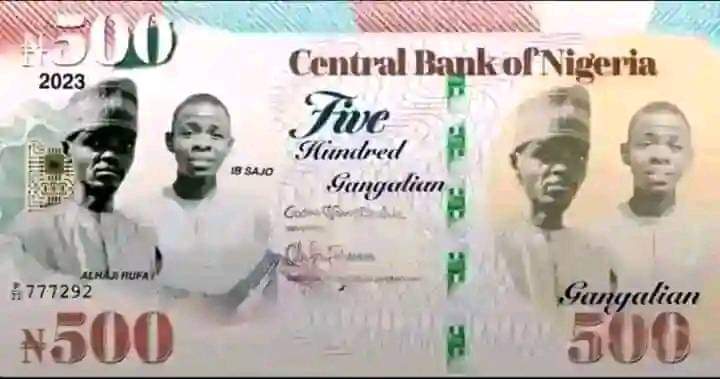
Thus, popular culture can raise awareness about important social issues. TV shows, films, and music often address topics like discrimination, environmental concerns and mental health, sparking discussions and encouraging positive change. For instance, in Kano in early 2023, AA Rufai Bullgates [sic], an individual with mental health issues, became a popular culture media celebrity due to his delusions of grandeur; at one stage, he bought Kano State for ‘gangaliyan’ naira – his coinage. It took social media to make people aware of the extent of his illness – and stop exploiting his guile.

The contempt with which we approach studies of Hausa popular culture – or, let me modify, modern/contemporary culture – allowed a big room for others to be experts on us. In this way, researchers such as Mathias Krings, Carmen McCain, Novian Whitsitt, Brian Larkin and Graham Furniss came to dominate the documentation of Hausa popular culture.

In 2007, I was a visitor to Graham Furniss’s house in London for lunch, and I was blown away by a bookshelf covering a whole wall devoted to his documentation of Hausa romantic (soyayya) fiction containing over one thousand volumes. In Kano, we refused even to acknowledge such novels existed, and at one conference, I heard a University librarian describing them as ‘trash’. Now, if you want to study the earlier novels in the genre, you can only find them in the Library of the School of Oriental and African Studies, courtesy of Graham Furniss – while they are not available at Bayero University, Kano.

Novian Whitsitt, an American, became an expert on the feminist ideologies of Bilkisu Salisu Ahmed Funtuwa and Balaraba Ramat Yakubu – two wonderful and brilliant female writers we ignored. He made a name out of researching their novels – and he had to learn the Hausa language first before he could even read the novels. In Kano, where we speak Hausa, we looked down on these writers. Now, if you want any reference to the works of these ladies, you have to go to Amazon for his books, for he is considered an expert on Hausa feminist writers.

Matthias Krings collected more Hausa cinema tapes than any European researcher and established a vibrant Hausa film reference library at Johannes Gutenberg University, Mainz, Germany, where he is based. In Kano, we refused even to acknowledge that Hausa film is worth studying – until we gave the study a shove and held an international conference on Hausa films in 2003 – the first of its kind in the whole of Africa in studying an indigenous African language film industry. Even the practitioners – filmmakers, producers, directors – don’t see the value in studying their works, believing that such is done to denigrate them rather than a critical analysis of their art. When I established Yahoo! Groups social network in 2001 – long before Facebook – those who entered the group were constantly fighting us for studying their art.

In any event, it was Brian Larkin from New York who even opened up the doors in 1997 with his brilliant paper, “Indian Films and Nigerian Lovers: Media and the Creation of Parallel Modernities.” Soon enough, he became the only reference point on the emergence of modern-mediated Hausa popular culture. I could go on, but you get the point.

As for music, no one cared – until the Talibanic censorship regime from 2007 to 2013 in Kano favourably enabled the separation of Nanaye soundtrack music from Hausa films, creating an independent Hausa Afropop music genre. It also led to the emergence of Rap music among young Hausa lyricists in 2013 – the year of creative freedom for Hausa popular culture. Billy-O produced the biggest hit Hausa Afropop hit of the year with ‘Rainy Season’, producing a brilliant Engausa song accompanied by Maryam Fantimoti.

No attempt was made to internationalise the study of the emergent music genres by anyone. They were all obsessed with studies of the songs of griot acoustic musicians, believing that the Afropop genre was a passing fad. Seeing a room for documentation, I entered into the field. In any event, I was considered a loose cannon in the whole Hausa ‘adabi’ canon. Luckily for me, my foray into Hausa popular culture, or ’Adabin Hausa’ as they often call it (while I prefer ‘Nishaɗin Hululu as the Hausa term for popular culture), was from the prisms of Stuart Hall (Birmingham School) and Frankfurt School critical theory perspectives.

Most importantly, I was analysing popular culture as a mass-mediated communication, rooting myself firmly in communication theories. I was not interested in etymology, morphology, syntax, grammar, pragmatics, stylistics or other branches of the study of literature in my analysis (I profess ignorance of these branches). My focus was that something was happening; it was providing a stethoscope on the social awareness pulse. We need to document it. It was no longer acceptable to let others become experts on us.

Thus, studying or even debating mediated popular culture was definitely frowned upon in northern Nigeria. I believe I am one of the few flying the flag of the discipline – such that it has now crept its way into a university curriculum. Next semester (December 2022/23), I will be teaching M.Sc. Popular Culture in the Department of Mass Communication – one of the very few Departments in the country courageous and bold enough to do so. It’d be a fully interactive class, touching all aspects of what gives us social awareness through mediated popular culture.

Now, to the question of Murja Ibrahim Kunya, a TikTok influencer who speaks at more than 100 km per second. She is important enough to have a Wikipedia page. Dr. Muazu Hassan Muazu was one of the lecturers teaching the EEP 4201 – Venture Creation and Growth course in the School of General and Entrepreneurship Studies (SGES), Bayero University Kano. We once taught the course together. In the first semester (2022/2023) examination, question #5 went like this: “Murja Kunya and Me Wushirya are bloggers who trend by causing scandalous contents on their social media handles, for that reason, they are given advertisement jobs. If they do that, they become – (a) influencer marketers, (b) brand ambassadors, (c) trading agents, (d) marketing managers.” Students are to choose one which they believe was the correct answer.

What drew attention was the focus on the activities of TikTokers – activities not taken seriously, especially those of Murja Kunya, who elicited different reactions from different people. One posting on Facebook even labelled her a mental health patient. And yet, here, a university is asking academic questions about their activities. The entire 70-item question paper included references to various brands – KEDCO, Rufaidah, Salima Cake, A.A. Rano, L&Z Yoghourt, Sahad Stores, MTN, Chicken Republic, and so on. All these are marketing HUBS. Why not TikTokers?

Marketers are looking for audiences – notice how those silly and irritating videos pop up on news sites on your device to attract your attention. Dr. Mu’azu’s inclusion of cyber popular culture in his course – and Chicken Republic, dealing with food, IS part of popular culture – to me, is a brilliant acknowledgement of popular culture and its social relevance. Crazy, drugged, attention-seeker or not, people follow Murja Kunya. That means audiences, that means market – making her a perfect vehicle to advertise products. So, what’s wrong with that? If a woman frying ƙosai by the roadside has the same level of audience attraction, we should also acknowledge her as a marketing potential. That does not mean we endorse what they do – it means we are interested in reaching out to their audiences to buy our products.

Without pop culture, we wouldn’t be able to understand generations, so knowing gives us all a better understanding. Overall, a critical analysis of pop culture and media can help to shed light on the ways in which media interacts with society and can help to promote a more informed and nuanced understanding of media’s role in shaping our world.

Now, print Ale Rufa’is Bullgates gangaliyan note and purchase your village.
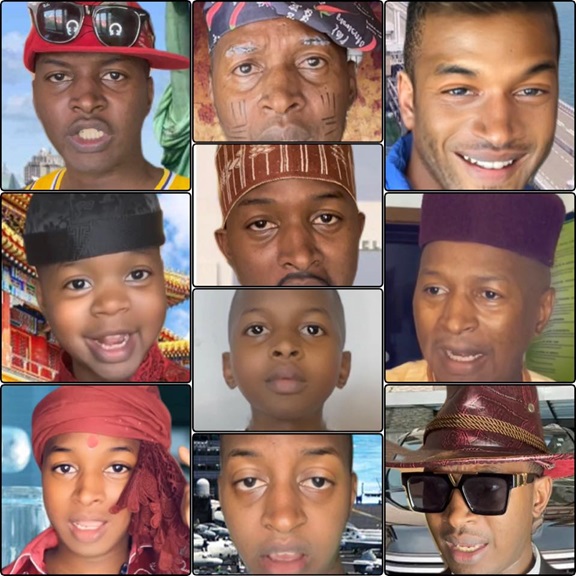
A serious humour: Bello Galadanchi’s comedy skit for social commentary

By Sa’id Sa’ad

Earlier this year – when Bello Galadanci’s videos were becoming popular on digital platforms – a colleague posted a video of his skit on his WhatsApp status. From what might be a simple curiosity, I asked him if he knew who the person was – of course, expecting him to at least know a bit – but he replied that he did not know him beyond his not-so-much-funny recent “comedy skits.”

That was weeks after the publication of my recent essay, A Crack on Hadiza Gabon’s Wall: Humanizing Northern Nigeria Storytelling, where I described what the show meant to storytelling in Northern Nigeria and the impact of what I called “hypocritical denial and intentional lack of acknowledgement” from the northern community. As it has always been, I bumped into a tweet where a young person from “northern” Nigeria condemned the entire comedy skits made by Bello Galadanci. If I weren’t from the North, I would have wondered why Northern consumers always find a way to devalue Northern content creators in whatever discipline. But I didn’t, because I understood the game. So. Well. It is nothing to raise a brow at, mainly because, as creatives, criticism as such is often expected, “Thanks for the PR” was the short response Galadanchi gave him.

Even with the recent trooping of young creators into the skit-making industry in Nigeria, majorly due to its financial and digital-popularity lakes tunnelled by TikTok, Instagram and YouTube, one could guess accurately – as most other useful or even useless “developmental” growth – that adoption of content creation as a business by young people in Northern Nigeria, came very late, as well. It is difficult to mention by name – the northern skit creators who began early – and still maintain the same consistency as one would mention Taoma or Aproko Doctor or Mr. Macaroni from the South. Only Galadanchi and a few others still retain their craft consistently.

Many young people in northern Nigeria continue to comment, criticise, or label Bello Galadanchi and his skits in multiple ways.

Aside from the unpopular northern Nigeria population that perceives his skit as the “working-for-the-white” theory (or the painting north black belief), and the many who – due to educational standards and exposure – fail to comprehend the satirical nature of his contents, most of those who do not find him funny do so due to Broda-Shaggying or Sabinufying Galadanchi’s skit.

Unlike most skit makers in Nigeria, whose focus is majorly only on sowing laughter and entertainment into the market and reaping their golds, built on creative juice – Galadanchi’s contents are meant for social and political commentary using humour and satire. Backed by journalism, creative, and educationalist careers, it might seem almost impossible for Galadanchi – even by himself – to create non-questionable or fluid content only meant for laughter because creatives are muscled with the hunger to correct and change using their art. His could be simplified as addressing serious problems without being too serious.

Therefore, this makes it difficult for those Broda-Shaggying and Sabinufying him to comprehend the content as, thus, they expect a consciously endowed full-length comedy. I don’t mean to belittle content created by skit makers whose conscious aim is to create a hundred-percent comedy piece. However, expecting an all-comedy-induced piece from a skit maker whose purpose is challenging social and political ills using humour could be as good as expecting something from nothing.

While writing this essay, I shared on WhatsApp status a short clip from an interview Bello Galadanchi granted CGTN where he sat on stairs with three other Chinese, in a swagger-spirited looks with polished accent and blonde hair. Most GenZ’s (respectfully) responded to have known him only through his comedy and never “expected” him to be this “polished”, so far away from what they expected Dan Bello (his character) to be.

That means most of those who denigrate his content would have been from their “expected lens” through which they measure him to be. As argued in my previous essay above – could this also be what I called “hypocritical denial and intentional lack of acknowledgement” of the northern population for contents and creators coming from the north? Because, of course, what Bello Galandanchi is doing for northern Nigeria-specific social and political issues is what Aproko Doctor is exactly doing for Nigeria’s health sector and health-related issues.

Though satire could emerge in professional, amateur, elitist, and popular forms, those who do not comprehend his satire might also be due to their level of comprehension rather than the perceived educational standard or exposure. However, I believe both play a role here. Of course, satire is meant to use humour and irony to criticise, as in the case of the Nigerian writer Elnathan John with his famous book, Be(com)ing Nigerian. However, because Galadanci focuses on the “North”, he is quickly labelled with the “working-for-the-white theory”.

Perhaps if Elnathan’s book was a digital piece as Galadanci’s – and produced in the same form and language – the same label could have been blanketed for him, too. Sometimes, the theory sounds a lot like a comedy skit as well because even a deported northerner fighting the cause of his people – in any way different from the (usual) northern norms – would be considered brainwashed to work for the whites.

More so, those who do not comprehend the satire in the contents are often blindfolded from seeing the patriotism in these pieces. If not for a deep love for a people, I wonder how one would continue to create these provocative contents that question deep political ills in the region. While also soaking insults from young people in the same region who barely understood the depth of what his craft was uprooting.

However, looking at his pieces of art critically (beyond Broda-Shaggying them), how they are deeply immersed in satire and sheer creativity, one could vividly tell how varying it is from the contents created by other skit makers. If other skit makers called theirs “contents”, a creative could easily describe Galadanchi’s as a “piece of art”. The beauty in the work is so immense that one could smell creative fragrances all over the place.

Imagine if the digital youths in the north focus on – if not creating – promoting creators from the region rather than policing social media in the holy name of the north. Imagine if we all question the system in the individual creative juices deposited in us. Imagine if we learn to place a market value on the creators and contents from the north rather than wasting our time watching these wayward girls crowd-chasing nonsense on TikTok in Hausa and serving them to your screen back-to-back. Imagine if we focus on the problems rather than those who help us understand the problem. Imagine if we don’t call for the heads of those who create alphabets to remind us of where we are.

Galadanchi didn’t just find questioning the ill social and political system for Nigerians in Nigeria. He has lived with the system, experienced the system and carried dozens of scars from the system to wherever the world took him.

If these pieces of art are what come out from creatives whom the ill Nigerian system has wounded, then very soon, the Bello Galadanchi in all of us will prevail.

Sa’id Sa’ad is a Nigerian writer, poet, and playwright from Maiduguri. He won the Peace Panel Short Story Prize 2018 and the NFC Essay Prize 2018. He tweets @saidsaadwrites and can be reached directly via saidsaadabubakar@gmail.com.

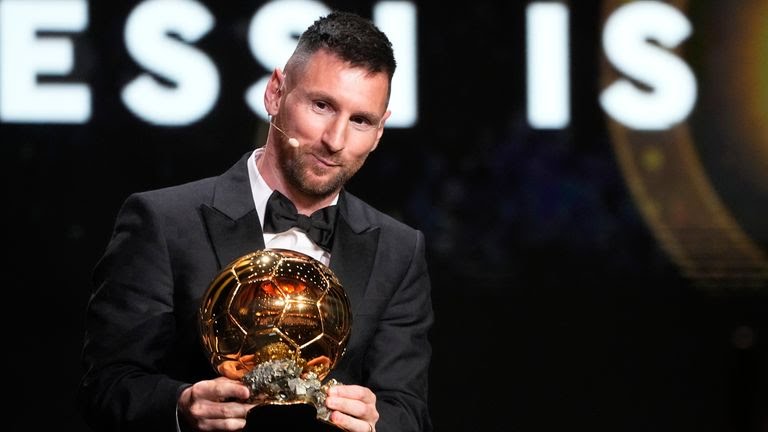
Lionel Messi wins eighth Ballon d’Or 

By Sabiu Abdullahi 

Lionel Messi, the iconic Argentine forward, has seized the Ballon d’Or for an unprecedented eighth time.

Messi, who now graces the fields of Major League Soccer with Inter Miami, achieved this remarkable milestone after steering Argentina to its maiden World Cup triumph in Qatar last year.

Not only did he guide his nation to glory, but he was also honoured with the Golden Ball award, recognising his stellar performance as the tournament’s standout player. 

His achievement widens the gap between him and his perennial rival, Cristiano Ronaldo, who notably did not feature on the shortlist for the first time since 2003.

Ronaldo, a five-time Ballon d’Or winner, currently plies his trade with Al Nassr in Saudi Arabia. 

Having bid adieu to European football at the conclusion of the last season, exiting after a successful stint with Paris Saint-Germain, where he clinched back-to-back Ligue 1 titles, Messi embarked on a new chapter in his illustrious career with Inter Miami in Major League Soccer.

El Classico: Barcelona investigate alleged racist abuse against Vinicius

By Sabiu Abdullahi 

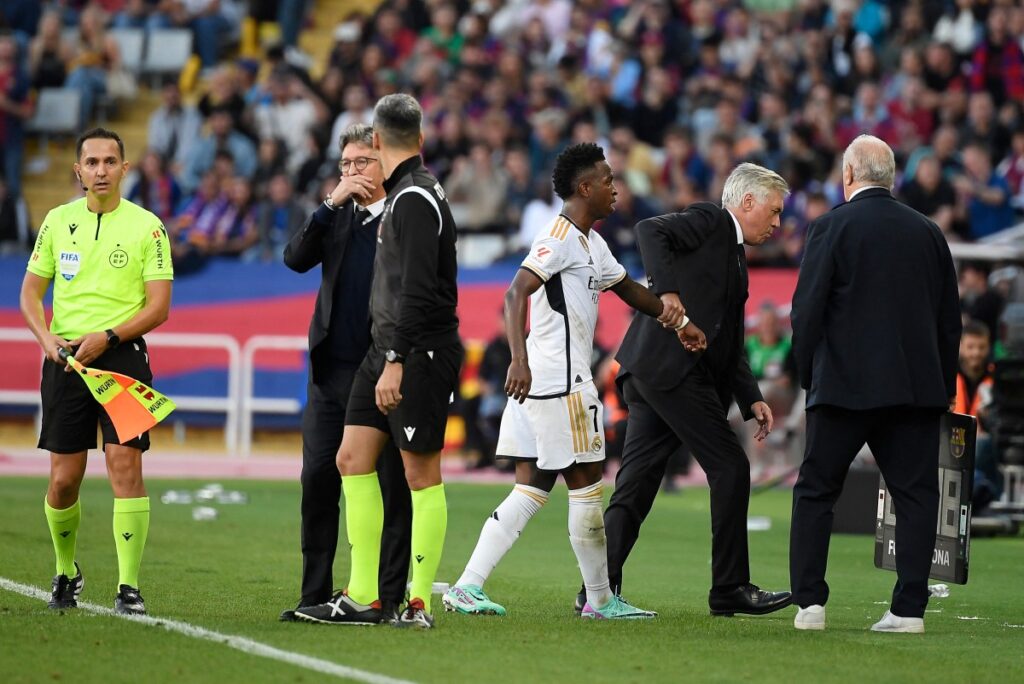
FC Barcelona has initiated an investigation into the alleged racist abuse directed at Real Madrid’s Brazilian winger, Vinicius Junior, during the recently played El-Clasico.

The incident occurred during the match held at Barcelona’s temporary Olympic Stadium, where a video published by Spanish media outlets seemed to capture a home supporter hurling racial slurs at Vinicius Junior. 

The video footage, widely circulated on social media, depicted a spectator in the stands allegedly referring to Vinicius Junior as a “monkey.”

Additionally, another disturbing incident occurred when what appeared to be a banana skin was thrown from another section of the stadium. 

Expressing their commitment to upholding the fundamental values of football, including respect for opponents, FC Barcelona released an official statement via their social media platforms, stating, “FC Barcelona will always defend the values of football and sport such as respect for the opponent, and we will investigate any racist insult that may have occurred this afternoon during the match against Real Madrid.” 

Throughout the match, Vinicius Junior faced jeers and derogatory chants from some Barcelona supporters.

Tensions escalated when the 23-year-old winger was substituted late in the game, following Jude Bellingham’s dramatic stoppage-time goal that secured Madrid’s victory.

Despite the hostile reception, Vinicius attempted to celebrate the win, pumping his fists towards the stands. Real Madrid’s coach, Carlo Ancelotti, intervened, guiding Vinicius Junior off the pitch while attempting to shield him from further provocation. 

The incident has reignited discussions about racism in football and the urgent need for decisive action to eradicate such behaviour from the sport.

FC Barcelona’s investigation aims to identify the individuals responsible for the abusive behaviour, underscoring the club’s dedication to promoting respect, tolerance, and inclusivity within the football community.

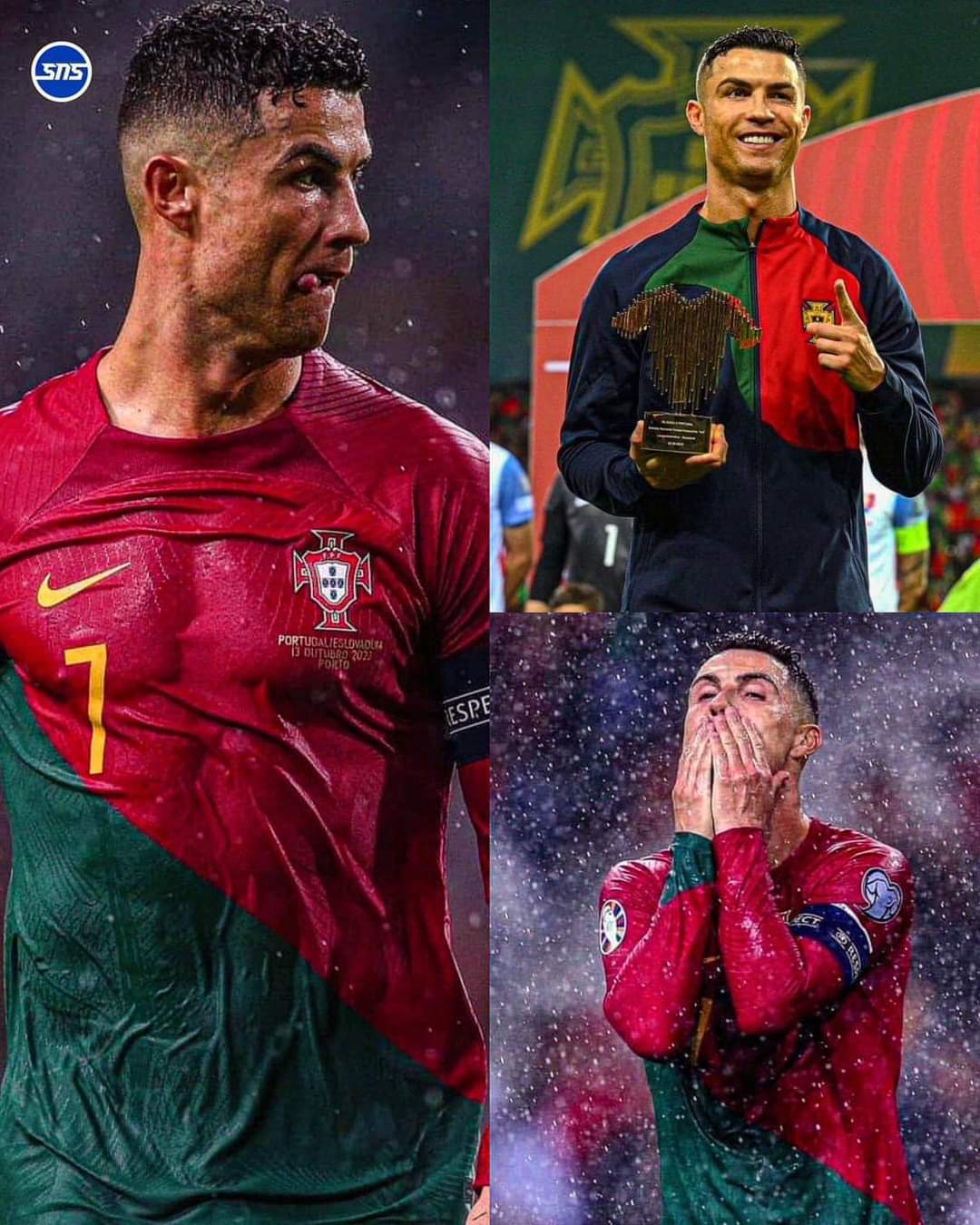
Cristiano Ronaldo is world’s highest earning footballer—Forbes

By Sabiu Abdullahi 

A recent Forbes report shows that Cristiano Ronaldo is the world’s highest-earning footballer, courtesy of his staggering £164 million annual contract with Al-Nassr and £49 million from sponsorships.

This places him leagues ahead of rivals like Messi and Neymar.

Notably, Ronaldo’s sponsorships alone surpass the combined earnings of Premier League stars Haaland, Salah, De Bruyne, and Kane. 

Adding to his triumphs, Ronaldo extended his international goal record to 125 during Portugal’s 3-2 victory over Slovakia in Euro 2024 qualifying.

Ronaldo’s dominance, both in the game and the financial arena, solidifies his status as an unparalleled icon in the world of football.

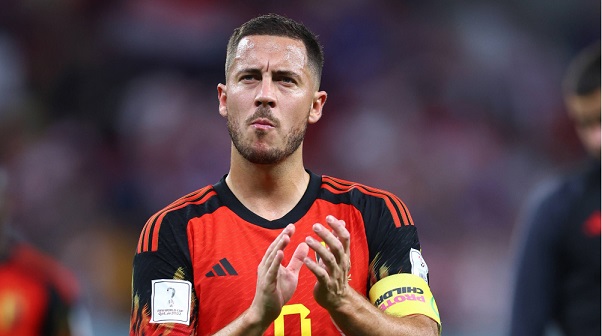
Farewell Eden Hazard, the Belgium Maestro

By Aliyu Yakubu Yusuf

I first took note of Eden Hazard’s mercurial talents way back around 2008 when he burst onto the scene for Lille in Ligue 1. Even in the team that boosted the likes of Johan Cabaye, Matthieu Debuchy, Adil Rami, Mousa Sow and Gervinho, Eden Hazard was the pick of the bunch. Hazard would lead that Lille side to the Ligue 1 crown in 2010/2011 ahead of the more fancied Marseille and Lyon.

When Cristiano Ronaldo left Manchester United for Real Madrid in 2009, I hoped and prayed that Fergie sign up Hazard as the Portuguese’s replacement. I consider Hazard as the only player that could replicate Ronaldo’s exploits for Manchester United. It wasn’t meant to be. Instead of donning United’s red shirt, Hazard would pitch in at Chelsea, where he terrorised EPL defenders week-in, week-out for a decade, winning every single club trophy along the way.

If Hazard’s EPL career will be indelible in the minds of the footballing world, his stint at Real Madrid in La Liga is a story to forget. A combination of injuries, poor form and lack of sheer willpower has left Hazard as merely a footnote in the history of the greatest football club in the world. The fact that Hazard spent three seasons in Madrid but played a grand total of zero minutes in 10 El Clasicos against Barcelona summed up how his stock dramatically fell in Spain.

Apart from Neymar, Hazard was the closest player to Lionel Messi in terms of pure talent and magical dribbles. In fact, when push comes to shove, I would pick a fitter and more focused Hazard ahead of flashy and wayward Neymar. Hazard is a player I so much enjoyed watching. His career may have ended with a whimper, but that shouldn’t take away anything from the fact that he’s one of the greatest players of this generation.

Adieu Eden. Football will never be the same without you.

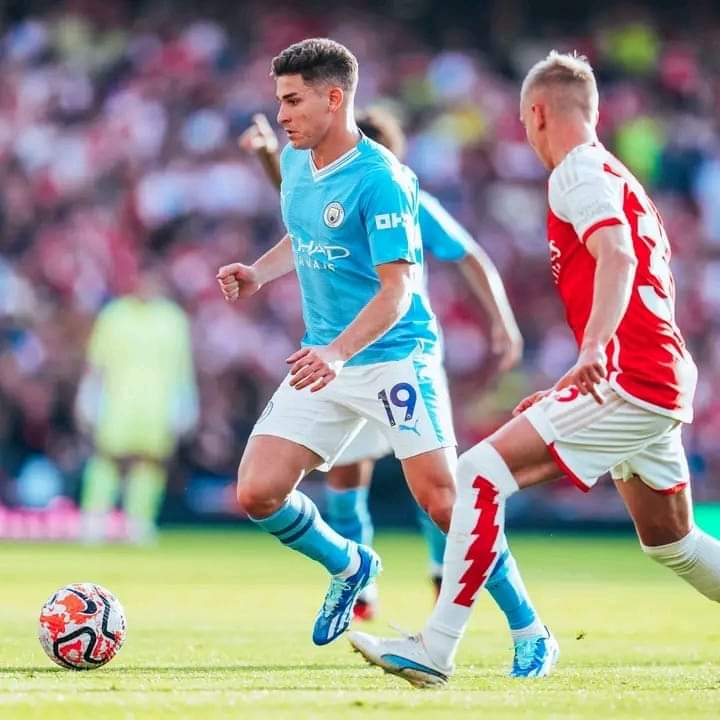
Arsenal end eight-year drought after thrashing Manchester City 1-0

By Sabiu Abdullahi 

Arsenal emerged victorious in a historic match against reigning champions Manchester City, ending their eight-year wait for a Premier League win over the Citizens.

The decisive moment came in the dying minutes of the game when Gabriel Martinelli’s shot, deflected off City defender Nathan Ake, found the back of the net, securing a dramatic 1-0 win for the Gunners. 

This long-awaited triumph sparked wild celebrations among Arsenal fans, marking a moment of sweet redemption after enduring 12 successive league defeats against Pep Guardiola’s men.

Arsenal’s victory, coming just four minutes from the final whistle, lifted them two points above third-placed City into second position, trailing behind leaders Tottenham on goals scored. 

This win holds significant weight for Arsenal, as it signifies their first top-flight success against the treble winners since December 2015.

Although Arsenal had previously defeated City in the Community Shield in August, this victory holds greater importance, positioning them as serious contenders in the title race. 

Manchester City, on the other hand, faced their second consecutive league defeat following their 2-1 loss against Wolves the previous weekend.

Coupled with a League Cup defeat against Newcastle, City have suffered three defeats in their last four games, raising concerns about their form and stability.

PSG players suspended for anti-LGBTQ+ chants

By Sabiu Abdullahi 

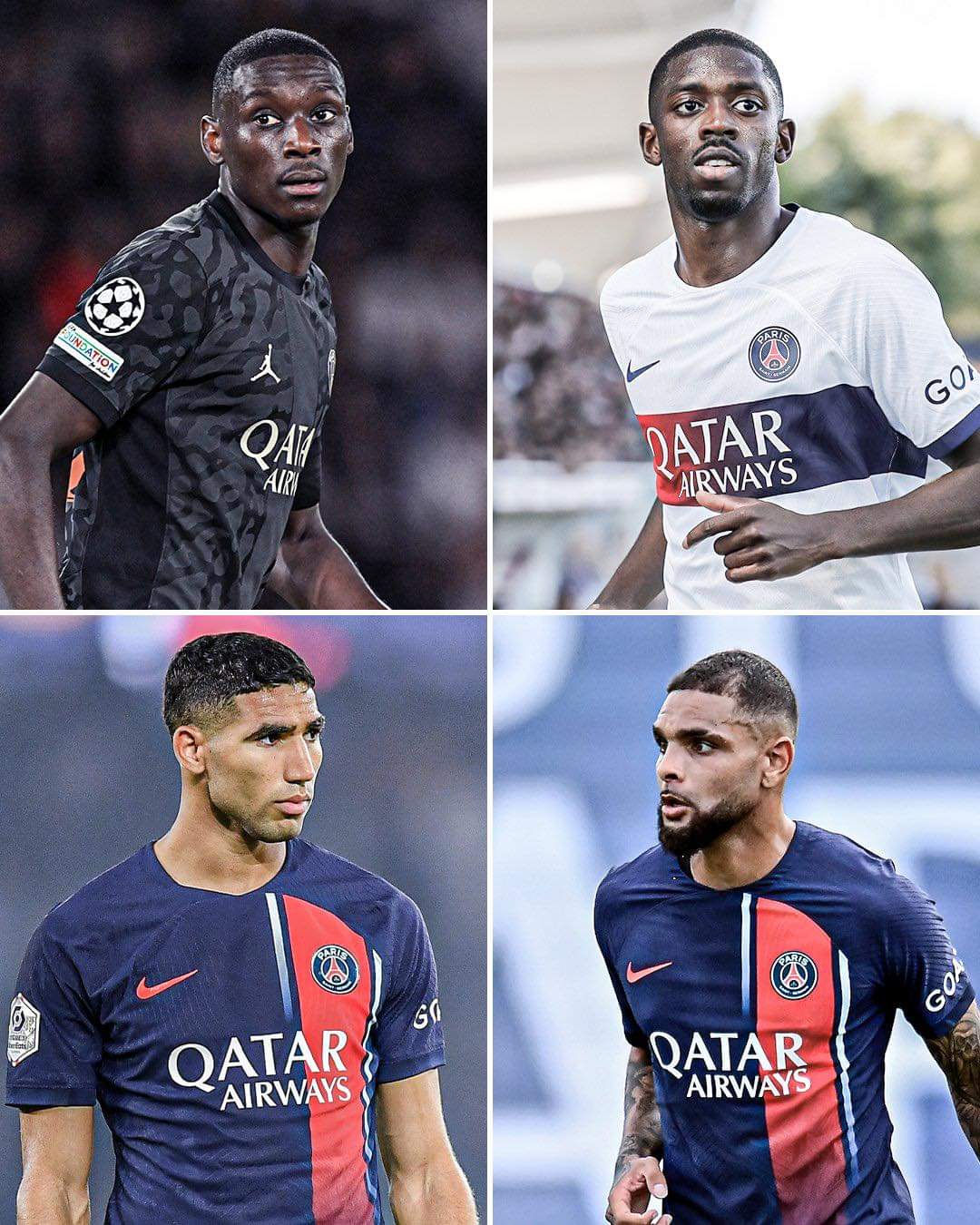
Paris Saint-Germain (PSG) players Randal Kolo Muani, Ousmane Dembele, Achraf Hakimi, and Layvin Kurzawa have been handed one-match suspensions by the Ligue de Football Professionnel (LFP) for their involvement in anti-gay chants after last month’s clash against Marseille. 

The LFP swiftly confirmed the disciplinary action, noting their commitment to combating discriminatory behaviour in football.

The derogatory chants, originating from a section of PSG supporters, led to an immediate investigation by the LFP, resulting in the sanctions against the players. 

In an official statement, the LFP condemned the players’ actions and reiterated their dedication to promoting inclusivity and respect within the sport.

Emphasising a zero-tolerance policy against discrimination, the LFP noted the importance of creating a football environment where individuals, regardless of sexual orientation, can enjoy the game without prejudice. 

The suspensions highlight the serious consequences of such behaviour in professional football, leaving PSG with a gap in their lineup for the upcoming match.

This incident serves as a stark reminder of the ongoing need to eradicate discrimination in sports and ensure a welcoming atmosphere for all.

Napoli issues statement dissociating self from caricature of Osimhen

By Sabiu Abdullahi

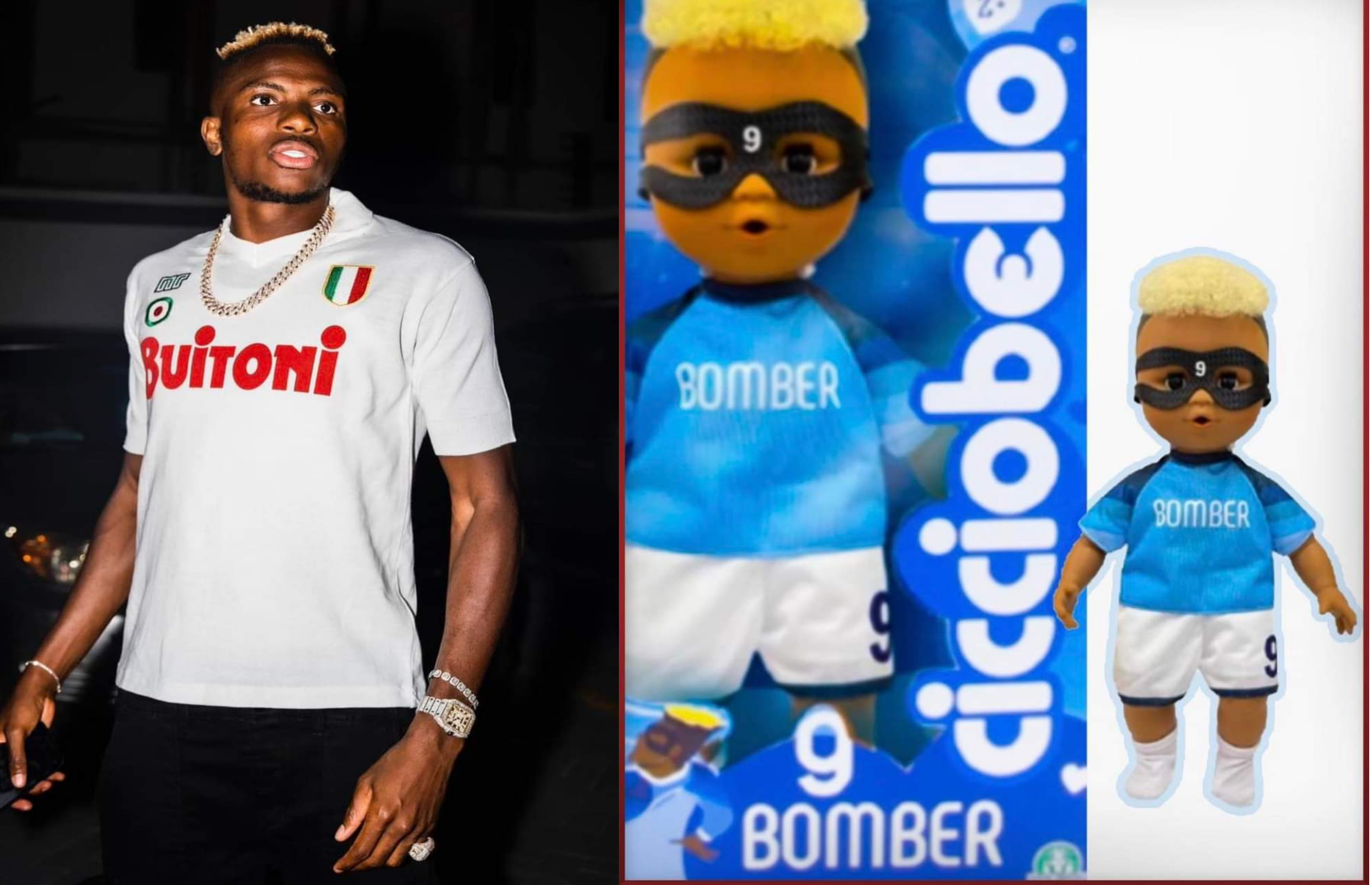
Napoli, the renowned Italian football club, vehemently denied reports circulating in the Italian media regarding the release of a children’s toy named ‘Cicciobello Bomber,’ inspired by Napoli striker Victor Osimhen wearing the club’s shirt. 

The club’s spokesperson stated, “We’re denying any report on the Italian media about releasing kids toy ‘Cicciobello Bomber’ inspired by Victor Osimhen in Napoli shirt.” 

The statement continued with a firm assertion that the said product was not authorised by the club. “That product was not authorized by the club — we will settle this issue in court,” added the spokesperson, underscoring Napoli’s determination to resolve the matter through legal channels. 

This announcement comes as a response to recent media speculation, which suggested the launch of a toy featuring Osimhen, a key player for Napoli, in the team’s attire.

Napoli has made it clear that they have no connection to, nor have they endorsed such a product.

The club’s decision to pursue legal action notes their commitment to protecting their brand and ensuring that unauthorised merchandise is not associated with their esteemed name. 

As the club prepares to address this matter in court, Napoli fans and the public await further developments regarding the unauthorised toy release.

Napoli remains focused on their upcoming matches, striving for success on the field while simultaneously safeguarding their reputation.

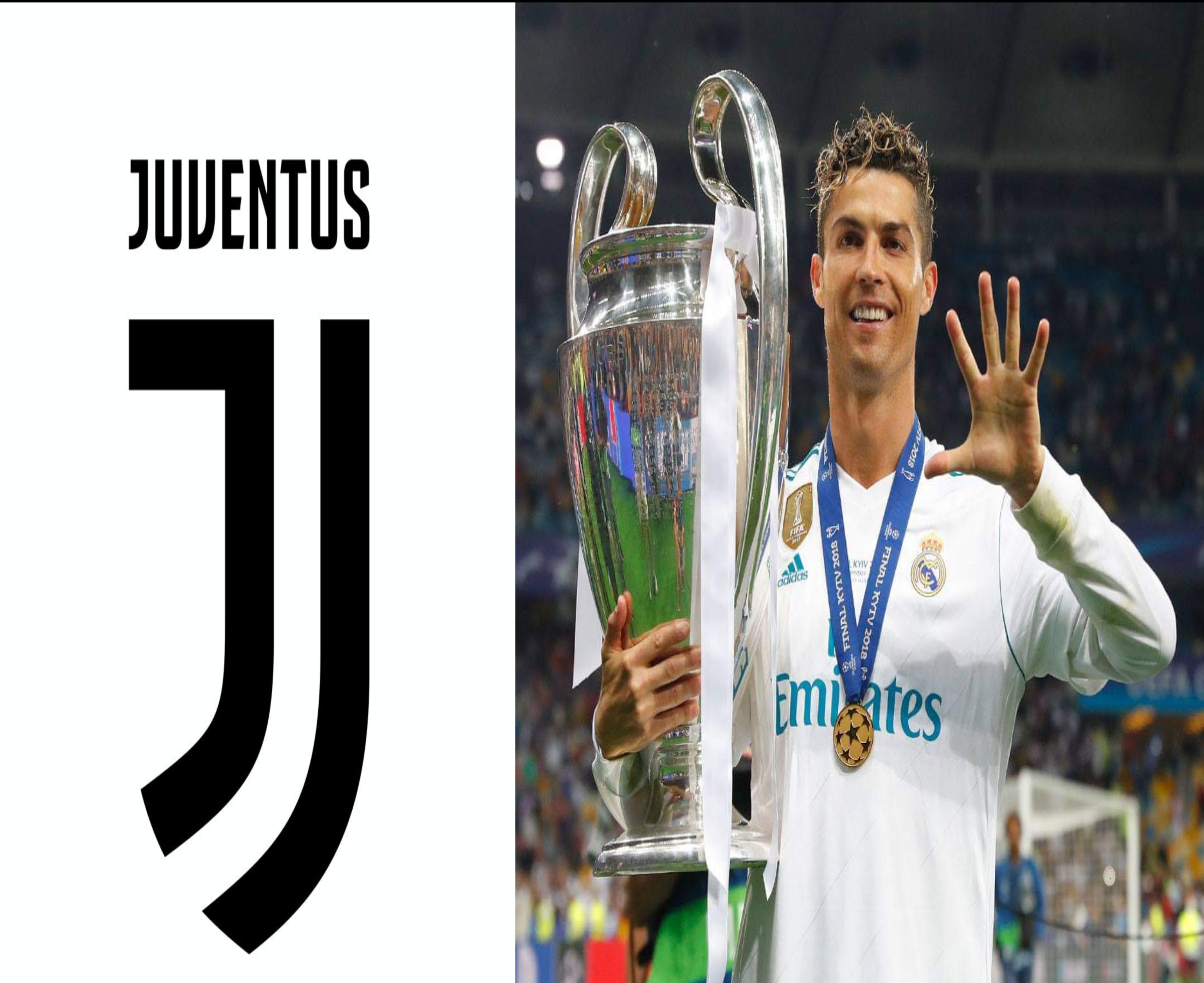
Ronaldo institutes legal action against former club Juventus over unpaid €19.9 million 

By Muhammadu Sabiu

Cristiano Ronaldo, the iconic Portuguese footballer, is set to sue Juventus Football Club for an alleged non-payment of €19.9 million, according to reports from Gazzetta dello Sport. 

The legal action comes as a response to the financial difficulties faced by Juventus during the COVID-19 pandemic. 

Ronaldo, who previously played for Juventus from 2018 to 2021, has reportedly taken his grievances to the Turin Prosecutor’s Office. 

His decision to pursue legal action follows unsuccessful attempts to resolve the matter through negotiations with the club. 

As of now, Juventus has not issued an official statement regarding the lawsuit, and the football world eagerly awaits further developments in this high-profile dispute.