Education

Is the English language a measure of intelligence? 

By Salisu Yusuf

I was drawn into this debate by Abubakar Shuaibu Rimi when he mentioned my name under the status update of one of his Facebook friends on the above subject. Rimi wanted to hear my side of the argument. I am not supposed to say something on this issue because it’s my area of specialisation. But I am writing on it to make some clarifications.

First language is a name given to either native speakers or those who acquire a language from early childhood; I mean those whose parents are non-natives but who are exposed to the language after birth. So first language is learned successfully during childhood without the need for a formal setting. First language is, in fact, acquired (acquisition), not learned, because a child is endowed with what linguists call LCD, a natural gift endowed by God so that a child will automatically acquire any language he’s exposed to.

The first language is learned with less effort because the acquirer acquires it subconsciously, as he’s not even aware of grammatical rules.

 A second language learner, on the other hand, is someone who learns a language later after acquiring his native language. It’s usually through the formal setup and is leaned consciously with a lot of effort. While the first language is natural, the second language is a gift(intelligence), as the learner learns it consciously aware of grammar and can talk of the rules. 

Second language learner is intelligent because:

In second language learning, the learner grapples with linguistic elements such as grammar, syntax, phonology, phonetics, sociolinguistics, morphology, semantics, etc. Whenever he’s speaking in the target language, he’s conscious of almost all of them, yet you say he’s unintelligent!

When learning a second language, the learner must scale cultural barriers and embrace certain new cultural elements in the target language. In other words, he must acculturate by bypassing what linguists call social and psychological distances.

Part of the learner’s acculturation is to learn how to use the new target language independently of his mother tongue,  even though traces of his first language can be found in his expressions.

A second language learner must be intelligent enough to fight certain linguistic impediments such as systematic errors, mistakes, language interference, transfer, and interlanguage and learn the language, not his own.

A second language learner must pass certain difficulties to learn, especially when he passes 15 years, as his linguistic receptors in the brain are becoming strained, therefore, making learning more difficult. 

The question ‘Is the English language not a measure of intelligence?’ may only be applicable to native speakers because they have learned the language since childhood and in their linguistic environment. Even this claim is contestable. This is because not all speakers of a language communicate with it efficiently. A select few do. For example, if the late Ɗan Masanin Kano or the former Emir of Kano, Muhammadu Sanusi II, addresses a Hausa audience in Hausa, people tend to listen because any one of the two masters the art of speaking even in Hausa. Can you call any one of the two dull? 

So not only the English language, which isn’t our language, even a good Hausa speaker is intelligent because an unintelligent man can’t organise his words to impress an audience. Also, a good native/non-native Arabic speaker is also intelligent enough to organize his words to communicate impressively, so also is a Hausa native who communicates in either Fulfulde, Yoruba, etc.

Generating some linguistic elements such as grammar, phonetics, phonology, morphology, syntax, semantics, etc and combining them to negotiate meaning isn’t an unintelligent job. Not all language users combine the spoken and written expertise of language. The Hausa oral skills of Ɗan Masanin Kano, for example, wouldn’t be a sign of dullness but intelligence.

In other words, reaching linguistic “competence and performance” (the ability to combine sounds and meaning to communicate) even for native speakers isn’t a simple act of a simpleton, for not all language users are endowed with the skill to communicate well.

Amina Buba, a trailblazer: The first female urologic surgeon from North-Eastern Nigeria

By Kamal Buba Danladi

According to the Oxford Dictionary, Urology, also known as genitourinary surgery, is the branch of medicine that focuses on surgical and medical diseases of the urinary tract and the male reproductive organs. Organs under the domain of urology include the kidneys, ureters, adrenal glands, urinary bladder, urethra and the male reproductive system.

On the 19th of April 2023, Dr Amina Buba became the youngest urologic surgeon in Nigeria, the 7th female urologist in our country and the first Muslim woman in Nigeria to bear that title. Amina truly has shattered the glass ceiling! She is an inspiration to young women all around the world that anything is possible.

Amina was born in Lagos and attended St. Jude’s private School in Festac Town, Lagos. Then she started her secondary school at Federal Government College, Kwali, Abuja, before she transferred to Federal Government Girls College, Bwari, Abuja. After completing her junior secondary school there, she moved to El-Amin International School, Minna, where she completed her senior secondary school and then proceeded to her A-levels at Irwin College Leicester, England.

Amina also studied medicine at Brighton & Sussex Medical School, Brighton, England and then did her Master’s in Tropical Medicine & International Health at the Prestigious London School of Hygiene and Tropical Medicine, where she gained an MSc. as well as a diploma in Tropical Medicine and Hygiene. Shen then did her surgical residency in Abuja, Nigeria, which she recently completed.

When asked about why she chose this particular field, Amina says that she has always wanted to be a doctor, and when she qualified as a doctor, she knew that she wanted to be a surgeon but wasn’t sure of the surgical speciality. She began her residency programme with a posting in urology, and she fell in love with urology instantly because it is such a diverse surgical speciality, and you get to operate on the entire urinary tract as well as the male genital tract. There are also so many facets to it; there are paediatric urology, reconstructive urology, and upper and lower tract surgeries.

She further says that there are also plenty of opportunities to engage in both open and minimally invasive surgery, that is, laparoscopic, robotic and endoscopic surgeries. She was also drawn to it because, as a junior resident, she had 5 amazing consultants who, despite the strains of an under-resourced working environment, ensured that their patients got the absolute best.

Another interesting thing about the field, according to her, is that most urology patients have fixable problems and so it is really satisfying to identify a pathology in a patient, operate on it and discharge a happy, healed patient. She also added that urology is a fantastic speciality with so much room for growth.

She gave thanks to her mentors because they have been encouraging, and says she has had excellent teachers. Speaking about some of the challenges she faced, she says that they were there but were minimal and mainly from her peers questioning her decision to specialize in urology. This also prompted her to carry out a questionnaire-based survey on patients’ perceptions of having a female urologist. And interestingly, the majority of patients have absolutely no qualms at all.

In her practice, she has seen that even the few patients who seem sceptical tend to relax once she starts talking to them and establishes a rapport. She also says that she has had patients who specifically only want to see her, and she also added that when people are sick, they just want a good doctor and don’t care about their gender. She jokingly often asks people who question a decision to specialize in a primarily male-dominated area; “what of the men in gynaecology”. They only see women, but at least as a urologic surgeon, she sees both male and female patients. Another challenge she faced in training which she says is not peculiar to her, is the lack of facilities in Nigerian Teaching Hospitals. Our government really ought to do better.

And when asked about her family’s view on it she says that they were extremely supportive, and she really would not have been here if she didn’t have such supportive parents. Amina also says that her two elder sisters have been supportive, and they cheer her on in the process because the training is strenuous, emotionally and physically demanding and without her family’s support, it would have been impossible.

She also states that they have gone through the entire journey with her, and she appreciates them tremendously. She adds that she had some really supportive friends and bosses who have always cheered her on, and finally, her advice to young girls, especially in Northern Nigeria, is they should believe in themselves and strive for excellence, don’t settle for mediocrity. Pray hard, establish a good relationship with God and work hard.

Amina also has this to say “Pray like you are not working and work like you are not praying”. The world is our oyster, and there are so many glass ceilings waiting to be shattered! She concludes by thanking Allah for the mercies he has shown to her and by saying if she can do it, then anybody can. She hopes that her achievement will inspire young ladies to realize that there is so much that needs to be done.

Kamal is a student of Mass Communication from Skyline University Nigeria. He writes from Kano, Nigeria.

War in Sudan: Evacuation of Nigerian students has started

Ibrahim Mukhtar and Dubai Ado

The fierce war between the Sudanese soldiers and some rebels has already scattered and shattered the country, and now almost all of the foreigners staying in Sudan have looked for their ways out of the war-torn country.

Many countries, as reported, have already evacuated their citizens, but Nigerians have been stranded for nearly a week. However, an evacuation effort has already started since yesterday, were most of the stranded Nigerian students are now on their way back to Nigeria.

According to Hamid Alhassan, one of the popular Nigerian students in Sudan who kept on calling the attention of the authorities concerned about the situation on the ground, he confirmed that buses were provided for the Nigerian students to be taken out of the war zone. He posted that “We are now in Atbara, 6hrs and 287km away from Khartoum. We still have another 7hrs and 492km to go to Port Sudan, the final extraction point.

TDR confirmed that Hamid has been reporting the development right from the beginning through live streaming and telling the Nigerian authorities and the whole world about the situation. Sometimes heavy gunfire from the anti-aircraft gun was heard while he was explaining the situation on the ground. According to him, the Nigerian students suffered traumatic experiences during their waiting period while all other nationals were evacuated.

Another student who sent viral videos online, Fauziyya, also sent another video praising the Nigerian government and thanking all those who have shared their stories with the world. She said that they are now very happy and are about to return to Nigeria. She also appealed to all to continue for their safe return to Nigeria as they are right now on their way.

initially, there were reports of some corrupt practices and dubious transactions which were said to have crept in between the Nigerian embassy in Sudan, the bus drivers and the neglect by the Nigerian authorities on the evacuation. However, the students are now confirmed to be out of Khartoum, and they will hopefully reach Nigeria on Monday.

2023: Federal university in Kebbi hosts UTME for visually impaired candidates

By Muhammadu Sabiu 
 
The 2023 Unified Tertiary Matriculation Examination (UTME) for visually impaired candidates from Kebbi and Sokoto States was hosted by the Federal University Birnin Kebbi (FUBK) on Thursday.
 
The Vice Chancellor of the University, Prof. Muhammad Zaiyan Umar, inspected the venues of the examination and praised the Registrar of the Joint Admissions and Matriculation Board (JAMB), Prof. Ishaq Oloyede, for ensuring that this cause to support persons with special needs in Nigeria is promoted.
 
The candidates and other individuals with special needs were urged by the vice chancellor to make the university their first choice, adding that the university had been working hard to meet the needs of the disabled students who were enrolled there so that they would have easy access to places and other learning facilities.
 
He was quoted as saying, “Being blind, deaf or albino is not a license for failure. There are several instances where people with special needs excel far more than normal person. This indicates that once given the opportunity to excel, they could do the country proud in Science, Technology, Engineering and Mathematics (STEM) as well as Humanities and Education.”
 

Learning crisis: TRCN remedies 7,000 quack teachers

By Uzair Adam Imam

Over 7,000 quack teachers were reported to have been remedied by the Teachers’ Registration Council of Nigeria (TRCN) in Adamawa, Borno and Yobe States. 

Prof. Josiah Ajiboye, the TRCN Chief Executive, made this disclosure to newsmen on Thursday at a workshop organised by the council.

At the workshop themed, “Strengthening Teachers Education: Challenges and Opportunities in Basic Sub-Sector in Nigeria”, Ajiboye lamented about the learning crisis in the country.

Ajiboye stated that the learning crisis in the country had always been attributed to poor teaching and the lack of qualified teachers.

However, he stated that the effort made by the council was to upscale the dignity of the teaching profession in the eyes of the public.

He stated, “The challenge with Nigerian education is largely attributed to poor teaching in which experienced, dedicated, committed and professional teachers were difficult to find in schools.

“The council, in order to upscale the dignity, rewards and recognition of the teaching profession, had developed a career path policy for the teaching profession,” he stated.

The Illogicalities in English Grammar

By Salisu Yusuf

As against the traditional definition of grammar, English grammar is a mixture of arbitrary and non-arbitrary, logical and illogical rules that are fused to form a language that was hitherto made up of some feuding tribal groups (Angles, Jutes and Saxons). It was around the 14th century, when the Renaissance started, that many linguistic and literary forms and areas were borrowed from Latin, Greek, Sanskrit, French, Spanish, etc, to swiftly form a language that would be used to conquer the world.

English grammar is full of arbitrary and illogicalities that are used as rules governing language use.

The inconsistency of English grammar is vivid in tense formations. For example, the three broad English tenses are further subclassed into 12. Each one delineates a form of the verb that allows you to express a specific time. But the English language has bizarrely many different ways of forming future references. While, for example, “he has…” and “he had…” express two incongruous tenses, the following 5 sentences express one thing, one idea and one tense:

1. The man will take off in 2 minutes.

2. The man will be taking off in 2 minutes.

3. The man is going to take off in 2 minutes.

4. The man is taking off in 2 minutes.

5. The man takes off in 2 minutes.

Has your language such bizarre ways of expressing the same idea from different tenses fused in one tense?

While the auxiliary verbs such as have, has, had, etc attract past form of a verb, the past modal auxiliaries such as could, would, should and might ironically attract the present forms of a verb:

 He had arrived before you came.

 He could arrive before you.

What an incongruity!

There’s no grammatical environment where the rules of agreements are flouted as in the use of idiomatic expressions. For example, the rule of specification in the use of definite and indefinite articles is sometimes dropped in favour of the arbitrary. For instance, nouns and adjectives take articles depending on the environment. But many idiomatic expressions do not leave rooms for articles:

 He is second to last.✔️

 He is second to the last.❌

 Moreover, idioms such as “it is high time..” and “it is time..” bizarrely take past forms of a verb whenever they are used though they express the present context:

 It is high time we spent the night there.✔️

 It is time he was jailed.✔️

 Sometimes, two similar idioms can be at variance with a slight change in an article. For example, the following sentences express two opposite meanings:

 1. Musa had been the shadow on Abdu’s shoulders during their undergraduate days.

 2. Musa is a shadow of his former self.

While the first means that Musa was so intelligent that he was Abdu’s rival at the university, the second one expresses that Musa is no longer as formidable as he was.

English grammar becomes arbitrary under the notional concord. Notional Concord refers to the agreement of verbs with their subjects on the basis of meaning rather than grammatical form. For example, each of the following quantifiers takes a different rule when it’s used: while “a number of..” takes a plural verb, “the number of..” arbitrarily takes a singular verb: 

 A number of students are missing.✔️

 The number of students is missing.✔️

Similarly, in the use of a “catenative verb”(denoting a verb that governs a series of verbs in a sentence), two or more verbs can appear in different forms. Another can follow a verb in past form in continuous or even base form:

 I saw her complain.✔️

 I saw her complaining.✔️

 I saw her complained.❌

 What a grammatical anomaly!

Conditional tenses clearly expose the incongruity of English grammar. For example, the first conditional tense looks more futuristic than present in their expressions, yet the “if ..” clause uses habitual tense(if you come..), and third person singular marker (if he comes..). But why should a future reference be used with elements of “s” inflexion exhibiting presentness?

The second conditional tense(which expresses unrealistic situations) daringly expresses the grammatical incongruity: “If you, we, he, she, they were..” is used in all the categories of pronouns and nouns. Here, classifications such as first, second and third-person singular and plural are immaterial! 

Under subject/verb concord, he, she, it, Musa, Binta is used in expressing habitual tense aspects using “s” or “es” inflection but I is not used in this pattern. He/she is used with “has” but I is used with “have”. He, she, it is used with “is” but I is used with “am”. You(second person plural), we, they are used with “are” yet “you”(second person singular) is also used with “are”. But you, we, they, he, she, it is used with “might have..”. Why not he, she, it ” might has..”? English grammar is so funny and complex! 

In plural/singular formations, the rule is sometimes arbitrary. For example, boy, girl, friend form their plural with an “s” inflection. Yet, ox(oxen), child (children), etc, are oddly different.

Why, then, is English so complex in its grammar, phonetics and phonology?

First, English is the child of partible paternity (many fathers)as Jute, Norman, Angle, and Saxon have all contributed their semen in the bearing and formation of what would later become English.

Secondly, English is the most subjugated language, with huge borrowing from Danish, Scandinavia, Latin, Greek, German, French, Arabic, Hindi, etc. No language enjoys huge borrowing as English does.

 Even the so-called 8 English Parts of Speech belonged to the Greek, not English grammar. This is why there are lots of incongruous rules. This is why “boy” is a noun but “beautiful” is not a noun but an adjective. Yet “beautiful” has all the qualifications of a noun. A table with a flat top and 4 legs is not called an adjective, but beautiful, an abstract quality is called an adjective.  This is why you have rules such as “he, she is..” but not “I is..” but “am”. These parts of speech are adopted from Greek grammar.

 The above and many more reasons are what make the English language have the hardest spelling system, pretty difficult pronunciation, a high number of sounds and sound shifts, etc.

The logic is that he is he, she is she, but I is not I, you is not you, but I am.. and you are… While she HAS the book, I ought also HAS the book. But it says I have… While we are we, they are they, but why you is not you, they say you are you not you is you.

 This grammar is illogical!

 Salisu Yusuf wrote from Katsina via salisuyusuf111@gmail.com.

Astronomical World: City Killer, Intelligent Beings and Earth Astrophysics

By Bilyaminu Abdulmumi

The first time I came face to face with a cosmic event was during the solar eclipse back in 2006. Before the event, the meteorologist announced it was coming, but while the naysayers kicked against it, the curious others, including myself, waited with bated breath. In Jega Kebbi State, a partial eclipse was experienced at about 9:40 am. The entire horizon slowly became dark for about an hour. In some other areas of the country, the eclipse was total darkness. Afterwards, the sky became clear and normal. Those who were asleep had only woken up to learn about it.

A couple of days back, on the 25th of March, another startling cosmic phenomenon took place; an asteroid passed between Earth and Moon’s orbits, specifically 175,000km away from Earth. According to astronomers, this is very close! The asteroid was nicknamed City Killer, indicating its potential to harm a city should it strike Earth on a habited area. But it was not as the name implies because, by God’s grace, the asteroid passed harmlessly as predicted.

Like all other cosmic events, the City Killer passage was discovered long before for possible action and announcement to the public, so people across the globe could follow the event live! The burning question here is, if Europe and other developed countries stand toe-to-toe proactively defending our Earth: in what part is Africa contributing? Are we stakeholders in these unfolding events?

The area of astronomy is both interesting and, at the same time, frighteningly complex; astronomy is an embodiment of epic proportions. Whenever something is referred to at the cosmic level, it is near impossible or almost infinite.

From what we learn from time to time from astrophysicists, the Sun is the centre of our solar system, and other planets, such as our Earth (and the 7 other known planets), rotate around it. To further complicate our life, the Sun is in constant spiral motion rotating around its axis, while the planets orbit around it!

The cosmic phenomenon would begin to go wild in our imagination when the concept of size and distance were brought up. The size of our Earth is about 12,800km, but compared to the size of the Sun of 1,400,000km, it is like comparing a dot with a circle. In addition, the distance between our Earth and the Sun is about 150 million km. Now imagine the size of our solar system!

The size of our galaxy (Milky Way) is mind-boggling. According to what astronomers told us, there are billions of solar systems in our galaxy. At this level, the distance is no longer measured in km but in light years. For instance, the distance between our star (Sun) to the closest Sun in our galaxy is about 4.25 light years. Light travels at the speed of 3,000km per second, so at this rate, it will only take light to travel from Borno to Lagos (a distance of about 1600km) about half a second. Now, this light that can travel in half a second from Lagos to Borno has to continue travelling for 4 years and 3 months to reach the next Sun close to ours. Pray! They told us there are billions of galaxies in the universe.

Because of this cosmos proportion, scientists such as Stephen Hawking believe that we can’t be the only intelligent in the universe. This view espouses that in one of the billions of galaxies in the universe, in one of the billions of solar systems in a galaxy, a celestial being like our Earth (bursting with intelligence) must exist. The universe is too vast to contain just one intelligence. The intelligent might be at par with us in terms of advancement, we could be way smarter than them, or the reverse may be the case. One astronomer said that it is scary anyhow one looks at the scenario: to say that we are not alone in the universe or we are alone.

The terrifying part of the multi-intelligence theory is, should the other intelligent locate us, what will be our fate? Are they going to destroy us in their search for raw materials just like we human beings are increasingly wreaking havoc on climate and habitat in exchange for raw materials (for technological advancements)? Or are they going to cooperate with us to add to our knowledge? It is equally frightening for the single intelligence theory: we are the only ones in this vastness of space. As much fantasy as the former theory looks, developed nations are not joking, as they committed a multi-billion dollar research centre in this direction: SETI (Search for Extraterrestrial Intelligence).

Unlike SETI, Earth astrophysics has been bagged. Earth doesn’t rotate on its axis for 24 hours to complete a cycle only but rotates around the Sun 365 days to complete a cycle. By God’s grace, the 24-hour cycle ensures night and day, while the 365 days cycle ensures seasons. The moon does similar; it rotates around the Earth in a month as a source of light for us, to keep time management, and to ensure Earth’s stability. Should the moon be trapped in the Earth’s shadow it will be a lunar eclipse, or should the moon pass between Earth and Sun hence blocking the Sunlight, we get a solar eclipse.

It is understandable for “people” to exhibit sheer amusement in the discussion of cosmic events. During the 2019 lunar eclipse, one deeply amused person asked: if our Earth rotates, why are we still in Nigeria? He appeared to mean that if the Earth actually rotates, then we should not be where we are now. Maybe we should be in Saudi Arabia by now!

Abdulmumin can be reached via: bilal4riid13@gmail.com.

Final-year OAU student beaten to death over phone theft

By Muhammadu Sabiu  

A mob reportedly lynched Okolie Ahize, a final-year student from the Department of Civil Engineering at Obafemi Awolowo University, OAU, Ile-Ife. 

Ahize allegedly got hit for stealing a cell phone from the university’s Hall of Residence. It was learned that the student had been tortured and was declared dead upon arrival at the Obafemi Awolowo University Teaching Hospital Complex’s Emergency Medicine Department on Tuesday afternoon. 

A statement by the university’s Public Relations Officer, Abiodun Olanrewaju, reads, “The Administration of Obafemi Awolowo University, Ile-Ife, Osun State, has condemned, in strong terms, the incidence that led to the death of a part 5 student of the institution. 

“Preliminary investigation revealed that the student died of a mob action on the allegation that he stole a phone. 

“Saddened by this ugly development which he described as unfortunate, the Vice Chancellor, Professor Adebayo Simeon Bamire, has set up a committee to unravel the circumstances that led to this incident. 

“The action of the mob, being a violation of the law of the country and of the University regulations, has been reported to the police who have commenced investigations.”

Rarara’s Invective Barbs: innuendoes, body shaming, and Kano politics

By Prof. Abdalla Uba Adamu

For the past 43 years that I have been a researcher, there were two areas I stay clear of: politics and religion. If you see my hand in any of these two, then the entry point is popular or media culture. For instance, I have recorded a lot of Kano Qadiriyya’s Anfasu zikr, not as a devotee, but as an ethnomusicologist – focusing on the body percussion and movements (after studying the wonderful works of Margaret Kartomi on body percussion while in Morocco). Similarly – and to balance things somewhat – I recorded Tijjaniyya zikr sessions at Chiranci in the city of Kano as part of a larger study on religious performances. All my recordings were uploaded to a dedicated YouTube public channel. I was, therefore, amused when people try to pigeonhole me either as Qadri or Tijjani. I am neither.

Politically, I am apolitical, meaning I really don’t care who rules the country. I don’t even vote, having done once a long time ago (at the insistence of a dear friend), and promised never to do it again. But performance arts brought my attention to protest songs and the prosecution of singers in Kano. The end product was a paper, “Poetic Barbs: Invective Political Poetry in Kano Popular Culture” which I am sure is floating somewhere in a modified form. And I thought that was it.

In 2014 I came across a song that I found amusing. I was playing it on my laptop when someone exhibited surprised that I was listening to the songs of Dauda Adamu Abdullahi Kahutu, with a stage name of Rarara. That was the first time I even heard the name. The song was “Zuwan Maimalafa Kano.” It attracted my attention in two ways. First, its lyrical construction, as well as its delivery, was just amazing. Rapid fire. He should have been a rapper, a genre of music I am totally besotted on (old school DMX, 2Pac, Snoop Dogg, Ice Cube, Queen “The Equalizer” Latifah, y’all). It was clear Rarara was singing off the cuff, not reading from a setlist or lyrical sheet. Second, it was the most detailed invective song I have heard in the Hausa Afropop music genre. I started digging and latched on to him and his songs. So, for the last seven years or so, I have been following every song he released using the invective matrix.

So, what is an invective song? Invective is the literary device in which one attacks or insults a person or thing through the use of abusive language and tone. If you like, “zambo/shaguɓe”. Invective is often accompanied by negative emotion. Invective can be divided into two types: high and low invective. High invective requires the use of formal and creative language, while Low invective, on the other hand, makes use of rude and offensive images. From 2010, Rarara became a master of popular Hausa invective oral poetry. He used his skills to abuse, insult and body shame anyone he was paid to insult. Including former masters and associates.

A pattern evolved. His switchbacks. Chronologically, his earliest non-invective song was “Saraki Sai Allah” (in honour of then Governor Ibrahim Shekarau’s turbaning as Sardaunan Kano in 2010 by the late Emir of Kano, Alhaji Ado Bayero). In 2011 – barely a year later – when Shekarau failed to anoint Rarara’s ‘master’, Deputy Governor Abdullahi T. Gwarzo, to succeed him, Rarara became ballistically invective – and established a career in body shaming, abuses and innuendoes against various previous masters. Shekarau bore the blunt of colorist abuses – often a case of the kettle calling the pot black. No one was spared his invective barbs. Deeply cut. Insulting. Spread over 39 songs, from 2014’s “Malam Ya Yi Rawa Da Alkyabba”, to 2023’s “Tangal-Tangal.”

I have seen social media calling Rarara out on his not being a Kano indigene, getting rich in Kano through his songs, and yet insulting Kano’s leaders. This is all true. However, ‘da ɗan gari a kan ci gari’ (enemy within). Only about three songs in my analytical corpus by Rarara were free-standing (i.e., unsponsored). All the others were commissioned and paid for – by politicians from Kano, to abuse other politicians from Kano. Rarara always acknowledges his sponsors in the opening doxology of his performances.

Rarara was a highly unprincipled and unethical businessman. Show him the money, and he will praise his closest friend and abuse the friend’s enemy. Show him more money, and he will insult the same friend he praised, and heap praises on the enemy he insulted. Does anyone remember that the glorified “Ɗan Ƙaramin Sauro” (irritating mote) was part of the demeaned “Banza Bakwai” (Bastard Seven)? The bromance did not end well, did it? Business unusual.

In any event, Rarara’s invective braggadocio came back to hit him hard on 5th April 2023 when his opponents used his mother’s picture in unflattering terms and splattered it all over social media and gave her a feminine variation of an insulting name he used against one of his targets. Apparently when the shoe is on the other foot, it pinches.

Thus, instead of focusing on political ideology and promises of creating a better life for the electorate, often politicians in Kano (and I think Kano, as usual, is the only state that uniquely does this) would pay more attention to denigrating, shaming, and condemning opposing candidates, creating an unfavorable imagery of the politician to prevent his being voted. Rarara was a perfect malleable puppet in this process. He has the same emotional value to Kano politicians as an alien from Saturn. Despite his lyrical brilliance and acerbic wit, he was expendable. How many singers from Kano can you recall doing the same invective insults as Rarara to Kano politicians? Two? Three? Their corpus is not as extensive as that of Rarara. Conversely, how many politicians from Katsina pay Rarara money to insult other Katsina politicians? I can only remember one.

Wary of possible legal action against direct defamatory speeches, politicians often find it easier to engage what I call ‘political drones’ to communicate their defamatory messages through the popular medium of singing. In this way, when push comes to shove, it is the singer who would face legal – or in some cases, physical – wrath in one way or other. Unethical singers like Rarara – who was arrested, but not charged in 2014 over “Zuwan Maimalafa Kano” – were willing to pay the price in exchange for the stupendous amount of money they will receive. At least they will have enough for medical care when their houses were wrecked, assaulted and incapacitated to continue singing.

And the politician who caused it all? He can’t even remember the song that made him popular, having moved on to greener political pastures. Until the next election cycle when he will latch on another expendable drone to help him heat up the polity through more invective songs using campaign words he does not have the guts to utter himself.

Rarara’s defense of not uttering specific names in his invective taunts and body shaming do not stand up to scrutiny under Nigeria’s defamation laws, and demonstrates that while he was a brilliant lyricist, he needs to understand the law. This is because his invective defamation in the form of his songs is publicly available (indeed, he made them so), created a narrative about individuals that are easily identifiable either by their physical appearance or public behavior, created a negative impression on the person being so targeted, and was not misquoted as Rarara’s utterances (from his songs) were publicly available and subject to an only interpretation as intended. A clever prosecutor would have enough to jail Rarara on listening to any of his invective songs, if someone complained hard enough.

Invective songs can often have their positive sides in the sense of making politicians – or their targets – aware of public perception of their misdemeanors, or at most, errant behaviors. Rarara’s invective narrative in the selected songs I analyzed, however, do not demonstrate their oversight functions in public accountability for politicians. Regardless of whether explicit names were uttered or not, their narrative was focused on kicking them when they are down, and subjecting them to public ridicule. This questions the artistry of Rarara as a purveyor of aesthetic values of the Hausa oral arts.

Academicians ignore Rarara and his art – and I think that’s a mistake. True, some would argue that his songs have no aesthetic, intellectual or ideological value. On the contrary, they do. In their own way. They are beautiful as lyrical discourses. His delivery is truly artistic, even if the content is inelegant. Unlike other songs in the repertoire of political communication, his are not protest songs, and thus lack ideological focus. They neither educate, illuminate or illustrate any aspect of political culture. They only entertain – at the expense of the dignity of the people he attacks. His songs synthesize Hausa rural lexicon overlayered with abusive, often self-constructed urban jargon to enhance general appeal – and act as rabble rousers for politicians who think like him. It is a unique, if unadmirable business model in the performing arts.

Subsequently, Rarara’s songs cannot be compared, by any stretch of imagination, with the classical Hausa protest poets such as Sa’adu Zungur, Mudi Sipikin, Aƙilu Aliyu, Abba Maiƙwaru and Aminu Kano, whose artforms were fueled by educative political ideology, certainly not profit. Mudi Sipikin, for instance. used his poetry to attack the system of colonial rule. Aƙilu Aliyu wrote poems directly attacking the NPC. Abba Maiƙwaru wrote a 10-line NEPU poem for which he and Aminu Kano were arrested in the mid-1950s.

Zungur used his poetry originally to warn the emirs of the north of the necessity for reform, as illustrated in his central work, Jumhuriya ko Mulukiya [Republic or Monarchy]. In this work, he called for political and social problems to be solved on the basis of the existing Islamic institutions, rejecting alien political concepts. He later used his poetry to appeal directly to the common people. In a similar vein, one of the earliest poems written for a northern political party was by Aminu Kano, and called ‘Waƙar Ƴancin NEPU-Sawaba’ [Freedom poem for NEPU-Sawaba], and published in 1953 and put in the final form by Isa Wali. It was one of the earliest statements of Nigerian nationalism.

Despite all these, I argue that as researchers we can’t afford to ignore a current of knowledge flowing right at our feet. But the cold shoulder given to Rarara by our community, opposed to Aminu Ladan Abubakar (ALAN Waƙa) who is a toast to the academic and intellectual community, merely emphasizes the expendable and ephemeral nature of Rarara’s art. Ten years after the release of any ALA song, it will still have relevance. The relevance of Rarara’s songs rarely last to the next song release. Instantly forgettable.

Nevertheless, just as we struggled for the recognition and documentation (if not acceptance) of the Kano Market Literature in the 1990s when everyone was denigrating it, we need also to document the stream of popular culture, including Rarara – warts and all – flowing around us at all times. As far as I can see, only Maikuɗi Zukogi has focused attention on two of Rarara’s songs. More needs to be done.

As soon as I tell myself that I will wrap up the research, he will release a song insulting a former master or associate. Subsequently, I delayed publishing the research until he insulted two people, and true to expectations, he did. These were President Muhammadu Buhari (Matsalar Tsaro) and Governor Abdullahi Umar Ganduje (Lema ta sha ƙwaya). With the ‘Hankaka’ barb against Ganduje in the Lema song, my fieldwork became almost complete. His destruction of “ɗan ƙaramin sauro” leaves only the references to be completed. As I argued, based on his corpus, Rarara sells to the highest bidder with neither conscience nor ideology. The huge profit he makes serves as insurance against future loss of earnings when Kano politicians become mature enough to stop patronizing him to insult each other (and themselves) and utilize his skills in more constructive ways.

My thanks to a team of eager research assistants, headed by my ever-faithful and close companion, Hassan Auwalu Muhammad – a former songwriter and lyricist himself. He was the one who mainly, patiently, transcribed the songs, which I wove into a narrative going to almost 40 pages! I plan to upload the lot during my Summer break when the children are all here on holiday! By then, the threatened wobbling ‘Tangal-Tangal’ had stopped and probably settled for a four-year legal battle.

Professor Abdalla Uba Adamu can be contacted via auadamu@yahoo.com.

Women who sacrifice for other’s education

By Hajara Jaoji

Kudos to my paternal uncle (a family man) who cared for ten of us, including my mom, after our dad died in 2010. He ensured we had a sound, good life as if our late father were on earth. 

This story is about me, a young beautiful, under thirty years old single intelligent lady. I am the third in my family, with two older brothers, two younger brothers and four younger sisters.  I graduated from university and finished my youth service in 2020. I got a temporary job appointment (still on it) before,  during,  and after my youth service.

I used to help and take care of my siblings. Regarding education, I helped my eldest brother pay his professional exam fees. I also help my immediate older brother in pursuing his education at university. In addition, I covered all the expenses for the two junior brothers in their secondary school days. One is now a student at Aminu Kano College of Legal Studies (second year); the youngest brother recently graduated from secondary school and is looking forward to securing admission into the university for him. 

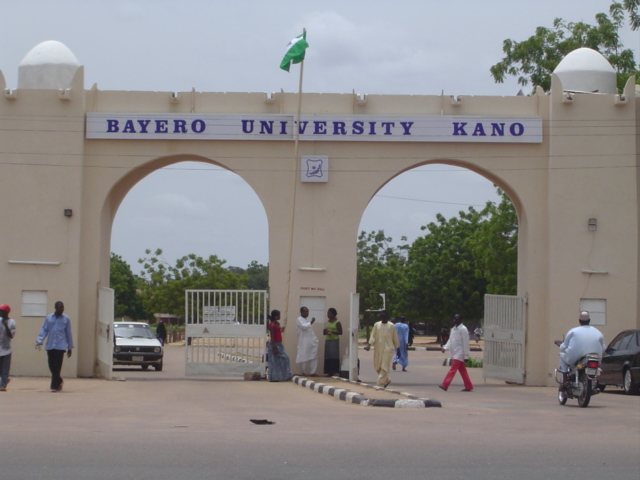
For the sisters, I took over my immediate younger sister’s expenses from my uncle. She’s a student at Bayero University, Kano (BUK). The other junior sister recently got admission to the School of Hygiene, Kano, while the two younger ones are secondary school students, and I still care for them all. 

Maturity is not by age but rather by the number of responsibilities one is able to shoulder. The best investment in life is to invest in human beings. I would rather walk around with old clothes and an old-fashioned phone, knowing that my siblings are busy getting qualitative education (modern and religious).

I  pray that God will increase my heart and bless my income so that I will help other non-blood-related orphaned children worldwide.

Hajara can be contacted via hajaraibrahimjaoji2019@gmail.com.