Education

Charms against bullets

By Bilyaminu Abdulmumin

Guns are the enigmatic force that charm practitioners, all over the world, have been trying to crack since time immemorial. There was no length these charm practitioners didn’t go to contain this mysterious “oyibo” invention. In 2017, Daily Trust reported an awful story about a member of a Vigilante Group in Katsina and his quest for bullet charm. This lad was said to test the charm while in the middle of the vigilante gathering, so in a show of bravery and gallantry, he wrapped himself up in the charms, did incantations, picked a dane gun, and fired on himself. He died instantly!

Coincidentally six years later two similar stories shook the internet. One was in Bauchi State. According to an interview by the Bauchi police in the viral video of the purported spiritual helper, luck ran out of them. As he was testing the charm on his client the bullet pierced the helper’s stomach. The second incident, all the way in Ghana, but this time around it was gang members who claimed to have gotten the charm against the bullet, so this too, when testing the charm against one of them he immediately kicked the old bucket. Why is the constant desperation going unorthodox ways for bulletproof when it could be easily achieved when tuned to science’s endless ways?

Bulletproof materials are simply materials fabricated using layers of strong fibers. The fibers that are strong enough can “catch” and deform a bullet, mushrooming it into a dish shape and spreading its force over a larger portion of the fiber materials. In other words, fiber materials like vests could absorb the energy from the deforming bullet, bringing it to a stop before it can completely penetrate the textile matrix. There are fibers everywhere including heaps of waste along the roadsides in our cities, this could be harnessed for such purposes. Some time ago, I heard in an interview from one Nigerian student who was working to harness the fibers in chicken feathers to develop a bullet vest. This student further elaborated the idea behind the bulletproof in another way, he said strong fibers arranged in a particular way act like black hole phenomena, the concept that was revolutionized by the greatest 21st theoretical physicist, Sir Steven Hawking.

A black hole consumes any force that comes close to it without a trace. So a carefully prepared fiber material has this awesome feature. I wish I could learn further where the idea of this student has gone. Perhaps for the show of bravery and gallantry the charms practitioners want it natural, without the use of any vest. Then they should cry no more because there is equally a research in this direction. This involved directly engineering human skin to deflect the bullet. In the Netherlands, another student researched this by bioengineering a small sample of human skin to include spider silk between its layers. The Netherlands Forensics Institute has test-fired low-speed rifle bullets at it, and shown that it halts them.

So, it’s up to researchers to pick up from here by bioengineering human skin with spider silk for higher rifle endurance. The sons of slain victims of bullet charm would have very good motivation to continue with this research. Whenever it comes to bullet charm, Bokero’s legacy stands out. Bokero claims to be possessed by snakes, as a result, he became known for assisting with every spiritual help. So when the East African countries, Tanzanians and co, grew impatient with German colonial rule, back early in the 1900s, they turned to Bokero for help. He provided them the war medicine, according to Bokero the concoction would not only protect them from the German bullets but would turn the bullet into water, motivated by this new charm, these zealots would confront German firearms. May the souls of about 300,000 rest in peace.

Mass comm graduates, wake up

By Hauwa Isa Dogo

With sadness, I respectfully write to advise the potential and graduate students of Mass Communication about the positive potency of being practicable in their respective fields of specialisation before or after graduating. Instead of remaining stagnant without practice—despite acquiring the certificate and the knowledge consumed in school, one could sadly find a Mass Communication graduate who cannot compose a paragraph of composition. This is quite sad, I must say.

However, many governmental and non-governmental agencies attend the newspaper pages where people’s opinions are published to see the possibility of hiring professional and consistent writers with expertise in their respective fields—Mass Communications in question.

Sadly, most of the time, the space purposely reserved for publishing people’s views is flooded with writers not specialised in mass communication. And that prevents field professionals from having the chance of being hired or employed by the organisations above.

Why shouldn’t they—the mass communication professionals—always live according to their area’s customs by actively practising their field of expertise to promote their area of creativity? This sounds like a mechanism for playing with their already-acquired certificates while their country needs them!

Therefore, I encourage—though challenging—you to wake up and work with reality by heeding my word of caution.

Hauwa Isa Dogo wrote from the Department of Mass Communication, University of Maiduguri.

A new era for higher education in Nigeria

By Nusaiba Ibrahim Na’abba

In his inaugural professorial lecture, Professor Muhammad Muftahu addressed the need for the institutionalisation of higher education as a field of study and professional practice in Nigeria. This came amidst increasing debates about skills over degrees or vice versa and other higher education problems that continue to stunt the growth of education in Nigeria.

In the lecture, which took place on November 14, 2023, at Kaduna State University, Prof. Muftahu disclosed the massive strategic importance of higher education in the development of Nigeria. He had served in various capacities as a professional higher education consultant and researcher. In his journey, he has navigated the multitude of intricacies of the discipline while teaching revered values in various institutions and organisations around the world.

In the years of my professional engagements with Prof. Muftahu, particularly in higher education research, article writing and research reviews, we have both documented facts and valuable insights that have given higher education the needed spotlight. Today, the sum of the knowledge I have gained has eased my current engagement as a content writer at a higher education institution. Prof. always insisted that we had learned from each other until my contracted work arrangement elapsed.

The higher education field is an essential asset to Nigeria’s all-round development, as he highlighted while delivering his lecture titled ‘Institutionalizing Higher Education as a Field of Study and Professional Practice in Nigeria’. It solidifies and amplifies every element purposely chosen to support general development by promoting economic growth and social progress, among other pillars that ensure the thriving of societal development.

Higher education is a multilayered field of endeavour. Existing therein are all tertiary institutions of learning, comprising mono-technics, polytechnics, colleges of education, centres of excellence in research, and universities, among other tertiary structures, not forgetting higher education programs. They are solely established to enable the production of new knowledge through skills, innovation and value-based education. This is necessary to keep steering the affairs of the country towards betterment and advancement.

Growing recognition of the importance of the field, growth and diversification of Higher Education Institutions, the influence of technology, the impact of policy and politics, and the globalisation of higher education are among the major components that transform research and studies in the higher education discipline. These components must be creatively streamlined into the higher education system to institutionalise its practice in full capacity.

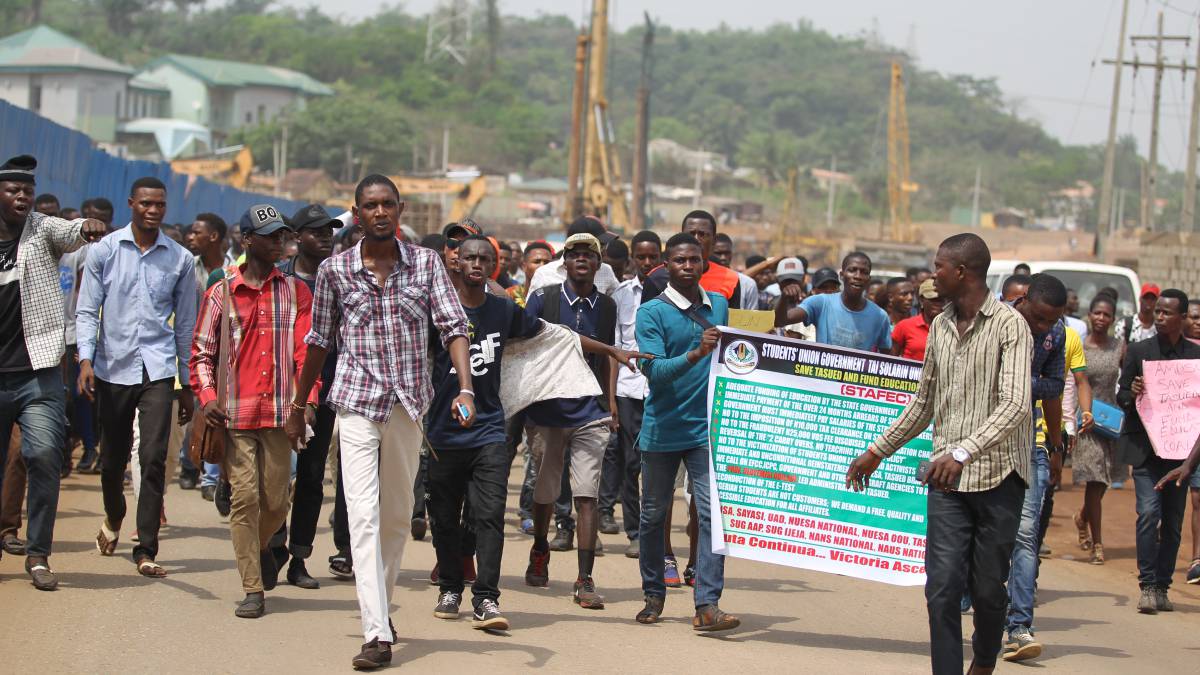
Prof. Muftahu’s inaugural lecture comes at a time when the Academic Staff Union of Universities (ASUU) and the Nigerian government have sharp disagreements over the autonomy of universities, the Integrated Payroll and Personnel Information System (IPPIS), the allowances of lecturers and notably the ‘Japa syndrome’ that has infested the universities. By the day, resourceful researchers in Nigerian universities seek lucrative, greener pastures abroad. Hence, they are trooping en mass to other countries, leaving behind the slowly decaying and pathetic system at home.

According to Muftahu, “Certainly, governance issues in higher education play a significant role in developing higher education practice in Nigeria. The lack of promotion of evidence-based policies and programs in higher education, as well as throughout the system, contributes to the difficulties in developing a strong pool of higher education researchers in Nigeria.” With the ‘Japa syndrome’ overwhelming the system, organising the strong pool of professionals dedicated to higher education research can be herculean.

The new era of higher education can be achieved through institutionalising it as a professional practice and a field of study in Nigeria. And doing that surely needs a redefined and robust approach. Critical areas that should be highly prioritised to elevate the status quo of higher education include higher education research and policy development, leadership, professional practice, a national strategic action plan and the establishment of a national institute for Higher Education research.

Higher education is a holistic collection of programs and institutions that serve as a think tank for every nation’s development. In advanced countries and developing ones like the US, Malaysia, Singapore, etc., higher education proudly supports decision-making at all levels of governance and public engagement with research and innovation. With the institutionalising of higher education using the key aspects, they have achieved a phenomenal transformation and development.

For Muftahu, “Without a doubt, a country’s overall development depends on the strength of its higher education system, which is heavily reliant on the presence and contributions of higher education professionals”. But, adapting to the contemporary practices of advancing higher education in Nigeria will be tricky.

In fact, with the current hike in university tuition, the tertiary education system is deterring youth from pursuing careers. This will also stagnate the development of a pool of resourceful higher education professionals that can ably streamline global best practices in the country’s education sector.

Nigerians are always on the search by global companies, research institutes, and other prominent organisations, courtesy of their well-regarded knowledge and abilities. A strategic national higher education roadmap is desperately needed to save the experts from trooping out of our country.

It is high time to stop the dramatic display of theatrics by the Nigerian government concerning higher education matters with evidence-based policies at institutional and national levels. These policies and programs can only be achieved by acknowledging the importance of skilled professionals in pursuing higher education excellence and values.

Nusaiba Ibrahim Na’abba is a content writer at Skyline University Nigeria (SUN). She obtained a degree in Mass Communication and a Master of Communication Studies. She is also a communication researcher and freelance writer.

Kano State’s scholarship debacle: Outstanding fees leave bright minds in limbo

By Dr Sagiru Mati

I was one of the beneficiaries of the 501 Scholarship Scheme during the Kwankwaso-Ganduje administration in 2012. Eleven of us were selected to pursue Master’s Degrees in Civil Engineering, Economics, and Software Engineering at Near East University. All expenses for tuition, accommodation, meals, a monthly stipend of four hundred US dollars ($400), flight tickets, and other necessary costs were covered and transferred to the university’s account. Towards the end of our program, an additional one thousand US dollars ($1,000) per person was also provided as a ‘thesis allowance.’ We are grateful to the Kano State government for this, and we hope that all scholarship schemes can be as hitch-free as ours.

Upon completing our master’s programs, approximately 50 students of Kano origin, primarily teenage girls, were transferred from India to Near East University. Additionally, a new group of undergraduates and post-graduates were granted scholarships under a new program initiated by the Ganduje-Hafiz administration. Unlike us, their fees and stipends were to be paid in instalments. Unfortunately, they faced numerous challenges, including delayed monthly stipends, despite their dedication to bringing pride to their parents and Kano State through hard work.

They comprise individuals holding PhDs (11 males and 1 female) and an MSc (1 female), alongside 47 undergraduates in Medicine (29 females and 5 males), Nursing (8 females and 2 males), Pharmacy (2 females), and Dentistry (1 female). In summary, there are 47 undergraduates and 13 postgraduates. These students showcased exceptional brilliance, making significant strides in their respective fields of study. Notable among them is Dr. Sani Isah Abba, the top PhD graduate in 2020, a distinguished researcher, and among the top 2% of world researchers in Artificial Intelligence. Assistant Professor Abdullahi Garba Usman stands out as the first postdoctoral scholar at Near East University, honoured with the Young Scholar Award, boasting over 800 citations.

Moreover, a married couple, Drs Auwalu Saleh Mubarak and Zubaida Said Ameen, received recognition from Near East University for two years in a row for their remarkable contributions to Biomedical Engineering research, accumulating hundreds of citations under their belts. Dr Rabiu Aliyu Abdulkadir is notable for having amassed more than 500 citations. At the same time, Dr. Abdulmalik Ahmad Lawan specialises in utilising technology for assessing autism spectrum disorder, and Dr. Umar Aliyu Shuaibu excels as an expert in assessing economic policy.

Similarly, the top three graduating medical students were Dr Ismail Adnan, securing the first position; Dr. Khadija Yusuf, ranking second; and Dr. Amina Aliyu Sambo, claiming the third spot. Likewise, Aliyu Nuhu Salihu distinguished himself as the top graduate in Nursing.

Despite these achievements, the Kano State government has not settled their tuition fees, stipends, and airfare for their return home. They were compelled to arrange their own means to travel back home. Near East University has withheld their certificates since 2019 due to the outstanding fees, which have escalated from around two hundred million Naira (NGN200,000,000) to approximately eight hundred million (NGN800,000,000) due to the depreciation of the Naira. Any further delay may increase this amount.

I have often pondered the following questions: Could it be because resolving their issues wouldn’t enhance political popularity? Is it because they don’t belong or lack connections to political families? Is it because there’s nothing in it for the government officials? Is it because the government lacks the funds to settle the debt?

I implore the government to act with compassion and understanding to settle this debt and safeguard the future of these bright minds before it becomes irreparable. They have demonstrated unwavering dedication to their education, and they deserve to have their achievements celebrated through the issuance of their certificates. The government should honour its commitment and restore the hope once ignited in these aspiring scholars’ hearts. They deserve the opportunity to reclaim their futures, proudly display their certificates, and embark on the careers they have diligently prepared for. Furthermore, Kano State needs human resources, predominantly female medical doctors in our hospitals and lecturers in our universities.

Sagiru Mati, BSc (BUK, Nigeria), MSc, PhD (NEU, North Cyprus), can be reached via sagirumati@yahoo.com.

Mrs. Nkechiyelu Mba’s Diary of Excellence

By Tajuddeen Ahmad Tijjani

If excellence means possessing good qualities in an eminent degree and superiority in virtue, Mrs. Mba, the Executive Director of Cooperate Services in the Niger Delta Power Holdings Company (NDPHC), is a personification of it all. Beyond meritorious service to the nation of Nigeria, her journey has been nothing short of extraordinary, marked by unwavering dedication and exceptional achievements.

One of Mrs. Mba’s notable accomplishments has been her role in spearheading initiatives to address Nigeria’s power crisis. Through her strategic vision and tireless efforts, National Integrated Power Projects (NIPP) has been making progress in increasing Nigeria’s electricity generation capacity. Her tireless effort towards ensuring a stable and reliable power supply continues to impact businesses and households, fueling economic growth and improving the quality of life for millions.

Her leadership style has been a source of inspiration for her colleagues and subordinates. Under her stewardship, NIPP has witnessed significant improvements in corporate governance, efficacy, and transparency. Moreover, corruption and favoritism have never been her portion; she believes in merit and ability to deliver, which is the only yardstick that would propel every organization, not only NIPP.

Beyond professional feats, Mrs. Mba is becoming a champion in social responsibility, where she actively engages herself in community development projects, promoting sustainable practices, and empowering local communities. Her achievements in this regard are clear for all to see and appreciate. I can only mention a fraction of her distinct accomplishments in service to God and humanity. Through her passion for environmental conservation and social welfare, she is leaving indelible marks on the regions served by NIPP; though, NDPHC’s footprint cuts across every nook and cranny of the country.

Mrs. Nkechiyelu Mba embodies the values of integrity, excellence, and service to the nation. Her meritorious service to Nigeria in the realm of energy and corporate governance has not only transformed the power sector but also served as an inspiration for future generations of leaders. I foresee that Nigeria will attain its full potential with her caliber in the energy sector. Again, her legacy is one of unwavering dedication to the betterment of her country, making her an exceptional and revered figure in Nigeria’s history of public service. On a personal note, I cherish and adore this woman of substance, who is a mother, the voice of the downtrodden, and an inspirational leader to the unborn generation.

History is more than the path left by the past; it can influence the present and shape the future. Mommy, I’m certain that history will be kind to you.

Tajuddeen Ahmad Tijjani writes from Abuja.

Is schooling a waste of time?

By Ubaydullah Abdulmalik

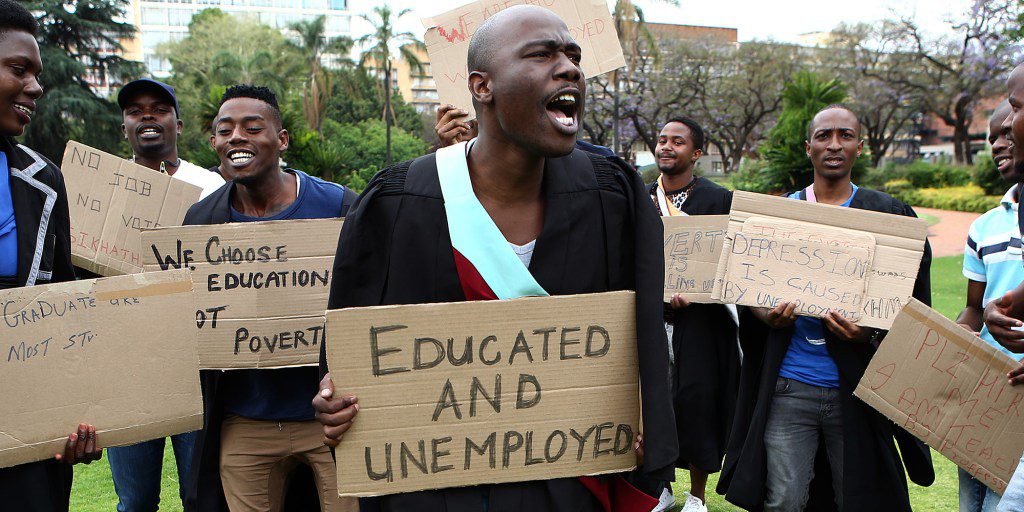
When an average youth from a developing country is fooled into believing that schooling is a scam because degrees do not guarantee employment, there is little that can be done to help such a person. There is hardly a day that I scroll through social media pages without stumbling over multiple posts that discredit the relevance of schooling and tertiary education. This argument continues to generate debates on whether it is worth it to go to school and acquire degrees, in a society where degree holders and degreeless people “hustle” equally for survival.

So is schooling a scam? Well, I will start with a quote from Michelle Obama, she said and I quote; “The ability to read, write and analyze; the confidence to stand up and demand justice and equality; the qualifications and connections to get your foot in the door and take your seat at the table – all of that start with education.” – Michelle Obama

It is gradually becoming a prevalent notion within our society that degrees and advanced formal education have limited relevance in the 21st century, and this is only because they don’t guarantee jobs to those who pursue or acquire them. No one says a college degree is the only path to success in life, but honestly, how could schooling be considered a waste of time?

Primarily, based on the misconception that people go to school and graduate to get employed, this reprehensible fallacy is gaining more ground in the midst of our youths and students. Phrases like “school na scam,” “who degree epp,” and “this useless course” among others, are trademarks of this idea. it is an undeniable fact that unemployment is at an all-time high state and that in today’s society, degrees and other qualifications may not guarantee employment, let alone job security for individuals, but this does not render degrees useless or schooling a waste of time. Because many do not understand the real essence of education, they stand to benefit the least from it – a lot go through schools only to leave a little different than they arrived.

Time has changed and even though college degrees largely guaranteed an employment in the past, that doesn’t hold anymore today. With the rapid rise of technological innovations, artificial intelligence and automation, concerns about unemployment continue to grow globally.

In my own opinion, this only reflects the dynamic and ever-evolving nature of societies and human interactions. The nature and standard of education in the past befitted the market requirements, socio-economic realities and technological advancement of those people, then.

Education has constantly evolved with societies and human behavior, and as such, we must continuously align the standards of our educational system with the dynamic needs and challenges of the present era. But this is difficult to fathom for some people. Instead of asking why a degree or some other form of formal education may not easily guarantee or get one a job in today’s society, a lot are trying to dismiss the relevance of tertiary education as a whole. This is completely wrong.

This is one out of many disheartening posts and conversations that happen daily on social media. The gullible among youths and students are glaringly made to believe this, because of obvious reasons, that education no longer holds much relevance in today’s society. And it is a very big fat lie! I don’t subscribe to the conspiracy theories questioning the motives behind our contemporary educational system. I do believe, however, that certain errors need to be corrected in our educational system, especially our mindset, regarding the purpose of education.

There’s this general misconception or conditioning that we all grow up with; since childhood, we are made to believe that we go through school and obtain education (the 6-3-3-4 system) to ultimately seek a job, a notion that is wrong in its entirety. When people grow up to learn the hard truths, some misunderstand it all and they begin to question the relevance of education.

A change in mindset and orientation would solve it all. The upcoming generation must come to understand that the end goal of education is not solely employment. Of course employment is a major factor after acquiring education; and gainful employment is expected of anyone with “sound education”, however, employment is never the primary purpose of education.

Education is meant to train individuals and to equip them with the requisite skills needed to thrive in any environment and live a meaningful life. Education is meant to broaden horizons, sparking innovations and producing problem-solvers that would champion the emancipation and advancement of societies. 

As Kofi Annan puts it: “Knowledge is power. Information is liberating. Education is the premise of progress, in every society, in every family.” Education has always been and will always remain the golden key to success. It depends however on one’s perception of what education is. 

Most often, we only think of the superficial value of things and never care to reflect deeply on the real essence of education. 1000 years ago, no one went to school to get degrees and universities as we know them today, did not exist. Even so, the people of those ages had their forms of education and learning systems, be they formal or informal. Similarly, universities as we know them today, may not exist in the next two or three centuries, but the essence of education will persist in accordance with the context of that era. This is because education is boundless and timeless.

Ubaydullah Abdulmalik is an undergraduate student from Bayero University, Kano. He is a passionate advocate for quality education and digital literacy in today’s society. He can be reached via; ubaydulmalik530@gmail.com

The Nigerian university professors and their sad reality

By Prof. Abdelghaffar Amoka

A part of the activities of the university professors is serving as external examiners to universities other than theirs. The appointment of external examiners is a worldwide practice for quality control. Professors can be external examiners for undergraduate or postgraduate programs. While the external examiner for a postgraduate program can be for a day if it involves just a student, appointment as an external examiner for an undergraduate program lasts for a whole academic year.

The external examiner is required to moderate the question papers and marking schemes of all the final-year examinations for the first and second semesters of the program. The Examinations Officer will travel to the university of the External Examiner with the question papers and marking schemes for the Examiner to moderate for each semester. I travelled to Kano for that exercise as an Examination Officer between 2006 and 2008. At the end of the academic year, the External Examiner is required to travel to the university to examine the students’ final-year project and also to moderate the answer booklets and results.

I was recently appointed as an External Examiner for the physics department of a Federal University about 210 km from my university. I moderated the question papers and marking schemes for both semesters. At the end of the session in October 2023, I was invited to the external examination of the students’ projects. While planning to go there, I inquired about the number of students to be examined, and I was told they were a bit above eighty (80). I was like, wow! The funny thing is that you do this job, especially as a first-timer, without knowing how much you will be paid for it.

I was wondering how I will examine 80 students in two days. The university is about 210 km from Zaria, and I need to analyse the economics of the trip. If I am to drive my car, I will spend about N40,000 on fuel for the round trip. But my instinct was telling me that using my car would cost more than I would be paid. So, I joined a public transport, and it cost me about N4,500 to get to the University.

Four passengers, including myself, were squeezed like sardines in a pack in the vehicle’s passenger seat.

I got there, examined the 80 students, and moderated the answer booklets of their final-year students for two full days. I examined 40 students each day. I was exhausted and needed enough space to relax, returning to Zaria. So, I paid for two seats, which cost me about N9,000. This made us three on the passenger seat to Zaria.

Just a few days ago, I received an alert of the payment for the one-year job. I got an alert of N138,920 six weeks after the job. My breakdown shows that I was paid N80,000 honorarium for the one-year job as an External Examiner for the university, N50,000 for accommodation for two nights to examine 80 students (25,000 per night), and N8,920 for transportation from Zaria to the university and back to Zaria (223km x 2 x 20 naira per kilometre). Payment for two nights implies that it was assumed that the job was done in one day. Yes, the university management assumed that I examined 80 students in one day.

At the end of the day, and even without using my car, I spent more on transportation than I was paid. For the moderation and examination of the students for an academic session, I was paid N1,000 per student for the exam moderation, reading of the project work, and oral examination of the students.

However, there was a circular in 2022 that reviewed duty tour allowance (DTA) and transport allowance per kilometre for public service. According to the circular, a Professor is meant to get N37,500 per night as DTA and N75 per kilometre for mileage. While it is in operation at every other MDA, under the current fuel subsidy removal regime, university professors are expected to travel at N20 per kilometre and can’t lodge in a hotel that costs more than N25,000 per night.

While the political class has subjected academics to abject poverty, the managements of our universities are still expecting us to travel with N20 per kilometre, lodge in a hotel that is not more than N25,000 per night, and then do oral examinations for 80 students in one day. They possibly felt that we could manage it. After all, we are already used to poverty. It’s sad that the political class does not regard us. We have lost respect in society and don’t seem to have regard for ourselves within the university system.

At least this university paid even though what was paid was ridiculous. I also got a nice reception from the department. For over a year, the other university has yet to pay the N50,000 for the professorial assessment of their staff and refund the N2,500 postage charges to send the assessment report. That is Nigerian academia.

Dear public university managers, why do we find it challenging to spend money on academic activities, the main activities of the universities? Does it still cost you 20 naira per kilometre to travel to Abuja for an official engagement on behalf of the university? The excuse is always that the university has no money. Then, why do we pretend that all is well when it is not? Why do we window-dress our programs for accreditation when we can’t adequately fund the programs? Why should we be expected to drain our blood to keep public universities open?

External moderation and examination are requirements for the award of degrees, and they should be properly funded. Otherwise, It should be suspended till there are enough funds to execute that component. If we want to make progress, we must stop the window-dressing approach and tell ourselves the truth.

Dear senior colleagues, I greatly respect your sacrifices and the risk of travelling between states these years on our bad roads for external examinations at this ridiculous honorarium and allowances. I don’t want to blame you for the sustenance of this slavery. But this treatment continued because you accepted it and MILT for these years. Even as teachers, we need a proper reward here on earth as we all strive for heavenly rewards.

Our old senior colleagues are already used to it. But to the new professors who will be taking up external assessment responsibilities, before going out for any external assignment, the supposed community service, to other universities, you need to be sure that the transport allowance will take you to the place to do the job and that the night allowance can afford decent accommodation.

Don’t be enslaved by the words “community service”. There is no free meal anywhere in the world. Somebody must pay for anything called a free meal.

Abdelghaffar Amoka Abdelmalik, PhD, wrote from Ahmadu Bello University, Zaria. He can be reached via aaabdelmalik@gmail.com.

Negative influence of TikTok trends on Nigerian youths

By Manasseh Mercy

Social media integrates digital media platforms, including combinations of electronic text, graphics, moving pictures and sounds in a structured computerized environment that allows users to interact with the data for appropriate purposes or otherwise. The digital environment can include the Internet, telecommunications and interactive digital television. The Web is now part of the overall business of communication, sales and services. It changes business practices across the globe.

Its technical limitations affect the amount of material and the speed of access. The network depends mainly on the connections of the telephone line, so the more they are good on a territory, the more the service will be reliable. As a result, messages can reach audiences and target groups in real-time and generate changes and trends.

Nowadays, younger generations grow up having good contact with different social networks, easily acquire digital culture and live in a digital world where only adults are naturalized citizens. Trends can bring awareness to other organizations and not just for selling products. 

In 2014, the ice bucket challenge was a popular trend that spread across Instagram’s platform. The trend was created to help bring awareness and donations to Lou Gehrig’s Disease, also known as ALS, which stands for Amyotrophic Lateral Sclerosis. Pete Frates, a former baseball player for Boston College, helped promote the nonprofit organization ALS Association because of his diagnosis of the disease. Both celebrities and regular social media account holders made videos of pouring ice water on themselves while tagging at least three friends to post themselves participating.

This trend was an example of one of the many situations that brought light to very serious topics. The millions of people posting about the ice bucket challenge resulted in the organization raising millions of money. That year, an estimated $115 million was raised for the cause in just a few months. The Ice Bucket Challenge was created to raise money for research purposes in hopes of finding a cure for ALS disease.

The Ice Bucket Challenge is just one of the many trends that took over social media platforms. Many nonprofit organizations have been going viral over the years, bringing awareness to millions of people. Situations like these can come out of pure luck to get everyone on the Internet to discuss a topic. Getting people to talk about specific issues brings attention to a cause that can get people to donate money. It’s not only companies and organizations that get attention online but also individuals as well.

TikTok is a social media platform for creating, sharing and discovering short videos. Young people use the App to express themselves through singing, dancing, comedy and lip-syncing. It allows users to create videos and share them across a community. It is one of the most popular social media platforms in the 21st century. 

In Today’s generation, popular trends on social media have a significant influence on younger generations. Trends can consist of different things such as makeup, clothes, music, toys, and interests. TikTok trends are viral short videos that use popular features, songs, sound effects and hashtags. 

Some current TikTok Trends (November 2023) include Bird’s-eye View — November 17, 2023. In this trend, you grab your friends or coworkers, tape your phone to the ceiling, and record yourselves dancing and being silly. Another was (Added November 20, 2023) Smug Corgi/Confused Dog Meme Trend. Example: Posting a video with the CapCut template from the example with a funny text overlay describing a situation where you (the corgi) would be smugly doing something while the other person (represented by the other dog) is super baffled, often about spend a lot of money on something like Christmas decorations.

What are the potential risks? Users may be exposed to foul language and sexual content. Users can comment on other videos, which leaves the potential for online bullying or negative comments. The App promotes positive comments and encourages users to ‘say something nice’. However, if you encounter an inappropriate comment, you can report it as abuse. 

Stalking, identity theft, personal attacks and misuse of information are some of the threats social media users face. Most of the time, the users themselves are to blame as they share content that should not be in the eye of the public. 

These dangerous trends are not only harmful to the individuals who participate in them, but they also hurt society as a whole. When young people engage in these trends, they send their peers messages that it is acceptable to engage in risky and inappropriate behaviours. This can lead to a culture of recklessness and disregard for personal safety and etiquette.

It is essential for parents and educators to be aware of these dangerous trends and to talk to young people about the potential consequences of participating in them. It is also essential for social media platforms like TikTok to take responsibility for the content shared on their platform and to take steps to remove the dangerous content.

In conclusion, TikTok trends influence the social behaviour of Nigerian youths in one way or another. Nigerian youths engage in time-consuming and energy-draining trends, and sometimes, they cost money because they want to be famous and act like their peers. The Nigerian government should closely monitor and adequately regulate TikTok trends so as not to destroy Nigerian youths’ moral and social behaviour.

Mercy Manasseh is a student of Mass Communication from the University of Maiduguri and can be reached via mercymanasseh951@gmail.com.

Another batch of 50 graduates fly to India for master’s degrees under Kano government’s scholarship

By Sabiu Abdullahi 

The Kano state government has dispatched the fifth batch of 50 first-class graduates to pursue their Master’s Degree programmes in India. 

The beneficiaries, part of the 1,100 indigenous students sponsored by the state government for overseas studies, departed from Malam Aminu Kano International Airport for Lagos on a Max Air aircraft at 7:30 a.m. on Friday. 

The Commissioner for Higher Education, Dr. Yusuf Kofarmata, and other government officials were present to witness the departure.

From Lagos, the beneficiaries are scheduled to board an Air Peace flight to India at 2:00 p.m. Speaking after the takeoff, Dr. Kofarmata noted that this initiative is a continuation of the government’s commitment to the 1,100 postgraduate scholarship programme for the academic year 23-2024. 

The selected graduates, now on their way to reputed institutions like Sharda, Symbiosis, Mewar, Sri Sai, Swarnnim, and Kalinga, were chosen based on their outstanding performance during their undergraduate studies. 

Highlighting the significance of the programme, Dr. Kofarmata stressed that the students would focus on internationally competitive fields, contributing to bridging the manpower gap not only in Kano State but also across the nation. 

“A total of 550 students are the first batch who are going to eight reputable universities to study in internationally competitive areas of professionalism to bridge the manpower gap in the state and across the nation.  

“The students are also expected to acquire experience, skills, and knowledge with the view to revamp the state commercial status and explore other potential for socio-economic development,” he said. 

Providing an update on the progress of the previous batches, Dr. Kofarmata revealed that the students had already commenced their academic pursuits, and approximately 30 beneficiaries had secured casual employment with their respective institutions, a testament to their academic prowess. 

Acknowledging the support and commitment of Governor Yusuf, the Commissioner noted the celebration among beneficiaries, parents, well-wishers, and citizens of the state.

Al-Qalam University holds its 2nd combined convocation

By Abdulrazak Iliyasu Sansani

Barring any last-minute changes, Al-Qalam University will hold its 2nd Combined Convocation on Nov. 25, 2023. The day is what everyone associated with the university eagerly looks forward to seeing. 

Al-Qalam University, Katsina (AUK), hitherto known as Katsina University, Katsina (KUK), is located in Dutsinma Road, Katsina State, and known for the academic aspiration of those who seek knowledge deeply rooted in sound morals. Al-Qalam University was established in 2005 as Nigeria’s first private Islamic university.

The university has gone from strength to strength since its establishment 18 years ago. It presently runs six schools/colleges, which offer assortments of options for the students: The College of Social and Management Sciences, College of Natural and Applied Sciences, College of Education, College of Humanities, College of Post Graduate Studies, and School of Basic and Remedial Studies. It awards 22 undergraduate degrees (among which five courses offer both full-time and part-time programs), 11 master’s programs, and nine PhD programmes, all accredited by the National Universities Commission (NUC) in line with the laws governing university education in Nigeria. 

Recently, some new courses were accredited by the NUC, which brings the total number of programmes to 36 for the 2023/2024 academic session. Despite being a non-profit institution and the difficult economic situation in Nigeria today, the university continues to flourish. However, this is not far-fetched as it is run by an exemplary governing council and administratively headed by an astute academic, economic luminary, and open-minded scholar, Professor Nasiru Musa Yauri, who has not only built on what his predecessors had achieved but also devised different means to take the university forward. He is equally supported by the hard-working team across the various faculties and colleges to actualise the founders’ dreams of the first Islamic University in Nigeria. 

The Programme of the 2nd Combined Convocation is quite extensive. Therefore, I will highlight some of the events for want of space.  The Vice  Chancellor of Al-Qalam University, Professor Nasiru Musa Yauri, disclosed some of the events scheduled for the imminent second combined convocation while briefing journalists in Katsina on Nov. 19, 2023.  

According to the information, 139 postgraduates will be conferred with different honours during the convocation ceremony, including seven Doctor of Philosophy (Ph. D), 125 Masters, and seven postgraduate diplomas (PGD). 

“We are going to honour and celebrate graduates from the 2016 to 2023 sessions, which means on Nov. 25, we are going to confer degrees on graduates for eight sessions. 

“This is to say specifically that we are preparing to ensure that graduates of this 2022/2023 session are also going to be celebrated at the convocation ceremony,” the VC said. 

Apart from this, there is also a Qur’an recitation contest for all interested university students to participate.  This is one of the major events scheduled for the convocation. Winners of the Qur’anic recitation competition, both the female and the male categories, will receive N1 million each. 

A pre-vocation lecture will be delivered on Nov. 24, 2023, by a distinguished scholar, Dr Usman Muhammad Bugaje, on the topic: “The out-of-school-children and the  Conscience of the Nation: A Discourse on the Genesis, Prognosis and Solutions of the Almajirci Phenomenon.” 

A novelty football match between Al-University students (AUK All stars) and its alumni (AUK Legends) is part of the programme, emphasising that all domains of learning: cognitive, affective, and psychomotor are given priority. 

To cap it all, four eminent personalities who have made a tremendous difference in various fields of human endeavour will be conferred with honorary doctorate degrees: including the Emir of Katsina, Alhaji Abdulmumin Kabir Usman; Emir of Kazaure, Alhaji Najib Hussaini Adamu; Alhaji Sani Zangon Daura, and Alhaji Abdulsamad Isiyaka Rabiu. 

Al-Qalam University Katsina is where it is today because of the leadership, who have remained steadfast to the ideals of the founding fathers and have employed transparent methods. The Vice-Chancellor, for example, is accessible, and every Thursday has been set aside for any student with a suggestion or problem to meet the Vice-Chancellor and iron out the issue amicably. This is good leadership and highly remarkable.

I am not writing this piece to pretend we have a flawless system. There is no system without flaws. All systems have their shortcomings in one way or the other. This may not be apparent without meticulous observation. But this we understand as we explore the system or rather utilise the services of the system. Hence, I do not claim a perfect system exists here or advance anything error-free for the public. 

To buttress my points, I was personally affected by one of such fallibilities when I was wrongly accused of committing an offence I didn’t and have always stood against. Herein, Al-Qalam University, especially its College of Education, exercised due diligence by using all the legal instruments to get to the root of the matter and ensure justice was done. In my opinion, the greatness of any system or institution should be measured not by the duration it exists but by how effectively its services are rendered to those in need. This proves where the institution belongs. 

Prof. Nasiru Musa Yauri’s giant strides are evident, from academics and sports to other equally important sectors of this citadel of learning. With time, Insha Allah, this institution can reach the heights its illustrious founding fathers envisioned when they established this university in 2005. May Allah (SWT) help Al-Qalam University to reach its rightful destination for the benefit of Nigeria. 

Abdulrazak Iliyasu Sansani is a student of Al-Qalam University Katsina.