Education

Palliative Tragedy: Distributions in tertiary institutions can go differently

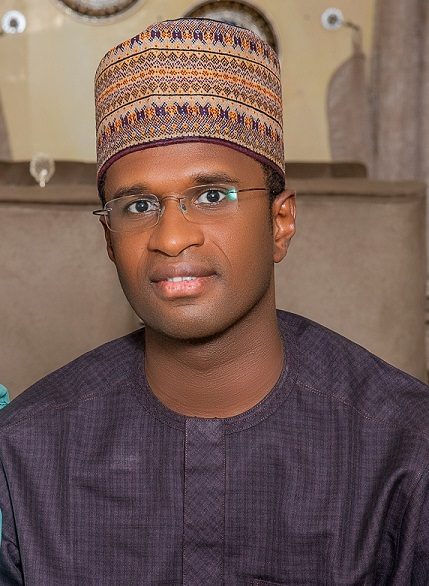
Bello Hussein Adoto

The tragic deaths of two students and the injury of 23 more at the botched distribution of palliatives at Nasarawa State University on Friday is a disturbing addition to what has been a troubling period for undergraduates in Nigeria.

Just last Friday, nine students of Federal University Gusau regained their freedom after spending over 170 days in terrorists’ captivity. On Thursday, three medical students of Abia State University died in a road traffic accident while returning from their seniors’ induction.

Unlike these other tragedies, however, the Nasarawa stampede could have been envisaged and prevented. The successful distribution of similar palliatives at the University of Ilorin shows us how we can do things differently.

Following subsidy removal and the attendant inflation in the country, several state governments distributed palliatives—foodstuffs and stipends—to ease the economic burden on citizens. Some states like Kwara and Nasarawa recently extended the palliatives to students in their tertiary institutions.

The initial distribution of the palliatives across institutions in Nasarawa state was peaceful. A government statement released after Friday’s stampede noted that previous distributions were “a huge success.” Students got two 7.5 kg bags of rice and 5,000 naira each.

However, events leading to the stampede at Nasarawa State University, Keffi, points towards a mismanagement of crowd control by the organizers responsible for distributing the palliatives. According to media reports, the palliatives were scheduled at the university convocation square until students arrived in large numbers and disrupted the distribution.

“After our arrangement for the distribution of palliatives to the students which was to hold at the University’s convocation square, they (students) suddenly arrived at the venue in their numbers and overpowered the security,” said Yunusa Baduku, National President of the Nasarawa State Students Association, in a Punch Online report.

He added that the students “broke through the gate into the Convocation square where the bags of rice was to be shared,” leading to the stampede that consumed the two students and injured many more.

Sadly, such chaos is not new. In February, the Nigerian Customs Service had to suspend its sale of seized bags of rice after seven people died at one of its centres in Yaba, Lagos. Some two years ago, 31 people died at a stampede at the King’s Assembly in Rivers state church during the distribution of palliatives to church members; seven more were injured.

Although the state governor, in a statement by his Chief Press Secretary, was quoted as calling the tragedy “a needless stampede,” the state could have prepared better for it. Distribution events, especially those intended to provide aid or relief, tend to draw large crowds, making effective crowd control essential.

In Unilorin, for instance, where students received palliatives—cartons of noodles—from the Kwara State government, distributions were such that students did not have to gather in their numbers at the arena or use vouchers.

The government sent the palliatives to the university, who distributed them to the faculties. From the faculties, they were distributed to departments, where class representatives from each level went to retrieve the packages for their class. It was as seamless as public distributions go.

I suppose the Unilorin model could help other tertiary institutions plan more effectively. The university leveraged student associations and divided the population into manageable chunks. Such divisions made it difficult for hoodlums to gatecrash, as the class reps knew their colleagues. The strategy also eased accountability.

While I admit there is a risk of student representatives appropriating the palliatives or shortchanging their colleagues, this is more manageable than asking a crowd of desperate undergraduates to gather for government handouts.

A departmental or level advisor can be mandated to coordinate the distribution, even if he has to be paid or receive palliatives, too. It is not likely that the coordinator will conspire with the student reps to loot the palliatives. In the rare event that that happens, then so be it. Nigeria students have suffered enough than to die in avoidable stampedes.

Adoto writes from Ilorin via bellohussein210@gmail.com.

Return of mass kidnapping in the North

By Zayyad I. Muhammad

In just one week, bandits and Boko Haram terrorists have abducted scores of students, female IDPs, Almajiris and other innocent citizens across Northern Nigeria.

On February 28, 2024, bandits killed two residents of Anguwan Auta in Gonin Gora, Kaduna state and kidnapped 16 others. The kidnappers are demanding a ransom of N40 trillion, along with 11 Hilux vans and 150 motorcycles, for their release.

On March 7th, 2024, 287 students, boys and girls between the ages of 8 and 15, were abducted by bandits from primary and secondary schools in the town of Kuriga in Kaduna State. The bandits have demanded a N1 billion ransom to set their captives free. They also threatened to kill the victims if the ransom was not paid in 20 days. It was reported that, on Tuesday, March 12, 2024, the bandits made contact through the principal of the school, Abubakar Isah, who was abducted alongside the students. The bandits contacted Aminu Kuriga, a friend of the school’s principal, at around 2 p.m. on that Tuesday, asking for the amount.

On Friday, March 8, 2024, Amnesty International (AI) reported that Boko Haram terrorists abducted over 400 people, including women and children, in Borno State. Boko Haram kidnapped the IDPs from different IDP camps in the Gamboru Ngala area of the state, which is one of the least secure parts of troubled Borno State, according to some observers.

In the early hours of Saturday, March 9, 2024, 15 Quranic school students and an elderly woman were kidnapped when bandits raided Gidan Bakuso village in the Gada Local Government Area of Sokoto State.

Looking at outrageous demands and the targets, the bandits and the Boko Haram terrorists are all out to embarrass the government and cash out from it because most of their targets are soft and in rural areas.

However, the Minister of Information and National Orientation, Alhaji Muhammed Idris, was quoted as saying that President Tinubu has directed that security agencies must, as a matter of urgency, ensure that these children and all those who have been kidnapped are brought back in safety and also in the process, to ensure that not a dime is paid as ransom.

Can the government secure the release of the hostages as soon as possible without negotiation or payment of a ransom? Have the terrorists discovered a loophole in the current approach? It appears that the bandits and terrorists are exploiting the successes achieved in certain hotspots, possibly causing security agents to focus on other areas.

What needs to be done is a holistic approach to the deployment of both the kinetic and non-kinetic approaches.

The state, federal, and local communities should work together; collaboration is key to security management. On March 14, 2024, The National Security Adviser, Mallam Nuhu Ribadu, all the service chiefs have met with all 19 northern governors to deliberate on the issue of security. This is good.

Managing security in a vast country like Nigeria with inadequate modern technology for security management is difficult, and federal security operatives cannot be everywhere and anywhere at the same time. And, Here comes the importance of a well-designed and structured state police. They play a crucial role in maintaining law and order within their respective states by enforcing state laws, responding to emergencies, investigating crimes, and ensuring public safety. Thereby, they contribute significantly to the overall security and well-being of the citizens within their jurisdiction, while complementing the efforts of other federal security agencies.

The hope is that the government should consider revitalising and re-strategizing both kinetic and non-kinetic security approaches as being implemented by the Office of the National Security Adviser (ONSA). This will not only lead to more successes and breakthroughs; however, more intelligence gathering is needed. Community engagement and direct psychological communication with the bandits should be employed. In community engagement, communities should be made to feel like part of the solution in security management, thus providing intelligence and also acting as watchdogs for security operatives without being endangered. Secondly, the reported ongoing soft approach’ should be sustained, and in direct communication with the bandits, psychological, social media, and artificial intelligence (AI) methods should be greatly utilized. Most bandits and Boko Haram terrorists now also use social media. Therefore, a coordinated effort should be launched by the ONSA and other relevant bodies to recruit individuals who speak the languages of the bandits. These individuals can then send convincing messages to them regarding the disadvantages and dangers associated with their activities, while also highlighting the benefits of adopting a normal lifestyle. This includes attending both Western and religious schools while still maintaining their culture, beliefs, and legal trade inherited from their communities.

Furthermore, radio and TV remain effective tools to reach the bandits, especially with the widespread availability of satellite TV and advancements in solar power technology. This allows bandits hiding in thick forests to charge their phones, watch TV, and listen to the radio and watch satellite TV.

To enhance security for soft targets and rural schools, the government at all levels, along with security agencies and local communities, should collaborate on implementing both kinetic and non-kinetic approaches.

Zayyad I. Muhammad writes from Abuja. He can be reached via 08036070980, zaymohd@yahoo.com

Kano students suffer as government fails to pay off their tuition fees

By Muhammed Sodangi

Let me begin with the famous saying of the South African anti-apartheid revolutionary leader, Nelson Mandela, who said, “It is through education that the daughter of a peasant can become a doctor, that the son of a mine worker can become the head of the mine, that a child of farm workers can become the president of a great nation. It is what we make out of what we have, not what we are given, that separates one person from another.”

On August 23, 2023, the Executive Governor of Kano State, Engr. Abba Kabir Yusuf, approved the payment of ₦700 million to 7,000 Kano indigenous students at Bayero University, Kano.

This commendable gesture has put smiles on the faces of a great number of students who were utterly struggling for the survival of their academic pursuits at the time.

Under your stewardship, Your Excellency, approximately 550 indigent students from Kano State were sponsored to travel overseas for a master’s scholarship program.

Thus, it is a clear testimony that the education sector has been prioritized by investing heavily in the future leaders of our state.

However, students studying at various universities outside the state risk deferment or withdrawal for not settling their tuition fees as promised by the Kano State government.

On March 2, 2024, the Kano governor held a meeting with the “Joint Consultative Forum of Kano Universities Students” to address the lingering issue regarding the payment of their tuition fees.

A few days later, a screening team from the scholarship board was dispatched to various universities, but no progress has been recorded yet.

Your Excellency, many students have missed tests and are on the brink of missing exams. We are thus calling on your intervention as soon as possible.

Thank you.

Father seeks help to fund part of graduate-son’s   unpaid tuition

By Uzair Adam Imam 

Adamu Sani Bello, a retired journalist and former civil servant from Bauchi State, is grappling with the distressing predicament of his son’s stranded status in Iran.

Despite graduating two years ago with a 75% scholarship, Bello’s son remains unable to return to Nigeria because of an unpaid university debt totaling $8,000.

Bello’s efforts to settle the remaining 25% of the debt have been thwarted by Nigeria’s economic woes, which have been exacerbated by rampant inflation.

Since his retirement, Bello has struggled to meet familial responsibilities amid challenging financial circumstances.

Desperate plea 

In a heartfelt three-minute video seen by The Daily Reality, Bello implores philanthropic individuals and nongovernmental organizations to come to his son’s rescue.

He reveals that his son, a trailblazer in dental surgery and the first Black student at his Iranian university, is unable to afford the $1,000 flight back to Nigeria.

The situation is dire as the expiration of his son’s residency visa looms.

Bello fears that his son may overstay his visa, compounding his already dire situation. 

Adding to the complexity, Iranian regulations prohibit students from seeking employment until they complete their studies.  

No way out 

With his passport also having expired in August, the young graduate finds himself trapped in a nightmarish limbo, devoid of job prospects and lacking the means to return home.

Bello’s desperate plea shows the urgent need for intervention to prevent his son from facing the harrowing prospect of incarceration in a foreign country.

FG approves upgrade of FMC Birnin Kebbi to Federal University Birnin Kebbi Teaching Hospital

By Sabiu Abdullahi 

President Bola Ahmed Tinubu has given the nod for the Federal Medical Centre (FMC) in Birnin Kebbi to be upgraded into a teaching hospital. 

The upgrade was conveyed in a statement signed by Jamilu Magaji Mohammed, Head, Information and Public Relations, Federal University Birnin Kebbi, today. 

According to Mr. Jamilu, this transformation is poised to serve as the principal clinical training venue for medical students enrolled in the College of Health Sciences at Federal University Birnin Kebbi (FUBK). 

The approval wasconveyed in a letter dated March 13, 2024, addressed to the Vice Chancellor of FUBK and signed by Dr. Tunji Alausa, the Honourable Minister of State for Health and Social Welfare.

“This approval is a further testament to the passion and commitment of Mr. President aimed at ensuring that Nigerians get the best healthcare at an affordable cost, and to increase much-needed Human Resources for Health in our country,” the letter states. 

The Minister has tasked FUBK with engaging the management of the newly designated Federal University Teaching Hospital, Birnin Kebbi, to enhance their facilities for teaching and research purposes. 

Expressing his elation over the development, Vice Chancellor Prof. Muhammad Zaiyan Umar affirmed the university’s dedication to leveraging the opportunities presented by the upgrade.

He extended gratitude to all stakeholders whose collaborative efforts facilitated this significant milestone. According to reports from the FUBK Bulletin, a committee has been established to oversee the implementation of the upgrade.

The Committee, chaired by Prof. B.B. Shehu, former Vice Chancellor of FUBK and current Vice Chancellor of the Federal University of Health Sciences, Katsina State, is tasked with working out modalities for the upgrade.

Prof. Aliyu A. Turaki, Deputy Vice Chancellor of FUBK, serves as the co-chair.

Re: Dump your Dollars to avoid tears, Naira appreciates – Presidency warns

Baffa Kabiru Gwadabe, PhD

When I first saw the news, I was overwhelmed by the efforts of Mr. Cardoso as the apex Bank Governor trying to stabilize the Naira. In the news cover, it was reported that “the Presidency has warned Forex speculators to discard their Dollars, saying that the Naira will soon appreciate”. But the above statement was said to be made by the President Bola Tinubu’s Special Adviser on Information and Strategy, Mr. Bayo Onanuga, through his Twitter (now X) handle on Thursday 21 March, 2024.

Mr. Onanuga urged Dollar speculators to quickly dump their Dollars to avoid ‘tears’ that may ensue after continued appreciation of the Naira. Mr. Onanuga was reacting to the recent disclosure by the CBN that it had cleared $7 billion foreign exchange backlog inherited by the Bank.

The development was confirmed by the CBN’s Acting Director, Corporate Communications, Mrs. Hakama Sidi Ali. According to her, the CBN had employed the services of Deloitte consult as an independent audit company to judiciously assess the forex backlog claims and all valid claims based on the recommendations of the company were settled by the Bank. She further indicated that all invalid claims or transactions were referred to the relevant authorities for further investigation.

Similarly, the above efforts, coupled with others such as the seeming ‘credibility of the CBN’ in keeping to its policies have made the Naira to appreciate to some levels and also to the rise in Nigeria’s foreign reserve to $34.11 billion early this month, which is almost the highest recorded since the last 8 months. This is welcoming for Nigeria as import-dependent economy and led Mr. Onanuga to talk to speculators in his tone of ‘Dump Your Dollars’. The ‘dumping of the Dollars’ is my point of entry from which I want to make some remarks.

Let me start by saying or informing Mr. Onanuga that the Dollar crisis in Nigeria is beyond speculations. To a greater extent, it is an issue of ‘store of wealth or value’ using the Forex, specifically the US Dollar. Many Nigerians that had the opportunity of accumulation of ‘large wealth’, try their ways in ‘safe-keeping’ same by converting certain amounts of Naira to the Dollar or other major currencies like the Euro, the Sterling Pounds etc. This has remained the practice in the country and has reached the extent of what I called the ‘unconscious journey’ or the ‘hardened behaviour’ of not seeing the Naira as any promising currency that is stable. In other words, the Naira will always keep depreciating.

With the kinds of policy efforts by the CBN and the Federal Government, this behaviour or trend may have its last gate. What I am saying, in short, is that the practice of scouting and safe-keeping of the Dollar at whatever rate to keep in ‘graveyards’, ‘underground safe-tanks’, ‘security safes’, ‘travelling bags or brief cases’, ‘laundering overseas’ and ‘deposits in commercial banks’ to mention but a few storage strategies of the Dollars may be curtailed.

I now ask some questions regarding the calls for ‘dumping’ by Mr. Onanuga. If Nigerians that had scouted and stored the Dollars were to repent and bring out some or all of their stored Dollars, where should they dump them? Is the dumping ground ‘safe’ without creating a new round of speculations and corruption? Are the dumpers ‘safe’ from stigmatization and punishment? Are the dumping sites going to be the CBN like during the New-Old Naira notes swap, the commercial banks or the BDCs or new hubs? Will the Dollar holders be allowed to spend the Dollars domestically for their transactions? The questions are many and could go on and on, but I stopped at just number 5, as other people may ask some more questions.

For some of the questions asked above, the answers may be very clear, just like the water colour in the day time. All that is needed in answering those questions is for the CBN and the Presidency to be more proactive and strategic enough in handling the long-standing crisis of the Dollar. This is just to say that there is a better need for change of strategies and operations.

The duo should greatly be reminded of the popular saying that ‘once-beaten, twice shy’. I hope to focus specifically on providing only 2 answers based on my little understanding and focus of the rejoinder, the ‘dumping of the Dollar’ and the ‘domestic spending of the Dollar (dollarization)’.

The dumping should strictly be accommodated by the CBN and new accredited dealers or service providers that are trustworthy other than commercial banks or the BDCs. The commercial banks and the BDCs had been tried and tested at different times and different exchange rate regimes but have failed in their own domains. For instance, most commercial banks hoard, receive bribes, kick-backs, brokering or profit from the CBN official Dollar allocations, thereby further widening the gap between the official rate and the black-market rates.

For the BDCs, they are the agents, on many occasions, that served as the foot-soldiers in scouting and mopping-off all the available Dollars in the market with huge Naira for their clients and launder same in some instances.

Additionally, the Binance crypto market speculations of the rates appeared to be new in the perpetuation of Dollar atrocities in the country but still cannot be ignored.

On the answer to the question of spending the stored Dollar domestically, the answer is a resounding yes. Those with Dollar currencies in their possession should be allowed to transact at accredited points and this will ensure more liquidity of the Dollar domestically and reduce demand pressure to squash undue speculations and arbitraging. Allowing the Dollar to co-exist with the Naira in the domestic economy at reasonable scale is called ‘partial dollarization’. This is important because the Dollar in Nigeria based on the recent happenings and the CBN’s approaches is ‘strangled’, ‘suffocated’, ‘compressed’, and ‘thirsted’ for the Naira. So, what the Dollar now needs the most include but not limited to ‘some breath’, ‘exit-doors’, ‘chimneys’, ‘exhausts’ and ‘water’. So, Mr. Onanuga, the issue is not only about the ‘dumping’ but the provision of ‘sustainable dumping sites or exit-doors or chimneys for the strangulated Dollar’.

Moreover, I know some economists and others will question the very proposal of ‘partial dollarization’ of Nigeria, where Dollar will be used as a medium of exchange in addition to the Naira. Their major argument will be that the ‘partial dollarization’ will jeopardize Nigeria’s CBN monetary policy autonomy, because the CBN has no control over the Dollars that will be in circulation in the country. This is very true but with proper monitoring of the inflationary trends, this can be dealt with but it is good that I remind my colleagues in Economics of the concept of ‘unholy trinity’; where it is practically not possible to control the trinity at the same time. The unholy trinity is made up of the fixed exchange rate regime, independent monetary policy and free capital movement (see Figueredo et al., 2023).

Therefore, dollarization is necessary for Nigeria as it has already been practiced in many countries in the World and is one of the hidden secrets for their stable exchange rate systems or regimes. For those that visit countries such as the UK, US, Turkey, UAE, China, Germany, Saudi, Japan etc, they find at the airports currency exchange boots to convert currencies at ease and also realize at some hotels and malls or restaurants, price menus being quoted in 2 or more currencies for one to choose. Therefore, Nigeria should start its own journey.

On a final note, let me make little summary in bullet points to fine-tune the statement by Mr Onanuga that says ‘Dump Your Dollars’ but the ‘dump’ should be in this order:

  • Dump your Dollars with the CBN at its various State offices and Headquarters;
  • Dump with new aggregators to be approved by the CBN for onward submission to the CBN at a much regulated and controlled service charges;
  • Dumpers or depositors of the Dollars must not have domiciliary accounts but for those that have one, part of the amounts could be lodged into the accounts;
  • Domiciliary accounts in Nigeria need to be reviewed with a view to embracing the best global practice for the stability of the Naira;
  • There should be authorized currency exchange boots at major International airports in the country for small exchanges, like buying and selling of not more than $1,000 or so for travelers in and out of the country.
    For the case of ‘partial dollarization’, the following are recommended:
  • Real estate or physical assets and automobile dealings could be accredited to receive Dollars under stipulated guidelines and this will ease their trouble scouting for Dollars for their imports;
  • Major shopping malls and stores, restaurants, hotels/suites, hospitals (private), pharmacies, schools (private and all categories) should be accredited to receive Dollars under the CBN stipulated guidelines;
  • Entertainment industry and certain concerts in major cities of Nigeria such as Lagos, Kaduna, Abuja, Portharcourt, Benin, Kano, etc should be allowed to receive Dollars for their gate fee charges under the CBN stipulated guidelines.

Thank you and see you next time.

Dr. Gwadabe (Baffa) is an academic staff of Bayero University Kano, Nigeria, from the Department of Economics. He can be reached at: bkabirugwadabe@gmail.com

OAU denies granting permission to illegal miners operating on campus

By Uzair Adam Imam 

Obafemi Awolowo University (OAU) in Ile-Ife, Osun State, has refuted claims of issuing any lease agreements to illegal miners found operating on university grounds. 

The university also revealed that they had previously reported these activities to the relevant federal government agencies to stop the illegal operations. 

The presence of illegal miners on campus raised concerns about the safety of students and staff.

Some miners claimed to have licenses to operate, but the university firmly denies granting such permission. 

In a statement released by the university’s Public Relations Officer, Abiodun Olarewaju, on Saturday, OAU clarified their position: “While the University has, since becoming aware of the illegal activities of these miners, written a formal complaint to the appropriate government authorities, it is equally important to inform the general public that the claim of these trespassers are totally false.” 

The statement further notes that OAU has not granted permission for any mining activities on its land. 

“The University therefore wishes to use this medium to inform the general public, especially our alumni and other stakeholders, that the University did not give any consent to any individual, group, company or association to obtain any license to carry out mining activities on its land.” 

They reiterate that no agreements have been signed with any individual or group regarding mining activities. 

The university assures its stakeholders and the public that they are taking legal action to stop these “trespassers” who pose a significant environmental hazard and negatively impact the university’s image. 

They also confirm receiving assurances from federal authorities that their complaint is being addressed.

NANS demands investigation after stampede at NSUK claims lives of students

By Uzair Adam Imam

The National Association of Nigerian Students (NANS) expressed outrage over the deaths of two students at Nasarawa State University, Keffi (NSUK) during a stampede caused by the distribution of palliatives.

NANS President, Comrade Lucky Emonefe, called for a “thorough investigation” into the incident.

“The tragic event at Nasarawa State University, Keffi, which resulted in the loss of two lives and numerous injuries, is vehemently condemned,” Emonefe said in a statement.

He offered condolences to the bereaved families and demanded that “those responsible for the mishandling of the distribution of palliatives be held accountable.”

NANS urged authorities to adopt “modern distribution methods” to prioritize safety during aid distribution.

They also called on the university to provide counseling and support services to the affected students.
 

WAEC releases first-time WASSCE-CBT results

By Sabiu Abdullahi 

The West African Examinations Council (WAEC) in Nigeria has rolled out the results of its pioneering Computer-Based West African Senior School Certificate Examination for Private Candidates, 2024—First Series. 

This signifies a notable departure from conventional paper-based assessments towards a digitally-driven format.

As per a statement from the council, the groundbreaking CB-WASSCE utilised a blended approach, projecting questions onto computers while candidates submitted real-time answers for multiple-choice questions and provided responses in booklets for essays and practical components.

The examination spanned from January 31 to February 17, 2024. An analysis of the results revealed that out of the 8,139 candidates who participated, 3,424 individuals, constituting 42.07%, attained credit or above in a minimum of five subjects, irrespective of English language and mathematics inclusion. 

The statement read, “2,519 candidates representing 30.95 per cent obtained credit and above in a minimum of five subjects, including English Language and Mathematics. 

“The coordination of examiners and marking of candidates’ scripts were carried out at three marking venues in Lagos, Enugu and Kaduna from March 1 to 16, 2024. A total of 459 Examiners participated in the Coordination and Marking Exercise. 

“The entry figure of 8,362 candidates showed a 4.30 per cent decrease in candidature when compared with the 2023 entry figure of 8,738. 8,139 candidates sat the examination at 140 CBT centres spread across the country. 

“Amongst the candidates that sat the examination, 21 candidates, with varying degrees of Special Needs, were registered for the examination. Out of this number, nine were visually challenged, two had impaired hearing and two were Albinos. 

“All these candidates with special needs were adequately catered for in the administration of the examination.”

Yusuf Sununu exemplifies dedication to transforming education sector

By Abbas Datti

The state minister of education, Yusuf Tanko Sununu, has been making giant strides in improving the nation’s education sector and ensuring that all children have access to quality education. His dedication and hard work shouldn’t go unnoticed, and he deserves to be commended for his efforts.

One of the key initiatives implemented in his intertwined collaboration with the minister of education, Tahir Mamman, is expanding access to educational programmes in underserved communities. By building new schools and upgrading existing ones, the minister has ensured that more children have the opportunity to receive a quality education. This has helped to bridge the gap between urban and rural education and ensure that all children have equal access to educational opportunities.

Furthermore, the state minister has been actively working to improve the quality of education in schools. He has introduced new teacher development programmes, like the Teacher Internship Scheme (TIS), provided support for teachers, and introduced innovative programs for teachers to adapt to a new digital age and assist in the development of smart education in Nigeria. This has not only improved academic performance but has also instilled a love for learning in students, helping them to reach their full potential.

The Teacher Internship Scheme which was introduced by the Universal Basic Education Commission (UBEC), to address the dearth of teachers in the field of smart education being championed by the commission in Nigeria, with the establishment of 37 smart schools across the country.

The Korea International Cooperation Agency (KOICA) is providing technical support for the execution of the smart education programme in Nigeria and has committed about $10.4 million to the project.

Additionally, the state minister has been a champion for inclusivity in education by creating a transnational educational policy that will promote diversity and massive enrollment in tertiary education institutions. The minister has also created a welcoming and inclusive environment for all students, regardless of their background or abilities. This has helped to create a safe and supportive learning environment where all students can thrive.

Moreover, Yusuf Sununu has shown a deep commitment to improving the education sector and ensuring that all children have access to better and quality education

Abbas Datti writes from Kano via abbasdatti448@gmail.com.