Economy

Tinubu: No regrets over fuel subsidy removal—it was a must-do reform

By Uzair Adam

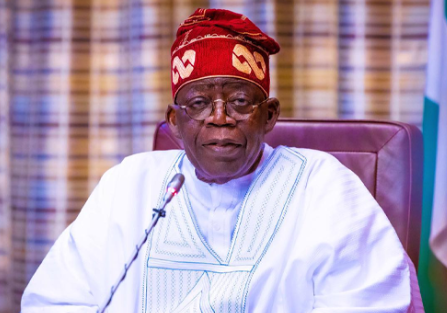
President Bola Ahmed Tinubu has reaffirmed the necessity of his administration’s decision to remove the fuel subsidy, describing it as an unavoidable step to secure Nigeria’s economic stability.

During his first presidential media chat on Monday night, Tinubu maintained, “I have no regrets whatever removing subsidies. It was necessary.”

The President explained that the subsidy system was unsustainable and akin to jeopardizing the nation’s future for immediate gratification.

“We were not investing; we were just deceiving ourselves. The reform was necessary. We cannot have expenditures we don’t have revenue for,” he stated, urging Nigerians to embrace fiscal discipline and prudent financial management.

“Cut your coat according to your size,” Tinubu advised, adding that the removal was imperative to ensure a sustainable future for upcoming generations.

He acknowledged the challenges posed by the reform, including resistance from smugglers, and emphasized the need for stringent enforcement and structural adjustments.

“I can see smugglers fighting back,” Tinubu remarked, vowing to address these challenges through necessary reforms and strong measures.

The President also extended his condolences to the families of victims of recent stampede incidents at a charity event, calling for improved organization and contingency planning to avoid similar tragedies.

“It is sad that people are not respected or are abused in situations like this. If you don’t have enough to give, don’t publicise it,” he said, urging event organisers to prioritise safety and crowd control.

Tinubu reiterated his administration’s commitment to making difficult but essential decisions, asserting, “No matter how you phase it, you still have to meet the bill.”

Banking service disruptions hit UDUS campus

By Wonderful Adegoke 

“I’ve also had to absorb the cost of failed transactions,” lamented Adeyemi Ademola, a food seller on campus at Usmanu Danfodiyo University, Sokoto (UDUS), her voice tinged with frustration and despair. 

Struggling to keep her business afloat, Ademola’s story highlights the pervasive challenges stemming from disrupted banking services. Her small shop, which supplies students with staples like rice, beans, garri, and other essentials, has been eerily quiet. The culprit? Persistent banking service disruptions, especially from Guaranty Trust Bank (GTB) and Access Bank, which her customers rely on for online payments.

Ademola’s predicament mirrors the experiences of countless others who cannot access essential banking services. GTB’s ongoing downtime—part of its transition to a new core banking application system—has left many in limbo. Even a visit to customer care brought little solace, as the explanation of “technical disruptions” linked to recent system upgrades felt more like a dismissal than a solution. Such upgrades, ostensibly aimed at fortifying defences against cyberattacks, have instead sown doubt about the security and efficiency of these systems.

The upgrades, though necessary, come with inevitable growing pains. Migrating vast amounts of customer data and integrating it across multiple platforms—from ATMs to mobile apps—is complex and time-intensive. Customers, however, bear the brunt of these transitions, enduring weeks or even months of service disruptions that hinder daily transactions.

In the past quarter alone, several commercial banks in Nigeria have initiated IT upgrades to bolster their operations and prepare for an increasingly competitive future. While these efforts are laudable, they have had far-reaching effects, straining banking operations and customer satisfaction. 

The National Bureau of Statistics (NBS) reports that the banking sector’s contribution to Nigeria’s GDP rose to 16.36% in Q2 2024, a testament to significant technological investments. Yet, for many, these figures are cold comfort amidst recurring downtimes and transaction failures.

Ademola’s weariness is palpable. She confides that her trust in traditional banking institutions, once the cornerstone of financial stability, is eroding. The persistent disruptions have cost her business revenue and undermined the basic operations on which her enterprise depends.

Lost Sales, Revenue, and Opportunities

The ripple effects of these banking failures are felt across various sectors. Rabi’u Bawa, a POS attendant, recounts her struggles: lost sales, revenue, and opportunities due to failed transactions. She still haunts the memory of a recent incident—a Sterling Bank system failure that left her unable to process payments. The frustrated customer walked away, leaving Bawa to shoulder the financial loss.

“This isn’t an isolated incident,” Bawa shares, her tone heavy with frustration. She’s frequently faced delayed payments and disputes stemming from unprocessed transactions. When her account is debited, but the recipient remains untouched, she finds herself mired in time-consuming and costly resolution processes, often at the expense of her reputation.

The disruptions have had devastating consequences for Adepoju Victor, an entrepreneur dealing with laptop repairs and phone accessories. “The stress and anxiety have taken a toll on my mental health,” he admits, his voice betraying sleepless nights spent worrying about his business. “The banks need to take responsibility for their actions and find a solution to this recurring problem.” His sentiment is echoed by many who have poured their resources and efforts into enterprises now threatened by systemic banking inefficiencies.

Service Disruptions Violate Customers’ Rights

The Federal Competition and Consumer Protection Commission (FCCPC) has warned financial institutions sternly about the crisis. According to a statement by Tunji Bello, the Commission’s Chief Executive Officer, these disruptions inconvenience customers and infringe upon their rights.

“Interruptions that impede customers from engaging in transactions or accessing essential funds are not merely an inconvenience,” Bello asserts. “They may constitute a violation of fundamental consumer rights.” The Commission’s stance underscores the urgency for banks to address these disruptions swiftly and decisively.

As customers continue to grapple with the fallout of these disruptions, Nigeria’s banking sector must balance technological advancements with reliable service delivery. Until then, entrepreneurs like Ademola, Bawa, and Victor have remained at the mercy of a system struggling to adapt to its progress.

CBN imposes N150m fine on banks selling new naira notes

By Anwar Usman

The Central Bank of Nigeria (CBN) has announced that it will slam a fine of N150m per branch on Deposit Money Banks found guilty of facilitating the illegal flow of mint naira notes to currency hawkers and unscrupulous agents.

The apex bank disclosed this in a circular issued on Friday, December 13, 2024, signed by the Acting Director of the Currency Operations Department, Mohammed Olayemi.

The circular revealed the CBN’s concern about the increasing prevalence of mint naira notes being traded by hawkers, a practice the bank described as impeding efficient and effective cash distribution to customers and the general public.

The circular, which referred to an earlier directive dated November 13, 2024, highlighted the apex bank’s determination to address the commodification of the naira.

Under the directive, any financial institution found guilty of this act will face a penalty of N150m for the first violation.

Subsequent infractions, the CBN warned, would attract stricter sanctions under the provisions of the Banks and Other Financial Institutions Act (BOFIA) 2020.

To ensure compliance, the apex bank stated that it would increase periodic spot checks in banking halls and ATMs while deploying mystery shoppers to uncover illicit cash hawking spots across the country.

The CBN further called on the DMBs to strengthen controls, processes, and procedures around their Cash Management Centres, branches, and teller operations to prevent their systems from being exploited for illegal transactions.

Reports has it that the CBN issued a serious warning to Deposit Money Banks over cash hoarding and diversion, stating that such actions will attract stiff penalties.

The CBN also warned against cash hoarding, diversion, and other practices that hinder cash flow, stressing that such actions violate the Clean Note Policy.

Naira slips to N1,585 in parallel market

By Anas Abbas

The Naira has declined in value within the parallel market, trading at N1,585 per dollar compared to N1,550 per dollar on Monday. In contrast, the official foreign exchange market reported an appreciation of the Naira, with rates improving to N1,525 per dollar, up from N1,538 per dollar earlier this week.

According to the latest data from the Central Bank of Nigeria (CBN) published in the Daily Nigerian Foreign Exchange Market (NFEM), the indicative exchange rate for the Naira has strengthened by N13, reflecting a notable shift in the official market.

Figures from FMDQ reveal a significant increase in dollar transactions on the Nigerian Autonomous Foreign Exchange Market (NAFEM). Trading volume surged by 129 per cent to $401.17 million, up from $175.15 million on Monday.

The surge has resulted in a widening gap between the parallel market and the NFEM rate, which has expanded to N60 per dollar from just N12 per dollar at the start of the week.

CCT Chairman: The Missteps of lawmakers and lawyers on Constitutional Matters

By Haroon Aremu

As a concerned young Nigerian, it’s disheartening to witness lawmakers and esteemed legal practitioners grapple with fundamental constitutional principles—especially regarding the Code of Conduct Tribunal (CCT).

It is astonishing that those tasked with crafting laws and interpreting them could exhibit such a glaring misunderstanding of the legal framework that governs their actions. The recent attempts by the Nigerian Senate to remove Mr. Danladi Umar, Chairman of the CCT, serves as a case in point.

In their misguided effort, the Senate invoked Section 157 of the 1999 Constitution, mistakenly applying it to the CCT. This section is pertinent to the Code of Conduct Bureau (CCB) and other executive bodies, but it has no bearing on the CCT, which operates under a different constitutional framework. As noted by PRNigeria’s fact-checking team, the remedial actions regarding judicial bodies such as the CCT require broader legislative consensus than the Senate alone can muster – specifically, a two-thirds majority from both the Senate and the House of Representatives, a detail curiously overlooked by the lawmakers.

Further complicating matters, the Senate suggested Mr. Abdullahi Usman Bello as Umar’s potential successor. However, it must be emphasized that Mr. Bello was appointed to lead the CCB, not the CCT. Moreover, constitutional stipulations require that the CCT Chairman possess qualifications akin to those of a judge of a superior court—qualifications which Mr. Bello notably lacks. This misstep reflects either a profound ignorance or a blatant disregard for the constitution.

It’s also alarming to observe the Senators conflating the roles of the CCB and the CCT, erroneously linking Umar’s situation to that of Bello. Their claims regarding the 9th Assembly’s investigations into Umar also deserve scrutiny, especially given that they appear to stem from a petition filed by a security guard concerning an unrelated incident —ironically, even after an anti-corruption agency had already cleared him of any wrongdoing.

Adding a layer of complexity to the situation is the media’s role in disseminating information. While there was widespread coverage of the Senate’s resolutions, many outlets failed to substantiate or fact-check their claims against the Constitution. This lapse in journalistic vigilance contributes to the propagation of misinformation, thereby undermining public trust in our governance systems.

The situation becomes even more troubling when senior lawmakers defend their misguided actions. The 1999 Constitution (as amended) clearly delineates that the appointment of the CCT Chairman and its members must follow the National Judicial Council’s recommendations, which should be informed by the Federal Judicial Service Commission. Thus, any motion to remove the CCT Chairman necessitates formal attention from both legislative chambers, not simply the Senate.

To complicate an already delicate situation, the newly elected President of the Nigerian Bar Association (NBA), Afam Osigwe (SAN), boldly claimed that the Senate adhered to constitutional protocols. Such statements from a figurehead of the legal profession raise questions about the level of legal literacy within our ranks.

Even more alarming was the endorsement from renowned human rights lawyer Femi Falana, also a Senior Advocate of Nigeria. By supporting the Senate’s push for Umar’s removal, Falana and others reveal a troubling trend where senior legal practitioners sidestep constitutional requirements, jeopardizing the sanctity of Nigeria’s judicial and legislative systems.

In light of these developments, distinguished legal scholars such as
Professor Mamman Lawan Yusufari, a former Dean of the Faculty of Law at Bayero University Kano (BUK), Professor Yemi Akinseye-George, the Executive Director of the Centre for Socio-Legal Studies, and Dr. Wahab Shittu have denounced the government’s handling of the CCT issue. They described these actions as blatant violations of constitutional mandates, calling on the Attorney-General of the Federation, Prince Lateef Fagbemi, SAN, to provide guidance to President Bola Tinubu on adhering to constitutional pathways for such significant personnel decisions.

Senior Advocate of Nigeria Yunus AbdulSalam further criticized the misinterpretation of the Constitution, labeling it alarming and indicative of a dangerous lack of diligence within both the executive and legislative branches. He remarked, “Their unconstitutional and desperate attempt to remove the CCT Chairman undermines the spirit of the Constitution and poses a serious threat to democratic integrity.”

It takes a whole week before the Senate admitted and corrected the procedural error by invoking the correct constitutional provisions, including Paragraph 17(3) of the Fifth Schedule and Section 22(3) of the Code of Conduct Bureau and Tribunal Act.

This entire debacle serves as a clarion call for lawmakers to strictly observe constitutional provisions. Legal protocols should never be compromised for political convenience. Moreover, the media must enhance its accountability in fact-checking claims that significantly influence national governance.

The independence of the judiciary and the integrity of the legislative process are cornerstones of Nigeria’s democracy; they must be protected from missteps and oversights, both from lawmakers and in media coverage. This incident reinforces that constitutional provisions are not mere guidelines; they are the foundation of a functioning democracy. The Senate’s actions reflect a troubling ignorance that could jeopardize the integrity of Nigeria’s legal system. As a nation, we must recommit ourselves to upholding the rule of law and rigorously adhering to constitutional procedures to safeguard judicial independence and the health of our democratic framework.

Haroon Aremu Abiodun is a co-author of ‘Youth Service for National Stability: A Corpers’ Chronicle.’ He can be reached at exponentumera@gmail.com

CBN asks Nigerians to report banks failing to dispense cash

By Uzair Adam

The Central Bank of Nigeria (CBN) has instructed all Deposit Money Banks (DMBs) across the country to ensure continuous cash disbursement to customers.

The Daily Reality reports that the bank urged members of the public to report banks that fail to comply.

In a circular issued to DMBs and the general public, and shared on the bank’s verified X (formerly Twitter) handle on Tuesday, the apex bank emphasized its commitment to enforcing compliance through intensified oversight and sanctions on erring banks.

The CBN Governor, Yemi Cardoso, assured that sufficient banknotes had been distributed to all banks based on their capacity, eliminating any reason for a cash shortage as the festive season approaches.

Titled ‘Cash Availability Over the Counter in Deposit Money Banks and Automated Teller Machines,’ the circular outlined guidelines for improving currency circulation in the economy.

“As part of ongoing efforts, the CBN directs DMBs to ensure efficient cash disbursement both over the counter and through ATMs. The bank will continue to monitor compliance closely,” the statement read.

The CBN also provided reporting channels for the public to lodge complaints about cash shortages.

Customers are required to submit details, including the name of the bank, location, amount, and date of the incident, through designated phone numbers or email addresses provided for each state.

The circular, jointly signed by Acting Director of Currency Operations Solaja Mohammed Olayemi and Acting Director of Branch Operations Isa-Olatinwo Aisha, took effect on December 1, 2024.

How oil dependence affects Nigeria’s economy

By Talent Akpan 

Nigeria’s economy has been heavily reliant on oil exports for decades, accounting for approximately 70% of government revenue and 90% of foreign exchange earnings. This dependence has far-reaching consequences, affecting various aspects of the country’s economic, environmental, and social landscape.

The country’s over-reliance on oil has hindered the development of other sectors, such as agriculture, manufacturing, and services. This lack of diversification makes Nigeria vulnerable to fluctuations in global oil prices, leading to economic instability and uncertainty. Moreover, oil wealth has fuelled corruption, with estimates suggesting billions of dollars lost to mismanagement and embezzlement.

Furthermore, oil exploration and production have devastated Nigeria’s environment, particularly in the Niger Delta region. The degradation of natural habitats and resources severely affects local communities, affecting their livelihoods and well-being.

Despite these challenges, opportunities exist for diversification. Nigeria has vast agricultural potential, with opportunities for growth in crops like cassava, rice, and maize. Developing manufacturing sectors, such as textiles and electronics, can create jobs and stimulate economic growth. Growing the services sector, including finance, tourism, and IT, can reduce reliance on oil. Investing in renewable energy sources, like solar and wind power, can also reduce dependence on fossil fuels.

Policy reforms are necessary to mitigate the risks associated with oil dependence. Diversification strategies, investments in human capital, transparency and accountability, and economic reforms can promote sustainable economic growth and development.

Some potential strategies for diversification include:

– Developing infrastructure to support non-oil sectors

– Providing incentives for private sector investment

– Enhancing education and training programs

– Encouraging foreign investment

– Promoting entrepreneurship and innovation

However, implementation challenges exist. Institutional weaknesses require strengthening, powerful interests may resist reforms, and Nigeria’s infrastructure requires significant investment to support non-oil sectors.

Addressing these challenges will require cooperation from various stakeholders, including government officials, private sector leaders, and civil society organisations. Nigeria can reduce its reliance on oil and build a more sustainable, diversified economy by working together.

Nigeria’s oil dependence poses significant economic, environmental, and social challenges. Diversification and policy reforms can mitigate these risks and promote sustainable economic growth and development.

Talent Bassey wrote via basseytalent@yahoo.com.

Tax Reform: Presidency debunks claims of northern marginalization

By Uzair Adam

The Presidency has dismissed concerns that the proposed tax reform bills currently before the National Assembly will impoverish northern Nigeria or disproportionately favor Lagos and Rivers states.

In a statement issued on Monday, presidential spokesperson Bayo Onanuga emphasized that the reforms are designed to improve the quality of life for all Nigerians, particularly the disadvantaged, by simplifying tax administration and fostering a better business environment.

The statement addressed apprehensions raised by Borno State Governor Babagana Zulum, who had suggested that the proposed Value Added Tax (VAT) sharing formula could be skewed in favor of Lagos and Rivers states.

Onanuga, however, described these concerns as unfounded and based on misinformation.

“The tax reform bills will not make Lagos or Rivers states wealthier at the expense of other regions, nor will they lead to the economic marginalization of any part of the country,” Onanuga stated.

He urged Nigerians to reject any attempt to polarize the nation over the proposed legislation.

Onanuga also clarified that the bills do not seek to abolish key federal agencies such as the Tertiary Education Trust Fund (TETFUND), the National Agency for Science and Engineering Infrastructure (NASENI), or the National Information Technology Development Agency (NITDA), which will continue to receive funding through budgetary allocations.

The spokesperson reiterated that President Bola Tinubu’s fiscal policy reforms aim to ease the tax burden on businesses, streamline tax collection, and support national development.

Meanwhile, former Speaker of the House of Representatives Yakubu Dogara called on Northern leaders to approach the tax reform bills pragmatically rather than with ethnic or religious sentiments.

Speaking during a Channels Television town hall in Abuja on Monday, Dogara stressed the importance of prioritizing the region’s future development.

“We Northern leaders must set aside ethnicity and religious biases and focus on the realities these reforms will bring,” Dogara said.

He also criticized senators who claimed there was insufficient consultation on the bills, questioning their own legislative practices.

“How often do they consult the public when making laws? Some state laws are drafted in governors’ living rooms,” Dogara remarked, dismissing the argument that public opinion outweighs the potential impact of the reforms.

Taiwo Oyedele, Chairman of the Presidential Committee on Fiscal and Tax Reforms, explained that the bills aim to empower subnational governments to enhance revenue generation and achieve fiscal self-sufficiency.

Senator Orji raises concern over tax reform process

By Abdullahi Mukhtar Algasgaini

Senator Orji Kalu, who represents Abia North at the upper legislative chamber has revealed that the federal government made a mistake not to have carried the National Executive Council, Nigeria Governor’s Forum, and the Council of State along in its tax reform bills.

Kalu disclosed this on Monday in an interview with Arise Television on the controversial tax reform bills.

Recall that Senator Mohammed Ali Ndume, the Northern Governor’s Forum, the National Economic Council, and others have openly opposed the tax reforms.

However, Orji noted that the bills are very progressive and would bring back fiscal federalism in Nigeria.

Meanwhile, he faulted the initiators of bills for not carrying key stakeholders along saying, “As I told you before, the bill is very progressive. It will bring back fiscal federalism. Many senators have not been briefed. I think the federal government made a mistake. The initiators of the bills would have briefed the National Economic Council, Governors’ forum”.

Recall tax reform bills, including the Nigeria Tax Bill 2024, the Tax Administration Bill, the Nigeria Revenue Service Establishment Bill, and the Joint Revenue Board Establishment Bill, were sent to the National Assembly for passage since October 2024.

The bills gained momentum last week when they secured second-reading passage at the Senate.

This comes after the Northern Governor’s Forum and National Economic Council called for the bill’s withdrawal.

Meanwhile, DAILY POST reports that economic experts have backed the tax reform bill on the grounds that it will boost Nigeria’s revenue.

However, Taiwo Oyedele, Chairman of the Presidential Fiscal Policy and Tax Reforms Committee had earlier in his contributions, explained why the tax bills generated so much controversy.

Nationwide Operations: Military neutralizes 135 terrorists, arrests 185 suspects

By Uzair Adam

Nigerian military troops have intensified their nationwide operations, eliminating 135 terrorists, apprehending 185 suspects, and rescuing 129 kidnapped victims within the past week.

The Director of Defence Media Operations, Maj.-Gen. Edward Buba, provided the update during a briefing at the Defence Headquarters in Abuja on Saturday.

He disclosed that in the North Central region, some terrorists have begun surrendering due to sustained military offensives and collaborative non-kinetic engagements with community stakeholders.

Among those who surrendered are notable figures such as Yellow Jambros, Alhaji Mallam, Ardo Idi (Alhaji Lawal), Lawal Kwalba, Salkado, Yellow Ibrahim, Gana’e, and Babangida.

Buba emphasized that the military would maintain its operational momentum to dismantle terrorist networks and encourage further surrenders.

During the operations, troops recovered 113 weapons and 2,415 rounds of ammunition, including 72 AK-47 rifles, 11 fabricated guns, 15 Dane guns, eight pump-action shotguns, and four hand grenades. They also seized 46 motorcycles, 15 vehicles, 28 mobile phones, and various communication devices.

In the Niger Delta, troops destroyed 93 crude oil cooking ovens, 12 dugout pits, 37 boats, and 82 illegal refining sites.

They also recovered 909,800 litres of stolen crude oil, 71,060 litres of illegally refined diesel, and 13,580 litres of petrol.

Maj.-Gen. Buba reiterated the military’s commitment to addressing Nigeria’s security challenges, stating, “We remain in a winning position in this war and will continue to innovate in our approach.”