Economy

Nigeria Customs Service strengthens ties with NPA to boost port efficiency, trade facilitation

By Sabiu Abdullahi

The Comptroller General of the Nigeria Customs Service (NCS), Bashir Adewale Adeniyi MFR, in an effort to enhance port efficiency and facilitate seamless trade, deepened collaboration with the Nigerian Ports Authority (NPA) during a visit to NPA Managing Director, Mohammed Bello-Koko, on Thursday, January 25, 2024. 

This is contained in a statement made available to journalists by the spokesperson of the Nigeria Customs Service, Abdullahi Aliyu Maiwadah, on Friday. 

According to Maiwadah, the CGC said the ongoing efforts between NCS and NPA shared the goal of achieving port efficiency. 

He was quoted as saying, ”NPA desires to achieve port efficiency, and we believe that in customs, Ports efficiency will help to facilitate trade.” 

Acknowledging the need for increased competitiveness in Nigerian ports, CGC Adeniyi stated, “We want to make our Ports more efficient. When our Ports are more efficient, it will translate into better efforts in revenue generation.” 

Addressing cargo clearance processes, the CGC affirmed the importance of technology in streamlining operations.

“If we deploy a scanner to examine goods, rather than subject them to a hundred percent examination, that’s one way to make them faster and more efficient,” he explained.

He further revealed plans for risk management expansion and the introduction of Authorized Economic Operator (AEO) in the first quarter of the year. 

The MD of NPA, Mohammed Bello-Koko, commended the CGC for his responsive approach to trade facilitation issues.

He highlighted the successful partnership in the functioning of the export desk, resulting in a significant increase in cargo exports. 

Discussing the critical need for efficient cargo clearance, MD Bello-Koko stressed the necessity of a 24-hour port operation.

“We need to be able to clear cargo as quickly as possible,” he noted.

“For them to do that, it means you need the shipping lines, terminal operators, security, and everybody to be on their toes and work 24 hours.”

How investing in shares, mutual funds can help you become financially independent

By Aminu Mohammed

The inspiration for this article came from a short Facebook post by Bashir Abubakar Gazaki, who advised young people to invest their money in shares of good companies to attain financial independence. His followers’ lack of financial awareness caught my attention, as evidenced by the comments below the post, where many people asked him to explain the stock market. 

It is not surprising that personal finance is not taught in universities. I learned about stock investments through books such as “The Richest Man in Babylon” by George Samuel Clason, “Rich Dad Poor Dad” by Robert Kiyosaki, and “Rich Dad’s Guide to Investing: What the Rich Invest In That the Poor and Middle Class Do Not.” I read these books shortly after graduating from Ahmadu Bello University, Zaria. 

The books gave me insight into why some people, despite working for many years, still struggle in life. The inspiration from these books led me to purchase my first share during my service year in Adamawa state. Similarly, a fellow corps member from the southwest who knew the stock market advised me to invest in good companies.

Invest money in assets Instead of liabilities 

Investing your time actively and your money passively is an excellent way to secure your financial future. Passive income refers to the money you earn from your assets, such as property, shares, mutual funds, Treasury bills, etc., while you sleep. Unlike your job, assets generate income for you, whether you work or not. So, it’s crucial to avoid wasting your money on liabilities and start investing in assets.


If you earn a salary or own a business, it is best to save at least 10 per cent of your income and invest it wisely. Investing in shares doesn’t require a large sum of money. Suppose you know about stock trading. In that case, you can invest in the United States stocks or the Nigerian stock market, even if you start small with a low amount.


However, it is understandable that many individuals are scared of investing their money in the stock exchange, given the capital market crisis in 2008, where several people lost a significant portion of their funds. I have experienced losses in the stock market myself, particularly with the shares I bought in the defunct Oceanic Bank and Bank PHB. But I have also gained from stocks like Dangote Sugar, GTBank, and Zenith Bank. Life is all about risk; sometimes, we win, while other times, we lose due to unforeseen circumstances. But that shouldn’t stop us from exploring new investment opportunities, no matter how little.

Investigate companies before Investing

Investing in the stock market is a business that requires a long-term strategy and patience rather than a quick way to get rich. Having a good understanding of the companies you invest in is crucial. According to Warren Buffet, the Chairman of Berkshire Hathaway, one of the most successful investors in the world, the best way to achieve greater rewards is to think long-term. Buffet recommends holding stocks for at least five to 10 years to accumulate wealth. However, some traders still profit by trying to beat the market daily.


If you are hesitant about investing directly in stocks, you can consider mutual funds, designed for people who want to minimise risk but have lower returns. You can contact your local banks, such as First Bank, GTBank, UBA, Stanbic IBTC, and others that offer asset management services. These companies manage various types of mutual funds under the guidance of experts.


As a salaried worker, unforeseen circumstances such as job loss or a downturn in business can be devastating. Therefore, it is important to have a safety net in the form of investments to help you recover in case of any unforeseen circumstances.

Consult a stock broker before buying any Shares

It is important to conduct thorough research and seek expert advice before investing in shares. Look for stocks with strong fundamentals and invest in them wisely. Diversifying your investment across different sectors and companies is recommended to maximise your returns.

It is crucial to emphasise that individuals with little knowledge about the stock market should educate themselves on basic financial concepts before investing in shares. The companies mentioned in this article are for illustration purposes only and to encourage young people to take control of their financial future through smart investments. Investing in shares is not a quick way to get rich, and seeking professional advice before investing is highly recommended.

I wish you the best as you strive towards financial independence and personal growth.

Aminu Mohammed wrote this article from Ingolstadt, Germany. He can be reached at gravity23n@gmail.com.

The Federal Republic of Lagosia

By Muhammad Sulaiman Abdullahi

The Bola Ahmed Tinubu-led government’s effort to forcibly uplift and upgrade Lagos State shouldn’t surprise anyone who knew or read about Nigeria’s history. The military initiated the idea of the creation of Abuja as the Federal Capital Territory of Nigeria in the late 20th century, precisely in the late 70th. The idea was well thought out, well planned and well executed in good faith by successive military governments. 

The actualisation of Abuja as the capital city of the federation was one of the few tasks inherited and continued by more than one regime of governance. A Wikipedia article says that; “it is a planned city built mainly in the 1980s based on a master plan by International Planning Associates (IPA), a consortium of three American planning and architecture firms made up of Wallace, Roberts, McHarg & Todd (WRMT – a group of architects) as the lead, Archi systems International (a subsidiary of the Howard Hughes Corporation), and Planning Research Corporation. The Central Business District of Abuja was designed by Japanese architect Kenzo Tange. It replaced Lagos, the country’s most populous city, as the capital on 12 December 1991.”

It is one of the fastest-growing cities in the whole world, not only in Nigeria or in Africa. “According to the United Nations, Abuja grew by 139.7% between 2000 and 2010, making it the fastest-growing city in the world. As of 2015, the city is experiencing an annual growth of at least 35%, retaining its position as the fastest-growing city on the African continent and one of the fastest-growing in the world.” This is Abuja for you. 

Everything about Abuja was well-planned by intellectuals of repute in the world. Its strategic location, terrain, weather and, above all, compatibility to all, comfort and suitability as the capital city of this complex combination. There are so many planned cities in the world, and they are done for a purpose. Right from the beginning of the amalgamation, those who perpetrated it had known that it would be so complex to manage. They, therefore, according to their expectation, helped in realising where the leadership would be easier for all. Thus, the idea behind the planned city of Abuja. And this shows how disciplined and committed the military were to the general development and progress of the country. If it were these set of politicians of today, such a momentous task would never be accomplished.

History recorded that the Yorubas vehemently rejected the idea of Abuja’s formation. The “biggest” opposition to the formation of Abuja was the then Yoruba chieftain and presidential candidate, Chief Obafemi Awolowo. Awo pledged and promised to his people that if elected, he would hire the American Walf Disney Corporation – an American multinational mass media and entertainment conglomerate, to convert the current site of Abuja into an amusement park. Perhaps Chief Awo’s dream is quickly becoming a reality under Tinubu’s administration.

Awo lost the election, and it was reported that one of the first works of Alhaji Shehu Shagari, when he assumed power, was to accelerate and lay the foundation of Abuja and push for its early completion. Successive governments took over from him, and the trend continues until these days when we see the reversal in quick gears.

I contested the supremacy of Lagos over Kano a long time ago, but later, when I visited the state in 2013, I concurred and agreed that Lagos state is so blessed and looks like other well-developed foreign cities, if not because of the roughness and ruggedness of some its people. The state is both naturally and artificially endowed. Its intellectuals also support it at the expense of all others. They are the kind of people who love themselves more than anyone else. We started seeing the manifestation of this love so early in this Tinubu-led government.

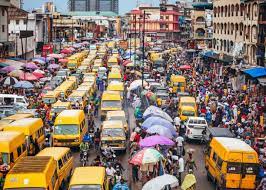
It is undoubtedly clear to anyone who pokes his nose into Nigeria’s issues that Lagos is by far more prosperous than all the 36 federation states combined. You may not be wrong if you call Lagos a country of its own. That’s why I find it weird when public structures are shamelessly moved to Lagos in the name of convenience, proximity and all other silly excuses. These flimsy excuses can look strong from the surface, but some hidden weaknesses may be uncovered after a deep X-ray.

I once asked a knowledgeable friend about the issue of population between Kano and Lagos. Those who promote Lagos promote it even where others are better. Almost all the time, I see conflicting and contradictory reports on the issue of population. He explained to me in layman’s language that Kano is the most populous city in Nigeria, and there is no doubt about this. But Kano’s population is a dispersed population while that of Lagos is the most densely populated city in Nigeria. 

Then, in the actual number of people living in the two states combined together, Kano is the most populous state in Nigeria. Even this, many people do not care to know. Back to the Federal Republic of Lagosia! The state has been leading in terms of infrastructural development, IGR, investment, inventions, entrepreneurship, companies and all that the world counts as the indices of development. This, no one can deny. Maybe Kano can only be ahead of Lagos in terms of decorum, legitimate earnings and legal dealings. But Kano, being the Centre of commerce, has for long been hijacked by many powers beyond an ordinary imagination to comprehend.

Recently, the Central Bank of Nigeria (CBN) has been reported to have moved some of its key departments to Lagos. Why? It was said that close to 60 per cent of Nigeria’s wealth revolves around Lagos state only. Then, why should CBN sit far away from the Center of money? In this respect, one should salute the courage and foresight of CBN to relocate. Those of you shouting, what do you bring to the CBN’s table to make the CBN move the headquarters to your state? 

FAAN also moved its key offices and officers and even issued a statement that they have done so for the good of the country. It was said that the former aviation minister, Hadi Sirika, was the one who forced them to be in Abuja. 

In the statement issued by FAAN, its PRO Obiageli, it is said that they don’t have enough space/offices to accommodate their personnel in Abuja. Whether this is true or false should not matter, as truth is so expensive in Nigeria, and lies are so cheap. Whatever may happen, they moved out, pending when there would be enough space for them. They would form a committee to start looking for whether they could move back to Abuja. But one important thing that Obiageli mentioned was the issue of 60% of Nigeria’s flights hovering around Lagos. This singular statement is heavier than all the other flimsy and silly excuses given. This holds water!

Abuja was not ordinarily built without any thinking. It was strategically chosen, located and designed. Abuja was one of the purposely well-planned cities in Africa, as explained. It was designed to be in the centre to ease everything for everyone. When it was established, as is the norm, many companies, government agencies, embassies, foreign establishments and above all, the seat of the government were all transferred to the location. This is how Abuja was made.

Today, under the Asiwaju’s government, silly excuses are forwarded, and some government agencies headed by Yorubas are taken back to Abuja without even consulting the two houses of assemblies. I thought such a decision must be backed by law. They should first take the issue to the National Assembly for consent. But even the movement is systematic. They started by saying we are moving “some offices”, maybe to outsmart Nigerians. Many other movements might have been shrouded in secrecy.

The preferential treatment given to Lagos state sends terrible signals to the remaining states. Yes, Lagos generates revenue, but don’t forget that many of Nigeria’s population resides in the North. Lagos is made to be a necessary location for all Northerners or their goods to pass through. To compound issues and systematically actualise this, the Northern land borders are shut. Therefore, everyone is systematically forced to carry his fate, money and energy to Lagos. The import and export solely rely on Lagos. Why all this centralisation? Something is fishy here. Are Yoruba’s up to something? Only time will tell.

Lagos state is rich enough to have its own Central Bank. It shouldn’t take everything away from the rest of Nigerians with the support of the president. Already through the shrewdness of its technocrats, more than half of what is supposed to be shared by all Nigerians is given to her alone, in the name of its ports and other cover-ups. If we go by the statement of proximity and suitability as issued by FAAN and CBN, then the Ministry of Defense should be relocated to Zamfara or Borno, NNPC to Rivers or Bayelsa, Mining and Solid Minerals to Zamfara, Borno or Yobe, among many others. 

Let Abuja be either disbanded for all Nigerians to take their share or be retained as it is. Developmental projects should be distributed evenly throughout the country. You have already forced so much of Lagos on all at the expense of all. Lagos has snatched away the lion’s share of the country’s earnings, and no one says anything. It is another country in Nigeria, so everything about her is different. The train, the power, the companies, and now Nigeria’s CBN, FAAN, among many others. Haba! Why all these? A stitch in time…

The impact of poverty on health, education, social structure, and crime

By Umar Sani Adamu

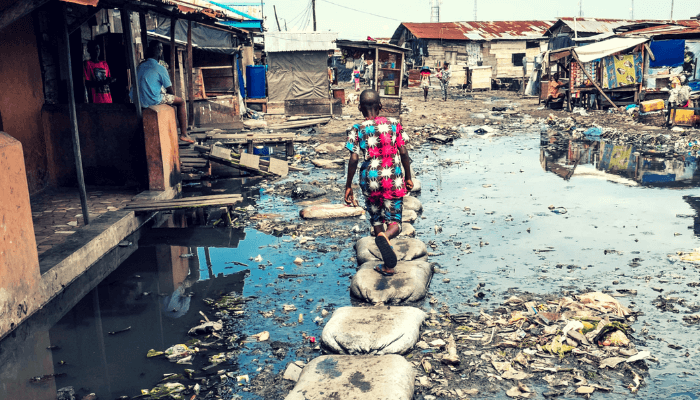
Poverty has far-reaching consequences on various aspects of society, including health, education, and social structure. Understanding these repercussions is crucial for addressing the root causes and developing effective strategies to alleviate poverty and its associated issues.

1. Health

Poverty significantly impacts health outcomes. Limited access to nutritious food, clean water, and adequate healthcare services contributes to a higher prevalence of malnutrition, infectious diseases, and chronic conditions among the impoverished. Lack of resources often results in substandard living conditions, exposing individuals to environmental hazards. Additionally, stressors associated with financial insecurity can lead to mental health issues, further exacerbating the overall health burden.

2. Education

Poverty creates barriers to educational attainment. Families struggling with economic hardships may prioritise immediate needs over investing in education. Children from impoverished backgrounds often face challenges such as inadequate access to quality schools, resources, and educational support. Limited access to books, technology, and extracurricular activities hinders their development. As a result, the cycle of poverty continues, as these individuals may find it challenging to break free from their circumstances through education.

3. Social Structure

The social fabric of a community is intricately linked to economic well-being. Poverty can contribute to the fragmentation of social ties as individuals grapple with the stress and uncertainty of their circumstances. Communities with high poverty rates may experience increased social inequality and a lack of social cohesion. This can manifest as reduced community engagement, weakened support networks, and a diminished sense of belonging.

4. Crime

Poverty is often identified as a significant factor contributing to crime. Several mechanisms explain this relationship. Firstly, individuals in poverty may resort to criminal activities as a means of economic survival. Limited opportunities for legitimate employment can lead some to engage in illegal activities to meet basic needs. Additionally, impoverished communities may experience higher rates of substance abuse, which can further contribute to criminal behaviour.

Furthermore, the lack of access to quality education and limited social support in impoverished areas can result in a higher prevalence of delinquency. The frustration and hopelessness stemming from persistent poverty may lead individuals, particularly young people, towards criminal behaviour as an alternative to breaking free from their challenging circumstances.

Addressing the Link Between Poverty and Crime

A multi-faceted approach is necessary to mitigate poverty’s impact on crime. Policies to reduce poverty through economic empowerment, education, and healthcare access are crucial. Investments in education, vocational training, and job creation can provide individuals with opportunities to escape the cycle of poverty and reduce the likelihood of resorting to criminal activities.

Social support programs that strengthen community bonds, mental health services, and addiction rehabilitation can address some of the root causes of criminal behaviour associated with poverty. Additionally, targeted efforts to improve law enforcement-community relations and reduce systemic inequalities can contribute to crime prevention.

In conclusion, poverty has profound consequences on health, education, and social structure, with a direct link to increased crime rates. Breaking this cycle requires comprehensive strategies that address the systemic issues contributing to poverty and simultaneously provide individuals and communities with the tools and resources needed for positive transformation.

Umar Sani Adamu (Kawun Baba) wrote via umarhashidu1994@gmail.com.

The hidden reality of life in Europe

By Aminu Mohammed

This article was inspired by a recent post by Dr Muhsin Ibrahim on Facebook regarding money belonging to someone named “Hassan Idris” sent through his PayPal account. Muhsin made the post asking the person to identify himself by sending him a message. However, soon after, he was inundated with messages from people seeking help in various forms. Some even asked him for money, assuming he had won a lottery or had ample cash stocked somewhere.

This issue not only worried me but also made me sad about the attitude of our youths. So that you know, I also live in Germany. I am yet to fathom the reason for the sudden influx of requests based on a Facebook post. Is it desperation, greed, ignorance, or the belief that money grows on trees in Europe?

I have thought about this issue and wondered why this behaviour occurred. Is it that the economic situation in the country has impoverished a large segment of society, making people desperate and in dire need of free money? What could be the reason behind this attitude?

I want to make it clear that I am aware of the difficult economic situation in Nigeria due to inflation and other factors. I also understand that there are genuine people who are in dire need of help and who reach out to Muhsin for support. However, I want people to know that just because Muhsin lives and works in Germany, it does not mean he is rich.

The Untold Story About Europe

Europe is often seen as a paradise with streets paved with gold and abundant wealth. However, the reality is different. Life in Europe is not as easy as it seems. Homelessness and begging are common in countries such as France, Italy, the Netherlands and the United Kingdom. In London alone, at least 167,000 people are homeless due to the high cost of living. Comparably, a great number of immigrants, among them Africans, are stuck in Europe and unable to return home because they are afraid of what is ahead.

 Although the standard of living is high in Germany and the government provides stipends for jobless citizens, there are still poor people, beggars and homeless people in the country. In my former city, Kiel, I have seen people sleeping in public buildings and bank corridors, even during the harsh winter months. I recently saw a naked woman amongst the homeless folks at the Hamburg Central Station, probably suffering from mental illness. It was heartbreaking.

Despite these challenges, there are still opportunities for people with relevant skills to excel and succeed in Europe. Even without a university education, one can live a good life in Germany by being disciplined and hardworking.

Rising Living Expenses

The ongoing war between Russia and Ukraine has brought about significant economic changes in Europe, particularly in Germany. As a result of Germany’s reliance on Russia for affordable energy, particularly gas, to power its numerous industries, the country has been severely impacted. Germany had to look for alternative gas sources, mainly from Norway and the Middle East. This has led to an increment in energy costs and subsequently affected the cost of living and production.

The high cost of living has affected many families, with numerous individuals struggling to pay their bills monthly. The rat race has worsened, and many people live paycheck to paycheck. Groceries and the prices of other goods have doubled or, in some cases, even more. This is in addition to an increase in rent, energy, water bills, etc.

2024 Goals

It is an incredible experience to step out of your comfort zone and explore new places in life. However, before travelling to any country, please conduct thorough research and set reasonable expectations. Life is not always easy, but you can succeed with diligence, perseverance, and hard work.

Set your goals for this year, and take concrete steps to achieve them. Additionally, aim to acquire new digital skills to increase your earning potential. I wish you the best as you enter the New Year with renewed energy and determination.

Aminu Mohammed wrote this article from Ingolstadt, Germany. He can be reached at gravity23n@gmail.com.

“No one ever makes rich with salary”

By Mohammed Usman (Noble-pen)

I often see people confidently saying the above statement, especially to sway someone’s mind and make him subscribe to their opinion. And most of them don’t care to take the time to think about it thoroughly. 

On the surface, the statement is true and leaves susceptible minds with no option but to agree. But suppose we subject it to close examination, broaden our lens of thinking horizon, and look at it from a different angle. In that case, we realise that the statement is not as accurate as it is often considered. 

Most people quickly make this statement; they merely take the case study of low-level salary earners working for a government or at a government ministry and then confidently make this sweeping statement: “No one ever makes rich with salary.” 

Suppose we hover our thinking over those low-level salary earners at government ministries and those holding miniature academic certificates. In that case, we cannot deny that no one among them, or hardly one among them, becomes rich with salary because the amount most of them receive as salary can only keep them breath and save them from dying of absolute starvation. They are mere slaves. 

Worst still, some people have very little or no savings and investment power. The rate of their disposal out of the salary outweighs that of their savings by a large percentage. They are living hand to mouth. 

However, no one can tell me that those holding advanced academic certificates and working in top levels of government, national and multinational corporations, and organisations (nongovernmental) that they are not making rich with their salary. Even the low-level workers in such organisations and corporations are getting rich! 

Therefore, the above statement is false whenever we look at it from this angle. And so we advise those people making the statement to reframe it accordingly because they are not right. 

In any case, the word “Richness” is subjective. Different people perceive and interpret it differently depending on their different life orientations. Some perceive and interpret being rich as only when you garner, in large profusion, materialistic things. Some interpret being rich as being able to manage scarce resources to attain satisfaction. Therefore, in this class, a poor person is greedy, always looking for more and more, and never gets satisfied with what he has. I belong to this class of people. 

If a person wants to work to earn a salary and sustain a living, let him do it. And that makes him no less reasonable than someone aspiring to enter a business venture. It is called “Individual and personal opinion”. By the way, it would not be brilliant to expect everyone to become a business owner or own a business venture or enterprise for a living.

But of course, business is worth it, especially in this current global economy. It offers numerous benefits to individuals, society, and the economy, such as : (1) Job Creation: Businesses create jobs which help people earn a living and improve their standard of living. They provide employment opportunities for workers of all levels of education and experience ; (2) Economic Growth: Businesses contribute to economic growth by generating revenue, investing in research and development, and creating new markets and industries. This, in turn, stimulates economic activity and raises the standard of living for everyone…. You can mention the others! 

So whether business or salary earning, the end is the same: “to earn a living”, and being rich, as I said above, is a subjective case. 

Thank you 

Mohammed Usman (Noble-pen) wrote via mohammedusman5706@gmail.com.

Data protection legislation and the future of Nigeria’s digital economy

By Muhammad Mikail

On the 12th of June 2023, President Bola Ahmed Tinubu signed the Nigeria Data Protection Bill into law, setting the historic course for a new data-protected Nigeria. As a matter of fact, the bill was among the very first bills assented to by President Bola Ahmed Tinubu upon assumption of Office. This is no doubt a demonstration of Nigeria’s commitment to safeguarding digital privacy and building trust with global partners and stakeholders; a bold statement and alignment with the cliché’ ‘hit the ground running.’ 

The newly assented Data Protection Act 2023 provides a legal framework for the protection of personal information, safeguarding people’s basic rights and freedoms while supporting the establishment of ‘The Nigeria Data Protection Commission (NDPC)’ for the regulation of the processing of personal information and data. Hence, the law doesn’t only address privacy concerns but also sets the stage for responsible data usage, fostering a secure, trustworthy and progressive digital economic environment.

This also signifies the Federal Government of Nigeria’s full-proof commitment to the “Digital Transformation Strategy for Africa (2020-2030)” as commissioned by the African Union (AU). The overarching objective of the “Digital Transformation Strategy for Africa (2020-2030)” is for every country within the African continent to harness digital technologies and innovation to transform African societies and economies to promote Africa’s integration, generate inclusive economic growth, stimulate job creation, break the digital divide, and eradicate poverty for the continent’s socio-economic development and ensure Africa’s ownership of modern tools of digital management.” The Nigeria Data Protection Commission will be a major player in achieving this lofty goal.

At one point, there was a lot of scepticism by development partners, international financial institutions, critical stakeholders in the digital economy and even potential investors about Nigeria’s lack of data protection legislation.       

Addressing these concerns, the Federal Government of Nigeria, under former President Muhammadu Buhari, established the Nigeria Data Protection Bureau (NDPB) in 2022 as the regulatory institution responsible for ensuring that people’s personal information is kept private and safe when used for ‘digital things’ with Dr Vincent Olatunji as the National Commissioner. However, the Bureau lacked a law establishing it and giving it the robust legal framework required for a full-fledged agency of government to adequately address issues bordering on the security and privacy of data in Nigeria.

In January 2023, the Federal Executive Council (FEC) approved the Nigeria Data Protection Bill presented by former Hon. Minister of Communication and Digital Economy, Prof. Isa Ali Ibrahim Pantami, for transmission to the National Assembly for consideration.      

The then Nigeria Data Protection Bureau, NDPB, now NDPC, led by the National Commissioner, Dr Vincent Olatunji, in collaboration with the Nigeria Digital Identification for Development Project (NDID4D), worked with critical stakeholders, Ministries Departments and Agencies, captains of industries and policymakers perfecting the bill. 

A Focus Group Discussion, national policy dialogue and validation workshop was held to present the draft bill to stakeholders, the 9th National Assembly, and the Federal Ministry of Justice for their buy-in, comments, criticism, and suggestions to improve the bill.  Prior to that, Nigeria had no policy instrument that focused on supporting data privacy and data protection. 

Described as one of the most forward-thinking Acts across the African data ecospheres, the Nigeria Data Protection Act recognises innovations, blockchains, Artificial Intelligence and robotics. The Act also fosters an environment where companies prioritise robust cybersecurity measures and protect sensitive personal information from unauthorised access.

Furthermore, the law empowers users by ensuring that their data is handled responsibly and ethically since, as a fact, the law emphasises informed consent, which enables users to make conscious decisions regarding the use of their data. With this regulation, organisations are bound by law to promptly adapt their practices to comply with the new data protection standards. This brings a balance between leveraging data for business growth and respecting individuals’ privacy rights.

In terms of job creation, Dr. Vincent Olatunji, the National Commissioner of the Nigeria Data Protection Commission, NPDC launched the Nigeria Data Protection Strategic Roadmap and Action Plan, NDP-SRAP 2023-2027 on the 13th of December 2023, in Abuja. The action plan is expected to create about 500,000 jobs and generate more than N125 billion in revenue.

Dr Vincent said in an interview that the NDP-SRAP 2023-2027 is in conformity with President Bola Ahmed Tinubu’s renewed hope agenda. He said, “Part of the ‘Renewed Hope Agenda’ of President Bola Ahmed Tinubu’s administration is to create about two million jobs in the digital economy sector. The data protection sector alone could create more than 500,000 jobs.”

According to the National Commissioner, “The NDP-SRAP comprises interlinked initiatives and activities like job, wealth creation, human capital development, revenue generation, foundational initiatives for the digital economy and enhancing Nigeria’s global reputation. These activities are expected to create about 500,000 jobs, generate revenue of more than N125 billion and expand the sector within the lifespan of this roadmap”.

In the same vein, the former Minister of Communication and Digital Economy, Prof. Isa Ali Ibrahim Pantami, was quoted in an interview to have said that “in two years of the implementation of the Nigeria Data Protection Regulation, NDPR, a novel sub-sector of the economy was created, 7,680 Nigerians were employed. Nigeria was appointed as the Vice Chair of the Data Protection Laws Harmonization Working Group at the African Union (AU) and was the only country in Africa to publish a data protection report in two years.

According to the DG/CEO of the National Identity Management Commission, “integrated identity is the backbone of e-governance initiatives as it provides an enabling environment for key government programmes of social safety net, financial inclusion, as well as for companies that want to provide innovative products and services to people.  She said, “An integrated identity system will strengthen the government’s fiscal management, promote good governance and transparency through inclusivity and social equality, as it ensures that marginalized and vulnerable populations are not excluded from government services.”

The Nigeria Data Protection Act is an enabler of inclusive identity issuance and management and a precursor for the growth, integration, and stability of Nigeria’s digital identity system. It is part of efforts to issue legal digital identities to 99.9% of people in Africa as part of a civil registration process by 2030. 

In this vein, the Act serves as the launch pad for the government’s efforts in building inclusive digital skills and human capacity across the digital sciences, judiciary, and education, both technical and vocational, to lead and power digital transformation, including coding, programming, analysis, security, blockchain, machine learning, artificial intelligence, robotics, engineering, innovation, entrepreneurship, and technology policy & regulation. This is evident in the recent launch of the 3 Million Technical Talent (3MTT) programme by the Hon. Minister for Communication, Innovation and Digital Economy, Mr Bosun Tijjani. The programme is aimed at building Nigeria’s technical talent backbone, powering her digital economy and positioning Nigeria as a net talent exporter the first phase of the programme, executed in collaboration with NITDA, is set to involve multiple stakeholders, including fellows, training providers, partners, and placement organisations.

Consequently, the nation hopes to witness robust digital economic growth, especially with the growth of digital platforms. These platforms are essential elements of digital infrastructure and can serve people, businesses, and government agencies in all aspects of life, including healthcare, education, commerce, transportation, and public benefits. Digital platforms serve or enable other products or services. For the people who use these platforms to receive their monthly pensions, securely login to a government e-services portal, pay their utility bills, submit a complaint, access public information, or find a person to rent their car, these platforms can provide a seamless service delivery experience that increases user convenience, savings, and agency. For governments, digital platforms can increase the efficiency and effectiveness of core functions and services, reduce unnecessary duplication of systems, and combat fraud.

Finally, as data subjects and responsible citizens, we must stay informed about data protection laws; demand transparency from organisations that collect our data and support NPDCs initiatives to sustain and promote international cooperation on data protection, its continuous improvement, and efforts to secure our digital economic future.

Muhammad Mikail writes from Abuja and can be reached via muhammadnmikail.mm@gmail.com.

Colloquium where Nigerian economic history was reviewed

By Ibrahim I. Waziri

When I saw the flyers announcing the theme of this year’s colloquium (16th December 2023) – “Political/Economic Formulas for National Development” – I couldn’t help but get excited. Though I work at a university where expert colleagues analyse the state of the nation during daily breaks, I felt ready for fresh perspectives on the current political and economic implications of the recent ECOWAS sanctions on Niger and how they impact us, particularly Nigerian businesses in the North.

My excitement stemmed from two key factors. First, the colloquium was to be held in Sokoto, one of the Nigerian states bordering Niger, which bears the brunt of the sanctions most. Second, the convener, Mallam Zayyanu Yabo, is the current Chairman of the Sokoto Professionals Network, a body dedicated to showcasing the abundant economic opportunities within Sokoto and putting the state on the national map.

However, Dr. Chima Amadi, the keynote speaker and a scholar-businessman, not only impressed the audience with his expertise but also left us with thought-provoking questions at the end of his presentation. After refocusing the theme solely on economics and development (much to my surprise not giving room for the ECOWAS-Niger political angle), he delved into defining “positive development” as possibly anything that leads to poverty reduction.

He then provided an insightful review of Nigerian economic history, highlighting the struggles associated with various economic frameworks adopted over the past 63 years since independence.

These included ten different economic plans, Washington Consensus-inspired structural adjustment programs under Babangida, Obasanjo’s NEEDS (also Bretton Woods institutions influenced), and later approaches that haven’t strayed far from past strategies. Dr. Amadi pointed out that these national planning and economic strategies were often prescribed by agenda-driven foreign institutions, potentially lacking a comprehensive appreciation of Nigeria’s history, local realities, and perhaps even neglecting its best interests.

The result, as statistics sadly demonstrate, he concluded, is a Nigeria far from achieving poverty reduction and ranking low on every reputable international survey on human development indices.

The solutions, he suggested, might include, among other things, looking into the journey of some contemporary nations with relative success in economy and development. The Asian Tigers abandoned Bretton Woods institutions’ prescriptions and are far better off than us. Perhaps we should focus more on local content, since development by its nature is organic and self-conscious, not externally prescribed and sourced!

This point resonated most with the audience and the panellists during the discussion session thereafter, as statistics reveal that about 65% of the country’s current GDP is not contributed from the formal structured economy that currently cannot be thoroughly analysed.

Among the lead panellists, one immediately pointed out how in some Asian Tiger countries, their indigenous cultural institutions before colonialism are still relevant constitutionally, providing needed social focus and keeping national planning consistent. 

An issue about the relationship between local businesses and research output from our institutions of higher learning was observed to be almost non-existent, with intellectual property laws seeming ineffective and indigenous ideas prone to theft within and across national borders.

Another erudite barrister, Kingston Chikwendu, building on an earlier submission about gender and youth inclusion, observed that the question of local content and inclusion stands front and centre even at the venue of the colloquium. He questioned why we gather in Sokoto, speaking in “exotic English” about economy and development in a language that the majority of the state’s economic demographic cannot understand. He suggested that in the future, provision should be made for at least a real-time translation of proceedings into Hausa, fulfilling the keynote address’s first prescription for local content and inclusion.

This last point reminded me of the often-repeated sentiment that if our local languages had been our medium of instruction at secondary school level, where substances like sulphur and potassium were taught in Chemistry classes as “Farin Kasa” and “Kanwa” respectively, we would have appreciated their value better and explored their economic relevance more. Between us and our grandmothers, we might have been able to come up with mixtures with the potential for inventions with significant personal and societal economic benefits.

The session for me was a high dose of concentrated intellectual elixir. Though the keynote address dropped the political angle of the theme, denying me the opportunity to see issues related to the ECOWAS sanctions on Niger and their attendant implications on Nigeria’s economy and security problems discussed, I can still say I got more than enough.

The Sokoto colloquium is putting the state in the news for all the right reasons. The session was attended by representatives of the Sultan of Sokoto and the state governor; and it received wide coverage by national news outlets. The deliberations are being heard by policymakers. Our prayers go to God to strengthen the will and wings of the convener as well as supporters across the nation. Nigeria is in dire need of robust policy review forums like what Sokoto colloquium offers.

Ibrahim A. Waziri wrote from Zaria, Kaduna State. He can be reached via iawaziri@gmail.com.