Economy

Ramadan: Kano governor urges reopening of borders to ease food crisis

By Uzair Adam Imam

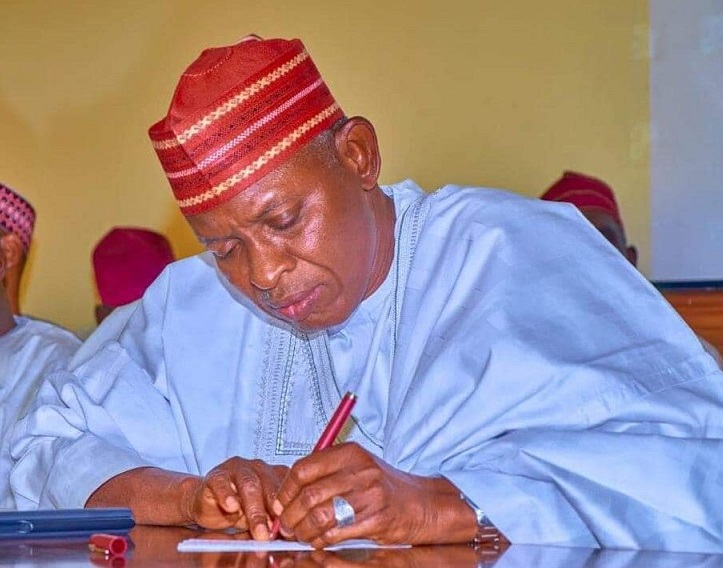
Kano State Governor, Abba Kabir Yusuf, has appealed to President Bola Ahmed Tinubu to consider reopening the country’s borders for the importation of foodstuff in order to address the current food crisis.

Governor Yusuf stressed that the closure of the borders has had a significant impact on the people of Kano State, leading to increased food prices and suffering.

In a statement issued by the governor’s spokesperson, Sunusi Bature Dawakin Tofa, Kano Governor Abba Kabir Yusuf called for the reopening of the country’s borders to address the current food crisis.

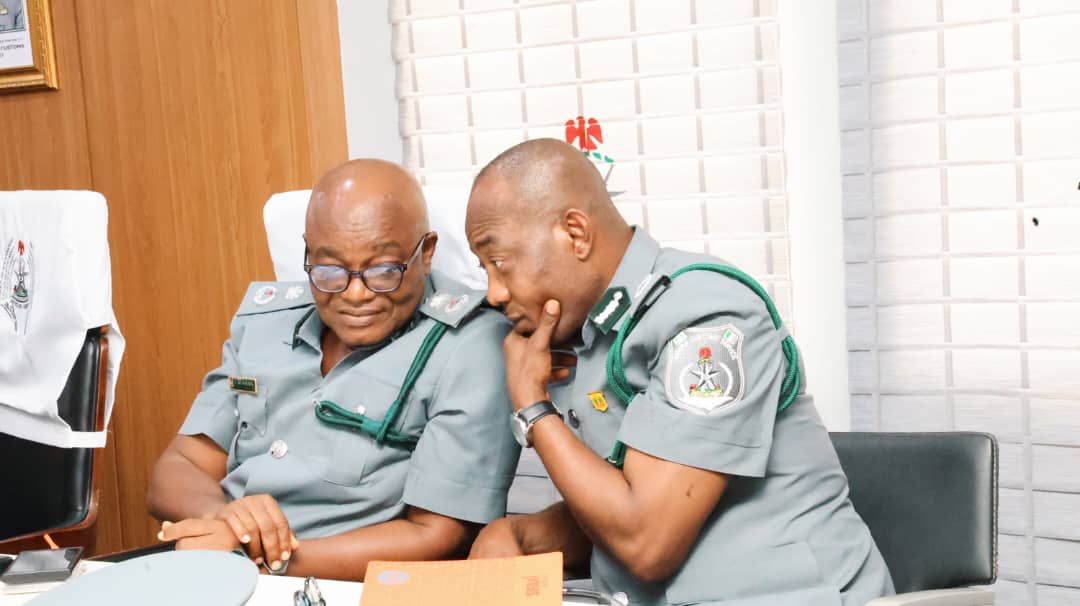
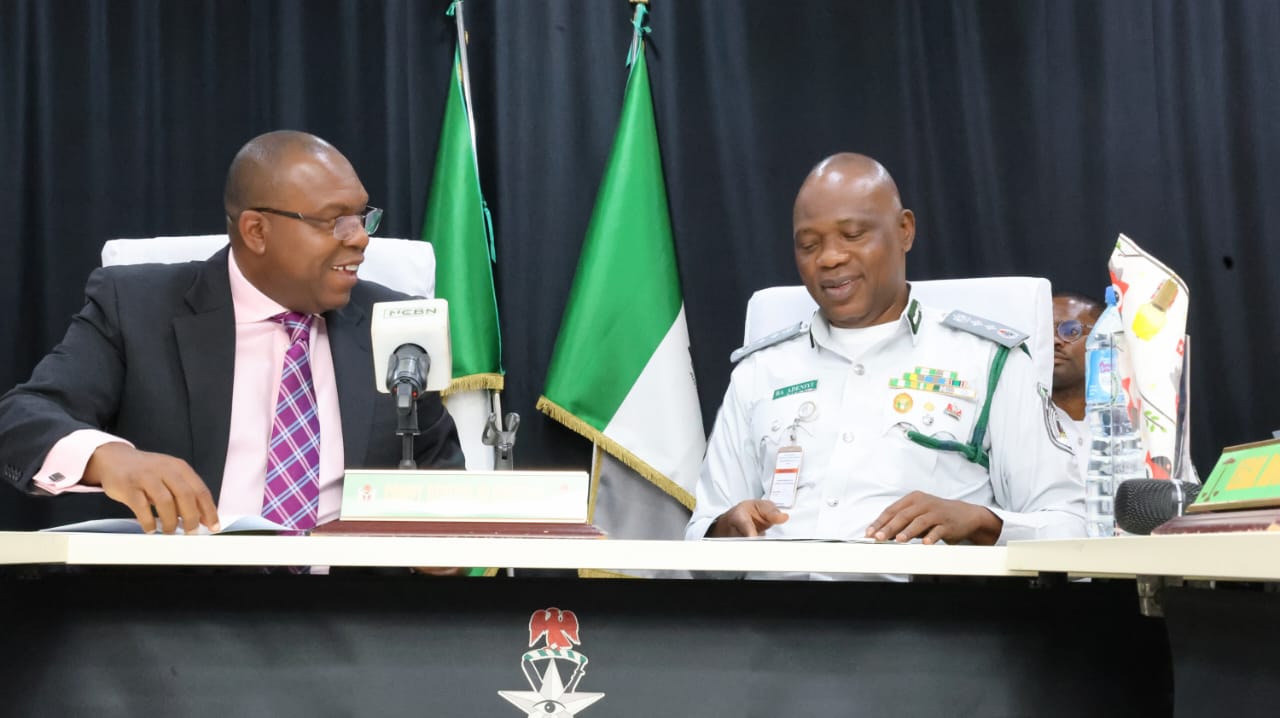
The statement was released following a meeting between the governor and the Controller General of the Nigerian Customs Service, Alhaji Bashir Adewale Adeniyi, at the Government House in Kano.

Governor Yusuf noted the critical condition of hunger and starvation in the country, which has been exacerbated by the sharp increase in commodity prices.

The statement read in part; “We wish appreciate the President’s intervention on the ongoing national food initiative which he considers Kano as the host for the initiative to be launched believing that the programme will cushion the effects of food scarcity if implemented”

Governor Yusuf stressed the urgent need for intervention, including the reopening of the borders to allow for the importation of commodities.

In his meeting with the Controller General of Customs, Bashir Adewale Adeniyi, Governor Yusuf highlighted the hardships faced by the people, particularly during Ramadan.

He stressed that the opening of the borders would be a crucial step in alleviating the distress of the people.

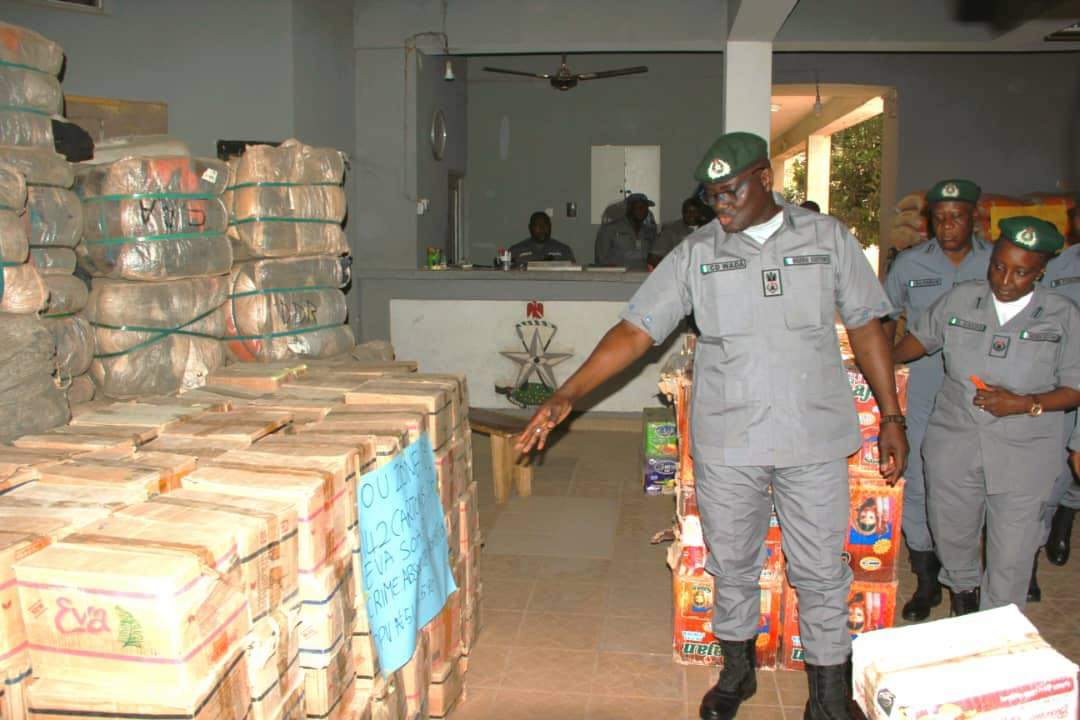
In addition to advocating for the reopening of the borders, Governor Yusuf commended the Customs Service’s initiative to distribute food items to the people of Kano, who have been facing hardship and hunger.

He urged the Customs Service to ensure that the food reaches those who are most affected. The governor also pledged his support to the Customs Service in its efforts to benefit the people of Kano and Nigeria as a whole.

In his response, Adeniyi emphasized the importance of building strong ties between the Nigerian Customs Service and the Kano community.

He emphasized the Service’s commitment to collaboration and constructive dialogue, and pledged to implement policies that would improve business processes and strengthen engagement with all stakeholders.

In addition to his interaction with stakeholders, the Controller General Adeniyi revealed that the Customs Service had made extensive plans to address the challenges of food scarcity and hardship in Kano. This includes the distribution of food items to the people of Kano.

Customs seize truckloads of beans intended for illegal export amidst food shortages

By Sabiu Abdullahi

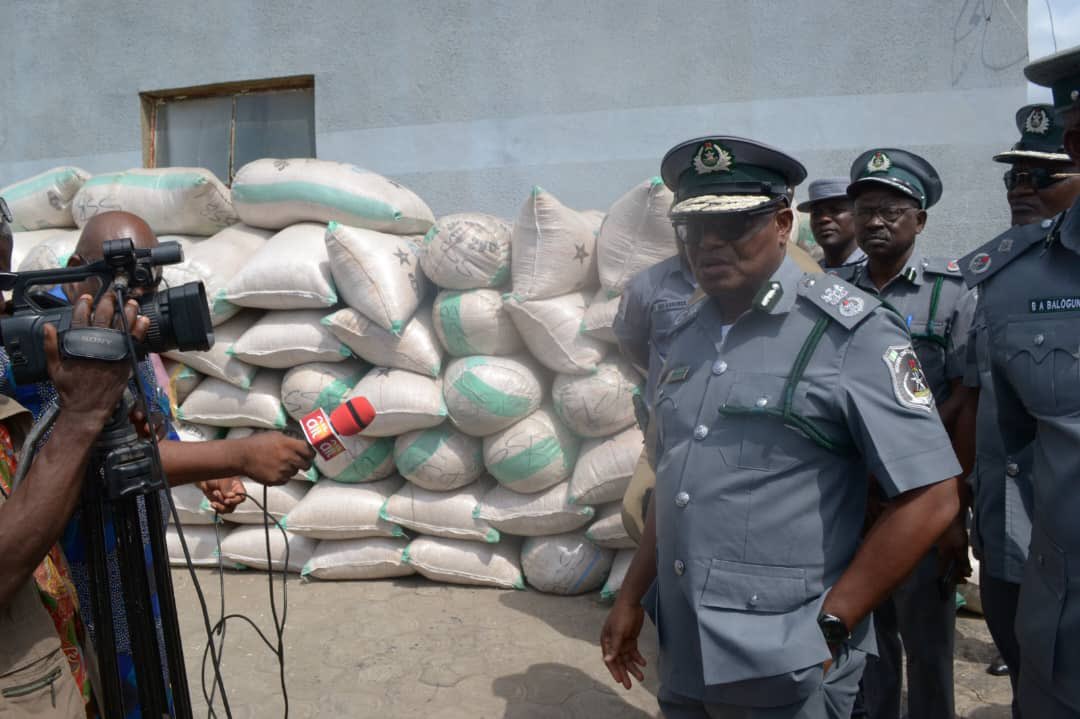
The Nigeria Customs Service, Seme Area Command, has intercepted a truckload of beans with a Duty Paid Value (DPV) of N61.4 million, intended for illegal exportation, amidst widespread food shortages across the nation. 

Customs Area Controller (CAC), Comptroller Timi Bomodi, disclosed this during a press briefing on Tuesday, 5 March 2024, marking the Command’s first press briefing for the year. 

According to Comptroller Bomodi, “In light of our present economic realities and the reported massive food shortages nationwide, and in line with the directive to prevent illegal grain export, the Command seized a truckload of beans, totaling 400 bags with a DPV of N61,450,000.00, stockpiled in a warehouse at one of the exit corridors at the border.” 

He further stated that the intercepted items have been securely stored in the Government warehouse and will be auctioned to the public. 

Highlighting the Command’s anti-smuggling efforts from January to February 2024, Comptroller Bomodi reported a series of successful interventions, including the seizure of 2,193 bags of foreign parboiled rice, 81,930 liters of PMS, 9 vehicles, 1,425 general merchandise, 265 parcels of cannabis sativa, and other narcotics, 149 packages of codeine, and 2 locally manufactured guns, with a combined DPV of N365,888,696.00. 

Thirteen suspects were apprehended during these operations, with various dispositions such as administrative bail, transfer to the NDLEA, and custody by the Nigeria Police. 

In terms of revenue generation, CAC revealed the Command’s yearly target of N7.875 billion, representing a significant increase from the previous year.

Despite challenges, the Command collected a substantial amount in January and February, reaching 88% of the expected revenue. 

Regarding exports, the Command processed 184 declarations for 43 items weighing 65,185.96 MT, with a Free on Board (FOB) value of N13.057 billion. Additionally, revenue was collected for the Nigerian Export Supervision Scheme (NESS) and export surcharges. 

Comptroller Bomodi reassured the public of the NCS’s commitment to its responsibilities, particularly amidst the current challenging times.

BREAKING: Binance announces departure from Nigerian market, halts naira services

By Sabiu Abdullahi 

Binance, one of the world’s largest cryptocurrency exchanges, has decided to terminate all services related to Nigeria’s fiat currency, the naira.

This decision comes amidst escalating regulatory tensions within the country. 

Effective immediately, Binance will no longer accept deposits in naira, with the cutoff time set for 14:00 UTC today.

Furthermore, withdrawals will be unsupported after March 8 at 6:00 a.m. UTC. 

To streamline the transition process, Binance will automatically convert naira balances to USDT (Tether) at a conversion rate of 1 USDT per 1,515.13 naira, starting on March 8 at 8:00 a.m. UTC. 

In addition, all spot trading pairs involving the naira will be delisted on March 7 at 3:00 a.m. UTC.

Any open spot orders for these pairs will be promptly closed. Moreover, Binance Convert, Binance P2P, the exchange’s Auto Invest feature, and Binance Pay will gradually cease support for the naira at different dates and times. 

This decision marks a significant shift in Binance’s operations within Nigeria, signalling the complexities and challenges of navigating regulatory environments in the cryptocurrency space.

As the industry continues to evolve, stakeholders will closely monitor how this development shapes the landscape for both users and exchanges operating in Nigeria.

Re: CBN’s revocation of 4,173 Bureau De Change (BDC) licenses

By Rabiu Aliyu Kiru

It has been announced by the Central Bank of Nigeria (CBN) that 4,173 Bureau De Change (BDC) licenses have been revoked, while 1,368 BDCs remain valid nationwide.

In the CBN publication signed by Sidi Ali Hakama (Mrs.), she did mention a series of offenses that prompted the CBN to revoke the BDC license. Such offenses never involved more than 3,000 BDCs.

I am a professional accountant and a BDC consultant. I have consulted for over 3,000 BDCs out of the total number of BDCs quoted above, and more than half of the total number of these BDCs only engage in buying from the CBN and selling to end-users.

I am beginning to wonder how the issues of money laundering and financing of terrorism will affect such a large number of these BDCs.

Going by the CBN regulations, which were visibly stated on the Approval of Principles (AIP), there is no place mentioned on the AIP where CBN has the right to cancel a BDC License at its own discretion.

The CBN should note that owners of these BDCs have been in business for almost 10 years now, but a BDC holder pays the sum of N250,000 to CBN each year as payment for the Annual Renewal License.

The CBN should also be informed that owners of these BDCs have been in recess for almost 10 years now, yet a BDC holder pays the sum of N250,000 to CBN annually as payment for the Annual Renewal License.

Despite following the CBN guidelines, the CBN abruptly cancels a BDC holder’s license.

The CBN should also note that these BDC holders contribute to the growth of the Nigerian economy, especially by creating job opportunities and eradicating poverty among the citizenry.

In fact, I believe that with the advent of this new government, which has adequate advisers, such an action should not be taken, particularly given the high level of increase in commodity prices and other wares.

The CBN should bear in mind that the BDC owners are learned enough to fight for their rights, particularly for those that they are operating within the ambit of the law.

In my previous advice that I gave to CBN, I never presumed that such advice could not be adhered to. This made me think that I was talking to the wrong person, not to the CBN, which consists of professionals.

It is pertinent to this that I am drawing your attention once again to revisit my observations and advice I gave you directly on your CBN portal.

Rabiu Aliyu Kiru wrote from Kano State. He is a BDCs Consultant, and can be reached via rd_aliyu@yahoo.com.

CBN considers significant increase in minimum capital requirements for BDC operators

By Sabiu Abdullahi 

The Central Bank of Nigeria (CBN) is contemplating raising the minimum capital requirements for Bureau De Change (BDC) operators, with proposed figures set at N2 billion for Tier 1 licences and N500 million for Tier 2 licences.

This potential adjustment marks a substantial increase from the previous requirement of N35 million for a general licence. 

The proposed updates encompass a series of modifications to the regulatory framework governing BDC operations across the nation.

Once ratified, these revised guidelines will be implemented on a date determined by the CBN. 

Under the proposed Tier 1 classification, operators must maintain a minimum share capital of N2 billion and furnish a mandatory caution deposit of N200 million.

Furthermore, the application fee is set at N1 million, with an additional licence fee of N5 million. 

For Tier 2 operators, the proposed minimum share capital stands at N500 million, accompanied by a mandatory caution deposit of N50 million.

The application fee for Tier 2 operators is proposed at N250,000, while the licence fee amounts to N2 million. 

The CBN stated the importance of these revised minimum capital requirements in enhancing the stability and integrity of the BDC sector.

These measures are intended to strengthen the operational capacity of BDC operators, promote transparency, and mitigate risks associated with currency exchange activities. 

This prospective adjustment underscores the CBN’s commitment to fostering a robust regulatory environment conducive to the sustainable growth and development of Nigeria’s financial sector.

Nigeria is hard, Nigerians in tears

By Ibrahim El-mu’azzam

It’s a very hard moment for Nigeria. It’s really unbelievable and unbearable to the extent that many Nigerians have forgotten the sweetness of life. Everything is turning from liquid to concrete. We are even getting used to it, only that we are poor in strength to withstand it.

Today, a Nigerian has taken the insecurity problem, with all its significance less valuable. The government has completely abandoned many people to their fate. It isn’t that we have removed the “in” from the “insecurity” but we are more focused on the gunmen and kidnappers that have all of us; hunger and poverty.

Everything is tough! Citizens are losing hope. To some, it’s lost already. Many prefer death than this tense navigation, in a country that we all know and believe to have excess and abundance of what is needed in terms of wealth and resources. We are very far from thinking of saving, everyone is after what he can get not even today but now.

Inflation has blocked the passage of oxygen to the lungs of Nigerians, removed food from their throats and chased away any positive thoughts from their mind. It’s onto the eyes and ears that people are seeing nothing but what suits and relieves them. The translation of this is that unlawful will be lawful, the strong will rule and the society will turn to a jungle.

Everything is drastically increasing price, and there is no control. You can buy a commodity for ₦10 and in an hour or less, it will be ₦20. Both the parties in the markets aren’t smiling, the transaction is dark as it’s done without pleasure.

Maize, rice, beans, millet, corn and even cassava are above the purchase of a common man, not to talk of meat, fish, milk or sugar. “Balance diet” has since been replaced with “living diet” in Nigeria. People today eat not to be satisfied but to retain their consciousness.

Where on earth can a Nigerian put his humble self?

Everywhere, everybody, this is the discussion, especially family men. These are usually family men with something, no matter how little, doing, what is your thought on those who will wake up in the morning without a single direction to follow?

Begging is now very normal and common, and no one questions. You will hear a person swearing that he and his family haven’t eaten for so long. Food, to pass through the throat and relieve hunger is now the problem of a Nigerian, in fact, a Northerner for that matter.

You will visit a house and come out no one will say “Please eat this”. Wives and children are no longer selecting food. It has reached to the extent that some humans are now eating the foods of animals.

I had to stop and rehear a statement yesterday when I heard someone begging people in a mosque to PLEASE BUY WHAT HE IS SELLING. He sells Qur’an and some other small Islamic books; Ƙawa’idi, Akhdari…, and similar stuff. He stood after Magrib prayer begging; “Don Allah a zo a yi min ciniki, don girman Allah”. For the first time in my life, I come across such type of begging.

I continue to ask myself, please where is the sympathy of our leaders? Where is the empathy of our producers and marketers? Where are the price-controlling institutions? Where are the leaders and where is the government as a whole? Please why are we going through this much? Who have we offended and what has been our offence? Please, are Nigerians entitled to suffering and discomfort? Where are we heading to?

It’snt long that we voted with the hope that things would be softened, pains would be relieved, and tears would be wiped, but the absolute reverse is the case. More and more terrific we are getting every day.

The government is careless. The budget has no direct aiding attention to the common Nigerians. Billions are spent on useless renovations, change of vehicles and leisure trips, but not a single unit directly for the common man of the nation.

And upon all these, one beautiful thing is that no one protested, broke any law, or did something illegal, yet. A Nigerian, as strong as he is isn’t so much complaining of the commodity prices, but the money to buy them. You will always hear; “Allah Ya ba mu abin saya”. See this extreme humbleness, humility and positivity.

To be honest, every Nigerian deserves an award of commendation. We have been navigating through a tough situation with increasing anger and frustration, yet quiet, peaceful, and even managing a fake smile. Weldone fellow countrymen, it’s getting over, it’s getting better, soon by the grace of God.

We urge, with a very loud voice, every Nigerian leader, scholar, producer, marketer, and every other stakeholder to remember that he or she will be accountable for this before God. He or she shall be fully responsible for the dying Nigerians, especially those who have what to do but chose not to do it.

Every stakeholder, from community leaders, councilors, religious figures, schoolers, elders, marketers, and others at the community level, moving to the local, state, to national level, this is the task now! People, move to them. Disturb them until we get their attention.

The government should as fast as possible intervene in these ravaging problems and provide solutions. Aid and humanitarian activities should be given extra priority under trusted custodians. If there is a need, I believe Nigerians will agree to the relocation of any project fund to address this problem. The government should reconsider its decision on the removal of fuel subsidy and all other subsidies it is removing. Nigerians are dying! Focus on Nigerians, focus on their condition, Nigeria will be better. PLEASE ITS URGENT!

Ibrahim El-mu’azzam
elmuazzammail@gmail.com

FG seals Sahad Store for alleged lack of price transparency

By Sabiu Abdullahi

The Federal Competition and Consumer Protection Commission (FCCPC) took decisive action on Friday by sealing Sahad Store, a prominent supermarket located in the Garki area of Abuja.

The commission cited the store’s lack of transparency in price fixing as the reason for the closure. 

This development comes just a day after President Bola Tinubu announced plans to address factors contributing to the ongoing food crisis in Nigeria.

Following a meeting with state governors, security agency heads, and ministers at the Presidential Villa in Abuja, Minister of Information and National Orientation, Mohammed Idris, revealed that a committee would be established to combat product hoarding. 

According to Idris, some traders have been accused of hoarding food products, exacerbating the challenges faced by Nigerians.

He emphasised the need to ensure that essential commodities are readily available to people at fair prices. 

The enforcement team from FCCPC, led by Acting Executive Vice Chairman Adamu Ahmed Abdullahi, found Sahad Store guilty of misleading pricing and lack of transparency during a preliminary investigation.

Abdullahi stated that the store would remain sealed until further investigations are completed. 

The commission invoked Section 115(3) of the law, which prohibits charging consumers prices higher than those displayed.

Additionally, Section 155 outlines severe penalties for corporate entities found in violation, including fines and potential imprisonment for directors. 

Despite being summoned to defend their actions, Sahad Store’s management failed to appear, only sending a lawyer who was not familiar with the case. Abdullahi emphasised that compliance with the law is necessary for the store’s reopening. 

The closure of Sahad Store underscores the government’s commitment to ensuring fair pricing practices and protecting consumers from exploitation amidst the current economic challenges facing Nigeria.

Making noise for Mambila Hydro Power Plant Project

By Bilyamin Abdulmumin

In the dramatic Gabon coup d’etat late last year, after all the hope seemed to be lost for Ali Bongo, he resorted to the last glimmer, he appeared in a recorded video that went viral appealing for the public to make some noise, apparently to deter the Junta from succeeding.  To paraphrase the former Gabon president, in the spirit of the success of the Mambila hydropower project, let us make some noise!

When the news of the contract between Nigeria and the government of China to undertake the project broke, it threw the country into much celebration. The project was said to have been conceived about 40 years ago, but each government came and went without moving the project an inch. A presumable turning point came when the then president, Buhari, met with the Chinese president and both governments were said to have agreed on the formation of a joint venture by the three companies, CGCC, SINOHYDRO, and CGCOC under the guidance of the Chinese authorities for the project building. The total cost of the project was estimated at 5.8 billion dollars, With the Chinese government providing a loan of 4 billion dollars from Exim Bank, and the Nigerian government providing the rest. The news of the strategic bilateral agreement went all over the internet with several stories surrounding it. Given its potential for improving the socio-economic status of not only the community around the Taraba State but Nigeria at large. The Nigerian President even likened the project to China’s Three Gorges Dam.

Currently, Nigeria (after generation, and transmission finally) distributes a meager 4 to 5
MW of electricity for more than 200 million Nigerians, but the Mambila alone is proposed
to add about 3.5 MW to the national grid, one now can fathom not only the extent of
Nigeria’s energy poverty but why the euphoria about the project.

From 2017 when the news of the contract was broken down to 2023, the project
development news kept flying around, fueling the hope and happiness of the public as
such painting the government of the day white. Some government zealot supporters
even circulated colorful pictures of other projects at the completing level purporting it to
be the Mambila hydro-power project.

The back and forth, mystery, and uncertainty surrounding the project triggered BBC
Hausa to embark on a fact-check mission, making a few-minute documentary about the
project. This fact-check mission steered up the honest net making the news become the
major public discussion. The public felt utterly betrayed by the government and thus
questioned its transparency resulting in straining the government’s image like never
before. It emerged that the project purported to be at the completion stage with finishing
pictures circulating has yet to be torched an inch.

This development forces the government through Garba Shehu to come out for damage
control. Unknown to the public, while all the euphoria was going on about project
completion, the government was battling court litigation. According former special
adviser, a businessman named Leno Adesanya,  through their company Sunrise Power

Transmission Company of Nigeria Ltd (SPTCL) has filed about 2.3 billion dollar lawsuit
at the ICC International Court of Arbitration, Paris, against the Federal Government of
Nigeria (FGN) for breach of contract” which they have secure the right in the 2003
agreement to construct the 3,050MW plant in Mambila, Taraba state, on a “build,
operate and transfer” basis.

On March 26, 2020, the then attorney general and minister of justice Malami secured an
out-of-court resolution with this company, to pay the sum of $200 million as a “full and
final settlement” to discontinue the arbitration and set the government free from all
liabilities in the dispute. The only soft landing that could warrant the project to proceed. 
However, Buhari, in his reply, a month later, rejected the settlement: “FG does not have
200 million dollars to pay SPTCL. Shehu echoed this response while responding to BBC
Hausa’s report: The Nigerian government could only call on him to show nationalism to
withdraw unconditionally, to allow the project to continue.

Now that those who are holding to ransom, the Mambila power project is clear: the
government and SPTCL company, let’s make more than just noise – let’s make a
resounding call for transparency, justice, and the release of a project poised to be a
game-changer for Nigeria’s socio-economic landscape. The Mambila hydropower
project deserves more than a viral plea; it deserves a roar of collective voices
demanding accountability and progress.

Lagosians join protests against high cost of living

By Uzair Adam Imam 

Lagos State people have joined the ranks of several other states across the country in staging protests against the high cost of living. 

In the Ibeju-Lekki area of Lagos State, market women and youths took to the streets on Saturday to voice their grievances. 

The protesters were displaying placards bearing messages such as “Baba Tinubu, Nigerians are hungry” and “Tinubu, come and rescue us”. 

The protesters highlighted the hardships faced by ordinary citizens due to the escalating cost of living. 

This demonstration marks the latest in a series of protests held in various states, including Kogi, Osun, Niger, and Kano, all echoing concerns over the relentless rise in commodity prices since the removal of the petrol subsidy in May 2023.

Nigerian entrepreneurs and the startup ecosystem investment

By Salisu Uba, PhD, FCIPS

In Nigeria, especially in the North, the time is ripe for successful entrepreneurs and business leaders to forge an alliance and spearhead investment in the burgeoning startup ecosystem. By forming angel syndicates to venture capitalists, we can create a robust foundation for attracting substantial investment not only from within Nigeria but also from across the globe. This aligns with locally supported startups through investment, addressing market fit and confidence in the business model, especially if the solution is locally targeted.

Why is this crucial?

Firstly, establishing angel syndicates allows us to tap into the wealth of knowledge and experience possessed by seasoned entrepreneurs. Imagine having a syndicate of angels across all states investing in and mentoring startups and small businesses; this could lead to more successful ventures, social impact, and job creation. Typically, when you have resources and skills in business, it becomes an avenue for addressing challenges and opportunities within the startup landscape, making it a source of invaluable mentorship for emerging businesses.

Secondly, starting with angel syndicates incentivizes the process of attracting more venture capitalists, signifying a maturation of the investment ecosystem. It’s important to understand that venture capitalists bring not only financial backing but also strategic guidance and access to extensive networks, propelling startups towards rapid growth and scalability.

I am glad that some folks are forming partnerships and have come up with venture labs funding. However, my question is how effective this is, especially when we don’t get updates about the deals they have closed? I want to be positive, as a typical round of investment can take anywhere from 3-7 months.

Furthermore, without adequate funding, promising startups risk stagnation or even relocation to more investment-friendly destinations. Incorporating in these alternative jurisdictions not only deprives Nigeria of potential economic growth from the ecosystem but also undermines the socio-economic development of the country offered by the startups.

Lastly, to catalyze this transformation, heightened awareness and targeted training programmes are essential for our successful entrepreneurs and business leaders. Educating successful entrepreneurs on the benefits and mechanisms of investing in the startup ecosystem will empower them to become active participants in driving innovation and economic prosperity.

Business schools in Nigeria should come up with tailored programmes on startup investment opportunities and the future of sustainable business practices. Our revenue houses should perhaps create incentives for high net-worth individuals when participating in investment in startups or small businesses.

I am absolutely certain that Nigerian entrepreneurs and business leaders should be engaged in creating a network of angel investors to invest in the startup ecosystem. We can foster a culture of innovation, drive economic growth, and position Nigeria as a leading player in the global startup landscape. Now is the time to act, to seize the opportunity, and to realize the full potential of Nigeria’s entrepreneurial spirit.

I am sure platforms like Startup Arewa, NITDA, Ministry of Finance, FIRS, and many other stakeholders can facilitate a dialogue and create a conversation around my proposition.

Salisu Uba, PhD, can be reached via salisuuba@ymail.com.