Economy

Salary increase or stronger Naira: My appeal to the President

By Sani Bello Hamza

Mr. President, before I delve into my concerns, it is indeed important to lay a proper foundation. As an aspiring lawyer and an opinion leader in my own capacity, I am not unaware of the challenges and intricacies of leadership. The stress, strain, and challenges are sometimes daunting and discouraging.

However, Mr. President, even your enemies and those from the opposition party can not doubt your capacity to lead and your unique style of leadership. Your ability to lead and manage successful politicians, industry men and academics leaves us in awe and surprise.

Your ability to understand and provide lasting solutions to national issues ought to be given careful consideration and serve as an exercise for students at various levels. Your unique style of leadership is indeed worthy of emulation and study. The Asiwaju school of thought!

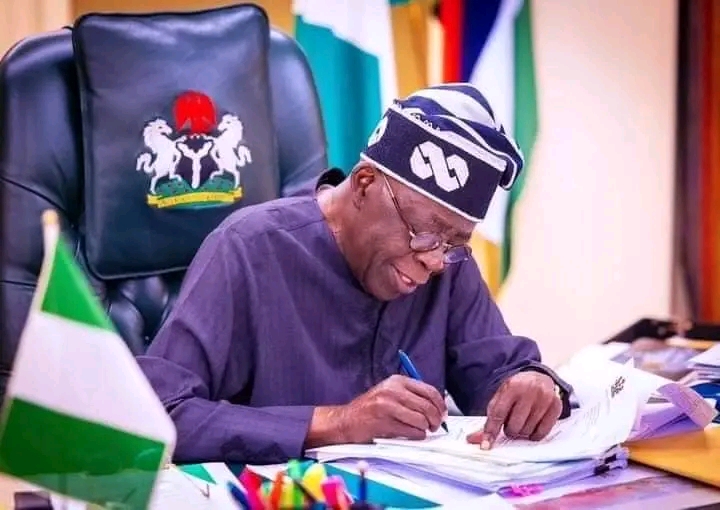
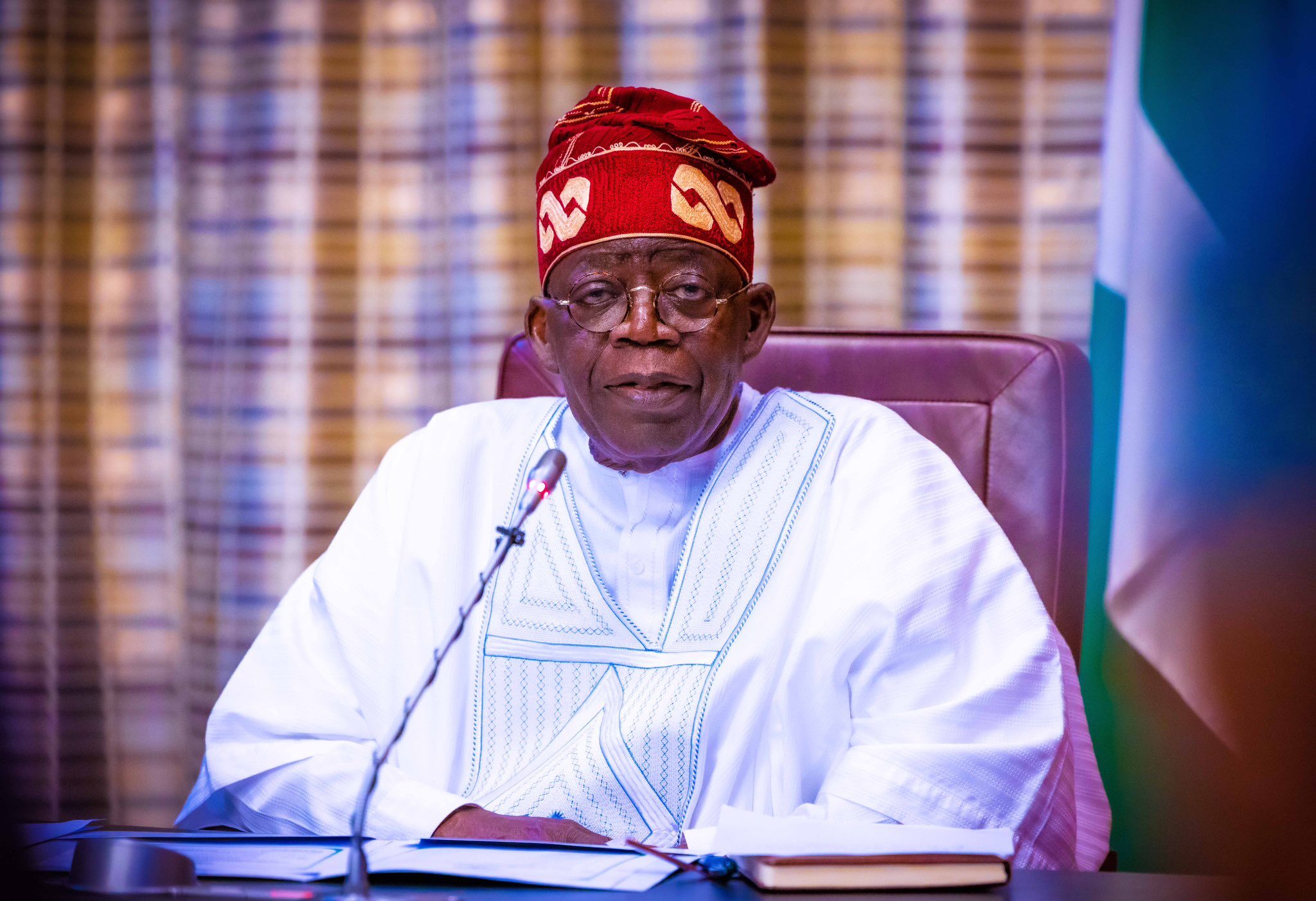
Dear President Bola Ahmed Tinubu, It has been a year since Nigerians qued in mass to support you and the renewed hope agenda. They voted for you and supported your candidacy. Nigerians, from every nook and cranny of the country, shun the nay-sayers and triumph to support you and the APC to make sure you make it to the Villa. It has now become history and forms a special part of the Asiwaju school of thought! 

Mr. President, sir, Before you declared your intention to run for president in early 2022, Nigerians were lost in search of a trusted and reliable leader, a qualified politician capable of steering them to the promised land. The APC seems to be falling after eight years of sheer disappointing tenure, and the PDP was not an option to be considered, given its 16-year tenure.

The resurgence and emergence of the renewed hope agenda and the “emilokan” slogan gave Nigerians a sigh of relief and hope that the table would turn around. That is, it’s time to reap what they sow and enjoy the fruit of their labour and hard work. 

Mr. President, I wish I could write this letter and deliver it directly to your mail or doorstep. Sadly, it’s not possible. I still wish I could be featured on national television to address you and beg you for one thing, yes, just one thing, Mr. President. 

If I were given the opportunity to meet you, the president, in a one-on-one conversation, I wouldn’t talk much. I promise to make the conversation short, brief, and succinct. Who will give me this golden opportunity? 

Anyway, the popular Hausa adage; “guntun gatarin ka ya fi sari ka bani” meaning your short axe is better than cut and give me” is what kept resounding in my skull. I will use the little I have to achieve what I don’t have. I will send this letter out, hoping that one day it’ll reach you, Mr. President. In a one-on-one meeting with the president, I will tell him to put aside anything that has to do with salary increases for the working class and concentrate on bringing back to life the already dead Naira. A stronger Naira is the only option.

Okay, back to the subject matter: Nigeria is indeed a blessed country with abundant natural resources (Minerals and Humans). Yet, our economy keeps dilapidating day in and day out. It always seems that yesterday was better than today, last month was better than the current month, and we wish to be taken back to the previous administrations. 

Why is this happening? What is the problem with Nigeria?

I was tempted to share a post on my Facebook timeline from March 2015 (nine years ago) in which the writer lamented how the prices of commodities skyrocketed during the fasting period. The only price that caught my attention was the price of spaghetti, which rose from 60 – 70 naira. Man! How much are you buying spaghetti now? They’ll say the dollar has risen.

Mr. President, back then, in 2014, the exchange rate of dollar to naira was 60-70 per dollar. The minimum wage then was 18,000 naira, which is enough for an average Nigerian to buy a bag of rice and other commodities to sustain himself throughout the month.

Fast forward to 2024, 10 years later, the Naira hit an all-time record of 1900 to a dollar, and the minimum wage has graciously increased from 18,000 to 30,000. The 30k will not be enough for the average Nigerian to buy half a bag of rice, not to talk of other daily life struggles.

Mr. President, I strongly believe a salary increase will only increase the amount of money in circulation, thereby making inflation the front seat of our economic discourse. They say more money, more problems. 

Mr President, sir, a good road network connecting rural to urban areas spiced up with increased exports will benefit the country more than an increased salary for less than five per cent of the country’s population. 

Dear President Bola Ahmed Tinubu, I equally believe the renowned economists in your midst understand the intricacies of our economy and where it’s heading to. With your continuous support, dedication and unwavering commitment to the progress of our nation, Nigerians will one day smile and say Alhamdulillah!

Sani Bello Hamza is a Law Student at Ahmadu Bello University Zaria. He writes from Zaria and can be reached via sanibellohamza@gmail.com.


Nigerian artisans and their psychological warfare

By Ibrahim El-Caleel

I have noticed one thing with artisans. A good number of them hate it when you ask them about their charges before commencing work on your item, be it electrical faults, plumbing issues or any other tasks. The prefer completing the job before telling you the price.

The underlying psychology here is for them to gain leverage in negotiation. By completing the task first, they position themselves in a stronger bargaining position. They will always argue that they have already done the job and they have really suffered to do so. This leaves you at their mercy, with some even framing their service to you as a massive favour.

However it goes, they will win. If you don’t pay as much as they want to charge you, then they will leave you with a guilt feeling about shortchanging them. An empathetic person will be prompted to add more money “just to clear his or her conscience”.

This is their psychology.

However, it is all your fault. No work should begin without a clear, mutually-agreed labour cost. It is akin to an employee signing an offer letter without a specified salary. Imagine starting a job as a Medical Doctor and your offer letter simply says, “we will pay you a monthly salary by 30th of every month.” No specified figure. What if at the end of the month the hospital pays you a salary of ₦17,500 while you were expecting ₦250,000? It’s absurd.

This is why both parties should agree on very clear terms before any work begins. If you meet your mechanic in his workshop, ask him how much he will fix your car’s Stabilizer & Ball Joints. Don’t agree with his vague assurances that, “No na Oga.. we are together”. Insist on knowing his charges upfront before the work begins.

Interestingly, this reminds me of an incident with Dr Sakynah some years back. After completing her shopping at the market, she hired a wheelbarrow boy to transport her goods and he brought them. When she asked him about his charging fee? He declined mentioning a figure, but told her “ko nawa ne ki bada; Allah Ya sa musu albarka”. Meaning, “just pay any amount of money; may God bless it”. She obliged and paid him ₦20, and that’s when he began murmuring.

“What happened again?”, she asked him.

“Haba. Ai ke ma kin san ya fi haka!” (Haba. You also know that this work deserves more than what you just paid), he replied.

She asked, ‘were you not the who said I could pay anything and may God bless it?’ So she asked him again, “how much is your money?”

Without any hesitation, he replied, “₦50!” And she now gave him his money. She could have paid him N200, and the guy would be happy that the strategy is working.

This is also another strategy artisans use to charge you more than what is their actual pay. They will tell you to simply pay any amount, no problem. I don’t know why any merchant would do this. Is it possible for me to go to a kiosk and pick a large loaf of bread, and then the kiosk owner will tell me to pay any amount? It’s impossible. So why do artisans issue labour with a blank price tag?

But then it is a strategy for price discrimination. You sell the same goods or service at different prices to different consumers. A seller is happy to do this, but a buyer feels uncomfortable. Some buyers even feel like they were swindled. This is the same strategy the e-CEOs of “DM for pricing” are using. They lure you to inbox, and sell a ₦2,000 kitchen utensil to you at ₦5,000; then lure your friend to inbox and sell the same product at ₦2,400.

As a buyer, you must be smart. Most sellers are already very smart. If you are not smart as a customer, they will maximize their profit out of your meager earnings. This is why they get richer annually while you either stay flat or decline. Sapa wan finish you.

Commercial Lawyers would say, “Caveat Emptor“, or “Let the Buyer Beware.”

Nigerian Customs seize contraband worth over N769 million, issues stern warning 

By Sabiu Abdullahi

The Nigeria Customs Service, Federal Operations Unit (FOU) Zone ‘B’, has announced the seizure of contraband goods with a staggering duty-paid value exceeding N769 million.

This significant haul was disclosed by the Comptroller of the Unit, Comptroller Chedi Wada, during a press briefing held on March 28, 2023, at Kangiwa House, Kaduna State. 

Comptroller Wada revealed that a total of 98 seizures involving 21 different items were executed during the operational period.

The contraband items confiscated encompassed a diverse range, including foreign parboiled rice, spaghetti, secondhand clothing, premium motor spirit, refined vegetable oil, used vehicles, and various other goods. 

Among the notable seizures were 372 bags of rice concealed within flour sacks, intercepted by vigilant unit operatives, and subsequently deposited at the Kwara Area Command.

Stressing the pivotal role of intelligence networks, Comptroller Wada underscored the unit’s commitment to unearthing smuggling operations, despite adversarial tactics employed by die-hard smugglers. 

In a stern warning directed at smugglers, Wada asserted, “Those who persist in illegal trade activities cannot deter us from fulfilling our duty. They must either transition to legitimate commerce or face the full force of the law.”

Additionally, he cautioned against the alteration of Vehicle Identification Numbers (VINs), highlighting the legal consequences and penalties outlined under the Nigeria Customs Service Act 2023. 

Drawing attention to the gravity of VIN tampering, Wada urged citizens to meticulously inspect vehicle VINs to thwart smuggling attempts and uphold regulatory compliance.

He noted the government’s initiative to facilitate the regularisation of improperly imported vehicles within a 90-day window, further alleviating financial burdens on citizens through the suspension of penalties. 

The resolute stance of the Nigeria Customs Service, exemplified by the diligent efforts of FOU Zone ‘B’, underscores a concerted commitment to combating illicit trade and safeguarding national interests.

As the unit remains steadfast in its enforcement endeavors, stakeholders are urged to collaborate in upholding regulatory standards and fostering a culture of lawful commerce.

Plateau potato farmers receive seedlings to boost production

 By Uzair Adam Imam 

Solidaridad, an international organization funded by the Netherlands, has donated potato seedlings to 4,000 farmers in Plateau State. 

The seedlings are resistant to potato blight, a disease that can reduce crop yields.

This is expected to increase the productivity of farmers during the 2024 farming season. 

The product was unveiled during the kick-off of the distribution of seedlings to farmers in Bokkos and Mangu Local Government Areas of Plateau State. 

Programme Manager of Solidaridad, Kene Onukwube, said: “We are starting with 4,000 household farmers. This can be further expanded, as we expect the state government to replicate this programme subsequently. 

“For the prove of concept we started with Bokkos and Mangu local governments, and together with the state ministry of agriculture would be able to show us other locations which is possible to do the same project.’’ 

Plateau State Governor Caleb Mutfwang, represented by the Permanent Secretary of the Ministry of Agriculture, Esther Pwaspo, stated that the state government is committed to improving the agricultural sector and boosting potato production for export.  

This initiative aims to increase the state’s agricultural output and generate revenue.

Re: Dump your Dollars to avoid tears, Naira appreciates – Presidency warns

Baffa Kabiru Gwadabe, PhD

When I first saw the news, I was overwhelmed by the efforts of Mr. Cardoso as the apex Bank Governor trying to stabilize the Naira. In the news cover, it was reported that “the Presidency has warned Forex speculators to discard their Dollars, saying that the Naira will soon appreciate”. But the above statement was said to be made by the President Bola Tinubu’s Special Adviser on Information and Strategy, Mr. Bayo Onanuga, through his Twitter (now X) handle on Thursday 21 March, 2024.

Mr. Onanuga urged Dollar speculators to quickly dump their Dollars to avoid ‘tears’ that may ensue after continued appreciation of the Naira. Mr. Onanuga was reacting to the recent disclosure by the CBN that it had cleared $7 billion foreign exchange backlog inherited by the Bank.

The development was confirmed by the CBN’s Acting Director, Corporate Communications, Mrs. Hakama Sidi Ali. According to her, the CBN had employed the services of Deloitte consult as an independent audit company to judiciously assess the forex backlog claims and all valid claims based on the recommendations of the company were settled by the Bank. She further indicated that all invalid claims or transactions were referred to the relevant authorities for further investigation.

Similarly, the above efforts, coupled with others such as the seeming ‘credibility of the CBN’ in keeping to its policies have made the Naira to appreciate to some levels and also to the rise in Nigeria’s foreign reserve to $34.11 billion early this month, which is almost the highest recorded since the last 8 months. This is welcoming for Nigeria as import-dependent economy and led Mr. Onanuga to talk to speculators in his tone of ‘Dump Your Dollars’. The ‘dumping of the Dollars’ is my point of entry from which I want to make some remarks.

Let me start by saying or informing Mr. Onanuga that the Dollar crisis in Nigeria is beyond speculations. To a greater extent, it is an issue of ‘store of wealth or value’ using the Forex, specifically the US Dollar. Many Nigerians that had the opportunity of accumulation of ‘large wealth’, try their ways in ‘safe-keeping’ same by converting certain amounts of Naira to the Dollar or other major currencies like the Euro, the Sterling Pounds etc. This has remained the practice in the country and has reached the extent of what I called the ‘unconscious journey’ or the ‘hardened behaviour’ of not seeing the Naira as any promising currency that is stable. In other words, the Naira will always keep depreciating.

With the kinds of policy efforts by the CBN and the Federal Government, this behaviour or trend may have its last gate. What I am saying, in short, is that the practice of scouting and safe-keeping of the Dollar at whatever rate to keep in ‘graveyards’, ‘underground safe-tanks’, ‘security safes’, ‘travelling bags or brief cases’, ‘laundering overseas’ and ‘deposits in commercial banks’ to mention but a few storage strategies of the Dollars may be curtailed.

I now ask some questions regarding the calls for ‘dumping’ by Mr. Onanuga. If Nigerians that had scouted and stored the Dollars were to repent and bring out some or all of their stored Dollars, where should they dump them? Is the dumping ground ‘safe’ without creating a new round of speculations and corruption? Are the dumpers ‘safe’ from stigmatization and punishment? Are the dumping sites going to be the CBN like during the New-Old Naira notes swap, the commercial banks or the BDCs or new hubs? Will the Dollar holders be allowed to spend the Dollars domestically for their transactions? The questions are many and could go on and on, but I stopped at just number 5, as other people may ask some more questions.

For some of the questions asked above, the answers may be very clear, just like the water colour in the day time. All that is needed in answering those questions is for the CBN and the Presidency to be more proactive and strategic enough in handling the long-standing crisis of the Dollar. This is just to say that there is a better need for change of strategies and operations.

The duo should greatly be reminded of the popular saying that ‘once-beaten, twice shy’. I hope to focus specifically on providing only 2 answers based on my little understanding and focus of the rejoinder, the ‘dumping of the Dollar’ and the ‘domestic spending of the Dollar (dollarization)’.

The dumping should strictly be accommodated by the CBN and new accredited dealers or service providers that are trustworthy other than commercial banks or the BDCs. The commercial banks and the BDCs had been tried and tested at different times and different exchange rate regimes but have failed in their own domains. For instance, most commercial banks hoard, receive bribes, kick-backs, brokering or profit from the CBN official Dollar allocations, thereby further widening the gap between the official rate and the black-market rates.

For the BDCs, they are the agents, on many occasions, that served as the foot-soldiers in scouting and mopping-off all the available Dollars in the market with huge Naira for their clients and launder same in some instances.

Additionally, the Binance crypto market speculations of the rates appeared to be new in the perpetuation of Dollar atrocities in the country but still cannot be ignored.

On the answer to the question of spending the stored Dollar domestically, the answer is a resounding yes. Those with Dollar currencies in their possession should be allowed to transact at accredited points and this will ensure more liquidity of the Dollar domestically and reduce demand pressure to squash undue speculations and arbitraging. Allowing the Dollar to co-exist with the Naira in the domestic economy at reasonable scale is called ‘partial dollarization’. This is important because the Dollar in Nigeria based on the recent happenings and the CBN’s approaches is ‘strangled’, ‘suffocated’, ‘compressed’, and ‘thirsted’ for the Naira. So, what the Dollar now needs the most include but not limited to ‘some breath’, ‘exit-doors’, ‘chimneys’, ‘exhausts’ and ‘water’. So, Mr. Onanuga, the issue is not only about the ‘dumping’ but the provision of ‘sustainable dumping sites or exit-doors or chimneys for the strangulated Dollar’.

Moreover, I know some economists and others will question the very proposal of ‘partial dollarization’ of Nigeria, where Dollar will be used as a medium of exchange in addition to the Naira. Their major argument will be that the ‘partial dollarization’ will jeopardize Nigeria’s CBN monetary policy autonomy, because the CBN has no control over the Dollars that will be in circulation in the country. This is very true but with proper monitoring of the inflationary trends, this can be dealt with but it is good that I remind my colleagues in Economics of the concept of ‘unholy trinity’; where it is practically not possible to control the trinity at the same time. The unholy trinity is made up of the fixed exchange rate regime, independent monetary policy and free capital movement (see Figueredo et al., 2023).

Therefore, dollarization is necessary for Nigeria as it has already been practiced in many countries in the World and is one of the hidden secrets for their stable exchange rate systems or regimes. For those that visit countries such as the UK, US, Turkey, UAE, China, Germany, Saudi, Japan etc, they find at the airports currency exchange boots to convert currencies at ease and also realize at some hotels and malls or restaurants, price menus being quoted in 2 or more currencies for one to choose. Therefore, Nigeria should start its own journey.

On a final note, let me make little summary in bullet points to fine-tune the statement by Mr Onanuga that says ‘Dump Your Dollars’ but the ‘dump’ should be in this order:

  • Dump your Dollars with the CBN at its various State offices and Headquarters;
  • Dump with new aggregators to be approved by the CBN for onward submission to the CBN at a much regulated and controlled service charges;
  • Dumpers or depositors of the Dollars must not have domiciliary accounts but for those that have one, part of the amounts could be lodged into the accounts;
  • Domiciliary accounts in Nigeria need to be reviewed with a view to embracing the best global practice for the stability of the Naira;
  • There should be authorized currency exchange boots at major International airports in the country for small exchanges, like buying and selling of not more than $1,000 or so for travelers in and out of the country.
    For the case of ‘partial dollarization’, the following are recommended:
  • Real estate or physical assets and automobile dealings could be accredited to receive Dollars under stipulated guidelines and this will ease their trouble scouting for Dollars for their imports;
  • Major shopping malls and stores, restaurants, hotels/suites, hospitals (private), pharmacies, schools (private and all categories) should be accredited to receive Dollars under the CBN stipulated guidelines;
  • Entertainment industry and certain concerts in major cities of Nigeria such as Lagos, Kaduna, Abuja, Portharcourt, Benin, Kano, etc should be allowed to receive Dollars for their gate fee charges under the CBN stipulated guidelines.

Thank you and see you next time.

Dr. Gwadabe (Baffa) is an academic staff of Bayero University Kano, Nigeria, from the Department of Economics. He can be reached at: bkabirugwadabe@gmail.com

Nigeria Customs Service, NEPC strengthen partnership to enhance export activities

By Sabiu Abdullahi 

The Nigeria Customs Service (NCS) has affirmed its commitment to collaborate closely with the Nigeria Export Promotion Commission (NEPC).

The announcement came during a significant meeting held on Tuesday, March 19, 2024, as the management team of NEPC paid a courtesy visit to the Customs Corporate Headquarters in Abuja. 

Comptroller-General of Customs, CGC Bashir Adewale Adeniyi, expressed the NCS’s eagerness to join forces with NEPC to streamline export processes, alleviate bottlenecks, and foster a conducive environment for exporters.

He stressed the pivotal role of this collaboration in redefining exports to enhance outbound trade volumes. 

During a joint session at the Customs Corporate Headquarters, CGC Adeniyi underscored the imperative of supporting exports, particularly in addressing logistical challenges.

His words were echoed by Nonye Ayeni, Executive Director and CEO of NEPC, who commended CGC Adeniyi’s notable achievements since assuming office.

Ayeni stated Nigeria’s wealth of resources, especially in agriculture and solid minerals, highlighting the pivotal role of advocacy in addressing exporters’ challenges. 

Se further reiterated the importance of non-oil exports for economic growth and called for concerted efforts to actualize the “Export 35 redefined” initiative.

She also urged sister agencies to actively contribute to mitigating logistical hurdles and proposed the establishment of aggregation centers to facilitate smoother export processes. 

In response to the discussions, Comptroller Ajibola Odusanya, Customs Area Controller Lilypond Export Command Lagos, amplified the necessity of the Nigeria Export Proceeds (NXP) to repatriate export proceeds.

Nigeria Customs Service, Joint Tax Board sign MoU to foster collaboration 

By Sabiu Abdullahi 

The Nigeria Customs Service (NCS) and the Joint Tax Board (JTB) have inked a memorandum of understanding (MOU).

The MOU, signed on March 18, 2024, at the NCS headquarters in Abuja, marks a great step towards fostering a more robust economic landscape in Nigeria. 

The signing ceremony, which followed a productive meeting held on January 16, 2024, saw the participation of key stakeholders, including the Comptroller-General of Customs, CGC Bashir Adewale Adeniyi MFR, and the Secretary of the Joint Tax Board, Olusegun Adesokan.

Both parties expressed their commitment to collaborative efforts aimed at enhancing tax management and facilitating economic growth. During the event, CGC Bashir Adewale Adeniyi MFR underscored the significance of the collective endeavour, emphasising the tireless efforts invested in finalising the MOU.

He highlighted the MOU’s role in laying a solid foundation for future initiatives and integrating fiscal policies to streamline data facilitation processes. 

The MOU signifies a landmark achievement in strengthening strategic collaboration between the NCS and the JTB.

It is poised to pave the way for enhanced coordination and synergy in driving economic development initiatives across the nation. 

In his remarks, Olusegun Adesokan, the Executive Secretary of the Joint Tax Board, commended the foresight of the parties involved in reaching this milestone.

He lauded the dedication and vision demonstrated by the teams, noting that the successful signing of the MOU is a testament to their commitment to advancing Nigeria’s economic interests. 

The MOU between the Nigeria Customs Service and the Joint Tax Board reflects a shared commitment to fostering sustainable economic growth and ensuring effective tax management practices.

As both entities embark on this collaborative journey, the prospects for a more vibrant and prosperous economy for Nigeria appear brighter than ever before. 

This partnership heralds a new era of cooperation and synergy in tackling the challenges and opportunities inherent in the nation’s fiscal landscape, setting the stage for transformative outcomes and lasting impact on Nigeria’s economic trajectory.

Nigeria: The road to new minimum wage…

By Prof. Abdelghaffar Amoka

In 2011, the exchange rate was 1 USD to 155 naira, and in 2024, it is about 1 USD to 1,550 naira. That is a ratio of 1: 10 for 2011 and 2024.

In 2011, a loaf of bread cost 150 naira, and in 2024, it is about 1,500 naira. That is a ratio of 1: 10 for 2011 and 2024.

In 2011, a bag of maize cost about 5,000 naira. In 2024, it is about 55,000 naira. That is a ratio of 1: 10 for 2011 and 2024.

The price of most basic needs has increased ten times between 2011 and now. That is still a ratio of about 1: 10 for 2011 and 2024.

Then, the price of fuel in 2011 was 65 naira per litre, and the current price in 2024 is about 690 naira. That is still a ratio of about 1: 10 for 2011 and 2024.

If the exchange rate and fuel price remain the same, if the minimum wage was 18,000 naira in 2011, it should be 180,000 naira in 2024.

Abdelghaffar Amoka Abdelmalik, PhD, wrote from Ahmadu Bello University, Zaria. He can be reached via aaabdelmalik@gmail.com.

Binance’s conflict with Nigerian authorities and troubles worldwide

By Haruna Chiroma

Binance is widely regarded as the largest cryptocurrency platform globally, facilitating billions of dollars in transactions daily. As of March 3 2024, it had over 179 million registered users across 100 countries and supported over 30 languages. Despite its prominence, this emerging financial institution operates with relatively lax oversight from financial regulatory agencies, unlike traditional financial institutions. This lack of stringent policing renders the platform vulnerable to illicit transactions. 

However, Binance also plays a significant role in fostering economic growth and providing earning opportunities for both digital natives and digital immigrants. Established in 2017, Binance rapidly gained widespread acceptance, particularly among digital natives, spreading rapidly like wildfire. 

Binance has encountered significant resistance from governments worldwide, citing concerns over its lack of transparency and regulatory issues. Numerous countries have completely banned Binance from their cyberspace, prohibiting transactions within their borders. These countries include China, Malaysia, Italy, Vietnam, the Philippines, Thailand, Australia, and several others. Despite all this, Binance is boldly embracing the wave of AI to stay competitive in the cryptocurrency market. 

The company has incorporated an AI token known as “Sleepless AI” into its platform, which is available on the Binance Launchpool. A visit to the Binance website indicates a listing of the top AI crypto tokens according to market capitalisation, with a market cap of over $7 billion and over $1.3 billion in trading volumes. 

Despite being banned from Japan, in 2022, Binance made determined efforts to re-enter the Japanese crypto market by expressing interest in acquiring Sakura, a Japanese crypto company. In another development, Binance sought a crypto license in Germany to facilitate transactions within the country’s crypto market, aiming to expand its presence across Europe. 

However, the crypto giant encountered regulatory hurdles from German financial regulators. In a prompt response, in March 2023, Binance announced the withdrawal of its license application. Following sanctions imposed on Iran, sidelining the country from traditional financial systems, Iran turned to Binance as an alternative gateway to financial institutions. Blockchain data reveals that between 2018 and 2022, Binance facilitated over $8 billion worth of transactions for Iranian firms. 

Banning Binance from a country does not necessarily prevent Binance customers from finding alternative means to conduct transactions within the banned country’s crypto market. The Wall Street Journal, published on August 2, 2022, stated that Binance successfully facilitated over $90 billion in transactions in one month within China’s crypto market. 

In the current digital age, blocking access to Binance is unlikely to be effective. Users can easily bypass restrictions by installing a Virtual Private Network (VPN) with a fleet of thousands of servers across many countries, choosing a server in a country where Binance operates, and accessing the platform with minimal effort. 

In 2021, Binance encountered regulatory challenges in Thailand, with the country’s financial authorities accusing the platform of operating without a license. This led to filing a criminal complaint against Binance with the Thai police. Later, Binance was finally banned from operations in Thailand.

Binance finds itself entangled in a legal dispute with US authorities, facing accusations of violating federal money laundering laws by neglecting to report more than 100,000 transactions deemed suspicious. Prosecutors argue that Binance serves as a prime environment for ransomware transactions (a cyberattack method that denies victims access to their computers until a specified ransom is paid via payment systems) and the exchange of payments for child abuse materials. In what appears to be an effort to resolve the matter out of court, Binance has opted for a plea bargain with US authorities. 

Under the terms of that agreement, Binance agreed to pay the US authorities a substantial fine of over $4.3 billion ($1.81 billion for criminal acts and forfeiture of $2.52 billion). Additionally, Binance plead guilty to sponsoring terrorism and involvement in money laundering. As part of the agreement, Binance has committed to operating within the legal framework and implementing monitoring mechanisms, as reported by Reuters on February 24, 2024. 

On February 24, 2013, NPR reported that the US Securities and Exchange Commission and Commodity Futures Trading Commission filed a lawsuit against Binance in court. The lawsuit was based on the absence of regulatory oversight, highlighting Binance’s operation without stringent policing akin to traditional financial institutions, artificially inflating trade volumes, and diversion of customer funds. 

Currently, Binance is engaged in a contentious dispute with the Nigerian government, which has resulted in the government blocking access to the platform. The government reportedly fined Binance a substantial sum of $10 billion, though the circumstances surrounding the fine are controversial. Users can circumvent the block by utilising a VPN, as previously discussed. Therefore, legalising and regulating the platform would be more prudent rather than the Nigerian government potentially losing billions in revenue through the backdoor. 

Given that Binance handles transactions in billions of dollars, I argue that it would be unwise to discard the benefits along with the drawbacks (“throwing a baby with the bath water”). Particularly in light of the high levels of unemployment among youths and the prevailing hardships in the country, many young people have discovered opportunities in the world of Binance. Therefore, rather than outright banning Binance from Nigeria, integrating it into its legal framework may yield better outcomes. 

As a short-term solution, Binance should be permitted to continue its operations in Nigeria under stringent control mechanisms established within the country’s legal framework, with critical oversight from entities such as the Central Bank of Nigeria (CBN), Economic and Financial Crimes Commission (EFCC), and other relevant authorities. 

For a long-term strategy, the CBN and EFCC, in collaboration with the Cybersecurity Department of the Federal University of Technology, Minna, should undertake high-impact research to be sponsored by the CBN and EFCC to develop a robust framework for regulating cryptocurrency operations in Nigeria. This framework should balance Nigeria’s legal system and economic growth objectives. 

Emphasising research and development is a globally recognised best practice for addressing societal challenges instead of relying solely on inter-ministerial committees, which may lack the necessary technical expertise, resources and research skills. 

Haruna Chiroma, Ph.D. Artificial Intelligence, wrote from the University of Hafr Al Batin, Saudi Arabia, via freedonchi@yahoo.com.

Hardship: President Tinubu, please listen to Arewa Economic Forum

By Haroon Aremu

Nigeria’s current economic woes are not isolated incidents but rather the peak of years of systemic challenges and policy missteps. From the decline of industries in the 1990s to the era of military rule marked by corruption and mismanagement, the nation has weathered numerous storms on its path to progress. 

In the vibrant tapestry of Nigeria’s economic history, the 1980s stood as a golden era marked by robust growth, industrialization, and promise. However, the echoes of prosperity have gradually faded into the stark reality of economic downturns, leaving the populace grappling with unprecedented challenges.

The 1980s witnessed Nigeria’s emergence as an economic powerhouse, fueled by oil revenue and ambitious development projects. With a thriving manufacturing sector, a stable currency that cannot be competed with and strategic investments in infrastructure, the nation seemed poised for enduring prosperity. 

However, the dawn of the new millennium brought with it a stark reality check as the nation grappled with a series of economic setbacks that threatened to undo decades of progress. Mismanagement, corruption, and global market fluctuations emerged as formidable adversaries, eroding confidence in Nigeria’s economic prowess and exposing deep-seated vulnerabilities. 

While well-intentioned, the decision to remove fuel subsidies proved to be a double-edged sword, unleashing a torrent of consequences that reverberated throughout society. The subsequent free fall of the Naira sent shockwaves through the economy, triggering a cascade of hardships that tested the populace’s resilience. 

Hyperinflation ran rampant, rendering incomes inadequate and purchasing power a distant memory. Faced with dwindling resources and mounting uncertainty, Nigerians found themselves thrust into a desperate struggle for survival.

To understand the gravity of Nigeria’s economic predicament, one must delve into its root causes, which are as deep-seated as they are complex. Corruption, a scourge that has plagued the nation for decades, continues to gnaw away at its foundations, siphoning off resources meant for public good and fostering an environment of impunity.

Inefficiency and a lack of diversification further compound the problem, leaving Nigeria’s economy dangerously reliant on oil revenue—a precarious position exacerbated by volatile global markets and shifting geopolitical dynamics. 

Despite ample opportunities for growth and development in sectors such as agriculture and manufacturing, inadequate investment and strategic planning have stymied progress and perpetuated cycles of poverty.

The failure to address these systemic issues has left Nigeria vulnerable to external shocks and internal instability, undermining efforts to achieve sustainable development and improve the lives of its citizens. Without decisive action and a concerted effort to address the root causes of its economic woes, Nigeria risks being trapped in a cycle of decline, with far-reaching consequences for generations to come.

Amidst this economic quagmire, the Arewa Economic Forum (AEF) emerges as a beacon of hope, advocating for pragmatic solutions to stem the tide of despair. In a recent press briefing that took place at PRNigeria Centre Abuja, Chairman Ibrahim Shehu Dandakata delivered a compelling call to action, urging a rethink of subsidy removal policies and proactive measures to address the pressing issues at hand.

The AEF highlights the adverse effects of fuel subsidy removal on the populace, citing the widening gap between state allocations and tangible improvements in livelihoods. Calling for a reversal of the subsidy removal policy, the forum emphasizes the need for accountable governance and targeted interventions to alleviate the suffering of the masses.

In a comprehensive approach to economic revitalization, the AEF advocates for strategic investments in agriculture and artisanal mining. By harnessing the potential of these sectors, the nation can unlock opportunities for job creation and sustainable development, empowering local communities and diversifying the economy.

Recognizing the detrimental impact of forex crises on the economy, the AEF calls for decisive action to stabilize the Naira and curb illicit financial practices. Proposals include banning the use of dollars for domestic transactions and cracking down on currency hoarding, signalling a commitment to restoring confidence in the national currency.

At the heart of Nigeria’s economic resurgence lies a renewed focus on education and skills development. The AEF emphasizes the importance of equipping the youth with practical skills and knowledge that align with market demands, fostering a generation of innovators and problem-solvers poised to drive sustainable growth.

To President Tinubu, As the leader of our great nation, the burden of Nigeria’s economic hardship weighs heavily on your shoulders. In these trying times, we implore you to remain steadfast in your commitment to steering the country towards prosperity. The recent press briefing by the Arewa Economic Forum underscores the urgency of the situation and the need for decisive action.

The removal of fuel subsidies has inflicted untold suffering on the populace, exacerbating inflation and widening the gap between the rich and the poor. We urge you to heed the call for policy reversal and prioritize the welfare of the Nigerian people above all else. Your leadership in this critical moment will determine the trajectory of our nation’s future.

Solving Nigeria’s economic woes is not the sole responsibility of the government; it requires collective effort and sacrifice from all stakeholders. Citizens must hold their leaders accountable, demand transparency, and actively participate in nation-building initiatives. Only through unity and collaboration can we overcome the challenges that lie ahead. 

As Nigeria stands at a crossroads, the imperative for decisive action has never been clearer. The Arewa Economic Forum’s impassioned plea for reform resonates across the nation, igniting fervour for change and renewal. It is a call to reclaim Nigeria’s economic destiny, guided by foresight, resilience, and a shared commitment to prosperity for all.

In conclusion, let us remain prayerful and hopeful that Nigeria will emerge stronger from this economic downturn. With resilience, determination, and a shared vision for a brighter future, we can overcome adversity and build a nation where prosperity is accessible to all. God bless Nigeria.

Haroon Aremu Abiodun is a youth corps member with PRNigeria Centre, Abuja.