Economy

PBT inaugurates presidential committee on implementation of livestock reforms

 By Abdullahi Mukhtar Algasgaini 

President Bola Tinubu inaugurated the Presidential Committee on Implementation of Livestock Reforms on Tuesday in Abuja to address obstacles to agricultural productivity and open up new opportunities that benefit farmers, herders, processors, and distributors in the livestock-farming value chain.  

The President appointed the former Chairman of the Independent National Electoral Commission (INEC), Professor Attahiru Jega, as Co-Chairman of the Committee. 

President Tinubu stated that the implementation of the reforms will require the collective efforts of members of the committee, drawn from the public and private sectors, state governors, and all Nigerians. 

“From here, I will appeal to everyone to remove every iota of partisan politics from this. I will assume the chairmanship of the committee as President and appoint Professor Attahiru Jega as my deputy or co-chair. 

“This is not about politics; this is about opportunity. This is about our nation. While I may be absent, Jega will preside and continue to promote our objectives,’’ the President said. 

Inaugurating the committee in the Council Chamber at the State House, the President thanked the National Chairman of the All Progressives Congress (APC), Dr. Abdullahi Ganduje, for his efforts in assembling experienced and reputable experts to ensure the activation of opportunities in the livestock sector, stating that a Ministry of Livestock Development will be created to further explore the potential in the area. 

“When we have great opportunities in our states, why should Nigerians continue to experience conflicts? 

“With the calibre of people that are here, this presents a unique opportunity also to delineate and establish a centric ministry called the Ministry of Livestock Development. It will give us the opportunity so that our veterinary doctors can haveIt will give us the opportunity so that our veterinary doctors can have the necessary access to research and cross-breed. We can stop the wanton killings,’’ President Tinubu stated. 

The President noted that the traditional method of livestock farming will need to be reviewed and repositioned with the support of stakeholders, which include state governments, in order to open up new opportunities for growth and prosperity.  

He said the Attorney-General of the Federation and Minister of Justice, Mr. Lateef Fagbemi (SAN), will ensure the removal of all legal obstacles to the implementation of the reforms, while the Minister of Communication, Innovation and Digital Economy, Dr. Bosun Tijani, will provide support with automation.  

“Modern technology is available to us. We are ready to work. I said at the beginning, with you, all of you, the solution is here, and we must run with it. Any law that might inhibit the promotion and actualization of our objectives, the Attorney-General is here, please give it a priority; and the Minister of Budget and Economic Planning is here; create a budget for it to grow, and the Minister of Finance is here as well to work out the money,’’ the President stated. 

The president also said the reforms will be comprehensive and collective, urging the support of all stakeholders.  

“We need to provide the incentive to enable Nigeria to finally take advantage of livestock farming; dairy products and cold-chain logistics collectively offer substantial commercial and economic advantages. We have seen solutions and opportunities. With these adversities that have plagued us over the years, I believe that prosperity is here – in your hands. 

“The dairy industry contributes significantly to nutrition and food security by supplying essential proteins and vitamins, through milk and its derivatives, such as cheese, yoghurt, and butter. Efficient cold-chain logistics is crucial in maintaining the quality and safety of these perishable goods from farms to markets, thereby reducing food waste and ensuring a steady supply. 

“This sector will boost agricultural productivity, enhance export opportunities and stimulate economic growth by fostering a robust value chain that benefits farmers, processors, herders, distributors, and consumers alike,’’ the President said. 

President Tinubu thanked the APC National Chairman for his initiative and leadership of the committee.  

“Let me thank the former Governor of Kano State and the National Chairman of the All Progressives Congress, Dr. Abdullahi Ganduje, for assembling the best minds and experts to find solutions by convening the National Conference on Livestock Reforms and Mitigation of Associated Conflicts in Nigeria in February last year,” the president said. 

In his remarks, the former chairman of the committee thanked the president for taking further action, following the submission of a report on livestock reforms on September 28, 2023.

El-Rufai sues Kaduna State Assembly for defamation

By Abdullahi Mukhtar Algasgain

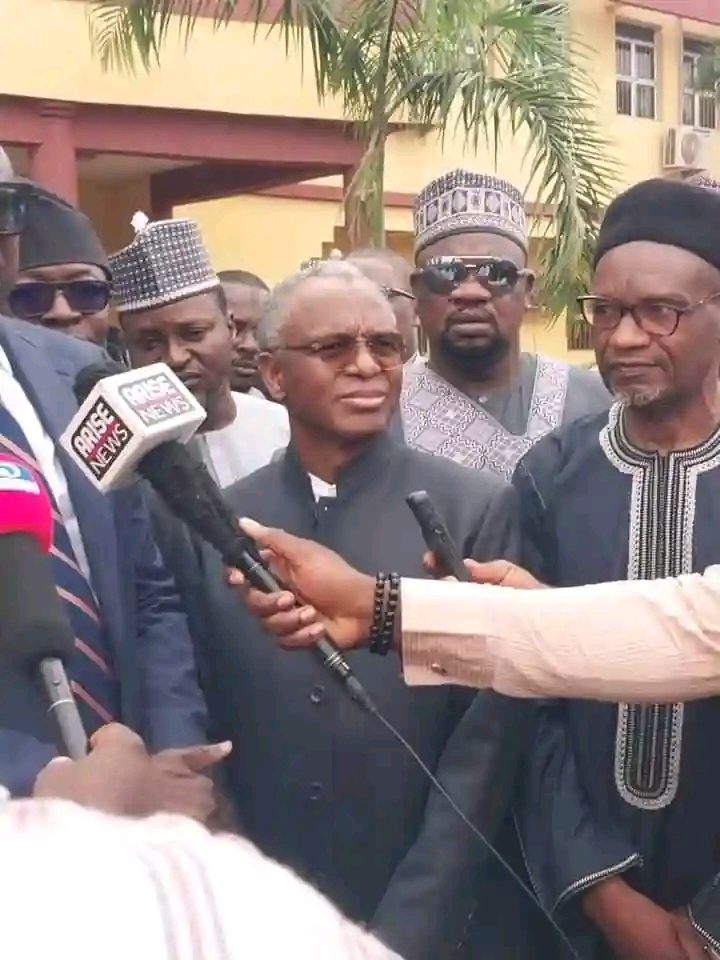
The former Governor of Kaduna State, Malam Nasir El-Rufa’i, has filed a defamation lawsuit against the Kaduna State Assembly. The lawsuit was presented today, Wednesday, at the Federal High Court in Kaduna.

El-Rufai is demanding a public apology from the lawmakers for a report they published, which he claims defamed him and his cabinet. The State Assembly’s report alleged that the former governor misappropriated over ₦423 billion during his tenure.

El-Rufai’s legal team argues that the report is both false and malicious, designed to tarnish his reputation and discredit his administration’s achievements. They assert that the allegations have caused significant harm to his personal and professional standing.

The former governor, noted for his developmental policies and efforts to improve infrastructure and education in Kaduna State, has consistently defended his administration’s transparency and commitment to public service. He maintains that the Assembly’s allegations are politically motivated and lack any substantive evidence.

The legal proceedings have drawn significant attention, with many awaiting the court’s decision on the matter. The outcome of this case could have substantial implications for El-Rufai’s political future and the current political landscape in Kaduna State.

Nigerians resort to taking loans as survival strategy amidst soaring inflation

 By Sabiu Abdullahi

A recent report by the Central Bank of Nigeria (CBN) has revealed that Nigerians are increasingly relying on loans to survive the harsh economic conditions, with consumer credit jumping by 12% to approximately ₦3.9 billion in January 2024. 

According to the CBN’s monthly economic report, the total consumer credit outstanding increased to ₦3,823 billion in January 2024, with personal loans accounting for 79% of consumer credit and retail loans accounting for 21%. 

The report noted that personal loans increased by 14.3% to ₦3,028 billion, while retail loans rose by 4% to ₦795 billion. However, consumer credit as a share of total credit from Online Data Capture Systems (ODCs) declined to 7% from 8% in the preceding month. 

The surge in demand for loans comes as the headline inflation rate hit 33.95% in May, forcing the CBN to hike the interest rate consecutively to 26.25%. 

A study by SBM Intelligence found that 27% of Nigerians across different income categories now resort to loan apps to keep up with their living expenses in the wake of record inflation. 

“The severe impact of the unyielding inflationary pressures on the daily lives of Nigerians, especially those already grappling with limited financial resources, is evident in the surge in demand for loan apps,” the report noted. 

As the cost of living continues to escalate, Nigerians are finding it increasingly difficult to make ends meet, with many resorting to loans as a survival strategy.

Malam Danmodi palliative superstores: A benevolence for the Jigawa masses

By Muhammad Attahiru

Jigawa State has always been tagged the luckiest state in Northern Nigeria in terms of getting leaders who have the state in their hearts. This statement was not further from the truth. Since the inception of this Administration led by the astute driver, Jigawa state has been once again over the radar, and the spirit of its citizens has been bashed again. 

This week, the APC administration, led by His Excellency Mallam Umar Namadi, clocks one year in office. Indeed, it was more than a proud moment not only for the APC electorate but for the entire state’s citizens, having someone who serves as the consolidator of projects abandoned two decades to date, also a unifier and visionary leader who despite the slander of all the doom prophets, they were put to shame. As a   Governor, Mal.  Namadi became the tangible symbol of the united Jigawa. 

Those conversant with state politics would realise my statement: Against all odds, the Unifier has maintained his stance on his promises before the election. His viable and economically sustained state projects were disbursed across all parts of the state with every sense of justice and fairness. 

The massive appointment of his political aides, including commissioners, Permanent Secretaries, Special Advisors, board members, and heads of various Agencies, was all evidence of his commitment to fairness without compromising his known attribute of prioritising merit over political connection.

Over the last twelve months, the administration of Mal.  Umar Namadi has recorded an uncountable number of visible and impacting projects across every sector that directly or indirectly positively affect the common man of Jigawa state.

Food security and social welfare were one area the administration of Malam Namadi took with a serious note. The constant alarm was raised by the United Nations bodies like the World Bank and the Food and Agricultural Organization (FAO) about the impending danger of food insecurity facing our countries, especially those bordering the Sahara, due to multifaceted factors of Insecurity and climate change.

Jigawa State Government initiated the food distribution Palliative, especially during the Ramadan fasting. The success story of the Ramadan feeding program was indeed commendable, considering the hardships the poor populace would have passed through during the Holy month. The subsidy was also injected into Fertilizer to boost the agricultural output of the state’s majority farmers.

The most ambitious project of all was the coveted Danmodi Super Store Palliative Project. Around N1.5 billion was injected into it to procure all forms of food and household items that would be sold by special stores across all wards and local government headquarters in the state. The items would be sold at very cheap and subsidised prices.

 The project is a public-private partnership with the reputable FinTech Company Bizi Mobile. Specially designed ATM cards would be distributed to people, and transactions for items would be made through the ATM card number. This would ensure direct remittances of payment proceeds to the state treasury and ensure no diversion or overbuying above a certain limit, allowing each individual to buy his foodstuffs without fear of hijacking by people with access or those with more money.

The Superstore project would soon be commissioned, and the CEO of the Company, Mal. Aminu Bizi, has already made the necessary preparations for the technology, tools, logistics, and personnel for the smooth implementation of the project. This would greatly help the poor citizens of the state access cheaper food items in the markets. On the other hand, the project would allow the Government to have more Data on its citizens to aid in implementing other economic, security and social programs.

If implemented, this project would again prove this Administration’s sincerity and socialist-style approach to Hayakawa emancipation. Jigawa state would be the only state in Nigeria with this very welcome system. This form of superstore has already been practised in many countries, such as Venezuela, Brazil, and China. It is a simple and effective way of ensuring citizens have access to cheaper and affordable food. It’s also a method that directly links the Government to the masses. 

This project would reduce the burden and hardship caused by the removal of the petrol subsidy. Indeed, it’s money well spent.

We wish the Jigawa state Government under Malam Namadi a successful tenure and more ideas that would help impact the Jigawa state’s common man.

Long live Mal. Umar Namadi.

Long live Jigawa state.

Long live Nigeria.

Muhammad Attahiru wrote from Dutse via habibmultilinks@gmail.com.

Nigeria’s economic revival: Drawing inspiration from the Asian Tigers

By Haruna Yusuf Abba

Nigeria, Africa’s largest economy, is grappling with severe economic challenges, including a debilitating recession, widespread poverty, and stagnant growth. Meanwhile, the Asian Tigers – Hong Kong, Singapore, South Korea, and Taiwan – have transformed their economies into high-tech, high-income powerhouses. This article explores the secrets behind the Asian Tigers’ success and how Nigeria can draw inspiration from their model to revitalise its economy.

I. Introduction

Nigeria’s economic woes are well-documented. With a shrinking GDP, rising inflation, and a volatile political climate, the country urgently needs a new economic direction. The Asian Tigers, on the other hand, have achieved remarkable economic growth and development, becoming global leaders in innovation, trade, and investment. By examining their strategies and policies, Nigeria can identify valuable lessons to overcome its current economic hardships.

II. The Asian Tigers’ Success Factors

A. Export-Led Growth

The Asian Tigers focused on export-oriented industrialisation, leveraging their competitive advantage in manufacturing and trade. Nigeria can similarly develop its export sector, particularly in areas like agriculture, textiles, and mineral processing.

B. Human Capital Development

Investing in education and training, the Asian Tigers built a skilled workforce, driving innovation and productivity. Nigeria must prioritise education, vocational training, and capacity building to enhance its human capital.

C. Infrastructure Development

The Asian Tigers invested heavily in modern infrastructure – transportation networks, energy systems, and telecommunications – creating a conducive business environment. Nigeria must upgrade its infrastructure to facilitate economic growth.

D. Economic Diversification

The Asian Tigers diversified their economies, reducing dependence on a single sector. Nigeria, too, must diversify its economy, exploring opportunities in services, manufacturing, and renewable energy.

E. Strong Institutions and Governance

Effective governance, rule of law, and institutional frameworks underpinned the Asian Tigers’ success. Nigeria must strengthen its institutions, combat corruption, and ensure transparency and accountability.

III. Nigeria’s Way Forward

A. Diversify the Economy

Nigeria must reduce its reliance on oil exports and develop other sectors, such as agriculture, manufacturing, and services.

B. Invest in Human Capital

Nigeria needs to prioritize education, vocational training, and capacity building to enhance its workforce’s skills and productivity.

C. Infrastructure Upgrade

Nigeria must invest in modern infrastructure, including transportation networks, energy systems, and telecommunications, to facilitate economic growth.

D. Export-Led Growth

Nigeria should focus on export-oriented industrialisation, leveraging its competitive advantage in areas like agriculture and mineral processing.

E. Strengthen Institutions and Governance

Nigeria must strengthen its institutions, combat corruption, and ensure transparency and accountability to create a conducive business environment.

IV. Conclusion

Nigeria’s economic revival requires a comprehensive approach, drawing inspiration from the Asian Tigers’ success factors. By diversifying its economy, investing in human capital, upgrading infrastructure, promoting export-led growth, and strengthening institutions and governance, Nigeria can overcome its current economic hardships and embark on a path of sustainable growth and development. The time for action is now.

Haruna Yusuf Abba wrote via ealistharoonyusufabba@gmail.com.

The vision of industrialization continues 

By Bilyamin Abdulmumin 

Last Tuesday, the Federal Executive Council approved several development projects. One of these projects is Malando-Wara-Ngaski Road in Kebbi State. Ngaski Local Government hosts GB Foods Africa, Africa’s largest integrated tomato paste processing facility.

Earlier this year, President Bola Ahmed Tinubu, represented by Minister of Agriculture Senator Abubakar Kyari, inaugurated the 2,400-tonne GB Foods tomato farm and concentrate factory. The project employed about 2,000 people, and another 5,000 outgrowers were trained and engaged. This is the height of impact that the industry can achieve in a state. 

This project was started during the second term of the industrious visionary leader, the current minister of budget and national planning. The project is now sealed with the firm support of the president and his successor, Dr Nasir Idris. 

The success of this project has gone a long way, vindicating one of my articles. When the Nigerians voted for Tinubu in the last general presidential election, I pointed to the imperative of voting for Dr Nasir Idris to succeed Senator Atiku Bagudu in Kebbi State. Imagine if the opposition party had secured the leadership of Kebbi State; it would have been much more difficult for both leaders to cooperate and much more challenging for the president to champion the project. Political scheming can never be overruled, even in developmental projects.

Another equally significant project undertaken by the former Kebbi State governor is the bioethanol plant. The project is also located in the Kebbi South, Danko/Wasagu local government; the project is even said to be more ambitious than the GB Food, as about 47,000 hectares of cassava are needed to supply the plant. If GB Food needs farmland of only about 1500 hectares to secure 7000 jobs, now do the math to figure out how many jobs the plant that, at full capacity, will require output of 47,000 hectares can create.  

During one of my seminar presentations, a professor decried the government’s lack of commitment to the B10 policy (a policy that envisaged the use of 10 per cent ethanol in petrol). Having the privilege of insider information, as one of the team of my supervisors is a consultant to the policy, I eased the Prof worry, explaining that the policy in Kebbi State is receiving a green light. The pilot plant has already been test run, about 5000 hectares of cassava have been cultivated, and the consultant’s hands are on the desk fishing out final torches of feasibility studies.

The rice revolution was the first industrialisation to be bagged through the Bagudu vision. The minister’s interest in industrialisation coincided with the then federal government’s interest in agriculture, so the appointment of Bagudu as chairman of the presidential task force on rice and wheat production proved to be a success story. Thanks to the mega to small-scale rice processing plants in the state, Kebbi has since become synonymous with rice production in Nigeria. One factor that points to the success of the rice revolution is the improvement of IGR in Kebbi State, which accrued from rice processing activities. When Bola Ahmed Tinubu, a successful business magnate who appeared to identify with competence, saw this uncommon performance, he could not help but delegate the responsibility of the Ministry of Budget and National Planning to the ace economist.

Industrialisation was a fit for purpose and value for money in Kebbi State, as farming was the bedrock economic activity of the state. All these industries rely on the farmers’ output to process their products. GB food processes tomatoes, bioethanol plants use cassava and sugarcane as raw materials, and rice processing plants need paddy rice.   

Nevertheless, dear Minister, while the success of the GB Foods tomato and rice industries can never be overemphasised, similar achievements need to be replicated in the bioethanol sector (the pace of bioethanol development seems to progress slowly), ensuring your continued vision of diversification of Kebbi’s industrial base.

Governor Fintiri and market development 

By Zayyad I. Muhammad 

In systems thinking, infrastructure and social developments don’t occur in isolation; projects and programmes are built using a series of interconnected systems that complement each other’s purposes and functions. Governor Fintiri is applying this approach to his development programmes, projects, and policies.

A typical example is the modernization of the Jimeta Shopping Complex, which aims to connect its purpose and functions with those of the new flyover at the old Mubi Roundabout while also providing a befitting shopping complex at the centre of Jimeta City for economic and aesthetic development as part of the urban renewal programme.

The new flyover at the old Mubi Roundabout will connect travellers to Jimeta’s economic activities and natural beauty. At one end, it will lead to the Gerio Swamp and the historic Jimeta Bridge over the River Benue, offering a glimpse of the area’s natural charm. At the other end, it will provide access to the Jimeta Modern Shopping Complex and ease traffic within the city—economic and social development knit together.

The new Jimeta Shopping Complex will feature a world-class, 24-hour, one-stop shopping mall with high-rise buildings. The redevelopment plan of the complex includes a diverse range of shops, boutiques, arcades, food courts, cinemas, banks, smart parking facilities, Wi-Fi connectivity, interactive displays, and a customer service desk.

Adamawa’s three senatorial zones each boast important urban and rural markets. In the southern zone, spanning from the Ganye grain market to the historic Mayo Belwa market, there are connections to the central zone’s Ngurore cattle market, the Jimeta modern market, the new Jimeta shopping complex, the Jimeta old market, the Yola-town market, and the Hong agriculture market.

In the northern zone, notable markets include the Mubi International Cattle Market, Michika Market, and various weekly markets. Plans are underway to transform these markets into modern trading hubs catering to local, national, and international trade. The markets in the northern zone and the Fufore markets serve as crucial centres for traders from Cameroon, Chad, and several Central African countries.

The redevelopment of the Mubi International Market is already underway, with plans to rebuild and remodel the burned Yola Town Market. Additionally, other major markets across Adamawa State are slated for modernization. The markets will undergo systematic redevelopment following Governor Fintiri’s government’s series-system development process.

Governor Fintiri’s comprehensive plan for market development focuses on revitalising economic activities across the state by introducing modern markets and shopping centres. This initiative aims to create vibrant commercial hubs catering to diverse needs. 

Central to the plan is a robust market redevelopment policy, streamlining bureaucratic processes and attracting local and international investors. Job creation is prioritised, with the goal of stimulating employment opportunities through market revitalization and new commercial spaces.

The policy also emphasises sustainability, promoting private sector participation to diversify revenue streams and reduce dependence on the dollar. Overall, Governor Fintiri’s vision for market development encompasses economic transformation, community empowerment, and a prosperous future for the state.

Zayyad I. Muhammad writes from Abuja via zaymohd@yahoo.com.

EFCC returns stolen assets to Kano, Enugu

By Uzair Adam Imam

The Economic and Financial Crimes Commission (EFCC) has made a significant breakthrough in the fight against corruption, returning 14 properties to the Enugu State government and 324 houses to Kano State pensioners.

The properties, valued at millions of naira, were recovered through diligent investigation and prosecution.

The Enugu State properties were formally handed over to the state government at the EFCC headquarters in Abuja, while the 324 houses were returned to Kano State pensioners who had been defrauded of their benefits.

EFCC Chairman, Ola Olukoyede, commended the Enugu State government and Kano State pensioners for their cooperation throughout the investigation and recovery process.

He assured that the EFCC would continue to work tirelessly to recover stolen assets and bring corrupt individuals to justice.

Enugu State Governor, Peter Mbah, expressed gratitude to the EFCC for its efforts in recovering the stolen assets and praised President Bola Tinubu for his prompt action in ceding the assets to the people and government of Enugu State.

This milestone marks a significant achievement in the fight against corruption and asset recovery, demonstrating the EFCC’s commitment to ensuring that corrupt individuals are held accountable and that stolen assets are returned to their rightful owners.

Save your little income and invest it: A call for students

By Salihi Adamu Takai

The personal anecdote of Robert T. Kiyosaki’s Rich Dad and Rich Dad’s Guide to Investing is alluring. The author’s insatiable appetite for investment doesn’t reveal excessive love for money. Instead, it’s just a guide for future students’ financial capacity. His voracious appetite for investment started when he was based in Huawei and met his friend and his Rich Dad. 

Robert was, of course, a fortune student who graduated from college and got a job with the Marine Corps as a pilot. He was able to survive on $12,000 annually. However,  in 1973, his mindset changed, and he became reluctant to continue working as a self-employed and government employee.

Robert believed that if he didn’t become an investor,  he would continue to be poor like his Poor Dad, who ended up with a paycheck-to-paycheck life. Eventually, he was guided by his Rich Dad. He became a sophisticated investor as he planned it — learning from his Rich Dad.

Investments vary as the business does. Since Rich Dad refused to let Robert invest in his business due to a lack of funds, it taught him that before investing with people, ensure you are financially and educationally equal to them. Robert didn’t have the minimum amount of $35,000 to invest in Rich Dad’s business, which disqualified him.

Therefore, as a university student, you must be open-minded and never limit your thoughts on becoming a self-employed or government employee (working with the government!). Try to be optimistic about money and believe that it’s simple to invest.

When you think that money is difficult to get, it will be difficult for you to become rich. Save your little income to invest it, starting a business with an open mind.

Salihi Adamu Takai wrote via salihiadamu8888@gmail.com.

Customs CG visits Huawei HQ, Shenzen Lantan Port to strengthen modernisation efforts 

By Sabiu Abdullahi

The Comptroller-General of Nigeria Customs, Adewale Adeniyi, led a team to the Headquarters of Huawei in Shenzhen, China, on Thursday, May 9, 2024, to explore opportunities for the Nigeria Customs Service Trade Modernization Project.

The visit was part of the CGC’s official trip to China for the 6th Global AEO Conference, held in Shenzhen from May 8-10, 2024. 

During the visit, CGC Adeniyi stated, “We are delighted to associate with the Global Leader Technology Services through the Team of Trade Modernization.”

This follows the Nigeria Customs Service’s expression of interest in deploying Huawei’s latest products for its trade modernisation project during the Huawei Connect 2023 in Shanghai last October. 

The CGC urged Huawei’s leadership to sustain their digitalisation services to the NCS and sought their support to collaborate with the Nigeria Customs Service on its transformative journey.

Xujing Xu, Huawei’s Vice President of Smart Transportation, welcomed the delegation and expressed confidence that their collaboration will benefit all parties involved, noting that “the foundational work for this transformation is already underway.” 

The TMP Chairman, Saleh Ahmadu, praised Huawei for living up to expectations in delivering its mandate under the Trade Modernization Project Limited.

He appreciated the support of the CGC and his management team towards the success of the NCS Trade Modernization Project. 

The CGC and the Trade Modernization Project team also visited Lantan Port to witness the level of automation and technological solutions provided by Huawei and other tech partners.

Also, Huawei organised a training program on Trends and Digital Solutions for Customs officials and the Trade Modernization Project team, focusing on equipping officials with the necessary skills to navigate the digital landscape of modern trade.

A separate training on Business Management, themed “The Journey of Huawei’s Continuous Growth”, aimed to enhance the capacity of officials to manage trade facilitation in Nigeria.