Business

You can add some category description here.

Confusion as CBN does not know quantities of new naira notes

By Uzair Adam Imam

The Central Bank of Nigeria (CBN) says it does not know the quantities of the new naira notes it printed and released for circulation in the country.

The CBN Deputy Governor, Aisha Ahmad, made this disclosure when she appeared before the House of Representative on Thursday.

Ahmad, who represented the CBN Governor, Godwin Emefiele, was before the lawmakers to brief them on the apex bank’s cashless policy and cash withdrawal limits.

The Daily Reality gathered that the lawmakers had on Wednesday requested that Ahmad should appear before the House since Emefiele was outside the country for health issues.

Ahmad was asked by a lawmaker, Sada Soli, about the quantities of the new notes printed due reason to non-availability of the notes days after they were released to the public.

But Ahmad, while responding to his question, said she does not know the quantities of notes printed by the apex bank.

Agitations against cashless policy insincere – Sanusi

By Uzair Adam Imam

A former Central Bank (CBN) governor, Sanusi Lamido Sanusi ll, said the new cashless policy by the Central Bank of Nigeria will help mitigate the lingering issue of corruption by some politicians during elections.

Sunusi also urged the general public to ignore the rain of complaints against the policy, reiterating that the policy would discourage rigging.

He disclosed this Sunday in a short video that went viral, adding that the policy dates back to 2012 when he was the CBN governor.

He said: “The cashless policy started in 2012 when I was governor of the CBN with Lagos and later spread to five states.

“The explanation we gave that time is that the world is evolving and people shouldn’t be carrying cash around, as such the introduction of cashless policy to ease transactions.

“At first people protested against it but they later accepted the policy and started using the different payment channels at restaurants, shops and other places.

“I want to advise people to be careful with what politicians are saying about the cashless policy because it does not favour them.

“They spend four years without delivering on their mandates and later return with huge sums of money thinking they can bribe the security agencies and the electoral body.

“What the policy entails now is that a politician who wants to bribe the security agencies or the electoral body, he/she must pay it in the persons’ bank account where the transaction can be traced.

“Therefore I urge people to embrace the policy as part of efforts to entrench democracy and also make rigging difficult for politicians,” he added.

Women miners decry molestation and abuse at mining sites, seek government intervention

By Ahmad Deedat Zakari

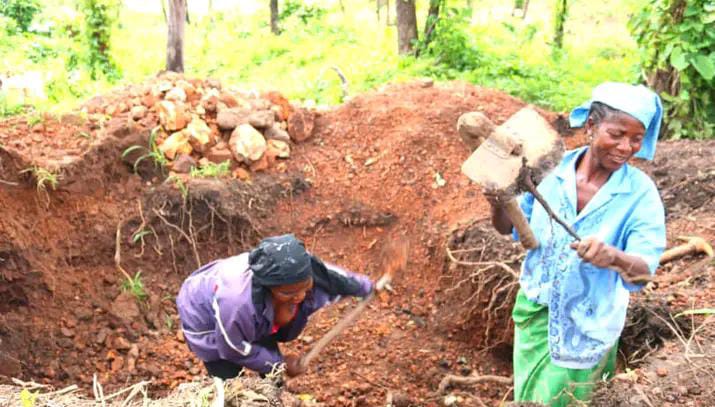
Women miners in Nigeria under the auspices of Women in Mining in Nigeria (WIMIN), decry molestation and abuse by male colleagues at mining sites in the country.

The Founder and National president of WIMIN, Janet Adeyemi made the disclosure at Lokoja on Sunday, December 11, 2022 and sought the intervention of the federal government to tackle the menace.

Ms Adeyemi while speaking at a capacity building workshop for artisans and small-scale miners in Lokoja, said the abuse of women at mining sites have become rampant.

She noted that women in mining have become subjects of constant molestation, are often cheated, over-laboured, underpaid, and even raped by male colleagues and staff of the mining industries.

Adeyemi who was represented by the Programme Coordinator of WIMIN, Ms Dolaraine Dennis, said that the opportunities for women in mining are enormous and they include: operators, engineers and quarry fields etc.

Adeyemi claimed that research findings have shown that 73 per cent of assault against women are verbal.

“73 per cent of assaults against women are verbal.”she said

In the remark of the Kogi State Commissioner For Women Affairs, Hajia Fatima Buba, she applauded the organisers for their support in building the capacity of women in the mining sector in the state.

CBN reduces cash withdrawal to N100,000 weekly, introduces new charges 

By Muhammadu Sabiu

As a step toward implementing the naira redesign strategy, the Central Bank of Nigeria, CBN, has released a new cash withdrawal policy that states withdrawals over N100,000 and N500,000 will now be subject to 5% and 10% fees, respectively.

The apex bank also said that going forward, only denominations of N200 and lower will be accepted at ATMs.

All Deposit Money Banks, other financial institutions, primary mortgage banks, and microfinance banks received a letter on Monday from the director of banking supervision at the Central Bank of Nigeria (CBN), Haruna Mustafa.

A third-party check for more than N50,000 would not be accepted for payment, per the letter cited with the BSD/DIR/PUB/LAB/015/069. The daily cap for over-the-counter, OTC, and ATM withdrawals is N20,000.

The letter reads, “The maximum cash withdrawal over the counter (OTC) by individuals and corporate organizations per week shall henceforth be N100,000 and N500,000, respectively.

“Withdrawals above these limits shall attract processing fees of 5% and 10%, respectively; third-party cheques above N50,000 shall not be eligible for payment over the counter, while extant limits of N10,000,000 on clearing cheques still subsist; the maximum cash withdrawal per week via Automated Teller Machine (ATM) shall be N100,000 subject to a maximum of N20,000 cash withdrawal per day; Only denominations of N200 and below shall be loaded into the ATMs; The maximum cash withdrawal via point of sale (PoS) terminal shall be N20,000 daily and in compelling circumstances, not exceeding once a month, where cash withdrawals above the prescribed limits are required for legitimate purposes, such cash withdrawals shall not exceed N5,000,000 and 10,000,000 for individuals and corporate organizations.”

When humans turn animals: a cruel, evil treatment of animals at ‘Yanshanu abattoir, Jos

By AbduIlslam, Abdulsalam, Rukaiyah, & Rabiatu

This year, Sentient Media reveals that every 60 seconds, one animal suffers abuse. One afternoon, I counted 483 drops of blood on the ground and lost counting to empathy of, what blood is it? But what really transpired?

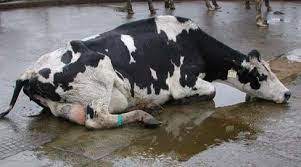
A wounded cow (with blood flowclose to the eye) was being paraded to the slaughtering ground which is about a mile and half (sometimes farther) from the livestock’s market of ‘Yanshanu in Jos. Added to the feeble state of this animal was respiratory mucosa effect, yet a reckless herder (sometimes a guy/boy) hit the cow with a goad on the eye wound because at some point, the cow didn’t move or moved slowly (its front legs were tied together) –immediately the cow fell to the ground due to the brutal and merciless hitting. This was repeated until the destination was reached. Such oppression is irrefutably done daily. This is simply because it is an animal! What a pity.

This scenario conforms to the argument of Peter Singer, author of Animal Liberation that “it would first be necessary to transform people’s attitude towards animal” Over 40 years ago, animal abuse was referred to as intentional act which causes pain to the animals. It sometimes brings too much suffering and even death. It comes in behaviors like beating, starving, choking etc., however, these maltreatments are rationalized in the ill and senseless feeling of ‘they’re animals’. But those acts beat conscience.

Yanshanu Livestock Market is a place where buying/selling of livestock are made daily. However due to its commercial string, most of the activities of dealers inflict severe suffering on the animals. Malam Suleiman Ahmad, Chairman Conflict Resolution ‘Yanshanu Market defended tucking livestock in a crevice space all in the name of transportation from villages to the market or from market to some destinations “we’re here for profits, [so] creating such fantasized comfort for animals will cost much [and] I know people don’t want meat costly.”

And on the issue of market herders inflicting unnecessary pain on the livestock while parading them out to eat or when marching them to the slaughtering ground, Malam Suleiman agreed that the herders sometimes overdo-it “let me be clear on something, due to unrest in our villages, they [Fulanis] protect their animals with several traditional methods and these sometimes remain even after sale – that’s why we use leather [plastic] to choke them when they refuse to stand up. However, we caution our boys on mishandling the animals as it is even un-Islamic and we put them in check with sanctions, but don’t forget, animals don’t understand you, to the good ones, it is the only language they understand, plus there are stubborn ones amongst them.”   

Admittedly, the African methods of animal husbandry values the goad, but the question here is, is it the most effective means of communication to animals? The answer is a capital No! This powerful oppression surely affects the health conditions of the livestock, so Malam Alkasim Ishaq, a vetinary outside the ‘Yanshanu Market condemned the recklessness reflecting that those keeping pets starve, let them stray and the cruel soul even beat, not to even mention some of the heartless dealers. He opined; “these people [dealers] are just here for business and time is money for them. Often, we vets around condemn their cruelty towards animals but you know our society [you become a black sheep for trying to better the system]. However, those hard beating and unreasonable tying affect the overall psyche and health of the animals.”

Whilst the vet expressing his concern, an individual who identified himself as member of Nigeria Livestock Association, Plateau State branch, lamented about his plight on unreasonable tying of animals and torture, because it stops the blood flow which explains the animals’ awkward behaviors sometimes.

It’s expected that such vast cruelty by humans should’ve been curbed by the government, but Malam Suleiman lamented that bad practices should’ve checked with government and Non-governmental organizations’ intervention. “We have written letters to the government but no response, so we can only do what is within our reach. In serious nations, they have abattiors and pay workers, no reckless beating and rush to make much money as we do.” He lamented.

However, going by the global animal husbandry, the vet and his friend pointed out that reforms need to start from the ordinary (not learned) members that made up of the animals’ bodies and organizations. And Mustapha Suleiman, a Vetinary Medicine student of Usman Danfodio University said; denial to understand the psychological condition of these guys [as he preferred to call animals] is what brought about abuses in our localities. He believed that if we pay good attention, we wouldn’t need to inflict pain on the animals with our traditional techniques.

But, it’s worrisome what the harshness of the herders on the animals is costing the host community – ‘Yanshanu. The livestock market is located in full residential area. Often, the maltreatment gets the animals wild – they end up going chaotic for about for over half an hour, smashing and aiming at everyone.

This discriminating treatment persists because humans fail to realize other living things’ response to stimuli – sometimes they’re feeble, they like, dislike; they feel hunger, anger, sick, even want to rest, but only when all these are understood. We should know that it is wrong to inflict suffering on other beings, even if not our own species. But attractive legislation on the subject matter is a priority.

AbduIlslam Kamaldeen Muhammad writes from Bayero University, Kano, together with

Abdulsalam Zikirullahi (SS3 Class) Alhaqq Comprehensive Private School Jos,

Rukaiyah Muhammad (SS2 Class) Alhaqq Comprehensive Private School Jos,Rabiatu Abubakar (SS2 Class) Alhaqq Comprehensive Private School Jos.

Buhari unveils new naira notes

By Ahmad Deedat Zakari

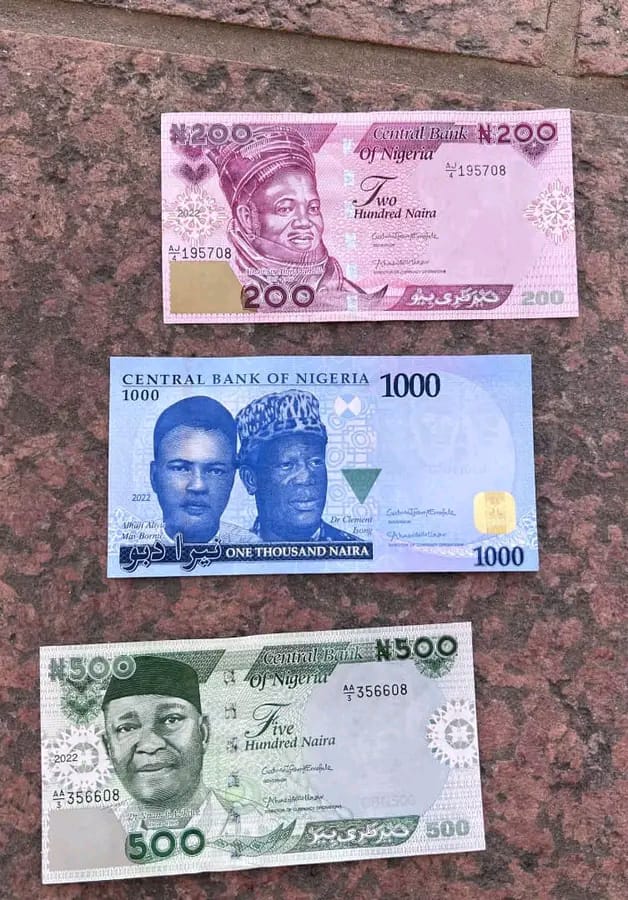
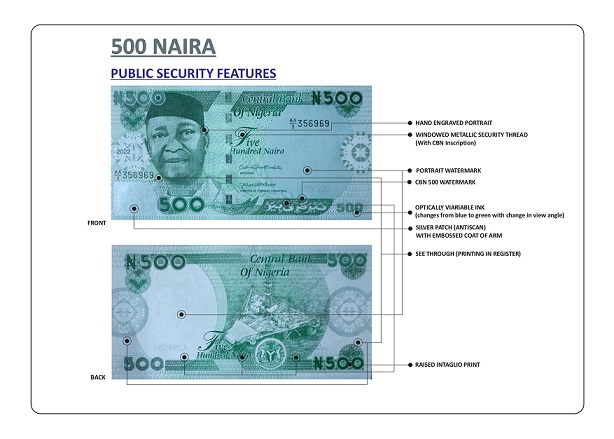
President Muhammadu Buhari has unveiled the redesigned naira notes in Abuja.

The President unveiled the new naira notes on Wednesday morning at the meeting of the Federal Executive Council (FEC ) at the state house, Abuja.

The Governor of the Central Bank of Nigeria (CBN), Godwin Emefiele was also in attendance during the unveiling ceremony.

While addressing the FEC members after the unveiling ceremony, the CBN governor debunked the rumours that the early unveiling of new notes is a means to target any Nigerian.

He therefore appealed to the public to refrain from perpetuating such rumours.

He added that the CBN will intensify the monitoring process and interrogate the process of withdrawals.

He stated that there will be strict restriction on the volume of cash that people can withdraw over the counter, as it works with the EFCC to monitor the purpose of any heavy transactions.

Naira redesign: CBN orders banks to work on Saturdays

By Muhammadu Sabiu

In order to allow customers to return old naira notes, the Central Bank of Nigeria has ordered commercial banks around the nation to open on Saturdays through January 31, 2023.

The N200, N500, and N1,000 banknotes will be redesigned by the Central Bank of Nigeria (CBN) and released by December 15, 2022.

The present notes will continue to be legal money until January 31, 2023, when they will no longer be, according to CBN Director of Corporate Communications Osita Nwasinobi, who was speaking at the CBN exhibition on Thursday in Ilorin, the capital of Kwara State.

Represented by the acting Director of Corporate Communications, CBN, Akpama Uket, the director said, “They [the banks] have also been instructed to receive the existing banknotes beyond the threshold stipulated by the Cashless Policy without charges to customers.

“Consequently, you must return all the current N200, N500, and N1,000 banknotes to your bank before the expiration of the deadline.”

Questions on Naira redesign

By Abdulhalim Ishaq Ringim

Yes, there’s about N2.73 trillion outside bank vaults. This figure represents 85% of the N3.23 trillion in circulation. However, it only represents 6.5% of more than N49 trillion that is in circulation.

Now, let’s consider Nigeria’s unbanked population which stands at 64 million according to World Bank’s “The Global Findex Database 2021: Financial Inclusion, Digital Payments, and Resilience in the Age of COVID-19” report.

What financial intelligence, as a matter of specificity, does the CBN have regarding the magnitude of the money circulating within this highly populous unbanked system. If we were to assume all the N2.73 trillion is in the hands of these unbanked population, then the amount of money on a per capita basis would be about N42,000. Is that too much?

But we all know this assumption is far from reality because the banked population also hold cash for transactionary and precautionary purposes(as in the case of emergencies). So let’s extend our assumption by adding 50% of the banked population to the unbanked population and let the final figure be the number of people who hold cash either because they are unbanked or because of other purposes as transactions and precautions. The per capita cash amount would reduce to N28,000. Is that also too much?

For the hoarding claims, economically speaking, what is the incentive of hoarding cash in Naira considering the continuous devaluation and inflationary trend that has been wiping the value of the Naira against the dollar when there are various hedging options available? Does the CBN have any tentative intelligence that suggest massive hoarding or is this just another trial and error policy?

But let’s also assume there’s indeed hoarding and some people are holding suspicious money. Have the CBN thought of the possibility that the hoarders might now be forced to consider hedging options by flooding the market with money in exchange for hedging-compatible commodities? Have they considered the inflationary tendencies of such an eventuality? Check Dr. Adamu Tilde’s most recent post to appreciate the happening in real world markets. Is the recent sharp rise of the dollar value also a consequence of such tendencies?

The risk of counterfeiting has always been present. The CBN confiscated N64.7 million and N56.8 million in 2019 and 2022 respectively. Compared to the money in circulation, are these figures significant enough to evoke the need for a currency redesign?

If it is for the purpose of managing inflation and ensuring the CBN contractionary monetary policies become more effective, then let’s assume they succeed in mopping up most of the cash outside banking vaults. Is it increased money circulation that actually causes inflation or increased money supply? Isn’t the CBN culpable in the expansion of money supply through their unhealthy tendencies of printing money for government spending via ways and means? What are they doing about the money supply? What is the government also doing about deficit spending and the projected budgetary deficit for the coming year?

Is our inflation strictly a consequence of the Demand-pull Effect(caused by an increase in money supply or credit with commensurate increase in demand for goods and services and resultant price increases) or is it a consequence of a combination with the Cost-push Effect as a result of increase in Oil prices and other commodities(mostly as a result of global events plus local events e.g insecurity, oil theft, floods etc) that is gradually rippling and causing increase in the prices of production process inputs? Does the CBN also not think that the hike in the prices of commodities as a result of the consequence of hedging(possibility of which has been painted by Adamu Tilde in his recent post) would also contribute in aggravating the Cost-push as a result of hikes in production process inputs?

What is the CBN tackling exactly?

Abdulhaleem Ishaq Ringim writes from Zaria.

Jack Dorsey, ex-Twitter founder, invents another SM platform

By Muhammadu Sabiu

Jack Dorsey, the creator of Twitter and former CEO, has introduced a brand-new social networking platform called “Bluesky.”

This is only a week or so after business tycoon and investor Elon Musk bought Twitter.

Within two days of the announcement, over 30,000 individuals had already signed up for the new app’s beta testing, which is still in its testing phase.

According to reports, Bluesky allows designers the opportunity to build independently from platforms and developers while also giving users authority over their algorithms, allowing them to choose the experience they want.

On April 14, 2022, Musk started the acquisition of Twitter and completed the deal on October 27, 2022.

MURIC to CBN: Make sure you inscribe Ajami text on Naira notes

By Uzair Adam Imam

The Muslim Rights Concern (MURIC) made a passionate plea to the Central Bank of Nigeria (CBN) to inscribe the Arabic text, Ajami, on all naira denominations just as they had been.

The MURIC Director, Prof. Ishaq Akintola, made this disclosure in a statement he made available to journalists.

Professor Akintola said the Muslim body supports the move by the Central Bank of Nigeria to redesign the naira notes.

However, he said, “the Arabic inscription, known as Ajami, must be inscribed on all the naira denominations.

“With the proviso that all the denominations must contain Arabic inscriptions just as they had been before, Arabic Ajami was conspiratorially and unjustly removed from some denominations. “The removal provoked Muslims and caused division within the country. Only its return to all denominations can heal the wound,” Akintola said.