Admin

A reminder to all Muslims around the world

By Amara Sesay

All praise is due to Allah, the Most High, the Most Exalted. We seek His peace and blessings upon the last Prophet sent to humanity, Muhammad (may the peace and blessings of Allah be upon him), his noble household, his companions and all those who follow in their footsteps until the Last Day.

“Has not the time come for those who have believed that their hearts should become humbly submissive at the remembrance of Allah and what has come down of the truth? And let them not be like those who were given the Scripture before, and a long period passed over them, so their hearts hardened; and many of them are defiantly disobedient. Know that Allah gives life to the earth after its lifelessness. We have made clear to you the signs; perhaps you will understand.” (Surah Al-Hadid, 57:16–17).

O Beloved Muslims, Has Not the Time Come? Beloved brothers and sisters, reflect for a moment—are we content with the state we find ourselves in today? How can we exchange a seat of honor for one of humiliation? Are we not the same people who pray at least five times daily, asking Allah: “Guide us to the straight path”, yet so easily stray toward the ways of those who have earned His anger? How can we abandon the mosque, the remembrance of Allah, and the noble mission entrusted to us, only to imitate those who oppose divine guidance? Are these the actions of Ahl al-Albab (the people of understanding)? Do they reflect the character of Ibadur-Rahman (the servants of the Most Merciful)?

Will such deeds bring us the comfort of angels at the time of death, or the comforting words Angels in the darkness of the grave? O Muslims, Do You Not Know Your Worth? You are the most honored of all peoples. Allah has chosen you to lift humanity from servitude to men into the worship of the ONE TRUE CREATOR of men. You were sent to liberate humankind—from the narrow confines of this world to the vastness of this life and the Hereafter.

For this noble mission, Allah has blessed you abundantly: He gave you the Qur’an, a book so mighty that if it were sent down upon a mountain, it would crumble from humility. He sent you Muhammad (may the peace and blessings of Allah be upon him)—a mercy to all creation. And the best of all created beings. Can there be a better role model for you? He granted lands rich in resources and strategically placed across the world.

He gave you population, wealth, heritage, and faith—blessings that many envy. But know, O servants of Allah, that these are trusts (Amanah) for which you will be questioned on the Day of Judgment. So fear Allah and let each soul reflect on what it has prepared for tomorrow. Truly, the convulsion of the Final Hour is a terrible thing!

O My Sister in Faith! You are the cornerstone of this Ummah’s future. You owe the world your purity, your steadfastness, and your sacrifice in raising a generation that will save mankind from despair and darkness. Do not be deceived by the false glitter of this fleeting world. The world praises you only when you abandon your modesty—but remember the deception of Shaytan toward your mother Hawwa (Eve). She lived in pure freedom until Shaytan promised “more,” only to strip her of dignity. Do not trade the honour of Maryam (Mary) for the cheap attention of those who see women as objects. Allah did not create you to be consumed and discarded—you were created to nurture faith, justice, and light. So fear Allah and pay attention to the kind of deeds you are sending forth for the Hereafter. Indeed, the convulsion of the Hour is a terrible thing.

O Believers, Remember your accountability know that every one of us will be questioned by Allah—about our life and how we spent it, our youth and how we used it, our wealth and how we earned and spent it, and the blessings we so often take for granted. “Then you will surely be asked that Day about pleasure.” (Surah At-Takathur, 102:8).

Will we then be grateful servants—or are we among the heedless who allowed this world to blind them from the Home of Eternal Bliss? “It [Paradise] is not [obtained] by your wishful thinking or by that of the People of the Scripture. Whoever does a wrong will be recompensed for it, and he will not find besides Allah a protector or a helper. And whoever does righteous deeds, whether male or female, while being a believer—those will enter Paradise and will not be wronged [even as much as] the speck on a date seed.” (Surah An-Nisa, 4:123–124).

The Promise of Allah Is True “If only the people of the cities had believed and feared Allah, We would have opened upon them blessings from the heaven and the earth; but they denied [the messengers], so We
seized them for what they were earning.” (Surah Al-A‘raf, 7:96).

Even amidst the trials facing the Muslim world—humiliation, oppression, poverty, and spiritual confusion—the promise of Allah remains true. The pious will inherit the earth, and the believers will rise again to a state of dignity, security, and leadership. The problem is not with the promise, but with the promised—all of us. If only we could temper our love for this fleeting world, conquer our fear of death, and return to Allah in sincere repentance—we would find Him Most Forgiving, Most Merciful. “O you who have believed, bow and prostrate and worship your Lord and do good that you may succeed. And strive for Allah with the striving due to Him. He has chosen you and has not placed upon you in the religion any difficulty. [It is] the religion of your father Abraham. He named you ‘Muslims’ before and in this [revelation], that the Messenger may be a witness over you and you may be witnesses over mankind.” (Surah Al-Hajj, 22:77–78).

“O you who have believed, persevere and endure and remain stationed and fear Allah that you may be successful.” (Surah Aal-Imran, 3:200). The Final Word, “And Our word has already preceded for Our servants, the messengers, that indeed they would be those given victory, and indeed Our soldiers will be those who overcome. So leave them for a while and see, for they are going to see. Exalted is your Lord, the Lord of might, above what they describe. And peace be upon the messengers. And praise to Allah, Lord of the worlds.” (Surah As-Saffat, 37:171–182).

O Muslims—return to Allah before death returns you to Him. Awaken your hearts, renew your faith, and rise to the honour Allah has destined for you. Hold fast to the rope of Allah together, for He is your Protector—and excellent is the Protector, and excellent is the Helper. May Allah revive our hearts, unite our Ummah, and make us among those who hear the reminder and follow the best of it. And the final word is: All Praise is due to Allah, Lord, and Nourishers of everything that exists in the Universe. And may the peace and blessings of Allah be upon the Messenger, his household, his companions, and all those who followed them on the right path.

Fayose releases evidence accusing Makinde of diverting ₦50bn FG funds for Ibadan explosion victims

By Anwar Usman

Former Ekiti State Governor, Ayodele Fayose, has shared evidence proving that Oyo State Governor, Seyi Makinde, received N50 billion from the federal government led by President Bola Tinubu.

According to Fayose, the money was approved as emergency support after the deadly explosion that occurred in Ibadan in January 2024.

Governor Makinde had earlier denied this accusation and challenged Fayose to provide proof.

Sequel to that, Fayose released the documents and claimed that only N4.5 billion from the funds was given to people affected by the explosion.

He alleged that the remaining money was used to support Makinde’s alleged plan to run for president.

In a statement signed by Fayose said, he made the documents available to public so Nigerians could decide for themselves whether the Oyo State Government has been truthful.

Fayose also dared Makinde to take legal action against him, while insisting that there are records showing that other financial support sent to Oyo State by Tinubu’s administration was never disclosed to the public.

More over, Fayose claimed he has documents revealing the true Internally Generated Revenue (IGR) of Oyo State, which he said is different from what the governor has publicly stated.

The statement in part reads, “Meanwhile, only N4.5bn was released to victims of the Ibadan Explosion. Rather, he diverted this fund and many others to his Presidential ambition, which is the reason for the crisis in the PDP and his attacks on President Bola Ahmed Tinubu and his government.‎‎

“Also, there are documentary evidences on the actual Internally Generated Revenue (IGR) of Oyo State, as against Governor Makinde’s claim, but we will keep our gunpowder dry for now. My name is still Ayo Fayose, I don’t say what I can’t prove.”

Zamfara police repel armed bandits’ plotted attack on Maru

By Sabiu Abdullahi

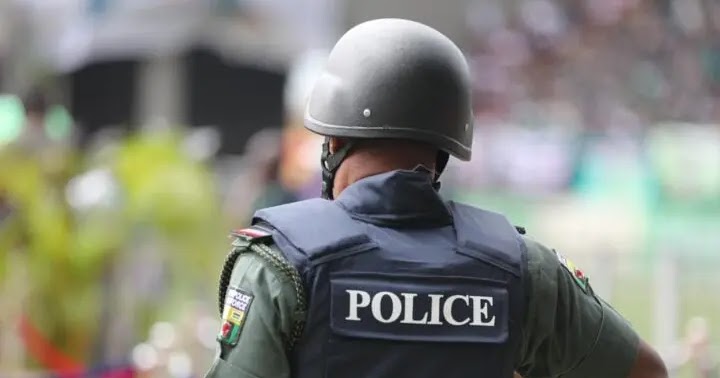
Zamfara State Police Command has successfully thwarted an attempted invasion of Maru metropolis by armed bandits who reportedly planned a mass abduction in the early hours of Sunday.

The Command’s Public Relations Officer, DSP Yazid Abubakar, disclosed this in a statement on Sunday.

“Acting on timely intelligence, a joint security team comprising the Police, Military, Community Protection Guards, and Vigilante Groups swiftly engaged the attackers, forcing them to retreat with suspected gunshot injuries. No casualties or abductions were recorded,” the statement read.

It added, “However, Security has since been reinforced in Maru and the surrounding areas.”

The State Police Commissioner, Ibrahim Maikaba, commended the professionalism of the operatives and assured residents of the Command’s dedication to protecting lives and property.

He also called for continued public cooperation to enhance security.

From TikTok to police cell: Borno’s crackdown on civic dissent

By Abdulsalam Alkali

Haruna Muhammad, known on the streets of Maiduguri as ‘ABALE BORNO’, had always chased greener pastures. His journey from his hometown to the bustling Nigerian capital, Abuja, was a familiar blur of hope and hardship. For a long time, he sold apples on Abuja’s streets, dreaming of the day he could return home to his mother and family.

When the month of Ramadan arrived, Abale felt a pull stronger than any market stall could offer. “I travelled from Abuja to Maiduguri, my heart light with the thought of sharing Eid al-Fitr with my loved ones. The journey was long, but the anticipation of reunion kept my spirits high”. Abale recounted with tears.

Back in Maiduguri, Abale slipped into his usual routine, posting short videos on TikTok. ‘’I voiced out my neighbourhood’s frustrations over an unfinished road project and the dilapidated Wadiya Primary School in Gomari Kostin’’ Abale stated. Residents slogging through potholes and the school’s crumbling walls quickly garnered attention.

One morning, seeking a quieter spot to rest during the Ramadan fast, Abale spread his mat under a lone tree inside the school, where he had earlier raised concerns about its dilapidated condition, offering some respite to the neighbourhood. As he lay there, three men approached—a Civilian Joint Task Force member and two policemen in traditional kaftans. “I felt relaxed even after seeing them, as I never thought the videos I made could trigger such a response from security,” Abale recounted.

While in Police Custody

“I was sceptical and confused about my arrest. I was first taken to the G.R.A Police Station, where I was temporarily detained until the Commissioner of Police, now-retired Yusuf Muhammad Lawan, arrived and ordered my transfer to the CRACK Division’’ Abale stated. Crack Division of the Nigeria Police is a unit specialised in tackling armed robbery, theft, and other capital offences.

“While in custody, I was denied access to my phone. I begged the policeman at the counter to help inform my mother. He agreed but charged one thousand naira for a call that lasted less than a minute,” Abale recalled.

At the CRACK Division, “I was informed that my offence was criticising the state government on TikTok, and I was arrested by ‘orders from above.’ There was no proper explanation. I was subjected to a thorough interrogation by scores of policemen, all asking the same question repeatedly: ‘Who is sponsoring you to attack the government?’ They took my phone, tripod, and microphone, searched them, but found nothing. The disappointment on their faces was visible,” he stated.

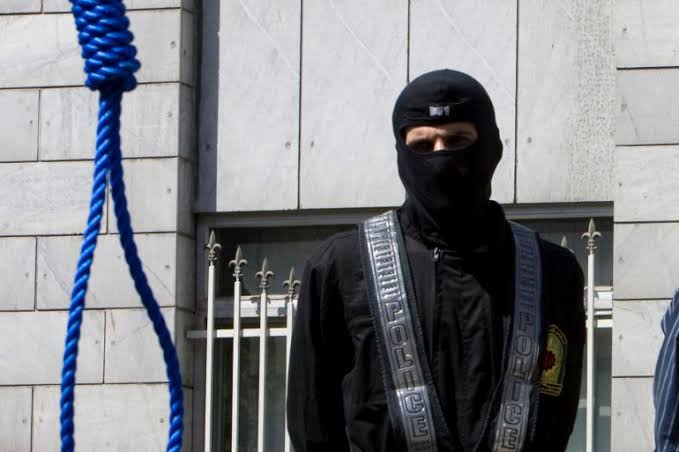
Abale recalled being treated like a criminal for expressing his community’s frustrations. “A policeman threatened my mother, telling her I was a criminal who would be jailed for no less than 20 years.” He was held for six days, despite laws requiring that an accused person be charged in court within 24 hours, or 48 hours if no court is within proximity, as stipulated by section 35 of the Nigerian Constitution. 

Abale had not initially engaged legal services. “However, a human rights lawyer, Hamza Nuhu Dantani, came to me. He was God-sent.” Abale stated

The Court Case

Abale was charged at Magistrate Court Number 2, popularly known as ‘Koton Madam,’ in Maiduguri. However, the court was in recess, and the case was referred to another magistrate. “The court found no significant reason for my arbitrary detention, and I was released,” Abale said.

Legal Struggle

After his bail was granted, Abale returned to Abuja to recover from the losses and expenses caused by his detention. However, the case was continuously adjourned. “I travelled from Abuja to Maiduguri three times to seek justice and retrieve my gadgets—two phones, pods, and a microphone—but to no avail. There was no conviction, no acquittal. The case was swept under the carpet,” he lamented.

Violations Continued

Suleiman Usman, 26, known as Sultan, was arrested and detained for three days simply for disagreeing with a public office holder on Facebook. “Even after promising my lawyer, I would be released within 24 hours, I spent three days in the cell,” Sultan recounted.

He was arrested after criticising the Executive Secretary of the Borno State Geographic and Information Service on Facebook. “The complainant insisted it amounted to criminal defamation, even though there was no proof. My words were harmless,” Sultan stated. After three days in the CRACK Division, he was released unconditionally.

Similarly, Alhassan Musa, 40, a father of nine, was arrested and detained for five weeks on the orders of Governor Babagana Zulum. “I was carrying passengers near the newly built flyover bridge in Bolori Store when a white Hilux vehicle drove into our way. It was Governor Zulum. He immediately ordered the police to arrest me,” Alhassan stated.

Detained at the CRACK Division for what was clearly a civil matter, Alhassan was repeatedly refused bail. Without formal charges, and only after his lawyer’s intervention, he paid N100,000 to the Borno State Traffic Maintenance Agency (BOTMA) for a traffic violation. “Five weeks of detention went under the carpet, unexplained,” he said.

Amnesty International Nigeria

In August 2025, Amnesty International Nigeria raised concerns over allegations of human rights violations by the Borno State government. “Borno, based on our initial findings, is increasingly becoming a bastion of repression, abuse of office, and unlawful attacks on the right of the people to disagree with those in power. People have the right to agree and disagree with those in power,” the statement read.

It further attests, “People who criticise the governor are being arbitrarily arrested and detained for months or more, without trial or access to a lawyer or family. A detention centre run by the police has now become a den of unlawful detention and ill-treatment. Some are even refused bail in utter disregard for due process.”

The statement was necessitated by the sentencing of five young people to five years imprisonment for organising and participating in an #EndBadGovernance protest.  Efforts to locate them proved abortive, but a relative of one of the sentenced individuals, who chose to remain anonymous, confirmed ‘’they are still in Maiduguri Maximum Correctional Centre”.

Similarly, Ibrahim Muhammad of the National Human Rights Commission in Maiduguri acknowledged the commission’s awareness of such claims but clarified its role. “We must receive a formal complaint, either in person or through other means of communication, before we can act. We have established protocols, and no violation has been officially reported to us,” he stated.

The Borno State Police Public Relations Officer, ASP Nahun Kenneth Daso, declined to comment, insisting on a physical meeting. However, he neither picked up calls nor replied to messages at the appointed time.

What the Law Says

According to lawyer Barr. Alkali Adamu Askira, “No individual, whether a governor or anyone acting under his authority, has the power to arrest and detain any person beyond the constitutionally permitted period of 24 hours, or at most 48 hours where applicable, without either granting bail or arraigning the person before a court of competent jurisdiction.” He further clarified, “Any directive or action that results in unnecessary arrest or prolonged detention outside these legal limits constitutes a gross abuse of power and an act of lawlessness.”

Barr. Askira noted that the remedy is to file fundamental human rights enforcement suits. “Otherwise, we will have rights we cannot enforce,” he stated.

Commenting on Abale and Sultan’s detention, human rights lawyer Barr. Hamza Nuhu Dantani said, “Abale and Sultan’s cases exemplify the endemic abuse of power, suppression, and denial of access to justice by people in authority.” He advised, “Security agencies should respect the rights to freedom of expression,” and urged public office holders to “refrain from using their office to oppress citizens. 

On the infringement of Nigeria’s sovereignty

By Zayyad I. Muhammad 

Bandits, Lakurawa, Ansaru (Jama’atu Ansarul Muslimina Fi Biladis Sudan) and other terrorist groups have been terrorising Nigerians through killings, kidnappings, and rape. They have displaced thousands of people, carved out territories for themselves, collected taxes, and effectively governed parts of the North-West and North-Central regions.

For 13 years, the violent separatist group IPOB/ESN, designated a terrorist organisation by the Federal Government, has been operating in southeast Nigeria, terrorising the region through armed attacks on security forces, the enforcement of sit-at-home orders, and the killing and coercion of citizens to obey its directives.

For over 15 years, Boko Haram and ISWAP have established their authority on soft targets in some parts of the North-East, as well as attacking military formations, killing and kidnapping civilians, and carrying out suicide bombings against innocent people.

From the North-East to the North-West and North-Central regions, both local and foreign terrorist groups have carved out territories within Nigeria, killing and kidnapping innocent citizens, collecting taxes, imposing their own laws, displacing hundreds of people and brazenly displaying their weapons in public and on social media platforms.

On December 25, 2025, the United States, with the coordination and approval of the Nigerian government, launched 16 GPS-guided missiles at terrorist targets in parts of Sokoto State. As a result, some debris fell in Jabo and Offa. In Jabo, the debris fell on open fields, while in Offa, two hotels were hit.

Nigeria’s failure to eliminate these terrorists has brought the country to this point. No nation welcomes foreign military intervention on its soil. 

However, which constitutes a greater infringement on Nigeria’s sovereignty: the existence of local and foreign terrorist groups operating freely, killing, kidnapping, conducting suicide bombings, collecting taxes, and displacing innocent citizens from their lands, homes and places of business for nearly two decades, or a few hours of a U.S. missile strike authorised by the Nigerian government?

 Zayyad I. Muhammad writes from Abuja via zaymohd@yahoo.com.

Troops rescue kidnap victim in gun battle along Kano–Katsina border

By Uzair Adam

Troops of the Joint Task Force (JTF) have rescued an abducted victim following a gun battle with suspected armed bandits in the early hours of Sunday around the Kano–Katsina border.

The operation took place around Yankwada after security operatives received intelligence on the movement of armed bandits advancing from Daurawa and Kira areas of Katsina State towards the Kano axis. Acting on the tip-off, the troops mobilised swiftly and engaged the suspects in a fierce exchange of gunfire.

It was gathered that one kidnap victim, identified as Rabiu Alhaji Halilu, 38, was rescued during the operation. Halilu, who sustained a gunshot injury to his leg, was evacuated to the JTF Faruruwa Medical Centre for treatment.

During the encounter, two motorcycles abandoned by the fleeing bandits were recovered, while an undisclosed number of cattle were also retrieved.

Confirming the development, the spokesman of the Nigerian Army’s 3 Brigade, Major Babatunde Zubairu, told journalists that the troops intercepted the bandits at Ungwan Dogo and Ungwan Tudu areas along the Kano–Katsina border.

According to him, a fighting patrol was deployed to the area, where the troops engaged the bandits and forced them to retreat in disarray towards Matazu Local Government Area of Katsina State.

Major Zubairu added that the troops remain on high alert as operations continue to secure the border communities and prevent further incursions by criminal elements.

Two dead in double IED attack on Zamfara highway as bandits target military escorts

By Abdullahi Mukhtar Algasgaini

A deadly ambush by bandits on the Dansadau–Magami highway in Zamfara State has left at least two people dead, with fears the toll could rise as more reports emerge.

The attack began when bandits detonated an improvised explosive device (IED) against travelers. As emergency responses mobilized, a second IED was detonated in what security analysts describe as a deliberate “double-tap” attack aimed at causing maximum casualties and panic. The blast sent surviving passengers scrambling for safety.

Authorities report that the attackers are actively planting additional explosives along the route in a new tactic aimed at sabotaging the military escorts assigned to protect civilian travel.

This development marks a dangerous escalation in the region’s security challenges.

Security forces have cordoned off the area for clearance operations as travel along the highway remains extremely hazardous.

Kebbi, Zamfara and the burden of a country failing its rural citizens

By Abdulhamid Abdullahi Aliyu

Nigeria has fallen into a bitter cycle of violence, with communities caught in a war they neither invited nor comprehend. In four days, at least 145 Nigerians were abducted in Kebbi, Zamfara, and Niger. This included 25 schoolgirls kidnapped in Kebbi, three villagers killed, 64 seized in Zamfara, 16 vigilantes murdered, and 42 abducted in Niger. The headlines are shocking, but the stories are more troubling: rural areas are dissolving under fear, abandonment, and rising criminal violence.

For many Nigerians, these incidents are not isolated tragedies; they are part of a vicious pattern stretching back years. In 2023, during the tense pre-election months, at least 792 Nigerians were abducted in only the first quarter, according to verified data. Today, as political parties warm up again for the 2027 contest, the shadows are lengthening once more. Insecurity rises, rhetoric rises, promises rise, but communities continue to fall.

The Kebbi school attack is particularly symbolic. Once again, the targets were schoolgirls. Once again, a perimeter fence proved more ceremonial than protective. Once again, armed men walked into a public school as though strolling through an unguarded market. According to the police, the bandits arrived at about 4:00 a.m., firing into the air and overpowering the school’s security before escaping with 25 children. A staff member, Hassan Makuku, was killed. A guard was shot. And the students vanished into the vast, unregulated forests that now function as safe havens for armed groups.

The Federal Government has condemned the attack as governments always do, calling it “reprehensible,” promising swift rescue, and directing security agencies to “locate, rescue and ensure justice.” The Minister of Defence described the incident as “totally unacceptable.” These statements are necessary, but they do little for the parents who now spend their days staring at empty bunks and silent uniforms.

Zamfara’s case is no less alarming. Entire families were carted away from Tsafe and Maru LGAs, with reports confirming three deaths and at least 64 abducted in one attack alone. Communities such as Zurmi, Shinkafi, Maradun, Maru and Bungudu have lived under this shadow for years. They pay levies. They negotiate to farm. They bury loved ones. They flee at night. Banditry in Zamfara has evolved into a parallel economy, one that thrives because the state’s presence has weakened, and criminal syndicates now operate with cold confidence.

Niger State’s tragedy further complicates the picture. Sixteen vigilantes were killed, and dozens were kidnapped. These vigilantes are ordinary residents who step in where the state has failed with torches, dane guns and courage as their only armour. They are outmatched, outgunned and overstretched. Yet they stand in the gap because the alternative is abandonment.

What links Kebbi, Zamfara and Niger is not geography but the silence that follows after promises fade and attention shifts elsewhere. Rural Nigeria has become the theatre of a slow, grinding war of attrition. Schools, farms, highways and markets have become targets. Parents now enrol children in schools not by distance or quality, but by safety. Communities now make security decisions based on rumours, not signals from the government.

Reactions from political figures capture a growing national frustration. Former Vice President Atiku Abubakar condemned the attacks as “a reminder of worsening insecurity,” pointing also to killings in Plateau, Benue and Kano. The PDP accused the Federal Government of “preferring politicisation to protection.” Security experts have raised deeper worries. Former CP Emmanuel Ojukwu warned that abductions often spike ahead of elections, becoming tools of disruption and intimidation. Another retired CP, Ladodo Rabiu, countered that insecurity has now become permanent, not seasonal, and politicians merely exploit it when convenient.

Both views reveal a brutal truth: Nigeria’s insecurity is no longer episodic; it is structural. It feeds on weak governance, fragile policing, porous borders, fragmented jurisdictions, and an overstretched military deployed incessantly for internal duties it was never designed to handle.

But beyond statistics and politics lies the real crisis, a moral one. Rural Nigerians are bearing the brunt of the state’s slow decay. They pay for security with money they don’t have. They live in fear; they didn’t create. They bury victims they cannot protect. Nigeria is failing them not because officials do not speak loudly, but because institutions do not act deeply.

So where does the problem lie, and what must be done?

First, the country’s security response remains reactive. Troops are deployed after attacks, not before them. Intelligence is gathered after kidnappings, not to prevent them. This cycle guarantees repetition. Nigeria must invest in village-level intelligence networks, not just forest-level firepower.

Second, the state is fragmented. Federal, state and local security efforts exist in parallel but rarely intersect meaningfully. Community policing remains a slogan instead of a functional architecture. Insecurity requires a coordinated chain; currently, Nigeria operates with scattered links.

Third, governance in the North-West has become inconsistent. Some states negotiate with bandits; others fight them; others allow communities to fend for themselves. Criminals easily read these patterns and exploit them.

Fourth, poverty and governance failure feed bandit armies. Unemployed youths become foot soldiers. Unprotected forests become camps. Unregulated mining corridors become revenue lines. No amount of military operations can defeat a criminal economy unless the incentives are dismantled.

Finally, transparency is missing. Nigerians rarely know what works or fails. Operations are announced, but outcomes are not documented. Without accountability, improvement is impossible.

The solutions are not mysterious. Deploy intelligence-driven operations; rebuild local policing; integrate vigilantes into formal security structures with training; secure forests with drone surveillance; regulate mining corridors; strengthen border patrols; ensure swift prosecution of captured bandits; and most importantly, ensure that victims are rescued quickly and consistently.

But no solution will matter unless Nigeria is honest with itself: the country has abandoned its rural citizens, leaving millions to bargain daily with terror. Kebbi, Zamfara and Niger are not just news items; they are warning lights for a nation whose peripheries are collapsing inward.

The question now is not whether the government will condemn the attacks it already has. The question is whether Nigerians will see meaningful change, or whether new tragedies will replace these before this week ends.

Until the state reclaims every inch of its territory physically, administratively and morally, rural Nigerians will continue to live on borrowed certainty, waiting for the next sound of gunshots in the night.

Abdulhamid Abdullahi Aliyu is a journalist and syndicated commentator based in Abuja.

Police nab wanted kidnapping kingpins in Kwara, recover arms, ransom cash

By Abdullahi Mukhtar Algasgaini

Kwara State police, in a coordinated operation, have arrested two notorious bandits linked to a spate of kidnappings and violent crimes across multiple states in Northern Nigeria.

The suspects, identified as Abubakar Usman (26), alias Siddi, and Shehu Mohammadu (30), alias Gide, were intercepted on Friday along the Komen–Masallaci axis in Kaiama Local Government Area. The arrest was conducted by operatives of the Force Intelligence Department–Intelligence Response Team (FID–IRT) alongside the Kwara State Police Command.

Authorities recovered significant items from the duo, including an AK-47 rifle loaded with 20 rounds of ammunition, ₦500,000 in cash described as unspent ransom money, and a brand new Honda motorcycle valued at ₦1.85 million. Investigators confirmed the motorcycle was purchased with proceeds from ransom payments.

Police investigations reveal the suspects are key figures in a dangerous gang responsible for terrorizing communities in Zamfara, Katsina, Niger, and Kwara States. The gang also allegedly supplies arms and ammunition to other criminal elements.

One of the arrested men, Abubakar Usman (Siddi), was recently identified as the individual seen in a viral social media video brazenly flaunting firearms and large sums of cash.

The Inspector-General of Police, IGP Kayode Egbetokun, praised the operatives for their professionalism and reiterated the Force’s commitment to dismantling criminal networks. The suspects are reportedly cooperating with the police to apprehend other gang members and recover more weapons.

The public is urged to continue providing timely information to support security operations.

Midnight blasts damage buildings in Kwara after Trump announces U.S. strikes on parts of Nigeria

By Sabiu Abdullahi

Residents of Offa in Kwara State were gripped by fear late Thursday night after powerful explosions tore through parts of the town, leaving several homes and shops damaged.

The incident came hours after United States President Donald Trump announced that American forces had carried out airstrikes against ISIS positions in some parts of Nigeria.

It has not been confirmed whether the explosions in Offa were connected to the reported U.S. military operations or whether they were the result of an action carried out solely by Nigerian security forces.

Witnesses said fragments fell from the sky shortly after the blasts. This development raised suspicions that the explosions may have resulted from bombs delivered by unmanned aerial vehicles.

A large piece believed to be part of a drone bomb was seen on the ground near the affected area.

Information gathered indicated that at least five houses and several shops were damaged. Rubble spread across the neighbourhoods that were hit by the explosions.

Video clips also showed frightened residents appealing to the Kwara State Government to step in and assess the situation.

Some residents expressed confusion over why Offa, known as a peaceful community, would experience such an incident.“Why would they launch a bomb here?” one visibly shaken resident asked. Another added, “We saw the drone remnants after it destroyed a house.”

A member of the local vigilante group who visited the affected areas confirmed that the first explosion occurred around midnight.“I got there after 12 a.m. I called the Balogun (war chief), and he came immediately. We went to the hotel where one of the explosions occurred, but I won’t mention the hotel’s name. The hotel was damaged. Another explosion happened around the prayer ground near Ijagbo in Offa,” he said.