Admin

EFCC boss collapses while delivering speech in Abuja

By Muhammad Sabiu

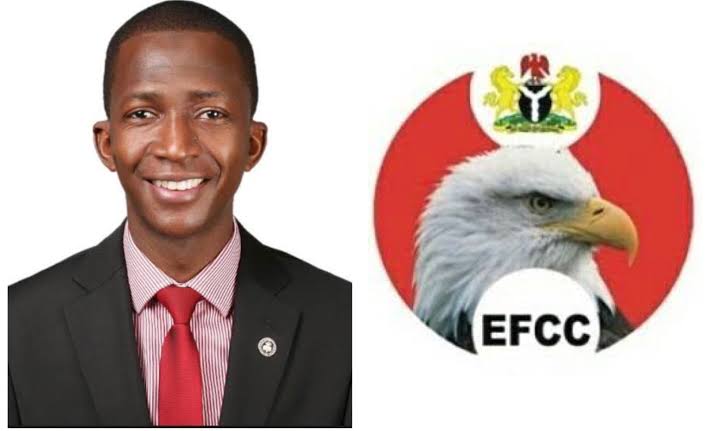
The chairman of the Economic and Financial Crimes Commission (EFCC), Abdulrasheed Bawa, collapsed while delivering a speech during a programme at the Presidential Villa in Abuja.

Mr Bawa was said to have suddenly stopped talking when giving a goodwill message and was later held by the Minister of Communications and other individuals.

He later fell and was hurriedly rushed to the hospital.

As of the time of filing this report, no details have been provided as to why the anti-graft agency’s boss collapsed.

Merits of social media

By Habib Sani Galadima

I was one of the persons that took social media (SM) as a joke. I used to think that SM was only for chatting with family and friends. I thought that one could not build a career or improve oneself there except if they belong to a small group of people who obtained certificates and special skills abroad.

I was scrolling down my Facebook timeline on a particular Friday night in 2019 when I got a post by Ibrahyim Elcaleel. He was jokingly talking about LinkedIn. I did not know anything about the platform, so I hurriedly went to check it on Google. I read the information about it until I was convinced to create an account with them.

Honestly, I didn’t take the platform seriously, for I didn’t even put a profile picture, let alone my academic details there. Coincidentally, in the first quarter of 2020, I read three articles, in a row, of late Prof. Ali Muhammad Garba, Mal. Muhsin Ibrahim and Dr Adamu Tilde advising youths to learn skills. One of these articles attempted to convince people to add the skills to their SM profiles.

Before then, I thought that only people who go to the highest level in many aspects of life beautify their profiles. So, doing that by an average translator like me is an exaggeration. In my experience, the only things I know that I could beat my chest to reference are two translation projects from Amnesty International and Al-Qalam University, Katsina State, and a few more from some national companies that need not be mentioned.

Still, I know that I have some writing skills, mainly translation, but I do have not many certificates to create a pretty CV to be read like a journal. Nevertheless, the late Prof. Ali Muhammad Garba said something that rehabilitated my conscience to move forward, thus: “There is the difference – between knowledge and skill. The former says you are aware of it, while the latter says you can do it. Which one do employers seek or value? The former is evidenced by a certificate (of attendance. The latter is evidenced by ability (buried in the anecdotal stories and case examples). Both are valuable, but one (skill) even more so. One addresses the question of “What?”, the other addresses the question of “How?”

Reading those articles by the people mentioned above pushed me to go back to my LinkedIn profile to edit it —adding academic details and some skills that I didn’t think were worthy of review.

Surprisingly, in one year, from the time I edited the profile, I did three projects, two from Northern Nigeria and the other from the southern part of the country. And my profile was reviewed by Writers.Gig, which is a part of success as a friend who works with them said. They review few people among many.

The mighty problem is how we consider ourselves “local”. We learn a skill, but we keep it unpublicised, assuming our friends on Facebook, Twitter, and other platforms know it since they know us. Many people keep their heads low in terms of humility, while it is a lack of confidence. Understanding the difference between humility and lack of confidence will help a lot. People have the latter, thinking it is the former. You can humbly show your skills to the world.

Dr Marzuq Abubakar Ungogo says, “As demand for skills increases worldwide, one easy way to lose opportunities is to show that you have no skills. But you actually have so many skills than you think of, mainly coming from your education, unpaid labour, charity or voluntary work. What skills need is packaging and honing. You can start by having a deep reflection on possible skills you have, then present them in the most marketable way possible. There are specific terminologies that you should also use. Once you do that, you also start working on getting better at them. This is not meant to stop. Constantly update!”

Habib Sani Galadima writes from Kano. He can be reached via habibmsani46@gmail.com.

Insecurity is corruption-in-motion

By AF Sessay

The data you don’t talk about comes back to haunt you!  And when it does come, it comes violently. Many years of corruption, nepotism and neglect of the basic rights of citizens quickly metamorphose into all forms of crime. While government inaction is not and cannot always be the cause of citizen-on-citizen crime, yet research suggesting the correlation between corruption in public places and crimes on the streets should not be taken with a pinch of salt.  

This is also true for the failings in high places and the ugly effect this has on battlefields. Because beyond artillery and manpower, there is a great need for strategy, intelligence, consistent supply of food, effective and top-notch communication and above all, sincerity of purpose. Unfortunately, in the situation where the cankerworms of embezzlement latch and sucks blood out of any of these in the security value, the figurative blood usually becomes pools of real blood. So, when it lingers, question the data. Who does what, and where are the numbers to say they are really doing it? 

Nigeria currently stands on a tripod of corruption, injustice and hope (no matter the percentage of that hope). 

Corruption keeps the corrupt healthy and well-nourished to perpetrate more acts of corruption with hands, heads, tongues and minds.

Injustice keeps the people blind to the truth. It is an essential spear in the hands of many African leaders and former leaders to strike and blind the advocates for truth, make deaf the masses, and cripple the nation.

As for Hope, it is always a ‘good’ magic wand, or opium, or weapon (depending on who is defining it) to mobilize the people for elections, discourage them from revolting and contain them till the next election.

On top of this tripod rotates the head of change. In every season, every decade, every century, there is always one head dressed with a different colour to match the epoch and circumstance. The change of this era is the change from a corruption-ridden nation to a corruption-free state.

Now, how many people are not corrupt so that they can serve as models of integrity for the corrupt? It seems this is a difficult question; let’s turn it the other way round. How many people are corrupt and ready to serve as models of corruption to others? The statistics here are too terrifying to betray the calculus of any optimist on the future of Nigeria and the African continent.

While the masses shy away from their responsibility to come out and spearhead this journey to a reformed Nigeria, the corrupt are on the other side of the divide, ever determined to embolden their fingerprint on the face of civilization! No wonder they get most of the honours, most of the honorary degrees, most of the titles, most of the praises, most youths ready to die for the “good cause”, most of the best universities for their children…

Are you surprised? Why should they not be determined and willing to sacrifice their wealth and might to fight for the continuation of corruption? See! Listen! They were born in it, bred and nourished in it, educated in it, employed in it, voted in it and possibly wish to die in it.

They are not scared of sitting on the corpses of millions of their brothers if that is the only throne they can find to sustain their Kingdom of Corruption. They are very okay with the fact that the millions awaiting their grave permit languish and die in scarcity, adversity, poverty, obscurity – you name it. This is nothing compared to losing a single day in their lives to integrity and probity.

They will fight, hire the best lawyers, get the cruellest thugs, sponsor many false reports to raise public ire and angst against the people who seek to “unjustly” drive them from their ‘paradise.’ They will make many human sacrifices. They will even invent new smart devices of iniquity. Don’t underestimate their ingenuity when it comes to protecting corruption. Never underestimate them.

Alas, how long will they fight before they run out of vim? How long will they endure against the harsh winds of change? How long will they live to eat the billions they have amassed over seasons and seasons of rot, corruption and cruelty in this farmland of the world. How long will they procure mass graves for hundreds of citizens so as to exercise their will to power? They call our youths to their graves while their duplexes and children and girlfriends enjoy the loots of Nigeria in Dubai and London.

They will fight, but the people will also fight back. And as far as I know, no Empire or force or fight is powerful enough to stop the might of the people when they are determined for reform.

Do you want to join this fight? In which army will you prefer to fight? If you must join the side of those who want reform in the polity, then you must do so while you are well armed with patience and firm belief in God then the leader’s ability to bring change. Don’t be carried away by the plots and ploys of the corrupt. Correct when mistakes are made, tell the truth where and when needed, be just and bold in your assessment but never be a recruit (though subconsciously) in the army of the corrupt!

AF Sessay writes from Lagos. He can be reached via amarasesay.amir@gmail.com.
British and American English(es): same or different thing(s)?

By Rabiu Muhammad Gama

Introduction

Have you ever wondered why Americans go on vacation while Brits go on holiday? I am sure you have. Or haven’t you ever heard that American kids like candy while British kids are crazy about sweets? Our Law of Contract lecturer, who was so lucky to do his PhD in England, once told us how nice his flat was when he was in England. On the other hand, one of our learned professors, who was privileged to have some training from Harvard Law School, lamented that he suffered before he could afford an apartment during his stay in the US. Curious?  Well, I can’t actually blame you for that. I think all these go to show us how beautiful the English language is.

British and American English

That famous Irish playwright, George Bernard Shaw, once said, “the United States and the United Kingdom are two countries divided by a common language.” That was Shaw. And he wasn’t entirely wrong.

There are many varieties of English today: American English, British English, Australian English, Canadian English, Caribbean English, to mention but a few. However, for some historical and accidental factors, American and British Englishes are the most widely used across the globe today. These two Englishes,  I am confident you may be aware of, are not always the same. However, they are not very different either. As far as this article is concerned, American English is that variety of the English language widely written and spoken in the United States and some parts of Canada. While British English, just as the name hints, is the standard dialect of the English language spoken and written in the United Kingdom (England, Scotland, Wales and Northern Ireland).

The most noticeable areas where British and American Englishes differ are vocabulary, spelling, grammar, and, though very rarely, idiomatic expressions. Forget about pronunciation; it does not count – as far as Standard English is concerned, pronunciation is not an accurate barometer for measuring “good English”. Ask around if you doubt me.

Vocabulary

This is arguably the most significant area where the two Englishes differ. Americans don’t say lifter; they say elevator. It’s the Britons that call it lifter. Had Leonel Messi moved to Manchester City rather than Paris Saint-Germain, he would have been playing football by now. But, if he were to move to any football team in the US, say, the indomitable Seattle Sounders or the New York City FC, he would be playing soccer. Donald Trump, the most confused American president in recent history, is crazy about expensive automobiles. It may shock you to hear that the current Prime Minister of England, Boris Johnson, doesn’t know how to drive a car! If you go to the US, you will need an airplane to commute from Orlando to Las Vegas (the Sin City) because the cities are very far from each other. Go to the UK afterwards; you won’t need an aeroplane to move from Liverpool to Manchester – the two cities are only a stone’s throw from each other.

Spelling

There are many spelling differences between American and British English. Words like color, labor and honor are found only in American English. In England, they would write these words as colour, labour and honour, respectively. In words like these, where the Americans use an “o”, the Britons would use “ou”. Where an American would ask you if you know any good theater, a Briton would ask you if you know any good theatre, “er” in American English changes to “re” in British English. The Britons organise programmes, but the Americans only organize programs. I am sure you got this last point, too, don’t you?

Grammar

In addition to spelling and vocabulary, there are specific grammar differences between British and American English. For instance, collective nouns are considered singular in American English, while they’re mostly treated as plural in British English. For example,  where an American would tell you that “his family is large”, a Briton would, most likely, tell you that “his family are large.” The Americans always take a shower, while the Britons mostly have a shower. The word “gotten”, the past particle of “get”, is now dead and buried in British English. Surprisingly enough, the word is still alive and kicking in American English.

On a final note, American English is the child of British English. Nonetheless, the former is the most widely written and spoken English today, thanks to America’s technology and robust economy. So, don’t be shocked whenever you read that the Brits actually introduced the language to the Americans because it’s true. Anyway, it is not uncommon to see a child that overshadows his dad. It’s, however, very unusual, perhaps unprecedented, to see a child reporting his mom to an anti-graft agency!

Rabiu Muhammad Gama is a level 300 Law student and  English Enthusiast. He can be reached on rabiuminuwa327@gmail.com or 09061912994.

Protest over registration fee: UNIBEN asks students to vacate campus

By Muhammad Sabiu

The management of the University of Benin (UNIBEN), Edo State has asked its students to vacate the institution before 12 pm on Wednesday over a protest that had taken place on Tuesday.

Recall that students of the institution embarked upon a protest due to the late registration fee the school had imposed on them.

The students, however, dismissed the fee, saying it would be hard for them considering the economic situation of the country.

The announcement was contained in a statement signed by the university’s registrar, Mr Ademola Bobola Salami.

“The Vice-Chancellor has reviewed the agitation by a section of the students’ body on Tuesday.

“After due consultation and in the overall interest of all students’ body, the Vice-Chancellor has, on behalf of Senate, approved the immediate closure of the University.

“This is based on security reports to avoid the students’ action being hijacked by hoodlums, and thereby prevent any form of breakdown of law and order within and outside the campuses of the University,” the statement said.

Family members contribute to bad attitude of youths

By Garba Sidi

Attitudes are fundamental to understanding social perceptions because they strongly influence our perception of people we meet, the people we live with, the groups we join or avoid, and colleagues in our various communities. In addition, attitudes are essential in organising information about other people. Thus, as we interact with different individuals, objects or situations from time to time and in different environments, we tend to form specific attitudes just as others form attitudes about us.

As psychologists said, our attitudes are formed firstly from family, society and schools. These three places are where children shape their attitudes, either negative or positive. Children will not pass without family, so that means the family is the first chain for shaping a child’s attitude. Whatever role the family play is how their children will grow and develop cognitively.

Family combine parents, sisters and brothers in nuclear family and grandfather, grandmother and uncles are included in the extended family. Each one of those members has a role to play in shaping a child attitude positively and negatively. Family is like a tree; any branch and leaf have a role in contributing to the survival of that tree. Failure of one branch or leaf will cause damage to the entire tree. That’s how the wrong role of one member will cause an unwanted attitude to the children of that family.

Sadly, nowadays family ignore their responsibility and substitute it with hatred, showing concerns to only biological sons and daughters. Even some parents leave their sons and daughters to live like sheep without shepherds. This careless behaviour that emerges today is hazardous, and it’s the central foundation of the problems we indulged in today.

Unfortunately, frustration is what leads the majority of children to form all these kinds of undesirable attitudes. Some children find themselves in a family full of challenges like hatred toward the mother by one’s stepmother, father not taking responsibility for his children, etc.

All these will lead a child to form unwanted behaviour after indulged in frustration. No doubt, our society is ravaged by kidnappers, sexual immorality, drunkenness and armed robbery. Children lack a sense of duty with lofty aspirations of becoming rich overnight to fulfil their needs. They engage in cultism and occultism, a fastest ritual way of getting rich and are subjected to unbearable pains and suffering.

May Allah save us, amin.

Garba Sidi can be reached at sidihadejia@yahoo.com.

6 Nigerian citizens declared wanted by UAE for terrorism

By Muhammad Sabiu

The United Arab Emirates has declared thirty-eight individuals wanted, of which six are Nigerian citizens.

The declaration is in connection to allegations of involvement in terrorism and related activities, which had the names of the individuals included on the country’s terror designation list.

A foreign news platform, Al Arabiya, reports, “The decision, WAM stated, comes within the framework of the UAE’s efforts to target and disrupt networks associated with the financing of terrorism and its associated activities.”

Other individuals on the UAE’s terror list are from Iran, Iraq, India, Russia, Jordan, Britain and others.

According to the Daily Trust newspaper, the six Nigerians are Abdurrahaman Ado Musa, Salihu Yusuf Adamu, Bashir Ali Yusuf, Muhammed Ibrahim Isa, Ibrahim Ali Alhassan and Surajo Abubakar Muhammad.

National Board for Technology Incubation DG visits Engausa Global Technology Hub

The Director-General, National Board for Technology Incubation, Engr. Dr Muhammad Jibril paid a special visit to Engausa Global Tech Hub, Kano, on September 11, 2021. The Engausa Management warmly welcomed the DG.

As the DG frequently does, the purpose of the visit was to monitor and ascertain the level of commitment of the business under the centre towards human capital development, skill development, and youths empowerment.

On his part, the Founder/CEO of Engausa, Engr Mustapha Habu Ringim, profoundly thanked the Federal Government, the Federal Ministry of Science and Technology (through the National Board for Technology Incubation) and the Federal Ministry Communications and Digital Economy ( through National Information Technology Development Agency) for providing a favourable business environment for Engausa Global Tech. Hub

The CEO noted that, if not for this elderly support and guidance from the Agencies, Engausa would not have recorded the successes so far.

Furthermore, the CEO briefed the DG NBTI about the 47 businesses harvested out by the hub and 1000 graduated apprentices powerfully trained in digital technology to bridge the digital skill gaps we have in the North and Nigeria at large.

The DG heartily applauded Engausa’s impact across the country and pledged to support the hub’s goals to cover more milestones. The DG added that they would do whatever it takes to help businesses and grow them to withstand any business tides through his office. He said that people who have business ideas, especially technology and innovation related ones, should put those ideas to work because the government will always be there to support innovative businesses like Engausa.

The DG was taken around the hub and ascertained the quality of the training tools, equipment, and bilingual education system deployed to ameliorate teeming youths’ learning difficulties.

Dear NECO registrar, removing English as admission criterion can be costly

By Ishaka Mohammed

Dear Professor Ibrahim Dantani Wushishi, we are aware that you have reached the pinnacle of your career as a Nigerian academic. That means you must have directly interacted with an overwhelming number of Nigerian students. We also know that you specialise in education. Therefore, you should know better than many of us the pros and cons of educational policies.

As the current registrar of the National Examinations Council (NECO), you think that the Federal Government of Nigeria should consider removing credit passes in English language and mathematics as criteria for admission to Nigeria’s higher institutions. This is further proof that you know Nigerian students and how difficult it is to pass these subjects in their Senior School Certificate Examinations (SSCE).

Similar to your suggestion, the current registrar of the Joint Admission and Matriculation Board (JAMB), Professor Is-haq Oloyede, once advocated that a credit grade be removed as an admission criterion for the arts and humanities in polytechnics and colleges of education. I subscribe to his submission.

However, considering the status of the English language in the 21st century and the fact that it’s our official language, I think it’s costly to abolish a credit grade in the subject (English language) as a criterion for admission into our tertiary institutions.

It’s glaring that despite the presence of this criterion which forces many of us to learn the language, we’re far from attaining true proficiency.

Prof., if you seek a paragon of “nobody is perfect”, just pay attention to how we (Nigerians) use the English language, starting from this write-up. Even the highly educated are prone to uttering or writing wrong English expressions. Concerning this claim, many people argue that no one is above mistakes, but I say that mistakes aren’t the same as errors. When one’s use of a wrong expression results from one’s unawareness of the correct pattern, that’s an error.

Sir, I think a few examples will suffice. Many Nigerian graduates wish to further their studies abroad, specifically in the United States and the United Kingdom, but their proficiency level hinders them in the English language. Each of the two main internationally recognised English language proficiency tests is difficult for most Nigerians to pass. Those who have sat for the tests or accessed their past questions can attest to my claim. Even an excellent Nigerian graduate needs intensive coaching to pass the Test Of English as a Foreign Language (TOEFL) or the International English Language Testing Systems (IELTS).

Prof., if making English errors were a criminal offence, we would be in jail. But, of course, that’s if judges aren’t guilty as well.

Sir, it’s a known fact that exposure to news media content boosts one’s language proficiency. Although the reverse isn’t totally the case in our country, consumers of Nigerian media content had better be wary of heavily relying on their (the media’s) expressions. Other authorities, including dictionaries, should be consulted as frequently as possible.

Let me buttress the above point. Since 1961, the Nigerian Guild of Editors has been a network of experienced journalists who have attained editors’ positions in their respective organisations. Ordinarily, one would assume that every member of the network possesses an unquestionable mastery of the English language. But, no, this isn’t the case. Some of the past presidents of the guild have repeatedly published wrong English expressions not as mistakes but as errors. One of such expressions is “Buhari felicitates with”. I’m sure the president has media aides, two of whom have presided over the affairs of the Nigerian Guild of Editors in the past.

In a similar vein, many of the federal ministry of education documents aren’t free of English errors, neither are those from our schools.

The above instances speak volumes about our deficiency in our lingua franca. Being aware of this situation, isn’t it advisable that we adopt measures to encourage us to learn the English language? Will it then be wise to abolish existing measures? 

I believe in the saying that where there’s a will, there’s a way. Our determination to secure admission to tertiary institutions makes us learn English more than we would ordinarily do. The more we practise, the better we’re highly likely to become. Frequency and expertise have a significant relationship.

Therefore, Prof., let’s maintain a credit grade in English as a criterion for admission to our higher institutions.

Ishaka Mohammed writes from Kaduna. He can be reached via ishakamohammed39@gmail.com.

KTSG’s Public Opprobrium: English is not the problem

By Ahmad Ganga

The recent executive order signed by Katsina State Government (KTSG) is filled with grammatical and typographical errors that critics can never overlook, even though English is not the problem. Instead, the problem lies in constituting members of the executive council tasked with governance delivery. Virtually, almost every politician in the North despises having competent people within their domain who can question their decision and ask for clarification for every policy made. That’s why lowbrows make a list of cabinet members: SAs, EAs, PAs, Secs, etc.

Being His Excellency, Governor of Katsina State, a former Speaker House of Representatives and an experienced administrator, the errors wouldn’t have happened —if the politicians in this State didn’t present their puppeteers while constituting cabinet. Competency and skills should be a yardstick in the process, instead of connection. The Executive Governor is not alone in this. Secretary to State Government, Dr Mustapha Inuwa, was in academia for long before he set his feet into politics. Tell me why critics would not descend on KTSG for committing such public opprobrium?!

Let me tell you a story. When the news of my Principal’s house stormed media, I came across a post he made himself wherein he showcased the house on the internet. I asked him why he did it, and he told me that his guard said to him that some people, assumed to be journalists, came snapping the house and asking people about the person of Honourable Member who’s President Buhari’s nephew. So, instead of letting the journalists break the news and twist it the way it suits them, he broke the news himself. 

Let me go back to the initial topic. Suppose the elected and appointed officials gave room for competency, like asking for inputs from their aides and secretaries on every policy before releasing them to the public. In that case, they could avoid such errors. As I say in the headline, English is not the problem. Every one of the elected and appointed politicians is looking for someone who always says YES to whatever.

Considering the consequences that followed this executive order, I suggest that His Excellency give room for competency to reign in his cabinet to control the damage done so far since he was sworn in as the Executive Governor of Katsina State.

Ahmad Ganga can be contacted via ahmadganga66@gmail.com.