Admin

Nigeria and the need for food security

By Mukhtar Ya’u Madobi


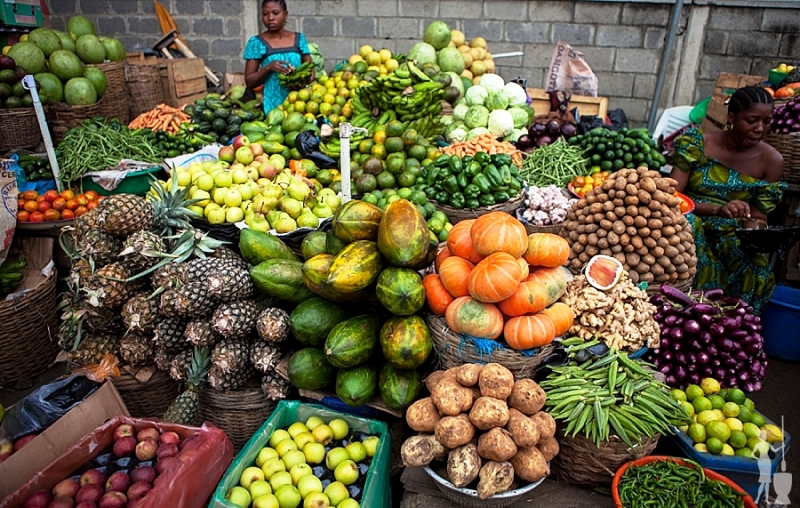
The right to sufficient food is enshrined in the Universal Declaration of Human Rights and subsequent international law. Food security is regarded as a situation whereby all people at all times have physical, social and economic access to sufficient food to meet their dietary needs for a productive and healthy life.  Food security is ensured when food becomes available, affordable and accessible.


However, it is good to note that food security is not simply having sufficient quantities of various staple foodstuffs. It also entails access to the entire citizenry to these food items at affordable prices. It further means that we must not only engage in mass food production but also ensure that Nigeria has sufficient purchasing power to acquire food items that guarantee good feeding and nutrition.
Food security has to do with the absence of threats of hunger or malnutrition people face in their lives. In a broad sense, it entails safety from basic physiological needs. The lack of safety will be manifested in chronic hunger or starvation and malnutrition.

The majority of the rural populace depends on Agricultural related activities for their livelihood. The appraisal in the past showed that successive administrations in Nigeria had initiated programs towards ensuring food availability and accessibility for the teeming population in the country.

These include; the National Accelerated Food Production Program (NAFPP) by Gen. Yakubu Gowon, Operation Feed the Nation (OFN) by Murtala/Obasanjo Administration; River Basin and Rural Development Authority (RBRDA), Green Revolution and World Bank-funded Agricultural Development Project (ADP) by Shehu Shagari and Babangida’s Directorate for Food, Road and Rural Infrastructure (DFRRI) among others.

Despite these efforts, Agriculture has been constrained by numerous challenges such as rural-urban migration, insufficient infrastructure, poor agricultural inputs, reliance on oil economy, over-dependence on rain-fed farming, environmental degradation, inadequate funding, poor socio-economic status of farmers, poor mechanization, climate change, corruption and poor commitment to the implementation of agricultural policies.

Yet, the most grievous bottleneck facing the agricultural sector today in Nigeria is the mass abandoning of arable land by farmers due to security challenges. These security threats include but are not limited to insurgency, banditry and kidnappings, killings and farmers-herders’ clashes. Consequently, all these turmoils lead to a deficit in agricultural production.

Nigeria still has the potentials to be food-secure through the adoption and implementation of strategic measures for the peasant farmers to operate in their farming activities through ensuring rural development, provision of easy access to basic farm inputs, adequate budgetary allocations to agriculture, particularly to the food crop sub-sector, enunciation of appropriate policies for food crop sub-sector, political stability, reduction in rural poverty, and peasant farmers’ education among others.

In response to that, the current administration of President Muhammadu Buhari has initiated multiple agricultural programs aimed at ensuring food security in the country. Notable among them include the Anchor Borrowers’ Programme (ABP) that commenced in 2015, which provides farm inputs both in kind and cash to smallholders farmers to boost the production of agricultural commodities. Tremendous success stories were achieved through this program, especially with breakthrough rice production in Kebbi State. The Presidential Fertilizer Initiative (PFI) was launched in 2016, a partnership between Nigeria and Morocco to make fertilizer available to the farmers. In addition, farm Youth Lab (FYL) is another Initiative of the Federal Agricultural Ministry to train Nigerian youths on livestock production and sustainable urban agriculture.

Additionally, the Presidential Economic Diversification Initiative (PEDI) was also launched in 2017 to support the revival of moribund industries, especially agro-processing ones, through facilitating investment, reducing regulatory bottlenecks, and enabling access to credit.

Moreover, in March 2018, President Muhammadu Buhari inaugurated the National Food Security Council (NFSC). The council was mandated to develop sustainable solutions to farmers and herders clashes, climate change, piracy and banditry, as well as desertification and their impacts on farmland, grazing areas, lakes and rivers. All these efforts are aimed towards increasing food production in the country.

The latest version of National Security Strategy 2019, a document released by the Office of the National Security Adviser (ONSA), Retired Major-General Babgana Monguno, noted that with the drastic reduction of food importation, the government would continue to develop agricultural potentials to attain self-sufficiency in food production as well as exportation. “The government will further consolidate investment in agricultural mechanization, irrigation and infrastructure to mitigate the risk and uncertainty occasioned by seasonal rainfall. In addition, modern techniques will be adopted to improve beef and dairy production and consolidate strategic food reserves to ensure that the nation is prepared for major emergencies and shortages”.

The latest Federal Government directives on the establishment of farm estates in 109 Senatorial districts across the nation deserves an accolade. This mandate is to be realized by the recently resuscitated National Agricultural Land Development Authority (NALDA), which has already commissioned its first integrated farm estate in Katsina and other states. Across the country, each farm is expected to engage in the rearing of poultry, fish and livestock, apiculture, crop farming, packaging and processing, respectively.

With this development, it is hopeful that the country will achieve food security and self-sufficiency in food production within the near future.

Nonetheless, even if all the policies mentioned above are implemented unless strategic measures are put in place to curtail the rising security challenges bedevilling the country, otherwise, the wish of the country to become a food-secure nation will never be realized.

Thus, peaceful environments should be created for farmers to resettle and muster more strength towards cultivating the vast abandoned arable lands in order to boost agricultural production in the country.

Mukhtar Ya’u Madobi writes from Kano. He can be contacted via ymukhtar944@gmail.com.

PDP can still zone presidency to the North

By Abdulhaleem Ishaq Ringim


Zoning, especially of the presidency, is not a product of a national consensus but that of certain political parties’ internal dynamics. It is pertinent that we understand that. Nigerians did not sit in a national conference and agree to zone or rotate power. So it is not binding on the broader national politics.

The idea of zoning started with the PDP in 1998, it was entrenched in PDP’s constitution in Article 7, Section 7.2(C), and it prescribes that “In pursuant of the principles of equity, justice and fairness, the party shall adhere to the policy of rotation and zoning of party and public elective offices and it shall be enforced by the appropriate executive committees at all levels”.

Chief Olusegun Obasanjo, a southerner, became president in 1999 and prevailed as president for two terms representing eight uninterrupted years. In 2007, Umaru Musa Yaradua was nominated to fulfil this zoning principle and rotation of power to the North. Hence, he was supposed to also prevail as president for eight uninterrupted years as the president of Nigeria.

Unfortunately, he was only able to serve for about three years due to his ill health and subsequent death. As a result, president Goodluck Jonathan, who was the Vice President, assumed office as Acting President through the invocation of the “Doctrine of Necessity” principle and completed the term, which was supposed to be between May 2007 to May 2011.

However, according to the zoning agreement, it was still the turn of the North as a Northern President was supposed to go for eight uninterrupted years. But Goodluck Jonathan was not going to have it; he insisted on contesting the presidency, thereby jettisoning the PDP’s zoning principle.

A serious crisis erupted within the party, and a section of the party’s membership was hell-bent on adhering to the zoning agreement and even went ahead to endorse Atiku Abubakar as the Northern Consensus candidate to complete the North’s uninterrupted eight years.

The stalemate prevailed until a case was made that Jonathan would only be completing the Yaradua Ticket, which he was initially part of. And it was agreed that Jonathan would only be going for a single term. The decision still contravened the zoning arrangement, but Jonathan had his way; he contested and won the 2011 elections.

Jonathan, however, went back on his promise and still contested for the 2015 elections even while it was supposed to be contested by a Northern candidate as per the 2011 agreement and the broader zoning principle. And he lost.

Hence, it is only fair that the presidency is rotated back to the North “In pursuant of the principles of equity, justice and fairness”.

So no matter where the party chairmanship is zoned, the party’s zoning principle will still favour the North for the Presidency. And come to think of it, the circumstance is not novel, for this is not the first time a Northern Presidential candidate would emerge during the chairmanship of a Northern Party Chairman in the PDP. Col Ahmadu Ali was PDP’s Chairman from 2005 to 2008, and Yaradua was nominated to fly PDP’s flag and was voted to office in 2007 while Col Ali was still chairman.

Coming back to the National outlook, the (unofficial) zoning agreement in the APC favours the South for the 2023 elections, while that of the PDP favours the North. And this is where the calculation is!

Peradventure the parties adhere to these zoning agreements, and we get a PDP Northern Candidate (for example, Atiku Abubakar with a running mate like Peter Obi, Nyesom Wike or Okonjo Iweala) and an APC Southern Candidate (for example, Asiwaju Bola Ahmed Tinubu with a running mate like Babagana Zulum, Maimala Buni or Boss Mustapha), who would the calculation favour?

Answer this, and you would understand why PDP would want to lure APC into fielding a Southern candidate!

Abdulhaleem Ishaq Ringim is a political and public affairs analyst. He writes from Zaria and can be reached through haleemabdul1999@gmail.com.

Atiku, Kwankwaso, Tambuwal, others shut out as PDP zones national chairmanship to North

By Ibrahim Siraj

There are indications that Nigeria’s main opposition party, the Peoples’ Democratic Party (PDP), would zone its presidential ticket to the Southern part of the country. This follows the decision of the party to zone the national chairmanship seat to the North ahead of its national convention coming up later this month. 

Although the party is yet to formally decide on the zone that will produce its flagbearer in the 2023 presidential election, the latest decision provides some clue because, based on convention, the party has never zoned the two coveted offices to the same region.

Announcing the decision Thursday, Governor Ifeanyi Ugwuanyi of Enugu State, who is also the Chairman of the party’s zoning committee, said the decision was arrived at at the end of his committee’s meeting.

He said his committee was not mandated to zone the presidential ticket. According to him, “The mandate of the committee does not include zoning of the president, vice president and other executive and legislative offices of the Federal Republic of Nigeria”.  

The decision of the party to zone the offices, the Governor adds, “is in line with the constitution of the party on zoning and rotation of party and national offices in the interest of justice, equity and fairness”.

By implication, the decision by PDP to push the national chairmanship seat to the North is likely to dash the hope of politicians eyeing the party’s presidential ticket from the North. Going by tradition, it is almost impossible for the party’s national chairman and presidential candidate to come from one zone.

Prominent among those affected by the party’s decision are former vice president Atiku Abubakar, former Senate President Bukola Saraki, Governor of Sokoto State Aminu Tambuwal and former Kano State Governor Rabi’u Musa Kwankwaso. These four politicians are among many others of Northern extraction who dominated the party’s presidential convention in 2019, with Atiku Abubakar eventually emerging as the winner. However, Mr Atiku was defeated by President Muhammadu Buhari of the ruling APC to win reelection.

Atiku unperturbed – Campaign Group

Speaking to The Daily Reality on the development, Alhaji Abdullahi Abdulkarim Gama, leader of Atiku Arewa Reporters, a campaign group rooting for the candidature of the former vice president, said his principal remains unperturbed. He said as far as they are concerned, the decision of the zoning committee is not final and only reflects the position of PDP governors. Moreso, he said, the Governor Ahmad Fintiri-led Convention committee is yet to conclude its assignment and submit its report regarding the party’s convention. He maintained that scheming for the party’s presidential ticket would continue until the last minute.


Situation sceptical yet no cause for alarm – Kwankwasiyya leader

On his part, Dr Aliyu Isa Aliyu, a leading Kwankwasiyya member in Kano, warned that the situation remains sceptical even though no cause for alarm as far as Kwankwaso’s presidential ambition is concerned given that the party has not formally taken a final position on the matter. He cited a situation in 2007 wherein late President YarAdua emerged as PDP’s presidential candidate and went ahead to win the presidency even though the national chairman at the time, Col Ahmadu Ali (Rtd), was also a Northerner. Col. Ali was replaced in 2008 by Chief Vincent Ogbulafor following the zoning of the position to the South. 

Agitation for power rotation not in the interest of Nigerian masses – Don

PDP’s decisions came when the North and the South are deeply entangled in a heated agitation for power rotation. The Southern governors have, on several occasions, made it utterly clear that power must shift to their region, and the North must shelve any thought of retaining the presidency beyond 2023. This position was, however, countered by Northern governors who consider it as “foolish”, “unconstitutional”, and “undemocratic” any attempt to dictate to the North who to vote for as president.

At the end of the governors’ meeting earlier this week which other leaders from the region also attended, the governors advised their Southern counterparts to explore dialogue and compromise as against confrontation and undemocratic tendencies if they are really interested in securing the support of the North for power to shift to the South. 

As the political tug of war between the North and the South continues over the zone that produces the next president, a university don has warned that the rotational presidency is undemocratic and thus has no place in Nigeria’s Constitution.  Answering enquiry from TDR, Dr Riyauddeen Zubairu Maitama of the Department of Political Science, Bayero Univerisity, Kano, explains that although so much importance has been attached to the issue of power rotation, what should be more significant for the citizens is justice and development. Of utmost importance to Nigerians, he said, is choosing a leader who will tackle corruption, poverty and widespread insecurity irrespective of the political party or the region such a leader comes from.

Dr Riyauddeen further lamented how politicians from both divides are becoming more preoccupied with zoning and power rotation at the expense of the welfare of the Nigerian masses who voted for them.  He described the agitation for secession championed by the likes of Sunday Igboho as Southern Nigeria’s gimmick to harass the North and to exact political concession ahead of the presidential election. 

Crucial months ahead

With less than a year and a half to Nigeria’s 2023 presidential election, the next few months will be crucial as zoning, and other issues are expected to dominate the discourse on the political scene. While the major political parties continue to gear up for their separate national conventions to choose national officers, Nigerians will continue to observe with keen interest how political events will unfold in search of President Buhari’s successor in 2023. The pertinent question for now is: can zoning succeed in ultimately sealing the fate of those presidential hopefuls from the North, or would they be able to come up with something dramatic to turn things around? Only time will tell!

Are we the leaders of tomorrow?

By MA Iliasu


This question has grown into a full-blown critical question among Nigerian youths. And from the way it exudes the aura of anger and despair, it’s evident that generational frustration and offence seem to take over at the mere mention of the question. The anger and grief are mainly directed at the core of the established ruling class, who aren’t growing any younger, whose incompetence also seem to grow with their age.

“We were scammed. I don’t believe we’ll be the leaders of tomorrow. Obasanjo was the president when I was born. Today it’s Buhari. Both are older than my grandfather. And tomorrow it’ll be another older man in the villa. How does that show any trustworthy sequential line of succession?” a very vibrant, 22-year-old young man who loves to discuss national politics tod me. Clear as the sun, he was angry.

I murmured. To an extent, the young man had a valid point – after all, who doesn’t want positive, fresh energy and change in the leadership capacity. Meanwhile, if there’s another thing to be exploited from the frustration of our youths that often warrants utterances, such as that is the plentiful poverty of imagination and painful obsession with literalism. And that alone can explain why young blood is absent in the establishment of the highest political echelon.

“Is the definition of leadership really that narrow?” – I asked the young man.

Indeed, if what is leadership and who is a leader is restricted to presidential, gubernatorial or representative chairs and who gets to sit on them, then it’s only expected that we don’t care to responsibly fulfil the vacuums of class captains and school prefects, students union governments and community initiatives, let alone develop the ambition of leading the pack in trillion-dollar conglomerates, become the CEO’s of medium and small enterprises and head of profit and nonprofit organizations. That, too, is leadership and perhaps even a more fulfilling one. But, sadly, it’s so vivid that in the mind of Nigerian youths, politics is the only method of the ladder to, and only acceptable definition of, leadership.

Meanwhile, if leadership is really that narrow, in any country of a hundred million population, only less than 0.01% would be leaders over the course of a century. Did the person who first said that never knew this? Far from that. The issue is on us and us alone. Today, in Nigeria, we develop the habits of taking phenomena out of context and converting positivity into negativity. Overwhelming positivity does indeed cause a crushing crisis. But one thing history teaches us is that prosperity has never blossomed in a negative mindset.

With over a billion population, the Chinese wake up every day to tell their children they’re the leaders of tomorrow. Do you know how many people led China in its 76 years of official declaration? The US, the arena of blockbuster politics and democracy, with a population of over three hundred million, was ruled by less than fifty people of its official existence. And any other person outside of the presidential list was once told they would be the leader of tomorrow. The Soviet had significantly lower, as does Russia and Saudi Arabia and Japan and any muscly country.

So maybe the frustration isn’t in the saying but in our interpretation of it. Perhaps we simply lack imagination. Perhaps we’re just lazy. Because if we think as the forward-thinking do, we may have enough to realize leadership begins by being a good husband to your wife, excellent father to your child, a kind friend to your neighbours, a just leader to your community, an empathetic and responsible Godfather to your employees, an excellent teacher to your students, a good HOD to your department, a good dean to your faculty, good examination officer to your school and even a trustworthy representative to the wealthy man who assigns you to distribute occasional stimulus.

That your grandmother called you a leader so that you’ll make the name proud and raise children who’ll change the world. That one day, you may become influential and inspire lives forever and not necessarily a political leader if you become that too brilliant. But there are other prerequisites. And if alive, every sane and healthy human must pass through. If you reach there, you’ve fulfilled your inevitable destiny of becoming a leader. And how you exercise the right defines you even in the sight of your Lord (SWT). It’s not a consolation, neither a justification of a rotten system—only consolidation of reality and highlighting the fallacies engraved in our sorry definition of leadership.

So again, one may ask, “are we the leaders of tomorrow?”. We must “yes” to that question even with an overwhelming affirmation. It’s a natural order that we were all born to be leaders. We were, we are, and we’ll be. The best wish is to ask Allah to make us the best our generation will ever see.

MA Iliasu writes from Kano. He can be reached via his email muhada102@gmail.com.

Nigeria’s constitution translated into 3 major languages

By Muhammad Sabiu


All is set for the launch of the copy of the Nigerian constitution (1999), which was translated into Hausa, Igbo and Yoruba by Prince Ade Ajayi Foundation Centre for Constitutional Literacy and Civic Education.


President of the foundation, Mr Ajayi, made the disclosure to journalists in Lagos on Friday.


He said that the translation work into the three languages, whose launch is scheduled to be held on the 25th day of November, took them six years.


According to him, the task aims to promote unity, national orientation.


He added that a book titled ‘I Love Nigeria, My Country’, would also be launched in the hope that national cohesion would be enhanced.


The News Agency of Nigeria (NAN) quoted him as saying: “Of 4,000 Nigerians randomly sampled in urban areas, over 80 per cent had never seen or read in whole or part, a soft or hard copy of the 1999 constitution.


“Of those who had, more than half could not recall what they had read. The statistics in rural areas are abysmal, largely due to literacy levels.


“We believe that the first step in national orientation is adequate civic education. This cannot take place where citizens do not have access to the one document that can most wholesomely, inform them.”

Nigeria @ 61: I will not celebrate sickness

By Aliyu Nuhu

At 61 years of age the only progress Nigeria made is in population growth, something that is not properly managed. It jumps from 36 million people formerly, we are now approximately 200 million. A clear case of quantity without quality.

What do we have to celebrate while Nigeria today is in company of Somalia, DRC, Sudan, Zimbabwe, Afghanistan, Niger, Iraq, Pakistan and host of other failed states in terms of development?

According to UNICEF about 20 million Nigerian children are not attending primary school, about 6 million that are attending will still come out illiterate due to poor quality of teaching. The worst is that the government pretends that all is well and is doing nothing about it. Almajiri system of education is still in practice and not properly managed. It is one of the indicators that Nigeria is not serious about its future.

Another tragedy is that, around 80 million Nigerians are unemployed, in fact about 98% of Nigerian youths are all without job or any form of social and economic engagement. Suddenly, Covid-19 came and made matters worse as more people are losing their means of livelihood. Banditry and kidnapping have chased people away from their farmlands.

Nigeria is without electricity, roads, railways, good airports, clean water and sanitation, public toilets and all other critical social and economic infrastructures.

The government naively claimed that the economy is growing forgetting the relationship between economic growth and job creation. How can growth be justified with 80 million unemployed citizens? How can growth be justified with 3000mw of electricity? That is far below what South Africa generates from renewable energy. According to the Ministry of Energy, South Africa’s total domestic electricity generation capacity is 51,309 megawatts. About 91.2%, or 46,776 MW comes from thermal power stations, while 4,533 MW or 8.8%, is generated from renewable energy sources.

How can growth be justified with industries failing, the entire Northern Nigeria is without viable industry! All the critical sectors that make a nation strong are either absent in Nigeria or in shambles. The chemical, commercial, communication, manufacturing sectors, dams, defense, emergency services, energy, banking and other financial services, food and agriculture, health care, information technology, nuclear reactor, material and wastes management, transport and waterways, all and sundry are either not working or completely corrupt and dubious.

Don’t roll the drum to celebrate, as a matter of fact we should remain in our houses and mourn our collective failure as a nation.

The Mo Ibrahim foundation just placed us among the 10 worst governed countries in Africa. The Economic intelligence Unit (of the London Economist) placed us among the world’s failed nations. And these institutions are not the opposition, it is not PDP that is giving this grim picture of our country.

It is easy for Nigerians to rise and say we are not a failed state, but going by the definition of state failure, a nation that fails to discharge its obligation to its citizens, is indeed heading to the direction of a failed state.

Everyone knows Nigeria cannot provide basic security to its citizens. We have hundreds of thousands of people displaced by insecurity. This is the kind of story associated with state failure because the state, after failing to secure lives, will also not be able to bring the criminals to justice.

We are never worse in terms of security, people are killed daily in our cities. They are kidnapped and attacked in their homes. Corruption has never been worse, yet the courts have simply joined the thieves. In Nigeria today, nobody gets jailed for corruption.

To me there is no need to celebrate, we should all put our hands on our heads and cry. Our leaders, both past and present should bury their heads in shame for bringing our country to its knees.

Nigeria is also practically not good for the poor and vulnerable. If you can’t get plum government appointment, just be rich.The rich are allowed to claim fuel subsidy, evade tax, have import duties, manipulate commodity prices, bet on stocks with privileged information they get from golf clubs. The equivalent of all these or even less, when done by the poor, is called stealing. And the poor also had their bad ways as well. Leaders looting by example while followers learning by instinct.

Nigeria allows great deal of latitude to the rich. The courts are even scared of them. This is our way of making up to them for creating a society in which everything can be done for money, while nothing is worth having at all.

I can only say happy independence to the Nigerian rich, they, along with our leaders, help in ruining this nation. They are now reaping the fruits of their labour. As things get so bad, there is no peace for them to enjoy their wealth. They are an endangered species on the highway. Kidnappers are looking for them the way hunters look for antelope. At home there is no peace. Even behind heavily fortified walls, they sleep with open eyes. It will continue to degenerate because peace exists only in a society that has shared prosperity among its people.

Sadly again, Nigeria is the most badly governed and mismanaged nation on earth. Most poor and backward countries owe their present condition to war, natural disasters, geography and size, but it is not the same with Nigeria. It is its people in the hierarchy of the leaders, the rich and the poor masses.

Vietnam was in a state of war for 20 years. Korea was at war for three years. Today they are developed economies.

Nigeria only witnessed civil war for three years and remained in peace for the best part of its 61 years existence, earning about $1 trillion from sale of oil. Yet with all that money it achieved nothing in terms of development. Most of it has been shamelessly mismanaged or stolen!Today Nigeria is 61 years old. Here are some reasons for sober reflection and adjustments by our leaders.

1. In 1960 Nigeria has only 2 universities. Today it has 40 federal universities, 40 state universities and 61 private universities. However its people have to run to Ghana, a country with only 9 universities to study. The reason is because the 141 universities in Nigeria are below international standard due to corruption, mismanagement and neglect. The country, according to UNICEF has 10.5 million children outside primary school. It means in 20 years, about 30% Nigerians will not be able to secure employment as security men, because the job will require basic literacy as qualification. Public primary and secondary education system has collapsed in Nigeria. Parents spend their earnings to educate their children. This goes to say adding weight is not equal to good health.

2. Twenty years ago India has the largest number of pure scientists in the world but it was considered a poor country compared to China because the number of scientists did not transform India into net exporter of goods and services. It was until India changed its ways and started producing technicians like China that it began manufacturing goods and earned the respect of the world. Numbers matter but vision matters most. The Indians were not seeing the world as the Chinese. Like India and China, Nigeria has abundant human and intellectual capital which have been wasted by neglect due to poor attention to education. And because of that our numbers produce nothing. In this age with our size we cannot produce needles, toys and bicycles. These are simple products that don’t require rocket science.

3. Today we have 193,600kms federal highway. Out of that length, only 28,200 kms are paved in the whole 60 years of the country’s existence. The paved highways are death traps killing hundreds of people daily. Meanwhile in 1960 Nigeria had 8,800km of paved federal highways in relatively good condition. The increase in the length without quality today does not translate to progress. Nigeria is considered the worst country among it’s neighbors in terms of road infrastructure. Quality matters more than numbers.

4. In 1960 Nigeria had 118 mission hospitals, and 101 government hospitals. Today it has 22 Federal Medical Centers, 23 giant teaching hospitals, about 46,000 state owned hospitals/health centers and hundreds of thousands private hospitals, clinics and dispensaries. But Nigerians run to Ghana to treat skin infection and UK to treat ear infections! For most heart and brain surgeries we have to go to India or Egypt. Some of us go to Niger and other neighbouring countries!

5. In 1841 Britain and Wales had a population of 15 million people. However Great Britain virtually held the entire world by the jugular, colonising all and every important nation and defining their destiny. Dynamites come in small sizes.

6. Today the US has a population of 325 million people but controls and sets standards for the world with a population of 8 billion. By contrast Nigeria has a population of 182m and military of 400,000 strength but is overwhelmed by a rag tag Boko Haram with a strength of 16,000 followers or even less.

7. Nigeria has 91 million hectares of arable land of which it is able to cultivate only 42% of it using crude and simple tools. Industrial scale holding is nonexistent in Nigeria. Despite being able to produce large quantities of rice, beans, sesame, cashew, cassava, cocoa beans, groundnuts, gum arabic, kolanut, maize (corn), melon, millet, palm kernels, palm oil, plantains, rice, rubber, sorghum, soybeans, bananas and yam; Nigeria is not a net exporter of agricultural products and it imports food to feed its population. FOA report put Nigeria slightly ahead of Niger, Ivory Coast, Liberia, Burkina Fasso and Sierra Leone in food security. Today Nigeria is facing food crisis due to inflation. Most households cannot feed. Those barely eat, eat poisonous, damaged or expired foodstuffs.

It is not how old you are but how well you are. It’s not your numbers that matter but the quality. I feel we have nothing to celebrate. Let’s not be a bunch of jokers!

Aliyu Nuhu, a public commentator, writes from Abuja, Nigeria.

Zamfara: Government directs restoration of telecom services in Gusau

By Sumayyah Auwal Ishaq

The Government of Zamfara State has directed for the restoration of telecommunications services within the state capital of Gusau with effect from today, Friday, 1st October, 2021.

According to the State Governor’s Special Adviser on Public Enlightenment, Media and Communications, Mr. Zailani Bappa, the restoration of the service at the state capital becomes imperative following the tremendous success recorded in the fight against banditry in the state and to ease the hardship faced by both the private and public sectors of the state.

Mr. Bappa further stated that the “Government finds it necessary to ease the tight measure after the recorded success desired of it which has no doubt destabilised the syndicate of criminals terrorising the state leading to the successes recorded against them by the security operatives”

Re: 2023, Osibanjo-Zulum ticket

By Tajudeen Ahmad Tijjani

This is a response to the mischievous interview published by the Dailypost on Friday, which was credited to one Dr Garus Gololo. This brings the camp of Hon. Mohammed Garba Gololo to our feet and compels us to officially clear the air on this purported interview lest the general public confuses the pseudonym Garus Gololo as the reputable Hon. Mohammed Garba Gololo.

Dr Garus Gololo was quoted by the Daily Post to have said, “APC should field Vice President, Yemi Osibanjo, and Governor Babagana Zulum of Borno State, for an overwhelming victory in the 2023 presidential election”. In the interview, he uttered many unprintable statements on some of the party’s critical stakeholders like our National Leader, Bola Ahmed Tinubu, Secretary to the Federal Government, Boss Mustapha and the incumbent Ondo State Governor, Rotimi Akeredolu.

To avoid doubt, Gololo is a name of a particular village in Gamawa LGA of Bauchi State, which many aboriginals use as their last name as it’s a common practice in Northern Nigeria. Therefore, anybody can pick the surname Gololo, but there is no APC chieftain with such a name in our blessed constituency to the best of our knowledge. We suspect it’s done to soil the courteous relationship between our Boss and the APC hierarchy.

Our Boss, Honorable Muhammad Garba Gololo, who was a representative of Gamawa Federal Constituency 2015-2019 in the green chamber, and a stakeholder in his own right and a loyal member of the APC, has nothing to do with that malicious interview.

It’s pertinent to remind the public that the relationship between Honorable Muhammad Gololo, Professor Yemi Osibanjo, Bola Ahmad Tinubu, Governor Babagana Zulum, Mr Synergy, Boss Gida Mustapha and Governor Akeredolu is cordial and intact. Therefore, no amount of blackmail would jeopardize the long-standing friendship that was built on trust and disposition.

Indisputably, Honorable Gololo is a firm believer in destiny. Beyond a shadow of a doubt, only God, the creator of the universe, gives power to whom he so wishes at his appointed time, regardless of tribe, religious or political inclination. Besides, health and life are prerogatives of God; none of us has the guarantee of reaching tomorrow talkless of 2023 that’s far ahead.

Notwithstanding, Hon. Garba Gololo as a devoted APC member is opposed to anything contrary to the provisions of our great party’s Constitution, which has yet to zone its presidential candidate to any region. However, let’s make it clear that our camp will not allow any deliberate or coincidental attempt to set up our principal against the party he laboured for right from its founding days all through the thick and thin that brought it to power.

We hope the general public will accept this as a disclaimer from the political camp of Hon. Mohammed Garba Gololo, which categorically disassociated our principal from the said interview.

Tajudeen Ahmad Tijjani writes from Bauchi State.

We have arrested 2000 bandits’ informers—Zamfara gov’t

By Muhammad Sabiu


Following the ban placed on telecommunication services and other commercial activities in Zamfara State due to incessant killings and kidnappings, the government on Thursday says about 2000 suspected informers assisting bandits have been apprehended.


Ibrahim Dodara, Zamfara State Commissioner for Information, disclosed this during a press conference in Kaduna.


Mr Dosara was quoted as saying, “The government has set up a situation room where complaints are being received to ensure prompt action.


He added that the terrorists are being eliminated by troops and have been hit by acute hunger due to the ban placed on commercial activities in the state.


“Many bandits have been neutralised by the army. Most of them are forced to eat raw food like millet because they have been cut off from their collaborators in town,” he said.


Based on the reports coming from the state in recent weeks, there has been tremendous success in the area of the fight against the terrorists in north-western Nigeria.

Afghanistan: Superpowers’ invasion and history of resistance

By Aminu Rabiu Kano


The history of Afghanistan is one characterized by epic tragedy. The narrative of the “Afghan problem” has been diverse, with each actor telling their side of the story in a bid to justify their action or inaction as the case may be. A poor, landlocked Afghanistan is one of the few countries in the world which events happening in and around it have been dominating the headlines for decades. Both the mainstream and social media are obsessed with happenings in the country. Indeed, even the layman on the street is more or less interested in the Afghan problem to the extent that virtually everyone can say one or two things about it. The question that follows, therefore, is, why is the world interested in happenings in Afghanistan? In other words, why are developments in Afghanistan capable of generating reactions around the world? Also, why have the superpowers in history found it necessary to invade Afghanistan?


To answer the above questions, we must begin by establishing the geopolitical relevance of Afghanistan on the world map. Afghanistan is doubtlessly strategically located. It is at the crossroads of Central and South Asia. It borders Pakistan, China, Iran, Turkmenistan, Tajikistan and Uzbekistan. It is predominantly mountainous and inhabited by approximately 32 million people – nearly 45% of whom speak the Pashtun language. Moreover, the Afghan population is primarily Muslim. This reason, coupled with the fact that it borders Iran, Afghanistan is sometimes seen as a part of the “Wider Middle East.”


From the list of the countries bordering Afghanistan, one will realize the geographical importance of Afghanistan in the international political environment. Of the five countries that bordered it, Iran and China stand out. However, Uzbekistan, Tajikistan and Turkmenistan had been part of the former Soviet Union that fell apart in the 1990s. This implies that Afghanistan has been a neighbour to glorious powers both in the past and present.


Therefore, it was invaded severally by several empires across ages due to its essential, strategic location. For example, Alexander The Great of the Macedonian empire invaded Afghanistan in 330 BC as part of the war against Persia. Alexander saw that he could only get the Persian empire subdued by invading Afghanistan. Similarly, foreign powers such as the Persian Empires, the Mongol Empire led by Khan Ghengis, the Mughal Empire, the Timurid Empire, the Rashidun Caliphate, and the Sikh Empire conquered Afghanistan.


Little wonder, Afghanistan, even in the modern era, grappled with yet other rounds of invasions, but this time around by the “superpowers”. The superpowers being the USA and the USSR. During the cold war, these superpowers used Afghanistan, among other countries, to test their military, economic and political powers. It all started when, in April 1978, the People Democratic Party of Afghanistan overthrew the Afghanistan government. Nur Muhammad Taraki, secretary of the PDPA, became president of Afghanistan. But Taraki’s government was communist in orientation and enacted some policies that were not well received by the masses. Thus, the masses hated government, and, as a result, Taraki was overthrown by Hafizullah Amin in September 1979. Despite the change of government from Taraki to Amin, opposition to communist rule continued even under Amin. In December 1979, Amin was shot and replaced by Babrak Kamal, who was in exile in Moscow. Kamal’s government heavily relied on the Soviet military for support and protection against his vast opponents.


Opposition to the communist government continued, which prompted the USSR to invade Afghanistan, deploying more than 50,000 soldiers. This occupation was even met by fierce resistance by Afghans, who have joined the Mujahedeen – a guerilla movement that proclaimed to be fighting anti-Islamic forces in Muslim lands. The Mujahedeen would later be referred to as the “Taliban”. The Taliban was formed by Mullah Muhammad Umar, who recruited young Muslim students from Afghanistan and neighbouring Pakistan to fight the Soviet Military. Over the next ten years, hundreds of thousands of lives were lost. In the end, the Soviet military was forced to withdraw from Afghanistan.


However, the mujahedeen (or the Taliban, if you like) did not fight the war alone: they were heavily supported, armed and financed by the USA, Saudi Arabia and Pakistan. USA was mainly instrumental in its support to the Taliban because it feared that if the USSR succeeded in occupying Afghanistan, its national interests would be threatened. In fact, the US’s intervention was informed by the need to resist the advance of what former President Reagan called the “evil vampire”. Then, the two superpowers – the USA and USSR – were in the heat of the cold war. Therefore, the US saw that if the Soviet Union succeeded in implanting communist rule in Afghanistan, the domino theory would materialize. This means that the USSR would also succeed in spreading communist ideology into those countries neighbouring Afghanistan. Most Fundamentally, by gaining the control of the Middle East, the USSR would determine oil and gas supply to the US and its allies in the West. This meant that the Soviets could do great harm to the US economy and those of its allies by cutting off the oil supply since oil was a vital product so crucial that military and industrial operations heavily depended on it.


After the withdrawal of the Soviet military from Afghanistan, the Taliban formed an Islamic government. Osama Bin Laden – a Saudi citizen – was instrumental in fighting the Soviet army. As the son of a rich and influential citizen in Saudi Arabia, Osama contributed substantial financial resources to the Afghanistan war that lasted for ten years. He later formed Al-Qaeda, which was said to be a terrorist movement determined to liberate the Muslim land from Western influence. On 11 September 2001, 4 aeroplanes were hijacked by, allegedly, the Al-Qaeda. Two were flown to the Twin Towers housing the World Trade Centre, one flown to the Pentagon and the other to Pennsylvania. As a result, more than 5000 people lost their lives, and critical government infrastructures were destroyed.


The US was quick to blame Osama’s Al-Qaeda for the tragic 9/11 event. The US President George Bush soon declared war on terror. The war was first on Afghanistan, which led to the overthrow of the Taliban government. After that, the American forces established a democratic government with its foundation in and allegiance to American imperialism. However, after 20 years of occupation, the Taliban expediently returned to power when the US forces willingly decided to withdraw from Afghanistan.


From the foregoing, three lessons can be learned. One, Afghans have a genetic history of resistance to foreign domination. Second, Afghanistan is a strategic country that played an important part in the Great Game power struggles for centuries. Finally, it is evident from the above that Afghanistan’s series of invasions was no end in itself, but a means to an end. Put it more succinctly, Afghanistan is a gateway for foreign powers. Its invasion would allow the superpowers to dominate the Asian continent, including the oil-rich Arab world. Overall, Afghanistan, despite its myriad of aggression by foreign superpowers, is still in existence. It survives!


Aminu Rabiu Kano is a political and public affairs analyst. He can be reached via 08062669232.