Admin

BREAKING: Jigawa Gov’t relieves 25 secretaries

By Uzair Adam Imam

Governor Muhammad Badaru Abubakar of Jigawa State has approved the relief of 25 out of the 27 Local Government Council Secretaries.

The Public Relation Officer, Ministry of Local Government, Alhaji Najib Umar, made this known in a statement signed Wednesday in Dutse.

The statement reads in part: “Jigawa State Government is hereby announcing the relieve of the appointments of all the 27 Local Governments Secretaries, except those of Sule Tankarkar and Buji Local Government Areas (LGAs).

“The affected officers are directed to hand over all official documents and other materials and items to their respective Directors of Administration and General Services (DAGS) with immediate effect,” the statement said.

The statement added that the Governor thanked the sacked appointees for their tremendous contributions towards the development of the local government areas they served.

However, Badaru also wished them success in their future endeavours. Nonetheless, the reason behind their sack is yet to be disclosed.

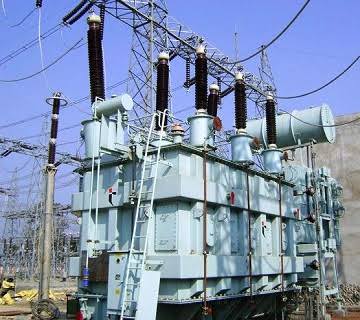
Electricity: Nigeria still in darkness in the 21st century

As FG is set to reverse the sale of DISCOs and GENCOs, it shows the highest form of corruption and mismanagement that continue to pester in their management. Go to their offices and see mismanagement and corruption personified, poor customer services and daylight bribery, before a meter is issued to a customer and so on.

There are 11 electricity distribution companies in Nigeria. Majority of them violated the agreement they entered with FG. There are over 20 electricity generating companies in Nigeria today but the top six GenCos providing the country with electricity are Egbin Power Limited, Transcorp Power, Shiroro, Kainji/Jebba, Sapele and Geregu. They have also failed to inject money into power generation and are begging government for funds.

Don’t get me wrong. I am not against privatisation of NEPA, but I am certainly not happy with the hurried way the government sold the utility corporation without putting it in good shape so that the private hands that will buy it will have a smooth and easy take up.

I was against selling the power corporation to former leaders, cronies and incompetent men by the Jonathan administration.

The past government didn’t rehabilitate the power plants before selling them. All money set aside were stolen by officials. The government refused to listen. We said they should take a cue from global trend. Almost all countries around the world began their power reforms from different starting points with a long history of handing over relatively well managed power corporations.

In contrast, Nigeria is privatising inherited pieces of the old NEPA systems, a derelict corporation where power generation was allowed to dip below 3500mw .

Nigeria will be the only nation in the world that sold its utility corporation at such an abysmal low power generation level, 3500MW to be precise.

Privatization of the Power and Natural Gas Industries around the world has a starting point which include: industry structure, wholesale market, labour and management relations, regulatory framework, privatization objectives and privatization methods.

Nigeria was so much in a hurry to sell out the entire system without taking a holistic appraisal of the likely consequences of the exercise to the nation.

And this explains why the country will remain in darkness for a very long time!

Aliyu Nuhu write from Abuja, Nigeria.

ISWAP abducts 5 travellers in Northeastern Nigeria

By Muhammad Sabiu

Suspected insurgents of the Islamic State of West African Province (ISWAP) have on Tuesday abducted at least five travellers along the Maiduguri-Damaturu road in northeastern Nigeria.

Reports have indicated that the insurgents mounted a fake military checkpoint and hoodwinked travellers which resulted in making them fall prey to their trap.

The abduction was said to have occurred in TamsuKawu village of Kaga local government area (LGA).

A source who spoke to an online newspaper on condition of anonymity said, “Three of the vehicles were forced to drive into the bush at gunpoint before the Boko Haram gunmen later selected five passengers whom they took away while the others and the three vehicles were later released.”

Another source in the know of the incident said, “The attack was suspected to be carried out by Abou Aseyia who was recently appointed as the Ameerul Fiya (Chief of Militant forces), in charge of Sambisa forest.”

The northeastern part of Nigeria is still being hit by terrorists’ attacks despite security agents’ efforts to curb the over-twelve-year-old insurgency.

Please, let there be peace in Ethiopia

By Muhsin Ibrahim

A former Ethiopian minister, a Humboldt scholar at our institute, delivered a lecture a couple of weeks ago. The topic was on Ometo, a minority language and culture in Ethiopia. However, her talk covered other cultures (and languages) such as Amhara, Tigray and Oromo. There I learned that the famous Maitama Sule Dan Masanin Kano-led Hausa school of thought that links the origin of Hausa people and Ethiopians had more plausible points than I knew.
 
The Professor explained that their women avoid mentioning their husbands’ names. Instead, they use euphemisms such as “master of the house”, “so-so’s father”, etc. Further, the Ometo language doesn’t have gender distinction in the plural, etc. These are the same cases in Hausa.
 
Christians or Muslims, the traditional Ethiopian apparels resemble that of the Hausa people. Moreover, some Amharic words and that of Hausa sound similar and mean virtually the same. These include “demena” & “damina“, “ābiduga” & “auduga“, among others.
 
For years, before the above discovery, I liked and read about Ethiopia. I fly their airliner more than any international flight for my love of the country, my convenience as it operates in Kano State, among other reasons. It’s, indeed, the pride of Africa.
 
When Prime Minister Abiy Ahmed won the Peace Nobel Prize in 2019, I heartily celebrated it. Like many people globally, I was optimistic that the country would progress further and become an example for other African countries to emulate. But, unfortunately, Ethiopia is heading to an all-our-war with itself. When will we ever make it in Africa, please?
 
Dear Ethiopians, don’t ruin the rich history, culture and beauty your country is known for. Your resilience used to be against foreign invaders and intruders since centuries ago. Even the fascist Mussolini had to give up. Rethink and let go of all these ethno-regional and political differences and put down your arms.
 
May peace reign in Nigeria, Ethiopia and other crisis-ridden places, amin.

Muhsin Ibrahim is a Nigerian. He works and studies at the Institute of African Studies and Egyptology, University of Cologne.

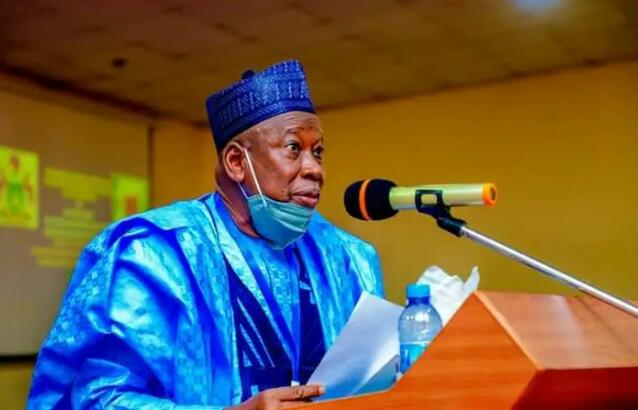
‘My administration is working to enhance onion farming’ – Ganduje

By Uzair Adam Imam

Governor Abdullahi Umar Ganduje of Kano has called for the establishment of small, medium and large scale processing plants in order to boost the production of the vegetable crop in the state.

Ganduje made the call on Wednesday,  3rd November, 2021 while addressing participants of the 4th regional onion conference at Kano Government House.

The Governor represented by his Deputy Dr. Nasiru Yusuf Gawuna stated that Kano being the 3rd largest onion producing state in the country and having one of its biggest market in the continent, his administration is working alongside the farmers in the state towards enhancing their production due to the importance of onion as a vegetable crop whose distinctive flavour and health benefits is appreciated by people around the globe.

“Because of our commitment towards promoting the value chain of onion, we are facilitating ways for the farmers to source for funds that will launch them into big processors and exporters,” he said.

Ganduje went on to describe the event as milestone and expressed appreciation to the organisers for the honour done to Kano to host the conference.

The Minister of Agriculture and Rural Development, Dr. Mahmood Abubakar represented by Alh. Abba Gana Yamani said the importance onions in the Nigerian diet can never be under estimated, adding that the ease of cultivating the crop makes it a lucrative venture for farmers.

“Nigeria is among the largest producers of onions in the world, in 2012 alone, an estimated 240,000 tonnes of green onions and 1,350,000 tonnes of dry onions were produced in Nigeria the Minister revealed”.

Speaking earlier, the President Of the National Onion Producers, Processors and Marketers Association Of Nigeria, Aliyu Maitasamu Isa explained only 1,400,000 million tonnes of onions instead 2,500,000 million tonnes therefore calls for increase in the production of the vegetable crop.

He said the conference with the theme: “The Onion sector in the era of the African continental free trade area and the COVID-19 pandemic” is aimed at developing a business plan for onion trade within the West and Central African Economic Community and also to harmonize and fashion ways of continued business despite the challenges caused by the COVID-19 pandemic.

The event was attended by onion producers, processors and other stakeholders across the African region.

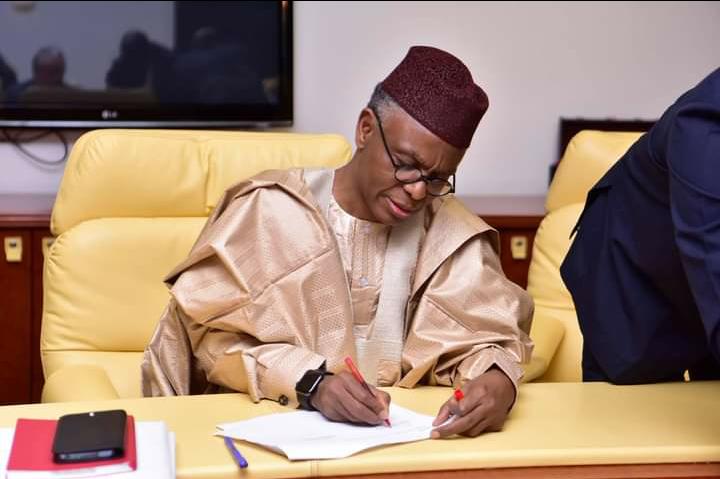
El-Rufa’i explains why he removed Chief of Staff

By Uzair Adam Imam

Governor Nasir El-Rufai of Kaduna State has explained the reasons behind the removal of his Chief of Staff, Muhammed Sani Abdullahi, and also denied Sunusi Lamido Sunusi’s involvement in his administration.

Recalled that the Kaduna State Chief of Staff had been removed from his position month ago and transferred to the Ministry of Budget and Planning Commission as a commissioner.

El-Rufa’i said that the ministry had been having challenges in preparing budgets two years since Abdullahi left the ministry.

He made the disclosure in a radio program in the state where he was quoted saying: “The removal of the chief of staff had nothing to do with addressing Khalifa Muhammadu Sanusi (II) as former Emir of Kano at an event in the state, recently.

“The transpired between the former governor of the Central Bank of Nigeria (Sanusi) and Abdullahi is a historical joke between Zaria and Kano people in which Zaria considered Kano people as their slaves,” he said

The governor further stated that the he mainly received advice from Sanusi, bu he has nothing to do with how he runs his government.

“He is the vice-chancellor of our state university because he is a professional in that aspect. Secondly, he is the deputy chairman of KADIPA.

“These are the two areas he is assisting us with advice and again everybody knows Muhammadu Sanusi is a qualified economist and so I only seek his advice on this aspect.

“But not on how I run my government or who will work with me. I don’t seek advice from anybody outside my colleagues in the government and we usually sit together to discuss,” El-Rufa’i concluded.

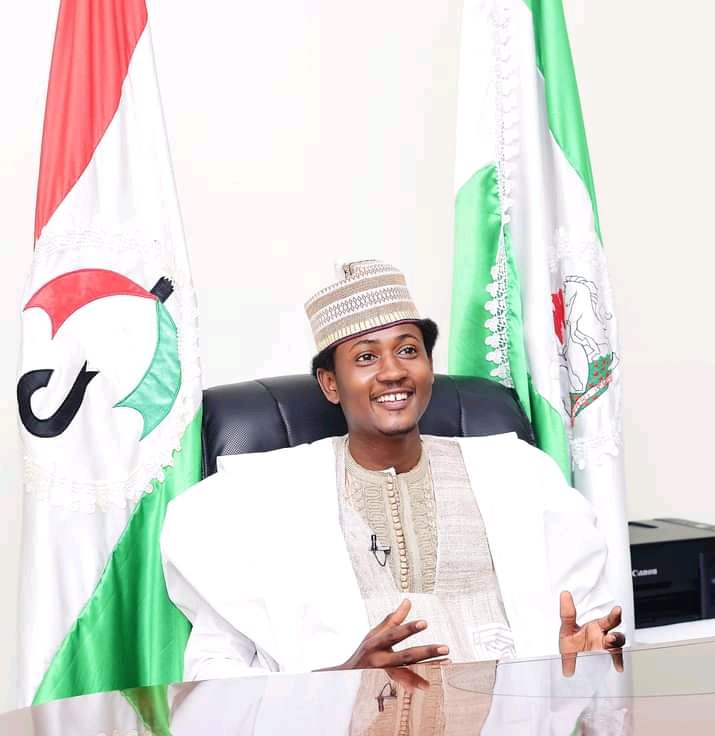
Youth leadership in Nigeria and the Muhammed Kadade’s example

By Abdulrazak Iliyasu Sansani

I am not a card-carrying member of the Peoples Democratic Party (PDP) or any other party. But I was on the cusp of becoming a member of the Congress for Progressive Change (CPC) in 2010 as a young man, who was majorly stopped by the constitutional requirements of being a card-carrying member, which I did not fulfil certain aspects of.  And, of course, other thoughtful considerations have prevented me from joining any party officially.

So, when the CPC merged with the ACN, ANPP, and a faction of APGA, the urge to join was renewed, and it only took God’s guidance for me not to have joined it or any other party. Nevertheless, I have always done all these with patriotic conviction and buoyed by the zeal to help my country in my little ways.

I am not a blind follower of any cause and certainly not a supporter of broad generalisations. This explains why I have never jumped on the bandwagon where youth leadership is equated with exemplary leadership, especially with optimal performance. I have clearly shown why it is not so in so many of my writings in the past. Nevertheless, I still believe that good leadership can be gotten in both the young and old. Throughout history, this has been proven to be spot on.

But when it comes to the issue of any leadership position that is reserved for youth. I am wholly in support of only youth leading in that instance. I do not subscribe to older men holding offices kept for the youth, which was absurdly becoming a given.

Hence, on October 31,  early Sunday morning, when I received the news of the emergence of the new National Youth Leader of PDP, Muhammed Kadade Sulaiman, whose age has been reported in so many newspapers, blogs, tabloids, etc. to be 25, I received it with great delight. It is a refreshing deviation from the past that had largely made a mockery of the contribution of the youth in respect of all the major parties in Nigeria. While this doesn’t repay all that, not even close. But it is the right step in the right direction.

If certain positions were mainly preserved for the elders, I would have had the same abhorrence if the youth destroyed this arrangement and occupied offices exclusively for the elders. I am a stickler for rules. Thus, I respect conventions and believe everyone should only get what is reserved for them.

In essence, I celebrated the victory of the PDP National Youth Leader, Muhammed Kadade Sulaiman, with the clarity of the triumph of the right thing over absurdity. Some have argued about his influential or rather affluent family background being the two reasons for his success. Whatever it is, there are numerous families with considerable influence in the polity who have had scions, who are political aficionados, and have vied for positions less significant than this and lost. They would have grabbed with both hands this grand opportunity, should it have been just for the two reasons above.

Therefore, the People’s Democratic Party, no matter your grouse against the party, has done something strategic and commendable. And for some of us, we applaud anything good and positive. We leave the rest for the pundits, political scientists, and seasoned politicians to analyse.

I hope Muhammed Kadade Sulaiman does well in this big assignment, and I pray that his emergence will pave the way for the massive influx of good and responsible youth in leadership positions. In the end, I also believe that the young and the old shouldn’t be denied a constitutional right to vote and be voted for simply because of their age. Merit must always be the watchword whenever we commence leadership discussion anywhere.

Abdulrazak Iliyasu Sansani wrote from Turaki B, Jalingo, Taraba State.
Buhari congratulates Sultan on his 15th Anniversary

By Uzair Adam Imam

President Muhammadu Buhari congratulates the leader of Nigerian Muslim Ummah and chairman of Nigerian Supreme Council of Islamic Affairs (NSCIA), His Eminence, the Sultan of Sokoto, Muhammad Sa’ad Abubakar (III), as he marks 15 years on the throne.

The statement signed Tuesday by the Senior Special Assistant to the President, Malam Garba Shehu, disclosed this, describing the Sultan as a “peacebuilder and a true embodiment of commitment to service”.

The statement also added, “Sultan Sa’ad has remained a leader who dedicated his life to the welfare of the people.”

“Greetings to His Eminence, the Sultan on his 15th year on the throne of his fathers. On behalf of my family and I, the government and the people of Nigeria, I wish you many more years in the position and working tirelessly to promote inter-religious and inter-communal harmony throughout the federation.

“It is very reassuring to have such leadership at these challenging times. My prayers are for your long and healthy life,” said the president.

Kannywood Movie Review: FANAN

In recent months, no romantic Hausa song has captured the public attention as FANAN. However, the song’s movie was premiered on Friday, October 29, 2021, in Platinum Cinema (a newly inaugurated multiplex cinema in Kano).

The film opened to full halls across the new cinema and grossed approximately ₦1.25 million on its opening day, setting the record of being the first Hausa film to get this in one cinema. This remarkable success can undoubtedly be attributed to the popularity of the Fanan song and the distinctive marketing strategy adopted by its executive producer, Mansurah Isah, in promoting the film. But does it, on itself, merit this immense success? I watched it on Sunday, and here is my review.

Plot:

Fanan is a family drama that tells the story of an obedient wife, Fanan (Sabeera), and her husband, Kamilu (Yakubu Muhammad), a private company employee. The couple lives peacefully together with their only daughter Amira (Iman Sani Danja).

Later, their life is disrupted when Kamilu begins to maltreat Fanan and eventually divorces her after starting an affair with a wealthy woman, Madam Jessica (Rahama M.K). Jessica promises to marry him and facilitate his promotion to the rank of manager in another big company. However, she ditches him afterwards without fulfilling any of her promises.

Kamilu then tries to restore his marriage with Fanan, but his attempt proves in vain. Fanan is beyond his reach as she is now married to a business mogul, Alhaji Sammani (Sani Danja), whom she meets through his son, Fahad (Khalifa Sani Danja), a schoolmate of her daughter. Therefore, the jealous Kamilu filed a lawsuit against Fanan, seeking the return of his daughter (Amira) to him. However, he eventually drops the case after the girl narrates the insult he inflicted upon her and her mother while they were together during the court hearing.

Critique:

The film doesn’t entirely disappoint, but it’s not unique in any way. Both its artistic and technical aspects are only average. The story is predictable, and there are many gaps in the screenplay. For example, when Kamilu leaves his job, Madam Jessica doesn’t facilitate his new job application. Yet, he’s shown to have a connection with the company where she works. Again, Alhaji Sammani’s family background and how he ends up being single remains a mystery.

The interspersing of the title song also throws a spanner in the film. Fanan and Alhaji Sammani performed it before their marriage. Considering its lyrics, however, it would’ve had a better impact if performed after the wedding.

Regarding the cast, Yakubu Muhammad is the life of the movie because his performance stands out. Next to him are Rahama Mk and Sabeera. The latter is, particularly, for her good look. But while Sani Danja’s role deserves notice, his children, Iman and Khalifa, need to hone their skills as actors.

Finally, the fact that Fanan is a huge success doesn’t mean it succeeded on its own merits. It rides only on the popularity of its song and the hype around it. I rate it 2/5.


Habibu Maaruf Abdu wrote from Kano, Nigeria. He can be contacted via habibumaaruf11@gmail.com.

NCH demands govt’s recognition to fight banditry

By Uzair Adam Imam

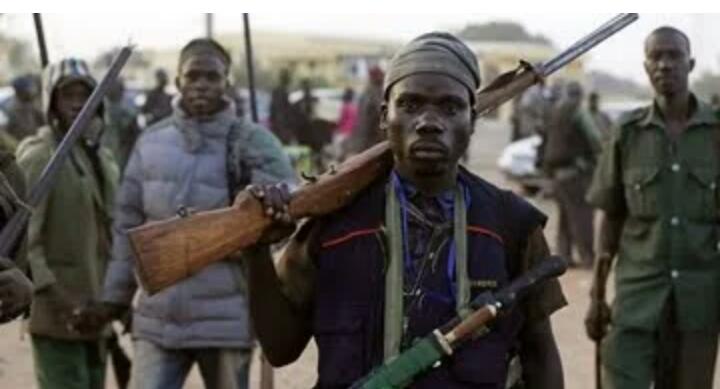
The Nigerian Hunters Council (NHC), under the leadership of its Commander-General, Joshua Osatimehin, has sought government’s recognition as official security agency to enable them fighting bandits and banditry in the country.

Osatimehin disclosed this yesterday, Monday, at Abuja, at the end of a five-day capacity training for over 7000 personnel of the NHC on corporate safety and conservation.

He also added that they their personnel are now very committed towards fighting bandits, kidnappers and other forms of criminality in the society.

Meanwhile, Osatimehin also appealed to the National Assembly to ensure that the Nigerian Hunters Council bill 2020 becomes a law with immediately.

“We have our headquarters and offices in the 36 states of the federation. What we want the government to do is to recognise hunters as a security agency in Nigeria. If this can be recognised by an enabling law, crimes and criminality will be drastically reduced in Nigeria.”

“The bill has passed first and second reading and the public hearing at the senate, any moment from now we expect it to be passed into law and we will not relax until government gives us the enabling law.

“When you aspire to acquire what you desire you don’t need to retire but you `refire’,’’ he added.