Admin

Greedy Nigerian leaders lack intellectual capacity to lead – Prof. Jega

By Uzair Adam Imam

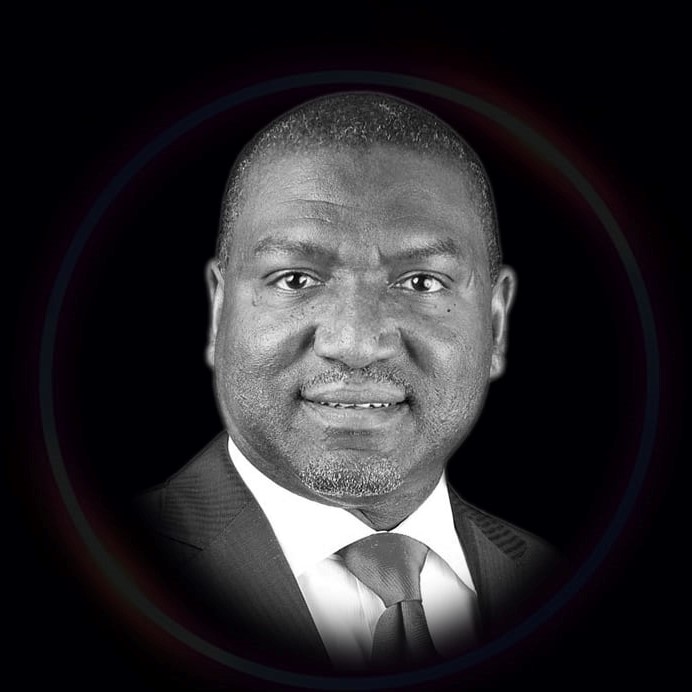
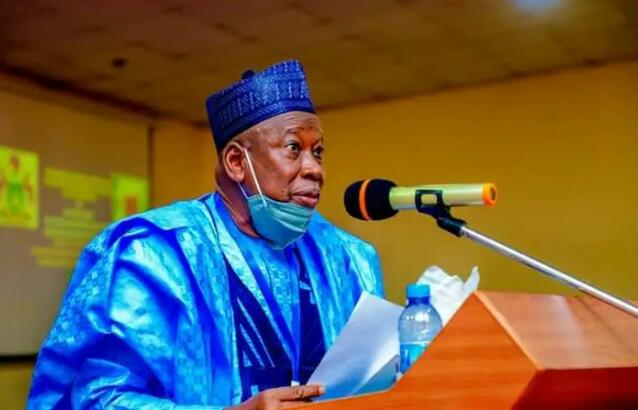
Former Chairman of the Independent National Electoral Commission (INEC), Prof. Attahiru Jega, has described Nigerian leaders as greedy who lack the intellectual capacity and vision in terms of how to usher in developmental projects.

Jega stated this on Monday, 15th November 2021, at the Maitama Sule Leadership Lecture Series, organised by the Students Wing of Coalition of Northern Groups (SW-CNG), in Katsina.

He also added that the insecurity and economic challenges that have been bedeviling the country for a long time are as a result of the country’s bad leadership.

Jega said: “The major indices of these crises manifested themselves from the Northern part of this country, whether it is poverty, youth unemployment, security challenges, maternal mortality, out-of-school children, lack of girl-child education and early marriage as well as the challenge of reproduction of our females.

“Anything you can think of, the terrible statistics come from the Northern part of this country. And why is it so? That is the key question. Today, we remember the Maitama Sule, the Amadu Bellos, Isa Katais and many others.

“These were people who led and protected the North and ensured that the North developed in accordance with its ability and their own abilities as leaders. While we cherish the memories of what had happened in the past, what kind of leadership have we got from the Northern part of this country?

“We have so-called leaders who are selfish, who are not selfless, greedy, who have a narrow vision in terms of how this country can develop not to talk about the region where they come from. They really lack intellectual capacity to be classified as leaders,” he said.

Yoruba Muslims in Yorubaland: Revisiting interfaith dailogue and religious tolerance

Perhaps, it was the Mathew Effect that made Professor Kpareogi’s recent article on the plight of the Yoruba Muslims in their own lands so famous that it generated so much response as if, until the piece was made public, nobody was aware that Yoruba Muslims, who were in the majority in the Southwest, have been under powerful religious subjugation by the Yoruba Christians.

But even a casual observer will not fail to notice the recurring crisis across the Yoruba land over the use of Hijab by Muslim female children in the schools. Some of these sartorial choice crises trended long enough to attract the attention of everyone while some have to be settled at the courts. The infamous ruling by an Ikeja high court that because Christians would feel less righteous in the presence of Hijab wearing children, Muslim children should not wear Hijab to their schools, is still fresh in our memories. Delivering the judgement on 17th October 2014, Justice Modupe Onyearbor declared that “The non-Hijab wearing students will feel inferior to those who are putting on Hijab.” The judge, therefore, banned the use of Hijab for Muslim girls till an Appeal Court put aside that judgement.

The sartorial choice struggle is, perhaps, the most glaring among the many struggles being fought by the embattled Muslim majority in the region, this is mainly due to publicity it is generating and the will to resist the subjugation by the new generation of Muslims who firmly believed in self-determination. The case of Barrister Firdaus Amata who refused to jettison her constitutional right on December 12, 2017, an action for which she was denied entry into the International Conference Centre by the Body of Benchers, highlighted one of such struggles.

Apart from the Hijab struggle, the most glaring inequality the Muslims are struggling with is the fact that despite being the majority in the region, not a single Islamic court exists in the whole region. They are forced to either take their cases to the imposed Christian common law courts or Customary courts. This is more worrisome given that Islamic courts existed in Yorubaland long before the arrival of the colonial armies who abolished them and imposed their own courts. Islamic courts existed since 1842 in that region, according to MURIC.

Even the Yoruba Muslim’s peaceful move to introduce sharia courts in Yorubaland through constitutional means was fiercely tamed by the Christians in that region. On May 27 this year, the Pentecostal Fellowship of Nigeria (PFN) was eloquent in its submission that the introduction of Shariah Law in the South West should be ignored by the Senate.

Nothing highlighted how the Muslims in Yorubaland are struggling to free themselves from Christian subjugation than the declaration by some Muslim groups that they are not in support of the Oduduwa Republic as they will face persecution if actualized. This belied the widely believed notion that the Yorubas are homogenous and that religion plays a second or third role in their lives. It proves that for a long time, the Muslim majority were silenced into submission out of fear of “social ostracism”. Their passiveness was fully exploited by Christians and misunderstood by northerners.

Now that the passiveness is giving way to the rising tide of Islamic awareness in the region, things are getting clearer that the hyped religious tolerance in that region was indeed the domination of Christians over Muslims.
Ironically, this is coming just as some voices are maintaining a hyperbolic but erroneous assumption that the North is the den of religious intolerance even as facts are contradicting them.

Sheikh Nuru Khalid is among those who seemed to have fallen for this fallacy recently. In his clamour for Interfaith Dialogue, he recently claimed, among other things, that Interfaith Dialogue was necessary now given the bad light in which the terrorist organizations, like Boko Haram, are painting Islam and the high level of religious intolerance in the North.

If the Sheikh is right on Interfaith Dialogue’s effect on religious intolerance, he is very wrong on the Boko Haram claim. He is also very wrong in his charge that Muslims are to be blamed for religious intolerance in the region. Because of all the religious crises in this part of the nation, over ninety per cent were NOT caused by Muslims; they were just defending themselves.

Therefore, to insinuate that Muslims are to blame for religious intolerance in the country is insidious even if said in good faith, because it is a BIG lie.

It is flabbergasting to assume that had there been an Interfaith Dialogue, Boko Haram wouldn’t have happened, because among the reasons the terrorists have for fighting is what they called the systematic downplaying of religious teachings in order to please non-Muslims.

It is evident that both the terrorists and the Sheikh have agreed on the same erroneous definition of Interfaith Dialogue. Both seemed to give Interfaith Dialogue the definition of Syncretism. Many people speak about syncretism while they think they are discussing Interfaith Dialogue.

To differentiate between the two terms, just take the stands of late Nnamdi Azikiwe who said “We must forget our differences”, and that of late Sir Ahmadu Bello (Sardaunan Sokoto) who replied, “No, let’s understand our differences…” What Azikiwe said is syncretism while the stand of Sardauna connotes Interfaith Dialogue.

I don’t think anyone who knows that Muslims are the majority of the victims of Boko Haram or understood their mission will honestly insist that an Interfaith Dialogue would have been an antidote to their aggression.

Finally, while I am not saying (the Muslim) North is totally devoid of religious intolerance (this depends on your definition of the term), it is not true that we are the purveyors of intolerance, rather, we are at the receiving end of religious intolerance. This could be discussed in another piece.

Muhammad Mahmood writes from Kano.

Nigerian Universities to embark on fresh strike

By Khadija Muhammad

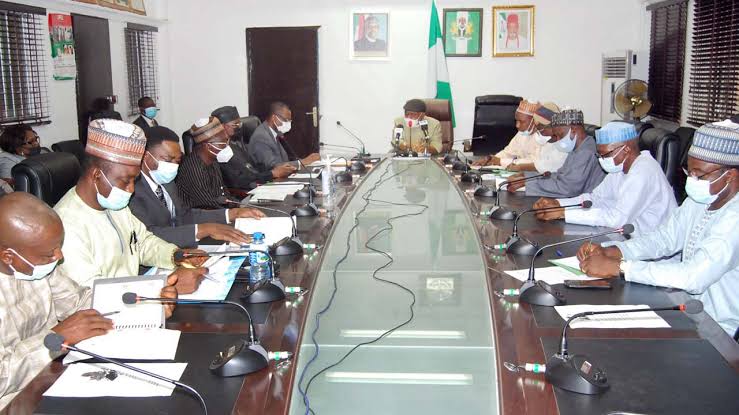
The national president of the Academic Staff Union of Universities (ASUU), Professor Emmanuel Osodeke, expressed concern over how the Federal Government of Nigeria is handling the demands of the universities unseriously. Together with other union leaders, he expressed their dismay at a press conference in Abuja on November 15, 2021.

The Academic Staff Union of Universities (ASUU) issued a three-week ultimatum to the Federal Government to address all issues as agreed in the December 2020 Agreement.

ASUU President, Professor Emmanuel Osodeke, stated this on Monday while addressing reporters in Abuja.

The president warned that the union might be compelled to embark on another nationwide strike should the government fail to implement the Memorandum of Action signed with ASUU before suspending the last industrial action.

According to the ASUU President, all the issues, including unpaid academic earned allowances and the universities revitalisation fund, have not been addressed almost one year after an agreement was reached.

The ultimatum is part of the resolutions reached at the National Executive Council (NEC) meeting of ASUU held in the nation’s capital.

It can be recalled that ASUU embarked on a nationwide strike in March 2020 following its disagreement with the government over the funding of the universities and the Integrated Payroll and Personnel Information System (IPPIS), among other issues. Accordingly, it had proposed the University Transparency and Accountability Solution (UTAS) to replace IPPIS. But in a bid to get the lecturers back to class, the Minister of Labour and Employment, Chris Ngige, convened a series of meetings with leaders of the union and relevant government officials.

Amid the strike that lasted several months and negotiations that ended in a deadlock, the government and ASUU later signed a Memorandum of Action in December 2020. This led to the suspension of the protracted industrial action that lasted nine months. However, not after the government offered a cumulative N65 billion to the lecturers to address earned academic allowances and revitalisation of universities.

On the IPPIS tussle, both parties agreed on the UTAS, while the government would pay the university lecturers’ salary arrears on a different platform.

ASUU had on several occasions warned that it would indeed go on strike if the federal government continued to break the promises and throw away all the agreements reached.

The fallacy behind free education in Kano

By Salisu Uba Kofar-Wambai

It might sound obnoxious, as bitter as gall, if I may say this free education program by the Kano state government may not see the light of the day. Often, politicians politicise education. The concept of free education has been with us for quite a long spell. Our education has always been free. The token amount collected from the students isn’t the actual school fees. Students only pay 700 Naira per term. Is this the school fees?

And hardly could you find where a student is deprived of attending classes because he fails to settle his payment.

In fact, the school heads face punishment if they send away a student or pupil who can’t pay his fees. The only way is to persuade the student to do the needful or grant him an exclusion considering his financial plight. The money raised is always spent in the school under the watch of the PTA, and auditors come from the education ministry to ensure the money collected isn’t embezzled and is used wisely and judiciously. Prudence is always the watchword.

The school heads usually run into trouble if they’re found wanting in the area of class furniture problems, paucity of teaching aids, unrepaired broken windows and doors, non-provision of markers and chalks and what-have-you.

Now, the government has directed the schools’ authorities to stop collecting such peanuts to maintain, sustain and administer the schools in the name of free education and claimed to be giving out money to the schools as upkeep to take care of them.

The bone of contention here is that: could the government continue to provide this fund? In case of delay or non-payment by the concerned authorities, what will happen to the schools? It will be very hard if they can continue supporting the schools.

This was a similar scenario under Engr. Rabiu Musa Kwankwaso administration. He stopped the tertiary institutions and universities from collecting fees in the name of “free education” and couldn’t provide enough funds to run the schools.

I am not hoping and praying to have problems with the program, but at least we shall embark on something feasible. Unfortunately, the politicians are only trying to be popular with the program, to impress voters, to the detriment of the system.

Many outside the system may not get me right. And our society will see me as someone who has no sympathy or don’t like to see the children of the poor getting education, NO! It isn’t. Rather am doing this for the betterment of their education.

Ganduje commiserates Dangote over death of brother

By Uzair Adam Imam

Governor Abdullahi Umar Ganduje of Kano state has commiserated with the President Dangote Group of Companies, Aliko Dangote over the death of his brother Sani Dangote, who was the Vice President Dangote Group of Companies.

A statement signed Monday 15th November, 2021, by the Chief Press Secretary to the Governor of Kano State, Malam Abba Anwar disclosed.

Mr Dangote died at a US hospital on Sunday evening after a protracted illness, and until his death he sat on the board of several companies and was the deputy chairman of African Gum Arabic Producers Association.

The governor said that we received the information about the passing away of this gentleman, Alhaji Sani Dangote, with shock. Kano state, our dear country Nigeria and the business community lost and illustrious son” he mourned.

However, he also lamented that the death was not only shocking to the immediate families of the deceased “…but to all of us particularly those from Kano state. We lost a rare gem in the business community.”

“It is therefore on behalf of the government and good people of Kano state, that I, the governor of Kano state, am sending our heartfelt condolence to the immediate families of Alhaji Sani Dangote, to his brother, Alhaji Aliko Dangote, over his death,” he stated.

He prayed for Forgiveness from the Almighty Allah for the reposed soul of the deceased. Adding that, “May Allah forgive all his shortcomings and reward his good deeds with Jannatul Fiddaus, ameen,” the statement added.

Alhaji Aliko Dangote loses brother

By Muhammad Sabiu

The richest man in Africa, Alhaji Aliko Dangote, on Sunday lost his younger brother Sani who passed on at a hospital in the United States after a protracted illness.

Sani was the deputy chairman of Dangote Group and had been a major stakeholder in the sectors of mining, manufacturing and the like.

He was also the Chief Executive Officer (CEO) of Dansa Agro-allied Limited.

However, no details have emerged as to the number of wives and kids he had left.

Nigerian Army clears air on “soldiers overthrowing Buhari’s regime” report

By Muhammad Sabiu

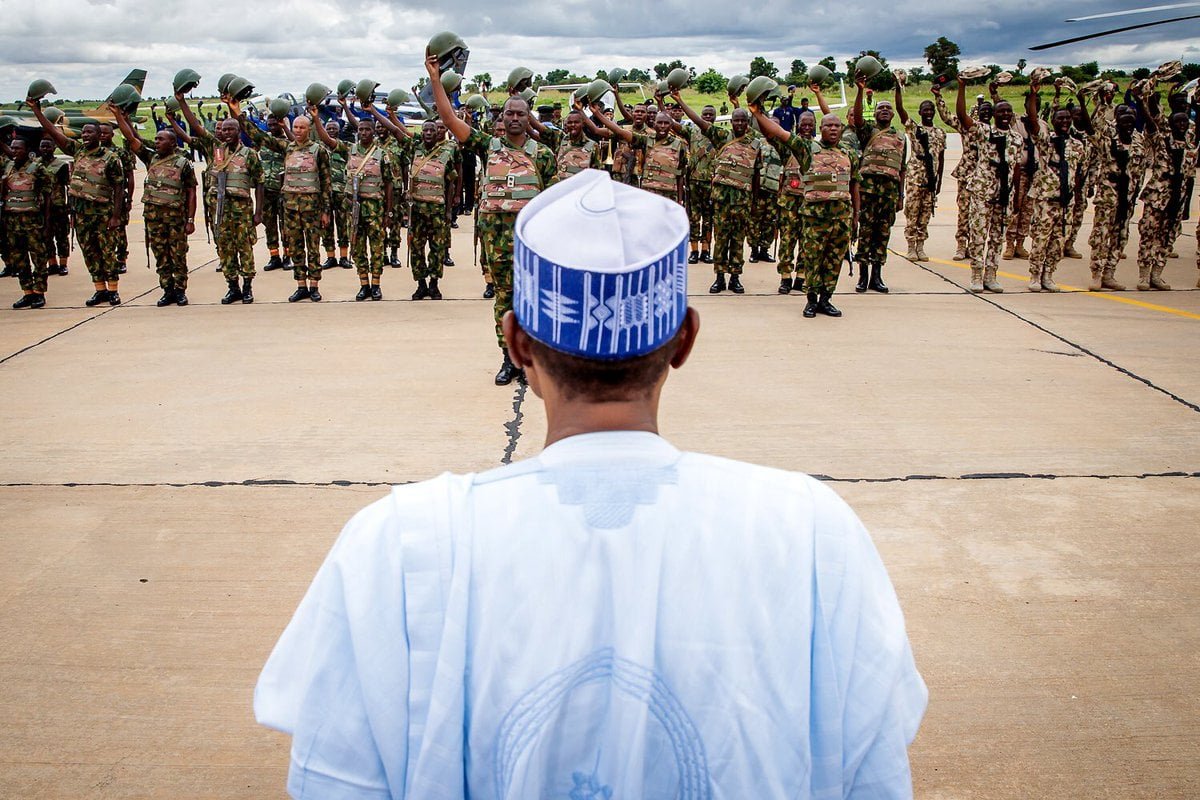
The Nigerian Army on Sunday has debunked some media reports making the rounds that it warned some of its personnel against overthrowing the Buhari-led government.

A statement released via Facebook by Army’s spokesperson, Onyema Nwachukwu, described the media reports as “outrageous lies and fabrications.”

“The Directorate of Army Public Relations has been notified of an online story making the rounds, with the caption, ‘Defence Headquarters wars soldiers against overthrowing Buhari’s regime” published on November 13, 2021, by a certain online news medium dubbed -Naija News House

“The said publication, which was riddled with outrageous lies and fabrications claimed that the Defence Headquarters has denounced a call for the military to take over the reins of power. The online outlet went further to attribute its falsehood to “Army Spokesman, Brig-Gen Onyema Nwachukwu”.

Clarifying the issue, the statement added that the Nigerian Army had never made any statement of such nature.

It said, “However, for the sake of clarity and to keep the records straight, we wish to state that at no time did the Director, Army Public Relations, Brig-Gen Onyema Nwachukwu issue any statement on the subject matter. It is, therefore, a figment of their imagination, which did not in any way emanate from Brig Gen Nwachukwu.”

With fabricated reports such as this and others, it’s obvious that Nigerian cyberspace has been littered with a lot of fake news, which has become a serious menace and has posed a serious threat to Nigeria’s peaceful coexistence.

Abductors of Zaria council workers demand 100M ransom

By Hussaina Sufyan Ahmad

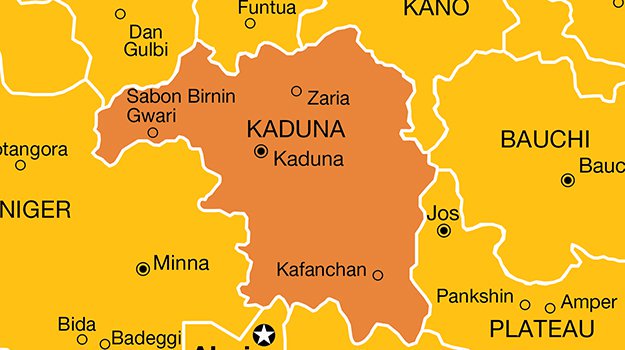
On Friday, abductors of the Zaria Local Council workers in Kaduna State contacted individual families to demand ransom, ranging from N15m, N20m to N100m on each abductee.

Spokesperson of the Coalition of Northern Groups (CNG), Abdul-Azeez Suleiman, confirmed this on Saturday at Abuja. He said:

“It has come to our notice that the abductors had made contact with their families. We learnt that the captors assured their safety to the families of the captives and demanded ransom.”

“With the unfolding scenario, the CNG headquarters has resolved to direct its Kaduna State students’ wing to put its planned mass protest on hold so as not to disrupt this fresh development.”

“We assure affected families, particularly the aggrieved students, who are in solidarity with their fellows, whose parents are among the victims, that CNG would remain vigilant, concerning the direction the situation would turn, until their parents are brought back alive.”

“We, however, frown at the discouraging silence by the authorities in the past four days since the captives, who are legitimate government workers, were abducted while carrying out an official assignment,” he said. The group called for special prayers for the safe return of all victims currently in captivity anywhere.”

Why I contest for APC National Youth Leader

By Abdulahi Majeli, Esq., AICMC

Looking critically at the multiple challenges of our time as youths of our dear nation, any well-meaning and patriotic youth would want to see both his future and that of the generations to come are set on the right footing. This is so that all and sundry enjoy peace and unity. This is what gives me both the courage and strength to stand up in doing what I feel is needed to be done, now, not later, in order to create an atmosphere full of prosperity for us all.

I am a vibrant advocate of youth participation in leadership, a chartered mediator and conciliator and a Barrister and solicitor of the Supreme Court of Nigeria. I hail from Gwale Local Government of Kano State. My advocacy in youth participation in leadership is rooted in the firm conviction that youth possess the needed acumen to introduce new ideas and fresher perspectives to address the multifaceted challenges and problems that are bedevilling our country.

The challenges of our time should be a great cause of concern for every well-meaning and patriotic citizen. These causes of concern stem from the strong hope for an improvement to the status quo and a better Nigeria where peace and unity abound for future generations. I draw immense strength and courage from this desire and am bolstered by it to do all that is needed to achieve this goal.

Growing up as a young man, especially during my sojourn undergraduate at Bayero University, I engaged actively in the struggles that improved the welfare of my fellow youth during my LL.B. That has undoubtedly built more passion in me to see the youths at the forefront of creating a worthy future.

As a lawyer with three years post-call experience, raising the bar and making sure all engagements are both effective and efficient while maintaining strict compliance with the clearly spelt out functions of National Youth Leader under Article 14.22 of the All Progressive Congress Constitution ( October 2014 as amended) is achievable, as functions of the office in question are to mobilize youth for the attainment of party objectives, initiation and implementation of strategic programmes that would endear our great party to Nigerian youths.

It is irrefutable that the youths are the backbone of any society. Yet, these youths are often left unheard. However, I believe the morale is high, and we want to utilize this office to fill the vacuum adequately.

Since the inception of our great party, we are wary about the communication barrier between the zonal and state youth leaders, which serves as a stumbling block to the success of our party. Therefore, it is imperative that strategic programmes are created that will coordinate and maintain the needed cohesion between the zonal and state youth leaders for the betterment of our party.

Nigeria is one of the most populous nations with a high percentage of youth as its population has the significant task of managing the human resources within its circles. Therefore, competent and hardworking people representing the people at various positions have been a problem these days. Anything not filled with the right hands shall not yield good and effective results.

So, it is upon us all to work collectively in ensuring the well-desired goals clearly spelt out in our giant nation’s constitution are achieved. Working out the policy and objectives of the party effectively and efficiently will bring a new life and development to our Nigerian people, our giant party and our dear nation. These are things that only competent people can accomplish.

So, we have to work collectively to ensure the well-desired goals are spelt in our giant nation’s constitution. Working out the policy and objectives of the party effectively and efficiently will bring a new life and development to our Nigerian people, our giant party and our dear nation. These are things only competent people can accomplish.

It’s high time we reposed our confidence and trust in the youths as they have fresh ideas and understand the youth better than anybody so as to avoid putting square pegs in a round hole.

Nevertheless, these young people play an indispensable role in the development of any country. As such, we should not allow incompetent people to pocket the position that is meant for us.

Nigeria is undoubtedly the only country we can call ours. To that end, making it great rests entirely on us. The decision to make it stand out is our collective responsibility. Let us all, with one unified voice, make our country great.

God bless the Federal Republic of Nigeria.

God bless the Nigerian Youths.

God bless us all!

Ganduje’s support on health is untiring – Pharmacist

By Uzair Adam Imam

The Director General, Kano State Drugs and Medical Consumables Supply Agency, Pharmacist Hisham Imamuddeen has received officials from the Sokoto State Ministry of Health on study tour to the agancy on Wednesday.

A statement signed by the Information Officer Ministry of Health, Kano State, Hadiza M. Namadi disclosed, stating that the contribution Ganduje is giving to the health sector is tremendous.

The visiting team, comprising top management officials from the ministry which was lead by Pharmacist Murtala, Sokoto State Drugs and Medical Consumables agency and the Lead Consultant from Global Health Supply Chain – Procurement Supply Management, Pharmacist Tukur Ibrahim.

Pharm. Hisham Imamudeen, while briefing them on the mandates, activities and the modest achievements recorded by the agency in recent times, he also commended Governor Abdullahi Umar Ganduje for his untiring support in the health sector.

However, he particularly expressed delight and deep appreciation to the Governor for allocating substantial percentage to the health sector in the 2022 Appropriation Bill as well as supporting commodity supply chain all aimed at improving the life of the people in the state.

Earlier in his his speech, the Team Lead, Pharm. Murtala said that they were in Kano for a study tour to see for themselves and learn the workings of the agency so as to improve their own.

Pharm. Murtala then expressed satisfaction with what they saw and therefore appreciated the capacity and friendly disposition of the DG as he promised to emulate the Kano state model in improving health commodity supply chain in their state.

He also thanked the DG and his entire management staff for their hospitality.