Admin

The 61-year-old Nigeria I want

By Adamu Usman Garko

The 61-year celebration of independence by Nigeria in 2021 will be a celebration of faux independence as Nigeria has yet to emancipate herself from the shackles of slavery fully. This slavery, however, isn’t covert but overt; it isn’t manifest but subliminal. Before the independence in 1960, that slavery was manifest. However, the contemporary form of slavery is reflective in the abysmal display of patriotism on all fronts and regards. 

If, in 61 years of existence as an independent nation, Nigeria has yet to boast of policies that favour her citizens confidently and can only boast of policies copied from her colonialists hook, line and sinker, then what independence is there to celebrate? If we have yet to absolve plagues like ethnic rivalry, corruption, the proliferation of theft, among other issues, then these calls for recourse in our actions. These are calls for a pictorial representation of the kind of Nigeria we want and deserve. Maybe that way, we would be able to plan towards the actualisation of our dream Nigeria.  

As a millennial, the first archetype I nurse is a Nigeria that appreciates creativity and innovation; there is no gainsaying that we are people blessed with talents, innovative and creative abilities, clarity of vision, resilience, and other virtues. Yet, the sickening reality is that these virtues are not duly apportioned the appreciation and support they deserve. Because of this, hordes of talents have been silenced and/or lost to countries where they are well appreciated. But, if schemes geared towards supporting and motivating the innovative abilities of young minds are instituted by the Federal Government of Nigeria, I believe that this subtle form of intellectual slavery will be absolved. 

Second, a Nigeria controlled by leaders who nurse a burning desire for recourse and restitution is what I desire. Young minds like myself have, over the years, witnessed so many transitions in government, but these transitions influence nothing; there is a continuum of hunger and pain despite the transitions. 

Leaders elected into public offices are elected on the grounds of financial strength, not on the grounds of shown community service, not on displayed prestige and honour, not on the grounds of brilliance and zeal for change.

During election periods, contestants for public offices litter our streets with faux promises only to be elected and trail the path of their predecessors. So, I want a Nigeria controlled by patriotic, sane, brave leaders who are not afraid to take the bulls of change by the horn. 

Also, a peaceful Nigeria is everything; a Nigeria devoid of violence, one where the insurgency is a word found in the pages of history, not on the daily newspapers, one where the safety of lives and properties is guaranteed. I am honestly tired of embodying fear in the crevices of my body, fear of being kidnapped, fear of leaving home whole and getting back unwhole, fear of losing all I’ve gathered as properties to the hands of thieves or the hands of ruins because this fear cripples the creativity of young minds like myself and this conversely affects our individual contribution to the development of the country. 

A peaceful Nigeria is not the only key to development but also key to the solidification of whatever changes occur. So I want a Nigeria devoid of favouritism, one other cankerworm that has eaten deep into the sinews of all fronts, even the healthcare system, even the judiciary. 

I want a Nigeria I can call home, and a home is a place of respite. I want a Nigeria that is kind. A Nigeria brimmed with people who are open and ready to embrace diversity in culture and language, choked with humane, open-minded people who see life as a commonplace for collaboration and not one for unhealthy competition. 

I want a Nigeria that can boast of being a giant, a Nigeria that isn’t a phoney or paperish giant but one that is living up to the giant tag by being the cheerleader of progress and development on the continent. A Nigeria that is clever in her use of raw materials, one that wouldn’t be exporting crude oil to other countries and rebuy. 

Until the Nigeria I described above is actuated, we would continue celebrating decades of independence without knowing that we are still enslaved in regards stated above; intellectual slavery, financial slavery, mental slavery and even developmental crippling.

Until we have a structured model out in place to actualize the kind of Nigeria stated above, I am afraid we shouldn’t be celebrating independence. And, we need not wait any further, for the future is now. 

Adamu Usman Garko writes from Gombe. He can be reached through poetadamu@gmail.com.

Kano Drug Agency trains 80 students on quality control

Aishatu Aliyu

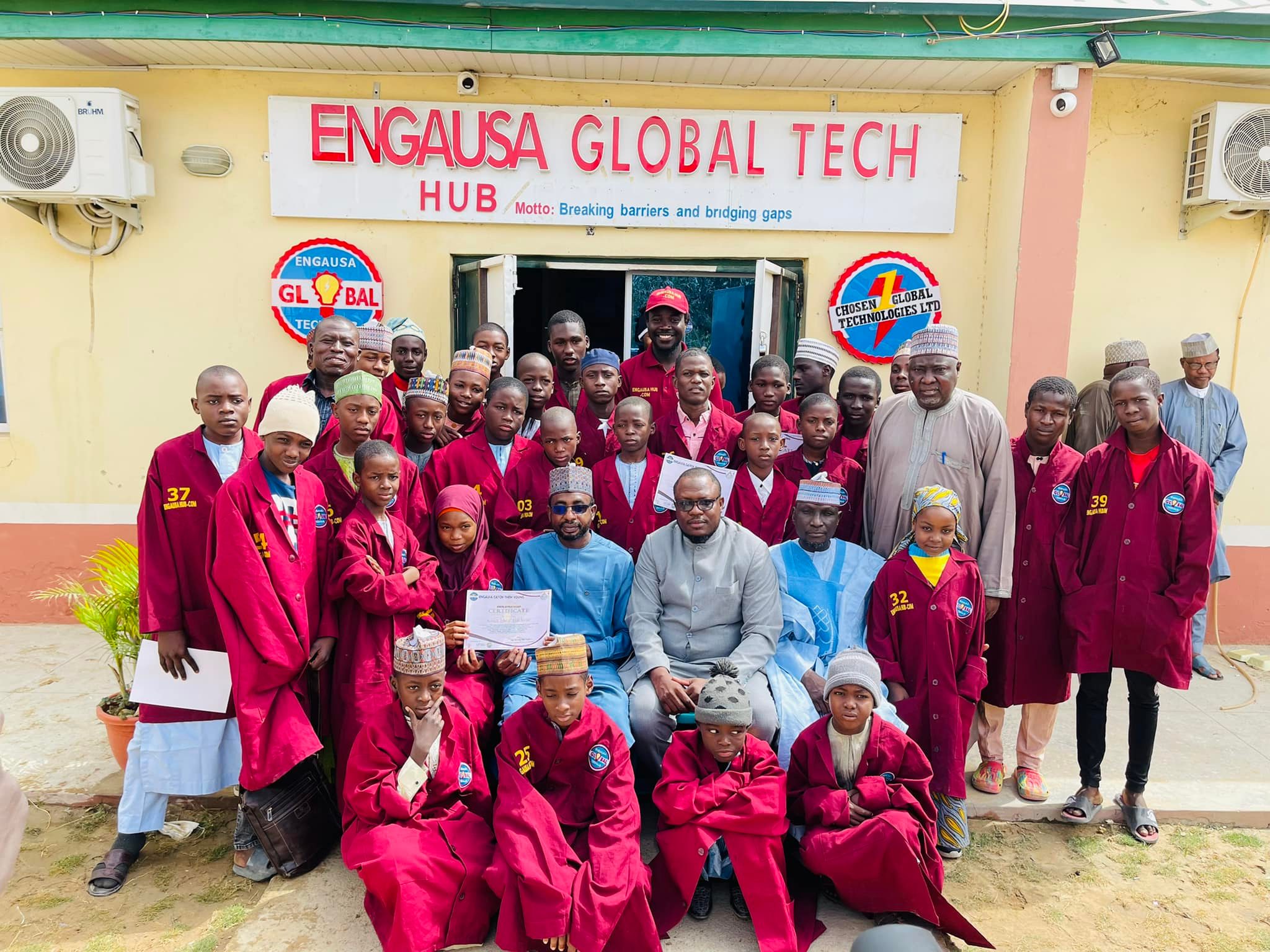
The Kano state Drugs and Medical Consumable Supply Agency has trained 80 students on mandatory industrial practical training at its office.

Presenting certificates at the graduation ceremony of the training, the Director-General of the Agency, Pharmacist Husham Imamiddeen, tasked the students to utilise their skills.

He said, “Amongst the responsibilities of the Drugs Medical Consumable Supply Agency is the production of qualitative and Affordable Drugs to the people of Kano State.”

The DG also stated that the Agency has a quality control unit, whereby tests were conducted before the release of drugs.

Pharmacist Imamudeen added that the students conducted their mandatory six months training on quality control, after which they were certified.

The trainees then commended the Agency for equipping them with the acquired skills and support during the training period.

Injustice in Jigawa State scholarship scheme

By Garba Sidi

It’s well-known that the Jigawa State government paid half of the registration fee to its indigenes each year. That’s how any governor in this state inherited it and continued it. Still, unfortunately, the present governor, Muhammad Badaru Abubakar, came with some injustice in this matter of scholarship. For three years, the money has not been paid.

The government conducted a screening exercise on 28/01/2021. However, after five months, they selected only three schools within the state and disbursed the money to some students, not all and stop till now. Then, they went on to the media and announced that they gave scholarships to all Jigawa state students. It is an injustice.

Sadly all these injustices that happened, neither the Jigawa state assembly nor the commissioner of education uttered a word about the matter. While students are suffering from poverty, and some even dropped their studies because of registration fees. Those House of Assembly members and commissioner of education are busy taking their children abroad to study in expensive schools.

Unfortunately, it looks like there is no Students Union Government in this state. This is because the Union has failed to discharge its responsibility to fight for students’ welfare. Unfortunately, the acting president of this Union is busy travelling from Kano to Katsina, and others state fulfilling the mission of another group he joined some time ago.

Days ago, leaders of Jigawa state schools’ chapters visited the state capital, Dutse. They met with Special Advisor on students matter on this issue of scholarship. His reaction was, if students protest, the government will not ever give scholarships to any indigenes of Jigawa state. That typically showed students have no freedom to struggle for their rights as the constitution of Nigeria gives to anybody.

May Allah bless us with good leaders.

Garba Sidi wrote from Jagawa State. He can be reached via sidihadejia@gmail.com.

Nigeria Jubilee Fellows Programme: Buhari announces application date Tuesday

By Ishaka Mohammed

President Muhammadu Buhari is set to announce the commencement of applications for the Nigeria Jubilee Fellows Programme (NJFP) on Tuesday, August 31, 2021. 

According to UNDP in Nigeria, the federal government will make the announcement at 10 a.m.

The statement urged interested and qualified graduates and organisations to follow the page (facebook.com/UNDPNigeria) for more details on how to watch the announcement and apply.

Recall that the NJFP was launched in June with the aim of placing 20,000 graduates in 12-month fully paid employment.

For eligibility criteria, read: https://dailyrealityng.com/2021/08/25/nigeria-jubilee-fellows-programme-why-you-should-apply/

On the rise of social media catfishing

By Nazir Muhammad

Have you ever met someone online with a false identity or been in love with a total stranger, believing he’s real and found out otherwise? That’s a catfish!

As social media (SM) globalised the world, catfishing is scrambling like a bushfire. It happens daily on Facebook, Twitter, Instagram, TikTok and other social media platforms.

The word “catfish” refers to a person who set up an account with a false identity (Name, Photos, Address, Occupation) SM for fraudulent, deceptive and other malicious purposes.

Social media experts explain that catfishing varies in nature, depending on the target goals. Some pretend to be businessmen to rip off people’s money. Others are merely playing around, toying with people’s emotions for fun because they are lonely, bored or mentally sick. Then, of course, there are also sexual offenders, kidnappers, and rapists, among others.

The vast majority of catfish victims are youths and teenagers. Perhaps, their facileness to fall in love with online friends is the reason. For decades, there are bunches of girls and boys blindly dating people old enough to be their fathers or mothers. Consequently, millions of people are trapped in job scams – losing their hard-earned funds. Often, girls get kidnapped, raped or heartbroken the same way.

A report gathered by Reuters on March 22, 2021, reveals that Facebook took down 1.3 billion fake accounts. However, notwithstanding the efforts, catfishing remains incessant. According to a recent online survey conducted by an American website, one out of four women (23 per cent) admitted that they had catfished someone. In contrast, one out of three males (38 per cent) also fessed up similarly. In addition to these reports, another statistic said that about 73% of people online use photos of someone else rather than actual pictures of themselves. No less than 10% of all online dating profiles are scammers. 

Shocked? Alas, it is true and daily business for the culprits -the only way to shield yourself is to be circumspect with online friends.

It is not a one-day job, if not impossible, to get rid of all catfishes online, but you can cover up yourself by getting adequate cyber awareness. However, having eagle eyes to spot the doers will also help. 

Often, a catfish could be easily discerned whilst desperately trying to be too friendly and familiar to their target – denying the face-to-face meeting, or refusing a video call could be a significant clue.

Furthermore, to verify a person’s identity, meet in person or make a video call/Skype; monitor people they interact with online and unrelentingly download his photo and verify it via Google image search to confirm whether it appears somewhere else.

FYI: No matter how close you are with your online bae/fiancee, concede to meet only in the daytime and on busy places or streets. Shun hotels and uncrowded areas for your safety. 

Nazir Muhammad writes from Gombe, Gombe State. He can be reached via nazzhubby@gmail.com.

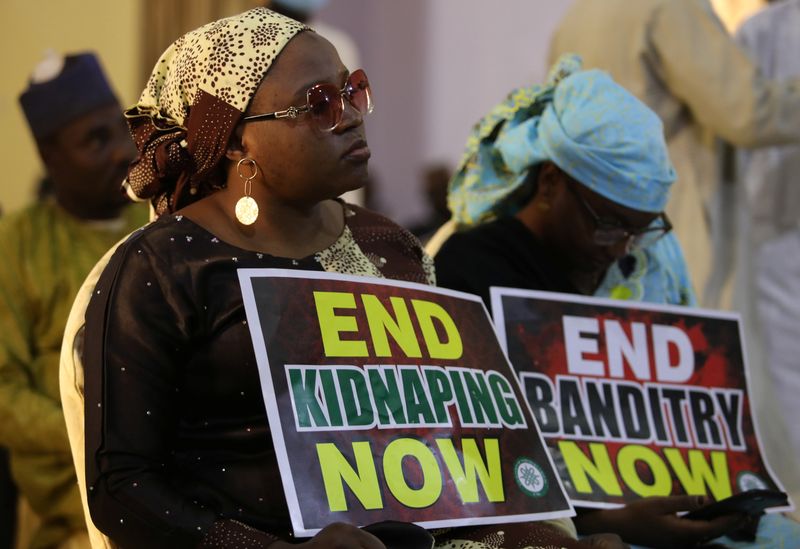
Banditry and Kidnapping: Dangers academics in Zaria face

By Abdelghaffar Amoka Abdelmalik

I love ABU and the used-to-be lovely Zaria; But is it time to run away?

After submitting the final copies of my PhD thesis in March 2012, a friend and I conversed about my plans after the PhD program. “I am leaving back to Nigeria in few days, resume my job, get married, and start living the Nigerian life”, I told her. And she was like, it appeared I had got everything planned out. And I said I couldn’t find anything to keep me back in the UK. Then about a year later, I got a postdoc research fellowship in Norway.

Immediately after my postdoc in 2015, I was looking forward to coming back home. I had this picture of a laboratory I want to set up in my university to perform impactful research from this part of the world. Maybe I was crazy. But for the five years three months that I spent in Europe, I never saw myself living there for long, but how I could use the experience of the few years to add value to the world of research from my country.

But after the kidnapping of my friend’s family last month, for the first, I started to ask myself if my decision to return to the country was the right one. And last night, I heard gunshots from my room before midnight. I knew something was wrong, but I could not figure out what it was and where. So I could not sleep well. Then, after waking up in the morning, I got a call that the same terrorists they choose to call bandits strike in Zaria again, but this time at Zango-Shanu and went away with four victims.

Criminals use to operate while hidden. But these terrorists take their time to break into houses and abduct their victims unchallenged. The police can’t dare do anything to them because they have superior arms and unlimited ammunition. One would expect special forces capable of repelling these terrorists to be put in Zaria due to these frequent occurrences, but nothing like that.

The government seems to have given up, and we are left on our own. The Governor insists no one should pay a ransom but no provision to prevent the kidnapping of anyone. So you have two choices when you have a victim with them; either you pay ransom to get them released after torture, or you leave the victim to die with them.

I closed my eyes, and I still see the picture of the state of my friend’s wife and kids when the bandits released them, and I cried. I am still wondering why these innocent young children and their mother should pass through that horrible experience. The system has failed them. The country has failed them. Now we live in fear. The government has failed us.

A distant cousin in Canada called me a few weeks ago and asked about my plans for my family with this insecurity that is getting worse by the day. I was dribbling around, and he said: how can you make an impact in an environment you are not safe? You can only make an impact if you are alive and free. That statement refused to leave my head.

You can’t sleep well at night for fear of the terrorists. So, how do you concentrate during the day to be productive to make your dream impact? Our children can’t go to school. The state government has closed down all the state-controlled schools for fear of kidnapping but no structure to prevent kidnapping the same children from their houses. So, what has he done?

The kids are living a caged life. You can’t even allow them to play outside talk less of sending them on an errand outside the house for fear of insecurity. We got President Goodluck Jonathan out for Boko Haram; President Buhari came in, and kidnapping was added to the list of the insecurity challenges. It has become a big business. The business CEOs sit in their houses while getting sophisticated arms for their boys for the kidnapping operation. They are ruthless, and of course, the informants are among us. There seems to be no much intelligent service to get rid of this challenge. At least not from the kidnapping of my friend’s wife and kids.

With all these challenges, the political leaders, including those claiming to be fighting corruption, are getting richer while the people are getting poorer. For example, a former recharge card seller, now an aide, has billions of naira in his accounts that he claimed are “gifts” from people. But he didn’t get such “gifts” when he was a  recharge card seller. Aside from workers at CBN, NNPC, DPR, etc., other workers struggle to survive with that thing called salary. And unfortunately, most of the victims are from families struggling to survive, but the informants perceive them as rich.

People are shouting why the Doctors that the country spent a lot to train are leaving. But, with the level of unemployment, economic hardship, and insecurity, will you stay and submit your life to banditry if you have a choice to leave the country?

The political leaders surround themselves with security personnel. They can run to any country of their choice if they think their lives and immediate family are unsafe while we are left for the bandits.

I had so much optimism in this country, but I am not sure any longer. Should we continue to live this life of fear and uncertainty? I never thought of the idea of relocating to another country till last month when those poor little kids and their mother were abducted for 40 days.

I had two chances and came back because I believed in Nigeria and wanted to make an impact. Will I return if I have the 3rd chance?

I still remember that prominent MKO Abiola’s interview on TV during the June 12 crisis, where he stated this famous quote: he who fights and runs away lives to fight another day.

Don’t hesitate to run if you have the slightest opportunity.

Abdelghaffar Amoka Abdelmalik writes from Zaria and can be reached through aaabdelmalik@gmail.com.

FG approves DISCOS’ electricity tariff increase

By Aliyu Nuhu

The federal government of Nigeria has approved DISCOS to increase the price of electricity in September. It could be as early as Monday. Already Lagos DISCOS had issued notices to that effect. It will interest you also to know that NNPC will increase the price of petroleum anytime. It could be in a matter of weeks.

The implications are so many. Inflation that is hovering around 100% will be on the rooftop. About 90% of Nigerians are already finding it difficult to feed. Salary earners will turn to beggars as inflation without a commensurate salary increase will see them working for peanuts. Life will be worse off for those that earn nothing. Businesses will be running at a loss. Even before the electricity price increase, most companies said they were working for DISCOS. This is because electricity prices by far outstrip their net profit.

The government said it wants to reduce poverty, but the major component of poverty is hunger. No man with an empty stomach can claim to be rich. The government wants to revive the economy and restore the strength of the Naira. There is no faster way to kill the Naira than allowing inflation to run unchecked.

Prices of cooking gas, kerosene and diesel have long been increased. Poor Nigerians will surely be in a sorry state by the time the government completes its increments in energy prices.

With his harsh economic policies, President Buhari is becoming the undertaker of the poor Nigerians that helped put him in power. Some of them used their last savings to buy his campaign cards that gave him the money to spend on his election, and this is how he is paying them. It is so bad.

We are all guilty of the state of the nation

By Abdelghaffar Amoka Abdelmalik

The trending news/video of the over 500 doctors that turned up in Abuja at the Saudi health ministry organised recruitment meeting to pick Nigerian doctors for work in Saudi Arabia reminded me of a comment by a Nigerian Professor in a university in the UK sometime in 2008 or so. There was a discussion on the management of PTDF oversee scholarship scheme, the scholars in the UK, their future, Nigeria, and capacity building. He said Nigeria is perhaps the only country in the world that spends a lot of money to train scholars and doesn’t care what becomes of the scholars after the training.

This scenario is common to all the scholars funded with government money. We send scholars to the UK and other countries under PTDF, TETFund,  NEEDS Assessment, NITTDA, etc., and we do not care if they return home or not. As a matter of fact, there is no provision at the home institutions to utilise the knowledge acquired by the scholars during the training on their return. It’s like you were trained for yourself and not for the system. Those who return are not better than they were before they left as no laboratory to train others. They most times become more frustrated.

Then, how do you expect a system that makes no provision for scholars sent abroad for training to make provision for those we managed to train at home? This is the case with our Medical Doctors moving to other countries to practice. Even though we do not have enough medical personnel, medical doctors sometimes find it challenging to get a job as Consultants after their residency. So, why they should not move to the UK, Canada, Dubai, Saudi Arabia, etc., to practice?

We need to deal with the lack of respect and value for our universities, professionals, and intellectuals. It worsened when our leaders abandoned our institutions while taking their families abroad for education and medical care. They are not even ashamed to post their graduation pictures on social media and shamelessly requesting us to celebrate with them. I thought COVID-19 and the lockdown would teach us lessons, especially our leaders, but it seems we have not learned any lesson from experience.

I read a comment sometime back that during the slave trade, our people were forced into slavery, but if it is now, Nigerians will give themselves up to be taken away. They believe that whatever the challenges are in those countries, it will still be better than Nigeria.

The gathering of over 500 professionals (Consultants and Resident Doctors), both Muslims and Christians, for a recruitment exercise to Saudi Arabia called for sober reflection and not throwing insults. These guys do not care about the Shariah law and the stories of racism in Saudi Arabia from those that have worked there. They just want to leave. So we need to sit down and reflect and ask ourselves questions. What future do we want to create for Nigeria and Nigerians?

Our leaders don’t believe in the country. They instead take our money to London, Dubai, and Saudi Arabia, etc., to secure the life of their family members. They patronise medical care in first-class state-of-the-art hospitals established by the leaders of those countries since they can’t make our health sector desirable. And they are not ashamed of that as leaders. On the contrary, they travel for medical tourism with pride and class.

You will not blame our doctors who were trained nearly for free in our “ASUU Strike” public universities by our “ill-equipped” professors to move to London, Canada, Dubai, Saudi Arabia, etc., to help those countries treat our politicians. But, of course, they want a better life too, and they will be paid better there. So, why should they be ashamed of running away when our leaders are not? Why should they endure and MILT (manage it like that) when our leaders aren’t prepared to MANAGE our hospitals and schools LIKE THAT for their kids?

It is unfair to expect the people to be patriotic when the leaders are not — and don’t even seem to believe that Nigeria can work. The president, Vice President, the Governor, the Senators, others that are supposed to make our schools work have their kids in schools in the UK. The president and other political leaders that are supposed to make our hospitals work receive medical care in the UK, Dubai, Saudi Arabia, etc. How will they make a system they don’t patronise to work? They will just think the system is OK for us as they are, and we can MILT.

Come to think of it. How can our doctors be on strike and hospitals shut for patients for over three weeks? It is not surprising. After all, they allowed the ASUU strike to last for nine months and public universities closed for that nine months. They would not have let that happen if they and their immediate families patronised the system that was and is on strike.

The leaders don’t believe that the country can be fixed, and the led also don’t believe the country can work. So let all of us just run away, even to Niger, Cotonou, Rwanda, etc., and let Nigeria fix itself before we return.  

While I am in solidarity with our Medical Doctors on strike, I only wish that the strike is not just about salaries and allowance but also on the proper funding of the healthcare sector so that we can have hospitals similar to the ones they patronise in the UK, Dubai, and Saudi Arabia.

The question now is: Do you want Nigeria to work? Just be the change that you desire—both the leaders and the led.

Meanwhile, the Punch newspaper has reported that the organisers have suspended Saudi Arabia recruitment as DSS disperses doctors, arrests journalists. Is that the way to fix the problem?

It is relieving that despite the ASUU strikes, the breaks, and all the insults on lecturers, our graduate doctors can still pass International examinations and are qualified to work in the UK, Canada, Dubai, and Saudi Arabia. To God be the Glory.

Kudos to our “ill-equipped” professors who have helped train this Nigerian workforce from 100 Level till graduation for the UK, Canada, Saudi Arabia, Dubai, etc.

Maybe I need to run too. Meanwhile, I am still thinking of the country to run to. 

Abdelghaffar Amoka Abdelmalik writes from zaria can be reached via aaabdelmalik@gmail.com.

Prophetic treaty as blueprint for peace in Nigeria and beyond

By Abdullahi Adamu Faggo

There is nothing which, indisputably, guarantees peace and harmonious existence than justice. Justice alone can end banditry, kidnappings, communal clashes and ethno-religious crises, amongst others. A lack of it espouses the notion of reprisals, retaliation, and jungle justice within the affected areas. It allows marauding hoodlums, bandits and thugs to unleash an onslaught on equanimous, meek and defenceless communities. 

Islam promotes justice, provides practical solutions to lingering and inexorable brawls in different communities. Therefore, I expect that any perspicacious and sagacious leader/follower will accept that justice is the only mechanism that protects the inalienable right of everyone, guards against the plundering of properties by brigands and prevents the inviolable souls from being attacked. 

Further, most incessant attacks on various communities continue to linger because the culprits, accomplices, and syndicates usually go scot-free. For example, the recent attack on innocent Muslim commuters in Rukuba, Jos, where suspected disgruntled Christian militias killed about 28 of them in cold blood, unchallenged. The incident has portrayed the level of lawlessness and injustice in our society. Likewise, atrocities committed by some Muslim/Christian herders on both Christian and Muslim communities are also part of the examples of dominant and pervasive injustice by our leaders for deliberately refusing to bring the malefactors to book for justice to prevail.

In contrast, the system of justice, which was both advocated by Jesus and Muhammad (may Allah be pleased with them both), ensures proper retribution for the wronged, the subjugated, the oppressed and defenceless citizens. Exultantly, this system was the one that Prophet Muhammad (SAW) used to end the sustained hostility and animosity between Al-Aws and Al-Kazraz, who happened to be the archenemies of one another.

Thus, when Prophet (SAW) migrated to Madina, he signed a treaty between them (Aws and Kazraj), Muhajirun (immigrants) and even non-Muslim allies. This had provided lasting solutions that brought about peace and harmony between them. Below is part of the treaty they gave credence to in the presence of SAW, as contained in Ar-Rahiq Al-Maktoum:

1. They should resist and stand against injustice or seek to appropriate something unfairly, encroaches upon or causes mischief among believers;
2. They all should stand against one who does so even if he were one of their offspring;
3. If one kills a believer intentionally and there is evidence for that, he will be retaliated in like, unless the family of the slain person pardons him;
4. All believers are to take a stand against him;
5. A believer is not allowed to advocate or give shelter to an initiator of evil or troublemaker. 

If our society today will adhere to these teachings, extrajudicial killings will indubitably come to a standstill.

Abdullahi Adamu Faggo is an academic staff at the Bauchi State University, Gadau. He can be reached via abdullahiadamufaggo@gmail.com.

China’s Reward of Enlightenment: A lesson for Nigeria

By Najib Ahmad, PhD.

Beyond doubt, you may have by now discerned that nearly everything you are using in your households, offices, and places of worship were made-in-China. A few weeks ago, I had a conversion with my friend and confidant, who told me that this China-made domination is manifested worldwide, even in Europe, where he lives. Hence, he no longer blames Nigeria for clinging to China-made products.

On another occasion, some German professors visited our research group (in China) two years ago. During lunch, one humorously told my former program supervisor that he thought even his shirt was made-in-China. We all laughed and continued eating. Unless you don’t know Germany, the European economic powerhouse, and the history of its industrialisation, this will startle you. Indeed, Germany is still technically capable and well industrialised, but Chinese products are ubiquitous there.

The question you may ask is: How did China achieve all this? I guess you are curious to have an insight into their progress. And how they catch up – sometimes even overtake or compete – with the most industrially advanced countries whose supremacy in this area was matchless within a short time? Their quest for financial power started ages ago, after the country’s opening-up in the 1970s by the then leader, Deng Xiaoping, otherwise known as the principal architect of China’s reform and significant foreign policy changes.

A former Emeritus Professor of Social Sciences at Harvard, Ezra F. Vogel, described the leader in his book, Deng Xiaoping and the Transformation of China, as the “man who most influenced China’s modern trajectory.” The central idea of his reform plans was nothing extraterrestrial. He only ensured that the ordinary Chinese population was enlightened (or educated) to the level they could create their path in a lifetime. He also superbly promoted China from “an agrarian society to the industrial powerhouse” (or manufacturing hub of the world). Beyond the shadow of a doubt, his projections have prospered in making China where it is today. The most important resolution was massive enlightenment. These resolutions have markedly shaped the trajectory of his policies to where they are today.

Provision of adequate and essential reading, writing, and good numeracy skills was the quintessence of the primary phase in their development journey. Thus, presently, you hardly encounter an older person who can neither read nor write or consider using a calculator for basic arithmetic summation (remarkable, right?). Although some reports show a few others are illiterates, especially in villages, it is a small percentage compared to the over a billion people who can. Moreover, there are all-women-operated shopping centres as the reform structure targeted women to prepare them for exceptional jobs. Many women work in hospitals now, especially in women-related matters.

The government of China sponsored children of low-income farmers and city workers to study in elite American and European universities. Some of these students specialised in sciences, applied sciences, technology, and other critical areas for China’s development. This scheme shaped the education development in China. At the same time, some of them remained in their newfound home. Today, five out of ten research papers from the European and American universities will have Chinese-sounding names. They are also in many places working on state-of-the-art science and technology. This was part of the product of the policies made on education about a century ago.

Many others joined various newly founded public universities and colleges all over China to teach and train young students. According to Statista, as of 2019, China has the largest education system globally, with 2688 public universities and colleges, a mixture of central (or federal), provincial (or state), and local government-owned institutions. Out of these institutions, 1,423 are higher vocational colleges. According to reports from the Chinese Ministry of Education, privately owned vocational colleges reached about 300 in 2021. Yet, they looked for more to provide jobs and ultimately boost the country’s economy.

In retrospect, you can see that China’s quest for economic supremacy started with excellent policies favouring education. It continues to this day. New policies were implemented and sustained in educating the society, for example, policies like a free nine-year compulsory quality education for primary and junior secondary schools.

Again, one of China’s leading, perhaps secret, ingredients for unprecedented technological developments is its total commitment to vocational education training at all levels. Vocational colleges (higher institutions) and vocational schools (secondary schools) have undoubtedly contributed to the record economic growth in China. They are the fundamental and out of sight driver and catalyst of their economy. They have produced craftspersons with skills that supported the country in job specialisations such as electrician, mechanic, computer technician, carpenter, tailor, beautician, chef, welder, fabricator, product designer, bus driver, and electric train driver, among others.

The government’s commitment to funding and sustaining vocational training schools have vastly invigorated the manufacturing capacity you see in China today. Subsequently, most foreign brands like Apple, Unilever, Nike, Zara, Mercedes-Benz, General Motors, and many more produce China-made products. The availability of highly-skilled workforce is another reason those brands go to China, among other benefits. Unfortunately, time and space will not permit me to mention them here. However, the reward of sound policies on enlightenment to a society and its propensity is ostensibly enormous. And above all, the government has significantly reduced poverty among its people and improved their livelihoods.

We can learn from the above that enlightening everyone, at least, to the level that they can read and write and get numeracy skills, even if it is in their native language. So doing is vital for the prosperity of society and the country at large. Sometimes, not everyone could have profound education. Suppose everyone you meet in the market, other places in Nigeria could read and write in their native languages. Undoubtedly, our growth and development as a society would be in a better direction than our current condition. Lack of these skills for everybody contributes to our lack of progress, absence of skilled workers, failure of industries, among other ills bedevilling our societies in Nigeria.

As the government is founding new universities year-round, they should consider establishing vocational colleges. As I see these days, the National University Commission (NUC) issue license to many private universities nationwide. Individuals can similarly step in to establish private vocational training colleges. It is not always that everything rests on the shoulder of the government. We need to take these few but critical steps to reset the collective societal future of Nigeria. Implementing them could set a new stage for self-directed youths equipped with the required skills to assist Nigeria’s economic growth, particularly at one of the worst phases of the country’s financial crisis, thanks to the coronavirus pandemic and poor governance.

Dr Najib Ahmad is a Postdoctoral Researcher at Shandong University, China. He can be contacted via namuhammad03@gmail.com.