Admin

Dear Governor Bala Mohammed, listen to Jama’are people

By Y. Z. Yaú

In 2018, the Jamaare Local Government Area of Bauchi State suffered a devastating flood that destroyed farms and houses and the central market. There was a Government in Bauchi State, but it did not respond to the crisis. Those who died due to the flood ended up as mere flood statistics. The descendants of Dilara took it calmly and in their strides.  They consulted among themselves and prayed to God to answer their prayers. In his infinite mercies, God answered and wiped their tears: the federal government through the Ecological Fund responded with an intervention to mitigate the effect of the flood.

In a three-part initiative, the Ecological Fund financed a new drainage network in the town and promised to rebuild the market destroyed by the flood. The third aspect was the dredging of the river so that the flood could be reduced if not altogether eliminated. The state government was to contribute as counter funding. But, unfortunately, it did not, and the flood came back with more vengeance during the last raining season, and for the first time in over 50 years, the flood got into town, occupied and destroyed many houses. Several people, mainly farmers and their children, died while crops were damaged in the waves. The loss to the community was shuttering. Again, not a whimper of sympathy from the state government. 

Over five years ago, as part of the ecological intervention, the Federal Government decided to upgrade the power sub-station, which serves more than four local governments, to improve the electricity supply in the area. A significant new sub-station was to be built on the understanding that the State Government would do the civil works while the Federal Government does the engineering component. The Federal Government delivered its part, and to date, the State Government has not delivered its component, so the project remains uncompleted. 

What does the frequent flood tell? While flood in itself is destructive, it reveals that if the water can be controlled, agricultural production can be improved to raise the national food production capacity. After all, already along with the Hadejia wing of the Hadejia-Jamaare Rivers basin, this area is perhaps the largest rice production belt of the country. Stabilization of the flood plain of the Jama’are river is, therefore, a project not meant for the benefit of the Jamaare people only. It is to improve national food security and farming resilience in the country. It is thus in the national interest. 

The flood plain of the Jama’are river is a fertile agricultural area and a ready-made natural laboratory for agricultural research that will improve farming systems and practices across the country. This consideration led the Faculty of Agriculture of the Bauchi State University in Jama’are to leverage this natural laboratory for research, experimentation and teaching. In addition, Jama’are people will benefit from agricultural extension services, agricultural advice from experts, improved skills and knowledge for the farmers, and uptake of research outcomes to address agricultural, livestock, and horticultural issues.

It will also benefit from the usual town-gown interaction that a university made possible. But above all, however, the state and the country stand to gain in enhanced agricultural production, livestock production and development of horticulture. The foresight of the Committee that searched and selected the site of the Faculty of Agriculture must be commended for their deep sense of patriotism and adherence to professional ethics. 

The Faculty is already on the ground with hundreds of students and over 100 academic and non-academic staff engaged in academic activities in the college. Academic activities have stabilized, and a sense of synergy between the campus and the host community has taken shape. 

Suddenly, there are rumours making rounds that the state government is planning to relocate the Faculty to another place for the Federal College of Education takeoff that the federal government recently decided to establish in the town. This move to relocate the Faculty that was sited based on clear reasons of functionality and leverage not only smacks of the politics of blockage but also totally lacking in appreciation of the considerations for the setting up of both the Faculty of Agriculture and the Federal College of Education in Jamaare. It certainly does not show concern for the deep patriotic thinking of sitting the Faculty. But this apart, the argument of justice and fairness has led to the establishment of the Federal College of Education. 

Jama’are is one of the oldest local governments in the state, established in the country’s first wave of local government creation. Jamaáre Emirate is a foundational emirate, resulting from the Dan Fodio Jihad and not a recent political design of some politicians. Of the four emirates in the state, until 2014, it was the only one lacking in any institution of higher learning. Even when the Faculty of Agriculture was established, the Emirate was nowhere near the others in terms of the number of higher institutions. It was to promote equitable educational development and the spreading of educational opportunities across the state that reinforced the rationale for selecting the site of the Faculty of Agriculture and the establishment of the Federal College of Education in Jamaare. 

It is difficult for the people of Jamaáre not to read the purported attempt to remove the Faculty as one more instance of deliberate discrimination against people known for their peaceful disposition. For all the deprivations, they have never taken to a protest. Not that they value their rights nor that they cannot fight for their right. They believe that what you do not get in peace will not necessarily come in violence. They live in the humble Fulbe spirit of not giving to showing pains or pleasure. Therefore, when last Monday they met from all corners of the Emirate at the Jamaare central mosque and led by the leadership of the scions of the Dilara dynasty, the community has taken this attempt to disinherit them calmly and resorted to prayers, in the hope that as usual, Allah will ensure that justice is done. As a peace-loving community, we take solace in our patience and trust our density. 

It is still not late for the Bauchi State Governor, Bala Mohammed (Kauran Bauchi), to dispel these rumours and assure the people of Jamaáre, and indeed the whole country (which stands to lose from this move) that what is theirs shall remain theirs. They will embrace him with brotherly love and in that spirit. We hope that Kaura hears our humble request for his heart to take flight into the hearts of Jamaáre people who would warmly embrace him in eternal gratitude for acting as a true leader who treats all parts of his constituency equally. We are waiting and watching.

Ya’u is the executive director of the Center for Information Technology and Development.
The drama that is 2023 general elections

By Idris Yana

Bola Ahmed Tinubu’s declaration of interest to contest for Nigeria’s presidency in 2023 is a prologue to the array of drama that we are going to witness in the next couple of months.

The 2023 presidential election will defy many political and analytical rationales.

Tinubu’s candidacy poses a challenge to both Tinubu himself and the Nigerian political philosophy. Currently, the unsigned sacred pact is that Nigeria cannot afford a president and his vice who belong to the same faith. Thus, Tinubu, being a Muslim, cannot have a Muslim vice-presidential candidate. Another “gentleman agreement” is that the president and his vice cannot come from the same part of the country. Therefore, this means that Tinubu’s running mate must come from the North and be a Christian. Though we must define where is North, at some point.

This is the epitome of the complexity (you can call it confusion) of Nigeria’s democracy. I will tell you why shortly.

The Northern Nigeria I know and live in can hardly support Christian to become Tinubu’s running mate. This, whether we say it out loud or not, is the mentality of an average Northern Muslim: A fact we all pretend does not exist.

While I cannot foresee an enduring strategy that Tinubu can use to navigate through this maze, I believe two parties stand a chance to benefit from his quagmire. The first is the current vice-President, Yemi Osinbajo. Although the witty professor-cum-pastor did not come out yet to declare his intention to run for the number one office, his body language and some events that have unfolded have already shown that he is in the race.

Osinbajo, being a Christian from the South, is very much aware that Tinubu’s dilemma is to his advantage. Many people in the North will prefer to have him as the presidential candidate so that they can field a Muslim running mate for him.

The other party that stands a chance to benefit from this is PDP. Like Osinbajo, I am sure PDP monitors the unfolding of Tinubu’s candidature and waits for the right time to make their move. They have many options to explore. One of such options is appealing the sentiment of the North by fielding a Muslim candidate from the part, most likely Atiku, and a Christian running mate from either South-South or South-East with Nyesom Wike as the most likely candidate. They have the option of reversing this and trying their luck.

Whatever happens in 2023, Nigerians will have multiple lessons to learn from. For me, the most important lesson is the dire and urgent need for the country to move away from the political ideology that favours primordial sentiments over competence. Instead, Nigerians must learn to elect a leader that is capable of saving us from us.

Idris Yana writes from Exeter, United Kingdom. He can be reached via idrishyana@gmail.com.

AFCON 2021: Nigeria at home in Garoua – Residents

By our Reporter who is in Garoua


Hours ahead of Nigeria’s Group D opener against the Pharaohs of Egypt, many residents of Garoua have expressed their support for the Super Eagles and vowed to cheer the Nigerian national team to victory. 


After a grand opening ceremony, the twice-postponed Africa Cup of Nations finally kicked off on Sunday in Yaounde. The opening match ended with the hosts, Cameroon, beating Burkina Faso 2:1 to lead Group A.


Nigeria, playing in Group D alongside Egypt, Sudan and Guinea-Bissau, will get into action Tuesday evening against the Mohamed Salah-led Egyptians. All Group D matches will be played at the Roumde Adjia Stadium in Garoua.


Thousands of Super Eagles fans have stormed the Northern Cameroon town “to offer their maximum support” for Nigeria’s national team “to emerge victorious”. While many arrived by air, fans mostly from northern Nigerian states crossed the land and water borders between Nigeria and Cameroon through Adamawa state.


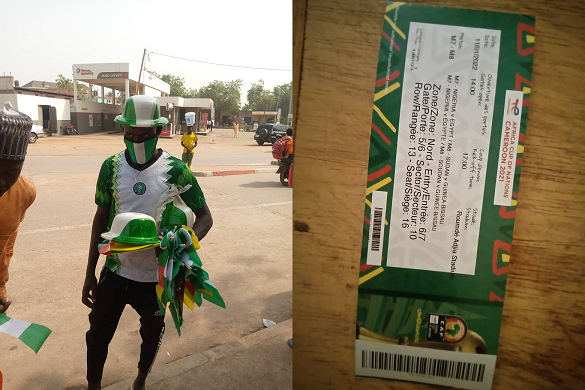
Garoua, a predominantly Fulani Muslim town, is wearing a new look with all major roads and streets adorned in Cameroon flags alongside flags of other participating countries. Nigerian flags can be sighted in many different locations, including on cars and motorbikes, signalling the level of support the Super Eagles have among Cameroonians as well as Nigerians residing in the country.


Many residents interviewed by TDR throw their weight behind the Super Eagles in the promising encounter against the North African opponents “in the spirit of good neighbourliness”, they said. 


“Though I like Salah (Liverpool star who is expected to lead the Egyptian onslaught against Nigeria), I will support Nigeria. When they play against Cameroon, I will support my country”, said a uniformed Cameroonian man who chose to remain anonymous. His position was echoed by Adamu (27) and Usman, a Cameroon-based Chadian.


This reporter caught up Tuesday morning with a group of vuvuzela blowing Cameroonian youths along one of the busiest roads in Garoua. “Nigeria is at home”, the over-excited youths told TDR as they chanted and waved Nigeria’s flag.


Meanwhile, the sale of tickets is ongoing at various locations in Garoua ahead of the crucial Group D tie expected to record a massive attendance.

Troops neutralize bandits in Kaduna village

By Uzair Adam Imam

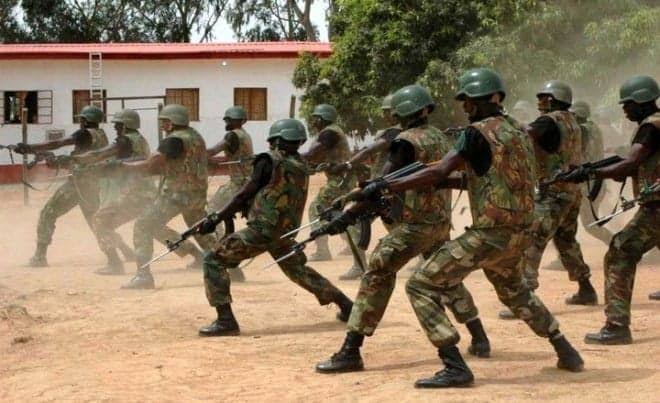
Troops in Kaduna State have reportedly neutralized bandits and foiled a planned attack on Fatika town of the state.

A release issued Monday, 10-1-2022 by the Commissioner for Internal Security and Home Affairs, Samuel Aruwan, disclosed that five members of the militant group were killed in the process.

Aruwan Said that the troops who conducted clearance patrols in Giwa local government area received credible intelligence of terrorists’ movement.

However, he added that, “the troops then mobilised to Marke and Ruheya in response.”

“The outlaws were sighted and attempted to escape the advancing forces. The troops however cut off their escape route at Kwanan Bataro, and engaged them in a firefight, during which five of the terrorists were neutralized. The troops returned to base after clearing the area,” he stated.

The statement stated that governor Nasir El-Rufai expressed satisfaction at the operational feedback.

El-Rufai has also commended the troops for their proactive and sharp response to the intelligence received, encouraging them to keep up the intensity in the ongoing offensives against terrorists in the area.

ISLAM: Disagreement is not a blessing but a scourge

By Abdullah Yahaya

In contrast to the popular belief that the disagreements which existed between the famous scholars of the early post-Qur’anic time [The leaders of the four schools of thoughts] and still exist between the contemporary Islamic scholars—that the variation in some of their juristic rulings is a blessing—is an antithesis to the correct teaching and lessons of the Qur’an and the authentic sayings of the Prophet [PBUH]. In no single incidence would you find either in the Qur’an or authentic hadith in which disagreement is encouraged. However, there are a plethora of divine injunctions where Allah and His Messenger [PBUH] frowned on disagreements or conflicts. 

In Suratul Anfal 7/46, Allah (SWT) says, “And you should obey Allah and his apostle, and do not dissent, you will crumble, and your strengths will fade away”. Another indication of the negative effects of disagreement happened when the Prophet Muhammad [PBUH] was alive. Two people among his companions engaged in a fierce dispute inside the Prophet’s mosque during the dawn prayer [Subh], and it happened that at that night the Prophet had a dream about the actual date in which the Night of Decree “Lailatul Qadr” will fall on. Upon reaching the mosque, the Prophet saw the two disputants and quickly went and reconciled them. As a result of that delay caused by their disagreement, the Prophet forgot about the contents of his dream and the Ummah is left until today in doubts of the actual date of Lailatul Qadr. The instances are too numerous to list out. Al-Subqee said, “Kindness and compassion require that we should eschew disagreement.”

The above and many other Quranic and sunnatic injunctions and the sayings of our guided forbears [Athaar] are combined efforts meant to stifle the adverse effects of disagreement, which include fragmentation of the Ummah, disunity, loss of strength and self-esteem among the Ummah and so on. The holy Qur’an has more of these examples.

Surat Daha, 20/83-97, explicitly relays to us what happened to the Israelites “Banu Israel” when Prophet Musa (AS) went to discuss with Allah, after which Musa Thamiri manufactured a calf from the clay embellished with gold and said it was their god and that they should worship it. Prophet Haroun (AS), whom he left as his representative, tried to call them to order to no avail. When Musa AS returned and met them in that situation, he reprimanded his brother and asked why he did allow them to commit polytheism. He said, “Oh my brother, seize me neither on my beard nor on my head, for I was afraid that you would say I cause a rift between Banu Israel just because they refuse to listen to me”, replied Prophet Haroun (AS).

With the above evidence, one can deduce that Islamic preachers ought to be extra heedful in airing to the public what will cause rift and disagreement between the Muslim community, especially on issues whose knowledge or ignorance will not harm someone’s belief. Moreover, disagreement in juristic rulings between our scholars is not a blessing but a scourge. This is considering the number of fractionation and fragmentation caused within the Muslim community then and now.

Abdullah Yahaya can be reached via abufudaily88@gmail.com.

How I started my own business with zero naira

By Zainab Ahmad Dantsoho

Most people believe that one cannot start a business without huge capital, but that is absolutely wrong. So let me first define what capital means according to economics.

Capital is anything that increases one’s ability to generate value. It can be used to increase value across a wide range of categories, such as financial, social, physical, intellectual, etc. In business and economics, the two most common types of capital are financial and human.

But I will like to give my definition because the most neglected is the Human Intellectual faculty.

In the 21st century, capital is the ability of an individual to think using the intellectual capacity to make money in the absence of little or no resources.

I want to stick to my definition because based on analysis, our economic index can be weighed by the standard of living and income expenditures, but I come from the North where according to the average statistics of people living in poverty as of 2020 holds 87% of Nigeria’s poverty rate – World Bank

So, are there resources in the North? Of course, YES! But the problem is intellectual capital.

In a community where people can’t even feed properly and begging seems to be a way out, how do we end poverty in families and our communities? I have asked this question to myself a lot of times.

Our northern community would be great if only our brains can think about starting a business with zero naira or little or no capital. And this makes me think that in the absence of money and basic resources, the only value any society could have is thinking skill because that’s the best way to beat poverty!

Let me take you through my journey of 1 kobo.

At a point in my life, I just decided to start my own business, make money in a halal way, take care of myself, and help the people close to me and my community at large. So I asked myself, “Zainabu, what about the capital? Where will you get the required amount to start the business?” Of course, this immediately came to mind, but then I remembered capital doesn’t necessarily have to be money.

Thus, I started going to some perfume shops, taking pictures and samples of the perfumes, showing friends, advertising on my social media platforms. Then, when someone asks for it, I’ll quickly go back to the shop and get what they wanted while adding a little profit for myself. This continued for months, and I was able to save some money!

So, I realised that the only capital I have in the absence of resources is my intellect, the ability to think and make money. So, these are a few basic things I had my eyes out for when starting my one kobo business.

  • Location – Where can I sell this product?
  • Demands – Is the product highly consumables, highly used in my environment?
  • Standard of living – this is where I have to think critically. Can they afford it? If they can, at what cost, and what’s my profit because nobody wants to start a business losing. It’s a win-win goal.

Then when it comes to branding – since I have no resources and capital of my own, whenever I want to make more profits, I usually meet the producers and negotiate with them. They make it, but then it carries my business name and agrees on percentage without losing anything but gaining. Most traders into cosmetic products typically agree with this since it offers mutual benefits.

Now, let’s talk about mind poverty, also known as mentality poverty. Mentality poverty is not the absence of cash and resources. It’s simply our way of thinking and behavioural pattern.

And I also think our average mentality is poor, and that’s why poverty in African societies seems to be inherited. We have resources, yet we are poor. It’s time to shift from the cash flow method of capital and currency to its intellectual flow because, that way, our community will grow.

If we were to cut down the amount we spend on our phones, clothing, accessories, cosmetics, etc., we would be surprised at how much we will save.

One may wish to know the advantages of this type of business. Don’t stress yourself. I will help you with some basic information.

1.  It empowers you

2. It eradicates poverty

3. It`s easy to access

4. You earn without deposit

5. You can advertise from your home using your social media handles.

If you aren’t on social media, you can do Door to Door, attend events or places where you can meet many people, and take advantage of friends to friends marketing strategies.  Especially for those that don’t go out.

But here are some of the challenges you will face with this type of business:

1. People may want to take credit from you, and you can’t give it out since the items don’t particularly belong to you; for me, it’s even risky giving and selling items on credit.

2. You may need more time and patience to get customers.

3. Sometimes such items may be out of stock, so that means you need to know or keep contact with the store, to what’s available and what’s not available

4. You may need one or more stores to patronise, if you want quick profits and if it’s worth the energy!

My advice to our young entrepreneurs is that we should always avoid perishable goods, except if the areas we live in have a high demand for those particular items.

Lastly, with the way our economic system is currently running, it is still possible to start a business with zero or little income. So don’t wait for significant capital. You can save and think, spend wisely, and Allah will certainly help you.

I hope you will find this article very helpful and join our one kobo community to start your business and get substantial information from us.

Why not make a move and be your boss with zero naira today?

Zainab Ahmad Dantsoho is a graduate of the Federal University, Gusau and an entrepreneur. She writes from Kaura-Namoda Town of Zamfara State. She can be reached at zainabahmaddantsoho@gmail.com.

The Almajirci Syndrome: A menace to our society

By Aisha Abdullahi Bello

The word “Almajiri” is derived from the Arabic word “Almuhajir”, which means an immigrant or someone who migrates from one place to another. So, originally, Almajiri is an immigrant who leaves his place of birth at a very tender age to acquire Islamic education.

It was believed by the people then that if a child received Islamic education at a very young age, he was likely to retain it throughout his lifetime. This had made many parents enrol their male children in the system.

In the ancient days, the system was so organised, and the parents were much responsible that they didn’t just dump their children at the “allo [slate]” schools the way today’s parents do. They also made it mandatory upon themselves to provide necessary food items and other provisions for the children, which would be enough for them throughout their stay with the “malams [teachers]”.

At each interval, maybe a period of three to four months, the children were readied for a return to their various homes. So, you’ll find out that each Almajiri would at least visit his parents thrice or even four times a year.

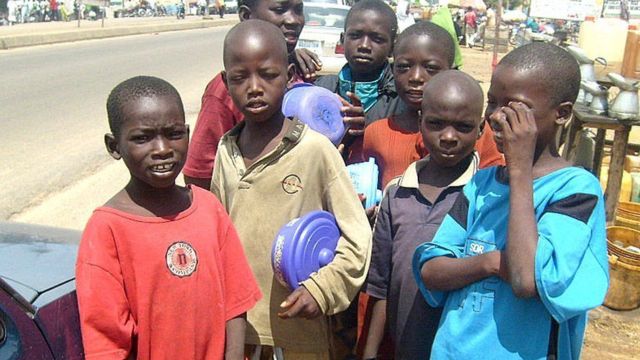
Now, the system is no longer what it used to be. Everything seems to have changed completely; the system, the parents and the children have all turned into something else. If you call the name ‘almajiri’, instead of the title to ring the bell of a child who came from a distant land to acquire knowledge, a different bell will ring. The name suggests an unlucky child whose parents gave birth to and later abandoned on the streets to fend for himself by whatever means.

I am used to asking myself, what could be the cause of this disguised child abuse in the name of almajirci”? What is the essence of bringing a child to this world if you cannot cater to his basic needs such as food, clothing, shelter, and quality education? Could this problem (almajirci) be attributed to poverty, lack of parental care, or is it a lack of adequate measures to tackle the menace by the government? These are the series of questions that are yet to be answered.

The rate at which the syndrome is growing could be checked if the parents control their birth rate through family planning measures. The government should try to enlighten parents on the benefits of family planning and its impact on society as much as possible.

To sanitise the system, the government should create a committee that will focus on the issues by standardising it to suit the present time. This could be achieved by taking the statistics of all almajirai, providing them with uniforms and building classrooms for them to have a conducive learning atmosphere. This will go a long way in curbing the extent to which they wander over the city.

The government and well-to-do individuals in the society should join hands together to create skill acquisition programmes and sponsor programs on TV and radio to educate the almajirai on how to acquire skills and make use of them for survival.  These skills could be tailoring, dyeing, soap making, blacksmithing, shoemaking, etc.

With this, I believe the rate at which the almajirci syndrome grows will hopefully reduce to some considerable level and, if carefully sustained, will someday become history.

Aisha Abdullahi Bello sent this article via aishaabdullahibello@gmail.com.

Tinubu meets Buhari, declares interest to contest for president

By Ahmad Deedat Zakari

Asiwaju Bola Ahmed Tinubu, the National Leader of the All Progress Congress (APC), met President Muhammadu Buhari behind closed doors at the Presidential Villa, Abuja, Monday.

When asked by newsmen if he had informed the president of his intention to run for the presidency, he replied in the affirmative. He, however, said he is yet to tell Nigerians because he is still consulting.

The National Party Leader reportedly said:” I have informed the President of my ambition, but I have not informed Nigerians yet; I’m still consulting.”

Mr Tinubu, who is known to be politically savvy, also described his ambition as lifelong while answering questions from journalists.

MURIC condemns Zamfara killings, condoles Governor Matawalle

By Muhammad Abdurrahman

About fifty-eight (58) people were reported killed in an attack by terrorists in Zamfara State on Tuesday, January 4, 2022. Meanwhile, an Islamic human rights organisation, the Muslim Rights Concern (MURIC), has sent a message of condolence to the state governor, Bello Muhammad Matawalle.           

In the condolence message made available to journalists on Monday, January 10, 2022, Professor Ishaq Akintola, MURIC’s director, described the killings as callous, disheartening, horrific and barbaric.

The message reads:

“About fifty-eight (58) people were reported killed in a three-day reprisal attack by terrorists in Zamfara State which began on Tuesday, 4th January 2022 and lasted till Thursday. 6th January 2022. About 300 terrorists on motorcycles stormed eight villages in the Anka Local Government Area of the state on Tuesday and another ten villages in the Bukkuyum district on Wednesday and Thursday. They killed at random.

“We strongly condemn these killings. They are callous, cowardly, disheartening, horrific and barbaric. We call on the security agencies to leave no stone unturned in apprehending the perpetrators. They must be held accountable. People who turn children, wives and husbands into orphans, widows and widowers respectively overnight are heartless beasts. They deserve no mercy.

“The killings are believed to be reprisal attacks carried out in revenge for terrorists killed during air raids by the Nigerian military fighter jets last week. The air raids reportedly killed some leaders of the terrorist groups as well as tens of their foot soldiers.

“This killing of unarmed civilians should not discourage the military. It merely shows that the bandits are feeling the pressure. We call for more pounding from the air. Terrorists must have no place to hide. They must be hounded from pillar to post until they all surrender or they are totally eliminated. Nigeria will not be defeated by sadistic renegades, rebellious subjects and enemies of peace.

“MURIC commiserates with the governor of Zamfara State, Bello Muhammad Matawalle, over the horrific killings. We also condole with members of the state executive, the traditional rulers and the good people of the state. Our hearts bleed for the bereaved families. May Allah have mercy on the direct victims and give their families the fortitude to bear the losses.”

Drop that certificate, go after your passion

By Aminu Mohammed

I must confess that I wrote this article due to a post made by a Facebook friend who just completed the NYSC scheme in Jigawa state. In the post made last week, he mentioned his readiness to fall back on his skill as an iron bender to fend for himself, pending when something better comes up.

I was impressed by his sense of reasoning and his zeal to drop his certificate and embrace a vocation to escape idleness and poverty. This has become apt given the current realities in Nigeria, where jobs are pretty limited and difficult to come by.

I know many people, especially recent graduates, will sneer at me for commending this young man for the courage to take responsibility for his own life. They may even wonder why I praised him for choosing to do a “menial job” below his status as a graduate.

But the reality today, coupled with the dwindling economy and limited opportunities for the teeming youths in the country, warranted me to write this article. The era of youths waiting for white-collar jobs is over. Many graduates are roaming the streets looking for elusive jobs. Typically, the few jobs available will be taken by the best candidates and those with a connection at the high places. Thus, most applicants are left with the option of either staying idle at home or embracing any vocation or skill to earn a living.

Let me clarify that I am not a motivational speaker, and neither do I claim to have a magic wand to turn silver to gold. But I believe in pragmatism, and the ability one has to achieve his goal if he has passion and works towards it. Passion is the only thing that can keep a man steadfast in his pursuit of success irrespective of the difficulties on his path. Your certificate will amount to nothing if you cannot shun pride and seek a means to earn a living.

I still recall my NYSC days nostalgically in the Numan, Adamawa state, 19 years ago. I did my primary assignment at Government Secondary School Pare, Numan, which gave me ample opportunity to engage in external activities. I kept myself busy outside school hours by selling clothes and shoes to augment the N7500 NYSC monthly allowance. I didn’t spend much out of my monthly stipend throughout the service year because my side business could cover my living expenses. I completed my NYSC in 2003 and engaged in various activities to earn a living for three years before I got my first job in August 2006.

During the service year in Adamawa state, I observed a stark difference in the mindset between some southern corps members that I interacted with and their northern counterparts. While some southern corps members engaged in all sorts of activities to earn income, some of their northern colleagues see those activities as demeaning to their status as graduates. Some of the southern corps members then decided to stay in Adamawa after the service year to continue their hustle, and many have prospered.

I still remember a friend we served in the same local government area, Mr Ifeanyi, a pharmacist from Anambra state. He did his primary assignment at the General Hospital, Numan and subsequently moved to Yola to set up a pharmacy after the service year. He was able to prosper a few years after the NYSC scheme due to his doggedness and zeal.

I decided to narrate this story to encourage our youth to shun pride and find a means or trade to improve their wellbeing. Acquiring education is just a means to enable you to unlock your potential. That you have a degree should not make you despise other vocations. Instead, find a work you are interested in and try to acquire the requisite skills to support yourself. Life after NYSC is tough, and the labour market is almost saturated due to many unemployed people seeking jobs.

I am not saying that our youth should focus only on entrepreneurship alone and abandon their certificate by not seeking jobs. Of course, not everybody has an inclination towards business and entrepreneurship. But for those that have no interest in entrepreneurship could learn other skills via the internet. Skills such as digital marketing, affiliate marketing, and web development are there for people interested in learning to earn an income.

In Germany, young people acquire skills in various fields through the vocational system popularly called “Ausbildung”. I admire the German Ausbildung system because a student attends school and works simultaneously. The student acquires theoretical and practical knowledge during the duration of the apprenticeship, which usually lasts three years. The training focuses on practical skills for actual work and includes several skills such as plumbing, software development, landscaping, mason, baking, painting, salesperson, nursing, care for the elderly, and electrician.

Those who completed the training earn very well just like their counterparts who obtained a degree in Germany. Ausbildung is highly valued in Germany, and the need for craftsmen is always on the rise here. German society has been structured so that virtually all jobs are accorded due respect. Nobody looks down on a painter, electrician, carpenter or mason in Germany, unlike what we do in Nigeria. Most of our youths, especially graduates from the North, shy away from doing those jobs as they see them as not befitting their status. Some prefer to remain idle at home while hoping to get a job. There is dignity in labour, and it is quite normal to see a female painter, mason or female plumber in cities across Germany.

Therefore, the onus is on the youth to follow their passion and strive to achieve their personal goals. Efforts should be placed on personal development through reading and skills acquisition. For instance, if you have an interest in baking, do not hesitate to go and learn it to support yourself, likewise any other skill. Life favours the meek and those who shun societal pressures and go after their passion and dream.

I will also urge our young men, especially new graduates, to leave their comfort zone. If you think that opportunities are very limited in your locality, there is no harm in moving to another city to take advantage of better opportunities there.

Do not hesitate to read good books, as it opens your mind to great possibilities. Scholarships are also available for those who are interested in studying abroad. You can use Google to search for scholarships in various universities across Europe, Asia, Canada and the United States. There are multiple scholarships worldwide for you to apply for, and there is no harm in trying. You could be lucky to get one if you meet the requirements and expectations even though it is highly competitive. Do not be discouraged if your application is rejected but continue to persevere and reapply to other scholarships. I also faced many rejections while seeking admission in Germany.

Take a look within your locality and find something to do. You can volunteer your time and energy to learn something new or even work on a farm. Don’t bother about what people will say; so far, you have a target and a dream of where you want to go. Try to get busy with something no matter how small it is, pending when you get the desired job. Remember that many big organisations and establishments that you see today started small several years ago. May Allah bless our hustle and efforts as we strive to achieve our goals this year.

Aminu Mohammed is at the school of Sustainability, Christian- Albrechts- Universität zu Kiel, Schleswig Holstein, Germany. He can be reached via gravity23n@gmail.com.