Admin

Nigeria faces rising insecurity

By Abdulhamid Abdullahi Aliyu

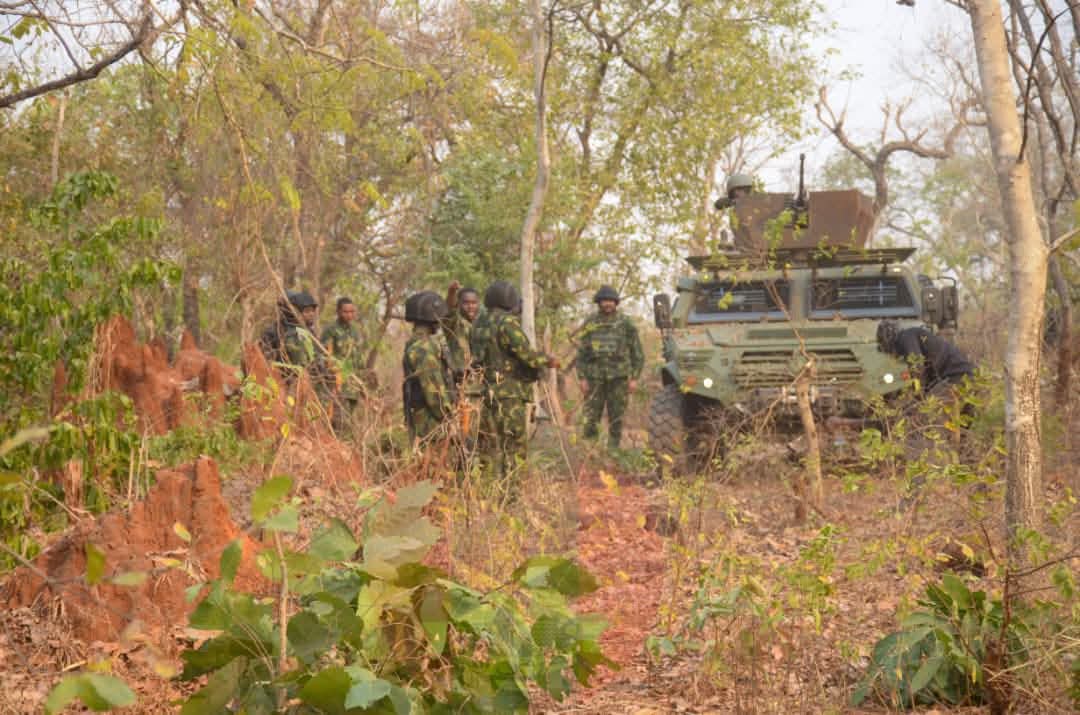
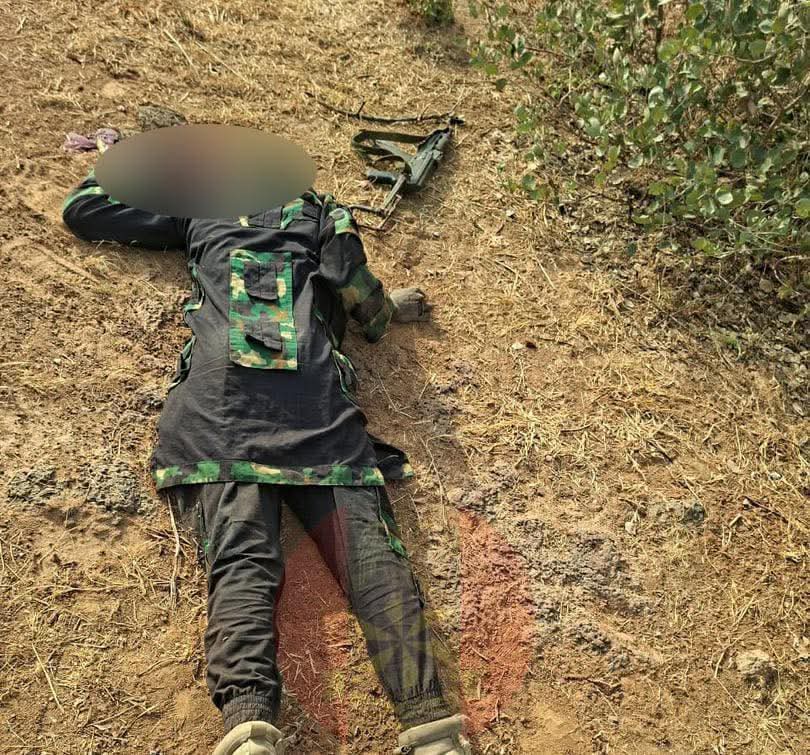
Nigeria is inching into a troubling chapter where insecurity is no longer a distant concern but a daily shadow stretching across communities, highways, markets and now, the country’s schools. The recent surge in kidnappings has unsettled citizens and raised serious questions about the effectiveness of national security frameworks. What used to be episodic attacks have evolved into a sustained campaign of abductions, village raids and highway banditry that expose deep cracks in the country’s ability to protect its people.

Across many states, residents speak of fear as a constant companion. Travellers avoid certain routes, farmers abandon farmlands, and families adjust their routines around the unpredictability of violence. Security agencies, though making efforts, continue to appear overstretched and often reactive. Attackers strike quickly, vanish into unmapped forests, and resurface in another location days later. Communities are left grieving while government assurances rarely transform into long-term relief.

In a development that underscores the urgency of the situation, several states have now moved to shut down schools as a precautionary measure. Katsina State has ordered the closure of all public schools following credible threats linked to the activities of kidnapping gangs. In Kwara State, schools across Ifelodun, Ekiti, Irepodun, Isin and Oke-Ero LGAs have been closed amid rising concerns about attacks on vulnerable institutions. Plateau State has taken similar steps, placing selected schools on an indefinite shutdown. Findings across the northern region show that over 180 schools have been affected by either temporary or ongoing closures linked directly to insecurity.

This trend represents one of the most alarming signals yet. When schools begin to shut down not because of strikes or infrastructure decay, but because the government is unable to guarantee children’s safety, the crisis deepens. The consequences are severe: disrupted learning, displacement of pupils, psychological trauma, reduced enrolment, and widened educational inequality. Children bear the heaviest burden of a battle they did not choose.

The broader insecurity plaguing the country is not without roots. Years of ungoverned spaces, porous borders, arms proliferation, youth unemployment and an over-centralised policing system have created fertile ground for criminal groups to thrive. Banditry has become organised; kidnapping has become transactional. The combination of economic desperation and weak local intelligence systems has allowed small groups of armed men to wield disproportionate influence in rural communities.

Still, this moment calls for more than routine condemnations. What Nigeria faces requires a recalibration of its security priorities. Intelligence must take precedence over brute force. Communities need to be integrated into early-warning mechanisms. Technology—primarily aerial surveillance, communication tracking, and real-time mapping of forest corridors—must shift from policy statements to operational deployment. States must also be allowed clearer, legally backed roles in security management, as the current centralised structure is no longer sufficient to address a crisis spread across vast territories.

Public trust, already weakened, can only be rebuilt through visible, sustained action. Citizens want coordinated operations, not conflicting statements. They want preventive measures, not post-attack visits. They want accountability in security spending and clarity in strategy. Above all, they want assurance that their children can sit in classrooms without fear.

Nigeria stands at an inflexion point. The closure of schools is more than a temporary safety measure—it is a national alarm, a stark reminder that insecurity is now undermining the very foundations of development. Whether the country reverses this trajectory depends on how decisively and intelligently the challenge is confronted.

For now, parents wait, communities worry, and a nation watches the future of its young people disrupted by forces that should never have been allowed to grow this bold.

Abdulhamid Abdullahi Aliyu is a journalist and syndicated commentator based in Abuja.

Enzo Maresca parts ways with Chelsea

By Ibrahim Yunusa

Enzo Maresca has officially stepped down as head coach of Chelsea Football Club after 18 months at the helm.

The Italian tactician parted ways with the club on January 1, 2026, following a poor run of form that saw Chelsea win just one of their last seven matches, a slump that triggered unrest within the club and among fans.

Sources close to the club revealed that internal disagreements with the board, coupled with mounting frustrations over performance and tactical direction, contributed to Maresca’s exit.

Chelsea are expected to announce a replacement soon, with Liam Rosenior emerging as a strong contender to succeed Maresca.

Plateau Governor Mutfwang defects from PDP

By Ibrahim Yunusa

Plateau State Governor, Caleb Mutfwang, has officially resigned from the Peoples Democratic Party (PDP), citing the need for purposeful leadership, clarity of direction, and improved service delivery.

In a letter dated December 29, addressed to the Chairman of the PDP in Ampang West Ward, Mangu Local Government Area, Governor Mutfwang expressed that the current political reality necessitated a shift in platform.

He wrote: “Given the realities of the moment and guided by my commitment to purposeful leadership, clarity of direction, and service delivery, I am compelled to seek an alternative political platform.”

Rumours of the governor’s potential defection had been circulated, with reports suggesting he had been in talks with the ruling, All Progressives Congress (APC).

His official exit from the PDP appears to confirm those earlier speculations.

Nasarawa North senator dies at 52

By Ibrahim Yunusa

Senator Godiya Akwashiki, representing Nasarawa North Senatorial District, has reportedly passed away in India at the age of 52 after a prolonged illness.

A family source, who requested anonymity, confirmed the senator’s death and described it as a significant loss to the district, Nasarawa State, and the nation at large.

“Since the creation of Nasarawa North, Senator Akwashiki has been the best the district ever produced, owing to his purposeful leadership,” the source stated.

Akwashiki, a native of Nasarawa Eggon Local Government Area, was first elected to the Nigerian Senate in 2019 and re-elected in 2023 on the platform of the Social Democratic Party (SDP).

During his tenure, he served as Chairman of the Senate Committee on Air Force and was a former Senate spokesperson.

Until his passing on December 31, 2025, while receiving medical treatment in India, Senator Akwashiki was widely respected for his dedication to legislative excellence, grassroots development, and public accountability.

Zohran Mamdani sworn in as New York City’s first Muslim mayor

By Maryam Ahmad

Democrat Zohran Mamdani has made history after being sworn in as the first Muslim mayor of New York City, marking a significant milestone in the city’s political and cultural landscape.

The swearing-in ceremony, held at City Hall, drew city officials, community leaders, and supporters from across the five boroughs. In his inaugural address, Mamdani emphasised unity, social justice, and inclusive governance, pledging to serve all New Yorkers regardless of background, faith, or political affiliation.

Mamdani’s victory has been widely celebrated by civil rights advocates and minority communities, who view his election as a reflection of New York City’s diversity and democratic spirit. Supporters say his leadership signals a new chapter focused on equity, accountability, and grassroots engagement.

As he assumes office, Mayor Mamdani faces pressing challenges, including housing affordability, public safety, and economic recovery, while carrying the expectations of a city that has once again made history.

A year called 2025

By Sulaiman Maijama’a 

Writing the end‑of‑year experience or the new‑year resolution, as is the case with many people on social media in recent years, has not been my tradition, for I don’t like making public the ladder I set out to climb in my life, nor do I like sharing my private‑life experience for public consumption. Reflecting on my journey through 2025, however, I saw the need to document the lessons learned, the experiences and knowledge acquired, and the shocks that became a turning point in my life. Perhaps this will shed some light on up‑and‑coming young people.

Of all the things I will recount, three occasions of opposite feelings of happiness and sadness that occurred stand out, and made me redefine my life and the people around me. Two experiences taught me, in practice, the concept of winning and losing in life. Several other experiences have widened my eyes to the realities of age and responsibility that come with it, as I’m rounding out the year as a newly improved version of myself.

On April 12th this year, I reached the pinnacle of my adulthood as I tied the nuptial knot with my beautiful Fulani wife in a momentous ceremony. Two days later, as we set out to enjoy the new life, my father-in-law, the father of my wife, passed on. The mosque we had gone to two days earlier to witness the making of my marriage contract was the same mosque we went back to observe the funeral prayers of my father-in-law. People who, two days earlier, came or called to celebrate with us were the same people who came or called to commiserate now. 

This tribulation obstructed all our plans: our honeymoon and visits from relatives to our newlywed home were suspended.  Weakened or rather paralysed by death, love vanished naturally from our hearts. My wife cried profusely (as she still does), and so my job was to pacify her and give her a sense of solace for her ever-growing pain. We did not have the luxury of the early days of marriage.

One month later, as we began to recover from the ordeal and as the rainy season set in,  thieves broke into my house mysteriously overnight while it was raining and took away my motorcycle. This was yet another moment of nervousness and suspicion about the area we reside in and the people around us, because we did not acclimatize to the environment.

Life continued through June and July, when I decided, for the first time in my life, to give agriculture a try. I planted soya beans with full force and hope to earn multiple profits. When it was almost ripe for cultivation, the farmland was tilted for a massive project, and I ended up having less than 20 per cent of what I invested.

In August, the most flabbergasting of all tribulations befell me: my biological father passed away after two years of illness. This is the greatest change in my life, and the realisation that growth has seriously come.

Looking back on my life, I know the Almighty’s favour and kindness toward me are immeasurable. Throughout my life, I have been successful in everything I have ever put my hands to; my educational journey, from nursery through primary and secondary school to polytechnic and university, has been seamless. Throughout this, I never retook any exam, graduated from polytechnic at the top of my class with a Distinction, and graduated from university with almost a First‑Class Honours. I never lacked resources, had opportunities, and even built a house while in university.

After graduation, I had two job offers before I finished the National Youth Service Corps. As I rounded out my NYSC, I got married immediately. I never missed any of my life’s milestones. With all these favours of God on me, why did God not test me in 2025? I will have to question my life and faith. Though these are tests of life that are hard to contend with, I draw solace whenever I remember Allah’s saying in the verse below in Surah Al‑Baqarah:

“And We will surely test you with something of fear and hunger and a loss of wealth and lives and fruits, but give good tidings to the patient”

Maijama’a is the Manager of Admin and Commercials, Eagle Radio Bauchi. He can be reached via sulaimanmaija@gmail.com.

NRS unveils new logo, marks transition from FIRS

By Muhammad Abubakar

The Nigeria Revenue Service (NRS) has officially unveiled its new institutional logo, formally marking its transition from the Federal Inland Revenue Service (FIRS) to a newly established revenue authority.

The unveiling ceremony took place in Abuja on Wednesday and was announced in a statement by Dare Adekanmbi, special adviser to the chairman of the NRS.

Speaking at the event, Zacch Adedeji, executive chairman of the NRS, described the new brand identity as a major milestone in the ongoing reform of Nigeria’s revenue administration framework, reflecting a renewed mandate and institutional vision.

Adekanmbi noted that the service became operational after President Bola Tinubu signed the Nigeria Revenue Service Establishment Act 2025 in June, paving the way for the transition from FIRS to NRS.

The new logo, officials said, symbolises efficiency, accountability, and a modernised approach to revenue generation in Nigeria.

MURIC calls for arrest over death threats to Igbo Muslims

By Anwar Usman

The Muslim Rights Concern (MURIC), a faith-based organisation, has called for the arrest and prosecution of a man identified as Maazi Kanayo over alleged incitement against Igbo Muslims in Southeastern Nigeria.

This was revealed in a statement on Wednesday, by the MURIC Executive Director, Professor Ishaq Akintola.

MURIC said, the organization’s concern followed the circulation of a video clip in which the person in question reportedly made statements targeting Igbo Muslims.

The statement in part reads “We are in possession of a viral video clip in which the audio message of one Maazi Kanayo was aired. In the audio, Maazi Kanayo incited the Igbo people of Southeastern Nigeria to kidnap Igbo Muslims and bury them alive. The post was shared via TikTok.

“Igbo Muslims are being threatened with death for embracing Islam: how can we rise to their aid?”

Akintola added that the statements specifically targeted Muslims living in certain states, potentially putting them at risk.

He stated that “Maazi Kanayo specifically directed his potential kidnappers and killers to target Muslims of Igbo extraction living in Enugu, Ebonyi and Imo states. This is the last thing Nigeria needs at a time when the whole country faces serious insecurity.”

The organization further explained that some Igbo Muslims are traditional rulers, which could affect community stability if the threat is acted upon.

“This is an extremely dangerous dimension as the audio puts the lives of thousands of Igbo Muslims on the line. Some Igbo Muslims are traditional rulers in their communities and this implies the likelihood of communal turbulence in the South East,” the statement revealed.

The organisation called on security agencies to take proactive measures that will prevent harm.

“MURIC therefore calls on the security agencies, particularly men of the Department of State services (DSS) and the Nigeria Police to arrest, detain and prosecute Maazi Kanayo. Every minute counts as the lives of thousands of people hang in the balance,” according to Akintola.

Rivers lawmakers return Fubara’s N100,000 Christmas gift as Wike warns against “automatic tickets”

By Sabiu Abdullahi

Members of the Rivers State House of Assembly have rejected a N100,000 Christmas payment that was paid into their personal bank accounts on the directive of Governor Siminalayi Fubara, stating that the transfer did not follow due process and lacked legislative approval.

In a statement issued on Tuesday and signed by the Chairman of the House Committee on Information, Petitions and Complaints, Enemi George, the lawmakers described the funds as unauthorised and confirmed that the money had been returned.

The statement, titled “Return of Unsolicited and Unapproved N100,000 Transferred to the Personal Accounts of Honourable Members of the Rivers State House of Assembly by the Executive Governor of Rivers State,” explained that each member received a credit alert on December 30, 2025.

“Today, 30th December 2025, honourable members of the 10th Rivers State House of Assembly received bank credit alerts of the sum of N100,000 each. The said unsolicited and unapproved amount was transferred on the instructions of the governor,” the statement read.

The House insisted that public funds must pass through established legal and legislative procedures. George further accused the governor of repeatedly withdrawing money from the state’s consolidated revenue account without the consent of the Assembly since assuming office in 2023.

“We are aware of staff who connive with the governor to contravene the constitution and laws of Rivers State. Their actions are unlawful. We assure the good people of Rivers State that we will not relent in performing our constitutional duties,” he said.

The lawmakers noted that while civil servants in the state received similar Christmas bonuses, those payments followed standard approval processes, unlike the transfer made to members of the Assembly.

Plenary sittings of the House have been adjourned until January 26, 2026. Governor Fubara has yet to submit the 2026 appropriation bill or forward the names of commissioner-nominees to the Assembly.

Since returning from suspension, he has been operating with eight commissioners whose positions were not affected by the Supreme Court ruling that recognised Martin Amaewhule as Speaker.

In a related development, the Minister of the Federal Capital Territory, Nyesom Wike, addressed residents of Khana in Khana Local Government Area on Tuesday, urging them to be cautious about future political choices. His comments were widely interpreted as a reference to the leadership dispute in Rivers State.

“As for the state, we will talk about that later. We will not make a mistake again,” Wike said.

“If you make another mistake, that means they will drive you out. Your ticket is not automatic. You have to earn it for you to present to your people.”

Wike also spoke on political alignment in the state and stressed his support for President Bola Tinubu’s administration.

“For us, there’s nothing like APC or PDP; what we have is Renewed Hope. We’re not voting based on party but on the fact that we belong to one political family. Just follow your leaders. Anywhere you see them going, that is where we are going,” he stated.

He attributed several projects in Rivers communities to President Tinubu’s intervention, mentioning road construction, the establishment of the Federal University of Environment, and the presidential pardon granted to the Ogoni Nine.

“During the turbulent period, Khana stood with us and now you have benefited—from good roads to the University of Environment among other benefits because of the love of Mr. President,” Wike said.

The National Vice Chairman of the All Progressives Congress for the South-South zone, Victor Giadom, declared Gokana Local Government Area a “no-go area” for Governor Fubara.“For him to win anything in Gokana, he must pass through Wike,” Giadom said.

A former senator for Rivers South-East, Magnus Abe, expressed similar views while pledging support for Wike and President Tinubu.

“Wike is a leader who unites, and that is why we are united. The Ogoni people are with you, and we will not go home empty-handed. Please tell Tinubu not to bother coming to Gokana to campaign. We are for him,” Abe said.

NNPP names Abiya acting Kano chairman as leadership crisis deepens

By Uzair Adam

The leadership crisis rocking the Kano State chapter of the New Nigeria Peoples Party (NNPP) has intensified following the appointment of Abdullahi Zubairu Abiya as Acting State Chairman after the removal of the former chairman, Hashimu Dungurawa.

The Daily Reality reports that the decision was announced after an emergency meeting of the NNPP State Executive Committee held at the party’s secretariat in Kano, where members endorsed Abiya’s appointment in line with the party’s constitution.

Speaking on the development, the party’s Assistant Legal Adviser, Barrister Yusuf Mukhtar, said the emergence of Abiya followed due process and was consistent with the provisions of the NNPP constitution.

He explained that the move came after Dungurawa was rejected and removed at the ward level.

Party sources disclosed that the action was based on a formal resolution submitted by the Dawakin Tofa Local Government Executive Committee, which recommended the sack and expulsion of Dungurawa over alleged anti-party activities.

It was gathered that the resolution originated from the Gargari Ward Executive Committee in Dawakin Tofa Local Government Area and was forwarded to the state leadership by the local government executive, led by Hon. Abdullahi Ali Uban Iya Dawanau.

The ward-level decision was reportedly adopted at the second executive meeting of the Gargari Ward, held about two weeks after the general election, where Dungurawa was accused of actions deemed inimical to the party’s interests.

After reviewing the report, the State Executive Committee ratified the resolution and approved Abiya’s emergence as Acting State Chairman, party officials said.

NNPP officials described the move as part of efforts to restore internal discipline, strengthen party unity and reposition the party for future political engagements in Kano State.

Reacting to his appointment, the Acting Chairman, Hon. Abdullahi Zubairu Abiya, said the party would ensure fairness and justice for all members.

He added that the Kano NNPP would remain loyal to the party’s national leader, Senator Rabiu Musa Kwankwaso, as well as the Kano State Governor, Engr. Abba Kabir Yusuf.