Admin

KASU VC: The battle for Prof. Tanko’s successor thickens

By Sumayyah Auwal Usman

With time racing down to the end of the administration of the incumbent Vice-Chancellor of the Kaduna State University, Professor Muhammad Tanko, schemings have begun by many academics who have indicated an interest in clinching the highest executive but challenging position in the university.

Indications emerged recently that there are strong contenders within the university who are out to slug it out to succeed Prof. Tanko, as the 6th Vice-Chancellor of the University. Even though the names of the candidates have remained top secret up to the time of filing this report, there are contestants that are believed to have applied.

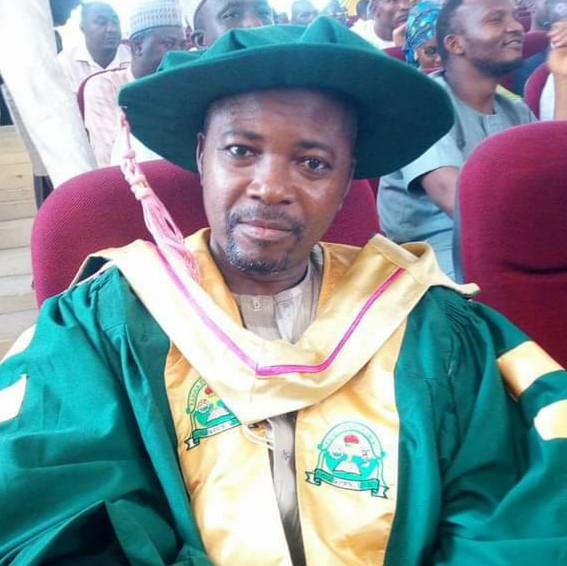
One of the leading contenders in the race, who many believe should have naturally been the successor to Professor Tanko is the incumbent Deputy Vice-Chancellor in charge of Academic matters, Professor Abdullahi Musa Ashafa. Before his appointment as the DVC, Academic, Professor Ashafa served as Head, Department of History, Dean, Faculty of Arts, a member of the 2nd Governing Council of the university led by Professor Idris Abdulkadir, and also Dean, School of Postgraduate Studies on two occasions. Ashafa and the outgoing VC were the first set of KASU to become Professors by promotion over ten years ago.

Another contender is Professor Yusha’u Ango, the Dean School of Postgraduate Studies. Although he was only promoted to the rank of professor last year, Ango is seen as a force to reckon with based on his political standing. He is believed to be supported by the one commissioner in Governor Nasiru El-Rufa’i cabinet, and he also held some administrative positions in the university as a Head of Department and Director.

It has also been gathered that Professor Bala Dogo, Department of Geography who was the first to be appointed a Professor from NDA Kaduna where he was an Associate Professor, is seriously in the race. Dogo has been a regular customer in applying for the post even outside KASU, but his low rating may likely see his ambition fly to anywhere. Others who are said to be in the race include Prof. John Laah, Department of Geography, Prof. Ahmed Kofa Babajo, Department of English and Drama, Prof. Hauwa Evelyn Yusuf, Department of Sociology, Prof Zainab Dabo of the Department of Business Administration & current Director of KASU Global Consult among others.

However, a source in the university said there are many Professors outside the university that have also indicated an interest in becoming the next VC. Other academics within KASU eyeing the position but are not from Kaduna State include Professor Ibrahim Malumfashi, Department of Nigerian Languages.

The major controversy in the process were the two contradictory advertisements made for the position. The first advertisement, signed by the then Commissioner of Education, Hon. Dr Shehu Usman Makarfi, instead of the University Registrar, stipulated the major criteria as a candidate must be a Professor of at least ten standing. But the second advertisement came out a week to the expiration of the deadline. In the new advertisement, the ten years standing for a professorship was removed. Contradictorily, it was signed by the same Commissioner Makarfi who had by then been redeployed to the Ministry for Local Government. This was said to have been made neither with the knowledge of the current Hon. Commissioner of Education nor her input.

The most controversial aspect of the second advert is that it did not indicate if it supersedes the previous one or not. The question interested parties thus asked is which of the advertisements would be used for the selection process of the new VC for KASU?

Another issue is that there is no Governing Council currently in the University to take charge of the process as stipulated in the University laws. It was reliably gathered that the academic union, ASUU, Kaduna State University Chapter have written to the Visitor of its opposition to the process outside the Council mandate. Though the Visitor was said to have directed for the collation of names for the constitution of a Council, how soon would it come out? If the Council is eventually constituted, observers expressed the likelihood of doing another advertisement without controversy. This, they also observed, will further delay the process. If this should happen until the incumbent Vice-Chancellor vacates office in January 2022, this will mean leaving the University with an Acting VC.

What pundits argue on this matter is why should a serious government like that of Governor El-Rufai who has another excellent and brilliant personality like Emir Muhammad Sanusi II as Chancellor allowed KASU’s excellent academic and administrative reputation tainted. The tenure of the current VC, Prof. Tanko is expiring on January 22, 2022.

Court sentences man to death for murdering his uncle

By Uzair Adam Imam

Jigawa State High Court has sentenced one Husseini Lushe to ‘death by hanging’ for starving his uncle, Muhammad Alhaji Amadu, to death.

Justice Ado Yusuf Birnin kudu said that Magaji Husseini Lushe of Rigar Didi Lamido village was arraigned before the court for murdering his uncle.

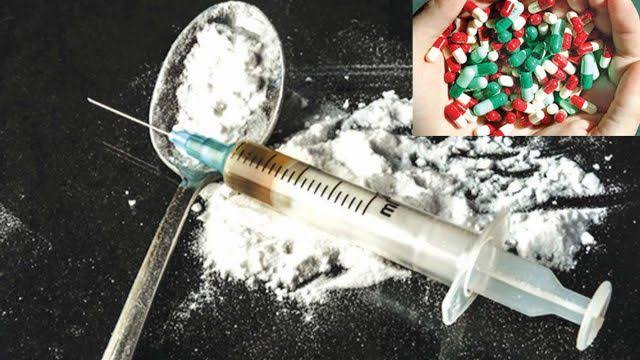
Justice Yusuf added that the convict made a confessional statement before the court that he intentionally committed the offence but under the influence of hard drugs.

Yusuf said that the offence contradicted section 221 of the Penal Code Law of 2014 as amended.

Therefore, he convicted him and sentenced him to death by hanging.

FG revises international travel protocol to tackle Omicron

By Uzair Adam Imam

As one of the measures in tackling the deadly virus of Covid-19 Omicron, the Federal Government Friday has announced a revision of its International Travel Protocol which was said to be effective from Sunday, December 5, 2021.

Boss Mustapha, the Secretary to the Government of the Federation (SGF) and Chairman, Presidential Steering Committee (PSC) on COVID-19, made the disclosure in a statement.

The statement stated that the said revised protocol was aimed at further reducing the risk of importation and exportation of COVID-19.

Mustapha said: “All passengers arriving in Nigeria are expected to provide evidence of and comply with COVID-19 Polymerase Chain Reaction (PCR) test to be done within 48 hours before departure; post-arrival day 2 COVID-19 PCR test; self-isolation for seven days (for unvaccinated and partially vaccinated individuals); and day seven post-arrival exit PCR test (for unvaccinated and partially vaccinated individuals).

“All out-bound passengers are required to provide either of the following documentation: valid evidence of full vaccination against COVID-19; negative PCR test result within 48 hours from the time (of) boarding.”

He added that the review of the protocol was based on science, national experience, and global developments.

Meanwhile, he also assured, “Nigerians that government would continue to monitor global and specific country situations with a view to taking necessary measures.”

Kannywood Movie Review: Gari Guda

Director: Sufyan Lawal Kabo

Language: Hausa

Release date: 26-11-2021

Company: Islamic Film Empire

Cast: Musa Lawal, Ibrahim Hassan, Mahmoud Mukhtar, Fatima Lawal, Binta Miko, etc.

Most of the criticisms around Kannywood are rooted in its personnels’ attitude towards filmmaking. They seem to focus on irrelevant, modern love stories, neglecting serious topics. Their films are therefore accused of cultural aberration and promoting moral decadence. However, as the criticisms became louder, a production company, Islamic Film Empire, came to change the narrative with its movie titled Gari Guda.

Set in Northwestern Nigeria, Gari Guda explores social vices like banditry and kidnappings that bedevil the region. It commences with a scene of a bandit attack on a village, where they kidnap many people, including its Chief Imam, and take them to their hideout in Dunguru Forest.

There is Abdul (played by Musa Lawal) on another side. He is a family man who, after losing his job, becomes bankrupt and cannot cater for them. His fruitless search for another job gets him increasingly frustrated with life, and he decides to end it all. He goes far away to Dunguru for the execution but eventually finds himself in the bandits’ camp. However, after hearing his story, their kingpin, Jalo (played by Ibrahim Hassan), asks him to work as their cyber-man.

Would Abdul accept the offer or turn it down? Find out in the cinemas!

Gari Guda is, indeed, a powerful film, not only for dealing with a pressing issue but for doing that effectively. It is shot in suitable locations that perfectly capture Northern Nigeria’s ecology. This makes it a realistic portrayal of the region and its current condition.

The film is a socio-political critique of the Northern political elites. It depicts their abuse of power as the posits that as the primary cause of the terrible mess the region faces. This is suggested when Jalo tells Abdul that he holds an LL.B degree, and his inability to afford “Law School” makes him resort to kidnapping. The intention of Abdul to commit suicide also reiterates the misconducts unemployed citizens could engage in.

The film is, in addition, overtly didactic. Its portrayal of Abdul, who encounters troubles for throwing his parents away, clearly symbolizes the consequence of parental disobedience. There are also many instances where the director incorporates moral teaching into the dialogue. I salute him for the job well done, together with all the cast and crew members.

Nonetheless, the film’s plot progresses too slowly. And while some scenes are lengthy with unnecessary details, some important points are missed. For example, what transpired with the people kidnapped at the beginning remains unknown. The director also fails to strike a balance between education and entertainment. Except for Abdul’s comical father character, there is no comic relief – something to allow the audience to recover from the tensions and excessive gunshots – in the film.

In conclusion, Gari Guda enlightens and educates. It is typical of what you would expect from the “Islamic Film Empire”. Therefore, I recommend it for the serious-minded—rating 3/5.


Reviewer:

Habib Ma’aruf

habibumaaruf11@gmail.com

Kaduna to dismiss 233 teachers, vow to conduct competency test

By Sumayyah Auwal Ishaq

The Kaduna State Universal Basic Education Board (KADSUBEB) will dismiss 233 teachers who presented fake certificates. According to the board chairman, Mr Tijjani Abdullahi, “the Board has verified 451 certificates by contacting the institutions that awarded the certificates.”

“The responses from the institutions show that 233 teachers presented fake certificates. This represents 51% of the 451 certificates on which responses have been received from the awarding institutions. One institution disowned 212 of these 233 fake certificates,” Abdullahi said.

A statement by the Board further added that it “will follow up the competency test with series of training programmes, organized in batches for teachers. This will begin in January 2022 for 12,254 teachers.

The Board has signed MoUs with the National Teachers Institute, the College of Education, Gidan Waya, and the Federal College of Education, Zaria, to conduct the training exercise.”

Nigerian soldiers kill many insurgents in Yobe

By Muhammad Sabiu

The Nigerian Army announced that its troops killed Boko Haram (BH) and Islamic State’s West Africa Province (ISWAP) terrorists in a fierce battle in Buni Yadi, Gujba Local Government Area of Yobe State, on Tuesday.

The terrorists were met with stiff resistance from troops of 27 Task Force Brigade and Nigerian Army Special Forces School, supported by the Nigerian Air Force Component and personnel of the Nigerian Police, according to Onyema Nwachukwu, Director, Army Public Relations, in a statement on Wednesday.

The fierce gun duel, he said, drove the criminals to flee in different directions after suffering huge losses while the troops took out numerous gun trucks and their occupants.

The accuracy with which Air and Land soldiers engaged the terrorists, destroying their gun trucks, was revealed in a preliminary battle damage assessment.

Troops are still using exploitation to take out fleeing terrorist remnants, he added.

Lieutenant General Faruk Yahaya, Chief of Army Staff, praised troops for their operational success and urged them to maintain the current operational pace in order to deny the insurgents from moving further.

Boat Mishap: Kano State Gov’t bans use of commercial boats in Bagwai

By Uzair Adam Imam

Following the boat mishap on Tuesday, 30th November, 2021 in Bagwai Local Government of the state, the Kano State Government has announced a ban on the use of commercial boats in transporting passengers in the river.

The Daily Reality has reported the incident that had claimed the lives of twenty nine people. Adding to that development, Kano State governor, Dr. Abdullahi Umar Ganduje disclosed the ban in a statement issued to journalists by the State Commissioner for Information, Malam Muhammad Garba.

In her effort, the Kano State government has provided two buses for passenger shuttle between Badau and Bagwai, while three new boats would be procured for effective water transportation in the area.

He added that: “Other control measures are expected to be instituted when the investigation committee set up by the state government submitted its report for implementation.”

How Kano officials locked up SAN who represented Shekarau faction

By Uzair Adam Imam

The lawyer who was reported to have played a vital role in the victory of Malam Ibrahim Shekarau faction of the All Progressives Congress (APC) in Kano State, Mr Nureini Jimoh, was locked up in his chamber by the government officials hours ago.

Reports have it that the Federal High Court in Abuja dissolved the excos of Governor Abdullahi Ganduje’s APC faction, taking that of Shekarau.

On Wednesday, December 1, 2021, police and officials of the Kano State government stormed Jimoh’s chamber at 16c Murtala Mohammed Way, Kano.

The officials sealed off the building while Mr Jimoh and his staff were inside the building, making it a thing of surprise to many.

However, the building was later unsealed after outrage from the Kano branch of the Nigerian Bar Association (NBA) and media reports.

Hassan Idris, the team leader, has disclosed that they were instructed by the Permanent Secretary from the ministry to unlock the premises.

Speaking at the scene, the Kano Police Spokesman, Abdullahi Haruna Kiyawa, said he was there to confirm the involvement of police as being reported by the media.

Beyond true/false: Things to know about information consumption in the era of Infodemic (I)

By Isah Nasidi

A report has it that about three hundred and sixty-one million (361,000,000) videos were uploaded on YouTube in just 30 days, and about 19,200 articles have been published on Google Scholar in the year 2020. Similarly, around 550 million tweets, including terms like “coronavirus,” “COVID-19, or “pandemic”, were recorded in March 2020. These are just a few platforms where information is produced, distributed, and consumed. Imagine the gross total of all the information shared on the entire world of conventional media, new media, and media.

New information technologies fueled the overabundance of information known as the “infodemic,” which is now the new feature of the information flow. Due to technological affordances, a fair percentage of people have the technical know-how to produce authentic and unauthentic information and circulate it without any professional gatekeepers. This makes it difficult for people to differentiate between accurate and inaccurate information, which in the end may cause disinformophobia. However, it is not only about the accuracy but also the safety or health of the information.

For journalists, social media influencers, and the entire audience or users to produce, circulate and consume safe information and avoid information disorder syndrome, media literacy on the ecosystem of information disorder is a must.

Basically, fact-checking organisations use truth metres or scales to categorise information. Depending on the in-house style, information can be divided into four categories based on the dimension of true or false: purely true, largely/partly true, false, largely/partly false, unconfirmed.

True information is not always good. Information can be true yet harmful to society. Information that is true and harmful is labelled as “malinformation”. Such information can be hate-speech, leaks about personal privacy without any justification of public interest, stereotypes, prejudice, and embarrassment. For instance, it is a true representation of identity when you call a Hausa man Aboki or Malam, but the intent and the approach may be harmful.

The largely/partly true information is the most common strategy for information contamination and is very dangerous and challenging to deal with. Here, the root of the information is genuine but diluted with false information, misinterpreted or misrepresented. This is what I call diluted information (dil-information). The intent may be good or bad. For instance, the military has been accused of reducing the number of casualties from their side while increasing the number of casualties from the enemy side. Yes, the Nigerian Army indeed killed some scores of bandits, but the number is not correct.

The false information can be classified as “false,” “transformed false,” or “unknown false. False information happens when both the producer and the consumer know the false status of the information. The majority of the content shared for entertainment purposes is false, and it is treated as such. However, known false content may be shared with another community of consumers that do not know the origin of the information, thus considering it true, which is transformed into true. This is very common in this era of globalisation, where content can be shared easily across the globe.

The unknown false information can be from either the source or the consumer. For instance, a journalist may unknowingly receive false information and share it as true, or he may deliberately fabricate information and share it as true. The former is classified as misinformation while the latter is called disinformation. In both cases, the consumers of the information do not know the false status of the information.

We will continue.

Isah Nasidi is a media consultant and research fellow at PTCIJ.

Kano boat mishap: Ganduje commiserates as 20 people die

By Uzair Adam Imam

Governor Abdullahi Umar Ganduje of Kano State has expressed shock over the death of twenty people in a boat mishap in Bagwai Tuesday evening.

The statement signed Wednesday, 1st December 2021, by the Chief Press Secretary, Mr Abba Anwar, disclosed.

The statement read in part: “Bagwai boat mishap, which so far caused the death of 20 people, as rescue operation still on, is a state tragedy.

“We learned that the boat started from Hayin Badau to Bagwai on their way to attend Maulud celebration.

“The boat was ferrying about 50 people with some loads; it capsized because of overloading. Most of the passengers were Islamiyyah students,” the statement stated.

The governor prayed for forgiveness to the deceased and also quick recovery of the rescued who are receiving medical treatment.

“I urge boat operators to always take the issue of overloading very seriously. They should know that they can still get profit without overloading their boats,” the governor said.

Ganduje said it was unfortunate that a similar incident was recorded some years ago on the same axis.

“People should know that the lives of their fellow human beings are too important to be risked deliberately.

“Based on the information we received this morning, there are 20 deaths. Seven persons have been admitted to the hospital and another eight others were found this morning. The rescue operation is still going on.

“We salute the courage and patriot posture of the rescue teams,” the statement added. (NAN)